The Legal System
Section 3 - classification of law
Mr Shipp, 2016
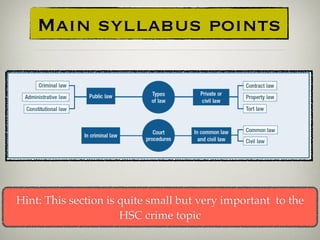
Main syllabus points
Hint: This section is quite small but very important to the
HSC crime topic
Public law
• Public law is the law which deals with the powers and
obligations of governments and citizens
• Three main types of public law:
• Criminal law – body of rules under which certain acts
are punished by the state
• Administrative law – laws dealing with government
powers/decisions
• Constitutional law – rules governing the executive,
judiciary and legislative functions
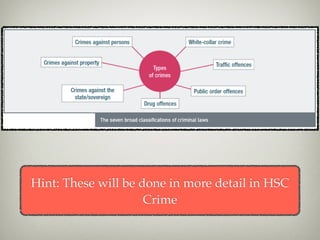
Hint: These will be done in more detail in HSC
Crime
Private law
• Private law is the law which aims to regulate the
relationships between individuals, companies and
organisations.
• Three main areas of private law:
• Contract law – agreement between two or more parties
recognised under the law
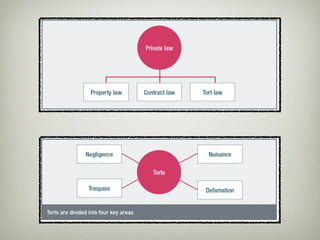
• Tort law – ‘Civil Wrongs’, interfering with the right of
someone else (Negligence, nuisance, trespassing,
defamation)
• Property law – wide area of law dealing with things
owned and that of commercial value
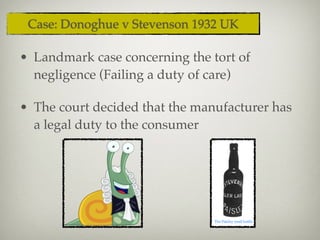
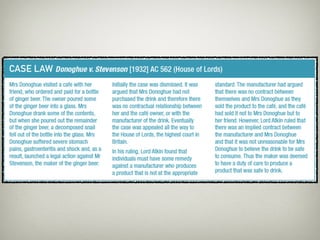
• Landmark case concerning the tort of
negligence (Failing a duty of care)
• The court decided that the manufacturer has
a legal duty to the consumer
Case: Donoghue v Stevenson 1932 UK
Donoghue v stevenson
• A prosecutor and a defendant (also known as the
accused)
• The state (through the prosecutor) brings the case
to court
• The burden of proof is on the prosecutor to
prove the case
Criminal Court
procedures
Criminal Cases
• The standard of proof in a criminal case is
‘beyond reasonable doubt’
• Criminal cases can either be summary or
indictable:
• Summary offences – heard by a magistrate in
the Local Court without a jury
• Indictable offences – usually in the District or
Supreme Court, before a judge and a jury
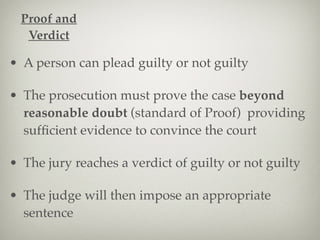
• A person can plead guilty or not guilty
• The prosecution must prove the case beyond
reasonable doubt (standard of Proof) providing
sufficient evidence to convince the court
• The jury reaches a verdict of guilty or not guilty
• The judge will then impose an appropriate
sentence
Proof and
Verdict
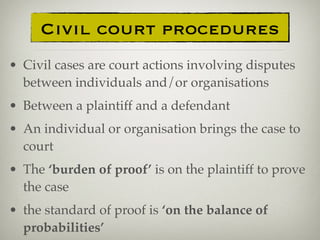
• Civil cases are court actions involving disputes
between individuals and/or organisations
• Between a plaintiff and a defendant
• An individual or organisation brings the case to
court
• The ‘burden of proof’ is on the plaintiff to prove
the case
• the standard of proof is ‘on the balance of
probabilities’
Civil court procedures
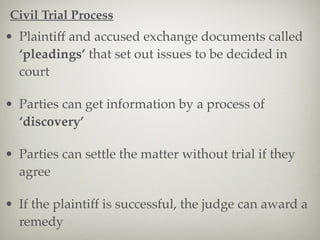
• Plaintiff and accused exchange documents called
‘pleadings’ that set out issues to be decided in
court
• Parties can get information by a process of
‘discovery’
• Parties can settle the matter without trial if they
agree
• If the plaintiff is successful, the judge can award a
remedy
Civil Trial Process
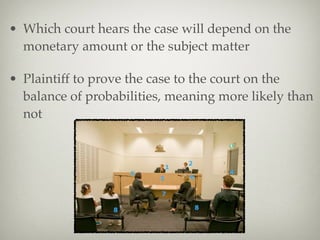
• Which court hears the case will depend on the
monetary amount or the subject matter
• Plaintiff to prove the case to the court on the
balance of probabilities, meaning more likely than
not
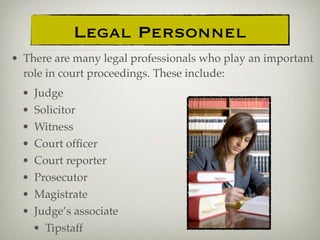
• There are many legal professionals who play an important
role in court proceedings. These include:
• Judge
• Solicitor
• Witness
• Court officer
• Court reporter
• Prosecutor
• Magistrate
• Judge’s associate
• Tipstaff
Legal Personnel
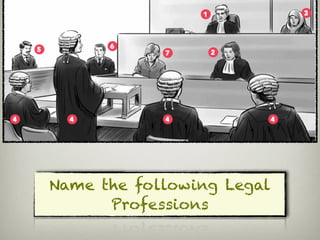
Name the following Legal
Professions
• In most indictable criminal cases, a jury is sworn in
with a number of 12 (can be 15 for long cases)
• ‘Challenge for cause’ - a juror can be stopped from
sitting due to not being qualified, being ineligible
or being suspected of bias.
• ‘Peremptory challenges’ - both sides can exercise
this right when a jury is empanelled. A reason does
not have to be given
The Jury
THE jury
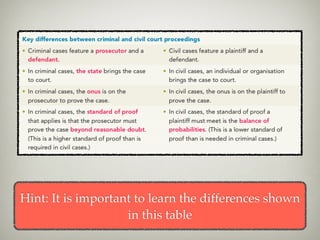
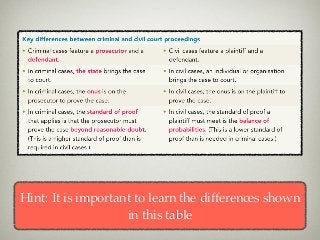
Hint: It is important to learn the differences shown
in this table
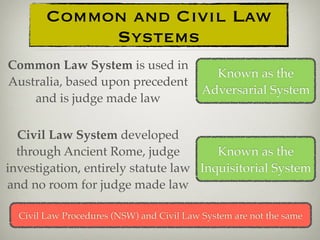
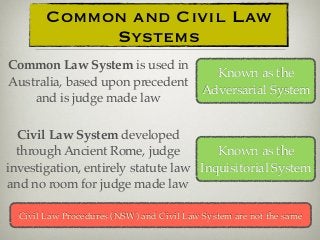
Common and Civil Law
Systems
Common Law System is used in
Australia, based upon precedent
and is judge made law
Civil Law System developed
through Ancient Rome, judge
investigation, entirely statute law
and no room for judge made law
Known as the
Adversarial System
Known as the
Inquisitorial System
Civil Law Procedures (NSW) and Civil Law System are not the same
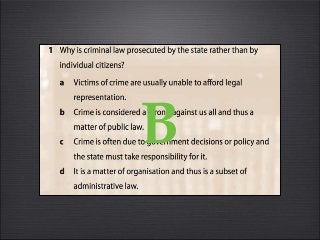
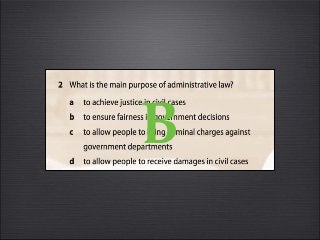
B
B
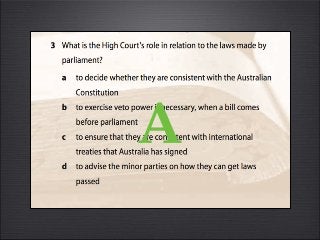
A
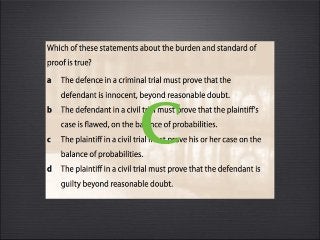
C

Classification of Law

  • 1.
    The Legal System Section3 - classification of law Mr Shipp, 2016
  • 2.
    Main syllabus points Hint:This section is quite small but very important to the HSC crime topic
  • 4.
    Public law • Publiclaw is the law which deals with the powers and obligations of governments and citizens • Three main types of public law: • Criminal law – body of rules under which certain acts are punished by the state • Administrative law – laws dealing with government powers/decisions • Constitutional law – rules governing the executive, judiciary and legislative functions
  • 5.
    Hint: These willbe done in more detail in HSC Crime
  • 6.
    Private law • Privatelaw is the law which aims to regulate the relationships between individuals, companies and organisations. • Three main areas of private law: • Contract law – agreement between two or more parties recognised under the law • Tort law – ‘Civil Wrongs’, interfering with the right of someone else (Negligence, nuisance, trespassing, defamation) • Property law – wide area of law dealing with things owned and that of commercial value
  • 8.
    • Landmark caseconcerning the tort of negligence (Failing a duty of care) • The court decided that the manufacturer has a legal duty to the consumer Case: Donoghue v Stevenson 1932 UK
  • 10.
  • 11.
    • A prosecutorand a defendant (also known as the accused) • The state (through the prosecutor) brings the case to court • The burden of proof is on the prosecutor to prove the case Criminal Court procedures Criminal Cases
  • 12.
    • The standardof proof in a criminal case is ‘beyond reasonable doubt’ • Criminal cases can either be summary or indictable: • Summary offences – heard by a magistrate in the Local Court without a jury • Indictable offences – usually in the District or Supreme Court, before a judge and a jury
  • 14.
    • A personcan plead guilty or not guilty • The prosecution must prove the case beyond reasonable doubt (standard of Proof) providing sufficient evidence to convince the court • The jury reaches a verdict of guilty or not guilty • The judge will then impose an appropriate sentence Proof and Verdict
  • 15.
    • Civil casesare court actions involving disputes between individuals and/or organisations • Between a plaintiff and a defendant • An individual or organisation brings the case to court • The ‘burden of proof’ is on the plaintiff to prove the case • the standard of proof is ‘on the balance of probabilities’ Civil court procedures
  • 16.
    • Plaintiff andaccused exchange documents called ‘pleadings’ that set out issues to be decided in court • Parties can get information by a process of ‘discovery’ • Parties can settle the matter without trial if they agree • If the plaintiff is successful, the judge can award a remedy Civil Trial Process
  • 17.
    • Which courthears the case will depend on the monetary amount or the subject matter • Plaintiff to prove the case to the court on the balance of probabilities, meaning more likely than not
  • 18.
    • There aremany legal professionals who play an important role in court proceedings. These include: • Judge • Solicitor • Witness • Court officer • Court reporter • Prosecutor • Magistrate • Judge’s associate • Tipstaff Legal Personnel
  • 19.
    Name the followingLegal Professions
  • 20.
    • In mostindictable criminal cases, a jury is sworn in with a number of 12 (can be 15 for long cases) • ‘Challenge for cause’ - a juror can be stopped from sitting due to not being qualified, being ineligible or being suspected of bias. • ‘Peremptory challenges’ - both sides can exercise this right when a jury is empanelled. A reason does not have to be given The Jury
  • 21.
  • 22.
    Hint: It isimportant to learn the differences shown in this table
  • 23.
    Common and CivilLaw Systems Common Law System is used in Australia, based upon precedent and is judge made law Civil Law System developed through Ancient Rome, judge investigation, entirely statute law and no room for judge made law Known as the Adversarial System Known as the Inquisitorial System Civil Law Procedures (NSW) and Civil Law System are not the same
  • 24.
  • 25.
  • 26.
  • 27.