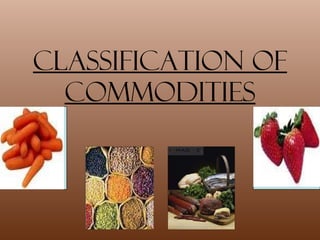
Classification of Commodities
Commodities which are used in the kitchen can be broadly classified in to three main categories: Perishables :  Ingredients which have short shelf life ranging from six hours to six days at room temperature such as milk and dairy products, meats, fish, eggs, fruits and vegetables Semi Perishables:   Ingredients which have a longer shelf life ranging from a few weeks to a few months such as cereals, pulses, fats, oils, condiments, spices, flour, proprietary foods etc. Non Perishables:   Ingredients which can be stored indefinitely such as salts, mild acids, sugar, edible colours, some essences etc.
Under ground vegetables :  roots, tubers, bulbs, rhizomes, pods,etc . Over ground vegetables :  Shoots, stems, leaves, fruits, seeds, pods, flowers etc . Vegetables are broadly classified into
Underground vegetables
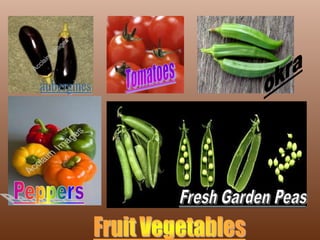
Over Ground Vegetables


1. Red Meat: Lamb, Beef, Pork, Mutton etc. 2. White Meat: Poultry birds such as  Chicken, Duck, Turkey etc. and also Fish  & Seafood: 3. Game Meat: Animals or Birds which are  hunted for their meat and not farm  reared, such as wild boar, hare, geese etc.


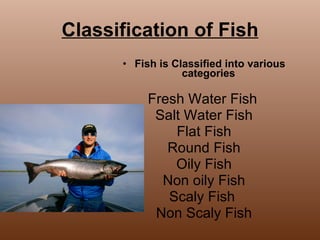
Classification of Fish Fish is Classified into various categories   Fresh Water Fish   Salt Water Fish Flat Fish Round Fish Oily Fish Non oily Fish Scaly Fish  Non Scaly Fish
Fresh Water Fish   Salt Water Fish
Classification of Seafood
Crustaceans
Cephalopods
Echinoderms
Molluscs
Fruits Fleshy: apple, pineapple, banana, papaya Vine : grape, water melon, cantaloupe  Stone : plum, apricot, lychee, mango  Citrus : orange, lime, kumquat  Soft fruits : raspberry, blackberry, strawberry
Fresh Herbs Rosemary Thyme Holy Basil Marjoram Chervil Fenugreek Leaves Dill Mint leaves Hyssop Fennel Sage Lavender Lemon Grass Tarragon Borage Chives Coriander or Cilantro Curry Leaves Parsley Caraway
Dairy Products Milk Cheese Cream Butter Ghee Butter Milk Curd Yoghurt
Types of Milk   Standardized milk - 4.5% fat, SNF 8.5% Whole milk  -  3.25% milk fat, 8.25% milk solids Reduced-fat milk (2%)  fat Low-fat milk (1%)  fat Skimmed milk/non-fat milk : 0.5%  fat   Evaporated or condensed milk  Sweetened condensed milk  Homogenized milk  Pasteurized milk Shelf-stable milk  Ultra pasteurized milk
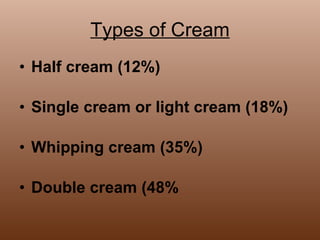
Types of Cream Half cream (12%)  Single cream or light cream (18%) Whipping cream (35%)  Double cream (48%
Types of Butter Cultured butter  Whipped butter  Churned butter or sweet butter  Flavoured butter  Farm butter  Ghee Table or Pasteurized yellow butter  Flavoured Spread able Butter
Types of Cheese Fresh Soft Cheese Soft Mould Ripened Cheese Hard and Semi Hard Cheese Washed Rind Cheese Blue Cheese Gouda Type Cheese Specialty Cheese - Cheese with Additives Mozzarella - Pasta Filata or Stretched Curd                                         Cheese Smoked Cheese Grated and Sliced Cheese
Cereals and Millets Cereals are normally staple foods which constitute major consumption by populations of the world example: Rice Wheat Corn or maize Sorghum or Jowar or Egyptian millets Ragi or Bhajra or Millets
Pulses and Legumes These  include all kinds of beans, dry peas, lentils, legumes and dals such as: Red gram or toor dal, green gram or moong dal, black gram or urad dal, bengal gram or channa dal, kidney bean or rajma, white broad beans, yellow beans, soya beans etc.
Spices Cardamom Cloves Mace Nutmeg Cinnamon Cumin Seed Mustard  Chillies Turmeric Coriander Seed Ginger Garlic Pepper Corns Caraway Seed Fenugreek seed Fennel Seed Poppy Seed Onion Seed Saffron Sesame Seed
Fats and Oils Almond oil Avocado Canola  (A US marketing name for rapeseed oil) Coconut Oil Corn oil Grape Seed Lard Olive Peanut Safflower, High Oleic Safflower, Regular Sesame Shortening, vegetable Soybean Sunflower, Regular Sunflower, High Oleic Vegetable Oil Nut (walnut, hazelnut) Pumpkin Seed
Types of Flours Whole Wheat Flour Refined Flour Self Raising Flour White Flour Rye Flour Gram Flour Plain Maize Flour White Corn Flour Wheat Based Flours
Sugars    Salts Cane Sugar Beet Sugar Brown Sugar Castor Sugar Demerara sugar Barley Sugar Barbados sugar Corn Syrup Cinnamon Sugar Invert Sugar Candy Sugar Table Salt   I odized Salt   Kosher Salt   Sea Salt   Pickling Salt   Rock Salt   Sour or Lemon Salt   Seasoned Salt Chinese Salt Black Salt
Acids and Chemicals Used in Cooking Sodium Chloride or plain salt Potassium Chloride or Black salt Sodium Bicarbonate or baking soda Ammonium Carbonate  Dilute Acetic Acid or Synthetic Vinegar Lemon Juice or Citric Acid Tartaric Acid or Cream of Tartar ( Potassium hydrogen tartrate}
Thank You

classification of commodities

  • 1.
  • 2.
    Commodities which areused in the kitchen can be broadly classified in to three main categories: Perishables : Ingredients which have short shelf life ranging from six hours to six days at room temperature such as milk and dairy products, meats, fish, eggs, fruits and vegetables Semi Perishables: Ingredients which have a longer shelf life ranging from a few weeks to a few months such as cereals, pulses, fats, oils, condiments, spices, flour, proprietary foods etc. Non Perishables: Ingredients which can be stored indefinitely such as salts, mild acids, sugar, edible colours, some essences etc.
  • 3.
    Under ground vegetables: roots, tubers, bulbs, rhizomes, pods,etc . Over ground vegetables : Shoots, stems, leaves, fruits, seeds, pods, flowers etc . Vegetables are broadly classified into
  • 4.
  • 5.
  • 6.
  • 7.
  • 8.
  • 9.
  • 10.
    1. Red Meat:Lamb, Beef, Pork, Mutton etc. 2. White Meat: Poultry birds such as Chicken, Duck, Turkey etc. and also Fish & Seafood: 3. Game Meat: Animals or Birds which are hunted for their meat and not farm reared, such as wild boar, hare, geese etc.
  • 11.
  • 12.
  • 13.
  • 14.
    Classification of FishFish is Classified into various categories Fresh Water Fish Salt Water Fish Flat Fish Round Fish Oily Fish Non oily Fish Scaly Fish Non Scaly Fish
  • 15.
    Fresh Water Fish Salt Water Fish
  • 16.
  • 17.
  • 18.
  • 19.
  • 20.
  • 21.
    Fruits Fleshy: apple,pineapple, banana, papaya Vine : grape, water melon, cantaloupe Stone : plum, apricot, lychee, mango Citrus : orange, lime, kumquat Soft fruits : raspberry, blackberry, strawberry
  • 22.
    Fresh Herbs RosemaryThyme Holy Basil Marjoram Chervil Fenugreek Leaves Dill Mint leaves Hyssop Fennel Sage Lavender Lemon Grass Tarragon Borage Chives Coriander or Cilantro Curry Leaves Parsley Caraway
  • 23.
    Dairy Products MilkCheese Cream Butter Ghee Butter Milk Curd Yoghurt
  • 24.
    Types of Milk Standardized milk - 4.5% fat, SNF 8.5% Whole milk - 3.25% milk fat, 8.25% milk solids Reduced-fat milk (2%) fat Low-fat milk (1%) fat Skimmed milk/non-fat milk : 0.5% fat Evaporated or condensed milk Sweetened condensed milk Homogenized milk Pasteurized milk Shelf-stable milk Ultra pasteurized milk
  • 25.
    Types of CreamHalf cream (12%) Single cream or light cream (18%) Whipping cream (35%) Double cream (48%
  • 26.
    Types of ButterCultured butter Whipped butter Churned butter or sweet butter Flavoured butter Farm butter Ghee Table or Pasteurized yellow butter Flavoured Spread able Butter
  • 27.
    Types of CheeseFresh Soft Cheese Soft Mould Ripened Cheese Hard and Semi Hard Cheese Washed Rind Cheese Blue Cheese Gouda Type Cheese Specialty Cheese - Cheese with Additives Mozzarella - Pasta Filata or Stretched Curd Cheese Smoked Cheese Grated and Sliced Cheese
  • 28.
    Cereals and MilletsCereals are normally staple foods which constitute major consumption by populations of the world example: Rice Wheat Corn or maize Sorghum or Jowar or Egyptian millets Ragi or Bhajra or Millets
  • 29.
    Pulses and LegumesThese include all kinds of beans, dry peas, lentils, legumes and dals such as: Red gram or toor dal, green gram or moong dal, black gram or urad dal, bengal gram or channa dal, kidney bean or rajma, white broad beans, yellow beans, soya beans etc.
  • 30.
    Spices Cardamom ClovesMace Nutmeg Cinnamon Cumin Seed Mustard Chillies Turmeric Coriander Seed Ginger Garlic Pepper Corns Caraway Seed Fenugreek seed Fennel Seed Poppy Seed Onion Seed Saffron Sesame Seed
  • 31.
    Fats and OilsAlmond oil Avocado Canola (A US marketing name for rapeseed oil) Coconut Oil Corn oil Grape Seed Lard Olive Peanut Safflower, High Oleic Safflower, Regular Sesame Shortening, vegetable Soybean Sunflower, Regular Sunflower, High Oleic Vegetable Oil Nut (walnut, hazelnut) Pumpkin Seed
  • 32.
    Types of FloursWhole Wheat Flour Refined Flour Self Raising Flour White Flour Rye Flour Gram Flour Plain Maize Flour White Corn Flour Wheat Based Flours
  • 33.
    Sugars Salts Cane Sugar Beet Sugar Brown Sugar Castor Sugar Demerara sugar Barley Sugar Barbados sugar Corn Syrup Cinnamon Sugar Invert Sugar Candy Sugar Table Salt I odized Salt Kosher Salt Sea Salt Pickling Salt Rock Salt Sour or Lemon Salt Seasoned Salt Chinese Salt Black Salt
  • 34.
    Acids and ChemicalsUsed in Cooking Sodium Chloride or plain salt Potassium Chloride or Black salt Sodium Bicarbonate or baking soda Ammonium Carbonate Dilute Acetic Acid or Synthetic Vinegar Lemon Juice or Citric Acid Tartaric Acid or Cream of Tartar ( Potassium hydrogen tartrate}
  • 35.