• Lecture No: 5
• Presented by:Amna Anwar Shaikh
• Introduction to Information & Communication
Technology
• Topic Classification of Computers
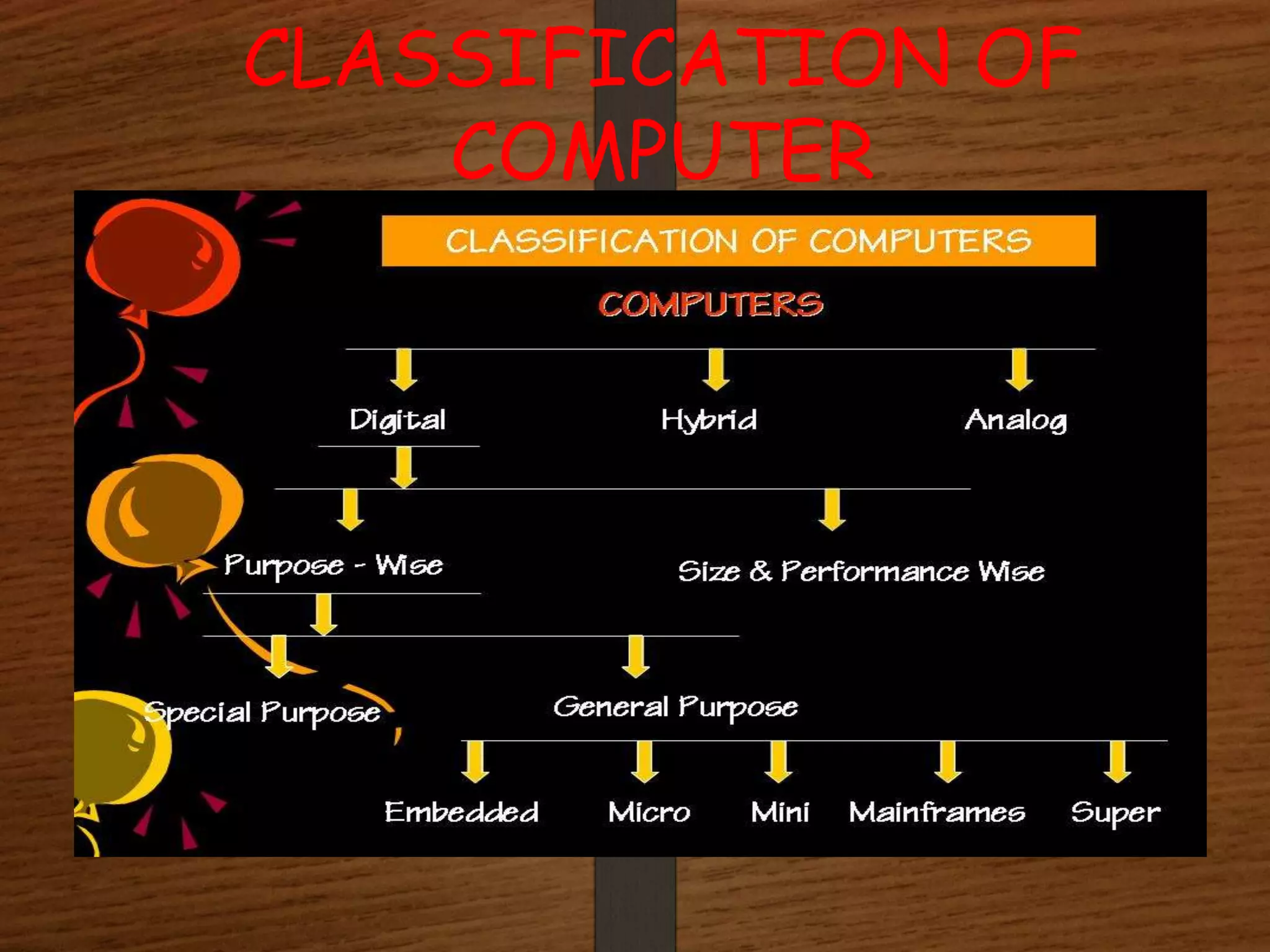
CLASSIFICATION OF
COMPUTER
Classification of Computers
Types of Computers
1. Analog Computers
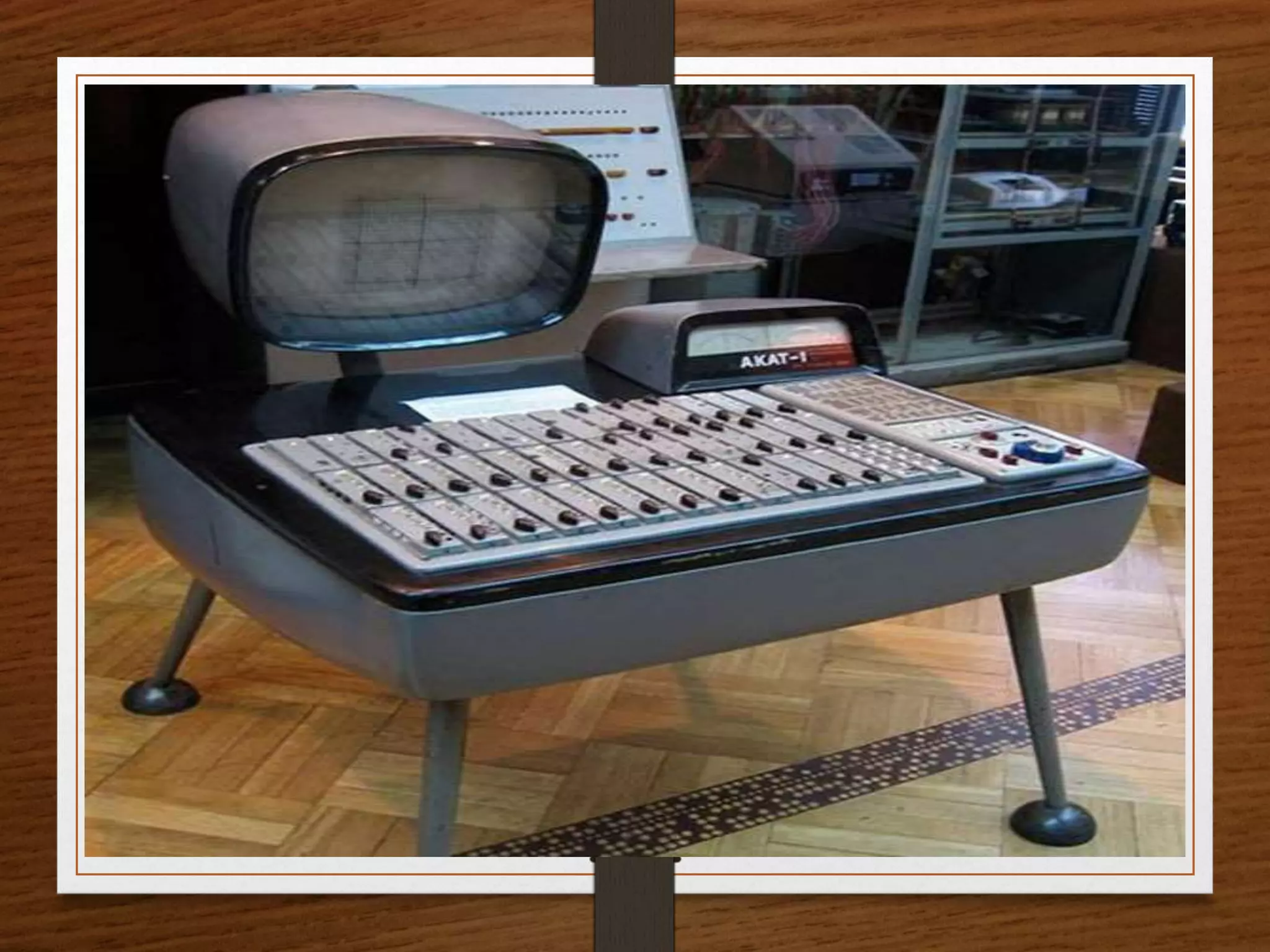
Analog computers are used to process continuous data. Analog
computers represent variables by physical quantities. Thus any
computer which solve problem by translating physical conditions such
as flow, temperature, pressure, angular position or voltage into
related mechanical or electrical related circuits as an analog for the
physical phenomenon being investigated in general it is a computer
which uses an analog quantity and produces analog values as output.
Thus an analog computer measures continuously. Analog computers
are very much speedy. They produce their results very fast. But
their results are approximately correct. All the analog computers are
special purpose computers.
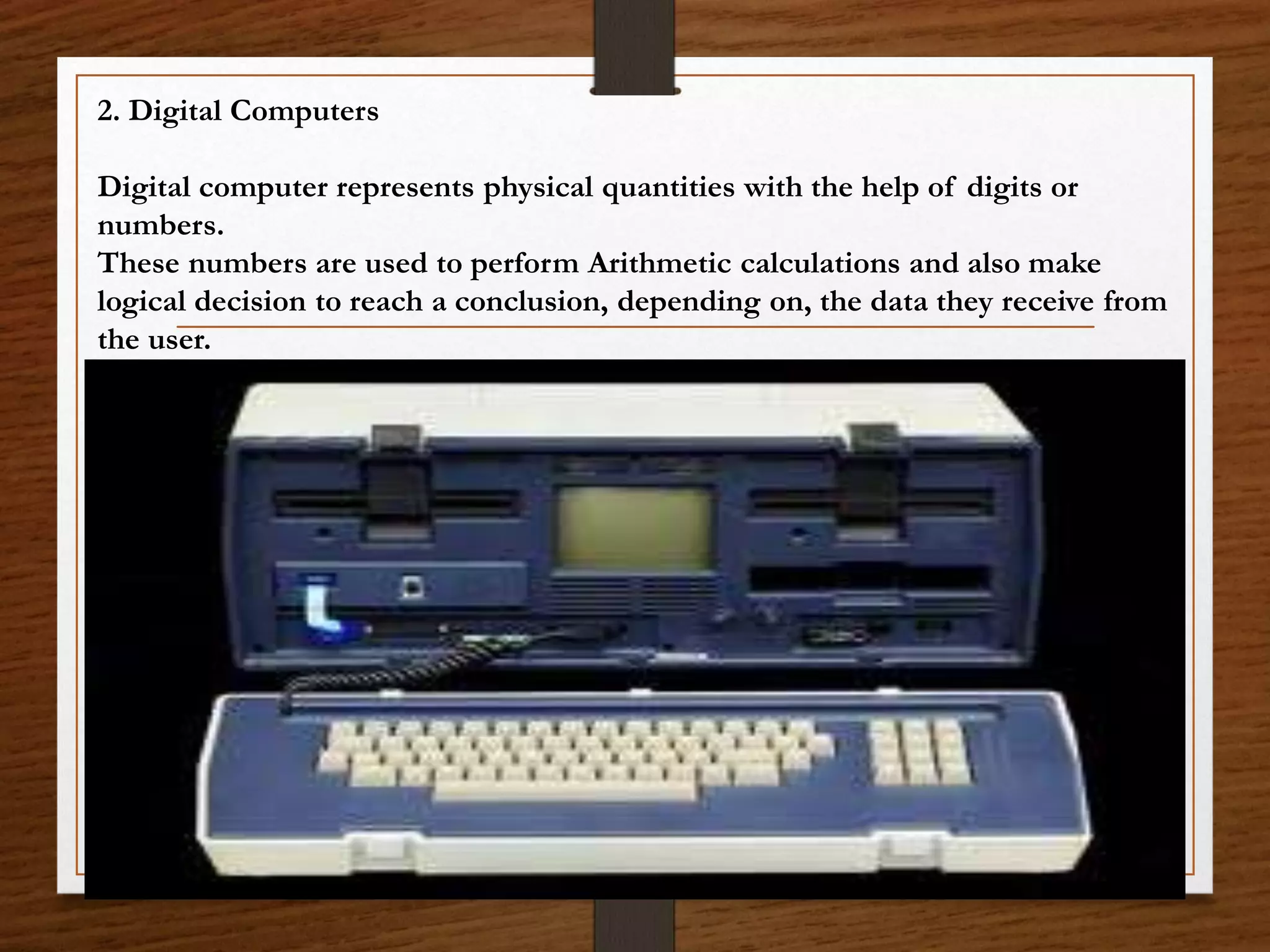
2. Digital Computers
Digital computer represents physical quantities with the help of digits or
numbers.
These numbers are used to perform Arithmetic calculations and also make
logical decision to reach a conclusion, depending on, the data they receive from
the user.
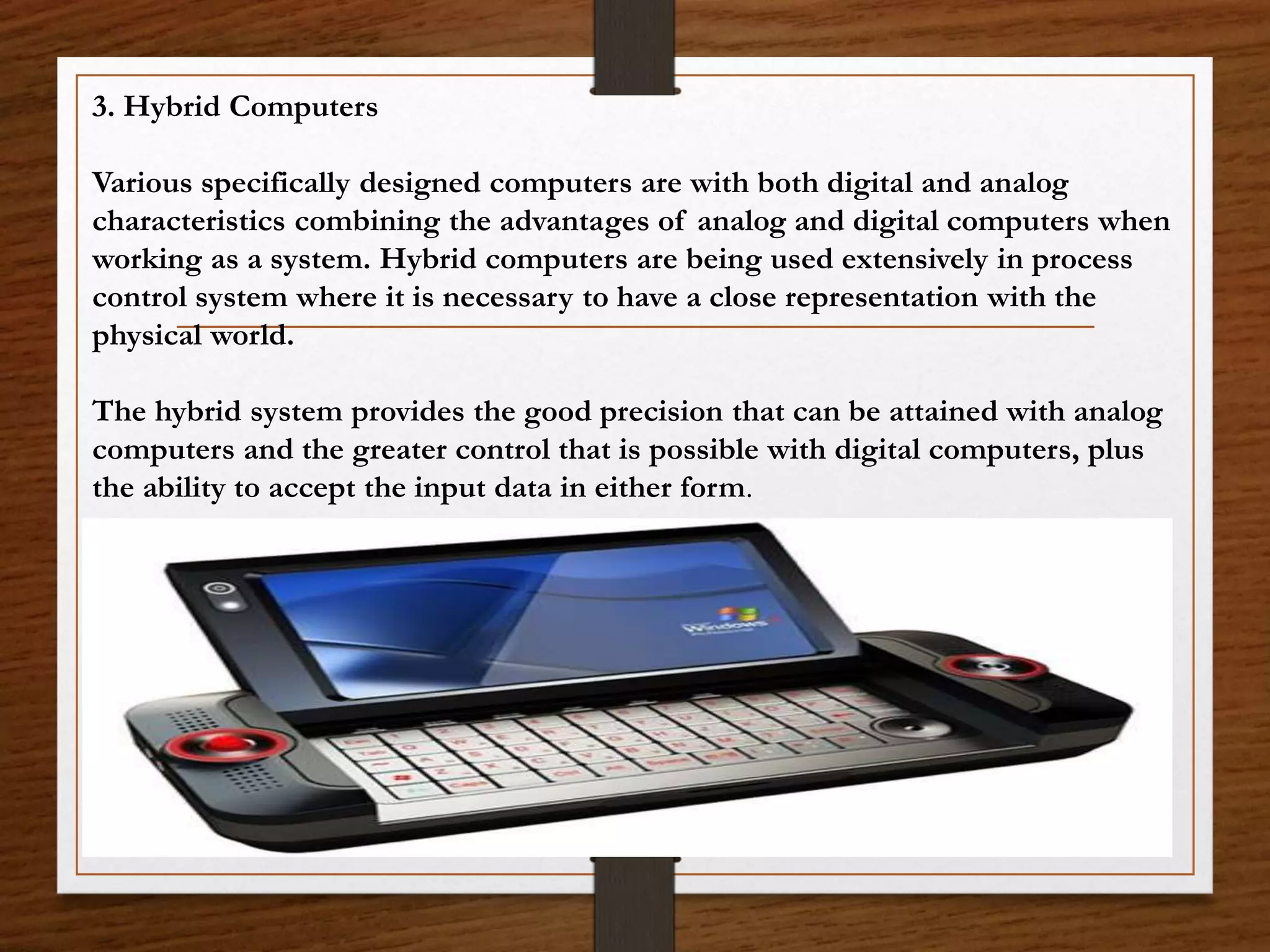
3. Hybrid Computers
Various specifically designed computers are with both digital and analog
characteristics combining the advantages of analog and digital computers when
working as a system. Hybrid computers are being used extensively in process
control system where it is necessary to have a close representation with the
physical world.
The hybrid system provides the good precision that can be attained with analog
computers and the greater control that is possible with digital computers, plus
the ability to accept the input data in either form.
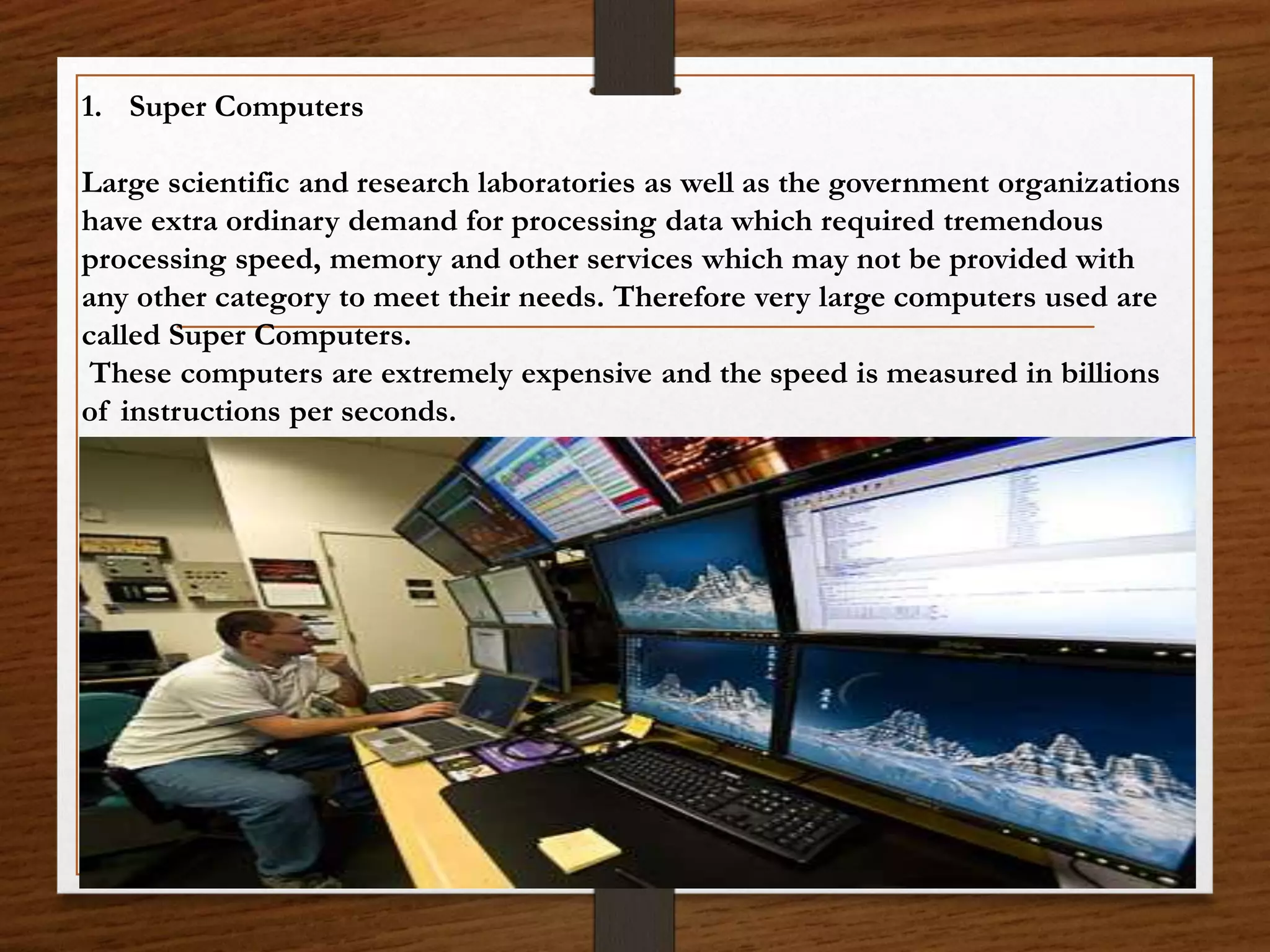
1. Super Computers
Large scientific and research laboratories as well as the government organizations
have extra ordinary demand for processing data which required tremendous
processing speed, memory and other services which may not be provided with
any other category to meet their needs. Therefore very large computers used are
called Super Computers.
These computers are extremely expensive and the speed is measured in billions
of instructions per seconds.
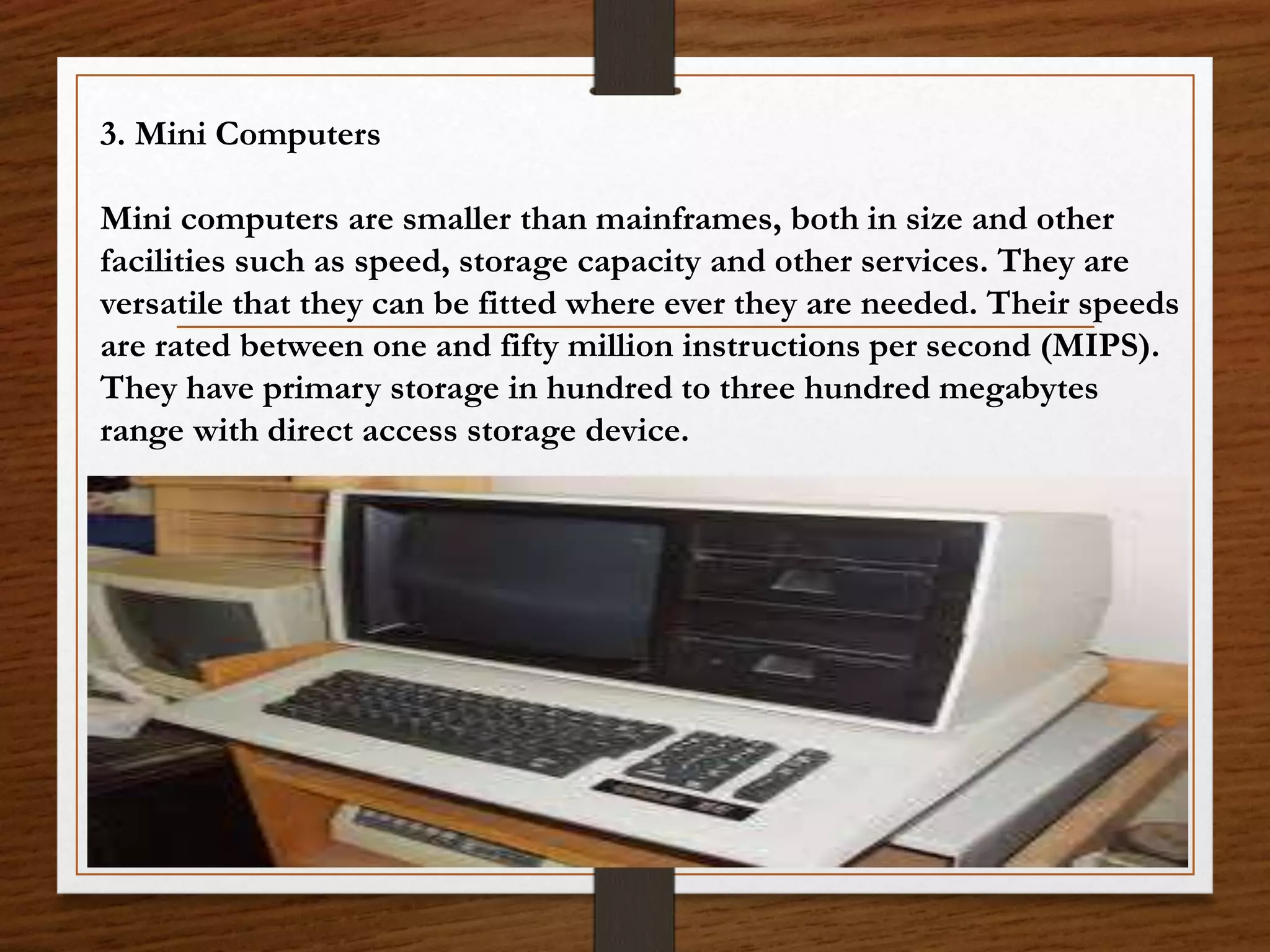
3. Mini Computers
Mini computers are smaller than mainframes, both in size and other
facilities such as speed, storage capacity and other services. They are
versatile that they can be fitted where ever they are needed. Their speeds
are rated between one and fifty million instructions per second (MIPS).
They have primary storage in hundred to three hundred megabytes
range with direct access storage device.
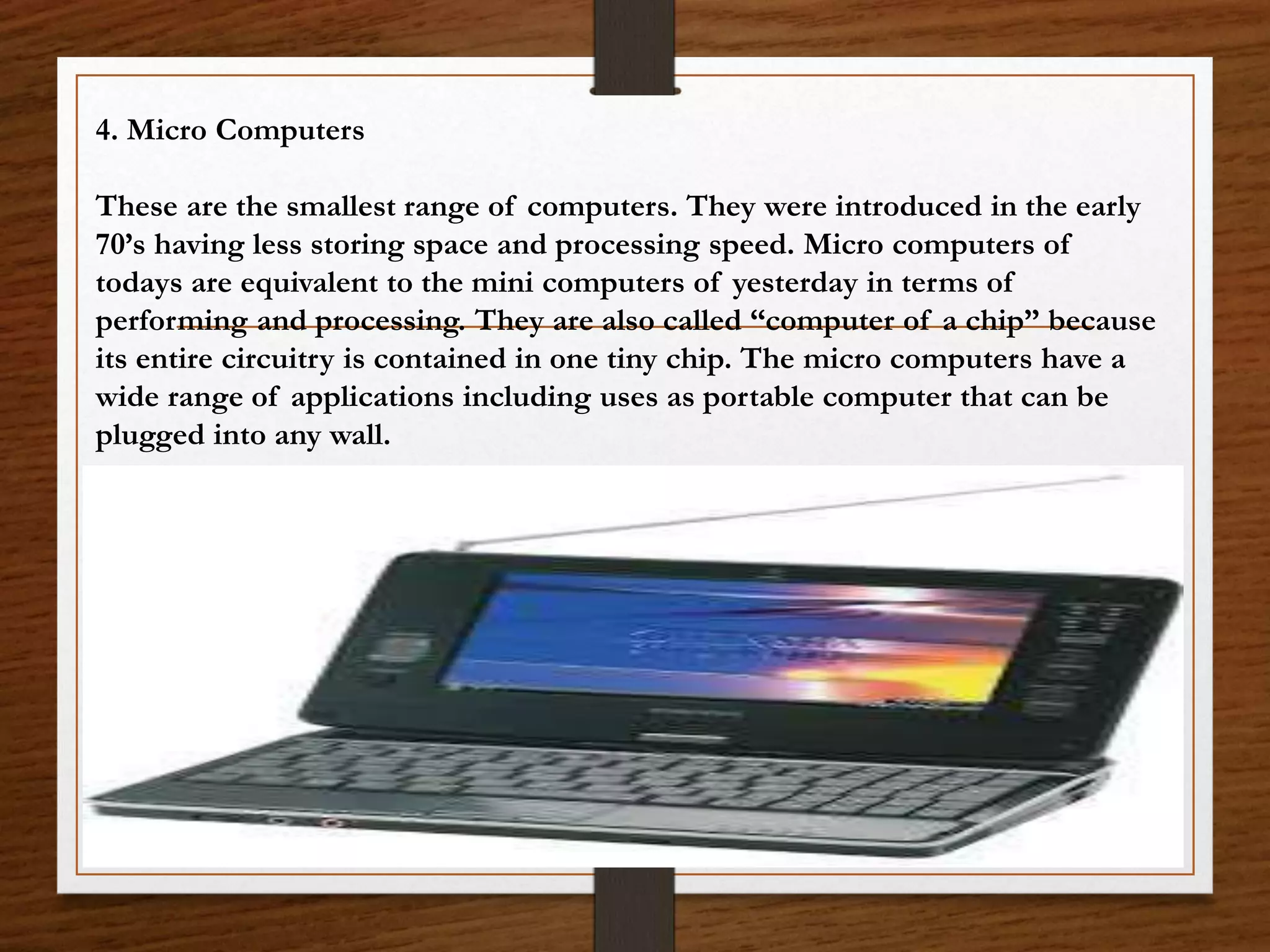
4. Micro Computers
These are the smallest range of computers. They were introduced in the early
70’s having less storing space and processing speed. Micro computers of
todays are equivalent to the mini computers of yesterday in terms of
performing and processing. They are also called “computer of a chip” because
its entire circuitry is contained in one tiny chip. The micro computers have a
wide range of applications including uses as portable computer that can be
plugged into any wall.
Brief Discrimination of Classification of Computer

Brief Discrimination of Classification of Computer

  • 2.
    • Lecture No:5 • Presented by:Amna Anwar Shaikh • Introduction to Information & Communication Technology • Topic Classification of Computers
  • 3.
  • 4.
    Classification of Computers Typesof Computers 1. Analog Computers Analog computers are used to process continuous data. Analog computers represent variables by physical quantities. Thus any computer which solve problem by translating physical conditions such as flow, temperature, pressure, angular position or voltage into related mechanical or electrical related circuits as an analog for the physical phenomenon being investigated in general it is a computer which uses an analog quantity and produces analog values as output. Thus an analog computer measures continuously. Analog computers are very much speedy. They produce their results very fast. But their results are approximately correct. All the analog computers are special purpose computers.
  • 6.
    2. Digital Computers Digitalcomputer represents physical quantities with the help of digits or numbers. These numbers are used to perform Arithmetic calculations and also make logical decision to reach a conclusion, depending on, the data they receive from the user.
  • 7.
    3. Hybrid Computers Variousspecifically designed computers are with both digital and analog characteristics combining the advantages of analog and digital computers when working as a system. Hybrid computers are being used extensively in process control system where it is necessary to have a close representation with the physical world. The hybrid system provides the good precision that can be attained with analog computers and the greater control that is possible with digital computers, plus the ability to accept the input data in either form.
  • 8.
    1. Super Computers Largescientific and research laboratories as well as the government organizations have extra ordinary demand for processing data which required tremendous processing speed, memory and other services which may not be provided with any other category to meet their needs. Therefore very large computers used are called Super Computers. These computers are extremely expensive and the speed is measured in billions of instructions per seconds.
  • 9.
    3. Mini Computers Minicomputers are smaller than mainframes, both in size and other facilities such as speed, storage capacity and other services. They are versatile that they can be fitted where ever they are needed. Their speeds are rated between one and fifty million instructions per second (MIPS). They have primary storage in hundred to three hundred megabytes range with direct access storage device.
  • 10.
    4. Micro Computers Theseare the smallest range of computers. They were introduced in the early 70’s having less storing space and processing speed. Micro computers of todays are equivalent to the mini computers of yesterday in terms of performing and processing. They are also called “computer of a chip” because its entire circuitry is contained in one tiny chip. The micro computers have a wide range of applications including uses as portable computer that can be plugged into any wall.