Vivek Parhi gave a presentation covering three types of computers: analog computers, digital computers, and hybrid computers. Analog computers process and store continuous analog data directly without conversion to numbers. They were commonly used for control systems but have been replaced by digital computers. Digital computers represent all variables numerically using binary numbers, allowing for versatility, reprogrammability, and accuracy. Hybrid computers combine analog and digital elements, utilizing analog systems for their parallel processing speed in solving differential equations while achieving the precision of digital computers.
ANALOG COMPUTERS
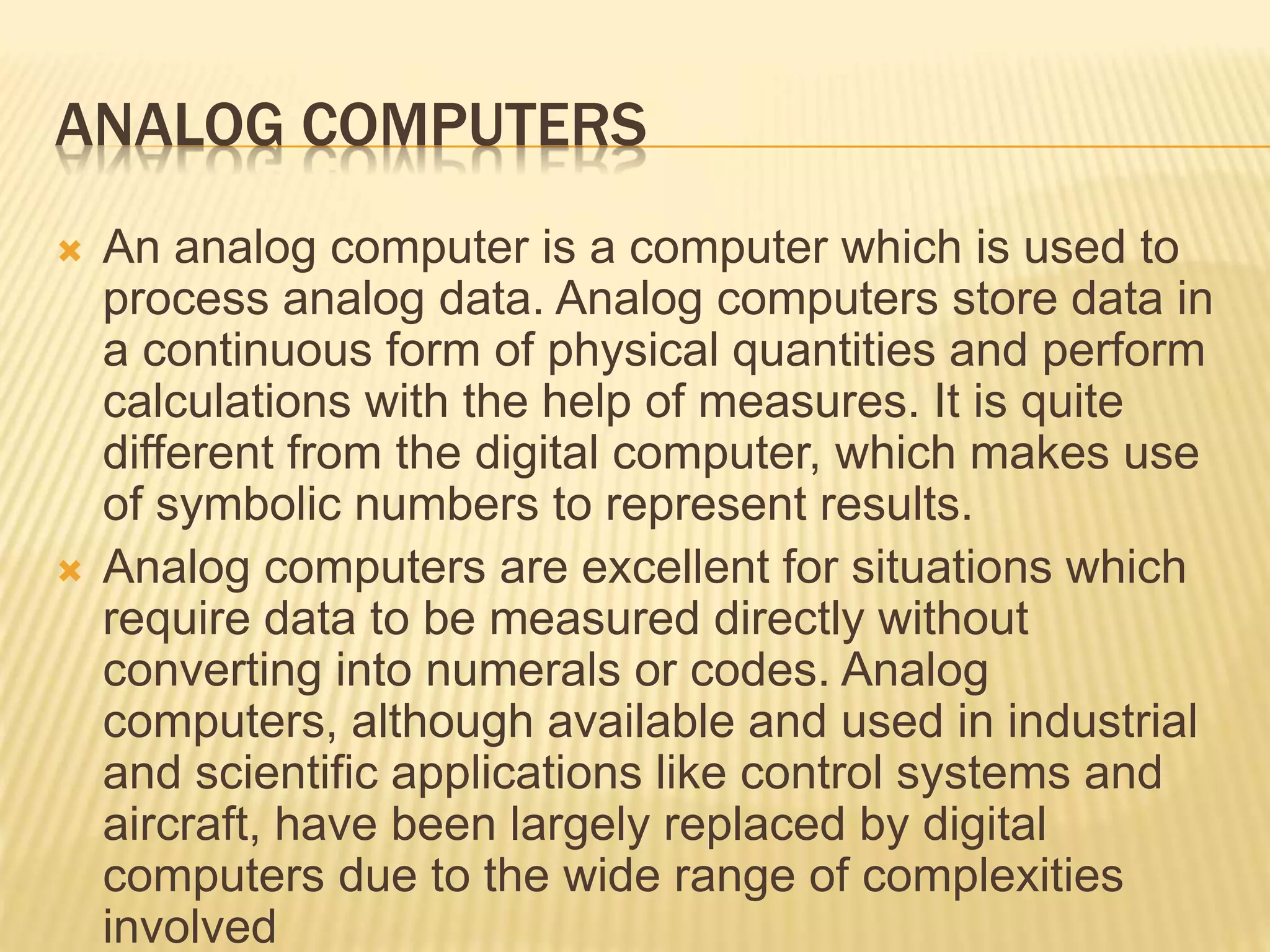
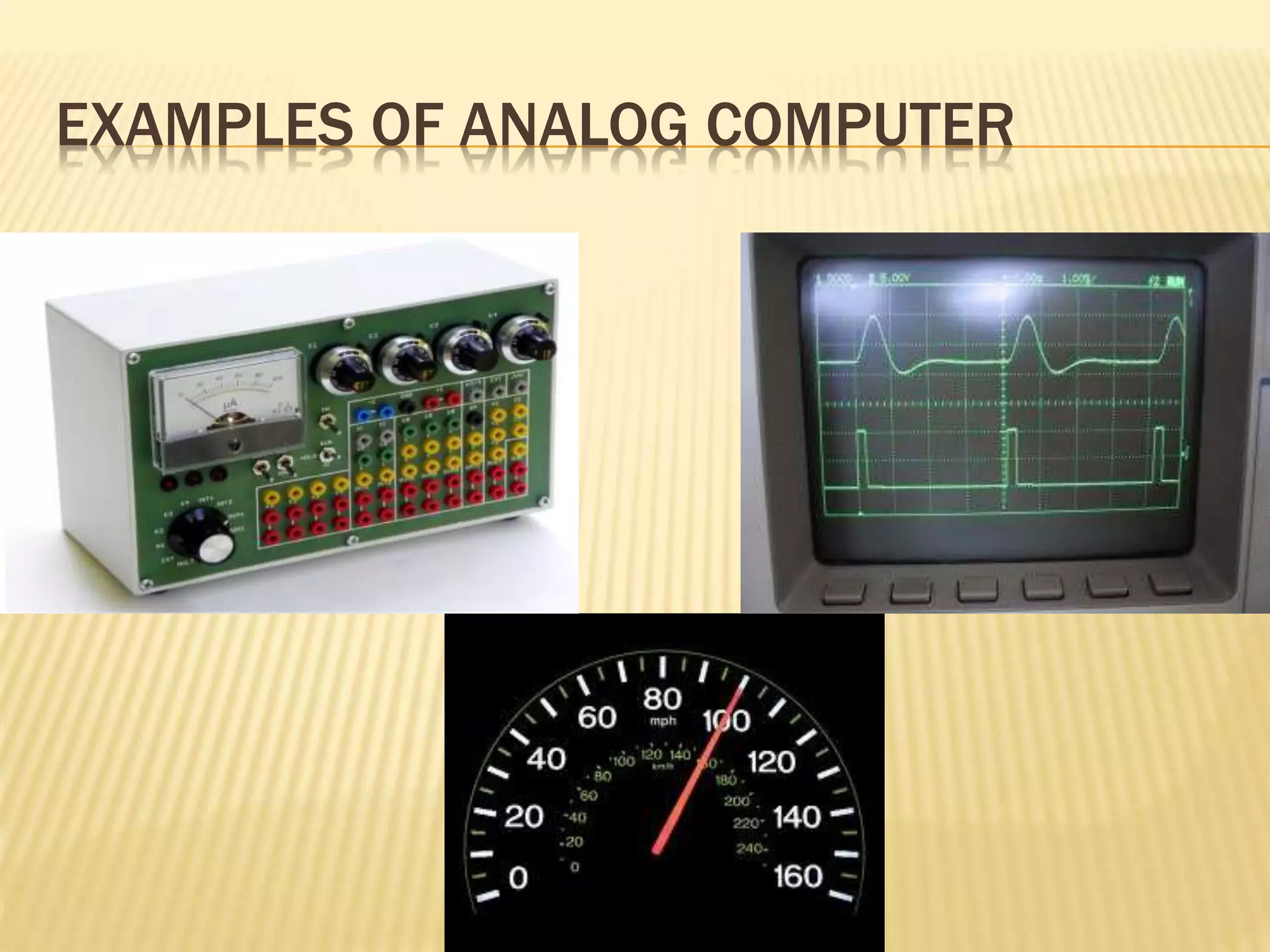
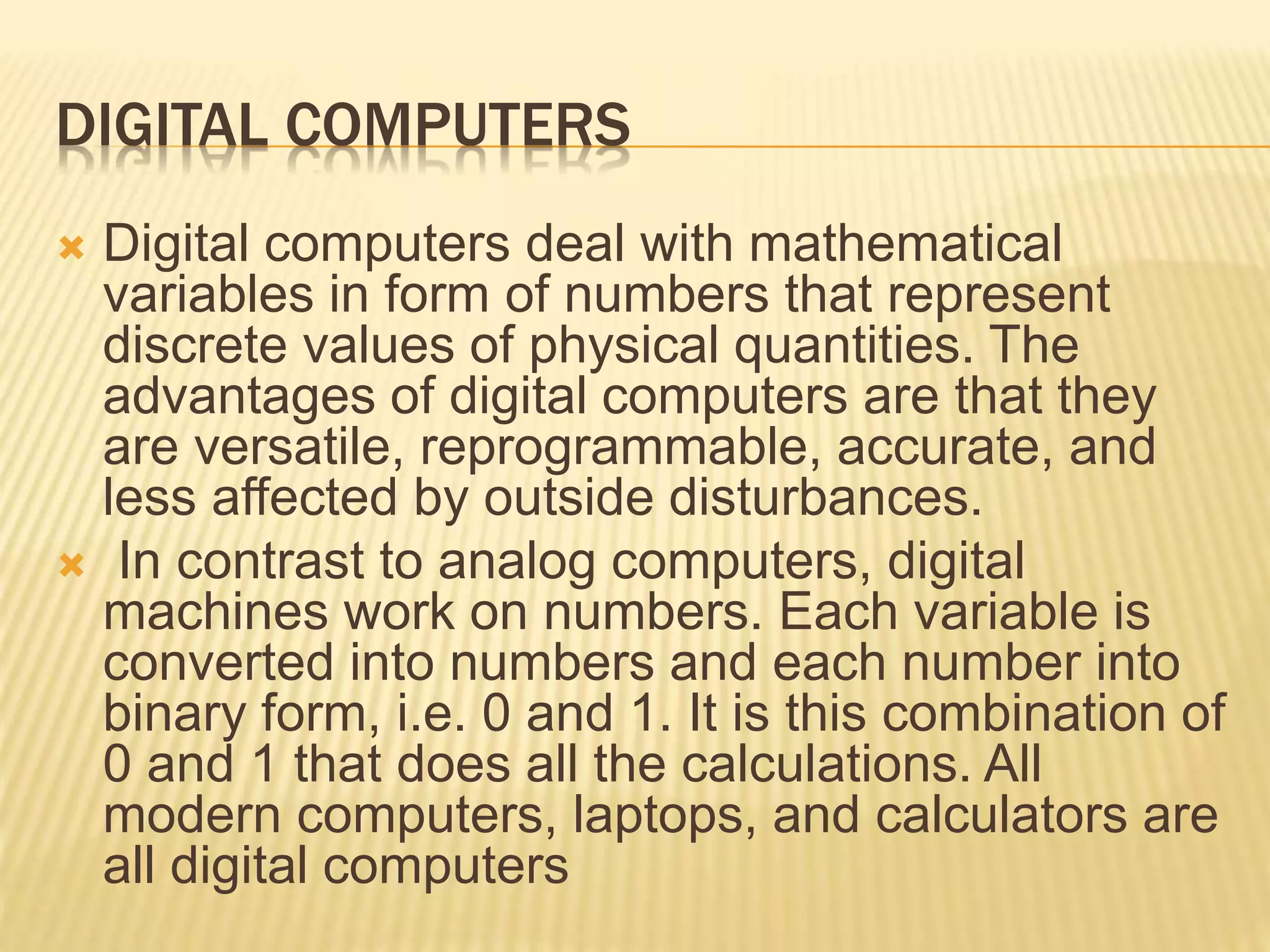
Ananalog computer is a computer which is used to
process analog data. Analog computers store data in
a continuous form of physical quantities and perform
calculations with the help of measures. It is quite
different from the digital computer, which makes use
of symbolic numbers to represent results.
Analog computers are excellent for situations which
require data to be measured directly without
converting into numerals or codes. Analog
computers, although available and used in industrial
and scientific applications like control systems and
aircraft, have been largely replaced by digital
computers due to the wide range of complexities
involved
DIGITAL COMPUTERS
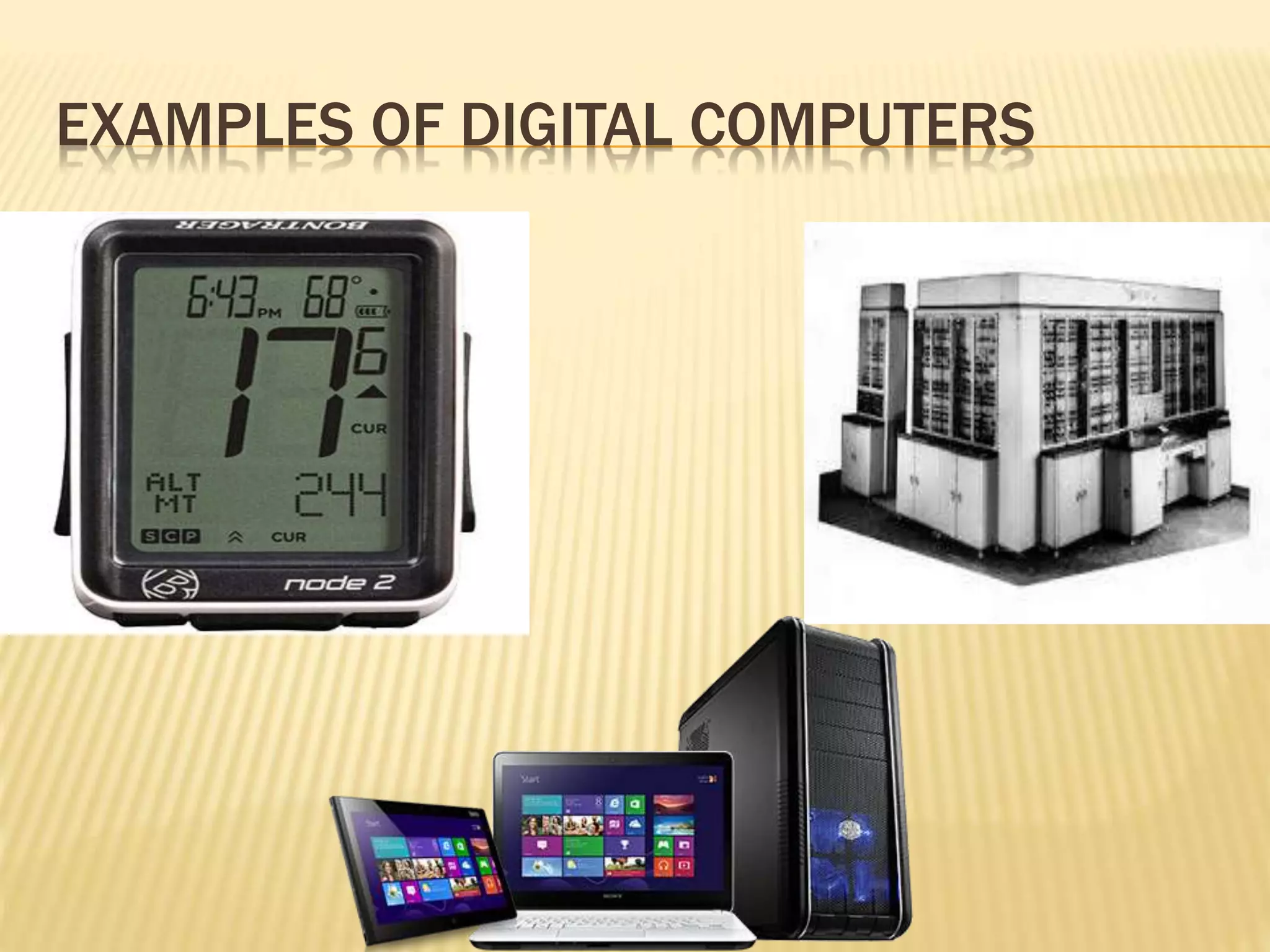
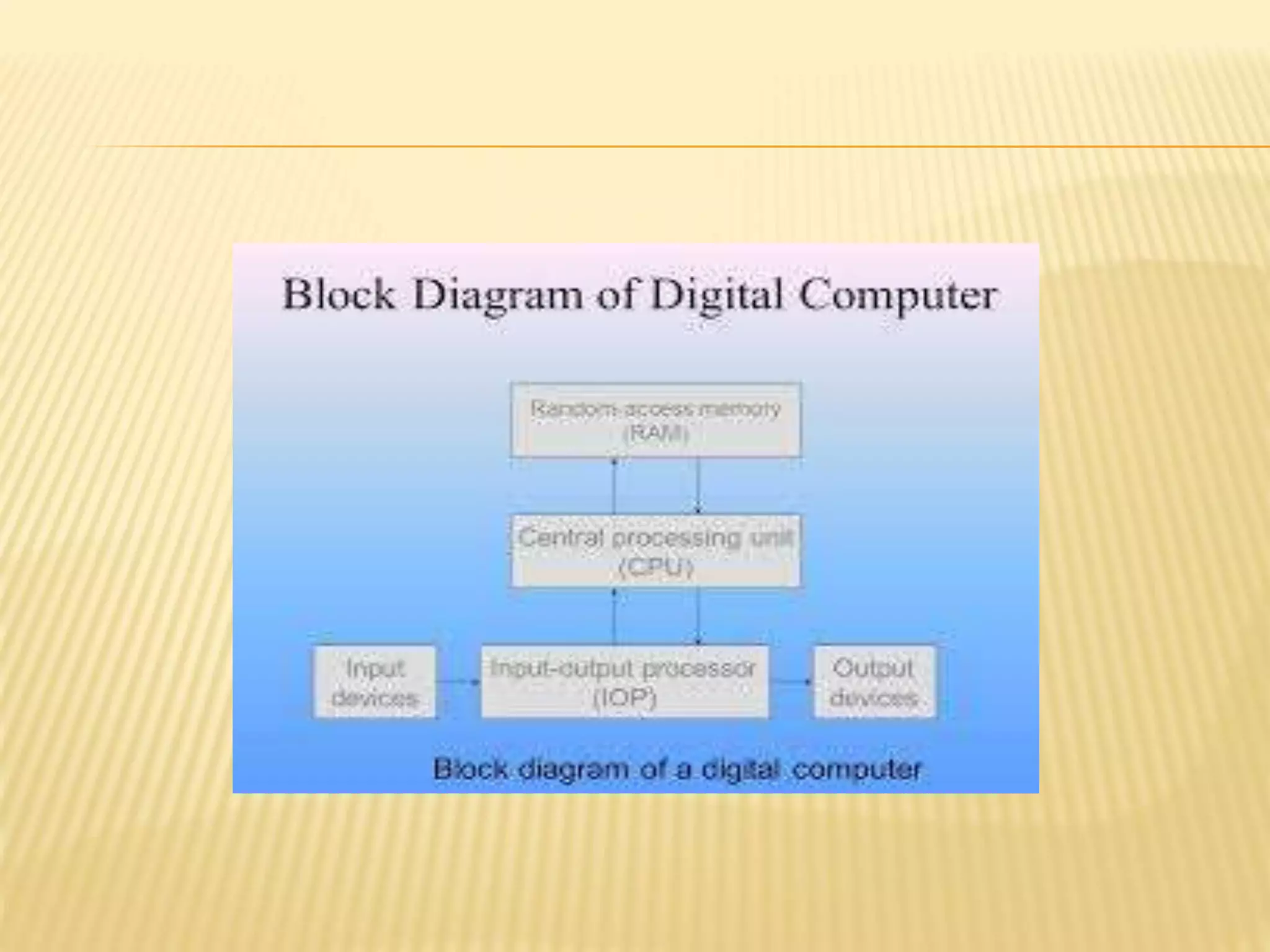
Digitalcomputers deal with mathematical
variables in form of numbers that represent
discrete values of physical quantities. The
advantages of digital computers are that they
are versatile, reprogrammable, accurate, and
less affected by outside disturbances.
In contrast to analog computers, digital
machines work on numbers. Each variable is
converted into numbers and each number into
binary form, i.e. 0 and 1. It is this combination of
0 and 1 that does all the calculations. All
modern computers, laptops, and calculators are
all digital computers
HYBRID COMPUTERS
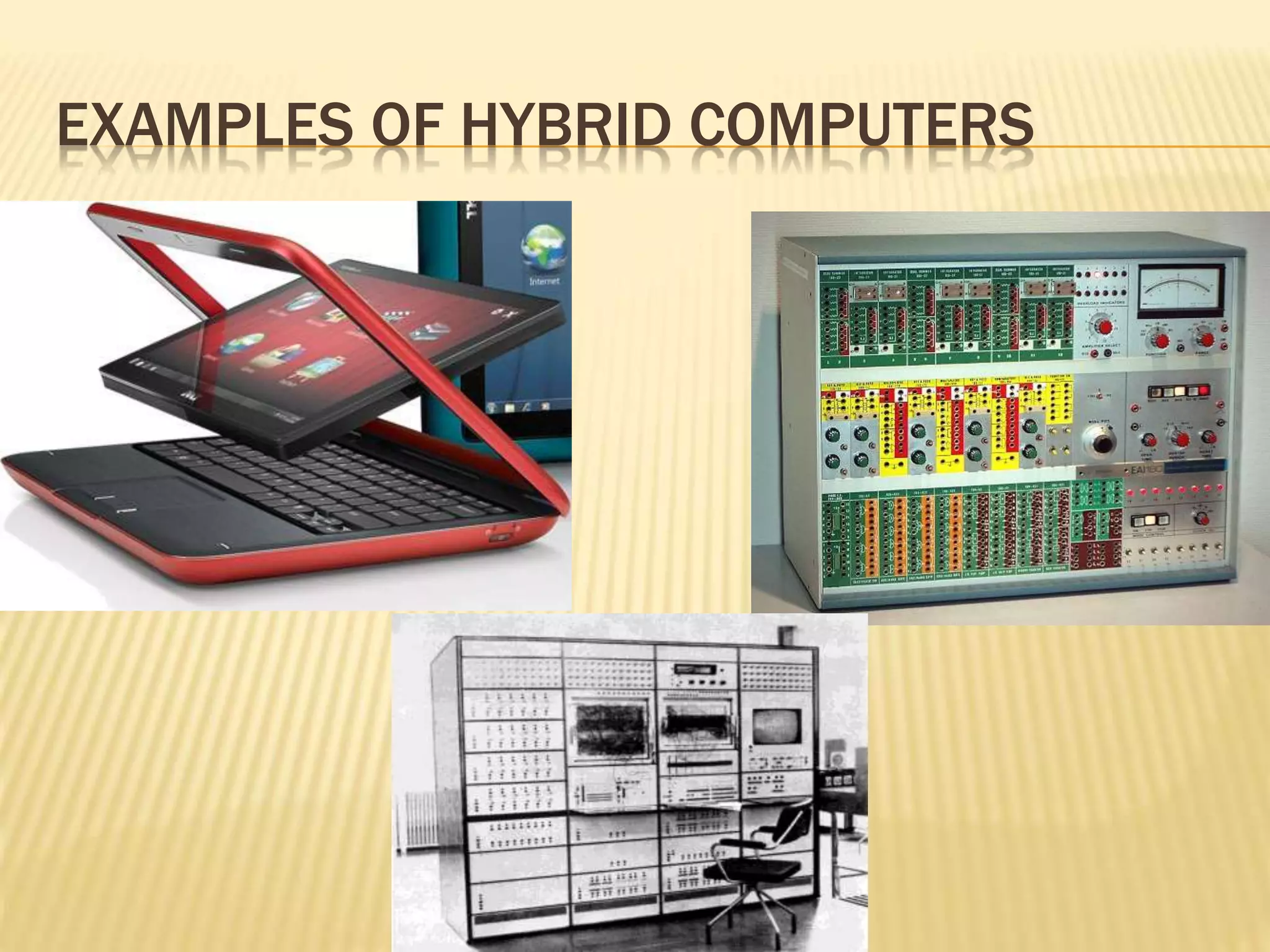
Hybridcomputers have tremendous computing speed
enabled by the all-parallel configuration provided by
the analog subsystem. This is particularly useful
when numerical solutions for differential equations
are required, such as in the case of flight simulation.
Analog systems have been used for these purposes
and are faster than digital computers; they provide
the solutions in a shorter time. However, the precision
and accuracy of these results are questionable. A
hybrid computer on the other hand, provides quick,
precise results and is particularly useful when big
equations need to be managed in real time and the
results are required almost immediately.