Equipment and materials used in
class 3 cavity preparation
1. Equipment
 Explorer: used to detect or explore the
cavity
 Radiographic machine (x-ray): too used to
examine the decayed portion of tooth
 Dental light: for examination
cont’
 Round tungsten carbide bur or diamond :used
with high speed handpiece
 Gingival margin trimmer : used for smoothing
the prepared cavity and too for trimming the
composite after filling
 Finishing bur
2. Materials
 Resin composite: is used to improve the esthetic
in anterior teeth
 Resin modified glass ionomer materials – used
for filling dental caries with margins extending
onto the root surface
Steps for cavity preparation
 Establish outline form – based on the location and extent of the carious
lesion
 Obtain resistance form – so that the restoration is resistant to
displacement.
 Obtain retention form - obtained by shaping the preparation or via bonding
procedures that attach the restorative materials to the tooth structure.
 Obtain convenience form- allows adequate observation, accessibility and
ease of operation during preparation and restoration of the tooth.
 Remove remaining carious dentin
 Finish enamel walls and cavo-surface margins- it involves making the walls
relatively smooth
 Clean the preparation- it includes washing and scrubbing away any debris
in the preparation and drying the preparation.
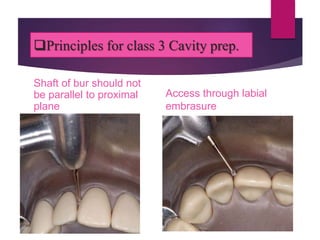
Principles for class 3 Cavity prep.
Shaft of bur should not
be parallel to proximal
plane
Access through labial
embrasure
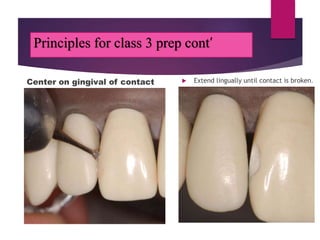
Principles for class 3 prep cont’
Center on gingival of contact
area
 Extend lingually until contact is broken.
WE THANK YOU ALL TO LISTEN !!
Reference
 Operative dentistry
 http://student.ahc.umn.edu/dental/2012/6436/Cl3%20co
mp%20prep.09.pdf
 http://collections.nlm.nih.gov/ext/dw/51030490R/PDF/51
030490R.pdf

Class III cavity preparation

  • 1.
    Equipment and materialsused in class 3 cavity preparation
  • 2.
    1. Equipment  Explorer:used to detect or explore the cavity  Radiographic machine (x-ray): too used to examine the decayed portion of tooth  Dental light: for examination
  • 3.
    cont’  Round tungstencarbide bur or diamond :used with high speed handpiece  Gingival margin trimmer : used for smoothing the prepared cavity and too for trimming the composite after filling  Finishing bur
  • 4.
    2. Materials  Resincomposite: is used to improve the esthetic in anterior teeth  Resin modified glass ionomer materials – used for filling dental caries with margins extending onto the root surface
  • 5.
    Steps for cavitypreparation  Establish outline form – based on the location and extent of the carious lesion  Obtain resistance form – so that the restoration is resistant to displacement.  Obtain retention form - obtained by shaping the preparation or via bonding procedures that attach the restorative materials to the tooth structure.  Obtain convenience form- allows adequate observation, accessibility and ease of operation during preparation and restoration of the tooth.  Remove remaining carious dentin  Finish enamel walls and cavo-surface margins- it involves making the walls relatively smooth  Clean the preparation- it includes washing and scrubbing away any debris in the preparation and drying the preparation.
  • 6.
    Principles for class3 Cavity prep. Shaft of bur should not be parallel to proximal plane Access through labial embrasure
  • 7.
    Principles for class3 prep cont’ Center on gingival of contact area  Extend lingually until contact is broken.
  • 8.
    WE THANK YOUALL TO LISTEN !!
  • 9.
    Reference  Operative dentistry http://student.ahc.umn.edu/dental/2012/6436/Cl3%20co mp%20prep.09.pdf  http://collections.nlm.nih.gov/ext/dw/51030490R/PDF/51 030490R.pdf