Measuring progress toward
accountable care: lessons from 59
pioneering hospitals
Keith J. Figlioli
SVP, Healthcare Informatics
Premier, Inc.
October 8, 2013
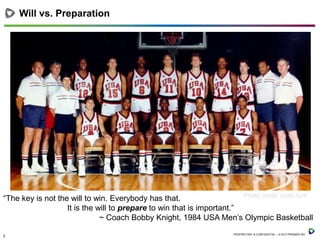
Will vs. Preparation

Photo credit: usab.com
“The key is not the will to win. Everybody has that.
It is the will to prepare to win that is important.”
~ Coach Bobby Knight, 1984 USA Men’s Olympic Basketball
2

PROPRIETARY & CONFIDENTIAL – © 2013 PREMIER INC.
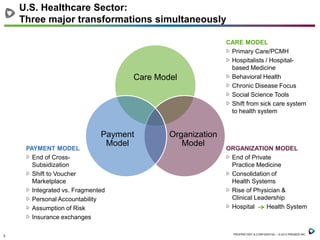
U.S. Healthcare Sector:
Three major transformations simultaneously

Care Model

Payment
Model

PAYMENT MODEL
End of CrossSubsidization
Shift to Voucher
Marketplace
Integrated vs. Fragmented
Personal Accountability
Assumption of Risk
Insurance exchanges
3

Organization
Model

CARE MODEL
Primary Care/PCMH
Hospitalists / Hospitalbased Medicine
Behavioral Health
Chronic Disease Focus
Social Science Tools
Shift from sick care system
to health system

ORGANIZATION MODEL
End of Private
Practice Medicine
Consolidation of
Health Systems
Rise of Physician &
Clinical Leadership
Hospital
Health System

PROPRIETARY & CONFIDENTIAL – © 2013 PREMIER INC.
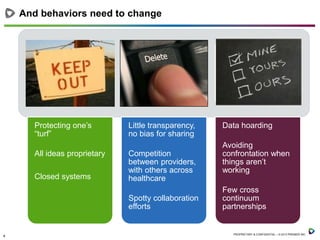
And behaviors need to change

Protecting one’s
“turf”

All ideas proprietary
Closed systems

Little transparency,
no bias for sharing

Competition
between providers,
with others across
healthcare
Spotty collaboration
efforts

4

Data hoarding
Avoiding
confrontation when
things aren’t
working
Few cross
continuum
partnerships

PROPRIETARY & CONFIDENTIAL – © 2013 PREMIER INC.
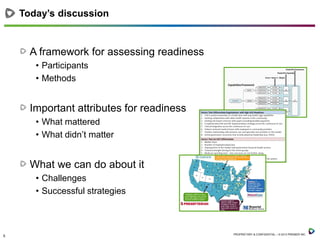
Today’s discussion

A framework for assessing readiness
• Participants
• Methods

Important attributes for readiness
• What mattered
• What didn’t matter

What we can do about it
• Challenges
• Successful strategies

5

PROPRIETARY & CONFIDENTIAL – © 2013 PREMIER INC.
Framework
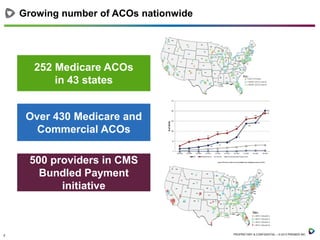
Growing number of ACOs nationwide

252 Medicare ACOs
in 43 states
Over 430 Medicare and
Commercial ACOs
500 providers in CMS
Bundled Payment
initiative

7

PROPRIETARY & CONFIDENTIAL – © 2013 PREMIER INC.
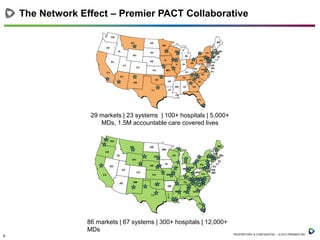
The Network Effect – Premier PACT Collaborative

29 markets | 23 systems | 100+ hospitals | 5,000+
MDs, 1.5M accountable care covered lives

86 markets | 67 systems | 300+ hospitals | 12,000+
MDs
8

PROPRIETARY & CONFIDENTIAL – © 2013 PREMIER INC.
Assessing readiness

9

PROPRIETARY & CONFIDENTIAL – © 2013 PREMIER INC.
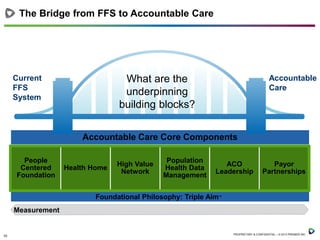
The Bridge from FFS to Accountable Care

What are the
underpinning
building blocks?

Current
FFS
System

Accountable
Care

Accountable Care Core Components
People
Centered
Foundation

Health Home

High Value
Network

Population
Health Data
Management

ACO
Leadership

Payor
Partnerships

Foundational Philosophy: Triple Aim™
Measurement

10

PROPRIETARY & CONFIDENTIAL – © 2013 PREMIER INC.
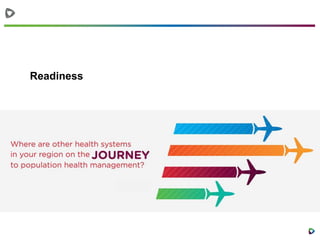
Readiness
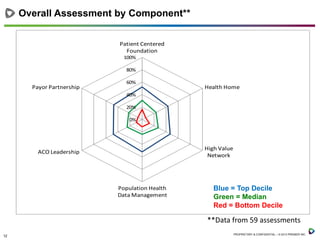
Overall Assessment by Component**
Patient Centered
Foundation
100%
80%

Payor Partnership

60%

Health Home

40%
20%

0%

High Value
Network

ACO Leadership

Population Health
Data Management

Blue = Top Decile
Green = Median
Red = Bottom Decile

**Data from 59 assessments
12

PROPRIETARY & CONFIDENTIAL – © 2013 PREMIER INC.
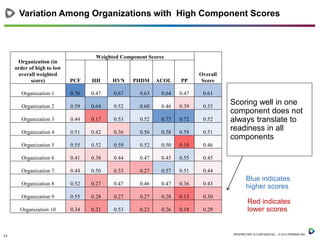
Variation Among Organizations with High Component Scores

Weighted Component Scores

Organization (in
order of high to low
overall weighted
score)

HH

HVN

PHDM

ACOL

PP

Organization 1

0.76

0.47

0.67

0.63

0.64

0.47

0.61

Organization 2

0.59

0.64

0.52

0.60

0.46

0.39

0.53

Organization 3

0.44

0.17

0.53

0.52

0.73

0.72

0.52

Organization 4

0.51

0.42

0.36

0.56

0.58

0.58

0.51

Organization 5

0.55

0.52

0.59

0.52

0.50

0.10

0.46

Organization 6

0.41

0.38

0.44

0.47

0.45

0.55

0.45

Organization 7

0.44

0.50

0.33

0.27

0.57

0.51

0.44

Organization 8

0.52

0.27

0.47

0.46

0.47

0.36

0.43

Organization 9

0.55

0.28

0.27

0.27

0.28

0.13

0.30

Organization 10

13

PCF

Overall
Score

0.34

0.21

0.53

0.23

0.26

0.18

0.29

Scoring well in one
component does not
always translate to
readiness in all
components

Blue indicates
higher scores
Red indicates
lower scores

PROPRIETARY & CONFIDENTIAL – © 2013 PREMIER INC.
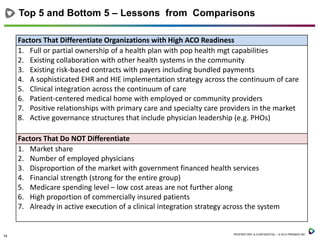
Top 5 and Bottom 5 – Lessons from Comparisons
Factors That Differentiate Organizations with High ACO Readiness
1. Full or partial ownership of a health plan with pop health mgt capabilities
2. Existing collaboration with other health systems in the community
3. Existing risk-based contracts with payers including bundled payments
4. A sophisticated EHR and HIE implementation strategy across the continuum of care
5. Clinical integration across the continuum of care
6. Patient-centered medical home with employed or community providers
7. Positive relationships with primary care and specialty care providers in the market
8. Active governance structures that include physician leadership (e.g. PHOs)
Factors That Do NOT Differentiate
1. Market share
2. Number of employed physicians
3. Disproportion of the market with government financed health services
4. Financial strength (strong for the entire group)
5. Medicare spending level – low cost areas are not further along
6. High proportion of commercially insured patients
7. Already in active execution of a clinical integration strategy across the system

14

PROPRIETARY & CONFIDENTIAL – © 2013 PREMIER INC.
Implications for future ACO development
White paper health systems
Fairview Health Services is a nonprofit healthcare
system based in Minneapolis with more than 50% of
its revenue under ACO payments.

AtlantiCare, in
Southeastern New
Jersey, is the region’s
largest healthcare
organization and largest
non-casino employer .
Presbyterian Healthcare Services
serves Albuquerque and rural New
Mexico with physician services at
more than 30 different locations.

16

Memorial Healthcare
System is a public provider
of healthcare services to
South Florida. It is the 5th
largest public system in the
nation.
PROPRIETARY & CONFIDENTIAL – © 2013 PREMIER INC.
Essential lessons learned

Managing populations
requires fundamental
health delivery change

Focus of primary
transformation:
Aligning clinical
w/payment

Physician leadership,
engagement pivotal in
ACO shift

Critical success factors
Care coordination
Executive leadership & governance support
Comprehensive & coordinated primary care
services, integrated IT

Pace of execution limited
by payer/physician
readiness for value-based
participation
17

Market pressures create
opportunities for
mutually-beneficial
partnerships
PROPRIETARY & CONFIDENTIAL – © 2013 PREMIER INC.
Challenges and policy implications

Challenges with physicians, local payers, infrastructure
investment, state/federal data regs slows execution
Payers should also support ACO participation in medical
home & bundled payment programs
Work needed with patient engagement, specialist and
post-acute care arrangements, and data exchange
Ideal pacing unclear:
• Slow implementation leaks savings to non-participating
payers
• Rapid implementation increases risk

18

PROPRIETARY & CONFIDENTIAL – © 2013 PREMIER INC.
Successful implementation strategies

19

PROPRIETARY & CONFIDENTIAL – © 2013 PREMIER INC.
Crawl, Walk, Run…But Start

Target programs for top 5% utilizers - Atlanticare
Begin to change organizational construct - Presbyterian
Embedded care managers - Fairview

Start with small populations – Memorial
ED navigators – Presbyterian
Culture, culture, culture – All systems

20

PROPRIETARY & CONFIDENTIAL – © 2013 PREMIER INC.
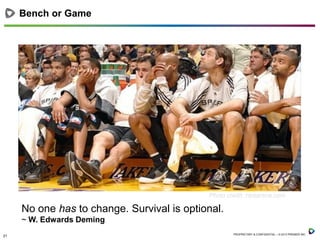
Bench or Game

Photo credit: nbaarena.com

No one has to change. Survival is optional.
~ W. Edwards Deming
21

PROPRIETARY & CONFIDENTIAL – © 2013 PREMIER INC.
Thank you…

CISummit 2013: Keith Figlioli, Measuring Progress Toward Accountable Care: Lessons from 50 Pioneering Hospitals

  • 1.
    Measuring progress toward accountablecare: lessons from 59 pioneering hospitals Keith J. Figlioli SVP, Healthcare Informatics Premier, Inc. October 8, 2013
  • 2.
    Will vs. Preparation Photocredit: usab.com “The key is not the will to win. Everybody has that. It is the will to prepare to win that is important.” ~ Coach Bobby Knight, 1984 USA Men’s Olympic Basketball 2 PROPRIETARY & CONFIDENTIAL – © 2013 PREMIER INC.
  • 3.
    U.S. Healthcare Sector: Threemajor transformations simultaneously Care Model Payment Model PAYMENT MODEL End of CrossSubsidization Shift to Voucher Marketplace Integrated vs. Fragmented Personal Accountability Assumption of Risk Insurance exchanges 3 Organization Model CARE MODEL Primary Care/PCMH Hospitalists / Hospitalbased Medicine Behavioral Health Chronic Disease Focus Social Science Tools Shift from sick care system to health system ORGANIZATION MODEL End of Private Practice Medicine Consolidation of Health Systems Rise of Physician & Clinical Leadership Hospital Health System PROPRIETARY & CONFIDENTIAL – © 2013 PREMIER INC.
  • 4.
    And behaviors needto change Protecting one’s “turf” All ideas proprietary Closed systems Little transparency, no bias for sharing Competition between providers, with others across healthcare Spotty collaboration efforts 4 Data hoarding Avoiding confrontation when things aren’t working Few cross continuum partnerships PROPRIETARY & CONFIDENTIAL – © 2013 PREMIER INC.
  • 5.
    Today’s discussion A frameworkfor assessing readiness • Participants • Methods Important attributes for readiness • What mattered • What didn’t matter What we can do about it • Challenges • Successful strategies 5 PROPRIETARY & CONFIDENTIAL – © 2013 PREMIER INC.
  • 6.
  • 7.
    Growing number ofACOs nationwide 252 Medicare ACOs in 43 states Over 430 Medicare and Commercial ACOs 500 providers in CMS Bundled Payment initiative 7 PROPRIETARY & CONFIDENTIAL – © 2013 PREMIER INC.
  • 8.
    The Network Effect– Premier PACT Collaborative 29 markets | 23 systems | 100+ hospitals | 5,000+ MDs, 1.5M accountable care covered lives 86 markets | 67 systems | 300+ hospitals | 12,000+ MDs 8 PROPRIETARY & CONFIDENTIAL – © 2013 PREMIER INC.
  • 9.
    Assessing readiness 9 PROPRIETARY &CONFIDENTIAL – © 2013 PREMIER INC.
  • 10.
    The Bridge fromFFS to Accountable Care What are the underpinning building blocks? Current FFS System Accountable Care Accountable Care Core Components People Centered Foundation Health Home High Value Network Population Health Data Management ACO Leadership Payor Partnerships Foundational Philosophy: Triple Aim™ Measurement 10 PROPRIETARY & CONFIDENTIAL – © 2013 PREMIER INC.
  • 11.
  • 12.
    Overall Assessment byComponent** Patient Centered Foundation 100% 80% Payor Partnership 60% Health Home 40% 20% 0% High Value Network ACO Leadership Population Health Data Management Blue = Top Decile Green = Median Red = Bottom Decile **Data from 59 assessments 12 PROPRIETARY & CONFIDENTIAL – © 2013 PREMIER INC.
  • 13.
    Variation Among Organizationswith High Component Scores Weighted Component Scores Organization (in order of high to low overall weighted score) HH HVN PHDM ACOL PP Organization 1 0.76 0.47 0.67 0.63 0.64 0.47 0.61 Organization 2 0.59 0.64 0.52 0.60 0.46 0.39 0.53 Organization 3 0.44 0.17 0.53 0.52 0.73 0.72 0.52 Organization 4 0.51 0.42 0.36 0.56 0.58 0.58 0.51 Organization 5 0.55 0.52 0.59 0.52 0.50 0.10 0.46 Organization 6 0.41 0.38 0.44 0.47 0.45 0.55 0.45 Organization 7 0.44 0.50 0.33 0.27 0.57 0.51 0.44 Organization 8 0.52 0.27 0.47 0.46 0.47 0.36 0.43 Organization 9 0.55 0.28 0.27 0.27 0.28 0.13 0.30 Organization 10 13 PCF Overall Score 0.34 0.21 0.53 0.23 0.26 0.18 0.29 Scoring well in one component does not always translate to readiness in all components Blue indicates higher scores Red indicates lower scores PROPRIETARY & CONFIDENTIAL – © 2013 PREMIER INC.
  • 14.
    Top 5 andBottom 5 – Lessons from Comparisons Factors That Differentiate Organizations with High ACO Readiness 1. Full or partial ownership of a health plan with pop health mgt capabilities 2. Existing collaboration with other health systems in the community 3. Existing risk-based contracts with payers including bundled payments 4. A sophisticated EHR and HIE implementation strategy across the continuum of care 5. Clinical integration across the continuum of care 6. Patient-centered medical home with employed or community providers 7. Positive relationships with primary care and specialty care providers in the market 8. Active governance structures that include physician leadership (e.g. PHOs) Factors That Do NOT Differentiate 1. Market share 2. Number of employed physicians 3. Disproportion of the market with government financed health services 4. Financial strength (strong for the entire group) 5. Medicare spending level – low cost areas are not further along 6. High proportion of commercially insured patients 7. Already in active execution of a clinical integration strategy across the system 14 PROPRIETARY & CONFIDENTIAL – © 2013 PREMIER INC.
  • 15.
    Implications for futureACO development
  • 16.
    White paper healthsystems Fairview Health Services is a nonprofit healthcare system based in Minneapolis with more than 50% of its revenue under ACO payments. AtlantiCare, in Southeastern New Jersey, is the region’s largest healthcare organization and largest non-casino employer . Presbyterian Healthcare Services serves Albuquerque and rural New Mexico with physician services at more than 30 different locations. 16 Memorial Healthcare System is a public provider of healthcare services to South Florida. It is the 5th largest public system in the nation. PROPRIETARY & CONFIDENTIAL – © 2013 PREMIER INC.
  • 17.
    Essential lessons learned Managingpopulations requires fundamental health delivery change Focus of primary transformation: Aligning clinical w/payment Physician leadership, engagement pivotal in ACO shift Critical success factors Care coordination Executive leadership & governance support Comprehensive & coordinated primary care services, integrated IT Pace of execution limited by payer/physician readiness for value-based participation 17 Market pressures create opportunities for mutually-beneficial partnerships PROPRIETARY & CONFIDENTIAL – © 2013 PREMIER INC.
  • 18.
    Challenges and policyimplications Challenges with physicians, local payers, infrastructure investment, state/federal data regs slows execution Payers should also support ACO participation in medical home & bundled payment programs Work needed with patient engagement, specialist and post-acute care arrangements, and data exchange Ideal pacing unclear: • Slow implementation leaks savings to non-participating payers • Rapid implementation increases risk 18 PROPRIETARY & CONFIDENTIAL – © 2013 PREMIER INC.
  • 19.
    Successful implementation strategies 19 PROPRIETARY& CONFIDENTIAL – © 2013 PREMIER INC.
  • 20.
    Crawl, Walk, Run…ButStart Target programs for top 5% utilizers - Atlanticare Begin to change organizational construct - Presbyterian Embedded care managers - Fairview Start with small populations – Memorial ED navigators – Presbyterian Culture, culture, culture – All systems 20 PROPRIETARY & CONFIDENTIAL – © 2013 PREMIER INC.
  • 21.
    Bench or Game Photocredit: nbaarena.com No one has to change. Survival is optional. ~ W. Edwards Deming 21 PROPRIETARY & CONFIDENTIAL – © 2013 PREMIER INC.
  • 22.