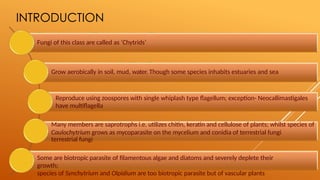
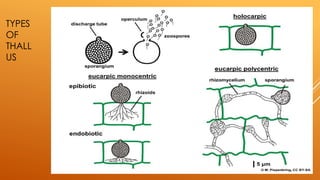
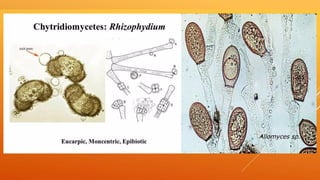
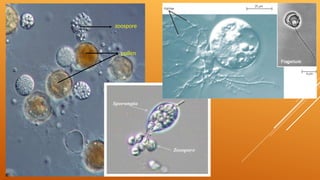
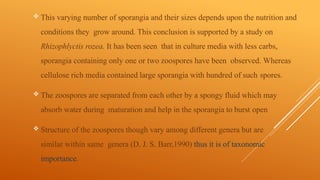
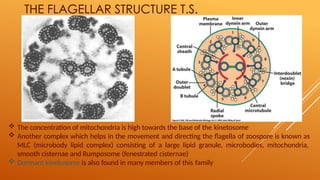
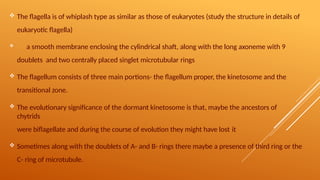
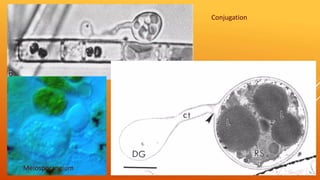
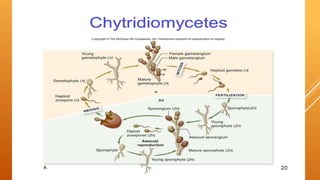
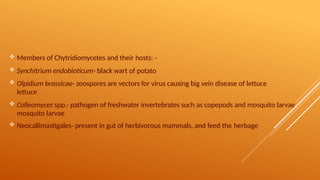
Chytridiomycota, known as chytrids, are fungi that primarily grow in aquatic and terrestrial environments, reproduce through zoospores, and exhibit diverse thallus structures. These fungi have evolutionary significance due to their unique cell wall composition, including chitin and cellulose, indicating a distinct lineage from higher fungi. Their reproduction can be asexual or sexual, with various forms of gametogamy, and they interact with different host organisms, including plants and invertebrates.