

QUY HOẠCH PHÁT TRIỂN DU LỊCH
Nội dung học phần Tổng quan về quy hoạch phát triển du lịch Các yếu tố và điều kiện trong quy hoạch phát triển du lịch Các công cụ và kỹ thuật trong quy hoạch và quản lý du lịch Quy hoạch phát triển du lịch bền vững
CHƯƠNG 1 TỔNG QUAN VỀ QUY HOẠCH PHÁT TRIỂN DU LỊCH
1. Khái niệm quy hoạch du lịch “ Planning is the process of identifying  objectives and defining and evaluating methods of achieving them ”
1.1 Khái niệm quy hoạch du lịch “ A plan... enables us to identify where we are going and how we get there ”
1.1 Khái niệm quy hoạch du lịch Quy hoạch du lịch là tập hợp lý luận và thực tiễn nhằm phân bố hợp lý nhất lãnh thổ những cơ sở kinh doanh du lịch có tính toán tổng hợp các nhân tố: điều kiện tự nhiên, tài nguyên du lịch, cơ sở hạ tầng, điều kiện kinh tế-xã hội, môi trường, kiến trúc xây dựng … Quy hoạch du lịch còn cụ thể hóa trên lãnh thổ những dự đoán, định hướng, chương trình và kế hoạch phát triển du lịch. Đồng thời quy hoạch du lịch bao gồm cả quá trình ra quyết định thực hiện quy hoạch, bổ sung các điều kiện phát triển nhằm đạt được các mục tiêu phát triển du lịch bền vững.
2. Lý do của việc quy hoạch phát triển du lịch 1. Destination life cycle; 2. More competitive situation; 3. More complicated phenomenon; 4. Tourism has damaged natural and cultural resources; 5. Community involved
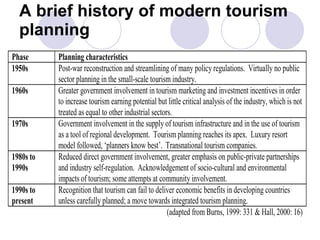
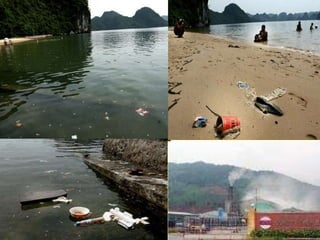
A brief history of modern tourism planning Tourism planning is a comparative newcomer. Early tourism development was founded on a basic assumption:  tourism is an ‘intrinsic goods’.  This led to many negative impacts on environment and society (non-sustainable tourism).
A brief history of modern tourism planning Why?  There was a lack of adequate foresight about changing tourist trends and demands and;  Little or no awareness of the side-effects on the local area (negative impacts).  It was the consequences of ‘non-integrated’ approach to tourism development
A brief history of modern tourism planning
A brief history of modern tourism planning From the mid-1960s to the present, integrated planning for development was more common. There is an increasing acceptance that it requires planning for achievement of  wide-ranging objectives within the context of sustainable development.
3. Mục đích của quy hoạch phát triển du lịch - Identifying alternative approaches; - Adapting to the unexpected; - Maintaining uniqueness; - Creating the desirable; - Avoiding the undesirable
 
Why is planning important? 1.  Planning can improve the visitor experience: –  Many different sectors must work together to provide the tourism “product” for the visitor: the visitor experience. –  Good planning enables destinations to carefully consider these different sectors.
Why is planning important? Elements of the Visitor Experience Transportation to/from destination  Marketing (creating expectations) Quality of Environment Access Quality of Accommodations Quality of Attractions Quality of Service
Why is planning important? 2.  Planning can improve the resident experience : –  Tourism has many different impacts on the destination and the residents. –  Good planning increases the ability of the destination to anticipate or avoid negative impacts. –  Good planning enables the destination to maximize the economic benefits of tourism.
Why is planning important? Elements of the resident experience Economic benefits Quality of jobs Quality of environment Quality of infrastructure  Behavior of visitors  Quality of life
Broad approaches to planning Boosterism: (tourism is good) views opposition to tourism as ‘unpatriotic’  little consideration of  carrying capacity practised by politicians & those that gain financially from tourism (Getz, 1987). Tourism as an industry Tourism used as a tool by governments to achieve economic restructuring  Economic goals: priority over social/ecological questions
Broad approaches to planning The land use/physical/spatial approach Minimise negative effects on the environment by land zoning to concentrate/disperse tourists Risk plans may ignore more socio/cultural factors. Community oriented tourism planning Recognised need for the social impact perspective: vital ethically (that people influence their destination destinies) and economically  (to attract tourists)
Levels of tourism planning Tourism planning occurs at several different. At each level, there are different issues. –  International level –  National level –  Regional / State level –  Local or community level –  Site level
Tourism planning confines Tourism planning has been largely confined to: Designated areas  such as national park and heritage sites ‘ Subject plan’  (plan which focus specially on tourism/leisure) Tourism/leisure as one topic in development plans  for an area.
Key actors in the planning process Residents of host destination area Environmental advocacy groups Tourism-related and non-tourism related businesses Politicians and other elected officials Labor unions and other employee representatives Government officials.
Public and Private Planning Public planning  generally involves public resources and objectives, such as creation of land, construction of highways, and other infrastructure. Private sector planning  consists of product development, building, finance, marketing, management and operations etc,.
4. Quy trình quy hoạch du lịch Stage 1: Recognizing the need for a tourism plan/strategy Stage 2: Setting objectives/goals for a specific planning strategy Why developing  tourism? What benefits  are expected from tourism? Type of tourism and visitor profiles? Limits on tourism growth? Time frame for development? Stage 3: Survey of existing data Stage 4: Implementation of new surveys Stage 5: Analysis of secondary and primary data Stage 6: Plan creation Stage 7: Recommendations of the plan Stage 8: Implementation of the plan Stage 9: Monitoring, evaluation and re-formulation
SURVEYS Demand Analysis - Existing and Intended Visitor Market  Market Analysis Tourist arrivals and characteristics Travel patterns and trends (season, changes) Supply Analysis – Destination and its attractions Attractions, accommodations, and facilities Transportation network, infrastructure, and manpower Inventory of Existing Attractions Inventory of Facilities, services and Infrastructure Business and Legal environment
Tourism Impact Analysis Environmental Impacts Anticipating the impacts of development is one of the most crucial functions of a tourism plan Physical environment impacts: Region; climate; existing land uses; project site; soils; flooding; water quality; hazardous materials and waste. Infrastructure and public facilities: traffic and transportation; wastewater, water supply, drainage, electrical power, emergency services. Socio-cultural Impacts To what extend is the society dependent upon a more  traditional economy? How will existing family structures and patterns fit with the possible employment of family members? How do residents feel about performing cultural practices before foreigners?
Case-study : Tourism Marketing Plan   Vietnam This Tourism Marketing Plan 2008 - 2015 has been prepared by the Tourism Promotion Department of the Vietnam National Administration of Tourism (VNAT), with the support of the Spanish Agency of International Cooperation for Development (AECID).
Tourism Marketing Plan   Vietnam
1. SITUATIONAL ANALYSIS 1.1 Tourism in Vietnam 1.2. Demand and Competitors 1.3 Competitiveness 1.4 SWOT Analysis 2. OBJECTIVES 3. POSITIONING Các giai đoạn lập kế hoạch
4. STRATEGIES 4.1 Products 4.2 Price 4.3 Publicity 4.4 Placement 4.5 People (Human Resources) 4.6 Organisation ( Processes ) Các giai đoạn lập kế hoạch
Các giai đoạn lập kế hoạch 5. ACTION PLAN 5.1 Products Action Plan 5.2 Price 5.3 Promotion / Publicity 5.4 Placement 5.5 People – Human Resources 5.6 Processes / Organisation
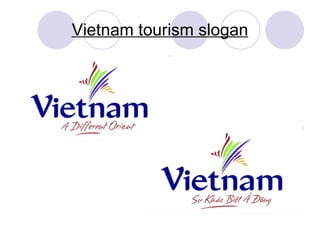
Vietnam tourism slogan

Chuong 1 quy hoach

  • 1.
    QUY HOẠCH PHÁTTRIỂN DU LỊCH
  • 2.
    Nội dung họcphần Tổng quan về quy hoạch phát triển du lịch Các yếu tố và điều kiện trong quy hoạch phát triển du lịch Các công cụ và kỹ thuật trong quy hoạch và quản lý du lịch Quy hoạch phát triển du lịch bền vững
  • 3.
    CHƯƠNG 1 TỔNGQUAN VỀ QUY HOẠCH PHÁT TRIỂN DU LỊCH
  • 4.
    1. Khái niệmquy hoạch du lịch “ Planning is the process of identifying objectives and defining and evaluating methods of achieving them ”
  • 5.
    1.1 Khái niệmquy hoạch du lịch “ A plan... enables us to identify where we are going and how we get there ”
  • 6.
    1.1 Khái niệmquy hoạch du lịch Quy hoạch du lịch là tập hợp lý luận và thực tiễn nhằm phân bố hợp lý nhất lãnh thổ những cơ sở kinh doanh du lịch có tính toán tổng hợp các nhân tố: điều kiện tự nhiên, tài nguyên du lịch, cơ sở hạ tầng, điều kiện kinh tế-xã hội, môi trường, kiến trúc xây dựng … Quy hoạch du lịch còn cụ thể hóa trên lãnh thổ những dự đoán, định hướng, chương trình và kế hoạch phát triển du lịch. Đồng thời quy hoạch du lịch bao gồm cả quá trình ra quyết định thực hiện quy hoạch, bổ sung các điều kiện phát triển nhằm đạt được các mục tiêu phát triển du lịch bền vững.
  • 7.
    2. Lý docủa việc quy hoạch phát triển du lịch 1. Destination life cycle; 2. More competitive situation; 3. More complicated phenomenon; 4. Tourism has damaged natural and cultural resources; 5. Community involved
  • 8.
    A brief historyof modern tourism planning Tourism planning is a comparative newcomer. Early tourism development was founded on a basic assumption: tourism is an ‘intrinsic goods’. This led to many negative impacts on environment and society (non-sustainable tourism).
  • 9.
    A brief historyof modern tourism planning Why? There was a lack of adequate foresight about changing tourist trends and demands and; Little or no awareness of the side-effects on the local area (negative impacts). It was the consequences of ‘non-integrated’ approach to tourism development
  • 10.
    A brief historyof modern tourism planning
  • 11.
    A brief historyof modern tourism planning From the mid-1960s to the present, integrated planning for development was more common. There is an increasing acceptance that it requires planning for achievement of wide-ranging objectives within the context of sustainable development.
  • 12.
    3. Mục đíchcủa quy hoạch phát triển du lịch - Identifying alternative approaches; - Adapting to the unexpected; - Maintaining uniqueness; - Creating the desirable; - Avoiding the undesirable
  • 13.
  • 14.
    Why is planningimportant? 1. Planning can improve the visitor experience: – Many different sectors must work together to provide the tourism “product” for the visitor: the visitor experience. – Good planning enables destinations to carefully consider these different sectors.
  • 15.
    Why is planningimportant? Elements of the Visitor Experience Transportation to/from destination Marketing (creating expectations) Quality of Environment Access Quality of Accommodations Quality of Attractions Quality of Service
  • 16.
    Why is planningimportant? 2. Planning can improve the resident experience : – Tourism has many different impacts on the destination and the residents. – Good planning increases the ability of the destination to anticipate or avoid negative impacts. – Good planning enables the destination to maximize the economic benefits of tourism.
  • 17.
    Why is planningimportant? Elements of the resident experience Economic benefits Quality of jobs Quality of environment Quality of infrastructure Behavior of visitors Quality of life
  • 18.
    Broad approaches toplanning Boosterism: (tourism is good) views opposition to tourism as ‘unpatriotic’ little consideration of carrying capacity practised by politicians & those that gain financially from tourism (Getz, 1987). Tourism as an industry Tourism used as a tool by governments to achieve economic restructuring Economic goals: priority over social/ecological questions
  • 19.
    Broad approaches toplanning The land use/physical/spatial approach Minimise negative effects on the environment by land zoning to concentrate/disperse tourists Risk plans may ignore more socio/cultural factors. Community oriented tourism planning Recognised need for the social impact perspective: vital ethically (that people influence their destination destinies) and economically (to attract tourists)
  • 20.
    Levels of tourismplanning Tourism planning occurs at several different. At each level, there are different issues. – International level – National level – Regional / State level – Local or community level – Site level
  • 21.
    Tourism planning confinesTourism planning has been largely confined to: Designated areas such as national park and heritage sites ‘ Subject plan’ (plan which focus specially on tourism/leisure) Tourism/leisure as one topic in development plans for an area.
  • 22.
    Key actors inthe planning process Residents of host destination area Environmental advocacy groups Tourism-related and non-tourism related businesses Politicians and other elected officials Labor unions and other employee representatives Government officials.
  • 23.
    Public and PrivatePlanning Public planning generally involves public resources and objectives, such as creation of land, construction of highways, and other infrastructure. Private sector planning consists of product development, building, finance, marketing, management and operations etc,.
  • 24.
    4. Quy trìnhquy hoạch du lịch Stage 1: Recognizing the need for a tourism plan/strategy Stage 2: Setting objectives/goals for a specific planning strategy Why developing tourism? What benefits are expected from tourism? Type of tourism and visitor profiles? Limits on tourism growth? Time frame for development? Stage 3: Survey of existing data Stage 4: Implementation of new surveys Stage 5: Analysis of secondary and primary data Stage 6: Plan creation Stage 7: Recommendations of the plan Stage 8: Implementation of the plan Stage 9: Monitoring, evaluation and re-formulation
  • 25.
    SURVEYS Demand Analysis- Existing and Intended Visitor Market Market Analysis Tourist arrivals and characteristics Travel patterns and trends (season, changes) Supply Analysis – Destination and its attractions Attractions, accommodations, and facilities Transportation network, infrastructure, and manpower Inventory of Existing Attractions Inventory of Facilities, services and Infrastructure Business and Legal environment
  • 26.
    Tourism Impact AnalysisEnvironmental Impacts Anticipating the impacts of development is one of the most crucial functions of a tourism plan Physical environment impacts: Region; climate; existing land uses; project site; soils; flooding; water quality; hazardous materials and waste. Infrastructure and public facilities: traffic and transportation; wastewater, water supply, drainage, electrical power, emergency services. Socio-cultural Impacts To what extend is the society dependent upon a more traditional economy? How will existing family structures and patterns fit with the possible employment of family members? How do residents feel about performing cultural practices before foreigners?
  • 27.
    Case-study : TourismMarketing Plan Vietnam This Tourism Marketing Plan 2008 - 2015 has been prepared by the Tourism Promotion Department of the Vietnam National Administration of Tourism (VNAT), with the support of the Spanish Agency of International Cooperation for Development (AECID).
  • 28.
  • 29.
    1. SITUATIONAL ANALYSIS1.1 Tourism in Vietnam 1.2. Demand and Competitors 1.3 Competitiveness 1.4 SWOT Analysis 2. OBJECTIVES 3. POSITIONING Các giai đoạn lập kế hoạch
  • 30.
    4. STRATEGIES 4.1Products 4.2 Price 4.3 Publicity 4.4 Placement 4.5 People (Human Resources) 4.6 Organisation ( Processes ) Các giai đoạn lập kế hoạch
  • 31.
    Các giai đoạnlập kế hoạch 5. ACTION PLAN 5.1 Products Action Plan 5.2 Price 5.3 Promotion / Publicity 5.4 Placement 5.5 People – Human Resources 5.6 Processes / Organisation
  • 32.