Download as PDF, PPTX



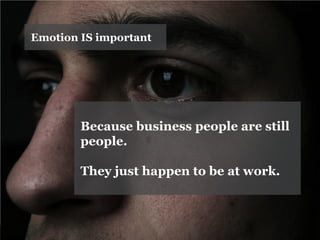

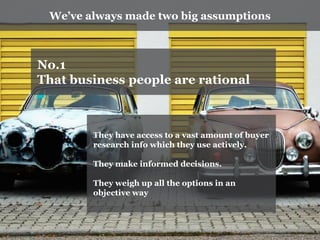
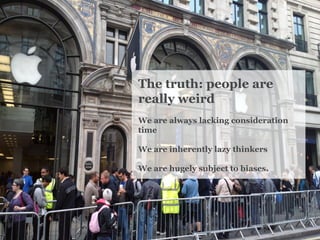

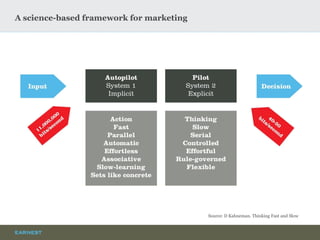
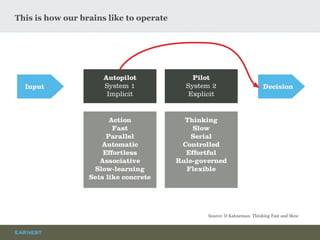
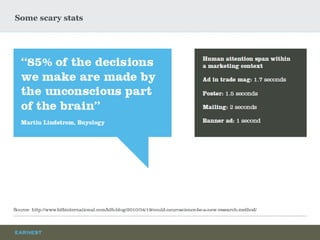

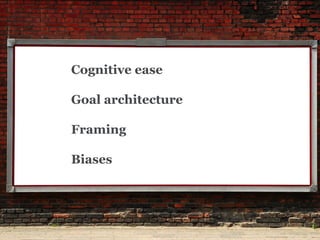

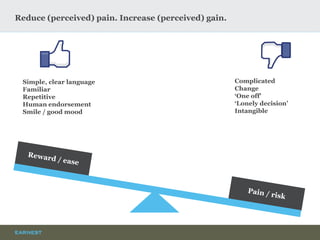
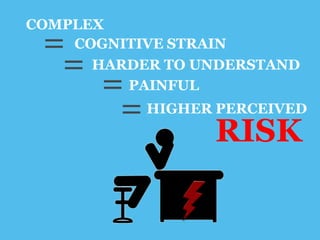
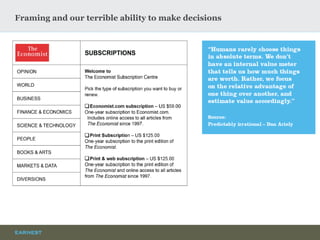
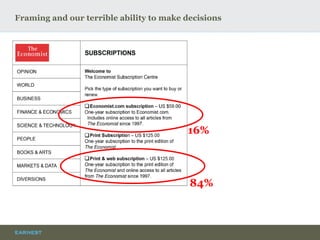
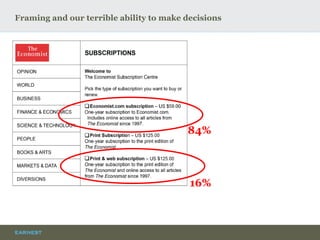
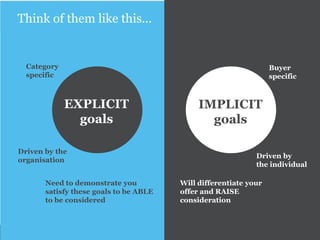

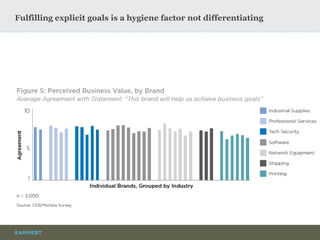
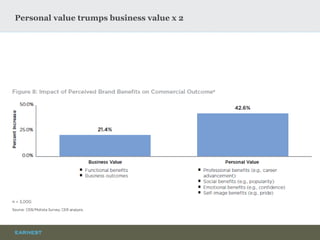
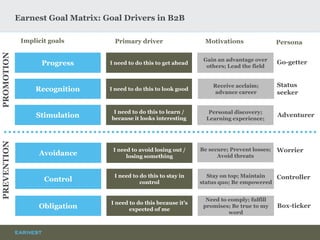
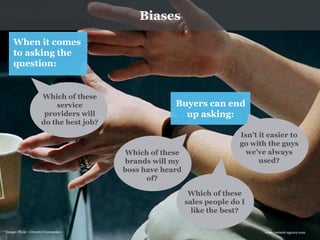
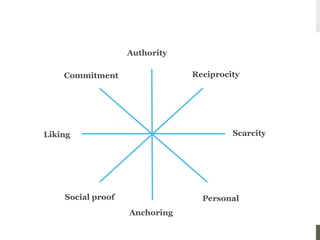





This document discusses how emotion is important in B2B marketing because business people are still people with emotions even at work. It argues that the common assumptions that business decisions are made entirely rationally and through a single logical decision are flawed, as purchasing decisions actually involve many "micro-yesses" that are highly emotive. The document introduces behavioural economics as a framework that combines neuroscience and psychology to understand how people actually think and make decisions using two systems - fast, intuitive thinking and slow, rational thinking. It discusses various cognitive biases and techniques like framing, cognitive ease and implicit/explicit goals that can influence purchasing decisions in emotionally-driven ways.


