Hierarchy of Physical
Planning
Jit Kumar Gupta
Urban; Rural Settlements - Census of India
 Two Types of human settlements exist on this planet- Urban and Rural
 Rural – has no definition --As of 2019, there's a total of 664,369 villages,
 Urban has been defined into – 2 categories-- 7935 towns
 Statutory towns- When any town has--municipality, corporation, cantonment board or a notified town
area committee- 4061
 Census Town-3874--when any settlement has;-
 - a minimum population of 5,000;
 - at least 75 per cent of the male working population is engaged in non-agricultural pursuits;
 - population density is at least 400 people per sq km.
 - towns has 6 categories – based on population--- upto 4.,999-vi
 5000- 9999-v; 10,000- 19,999-iv; 20,000- 49,999-iii; 50,000- 99,999-ii; 1,00,000 and more-I; 1million
and plus-Metropolis; 10 million plus- Megapolis
Planning typologies in India- administrative , Urban, Rural
 Planning at National Level- National Planning- Five Year Plans; Annual Plan- R&U
 Planning at State Level- State Planning- R&U
 Planning at Regional Level- Regional Planning- R&U
 Planning at District Level- District Planning- 73rd CAA-1992- R&U- Aspirational
districts
 Planning at Metropolitan Level- Metropolitan Planning-73rd CAA-1992- R&U
 Urban planning--Planning at City Level- Master plans/Development plans- Urban
 Planning at Zonal Level- Zonal Plans- Urban
 Planning at Local Level- Local Area Planning- R&U
 Rural Planning- Planning at Tehsil Level– Tehsil Planning-- R&U
 Planning at Block Level-- Block Planning- R&U
 Planning at Village Level- Village Planning- R
Physical Planning- UDPFI Guidelines
Perspective Plans- State level Plan
Regional Plan- Regional level Plans
Development Plan /Master Plans-City
level Plan
Local Area Plan- Neighborhood Level
Plan
Special Purpose Plans-Sector Plan
Annual Plan
Perspective Plans
Purpose of perspective plan is to
provide;
 -- an overall framework
-for preparation of detailed plans.
-- serves as a guide for
--Regional authorities-
preparation of regional plans
-- local authorities--
preparation of development plans
Regional Plans
 Sustainable /Planned development of Regions
 Prepared within framework of Perspective Plans
 3 Planning regions -- (a) Administrative Regions--
District / Metropolitan Regions - 73rd & 74th CAA
 (b) Investment Regions new investment manufacturing zones-
SEZ, industrial corridor
 (c) Special Region -- environment/ socio economic Sensitive
zone-
• Regional plan prepared under an Act
• focuses on balanced development of Region
 defines hierarchy of settlements- both urban & rural
 defines Hierarchy of connectivity -
road, rail, sea airports
 focuses on
 -- land utilisation
 --resources utilisation,
 --resource mobilisation,
 -- environmental protection
 -- disaster risk management.
Development Plan/Master Plan
 Development plan -
 a statutory plan
 prepared under an Act
 within framework of perspective plan
Objective of development plan
 - to provide
 -- further necessary details/ intended actions
 - in the shape of strategies &
 physical proposals
 for various policies
 given in perspective plan/ regional plan
 depending upon economic /social needs and
 aspiration of people,
 available resources and
 defined priorities.
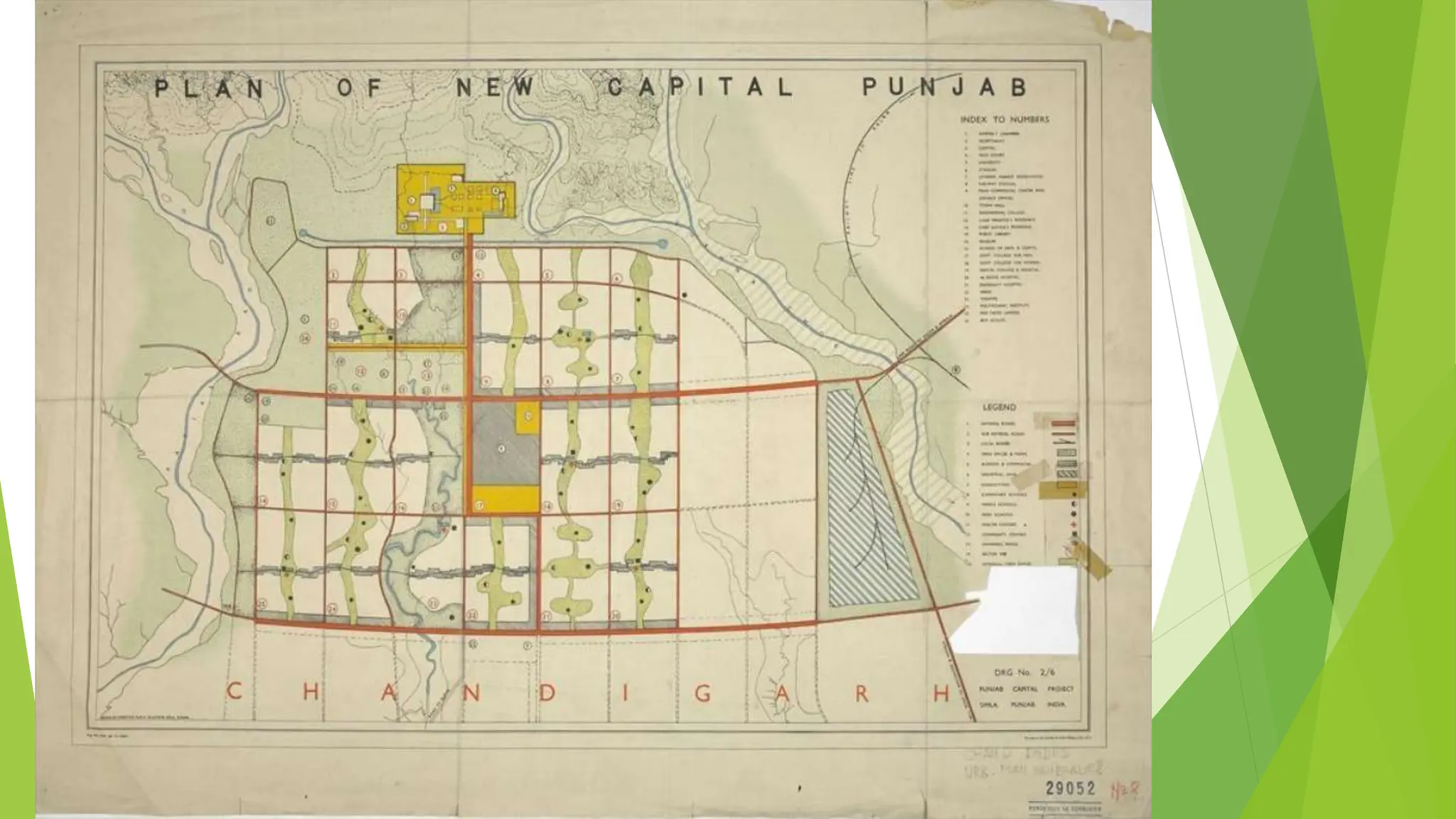
Chandigarh Plan
Defining -Local Area Planning
 Local area planning is a—
 - process of planning that is;
 -- concerned with resolving
 -- local level problems / issues.
 - focusing on—
 -- welfare of local people
 - development of the local area.
 -- Maintenance of local level social services /amenities,
 -- promoting quality and quantity of- local products / services
 -- keeping surroundings / local environment clean /green
 Size- smallest planning unit- with reference to people/places.
 -- Planning carried out through people’s - Vision/participation
 - adopted in India’s Five Year Plans
Defining -Local Area Planning
 micro‐planning -- local area plans,
 Prepared for decentralization/ improving implementation of Development Plans.
 73rd & 74h CAA--
planning decision / implementation of plans should be disaggregated
 for bringing planning closer to local people.
 Objective;
 --Local area plans are prepared to;
 -- guide development / re‐development of land at local level
 -conservation of buildings physical features at local level
 -providing improvements in physical layout- at local level
 - making required infrastructure & amenities at local level
 - managing area at local level
 - enhancing health /safety of local residents
 -- supportting economic development at local level
 --enhancing quality of living and local environment.
Local Area Planning context
 Local area plans specify- compliance with Government Policies related to-
 - housing, urban development, rainwater harvesting,
 -- energy, disaster management, industrial /service sector investment,
 -- barrier‐free environment for elderly / physically challenged,
 e‐Governance, tourism etc.
 Plan should delineate;
 - reservation of land for roads
 -reservation for public purposes,
 -- for construction, reclamation etc.
 Plan should provide a framework
 -- for recovery of associated costs for public projects,
 --- by levy of betterment charges,
 -- levying charges on additional development rights, and
 ---- appropriate user charges.
Sector of Chandigarh
 Chandigarh is composed of sectors.
 Each sector is 800 meters by 1,200 meters,
 enclosed by roads allocated to fast mechanised
transport and
 sealed to direct access from houses.
 Each sector caters to daily needs of its
inhabitants,
 Population varies from 5,000 to 25,000
 has a green strip oriented longitudinally
 stretching centrally along sector in the
direction of mountains.
 Green strip should stay uninterrupted and
 accommodate schools, sports fields, walkways
and recreational facilities for sector
Vehicular traffic is completely forbidden in green
strips,
 where tranquility shall reign and
 curse of noise shall not penetrate.
People Participation- Involving Communities
 Planning has focus on -people / promote welfare of people and place where they live.
 Approach to planning should shift -- from top‐down to bottom‐up approach
 to make planning process - more inclusive, comprehensive, sustainable.
 Involving communities important for--
 -Understanding ground realities
 - Understanding people aspirations
 - Ascertaining needs of people/area
 - Ascertaining Local priorities
 -Ensuring plans remain relevant- making value addition to planning process
 -Planning has people ownership-remain people led
 People participation can be sourced–
 --during- planningƒ -developing vision
 --identification local requirements
 - identifying development priorities. ƒ-
 -before finalization / implementation of development programmes and priorities. ƒ
 -- during implementation
 --evaluation of development programmes project.
Participative Planning- Involving Communities
ory planning helps in
away from Static, state driven, spatially biased planning to
people-driven and integrative planning
del for management relative to “conventional” - expert input
ory planning woks a tool which helps in;
ng conflicts.
ing / prioritizing city needs
accepted solutions/ improve decision making
new sense of ownership of both problems and solutions
and evaluation.
ty planning;
ring cities& communities
Participative Planning
uestionnaires
Focused group discussions (FGDs)
interviews;- Involving residential welfare organisations
ng workshops- - Creating a think Tank- Involving professional institutions- ITPI/IIA/IE/CII/PHD
CBOs/ NGOs – Involving Government Departments-
Focus of Planning
 Sustainable Urban and Regional Development
 1. Urban / Regional plans must focus on Sustainability-
 -- financial, social, governance/ managerial and environmental.
 2. Financial sustainability -- working out capital &operational costs and options to
recover
 -- development charges-to recover the capex project
 -- user charges should pay for the operational expenses.
 3. Social sustainability - inclusion, provide benefit to all residents equitably.
 Identifying gainers /losers-- ensure that gainers are charged & pass on to losers.
 4. Governance/ managerial sustainability -- project meet statutory / regulatory
requirements
 -- have adequate capacities for maintaining project at reasonable costs.
 5 Environmental sustainability -- improvement environment, ‘minimising / damage’
chitkara--Local Area Planning.pptx

chitkara--Local Area Planning.pptx

  • 1.
  • 2.
    Urban; Rural Settlements- Census of India  Two Types of human settlements exist on this planet- Urban and Rural  Rural – has no definition --As of 2019, there's a total of 664,369 villages,  Urban has been defined into – 2 categories-- 7935 towns  Statutory towns- When any town has--municipality, corporation, cantonment board or a notified town area committee- 4061  Census Town-3874--when any settlement has;-  - a minimum population of 5,000;  - at least 75 per cent of the male working population is engaged in non-agricultural pursuits;  - population density is at least 400 people per sq km.  - towns has 6 categories – based on population--- upto 4.,999-vi  5000- 9999-v; 10,000- 19,999-iv; 20,000- 49,999-iii; 50,000- 99,999-ii; 1,00,000 and more-I; 1million and plus-Metropolis; 10 million plus- Megapolis
  • 3.
    Planning typologies inIndia- administrative , Urban, Rural  Planning at National Level- National Planning- Five Year Plans; Annual Plan- R&U  Planning at State Level- State Planning- R&U  Planning at Regional Level- Regional Planning- R&U  Planning at District Level- District Planning- 73rd CAA-1992- R&U- Aspirational districts  Planning at Metropolitan Level- Metropolitan Planning-73rd CAA-1992- R&U  Urban planning--Planning at City Level- Master plans/Development plans- Urban  Planning at Zonal Level- Zonal Plans- Urban  Planning at Local Level- Local Area Planning- R&U  Rural Planning- Planning at Tehsil Level– Tehsil Planning-- R&U  Planning at Block Level-- Block Planning- R&U  Planning at Village Level- Village Planning- R
  • 4.
    Physical Planning- UDPFIGuidelines Perspective Plans- State level Plan Regional Plan- Regional level Plans Development Plan /Master Plans-City level Plan Local Area Plan- Neighborhood Level Plan Special Purpose Plans-Sector Plan Annual Plan
  • 6.
    Perspective Plans Purpose ofperspective plan is to provide;  -- an overall framework -for preparation of detailed plans. -- serves as a guide for --Regional authorities- preparation of regional plans -- local authorities-- preparation of development plans
  • 7.
    Regional Plans  Sustainable/Planned development of Regions  Prepared within framework of Perspective Plans  3 Planning regions -- (a) Administrative Regions-- District / Metropolitan Regions - 73rd & 74th CAA  (b) Investment Regions new investment manufacturing zones- SEZ, industrial corridor  (c) Special Region -- environment/ socio economic Sensitive zone- • Regional plan prepared under an Act • focuses on balanced development of Region  defines hierarchy of settlements- both urban & rural  defines Hierarchy of connectivity - road, rail, sea airports  focuses on  -- land utilisation  --resources utilisation,  --resource mobilisation,  -- environmental protection  -- disaster risk management.
  • 8.
    Development Plan/Master Plan Development plan -  a statutory plan  prepared under an Act  within framework of perspective plan Objective of development plan  - to provide  -- further necessary details/ intended actions  - in the shape of strategies &  physical proposals  for various policies  given in perspective plan/ regional plan  depending upon economic /social needs and  aspiration of people,  available resources and  defined priorities.
  • 9.
  • 10.
    Defining -Local AreaPlanning  Local area planning is a—  - process of planning that is;  -- concerned with resolving  -- local level problems / issues.  - focusing on—  -- welfare of local people  - development of the local area.  -- Maintenance of local level social services /amenities,  -- promoting quality and quantity of- local products / services  -- keeping surroundings / local environment clean /green  Size- smallest planning unit- with reference to people/places.  -- Planning carried out through people’s - Vision/participation  - adopted in India’s Five Year Plans
  • 11.
    Defining -Local AreaPlanning  micro‐planning -- local area plans,  Prepared for decentralization/ improving implementation of Development Plans.  73rd & 74h CAA-- planning decision / implementation of plans should be disaggregated  for bringing planning closer to local people.  Objective;  --Local area plans are prepared to;  -- guide development / re‐development of land at local level  -conservation of buildings physical features at local level  -providing improvements in physical layout- at local level  - making required infrastructure & amenities at local level  - managing area at local level  - enhancing health /safety of local residents  -- supportting economic development at local level  --enhancing quality of living and local environment.
  • 12.
    Local Area Planningcontext  Local area plans specify- compliance with Government Policies related to-  - housing, urban development, rainwater harvesting,  -- energy, disaster management, industrial /service sector investment,  -- barrier‐free environment for elderly / physically challenged,  e‐Governance, tourism etc.  Plan should delineate;  - reservation of land for roads  -reservation for public purposes,  -- for construction, reclamation etc.  Plan should provide a framework  -- for recovery of associated costs for public projects,  --- by levy of betterment charges,  -- levying charges on additional development rights, and  ---- appropriate user charges.
  • 14.
    Sector of Chandigarh Chandigarh is composed of sectors.  Each sector is 800 meters by 1,200 meters,  enclosed by roads allocated to fast mechanised transport and  sealed to direct access from houses.  Each sector caters to daily needs of its inhabitants,  Population varies from 5,000 to 25,000  has a green strip oriented longitudinally  stretching centrally along sector in the direction of mountains.  Green strip should stay uninterrupted and  accommodate schools, sports fields, walkways and recreational facilities for sector Vehicular traffic is completely forbidden in green strips,  where tranquility shall reign and  curse of noise shall not penetrate.
  • 15.
    People Participation- InvolvingCommunities  Planning has focus on -people / promote welfare of people and place where they live.  Approach to planning should shift -- from top‐down to bottom‐up approach  to make planning process - more inclusive, comprehensive, sustainable.  Involving communities important for--  -Understanding ground realities  - Understanding people aspirations  - Ascertaining needs of people/area  - Ascertaining Local priorities  -Ensuring plans remain relevant- making value addition to planning process  -Planning has people ownership-remain people led  People participation can be sourced–  --during- planningƒ -developing vision  --identification local requirements  - identifying development priorities. ƒ-  -before finalization / implementation of development programmes and priorities. ƒ  -- during implementation  --evaluation of development programmes project.
  • 16.
    Participative Planning- InvolvingCommunities ory planning helps in away from Static, state driven, spatially biased planning to people-driven and integrative planning del for management relative to “conventional” - expert input ory planning woks a tool which helps in; ng conflicts. ing / prioritizing city needs accepted solutions/ improve decision making new sense of ownership of both problems and solutions and evaluation. ty planning; ring cities& communities Participative Planning uestionnaires Focused group discussions (FGDs) interviews;- Involving residential welfare organisations ng workshops- - Creating a think Tank- Involving professional institutions- ITPI/IIA/IE/CII/PHD CBOs/ NGOs – Involving Government Departments-
  • 17.
    Focus of Planning Sustainable Urban and Regional Development  1. Urban / Regional plans must focus on Sustainability-  -- financial, social, governance/ managerial and environmental.  2. Financial sustainability -- working out capital &operational costs and options to recover  -- development charges-to recover the capex project  -- user charges should pay for the operational expenses.  3. Social sustainability - inclusion, provide benefit to all residents equitably.  Identifying gainers /losers-- ensure that gainers are charged & pass on to losers.  4. Governance/ managerial sustainability -- project meet statutory / regulatory requirements  -- have adequate capacities for maintaining project at reasonable costs.  5 Environmental sustainability -- improvement environment, ‘minimising / damage’