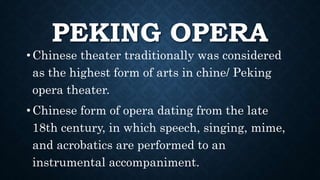
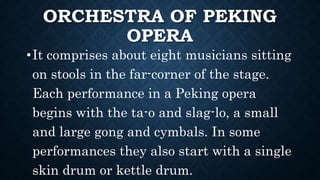
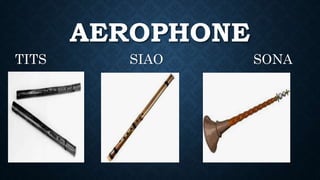
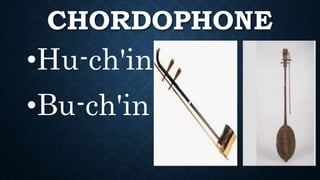
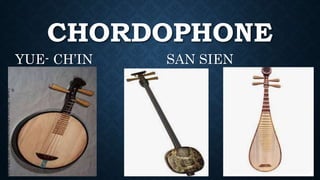
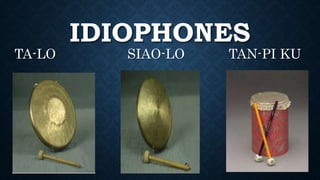
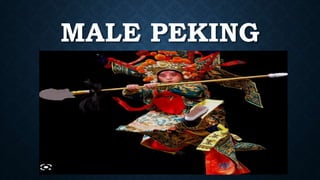
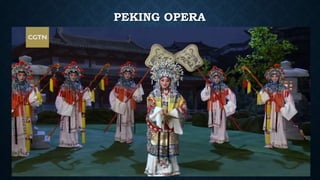
Peking opera is a traditional form of Chinese theater that combines music, singing, mime, and acrobatics. It utilizes various musical instruments in the orchestra including flutes, trumpets, string instruments like the hu-ch'in and bu-ch'in. Percussion instruments like gongs and drums are also used to mark the beginning and set the tempo of performances. Peking opera features distinct vocal styles and roles for males and females that involve both speaking and limited singing compared to other Chinese opera styles.





![677290754-Chinese-Theater [Autosaved] [Autosaved].pptx](https://cdn.slidesharecdn.com/ss_thumbnails/677290754-chinese-theaterautosavedautosaved-250306134242-e5a62f18-thumbnail.jpg?width=640&height=640&fit=bounds)
![677290754-Chinese-Theater [Autosaved] [Autosaved].pptx](https://cdn.slidesharecdn.com/ss_thumbnails/677290754-chinese-theaterautosavedautosaved-250306141018-1d72e3db-thumbnail.jpg?width=640&height=640&fit=bounds)


