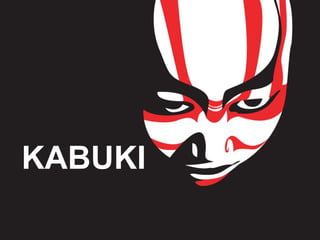
Kabuki is a traditional form of Japanese theater that originated in the 17th century. It is recognized as one of Japan's three major classical theaters along with noh and bunraku. Kabuki performances involve elaborate costumes, stylized makeup and exaggerated movements to convey meaning to audiences. Famous Kabuki theaters include the Kabukiza in Tokyo, the National Theatre in Tokyo, the Minamiza in Osaka, the Shochikuza in Kyoto, and the Hakataza in Fukuoka. Popular Kabuki plays retell important stories from Japanese history and include Treasured Retainers, Yoshitsune and the Thousand Cherry Trees, and Sugawara and the Secrets of Calligraphy.







![[K-12] MAPEH 8 - Peking Opera of China](https://cdn.slidesharecdn.com/ss_thumbnails/mapeh8pekingoperaofchina-150702113928-lva1-app6891-thumbnail.jpg?width=640&height=640&fit=bounds)


![Wayang kulit [recovered] (2)](https://cdn.slidesharecdn.com/ss_thumbnails/wayangkulitrecovered2-170124070958-thumbnail.jpg?width=640&height=640&fit=bounds)


