Module 4:
Defining
Child Abuse
Child abuse includes behaviour that results in physical,
emotional and sexual harm to a child or young person
• Can be a single incident or a number of incidents
• May be intentional or unintentional
• Can result from a combination of factors that have placed the
child at risk of harm
• Occurs across all socio-economic groups
• Is most often perpetrated by someone known by the child.
Emotional
Physical
Sexual Neglect
Forms of Child Abuse
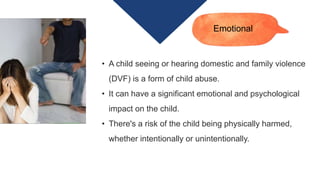
• A child seeing or hearing domestic and family violence
(DVF) is a form of child abuse.
• It can have a significant emotional and psychological
impact on the child.
• There's a risk of the child being physically harmed,
whether intentionally or unintentionally.
Emotional
Neglect
Neglect occurs when a child's basic necessities of life
are not being met and their health and development
are affected.
Physical Abuse
Physical abuse occurs when abuse leads to non-
accidental physical injury or harm
Emotional Abuse
Emotional Abuse occurs when a child is repeatedly
made to feel worthless, unloved, alone or scared.
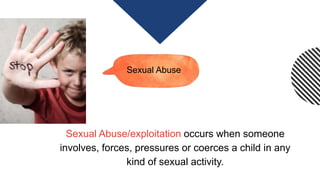
Sexual Abuse
Sexual Abuse/exploitation occurs when someone
involves, forces, pressures or coerces a child in any
kind of sexual activity.
Relationships between types of child abuse
and emotional harm
• Abuse rarely happens as a single type of abuse
• All forms of abuse have a degree of emotional harm
• Can result from a combination of factors that have
placed the child at risk of harm
• The extent of harm will vary for every child.
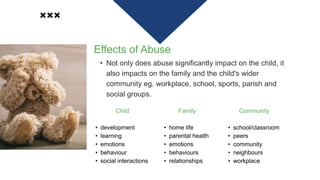
Effects of Abuse
• Not only does abuse significantly impact on the child, it
also impacts on the family and the child's wider
community eg. workplace, school, sports, parish and
social groups.
Child
• development
• learning
• emotions
• behaviour
• social interactions
Family
• home life
• parental health
• emotions
• behaviours
• relationships
Community
• school/classroom
• peers
• community
• neighbours
• workplace

Defining Child Abuse.pptx

  • 1.
  • 2.
    Child abuse includesbehaviour that results in physical, emotional and sexual harm to a child or young person • Can be a single incident or a number of incidents • May be intentional or unintentional • Can result from a combination of factors that have placed the child at risk of harm • Occurs across all socio-economic groups • Is most often perpetrated by someone known by the child.
  • 3.
  • 4.
    • A childseeing or hearing domestic and family violence (DVF) is a form of child abuse. • It can have a significant emotional and psychological impact on the child. • There's a risk of the child being physically harmed, whether intentionally or unintentionally. Emotional
  • 5.
    Neglect Neglect occurs whena child's basic necessities of life are not being met and their health and development are affected.
  • 6.
    Physical Abuse Physical abuseoccurs when abuse leads to non- accidental physical injury or harm
  • 7.
    Emotional Abuse Emotional Abuseoccurs when a child is repeatedly made to feel worthless, unloved, alone or scared.
  • 8.
    Sexual Abuse Sexual Abuse/exploitationoccurs when someone involves, forces, pressures or coerces a child in any kind of sexual activity.
  • 9.
    Relationships between typesof child abuse and emotional harm • Abuse rarely happens as a single type of abuse • All forms of abuse have a degree of emotional harm • Can result from a combination of factors that have placed the child at risk of harm • The extent of harm will vary for every child.
  • 10.
    Effects of Abuse •Not only does abuse significantly impact on the child, it also impacts on the family and the child's wider community eg. workplace, school, sports, parish and social groups. Child • development • learning • emotions • behaviour • social interactions Family • home life • parental health • emotions • behaviours • relationships Community • school/classroom • peers • community • neighbours • workplace

Editor's Notes