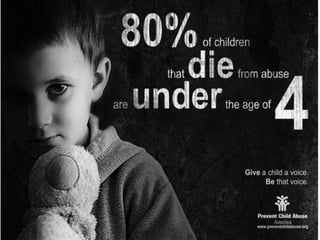
CHILD ABUSE
CHILD ABUSE:
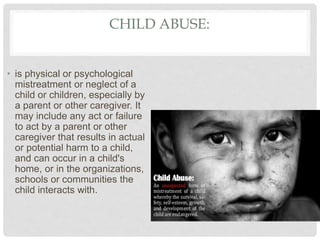
• is physical or psychological
mistreatment or neglect of a
child or children, especially by
a parent or other caregiver. It
may include any act or failure
to act by a parent or other
caregiver that results in actual
or potential harm to a child,
and can occur in a child's
home, or in the organizations,
schools or communities the
child interacts with.
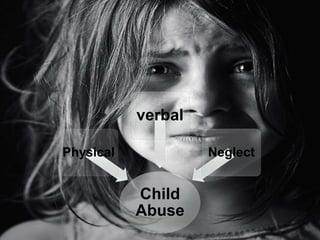
Child
AbuseChild
Abuse
Physical
verbal
Neglect
1- PHYSICAL ABUSE
Among professionals and the
general public, people often do not
agree on what behaviors constitute
physical abuse of a child. Physical
abuse often does not occur in
isolation, but as part of a
constellation of behaviors
including authoritarian control,
anxiety-provoking behavior, and a
lack of parental warmth.
• Physical abuse involves physical
harm or injury to the child such as
using a belt on a child, or physical
punishment that is inappropriate to
the child’s age or physical condition.
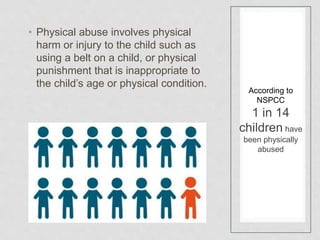
According to
NSPCC
1 in 14
children have
been physically
abused
2- NEGLECT ABUSE
• is the failure of the person with
responsibility for the child, to provide
needed food, clothing, shelter, medical care,
or supervision to the degree that the child's
health, safety or well-being may be
threatened with harm. Neglect is also a lack
of attention from the people surrounding a
child, and the non-provision of the relevant
and adequate necessities for the child's
survival, which would be a lacking in
attention, love, and nurture.
• Child neglect—a very common type of
child abuse—is a pattern of failing to
provide for a child's basic needs,
whether it be adequate food, clothing,
hygiene, or supervision.
According to
NSPCC
1 in 10
children have
experienced
neglect
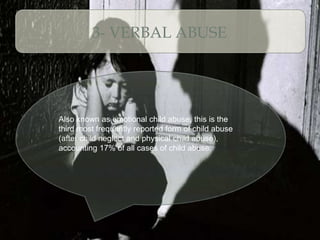
Also known as emotional child abuse, this is the
third most frequently reported form of child abuse
(after child neglect and physical child abuse),
accounting 17% of all cases of child abuse.
3- VERBAL ABUSE
• examples of verbal/emotional abuse:
• Constant belittling, shaming, and humiliating
• Calling names and making negative comparisons to
others
• Constantly telling someone he or she is no good,”
“worthless,” “bad,” or “a mistake”
• Yelling, threatening, or bullying –Ignoring or rejecting
someone, giving him or her the silent treatment
• Witnessing acts that cause a feeling of helplessness
and horror, such as domestic violence or watching
another sibling or pet be abused. This kind of abuse
may seem invisible. But the effects can be extremely
damaging and may even leave deeper lifelong
psychological scares than physical or sexual abuse.
Signs for verbal
abuse:
• Negative self-
image
• Self-destructive
acts
• Antisocial
behavior.
• Delayed
development
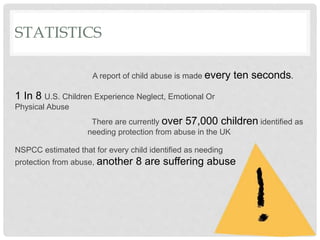
A report of child abuse is made every ten seconds.
STATISTICS
1 In 8 U.S. Children Experience Neglect, Emotional Or
Physical Abuse
There are currently over 57,000 children identified as
needing protection from abuse in the UK
NSPCC estimated that for every child identified as needing
protection from abuse, another 8 are suffering abuse
can result in immediate adverse physical effects but it is also
strongly associated with developmental problems and with many
chronic physical and psychological effects, including subsequent ill-
health, including higher rates of chronic conditions, high-risk health
behaviors and shortened lifespan .
Child abuse Affects
Emotionally
the child is greatly influenced and responds to the experiences with
families, caregivers, and the community ,
bused children can grow up experiencing insecurities, low self-esteem, lack
of development , difficulties with trust, social withdrawal, trouble in school,
and forming relationships , overly affectionate towards strangers or people
they haven’t known for very long , Older children may use foul language or
act in a markedly different way to other children at the same age, struggle
to control strong emotions
Child abuse Affects
psychological
children who experience child abuse and/or neglect are 59% more likely to
be arrested as juveniles, 28% more likely to be arrested as adults, and
30% more likely to commit violent crime .
they suffer from different types of physical health problems later in
life. some reportedly suffer from some type of chronic head, abdominal,
pelvic, or muscular pain with no identifiable reason .
On the other hand, there are some children who are raised in child abuse,
but who manage to do unexpectedly well later in life regarding the
preconditions..
Child abuse Affects
Nouf Alhammadi
Yasmin Albakri
Maha Joraid
Atheer Alnashri
Alanoud Alomari

Child Abuse

  • 1.
  • 2.
    CHILD ABUSE: • isphysical or psychological mistreatment or neglect of a child or children, especially by a parent or other caregiver. It may include any act or failure to act by a parent or other caregiver that results in actual or potential harm to a child, and can occur in a child's home, or in the organizations, schools or communities the child interacts with.
  • 3.
  • 4.
    1- PHYSICAL ABUSE Amongprofessionals and the general public, people often do not agree on what behaviors constitute physical abuse of a child. Physical abuse often does not occur in isolation, but as part of a constellation of behaviors including authoritarian control, anxiety-provoking behavior, and a lack of parental warmth.
  • 5.
    • Physical abuseinvolves physical harm or injury to the child such as using a belt on a child, or physical punishment that is inappropriate to the child’s age or physical condition. According to NSPCC 1 in 14 children have been physically abused
  • 6.
    2- NEGLECT ABUSE •is the failure of the person with responsibility for the child, to provide needed food, clothing, shelter, medical care, or supervision to the degree that the child's health, safety or well-being may be threatened with harm. Neglect is also a lack of attention from the people surrounding a child, and the non-provision of the relevant and adequate necessities for the child's survival, which would be a lacking in attention, love, and nurture.
  • 7.
    • Child neglect—avery common type of child abuse—is a pattern of failing to provide for a child's basic needs, whether it be adequate food, clothing, hygiene, or supervision. According to NSPCC 1 in 10 children have experienced neglect
  • 8.
    Also known asemotional child abuse, this is the third most frequently reported form of child abuse (after child neglect and physical child abuse), accounting 17% of all cases of child abuse. 3- VERBAL ABUSE
  • 9.
    • examples ofverbal/emotional abuse: • Constant belittling, shaming, and humiliating • Calling names and making negative comparisons to others • Constantly telling someone he or she is no good,” “worthless,” “bad,” or “a mistake” • Yelling, threatening, or bullying –Ignoring or rejecting someone, giving him or her the silent treatment • Witnessing acts that cause a feeling of helplessness and horror, such as domestic violence or watching another sibling or pet be abused. This kind of abuse may seem invisible. But the effects can be extremely damaging and may even leave deeper lifelong psychological scares than physical or sexual abuse. Signs for verbal abuse: • Negative self- image • Self-destructive acts • Antisocial behavior. • Delayed development
  • 10.
    A report ofchild abuse is made every ten seconds. STATISTICS 1 In 8 U.S. Children Experience Neglect, Emotional Or Physical Abuse There are currently over 57,000 children identified as needing protection from abuse in the UK NSPCC estimated that for every child identified as needing protection from abuse, another 8 are suffering abuse
  • 12.
    can result inimmediate adverse physical effects but it is also strongly associated with developmental problems and with many chronic physical and psychological effects, including subsequent ill- health, including higher rates of chronic conditions, high-risk health behaviors and shortened lifespan . Child abuse Affects
  • 13.
    Emotionally the child isgreatly influenced and responds to the experiences with families, caregivers, and the community , bused children can grow up experiencing insecurities, low self-esteem, lack of development , difficulties with trust, social withdrawal, trouble in school, and forming relationships , overly affectionate towards strangers or people they haven’t known for very long , Older children may use foul language or act in a markedly different way to other children at the same age, struggle to control strong emotions Child abuse Affects
  • 14.
    psychological children who experiencechild abuse and/or neglect are 59% more likely to be arrested as juveniles, 28% more likely to be arrested as adults, and 30% more likely to commit violent crime . they suffer from different types of physical health problems later in life. some reportedly suffer from some type of chronic head, abdominal, pelvic, or muscular pain with no identifiable reason . On the other hand, there are some children who are raised in child abuse, but who manage to do unexpectedly well later in life regarding the preconditions.. Child abuse Affects
  • 16.
    Nouf Alhammadi Yasmin Albakri MahaJoraid Atheer Alnashri Alanoud Alomari