• What is Child Labor?
• Child Labor in world
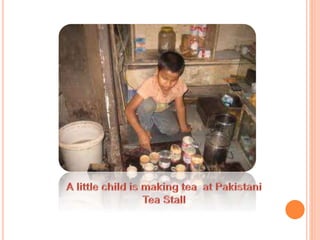
• Child Labour in Pakistan
• Causes of child labour
• Working areas of child labour
• Laws
• Conclusion
• Suggestions
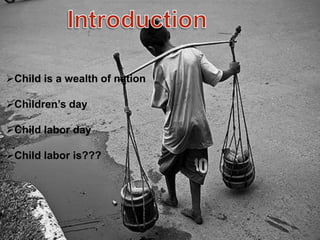
Child is a wealth of nation
Children’s day
Child labor day
Child labor is???
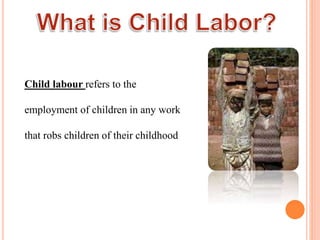
Child labour refers to the
employment of children in any work
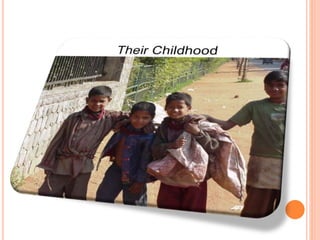
that robs children of their childhood
• Today, throughout the world, around 215 million children work, many full-
time.
• They do not go to school and have little or no time to play.
• Many do not receive proper nutrition or care. They are denied the chance
to be children.
• More than half of them are exposed to the worst forms of child labour
such as work in
 hazardous environments,
 slavery, or other forms of forced labour,
 illicit activities including drug trafficking .
 involvement in armed conflict.
Following are some of the common figures of child labour around the world:
• There are 218 million child labourers in the world as of 2004,
according to UNICEF.
• 14% of children labor is between 5 and 17 age brackets.
• 69% of child labourers work in agriculture, hunting and fishing.
• Every year 22,000 children die in work related accidents.
But over the years progress had been made, from 2002 to 2006 the number
of child laborers has decreased 11%. And the number of children in
hazardous work has decreased 26% worldwide.
Statistics
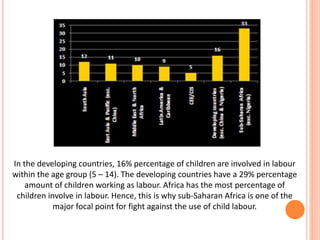
Percentage of children aged 5-14 involved in child labour.
In the developing countries, 16% percentage of children are involved in labour
within the age group (5 – 14). The developing countries have a 29% percentage
amount of children working as labour. Africa has the most percentage of
children involve in labour. Hence, this is why sub-Saharan Africa is one of the
major focal point for fight against the use of child labour.
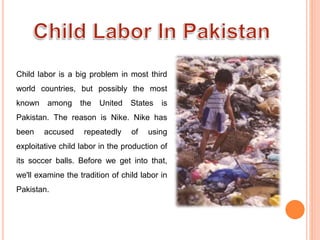
Child labor is a big problem in most third
world countries, but possibly the most
known among the United States is
Pakistan. The reason is Nike. Nike has
been accused repeatedly of using
exploitative child labor in the production of
its soccer balls. Before we get into that,
we'll examine the tradition of child labor in
Pakistan.
• Child labor is scattered all over Pakistan, but it has the greatest impact
on a north-western province called Sialkot.
• Sialkot is an important center for the production of goods for export,
especially sporting goods.
• In 1994, it brought about $385 million into the Pakistan economy.
• Child labor exists in both the export and domestic sectors of the
economy in Sialkot.
• This has been well documented internationally, and it is documented
that child labor is against Pakistan's law, but neither the government
nor anyone else chooses to do anything about it.
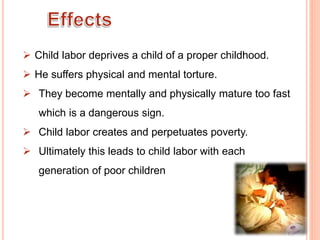
 Child labor deprives a child of a proper childhood.
 He suffers physical and mental torture.
 They become mentally and physically mature too fast
which is a dangerous sign.
 Child labor creates and perpetuates poverty.
 Ultimately this leads to child labor with each
generation of poor children
 Poverty
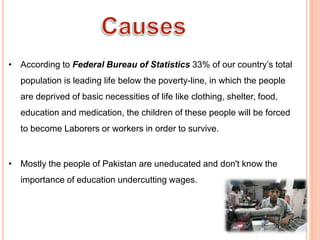
• According to Federal Bureau of Statistics 33% of our country’s total
population is leading life below the poverty-line, in which the people
are deprived of basic necessities of life like clothing, shelter, food,
education and medication, the children of these people will be forced
to become Laborers or workers in order to survive.
 Ignorance &Lack of Education
• Mostly the people of Pakistan are uneducated and don't know the
importance of education undercutting wages.
Working areas of child labor in Pakistan
 In factories -- making products such as matches,
fireworks and glassware
 On the street -- as beggars
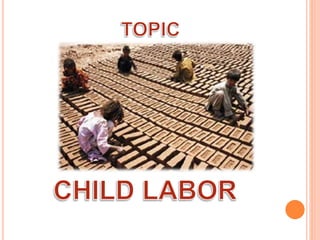
 Outdoor industry: brick kilns, mines, construction
 Agricultural Sector
 Working at auto workshop.
• Under the Act, child means a person who has not
completed his 14th year of age, any such person
engaged for wages, whether in cash or kind, is called a
child worker.
• All the children not being provided education at a school
are considered a child labor
• The basic aim of laws is to provide a decent childhood
with proper care and education to each and every child
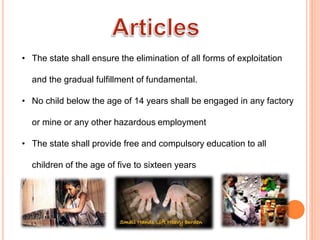
• The state shall ensure the elimination of all forms of exploitation
and the gradual fulfillment of fundamental.
• No child below the age of 14 years shall be engaged in any factory
or mine or any other hazardous employment
• The state shall provide free and compulsory education to all
children of the age of five to sixteen years
Following instruments of legislation deal exclusively with the
subject of child labor.
 The Employment of Children Act 1991
 The Employment of Children Rules 1995
Other than these two, there are other laws as well which deal
with the employment of children and regulate the working
conditions for employed child workers.
 Mines Act, 1923
 The Children (Pledging of Labour) Act, 1933
 The Factories Act, 1934
 The Road Transport Workers Ordinance, 1961
 Shops and Establishments Ordinance, 1969
 Merchant Shipping Ordinance, 2001
 It shall be an ideal statement that we should stop child labor
but thing is that what is promoting it? What is the root of its
cause?
“Its Poverty.”
 People are unable to bear their necessary expenses. They are
not provided with bread, clothe and shelter (which is
supposed to be their basic right of living).
 And poor parents are impelled to engage their children as
laborers for having one time meals.
 No one wants to see their children working day and night but
they have to for themselves.
Laws are available but are they properly being
implemented?
What steps are taken by us to say NO to Child labor?
• Our Responsibility
• Government’s Responsibility
Govt. and us, we collectively should take steps/efforts
to eliminate this sign of darkness from our country.
Laws are available, procedures are defined.
The only thing Govt. needs to do is ensuring
transparency in their policies and the
implementation of laws and rules.
child labour

child labour

  • 3.
    • What isChild Labor? • Child Labor in world • Child Labour in Pakistan • Causes of child labour • Working areas of child labour • Laws • Conclusion • Suggestions
  • 4.
    Child is awealth of nation Children’s day Child labor day Child labor is???
  • 5.
    Child labour refersto the employment of children in any work that robs children of their childhood
  • 8.
    • Today, throughoutthe world, around 215 million children work, many full- time. • They do not go to school and have little or no time to play. • Many do not receive proper nutrition or care. They are denied the chance to be children. • More than half of them are exposed to the worst forms of child labour such as work in  hazardous environments,  slavery, or other forms of forced labour,  illicit activities including drug trafficking .  involvement in armed conflict.
  • 9.
    Following are someof the common figures of child labour around the world: • There are 218 million child labourers in the world as of 2004, according to UNICEF. • 14% of children labor is between 5 and 17 age brackets. • 69% of child labourers work in agriculture, hunting and fishing. • Every year 22,000 children die in work related accidents. But over the years progress had been made, from 2002 to 2006 the number of child laborers has decreased 11%. And the number of children in hazardous work has decreased 26% worldwide.
  • 10.
    Statistics Percentage of childrenaged 5-14 involved in child labour. In the developing countries, 16% percentage of children are involved in labour within the age group (5 – 14). The developing countries have a 29% percentage amount of children working as labour. Africa has the most percentage of children involve in labour. Hence, this is why sub-Saharan Africa is one of the major focal point for fight against the use of child labour.
  • 12.
    Child labor isa big problem in most third world countries, but possibly the most known among the United States is Pakistan. The reason is Nike. Nike has been accused repeatedly of using exploitative child labor in the production of its soccer balls. Before we get into that, we'll examine the tradition of child labor in Pakistan.
  • 13.
    • Child laboris scattered all over Pakistan, but it has the greatest impact on a north-western province called Sialkot. • Sialkot is an important center for the production of goods for export, especially sporting goods. • In 1994, it brought about $385 million into the Pakistan economy. • Child labor exists in both the export and domestic sectors of the economy in Sialkot. • This has been well documented internationally, and it is documented that child labor is against Pakistan's law, but neither the government nor anyone else chooses to do anything about it.
  • 14.
     Child labordeprives a child of a proper childhood.  He suffers physical and mental torture.  They become mentally and physically mature too fast which is a dangerous sign.  Child labor creates and perpetuates poverty.  Ultimately this leads to child labor with each generation of poor children
  • 15.
     Poverty • Accordingto Federal Bureau of Statistics 33% of our country’s total population is leading life below the poverty-line, in which the people are deprived of basic necessities of life like clothing, shelter, food, education and medication, the children of these people will be forced to become Laborers or workers in order to survive.  Ignorance &Lack of Education • Mostly the people of Pakistan are uneducated and don't know the importance of education undercutting wages.
  • 16.
    Working areas ofchild labor in Pakistan  In factories -- making products such as matches, fireworks and glassware  On the street -- as beggars  Outdoor industry: brick kilns, mines, construction  Agricultural Sector  Working at auto workshop.
  • 18.
    • Under theAct, child means a person who has not completed his 14th year of age, any such person engaged for wages, whether in cash or kind, is called a child worker. • All the children not being provided education at a school are considered a child labor • The basic aim of laws is to provide a decent childhood with proper care and education to each and every child
  • 19.
    • The stateshall ensure the elimination of all forms of exploitation and the gradual fulfillment of fundamental. • No child below the age of 14 years shall be engaged in any factory or mine or any other hazardous employment • The state shall provide free and compulsory education to all children of the age of five to sixteen years
  • 20.
    Following instruments oflegislation deal exclusively with the subject of child labor.  The Employment of Children Act 1991  The Employment of Children Rules 1995 Other than these two, there are other laws as well which deal with the employment of children and regulate the working conditions for employed child workers.  Mines Act, 1923  The Children (Pledging of Labour) Act, 1933  The Factories Act, 1934  The Road Transport Workers Ordinance, 1961  Shops and Establishments Ordinance, 1969  Merchant Shipping Ordinance, 2001
  • 21.
     It shallbe an ideal statement that we should stop child labor but thing is that what is promoting it? What is the root of its cause? “Its Poverty.”  People are unable to bear their necessary expenses. They are not provided with bread, clothe and shelter (which is supposed to be their basic right of living).  And poor parents are impelled to engage their children as laborers for having one time meals.  No one wants to see their children working day and night but they have to for themselves.
  • 22.
    Laws are availablebut are they properly being implemented? What steps are taken by us to say NO to Child labor?
  • 23.
    • Our Responsibility •Government’s Responsibility Govt. and us, we collectively should take steps/efforts to eliminate this sign of darkness from our country.
  • 24.
    Laws are available,procedures are defined. The only thing Govt. needs to do is ensuring transparency in their policies and the implementation of laws and rules.