



CHEMISTRY


         FORM 4

NAME:
INTRODUCTION


     o    Pure metals usually have high densities; high melting and boiling points are good
          conductors of heat and electricity, shiny, malleable and ductile.
     o    Pure metals are composed of the same type of atoms and are of the same size.
     o    In the solid state, the atoms are closely packed in an orderly manner.
     o    This arrangement of atoms in metals gives the metals their ductile and malleable
          properties when a force is applied.
     o    Ductility of metals
          The layers of atoms can slide over one another when a force is applied. Therefore,
          metals are ductile or can be stretched.
     o    Malleability of metals
         There are some imperfections in the orderly arrangement of atoms. When a metal is
         knocked, atoms slide into new positions. Therefore, metals are malleable (can be
         hammered into different shapes without cracking) or can be shape

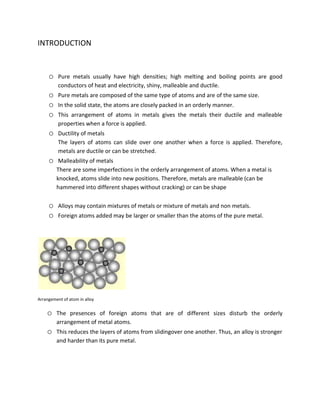
     o    Alloys may contain mixtures of metals or mixture of metals and non metals.
     o    Foreign atoms added may be larger or smaller than the atoms of the pure metal.


Arrangement of atom in alloy


    o    The presences of foreign atoms that are of different sizes disturb the orderly
         arrangement of metal atoms.
    o    This reduces the layers of atoms from slidingover one another. Thus, an alloy is stronger
         and harder than its pure metal.
OBJECTIVE


To know more about alloy and their important.
WHAT ARE ALLOYS?


1.Pure metal are usually too soft for most uses. They also have a low
r e s i s t a n c e t o corrosion. They rush and tarnish easily.

2.To improve the physical properties of metal, a small amount of another
e l e m e n t (usually metal) is added to form another alloy.

3.An alloy is a mixture of two or more metals (something non -metal) in a
s p e c i f i c proportion. For example

   a) Bronze (90% of copper and 10% of tin)

   b) b.Steel (99% of iron and 1% of carbon)

4.The purposes of making alloys include the following:

a)Increase the strength

  i.   Pure iron is soft and vary malleable. When a small amount of carbon is added to iron, an
       alloy, steal is formed. The more carbon is added, the stronger the steel becomes.
 ii.   ii.Pure aluminium is light but not strong. With a small amount of
       copper andmagnesium are added to aluminium , a strong, light and
       d u r a b l e a l l o y c a l l duralumin is produced.

b)Improving the resistance to corrosion

  i.   Iron rust easily but stainless steel which contains 80.6% of iron, 0.4% of carbon, 1 8 %
       of chromium and 1% of nickel does not rush. These properties
       m a k e stainless steel suitable for making surgical instrument and cutlery.
 ii.   Pure copper tarnish easily. When zinc (30%) is added, the yellow alloy which isknown as
       brass develops a high resistance to corrosion

c)Enhancing the appearance

  i.      Pewter, an alloy of tin (97%), antimony and copper is not only hard but also hasa
          more beautiful white silvery appearance.
 ii.      When copper is mixed with nickel to form cupronickel, an alloy
          t h a t h a s a n attractive silvery, bright appearance is formed which is
          suitable for makingcoins
EXAMPLES OF ALLOY


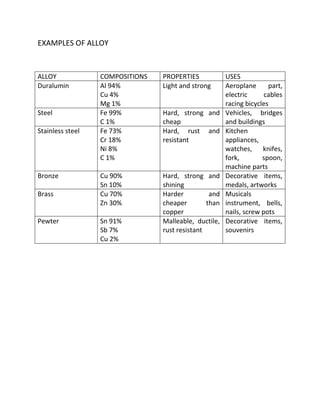
ALLOY             COMPOSITIONS   PROPERTIES            USES
Duralumin         Al 94%         Light and strong      Aeroplane      part,
                  Cu 4%                                electric      cables
                  Mg 1%                                racing bicycles
Steel             Fe 99%         Hard, strong and      Vehicles, bridges
                  C 1%           cheap                 and buildings
Stainless steel   Fe 73%         Hard, rust and        Kitchen
                  Cr 18%         resistant             appliances,
                  Ni 8%                                watches,     knifes,
                  C 1%                                 fork,        spoon,
                                                       machine parts
Bronze            Cu 90%         Hard, strong and      Decorative items,
                  Sn 10%         shining               medals, artworks
Brass             Cu 70%         Harder          and   Musicals
                  Zn 30%         cheaper        than   instrument, bells,
                                 copper                nails, screw pots
Pewter            Sn 91%         Malleable, ductile,   Decorative items,
                  Sb 7%          rust resistant        souvenirs
                  Cu 2%
DISCUSSION


An alloy is a mixture or metallic solid solution composed of two or more elements. Complete
solid solution alloys give single solid phase microstructure, while partial solutions give two or
more phases that may or may not be homogeneous in distribution, depending on thermal (heat
treatment) history. Alloys usually have different properties from those of the component
elements.
Alloy constituents are usually measured by mass. Alloys are usually classified as substitution or
interstitial alloys, depending on the atomic arrangement that forms the alloy. They can be
further classified as homogeneous, consisting of a single phase, heterogeneous, consisting of
two or more phases, or intermetallic, where there is no distinct boundary between phases.
CONCLUSIONS


We must appreciate these various synthetic industrial materials. One of the ways is bydoing
continuous research and development (R&D) to produce better materials used toimprove our
standard of living. As we live in a changing world, our society is gettingmore complex. New
materials are required to overcome new challenges and problems weface in our daily lives.

Synthetic materials are developed constantly due to the limitationand shortage of natural
materials. New technological developments are used by scientiststo make new discoveries.

 New materials for clothing, shelter, tools and communication to improve our dailylife are
developed continuously for the well-being of mankind. New needs and new problem will
stimulate the development of new synthetic materials. For example, the newuse of plastic
composite material will replace metal in the making of a stronger andlighter car body. This will
save fuel and improve speed. Plastic composite materials mayone day used to make organs for
organ transplant in human bodies. This will becomenecessity with the shortage of human organ
donors.

The understanding of the interaction between different chemicals is important for both the
development of new synthetic materials and the disposal of such syntheticmaterials as waste. A
responsible and systemic method of handling the waste of syntheticmaterials and their by-
product is important to prevent environmental pollution. The recycling and development of
environmental friendly synthetic material should beenforced.
REFERENCES


  1. Spotlight SPM Chemistry, Ooi Yong Seang, Darric Lim, Pan Asia Publications SDN BHD,
     2009.

  2. www.scribd.com
Chemistry

Chemistry

  • 1.
    CHEMISTRY FORM 4 NAME:
  • 2.
    INTRODUCTION o Pure metals usually have high densities; high melting and boiling points are good conductors of heat and electricity, shiny, malleable and ductile. o Pure metals are composed of the same type of atoms and are of the same size. o In the solid state, the atoms are closely packed in an orderly manner. o This arrangement of atoms in metals gives the metals their ductile and malleable properties when a force is applied. o Ductility of metals The layers of atoms can slide over one another when a force is applied. Therefore, metals are ductile or can be stretched. o Malleability of metals There are some imperfections in the orderly arrangement of atoms. When a metal is knocked, atoms slide into new positions. Therefore, metals are malleable (can be hammered into different shapes without cracking) or can be shape o Alloys may contain mixtures of metals or mixture of metals and non metals. o Foreign atoms added may be larger or smaller than the atoms of the pure metal. Arrangement of atom in alloy o The presences of foreign atoms that are of different sizes disturb the orderly arrangement of metal atoms. o This reduces the layers of atoms from slidingover one another. Thus, an alloy is stronger and harder than its pure metal.
  • 3.
    OBJECTIVE To know moreabout alloy and their important.
  • 4.
    WHAT ARE ALLOYS? 1.Puremetal are usually too soft for most uses. They also have a low r e s i s t a n c e t o corrosion. They rush and tarnish easily. 2.To improve the physical properties of metal, a small amount of another e l e m e n t (usually metal) is added to form another alloy. 3.An alloy is a mixture of two or more metals (something non -metal) in a s p e c i f i c proportion. For example a) Bronze (90% of copper and 10% of tin) b) b.Steel (99% of iron and 1% of carbon) 4.The purposes of making alloys include the following: a)Increase the strength i. Pure iron is soft and vary malleable. When a small amount of carbon is added to iron, an alloy, steal is formed. The more carbon is added, the stronger the steel becomes. ii. ii.Pure aluminium is light but not strong. With a small amount of copper andmagnesium are added to aluminium , a strong, light and d u r a b l e a l l o y c a l l duralumin is produced. b)Improving the resistance to corrosion i. Iron rust easily but stainless steel which contains 80.6% of iron, 0.4% of carbon, 1 8 % of chromium and 1% of nickel does not rush. These properties m a k e stainless steel suitable for making surgical instrument and cutlery. ii. Pure copper tarnish easily. When zinc (30%) is added, the yellow alloy which isknown as brass develops a high resistance to corrosion c)Enhancing the appearance i. Pewter, an alloy of tin (97%), antimony and copper is not only hard but also hasa more beautiful white silvery appearance. ii. When copper is mixed with nickel to form cupronickel, an alloy t h a t h a s a n attractive silvery, bright appearance is formed which is suitable for makingcoins
  • 5.
    EXAMPLES OF ALLOY ALLOY COMPOSITIONS PROPERTIES USES Duralumin Al 94% Light and strong Aeroplane part, Cu 4% electric cables Mg 1% racing bicycles Steel Fe 99% Hard, strong and Vehicles, bridges C 1% cheap and buildings Stainless steel Fe 73% Hard, rust and Kitchen Cr 18% resistant appliances, Ni 8% watches, knifes, C 1% fork, spoon, machine parts Bronze Cu 90% Hard, strong and Decorative items, Sn 10% shining medals, artworks Brass Cu 70% Harder and Musicals Zn 30% cheaper than instrument, bells, copper nails, screw pots Pewter Sn 91% Malleable, ductile, Decorative items, Sb 7% rust resistant souvenirs Cu 2%
  • 6.
    DISCUSSION An alloy isa mixture or metallic solid solution composed of two or more elements. Complete solid solution alloys give single solid phase microstructure, while partial solutions give two or more phases that may or may not be homogeneous in distribution, depending on thermal (heat treatment) history. Alloys usually have different properties from those of the component elements. Alloy constituents are usually measured by mass. Alloys are usually classified as substitution or interstitial alloys, depending on the atomic arrangement that forms the alloy. They can be further classified as homogeneous, consisting of a single phase, heterogeneous, consisting of two or more phases, or intermetallic, where there is no distinct boundary between phases.
  • 7.
    CONCLUSIONS We must appreciatethese various synthetic industrial materials. One of the ways is bydoing continuous research and development (R&D) to produce better materials used toimprove our standard of living. As we live in a changing world, our society is gettingmore complex. New materials are required to overcome new challenges and problems weface in our daily lives. Synthetic materials are developed constantly due to the limitationand shortage of natural materials. New technological developments are used by scientiststo make new discoveries. New materials for clothing, shelter, tools and communication to improve our dailylife are developed continuously for the well-being of mankind. New needs and new problem will stimulate the development of new synthetic materials. For example, the newuse of plastic composite material will replace metal in the making of a stronger andlighter car body. This will save fuel and improve speed. Plastic composite materials mayone day used to make organs for organ transplant in human bodies. This will becomenecessity with the shortage of human organ donors. The understanding of the interaction between different chemicals is important for both the development of new synthetic materials and the disposal of such syntheticmaterials as waste. A responsible and systemic method of handling the waste of syntheticmaterials and their by- product is important to prevent environmental pollution. The recycling and development of environmental friendly synthetic material should beenforced.
  • 8.
    REFERENCES 1.Spotlight SPM Chemistry, Ooi Yong Seang, Darric Lim, Pan Asia Publications SDN BHD, 2009. 2. www.scribd.com