Chemical reactions
Hello!
I am Rama Al-Ghamdi
I am here because I love to give presentations.
And I love to teach. I’m grade 7A. I wish you have a
good listening to my presentation.
2
Vocabulary:
• Chemical reaction surface area
• Chemical formula temperature
• Chemical equation catalyst
• Reactants subscripts
• Products
• Law of conversation of mass
• Coefficient
• Endothermic reaction
• Exothermic reaction
• Law of conversation of energy
• Concentration
3
What are the signs of a chemical reaction?
Chemical reactions: is the process in which
an atom are rearranged to produce new
substances.
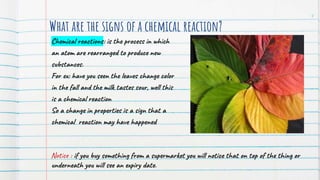
For ex: have you seen the leaves change color
in the fall and the milk tastes sour, well this
is a chemical reaction
So a change in properties is a sign that a
chemical reaction may have happened
Notice : if you buy something from a supermarket you will notice that on top of the thing or
underneath you will see an expiry date.
4
How are chemical reactions modeled?
Chemical formula: uses chemical symbols and numbers to represent a given
substance.
• You can also use symbols to identify the substances . Each element
has its own chemical symbol
For example, H is the symbol of hydrogen, and O is the symbol of oxygen.
You can also use the periodic table to find the chemical symbol
5
Subscripts
Subscripts: are the numbers written bellow or on the right of the
chemical symbols.
What’s a subscripts: they are the numbers hat tells you how many of each
type of an atom are in a molecule .
For example, the chemical formula of water is (H2O). The script 2 tells
you that there are two atoms of hydrogen in each water molecule.
There is no script on (O) so there is on 1 oxygen in each water molecule.
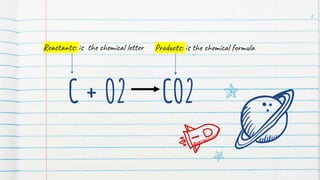
Chemical equation: is an expression that uses symbols or show the relationship
between the starting substances and the substances that are produced by
chemical reaction.
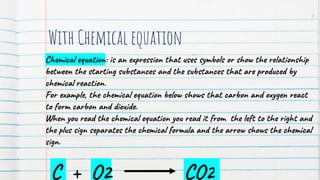
For example, the chemical equation below shows that carbon and oxygen react
to form carbon and dioxide.
When you read the chemical equation you read it from the left to the right and
the plus sign separates the chemical formula and the arrow shows the chemical
sign.
C + O2 CO2
7
With Chemical equation
C + O2 CO2
8
Reactants: is the chemical letter Products: is the chemical formula
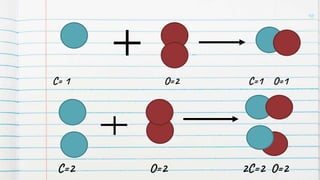
A: Law of conversation of mass:
states the matter is neither created
or destroyed in ordinary physical
and chemical changes.
This law means that a equation
must show the same numbers and
kinds of atoms on both sides of the
arrow.
How do chemical equation show the law conversation of
mass?
B: Coefficient: is a number that is
placed in front of the chemical
formula.
For example, (3H2O) represents
three water molecule.
The number 3 is the coefficient
9
10
C= 1 O=2 C=1 O=1
C=2 O=2 2C=2 O=2
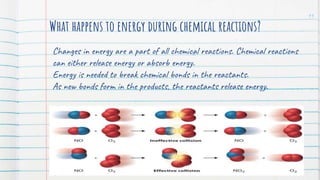
What happens to energy during chemical reactions?
Changes in energy are a part of all chemical reactions. Chemical reactions
can either release energy or absorb energy.
Energy is needed to break chemical bonds in the reactants.
As new bonds form in the products, the reactants release energy.
11
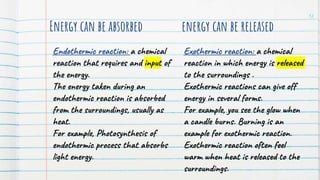
Energy can be absorbed energy can be released
Endothermic reaction: a chemical
reaction that requires and input of
the energy.
The energy taken during an
endothermic reaction is absorbed
from the surroundings, usually as
heat.
For example, Photosynthesis of
endothermic process that absorbs
light energy.
Exothermic reaction: a chemical
reaction in which energy is released
to the surroundings .
Exothermic reactions can give off
energy in several forms.
For example, you see the glow when
a candle burns. Burning is an
example for exothermic reaction.
Exothermic reaction often feel
warm when heat is released to the
surroundings.
12
13
Endothermic reaction
Exothermic reaction
Energy is always conserved
Law of conversation of energy: states that energy cannot be created or
destroyed.
The total amount of energy does not change in endothermic or exothermic
reactions
For example, light energy from sun changes into energy stored in chemical
bonds during photosynthesis.
Methane (CH4) burns when it reacts with oxygen (O2). This reaction
produces carbon dioxide (CO2) and water (H20), as shown in the
diagram.
14
15
Exothermic reaction methane and oxygen
Stored energy of reaction = stored energy of products and released energy
What affects the rates of reaction?
Some chemical reactions occur in less than a second. Others may take
Days. The rate of reactions describes how fast the reactions occurs. for
a reaction to occur, particles of the reactants must collide. Reaction
rates are effected by how often the particles collide. Factors that
affect reactions rates include concentration, surface area, temperature,
and the presence of a catalyst
Changing the rate of reaction
A: Concentration: at
higher concentrations,
there are more
reactants in given
volume. The reactants
are more likely to
collide and react. The
reactant rate is
higher when the
concentration is
higher
B: Surface are: the
reactions particles are
exposed to one
another. Crushing or
grinding solids
increases their
surface area and the
reaction rate
C: Temperature:
reactions usually occur
faster at higher
temperature. Particles
move faster at higher
temp. because the
particles move more
quickly, likely are more
likely to collide and
reacte
17
continues
D: Catalysts: is a substance that changes the rate of a chemical
reaction with out being used up or changed very much. Catalysts
can increase reaction rate by bringing together reactants.
Enzymes are type of catalysts found in living things
18
19
A:
B:
C:
D:
Thank you for
watching. Love u
20

Chemical reaction presentation gr7

  • 1.
  • 2.
    Hello! I am RamaAl-Ghamdi I am here because I love to give presentations. And I love to teach. I’m grade 7A. I wish you have a good listening to my presentation. 2
  • 3.
    Vocabulary: • Chemical reactionsurface area • Chemical formula temperature • Chemical equation catalyst • Reactants subscripts • Products • Law of conversation of mass • Coefficient • Endothermic reaction • Exothermic reaction • Law of conversation of energy • Concentration 3
  • 4.
    What are thesigns of a chemical reaction? Chemical reactions: is the process in which an atom are rearranged to produce new substances. For ex: have you seen the leaves change color in the fall and the milk tastes sour, well this is a chemical reaction So a change in properties is a sign that a chemical reaction may have happened Notice : if you buy something from a supermarket you will notice that on top of the thing or underneath you will see an expiry date. 4
  • 5.
    How are chemicalreactions modeled? Chemical formula: uses chemical symbols and numbers to represent a given substance. • You can also use symbols to identify the substances . Each element has its own chemical symbol For example, H is the symbol of hydrogen, and O is the symbol of oxygen. You can also use the periodic table to find the chemical symbol 5
  • 6.
    Subscripts Subscripts: are thenumbers written bellow or on the right of the chemical symbols. What’s a subscripts: they are the numbers hat tells you how many of each type of an atom are in a molecule . For example, the chemical formula of water is (H2O). The script 2 tells you that there are two atoms of hydrogen in each water molecule. There is no script on (O) so there is on 1 oxygen in each water molecule.
  • 7.
    Chemical equation: isan expression that uses symbols or show the relationship between the starting substances and the substances that are produced by chemical reaction. For example, the chemical equation below shows that carbon and oxygen react to form carbon and dioxide. When you read the chemical equation you read it from the left to the right and the plus sign separates the chemical formula and the arrow shows the chemical sign. C + O2 CO2 7 With Chemical equation
  • 8.
    C + O2CO2 8 Reactants: is the chemical letter Products: is the chemical formula
  • 9.
    A: Law ofconversation of mass: states the matter is neither created or destroyed in ordinary physical and chemical changes. This law means that a equation must show the same numbers and kinds of atoms on both sides of the arrow. How do chemical equation show the law conversation of mass? B: Coefficient: is a number that is placed in front of the chemical formula. For example, (3H2O) represents three water molecule. The number 3 is the coefficient 9
  • 10.
    10 C= 1 O=2C=1 O=1 C=2 O=2 2C=2 O=2
  • 11.
    What happens toenergy during chemical reactions? Changes in energy are a part of all chemical reactions. Chemical reactions can either release energy or absorb energy. Energy is needed to break chemical bonds in the reactants. As new bonds form in the products, the reactants release energy. 11
  • 12.
    Energy can beabsorbed energy can be released Endothermic reaction: a chemical reaction that requires and input of the energy. The energy taken during an endothermic reaction is absorbed from the surroundings, usually as heat. For example, Photosynthesis of endothermic process that absorbs light energy. Exothermic reaction: a chemical reaction in which energy is released to the surroundings . Exothermic reactions can give off energy in several forms. For example, you see the glow when a candle burns. Burning is an example for exothermic reaction. Exothermic reaction often feel warm when heat is released to the surroundings. 12
  • 13.
  • 14.
    Energy is alwaysconserved Law of conversation of energy: states that energy cannot be created or destroyed. The total amount of energy does not change in endothermic or exothermic reactions For example, light energy from sun changes into energy stored in chemical bonds during photosynthesis. Methane (CH4) burns when it reacts with oxygen (O2). This reaction produces carbon dioxide (CO2) and water (H20), as shown in the diagram. 14
  • 15.
    15 Exothermic reaction methaneand oxygen Stored energy of reaction = stored energy of products and released energy
  • 16.
    What affects therates of reaction? Some chemical reactions occur in less than a second. Others may take Days. The rate of reactions describes how fast the reactions occurs. for a reaction to occur, particles of the reactants must collide. Reaction rates are effected by how often the particles collide. Factors that affect reactions rates include concentration, surface area, temperature, and the presence of a catalyst
  • 17.
    Changing the rateof reaction A: Concentration: at higher concentrations, there are more reactants in given volume. The reactants are more likely to collide and react. The reactant rate is higher when the concentration is higher B: Surface are: the reactions particles are exposed to one another. Crushing or grinding solids increases their surface area and the reaction rate C: Temperature: reactions usually occur faster at higher temperature. Particles move faster at higher temp. because the particles move more quickly, likely are more likely to collide and reacte 17 continues
  • 18.
    D: Catalysts: isa substance that changes the rate of a chemical reaction with out being used up or changed very much. Catalysts can increase reaction rate by bringing together reactants. Enzymes are type of catalysts found in living things 18
  • 19.
  • 20.