20MHL12 - CHEMICAL
ENGINEERING
LABORATORY I
Manju Sri A
Assistant Professor
Department of Chemical Engg
List of Experiments
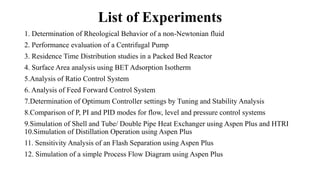
1. Determination of Rheological Behavior of a non-Newtonian fluid
2. Performance evaluation of a Centrifugal Pump
3. Residence Time Distribution studies in a Packed Bed Reactor
4. Surface Area analysis using BET Adsorption Isotherm
5.Analysis of Ratio Control System
6. Analysis of Feed Forward Control System
7.Determination of Optimum Controller settings by Tuning and Stability Analysis
8.Comparison of P, PI and PID modes for flow, level and pressure control systems
9.Simulation of Shell and Tube/ Double Pipe Heat Exchanger using Aspen Plus and HTRI
10.Simulation of Distillation Operation using Aspen Plus
11. Sensitivity Analysis of an Flash Separation using Aspen Plus
12. Simulation of a simple Process Flow Diagram using Aspen Plus
Determination of Rheological Behavior of
a non-Newtonian fluid
Aim: To determine the Rheological Behavior of flow for the given non-
Newtonian fluid. (Flow behavior index (K) and flow consistency index
(n))
Theory:
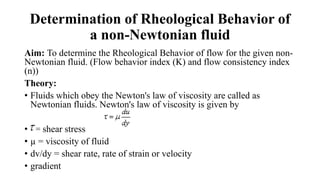
• Fluids which obey the Newton's law of viscosity are called as
Newtonian fluids. Newton's law of viscosity is given by
• = shear stress
• µ = viscosity of fluid
• dv/dy = shear rate, rate of strain or velocity
• gradient
Examples of Newtonian fluid
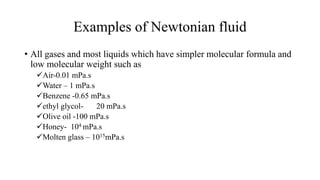
• All gases and most liquids which have simpler molecular formula and
low molecular weight such as
Air-0.01 mPa.s
Water – 1 mPa.s
Benzene -0.65 mPa.s
ethyl glycol- 20 mPa.s
Olive oil -100 mPa.s
Honey- 104 mPa.s
Molten glass – 1015mPa.s
Non-Newtonian fluid
• Fluids which do not obey the Newton's law of viscosity are called as
non-Newtonian fluids
Shear stress Vs shear rate curve (rheogram) is not linear
Does not pass through origin
• The apparent viscosity is not constant for non-Newtonian fluids
• Not constant at T and P
• Depends on the flow condition such as flow geometry, shear rate
Classification of non-Newtonian fluid
• Time-independent:
Fluids for which the rate of shear at any point is determined only by the value
of the shear stress at that point at that instant
• Shear-thinning/Pseudoplastics
Exhibits viscosity that decreases with strain rate - polymer solutions and polymer melts ,
Rubber Latex
• Shear-thickening or dilatant
Exhibits viscosity that increases with strain rate- Sand , Corn starch suspension in water
• Bhingham plastics
minimum stress(threshold stress )is required before the fluid flows
Contd..
• Time-dependent
The apparent viscosity of a fluid changes with time as the fluid is continuously
sheared
• Thixotropic
If the apparent viscosity decreases with time e.g. paints, cream, aqueous iron oxide
gels,some drilling mud's
Result of a break down in the microstructure of the material as shearing continues
This happens when the shear is exceeded of a limit
It leads to non-linear stress-strain behavior Rheopectic
Contd..
• Rheopectic
Is the rare property of some non-Newtonian fluids if the apparent viscosity
increases with time
The longer the fluid undergoes shearing force, the higher its viscosity
Examples are gypsum pastes and printer inks
Also termed as negative thixotropy
• Visco-elastic fluid
displays both elastic and viscous properties.
 A true visco-elastic fluid gives time dependent behavior -steel or aluminum,
Quartz
Rheological behavior of non-Newtonian
Fluid
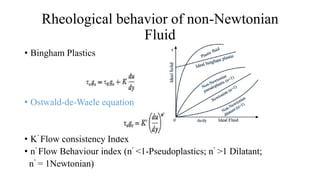
• Bingham Plastics
• Ostwald-de-Waele equation
• K’ Flow consistency Index
• n’ Flow Behaviour index (n’ <1-Pseudoplastics; n’ >1 Dilatant;
n’ = 1Newtonian)
Observation
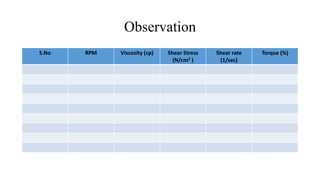
S.No RPM Viscosity (cp) Shear Stress
(N/cm2 )
Shear rate
(1/sec)
Torque (%)
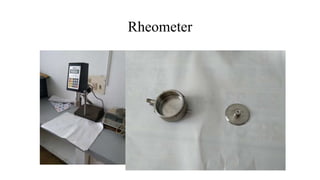
Rheometer
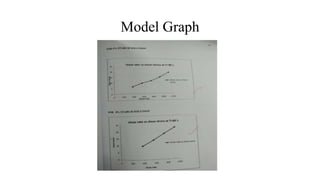
Model Graph
Thank you

Chemical engineering laboratory i

  • 1.
    20MHL12 - CHEMICAL ENGINEERING LABORATORYI Manju Sri A Assistant Professor Department of Chemical Engg
  • 2.
    List of Experiments 1.Determination of Rheological Behavior of a non-Newtonian fluid 2. Performance evaluation of a Centrifugal Pump 3. Residence Time Distribution studies in a Packed Bed Reactor 4. Surface Area analysis using BET Adsorption Isotherm 5.Analysis of Ratio Control System 6. Analysis of Feed Forward Control System 7.Determination of Optimum Controller settings by Tuning and Stability Analysis 8.Comparison of P, PI and PID modes for flow, level and pressure control systems 9.Simulation of Shell and Tube/ Double Pipe Heat Exchanger using Aspen Plus and HTRI 10.Simulation of Distillation Operation using Aspen Plus 11. Sensitivity Analysis of an Flash Separation using Aspen Plus 12. Simulation of a simple Process Flow Diagram using Aspen Plus
  • 3.
    Determination of RheologicalBehavior of a non-Newtonian fluid Aim: To determine the Rheological Behavior of flow for the given non- Newtonian fluid. (Flow behavior index (K) and flow consistency index (n)) Theory: • Fluids which obey the Newton's law of viscosity are called as Newtonian fluids. Newton's law of viscosity is given by • = shear stress • µ = viscosity of fluid • dv/dy = shear rate, rate of strain or velocity • gradient
  • 4.
    Examples of Newtonianfluid • All gases and most liquids which have simpler molecular formula and low molecular weight such as Air-0.01 mPa.s Water – 1 mPa.s Benzene -0.65 mPa.s ethyl glycol- 20 mPa.s Olive oil -100 mPa.s Honey- 104 mPa.s Molten glass – 1015mPa.s
  • 5.
    Non-Newtonian fluid • Fluidswhich do not obey the Newton's law of viscosity are called as non-Newtonian fluids Shear stress Vs shear rate curve (rheogram) is not linear Does not pass through origin • The apparent viscosity is not constant for non-Newtonian fluids • Not constant at T and P • Depends on the flow condition such as flow geometry, shear rate
  • 6.
    Classification of non-Newtonianfluid • Time-independent: Fluids for which the rate of shear at any point is determined only by the value of the shear stress at that point at that instant • Shear-thinning/Pseudoplastics Exhibits viscosity that decreases with strain rate - polymer solutions and polymer melts , Rubber Latex • Shear-thickening or dilatant Exhibits viscosity that increases with strain rate- Sand , Corn starch suspension in water • Bhingham plastics minimum stress(threshold stress )is required before the fluid flows
  • 7.
    Contd.. • Time-dependent The apparentviscosity of a fluid changes with time as the fluid is continuously sheared • Thixotropic If the apparent viscosity decreases with time e.g. paints, cream, aqueous iron oxide gels,some drilling mud's Result of a break down in the microstructure of the material as shearing continues This happens when the shear is exceeded of a limit It leads to non-linear stress-strain behavior Rheopectic
  • 8.
    Contd.. • Rheopectic Is therare property of some non-Newtonian fluids if the apparent viscosity increases with time The longer the fluid undergoes shearing force, the higher its viscosity Examples are gypsum pastes and printer inks Also termed as negative thixotropy • Visco-elastic fluid displays both elastic and viscous properties.  A true visco-elastic fluid gives time dependent behavior -steel or aluminum, Quartz
  • 9.
    Rheological behavior ofnon-Newtonian Fluid • Bingham Plastics • Ostwald-de-Waele equation • K’ Flow consistency Index • n’ Flow Behaviour index (n’ <1-Pseudoplastics; n’ >1 Dilatant; n’ = 1Newtonian)
  • 10.
    Observation S.No RPM Viscosity(cp) Shear Stress (N/cm2 ) Shear rate (1/sec) Torque (%)
  • 11.
  • 12.
  • 13.