Name: Sandra Cash

Student ID: 971382

Date: May 4, 2011


   CHE1006 Lab Exercise Ten Results
       Conservation of Energy

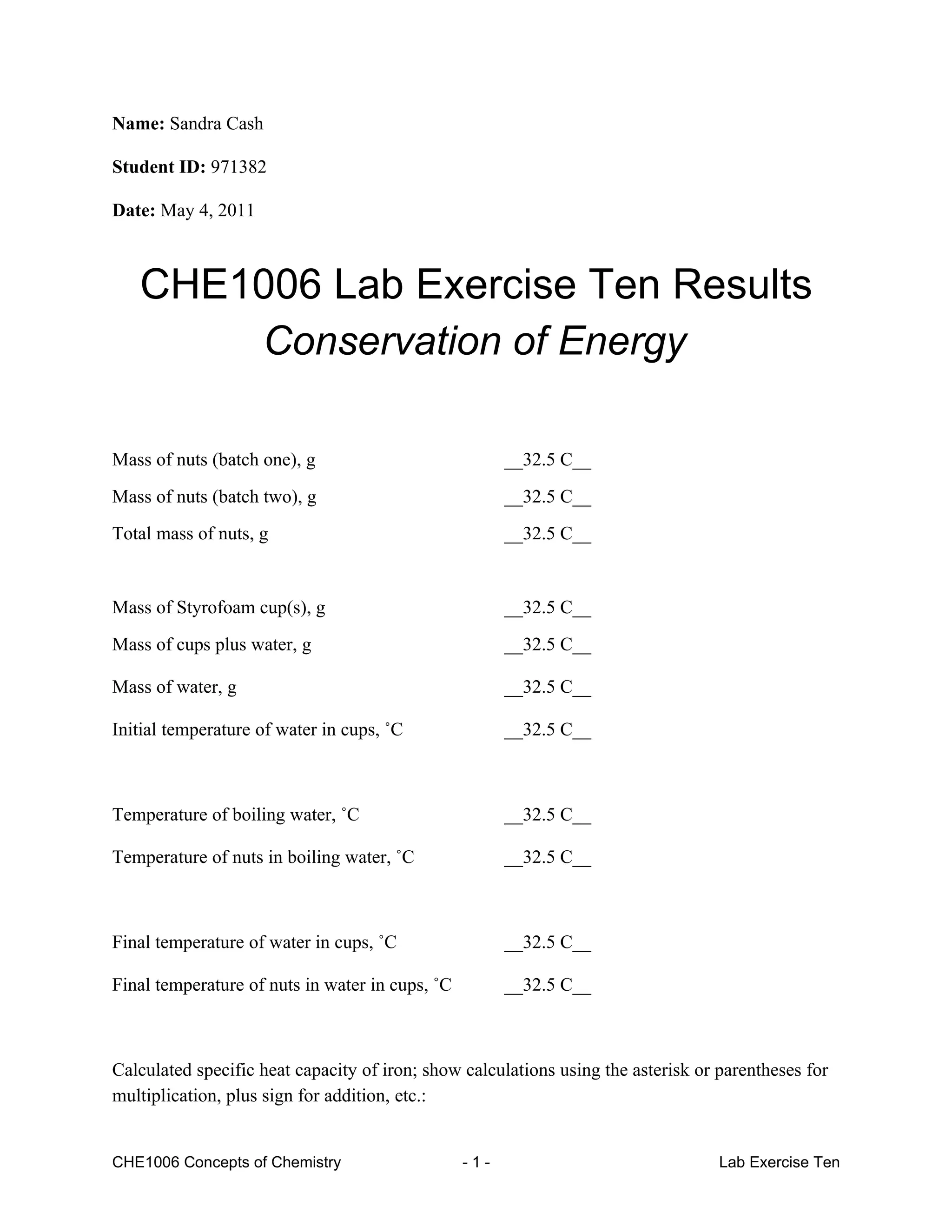
Mass of nuts (batch one), g                            __32.5 C__
Mass of nuts (batch two), g                            __32.5 C__
Total mass of nuts, g                                  __32.5 C__


Mass of Styrofoam cup(s), g                            __32.5 C__
Mass of cups plus water, g                             __32.5 C__

Mass of water, g                                       __32.5 C__

Initial temperature of water in cups, ˚C               __32.5 C__


Temperature of boiling water, ˚C                       __32.5 C__

Temperature of nuts in boiling water, ˚C               __32.5 C__


Final temperature of water in cups, ˚C                 __32.5 C__

Final temperature of nuts in water in cups, ˚C         __32.5 C__


Calculated specific heat capacity of iron; show calculations using the asterisk or parentheses for
multiplication, plus sign for addition, etc.:


CHE1006 Concepts of Chemistry                    -1-                               Lab Exercise Ten
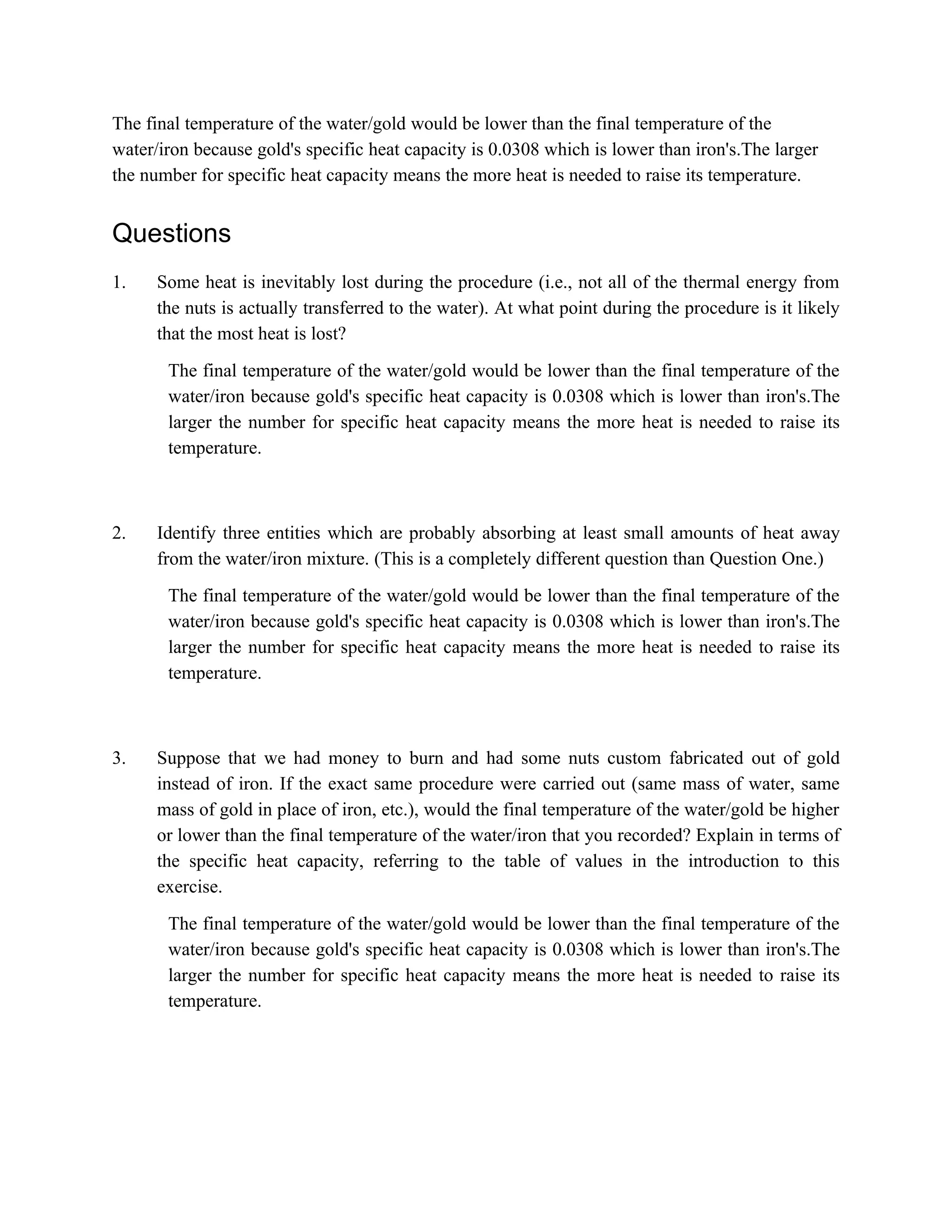
The final temperature of the water/gold would be lower than the final temperature of the
water/iron because gold's specific heat capacity is 0.0308 which is lower than iron's.The larger
the number for specific heat capacity means the more heat is needed to raise its temperature.


Questions
1.    Some heat is inevitably lost during the procedure (i.e., not all of the thermal energy from
      the nuts is actually transferred to the water). At what point during the procedure is it likely
      that the most heat is lost?
       The final temperature of the water/gold would be lower than the final temperature of the
       water/iron because gold's specific heat capacity is 0.0308 which is lower than iron's.The
       larger the number for specific heat capacity means the more heat is needed to raise its
       temperature.


2.    Identify three entities which are probably absorbing at least small amounts of heat away
      from the water/iron mixture. (This is a completely different question than Question One.)
       The final temperature of the water/gold would be lower than the final temperature of the
       water/iron because gold's specific heat capacity is 0.0308 which is lower than iron's.The
       larger the number for specific heat capacity means the more heat is needed to raise its
       temperature.


3.    Suppose that we had money to burn and had some nuts custom fabricated out of gold
      instead of iron. If the exact same procedure were carried out (same mass of water, same
      mass of gold in place of iron, etc.), would the final temperature of the water/gold be higher
      or lower than the final temperature of the water/iron that you recorded? Explain in terms of
      the specific heat capacity, referring to the table of values in the introduction to this
      exercise.
       The final temperature of the water/gold would be lower than the final temperature of the
       water/iron because gold's specific heat capacity is 0.0308 which is lower than iron's.The
       larger the number for specific heat capacity means the more heat is needed to raise its
       temperature.
v.3:8/09


CHE1006 Concepts of Chemistry   -3-   Lab Exercise Ten

Che1006 lab 10q

  • 1.
    Name: Sandra Cash StudentID: 971382 Date: May 4, 2011 CHE1006 Lab Exercise Ten Results Conservation of Energy Mass of nuts (batch one), g __32.5 C__ Mass of nuts (batch two), g __32.5 C__ Total mass of nuts, g __32.5 C__ Mass of Styrofoam cup(s), g __32.5 C__ Mass of cups plus water, g __32.5 C__ Mass of water, g __32.5 C__ Initial temperature of water in cups, ˚C __32.5 C__ Temperature of boiling water, ˚C __32.5 C__ Temperature of nuts in boiling water, ˚C __32.5 C__ Final temperature of water in cups, ˚C __32.5 C__ Final temperature of nuts in water in cups, ˚C __32.5 C__ Calculated specific heat capacity of iron; show calculations using the asterisk or parentheses for multiplication, plus sign for addition, etc.: CHE1006 Concepts of Chemistry -1- Lab Exercise Ten
  • 2.
    The final temperatureof the water/gold would be lower than the final temperature of the water/iron because gold's specific heat capacity is 0.0308 which is lower than iron's.The larger the number for specific heat capacity means the more heat is needed to raise its temperature. Questions 1. Some heat is inevitably lost during the procedure (i.e., not all of the thermal energy from the nuts is actually transferred to the water). At what point during the procedure is it likely that the most heat is lost? The final temperature of the water/gold would be lower than the final temperature of the water/iron because gold's specific heat capacity is 0.0308 which is lower than iron's.The larger the number for specific heat capacity means the more heat is needed to raise its temperature. 2. Identify three entities which are probably absorbing at least small amounts of heat away from the water/iron mixture. (This is a completely different question than Question One.) The final temperature of the water/gold would be lower than the final temperature of the water/iron because gold's specific heat capacity is 0.0308 which is lower than iron's.The larger the number for specific heat capacity means the more heat is needed to raise its temperature. 3. Suppose that we had money to burn and had some nuts custom fabricated out of gold instead of iron. If the exact same procedure were carried out (same mass of water, same mass of gold in place of iron, etc.), would the final temperature of the water/gold be higher or lower than the final temperature of the water/iron that you recorded? Explain in terms of the specific heat capacity, referring to the table of values in the introduction to this exercise. The final temperature of the water/gold would be lower than the final temperature of the water/iron because gold's specific heat capacity is 0.0308 which is lower than iron's.The larger the number for specific heat capacity means the more heat is needed to raise its temperature.
  • 3.
    v.3:8/09 CHE1006 Concepts ofChemistry -3- Lab Exercise Ten