The Sun:
Our star
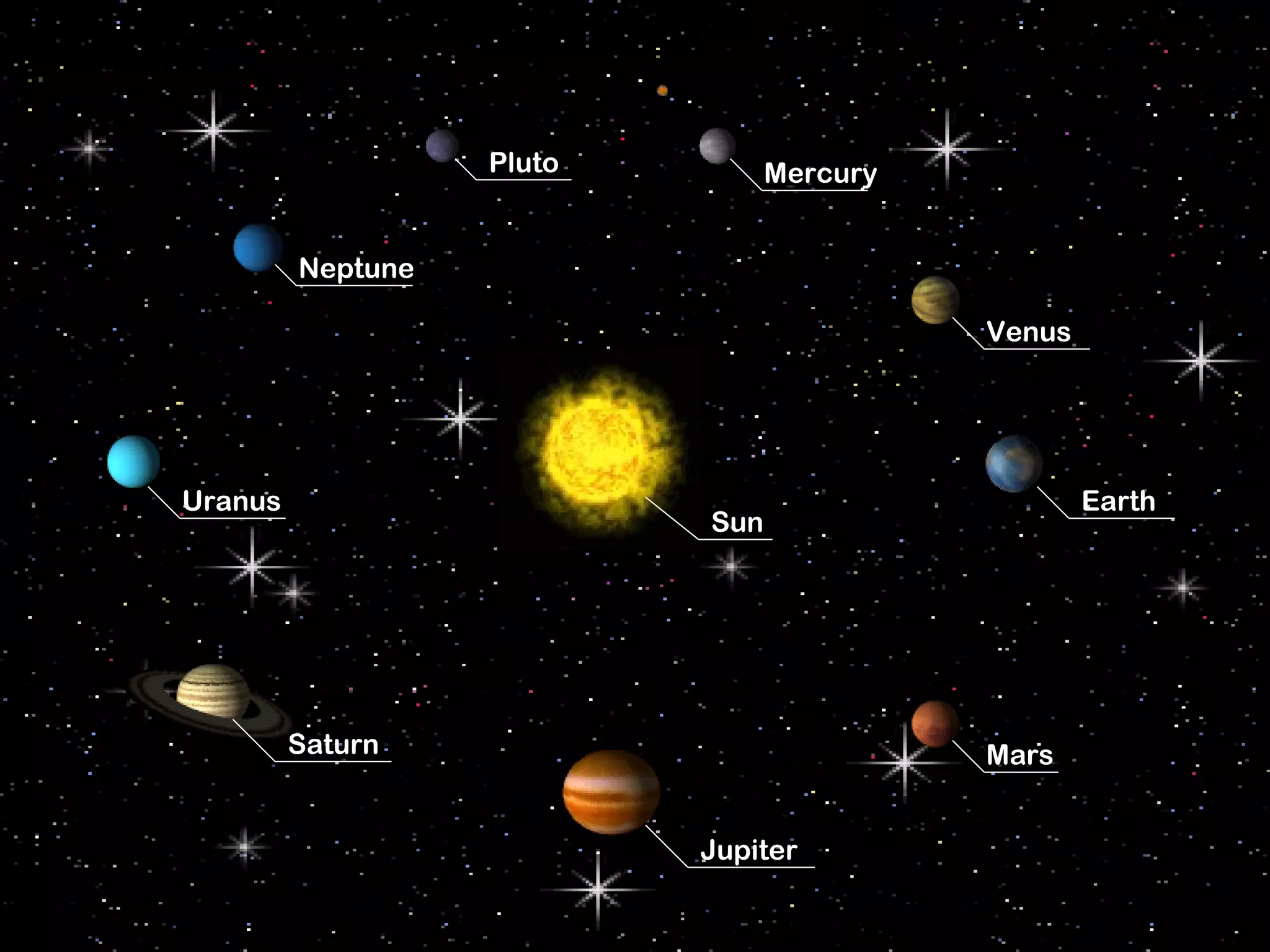
Sun
Mercury
Venus
Earth
Mars
Jupiter
Saturn
Uranus
Neptune
Pluto
•The sun is very hot.
•The sun provides energy that
heats the Earth and allows
plants and animals to survive.
•The sun is very bright.
•Light from the sun allows
animals to see and plants to
make food.
•The Sun has a strong force of
gravity.
•The Sun’s gravity holds Earth
close to the Sun where it
received the Sun’s energy.
•The Sun is a good distance
from the Earth. The Sun is far
enough away that the Earth is
not too hot or too cold.
Our Sun is the closest star to
the Earth.
It is at least 4.5 billion years
old.
Without the Sun, the Earth
would not be able to support
life.
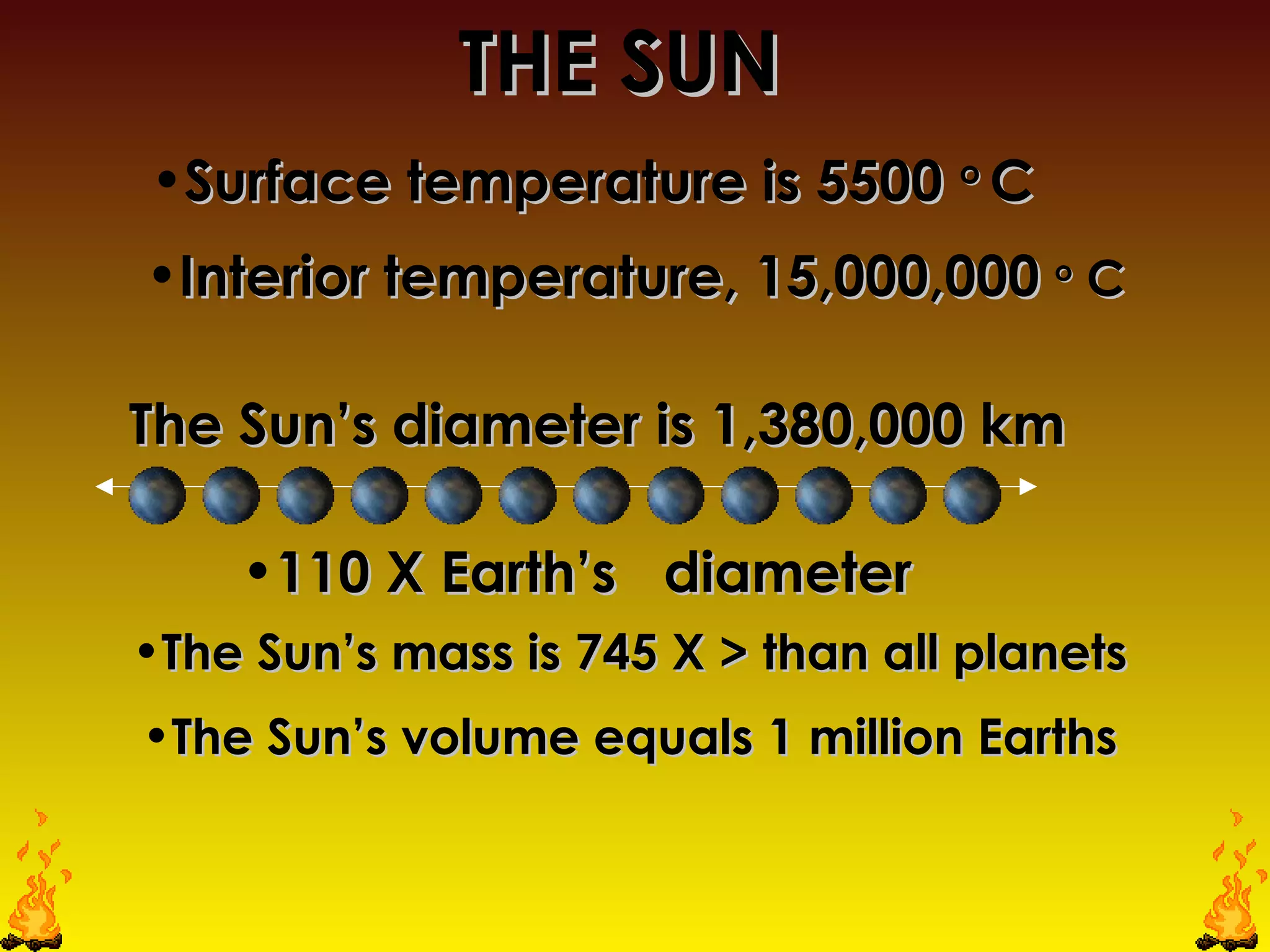
THE SUNTHE SUN
The Sun’s diameter is 1,380,000 kmThe Sun’s diameter is 1,380,000 km
•110 X Earth’s diameter110 X Earth’s diameter
•The Sun’s volume equals 1 million EarthsThe Sun’s volume equals 1 million Earths
•The Sun’s mass is 745 X > than all planetsThe Sun’s mass is 745 X > than all planets
•Surface temperature is 5500Surface temperature is 5500 oo
CC
•Interior temperature, 15,000,000Interior temperature, 15,000,000 oo
CC
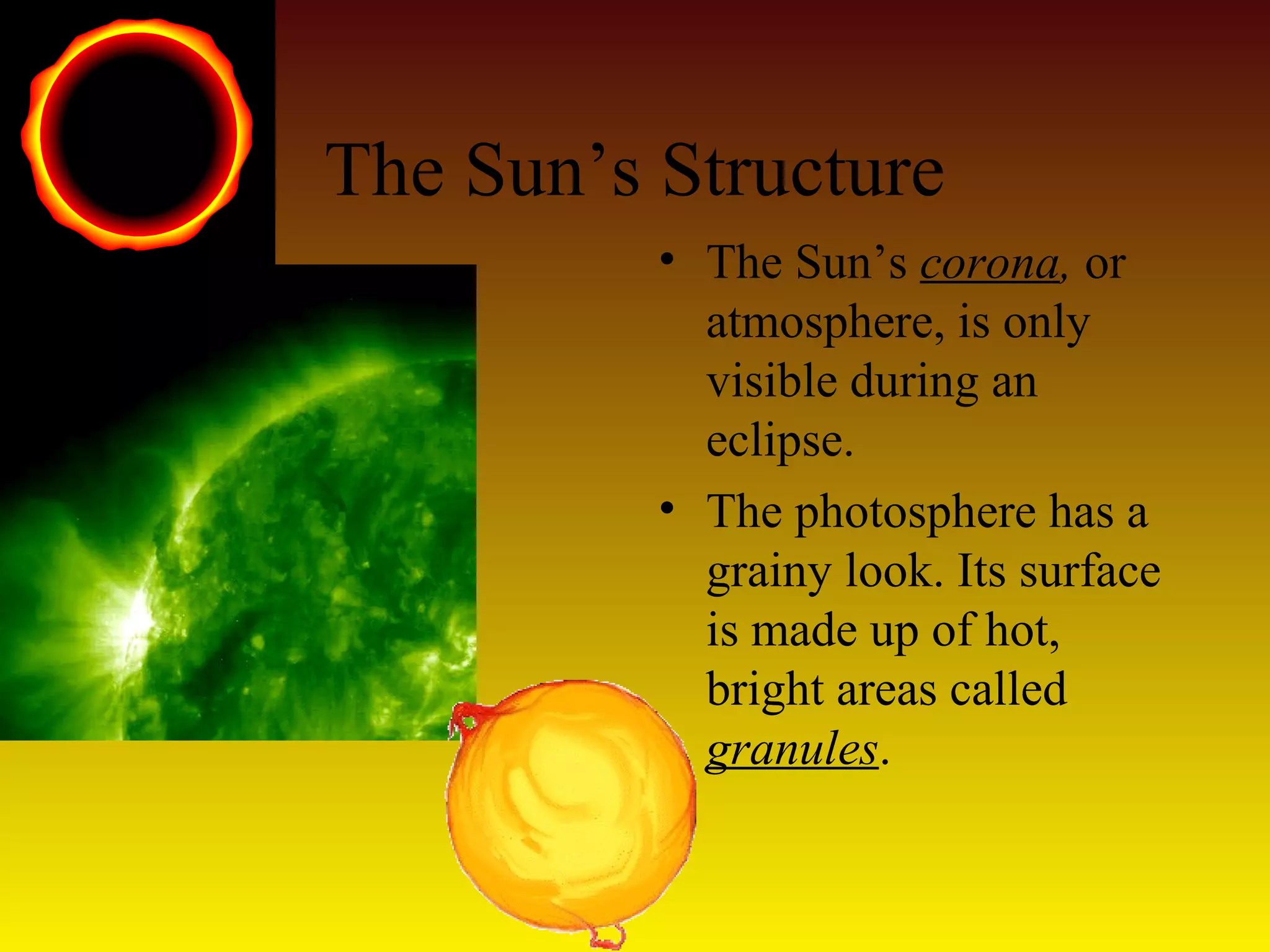
The Sun’s Structure
• The Sun’s corona, or
atmosphere, is only
visible during an
eclipse.
• The photosphere has a
grainy look. Its surface
is made up of hot,
bright areas called
granules.
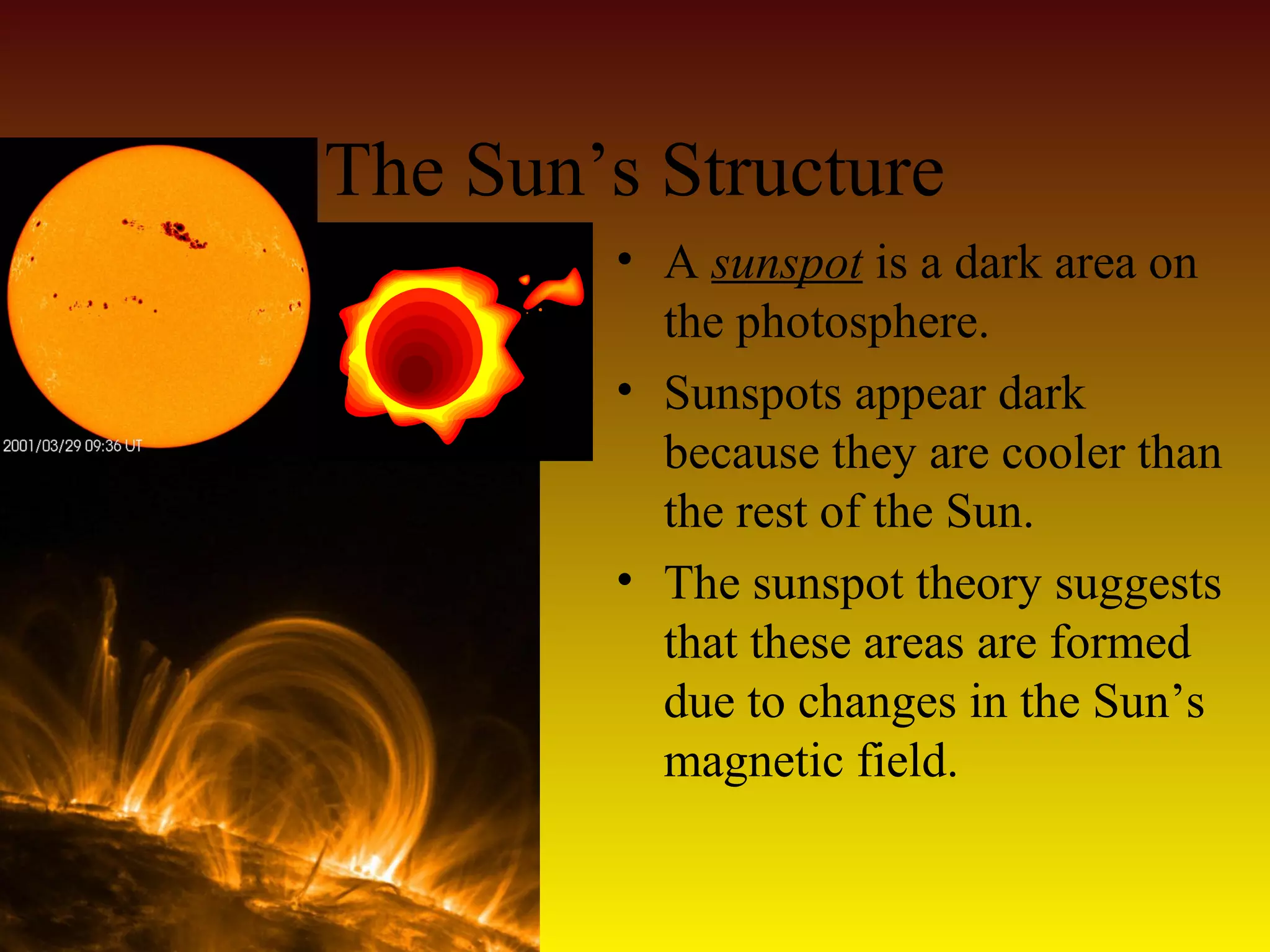
The Sun’s Structure
• A sunspot is a dark area on
the photosphere.
• Sunspots appear dark
because they are cooler than
the rest of the Sun.
• The sunspot theory suggests
that these areas are formed
due to changes in the Sun’s
magnetic field.
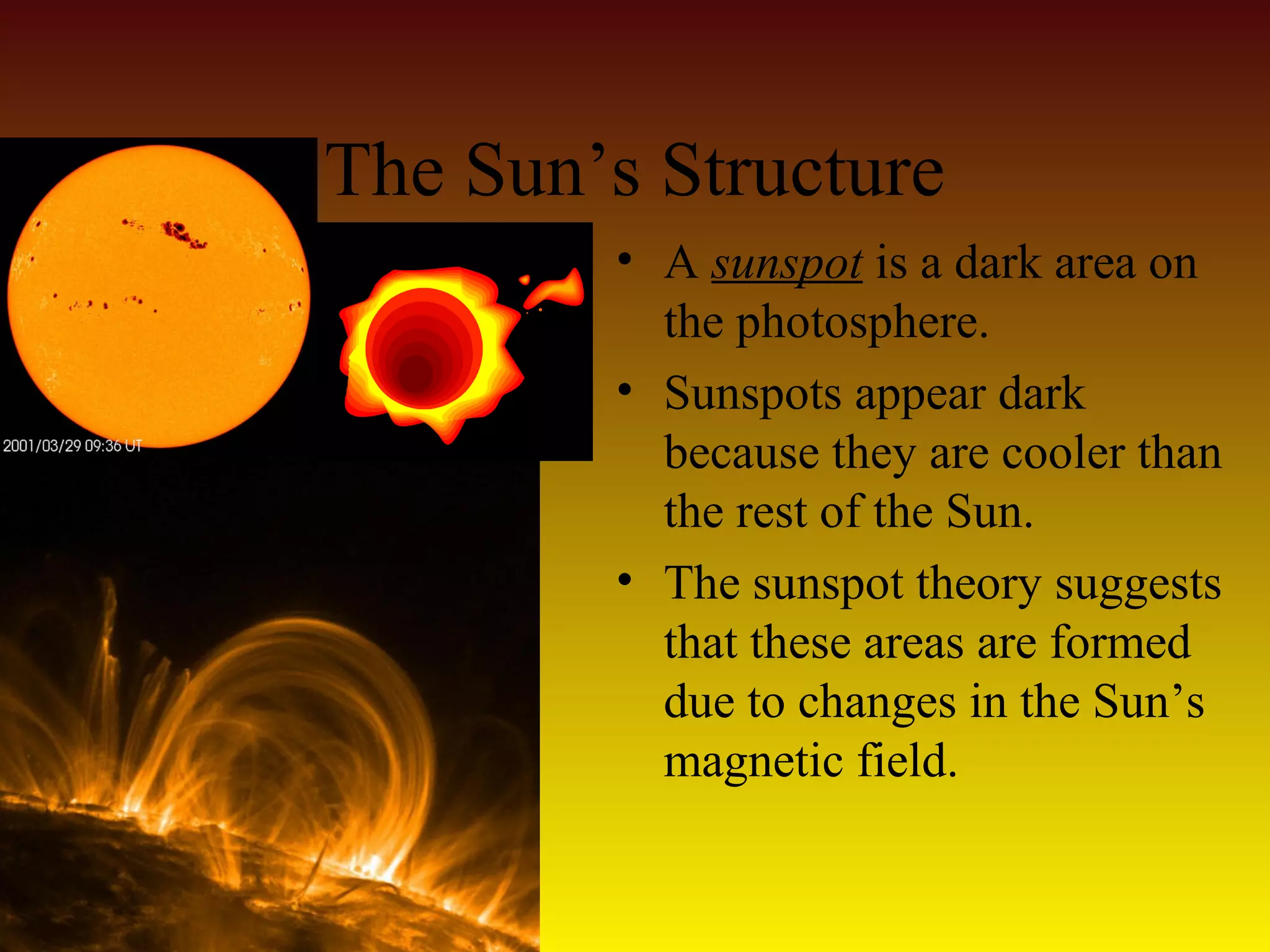
The Sun’s Structure
• A sunspot is a dark area on
the photosphere.
• Sunspots appear dark
because they are cooler than
the rest of the Sun.
• The sunspot theory suggests
that these areas are formed
due to changes in the Sun’s
magnetic field.

Characteristics sun

  • 1.
  • 2.
  • 3.
    •The sun isvery hot. •The sun provides energy that heats the Earth and allows plants and animals to survive. •The sun is very bright. •Light from the sun allows animals to see and plants to make food.
  • 4.
    •The Sun hasa strong force of gravity. •The Sun’s gravity holds Earth close to the Sun where it received the Sun’s energy. •The Sun is a good distance from the Earth. The Sun is far enough away that the Earth is not too hot or too cold.
  • 5.
    Our Sun isthe closest star to the Earth. It is at least 4.5 billion years old. Without the Sun, the Earth would not be able to support life.
  • 6.
    THE SUNTHE SUN TheSun’s diameter is 1,380,000 kmThe Sun’s diameter is 1,380,000 km •110 X Earth’s diameter110 X Earth’s diameter •The Sun’s volume equals 1 million EarthsThe Sun’s volume equals 1 million Earths •The Sun’s mass is 745 X > than all planetsThe Sun’s mass is 745 X > than all planets •Surface temperature is 5500Surface temperature is 5500 oo CC •Interior temperature, 15,000,000Interior temperature, 15,000,000 oo CC
  • 8.
    The Sun’s Structure •The Sun’s corona, or atmosphere, is only visible during an eclipse. • The photosphere has a grainy look. Its surface is made up of hot, bright areas called granules.
  • 9.
    The Sun’s Structure •A sunspot is a dark area on the photosphere. • Sunspots appear dark because they are cooler than the rest of the Sun. • The sunspot theory suggests that these areas are formed due to changes in the Sun’s magnetic field.
  • 10.
    The Sun’s Structure •A sunspot is a dark area on the photosphere. • Sunspots appear dark because they are cooler than the rest of the Sun. • The sunspot theory suggests that these areas are formed due to changes in the Sun’s magnetic field.