• Define Character
• Look at Psychological Perspectives
• Discuss Character’s Components
• Build a Foundation for Developing Character
https://www.youtube.com/watch?v=YgxACD-rL5c
•Can we define character?
• We all have character
• Components of Character include positive
and negative social behaviors (Bandura 1999)
• Our goal is to
improve the quality
of our own character
and our organizations
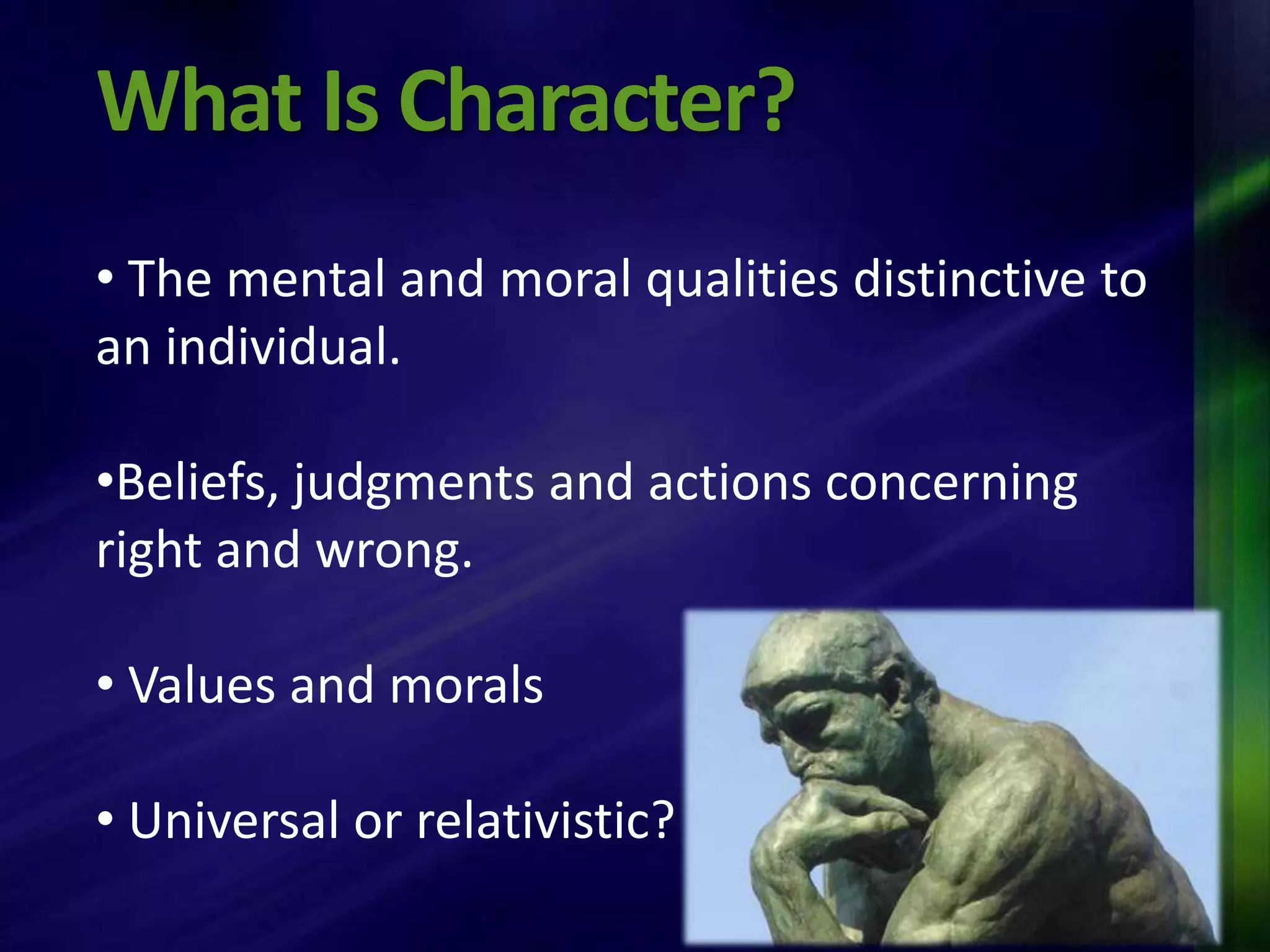
• The mental and moral qualities distinctive to
an individual.
•Beliefs, judgments and actions concerning
right and wrong.
• Values and morals
• Universal or relativistic?
•Modeling
•Reinforcement
•Social Comparison
• Development of morality
• Right vs. Wrong
• How and Why
Development  Reasoning  Behavior
Character determined by:
• Personal elements
• Social factors
• Compassion = empathy
• Fairness
• Ethical Behavior (good sporting behavior)
• Integrity = moral self-efficacy
Shields and Bredemeir (1995)
• Trustworthiness
• Respect
• Responsibility
•Fairness
•Caring
•Citizenship
Character Counts! Six Pillars of Character® Josephson Institute
• Honesty, loyalty, reliability
• Your word is your bond, your name is your
legacy
• The golden Rule
• Use words wisely
•Use good manners
• Be self-disciplined
• Think before you act — consider the
consequences
• Be accountable for what you say or do
• Be open-minded
• Follow the rules
•Sharing
• Compassion
•Empathy
•Kindness
•Gratitude
•Patience
• Cooperation
• Follow Rules
• Respect authority
• Positively represent your
community
• Start with the basics
• Be consistent
•Practice what you preach
• Your Core Values are what help define your
character
-Fundamental beliefs
•Core values = our own personal mission
statement
• Define ethical behavior to your audience
• Reinforce and encourage these behaviors
• Model the appropriate behaviors
• Explain specific appropriateness of behaviors
• Discuss moral dilemmas and choices
• Build moral dilemmas into practice
• Teach cooperative learning strategies
• Transfer power from leaders to participants
1) Tell The Truth = Honesty
• Trustworthiness
-Dependability > Ability
2) Be a Gentleman = Golden rule
• Thoughtfulness
• Empathy
• Self-sacrifice
3) Love your Brother
• Tolerance
• Service
-Kindness
-Humility
-Love
• Learning to overcome obstacles, cooperate
with others, developing self control, and
persist in the face of defeat (Ewing et al, 1996)
• Be an Example
• Show how and tell why

Character development

  • 2.
    • Define Character •Look at Psychological Perspectives • Discuss Character’s Components • Build a Foundation for Developing Character
  • 4.
  • 5.
    •Can we definecharacter?
  • 6.
    • We allhave character • Components of Character include positive and negative social behaviors (Bandura 1999) • Our goal is to improve the quality of our own character and our organizations
  • 7.
    • The mentaland moral qualities distinctive to an individual. •Beliefs, judgments and actions concerning right and wrong. • Values and morals • Universal or relativistic?
  • 9.
  • 10.
    • Development ofmorality • Right vs. Wrong • How and Why Development  Reasoning  Behavior
  • 11.
    Character determined by: •Personal elements • Social factors
  • 13.
    • Compassion =empathy • Fairness • Ethical Behavior (good sporting behavior) • Integrity = moral self-efficacy Shields and Bredemeir (1995)
  • 14.
    • Trustworthiness • Respect •Responsibility •Fairness •Caring •Citizenship Character Counts! Six Pillars of Character® Josephson Institute
  • 15.
    • Honesty, loyalty,reliability • Your word is your bond, your name is your legacy
  • 16.
    • The goldenRule • Use words wisely •Use good manners
  • 17.
    • Be self-disciplined •Think before you act — consider the consequences • Be accountable for what you say or do
  • 18.
    • Be open-minded •Follow the rules •Sharing
  • 19.
  • 20.
    • Cooperation • FollowRules • Respect authority • Positively represent your community
  • 22.
    • Start withthe basics • Be consistent •Practice what you preach
  • 23.
    • Your CoreValues are what help define your character -Fundamental beliefs •Core values = our own personal mission statement
  • 24.
    • Define ethicalbehavior to your audience • Reinforce and encourage these behaviors • Model the appropriate behaviors • Explain specific appropriateness of behaviors • Discuss moral dilemmas and choices • Build moral dilemmas into practice • Teach cooperative learning strategies • Transfer power from leaders to participants
  • 25.
    1) Tell TheTruth = Honesty • Trustworthiness -Dependability > Ability 2) Be a Gentleman = Golden rule • Thoughtfulness • Empathy • Self-sacrifice 3) Love your Brother • Tolerance • Service -Kindness -Humility -Love
  • 26.
    • Learning toovercome obstacles, cooperate with others, developing self control, and persist in the face of defeat (Ewing et al, 1996)
  • 31.
    • Be anExample • Show how and tell why