Biology 1.2 What’s important?

4 Plant Parts:
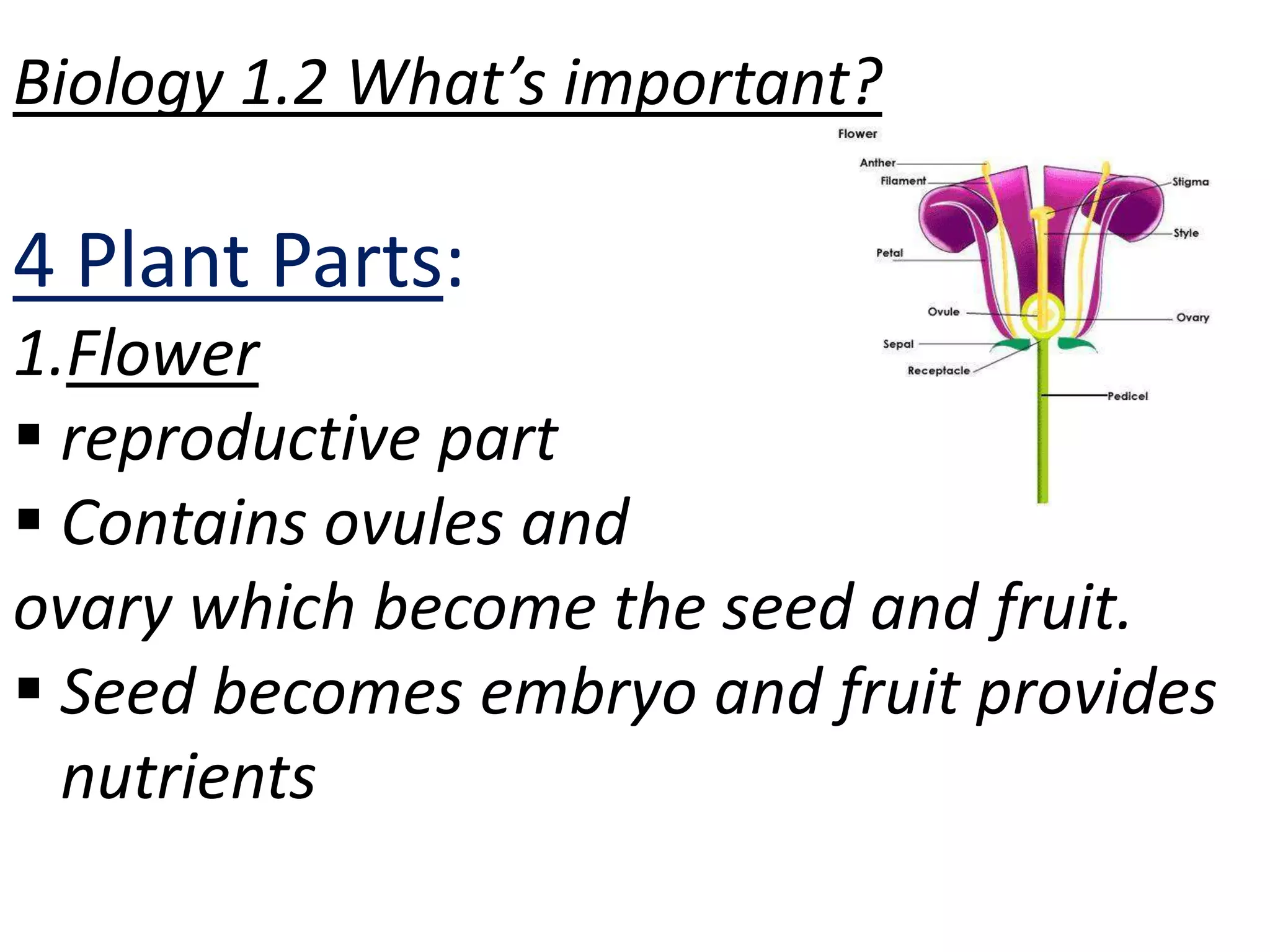
1.Flower
 reproductive part
 Contains ovules and
ovary which become the seed and fruit.
 Seed becomes embryo and fruit provides
  nutrients
Biology 1.2 What’s important?

4 Plant Parts:
1. Flower
 reproductive part
 Contains ovules and ovary which become the seed and fruit.
 Seed becomes embryo and fruit provides nutrients

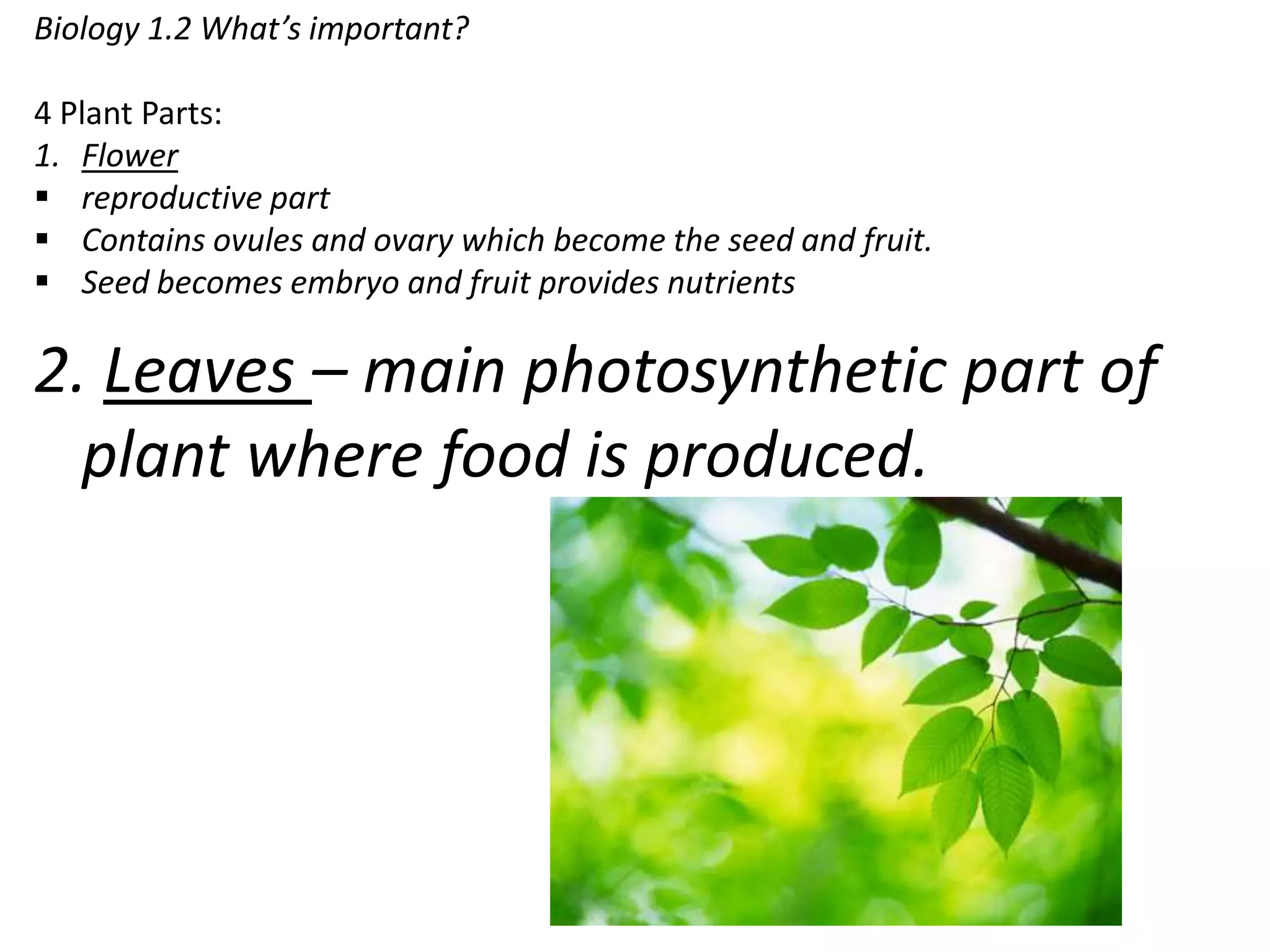
2. Leaves – main photosynthetic part of
  plant where food is produced.
2. Leaves – main photosynthetic part of plant where food is produced.


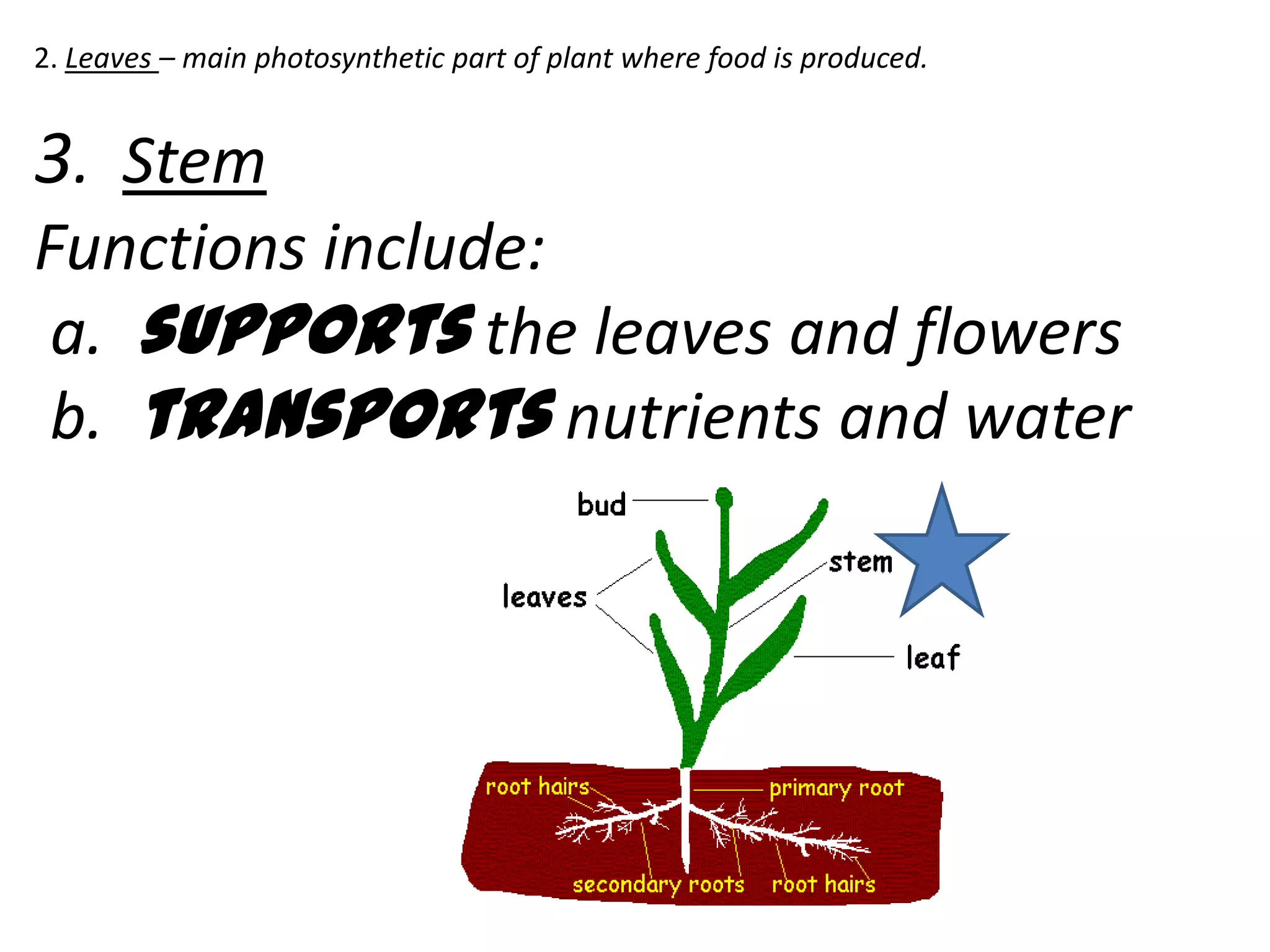
3. Stem
Functions include:
 a. supports the leaves and flowers
 b. transports nutrients and water
3.   Stem
     Functions include:
a. supports the leaves and flowers
b. transports nutrients and water


Two types of stems are:
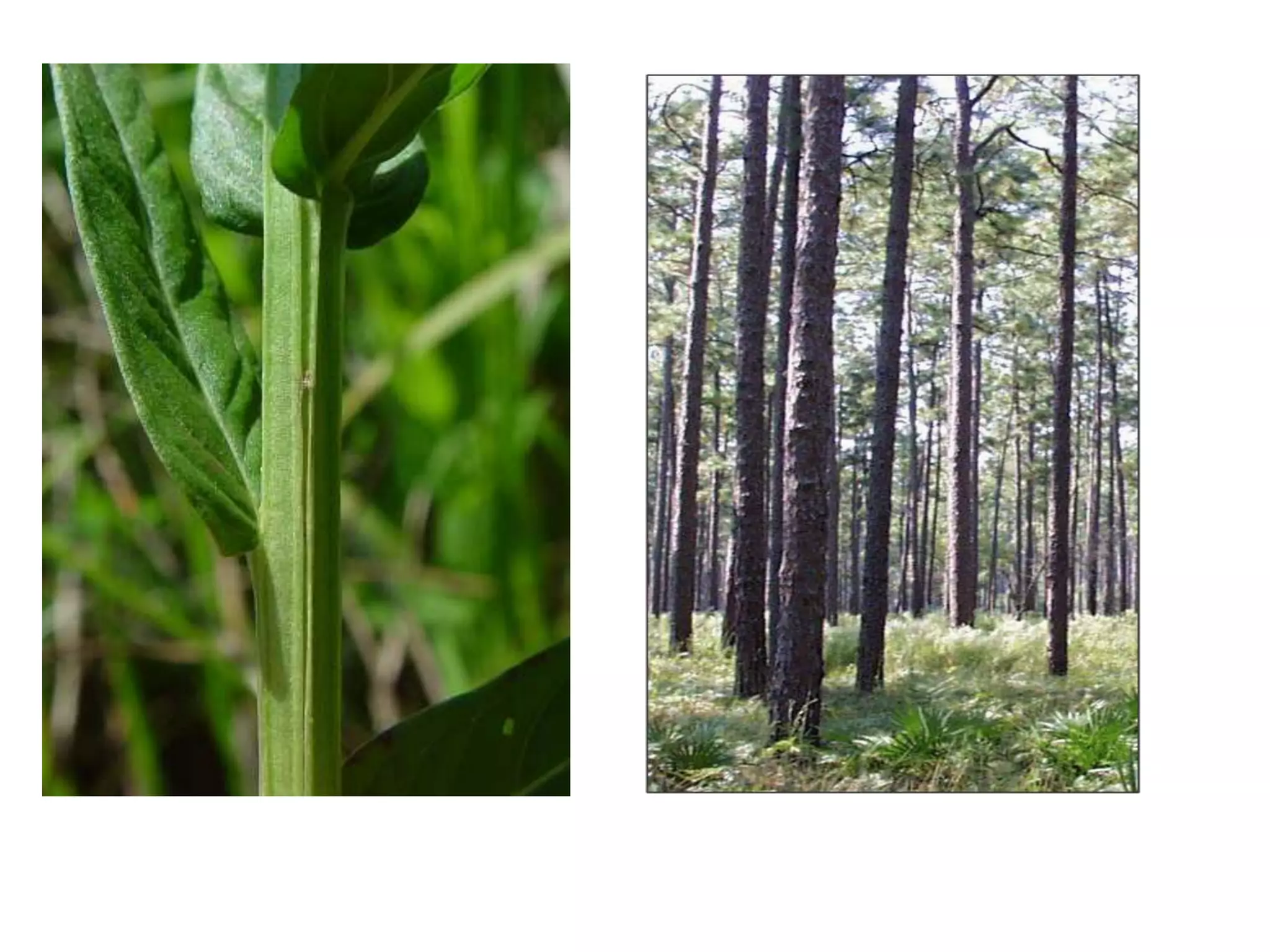
     woody stems –
• found on trees and shrubs
• are brown and rigid
  herbaceous stem–
• found on herbs
• are green and flexible
• called herbs includes flowers, and all                   plants
     with flexible stem
                               •     Vines can be either
3. Stem

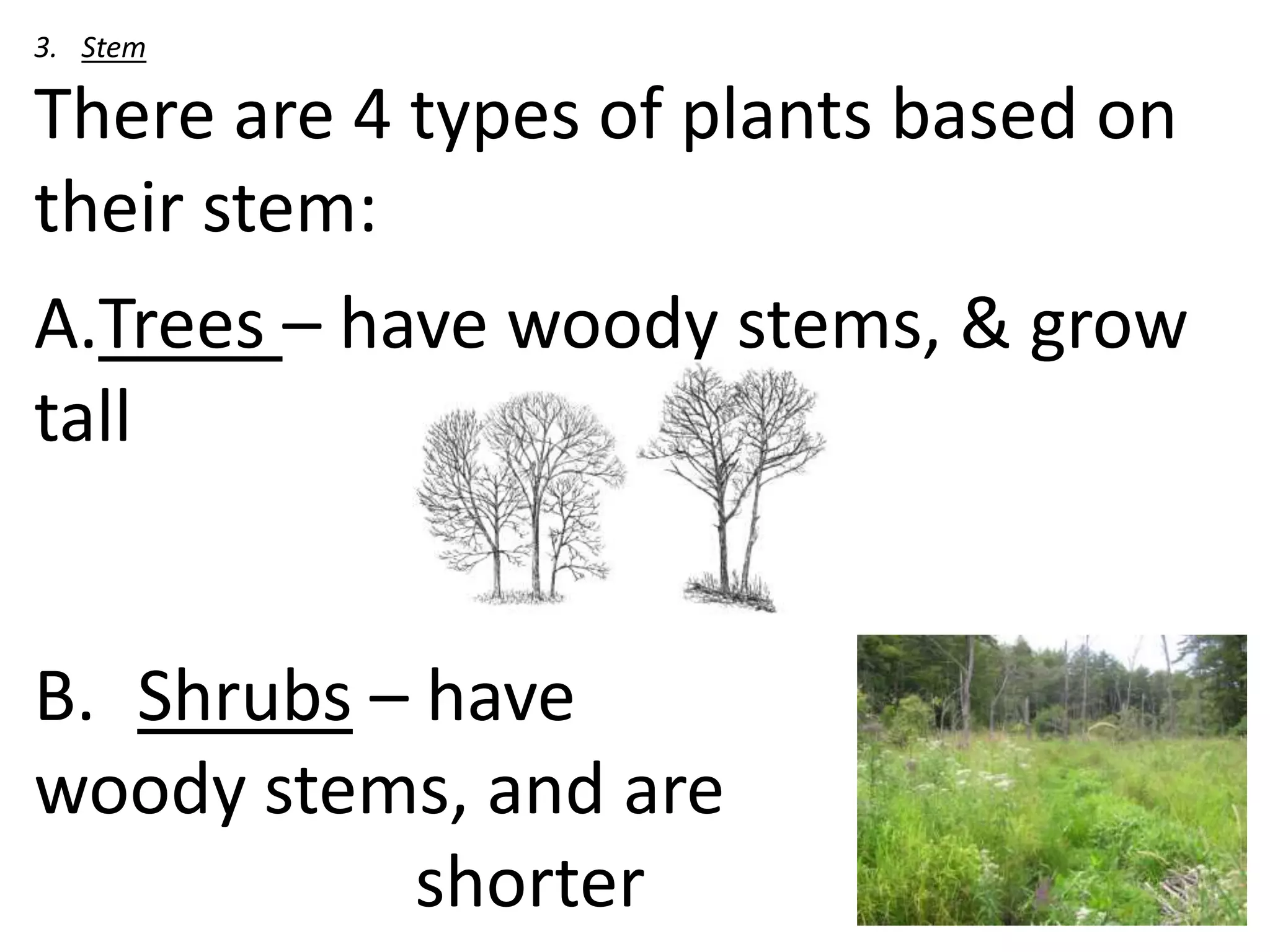
There are 4 types of plants based on
their stem:
A.Trees – have woody stems, & grow
tall


B. Shrubs – have
woody stems, and are
           shorter
3. Stem
There are 4 types of plants based on their stem:

A.Trees – have woody stems, & grow tall
B.Shrubs – have woody stems, and are shorter


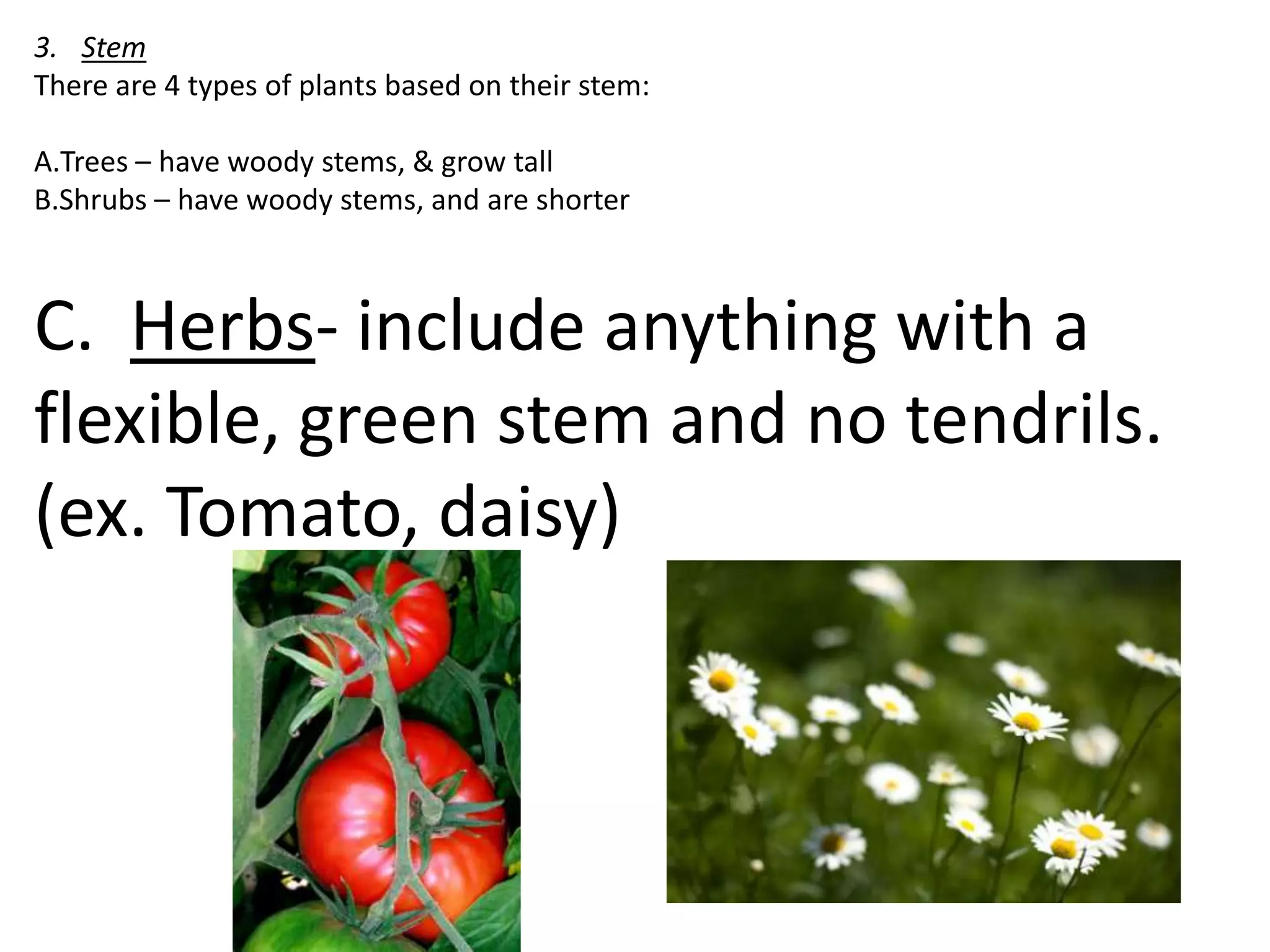
C. Herbs- include anything with a
flexible, green stem and no tendrils.
(ex. Tomato, daisy)
3. Stem
There are 4 types of plants based on their stem:

A.Trees – have woody stems, & grow tall
B.Shrubs – have woody stems, and are shorter
C.Herbs- include anything with a flexible, green stem and no tendrils.

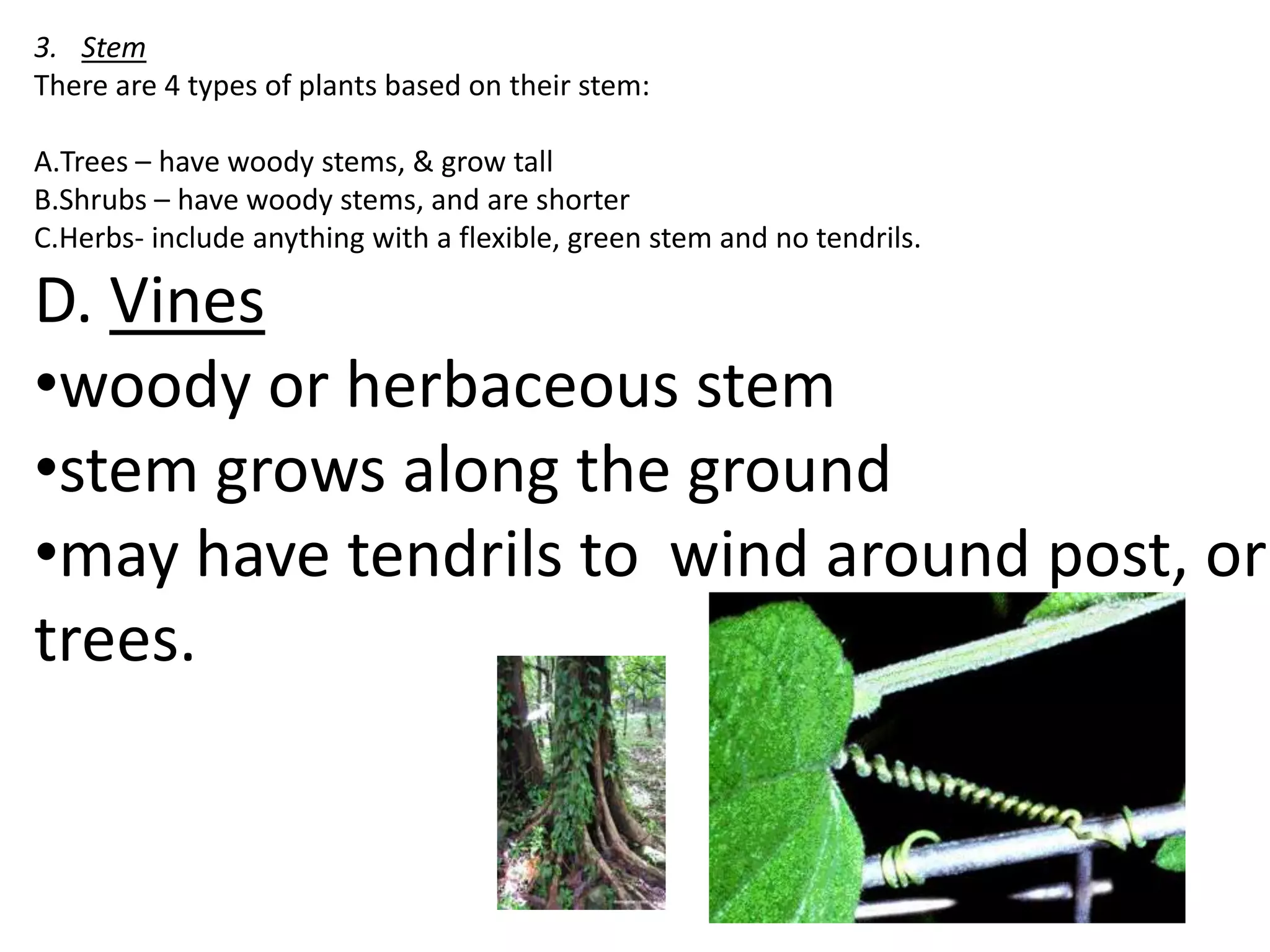
D. Vines
•woody or herbaceous stem
•stem grows along the ground
•may have tendrils to wind around post, or
trees.
3. Stem
There are 4 types of plants based on their stem:
A.Trees – have woody stems, & grow tall
B.Shrubs – have woody stems, and are shorter
C.Herbs- include anything with a flexible, green stem and no tendrils.
D. Vines – can have a woody or a herbaceous stem, which grows along the ground, or may have
tendrils to         wind around post, or trees.

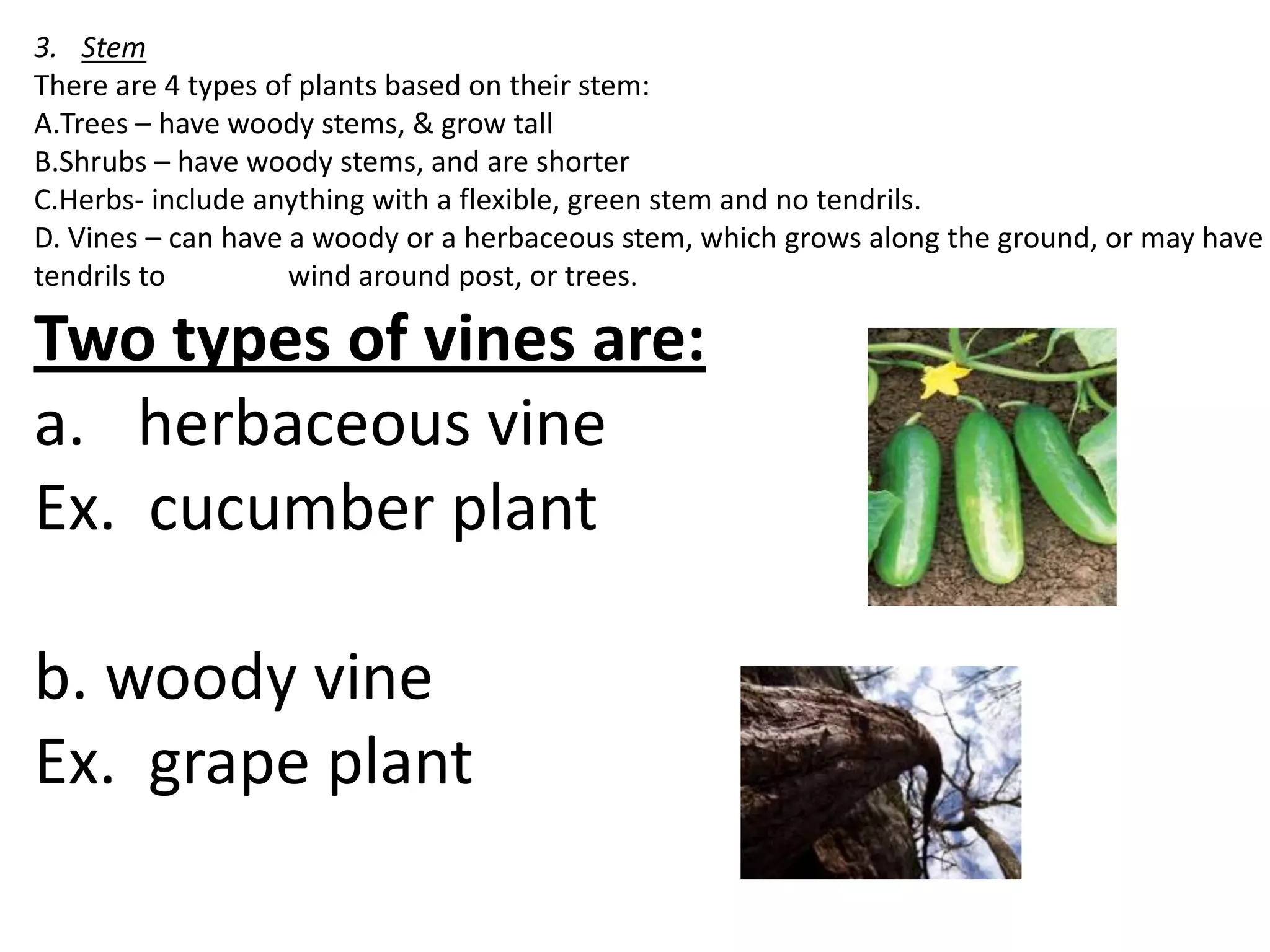
Two types of vines are:
a. herbaceous vine
Ex. cucumber plant

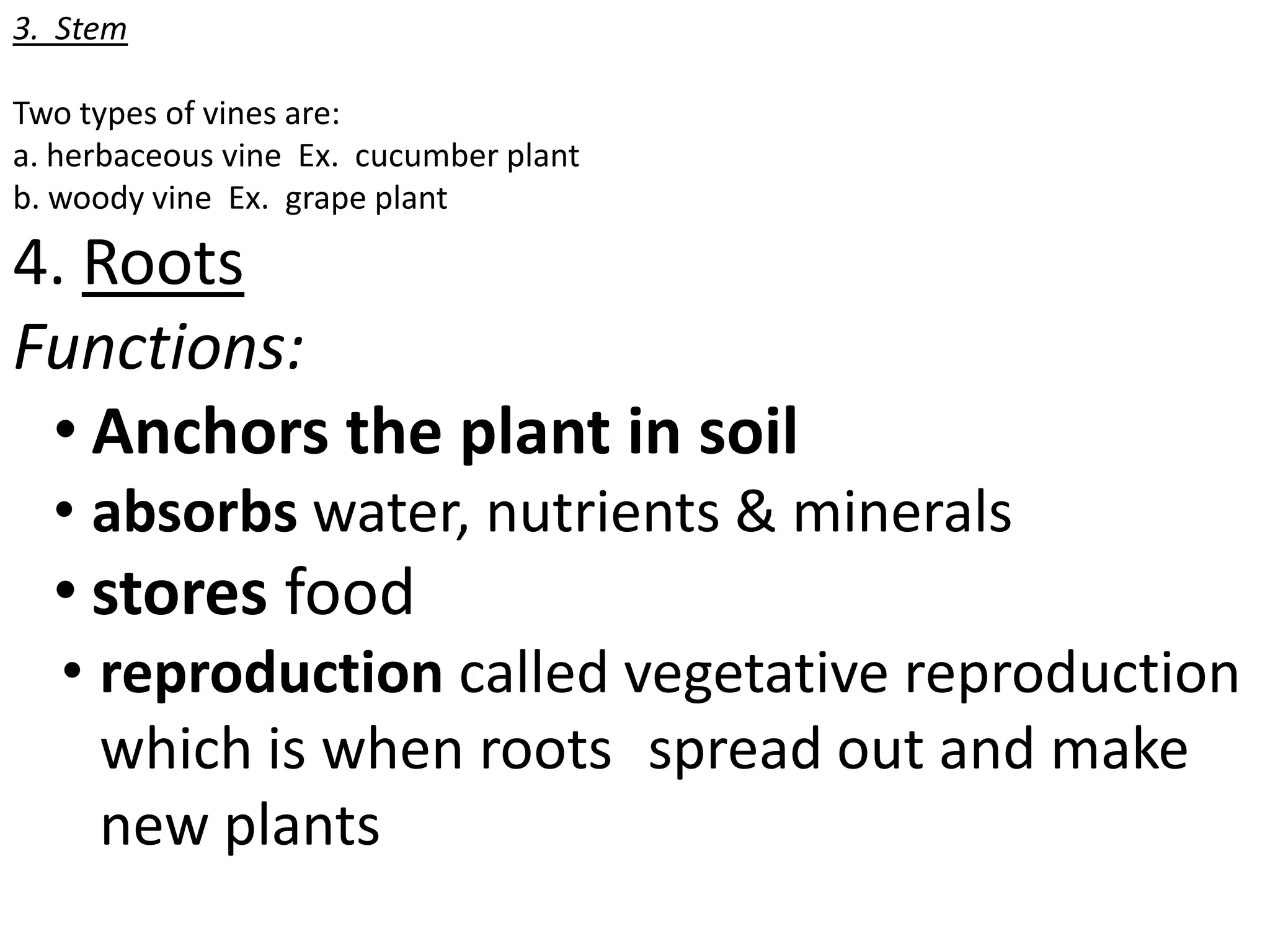
b. woody vine
Ex. grape plant
3. Stem

Two types of vines are:
a. herbaceous vine Ex. cucumber plant
b. woody vine Ex. grape plant

4. Roots
Functions:
 • Anchors the plant in soil
  • absorbs water, nutrients & minerals
  • stores food
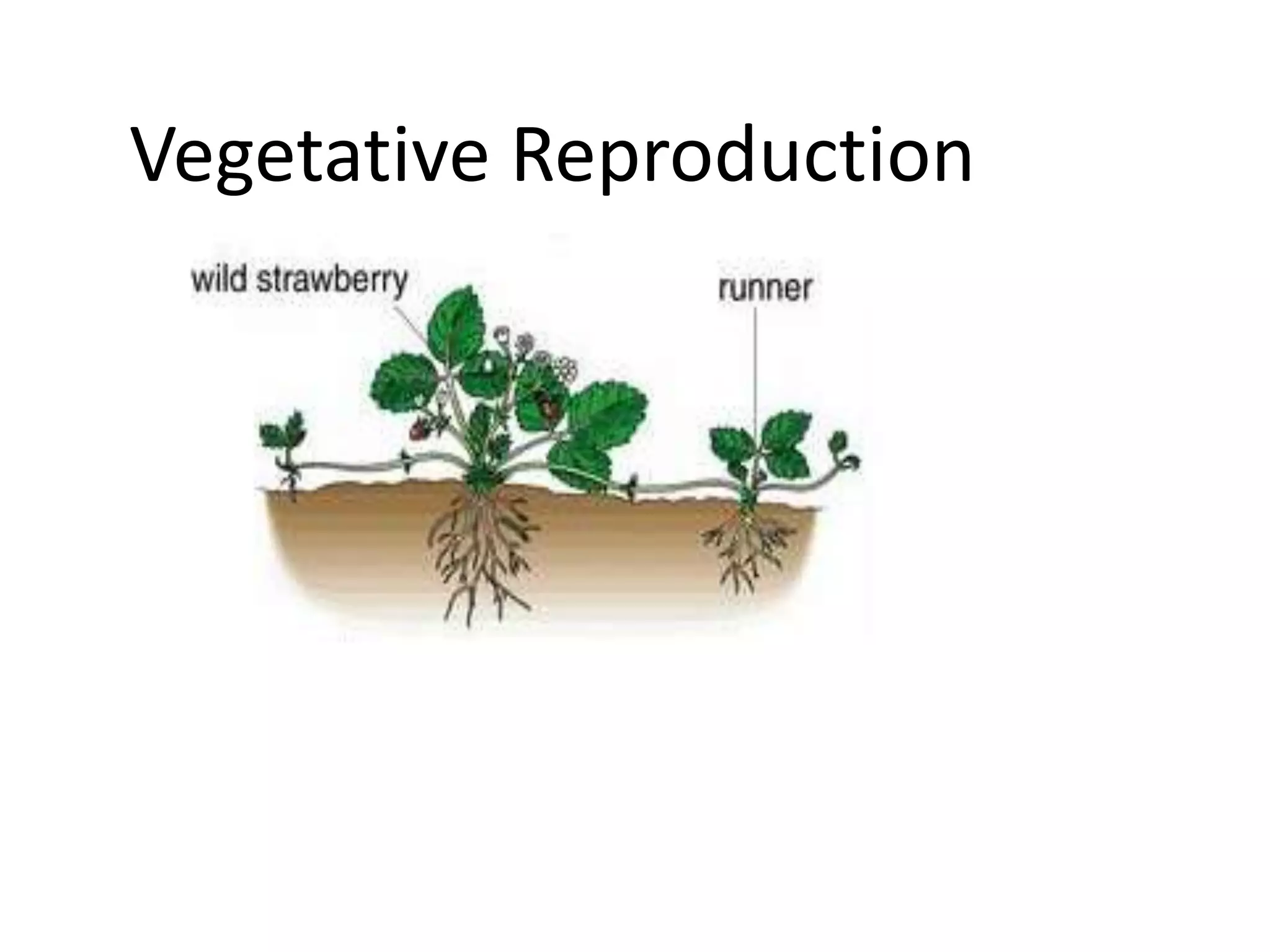
   • reproduction called vegetative reproduction
     which is when roots spread out and make
     new plants
Vegetative Reproduction
4. Roots
Functions:
    • Anchors the plant in soil
    • absorbs water, nutrients & minerals
    • stores food
     • reproduction called vegetative reproduction which is when roots   spread out and make new
        plants

Types of root systems
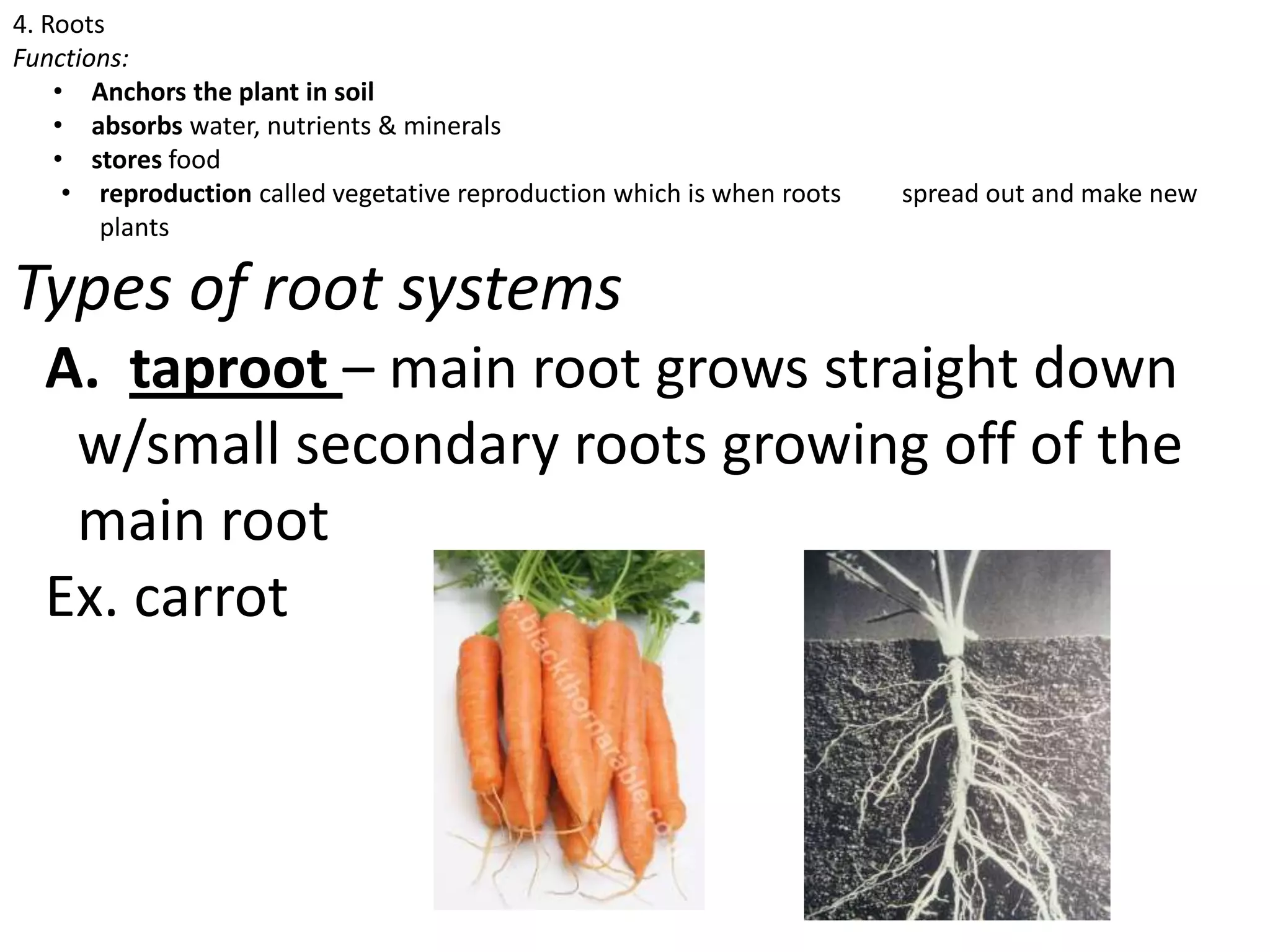
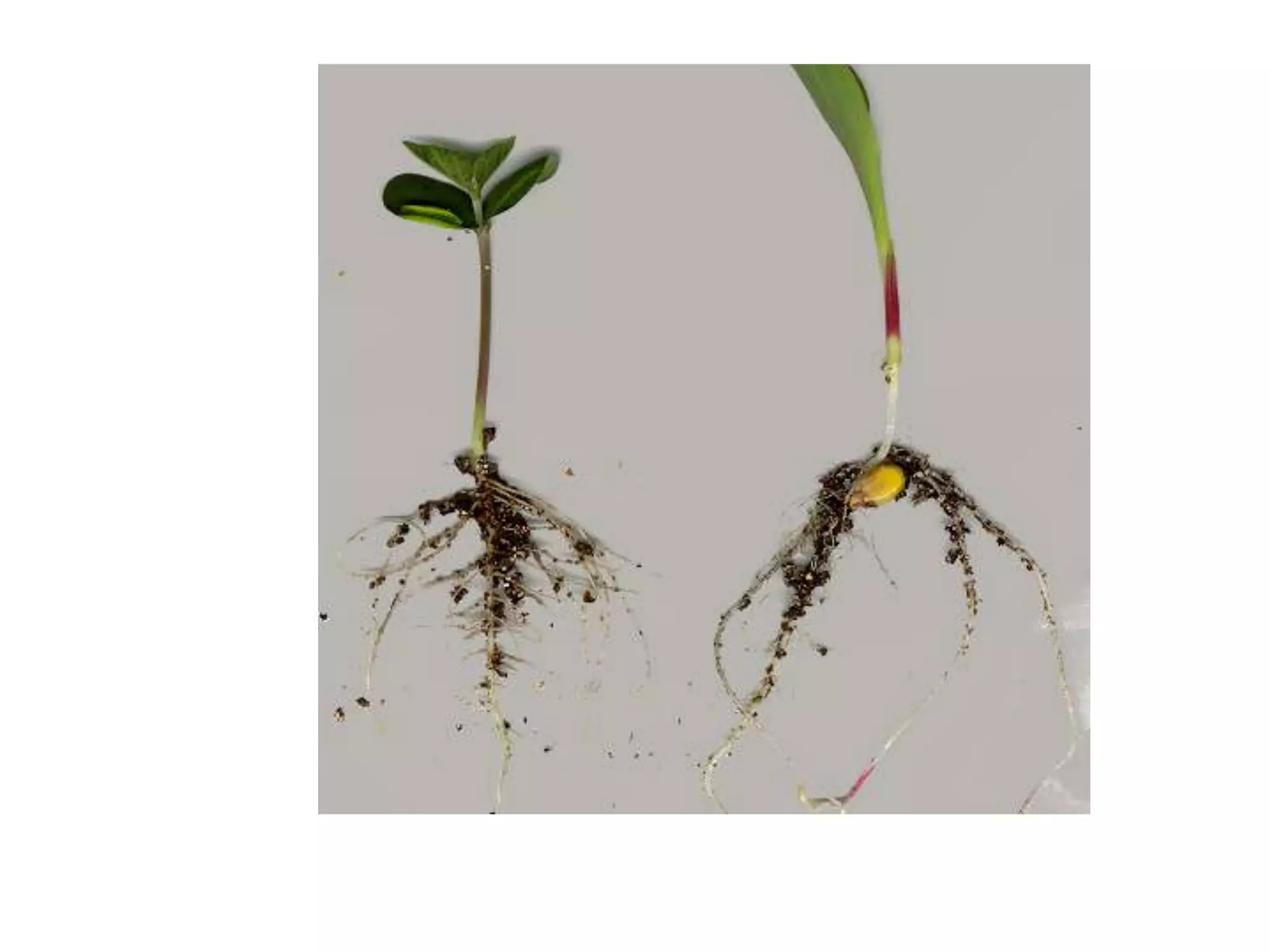
  A. taproot – main root grows straight down
   w/small secondary roots growing off of the
   main root
  Ex. carrot
4. Roots
Types of root systems
  A. taproot – main root grows straight down w/small secondary roots growing off of the
    main root
  Ex. carrot

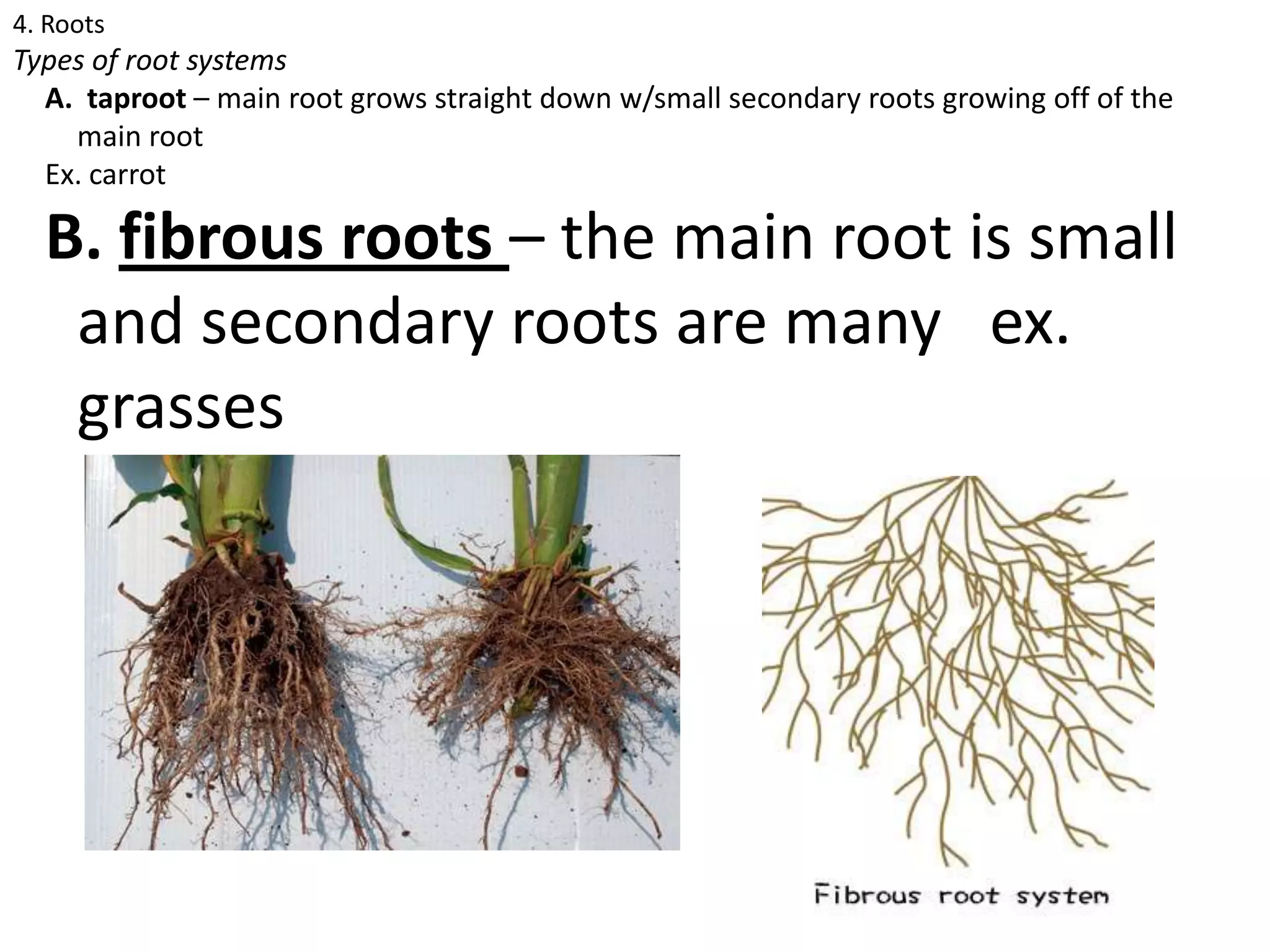
  B. fibrous roots – the main root is small
   and secondary roots are many ex.
   grasses
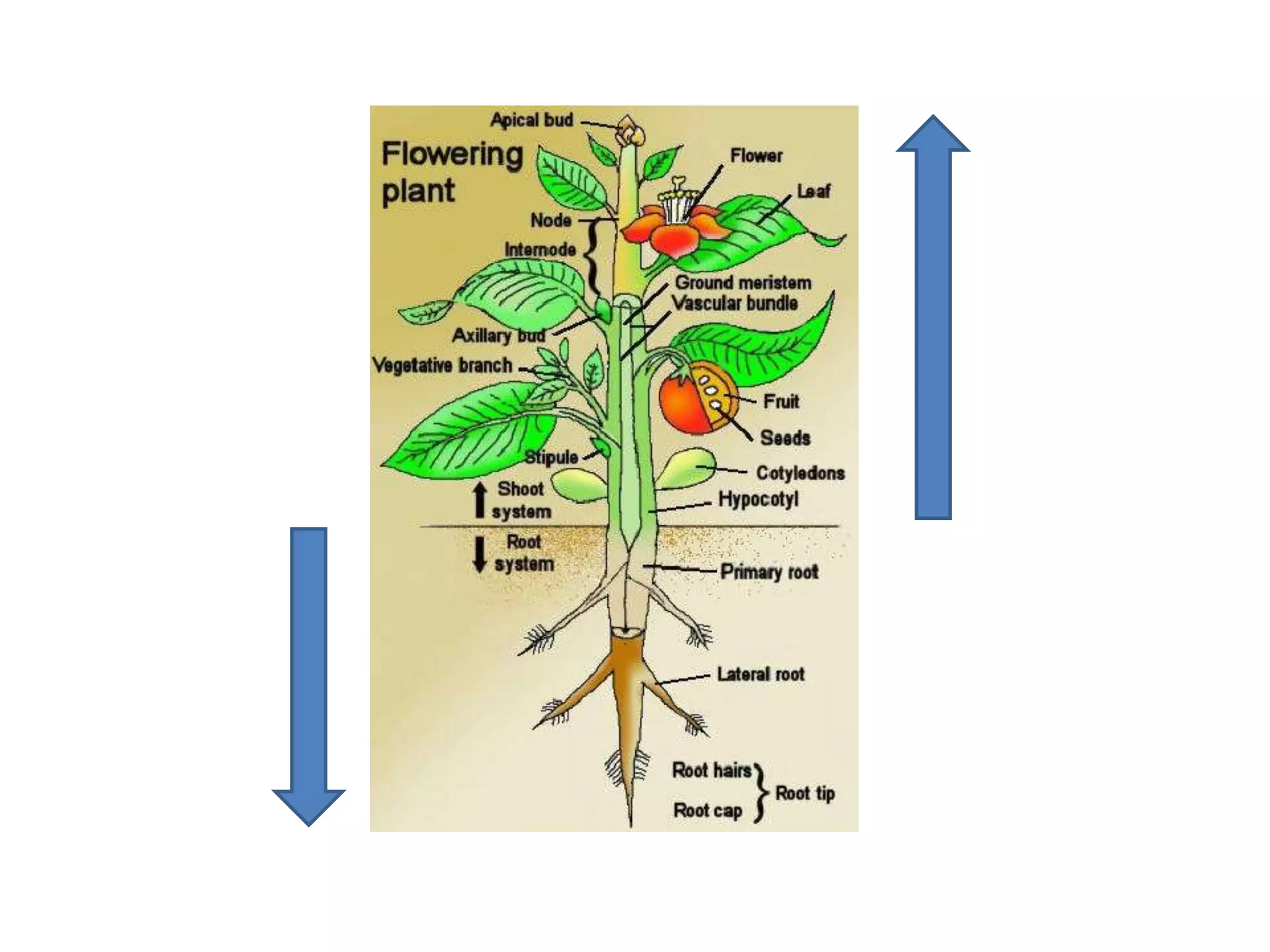
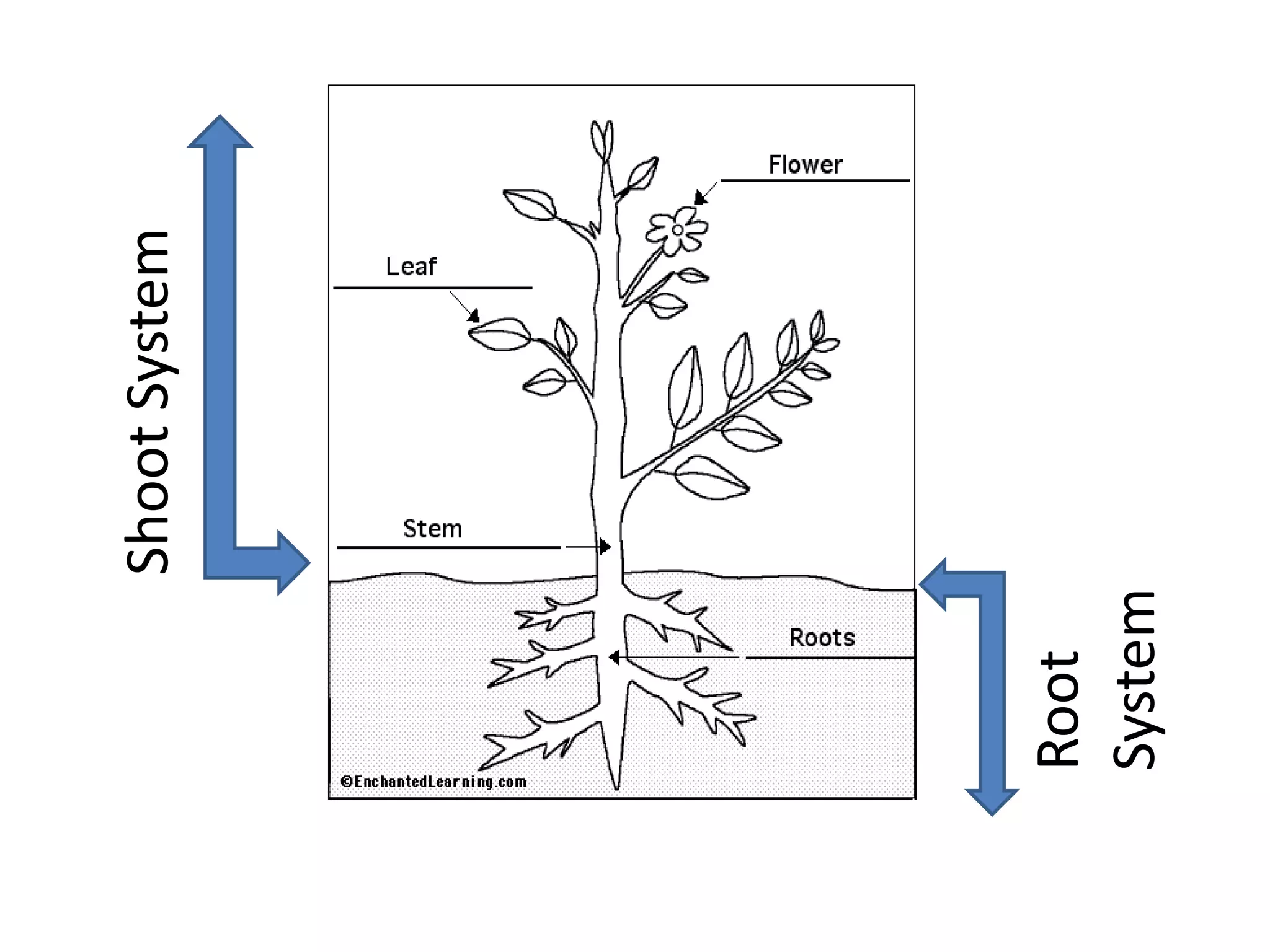
Plant parts are divided into two plant
systems
Shoot system – above the ground
and includes stem, flower, and leaves
Root system – part below the ground
includes the roots
Shoot System


Root
System
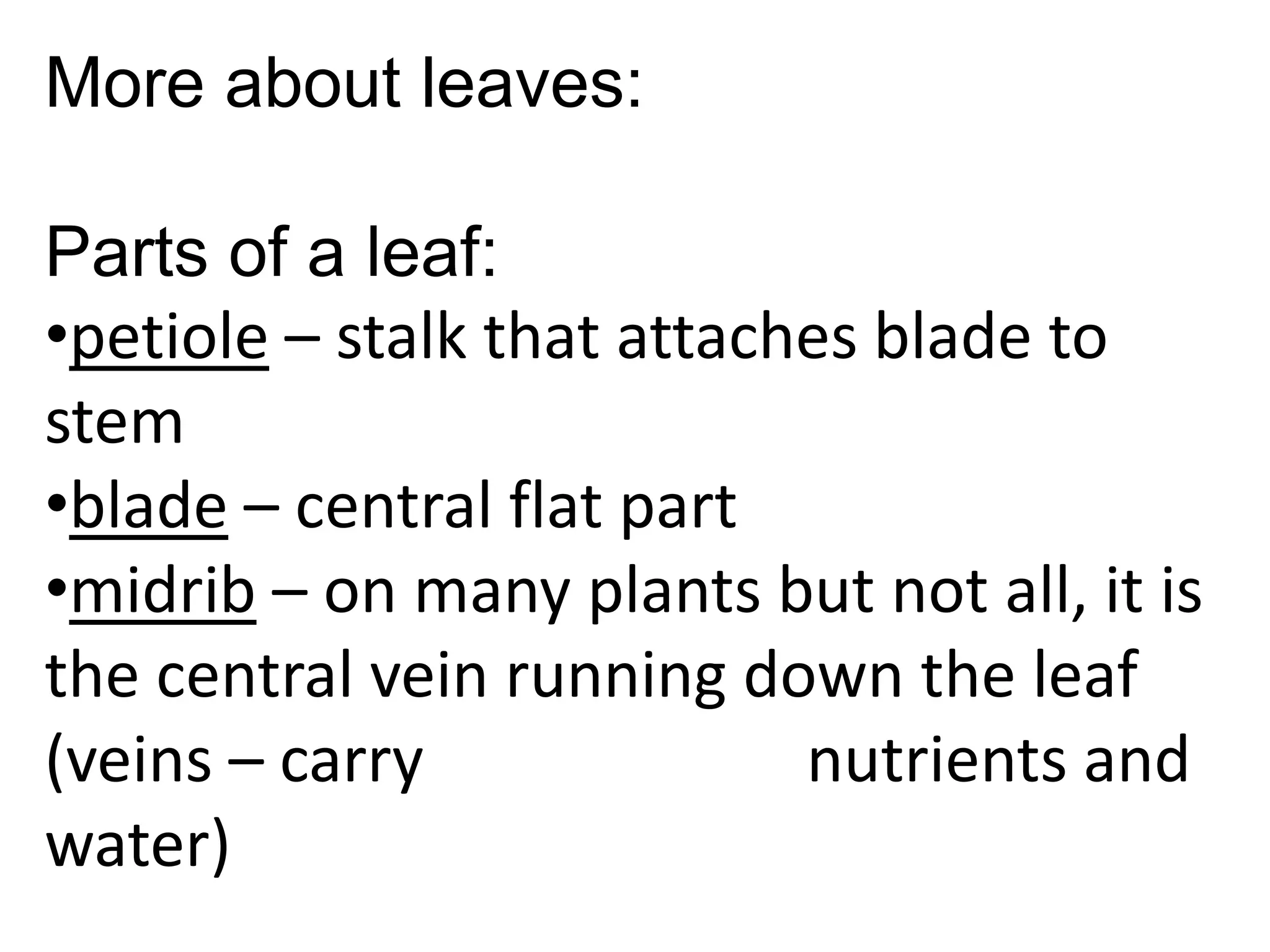
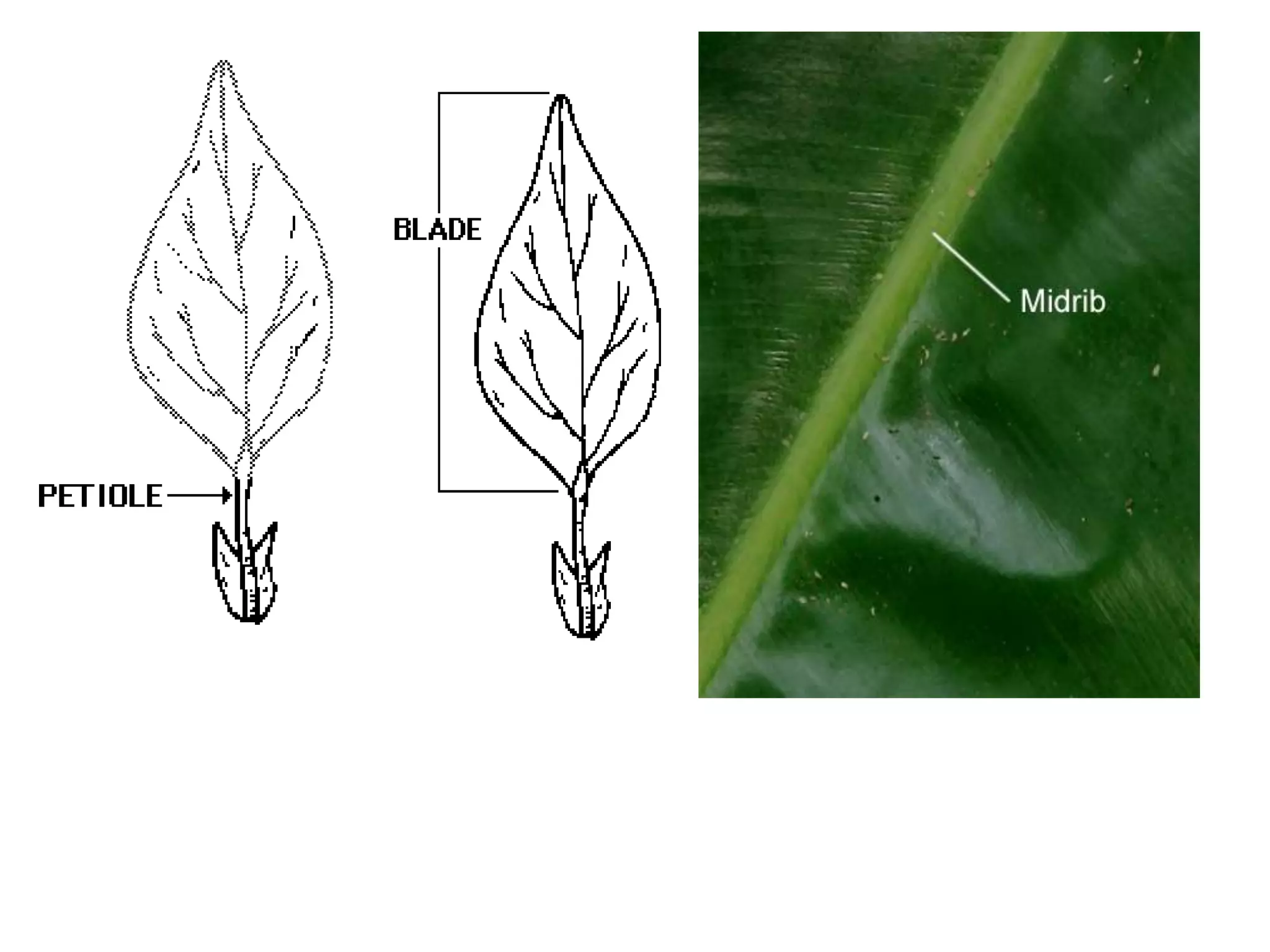
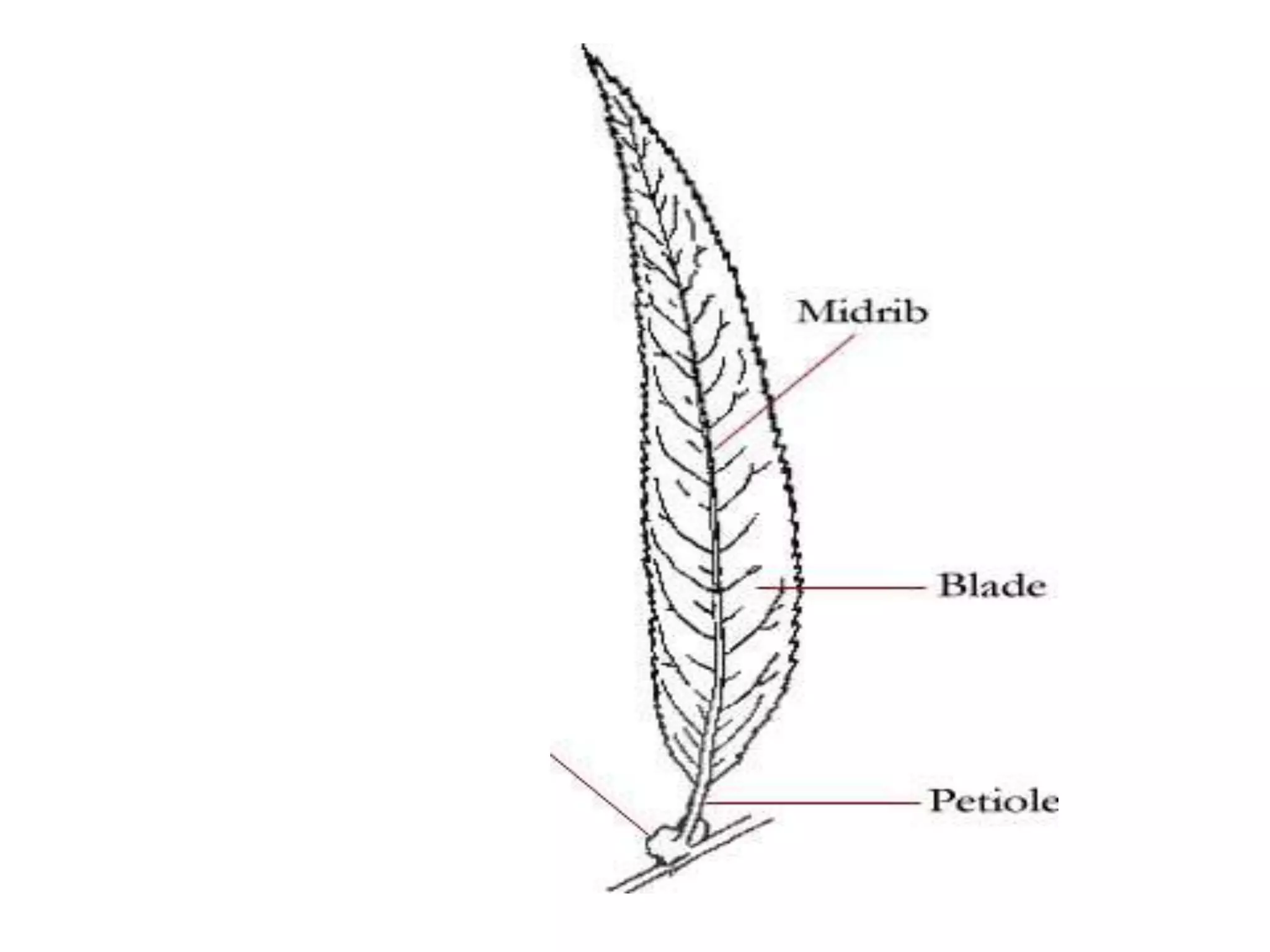
More about leaves:

Parts of a leaf:
•petiole – stalk that attaches blade to
stem
•blade – central flat part
•midrib – on many plants but not all, it is
the central vein running down the leaf
(veins – carry              nutrients and
water)
More about leaves:

Part of a leaf:
 • petiole – stalk that attaches blade to stem
 • blade – central part
 • midrib – on many plants but not all is the central vein running down the leaf (veins –
   carry nutrients and water)


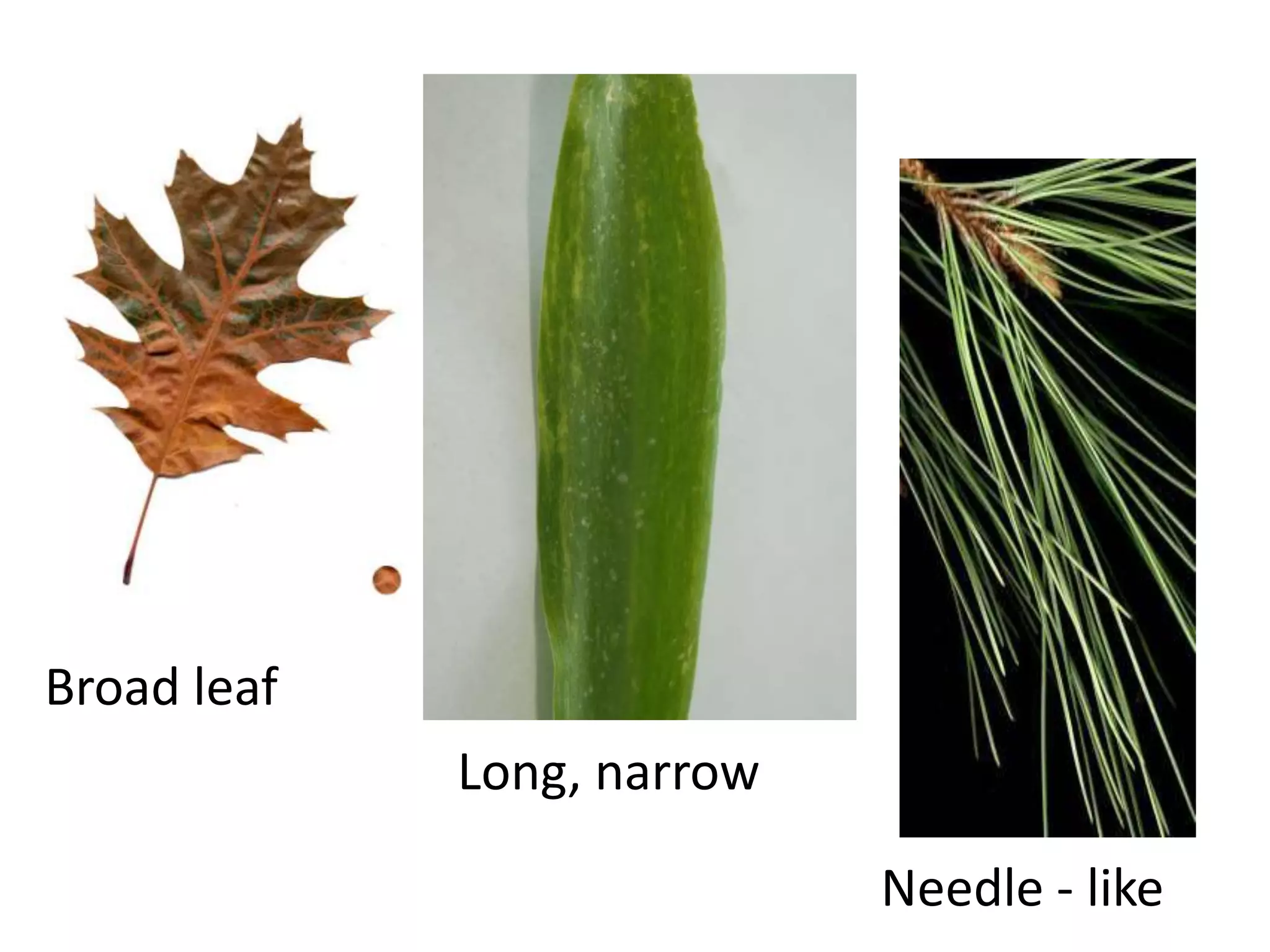
Three basic leaf shapes:
 1. broad and flat (maple, oak)
 2. long and narrow (onions, lilies)
 3. needle or scale like (pines, cedars)
Broad leaf
             Long, narrow

                            Needle - like
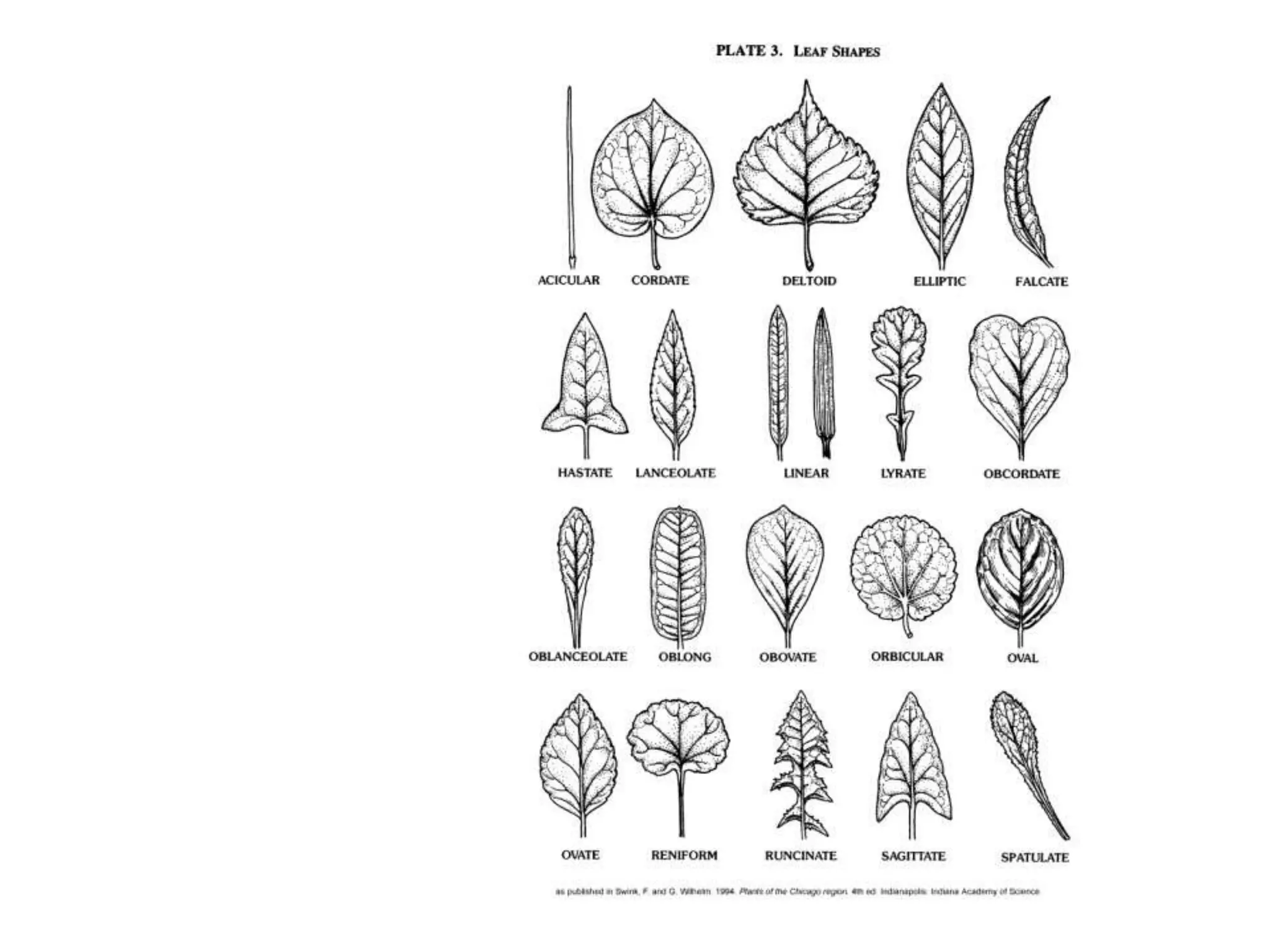
Shapes of broad leaves:
 elliptical
  oval
 ovate (triangular)
 obovate (reverse of ovate)
 lance-shaped
 heart shaped
 arrow shaped
Shapes of broad leaves:
 elliptical
 oval
 ovate (triangular)
 obovate (reverse of ovate)
 lance-shaped
 heart shaped
 arrow shaped


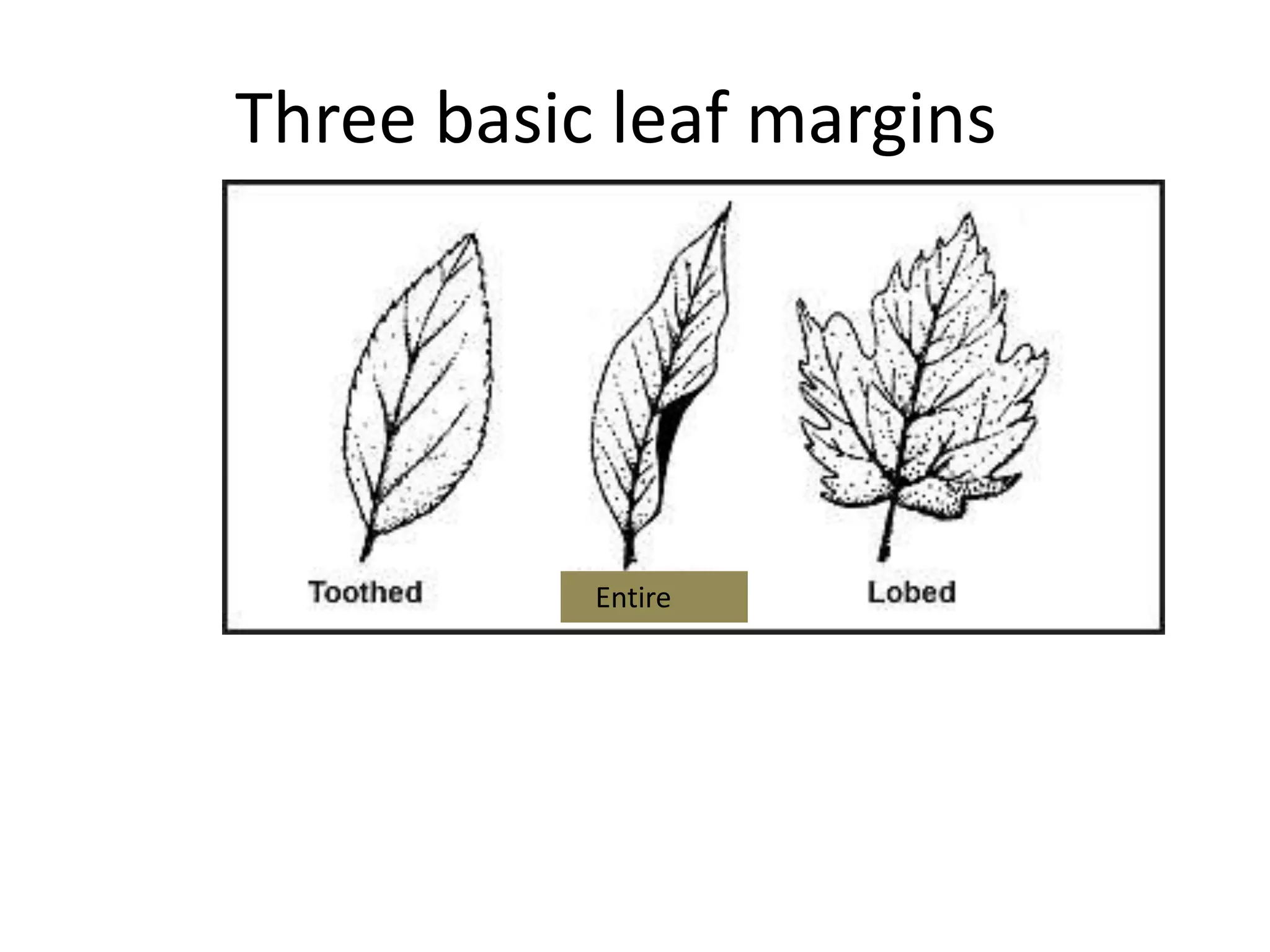
Types of Leaf margins (around the
outside edge):
1. entire – smooth edge
2. toothed – jagged edge ex. Holly
3. lobed - has lobes ex. oak
Three basic leaf margins


           Entire
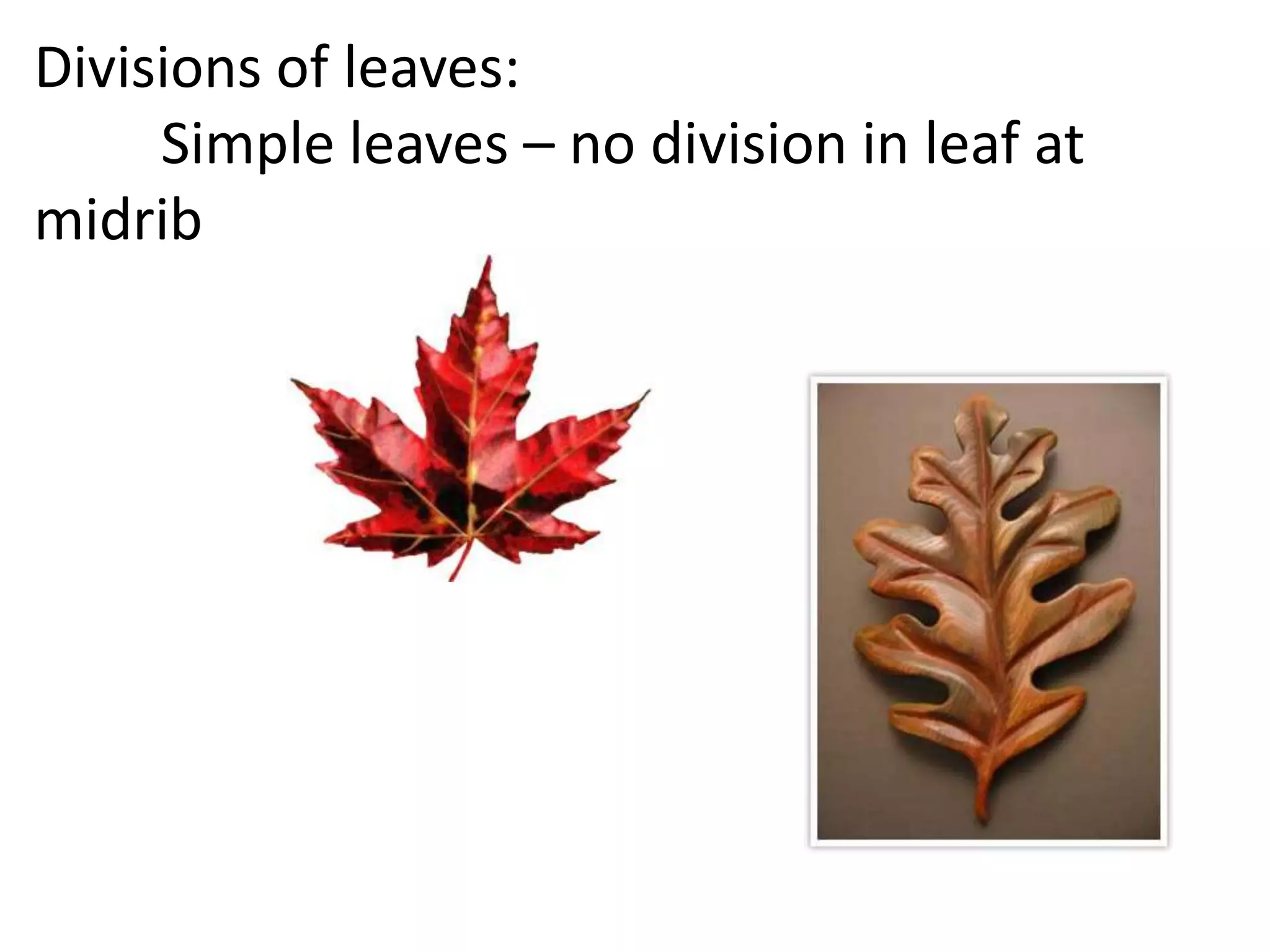
Divisions of leaves:
     Simple leaves – no division in leaf at
midrib
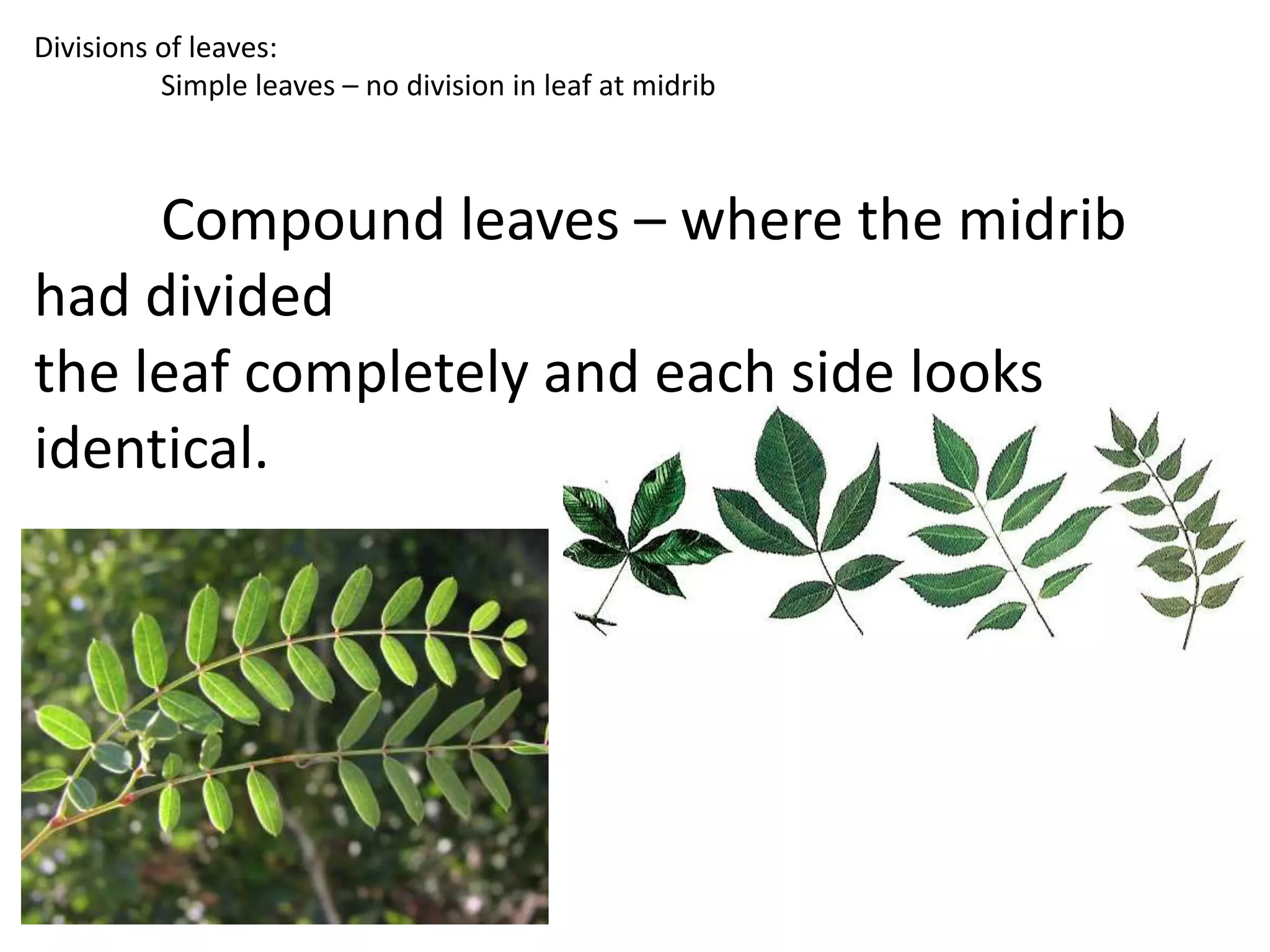
Divisions of leaves:
          Simple leaves – no division in leaf at midrib


     Compound leaves – where the midrib
had divided
the leaf completely and each side looks
identical.

Biology Lesson 1.2

  • 1.
    Biology 1.2 What’simportant? 4 Plant Parts: 1.Flower  reproductive part  Contains ovules and ovary which become the seed and fruit.  Seed becomes embryo and fruit provides nutrients
  • 2.
    Biology 1.2 What’simportant? 4 Plant Parts: 1. Flower  reproductive part  Contains ovules and ovary which become the seed and fruit.  Seed becomes embryo and fruit provides nutrients 2. Leaves – main photosynthetic part of plant where food is produced.
  • 3.
    2. Leaves –main photosynthetic part of plant where food is produced. 3. Stem Functions include: a. supports the leaves and flowers b. transports nutrients and water
  • 4.
    3. Stem Functions include: a. supports the leaves and flowers b. transports nutrients and water Two types of stems are: woody stems – • found on trees and shrubs • are brown and rigid herbaceous stem– • found on herbs • are green and flexible • called herbs includes flowers, and all plants with flexible stem • Vines can be either
  • 6.
    3. Stem There are4 types of plants based on their stem: A.Trees – have woody stems, & grow tall B. Shrubs – have woody stems, and are shorter
  • 7.
    3. Stem There are4 types of plants based on their stem: A.Trees – have woody stems, & grow tall B.Shrubs – have woody stems, and are shorter C. Herbs- include anything with a flexible, green stem and no tendrils. (ex. Tomato, daisy)
  • 8.
    3. Stem There are4 types of plants based on their stem: A.Trees – have woody stems, & grow tall B.Shrubs – have woody stems, and are shorter C.Herbs- include anything with a flexible, green stem and no tendrils. D. Vines •woody or herbaceous stem •stem grows along the ground •may have tendrils to wind around post, or trees.
  • 9.
    3. Stem There are4 types of plants based on their stem: A.Trees – have woody stems, & grow tall B.Shrubs – have woody stems, and are shorter C.Herbs- include anything with a flexible, green stem and no tendrils. D. Vines – can have a woody or a herbaceous stem, which grows along the ground, or may have tendrils to wind around post, or trees. Two types of vines are: a. herbaceous vine Ex. cucumber plant b. woody vine Ex. grape plant
  • 10.
    3. Stem Two typesof vines are: a. herbaceous vine Ex. cucumber plant b. woody vine Ex. grape plant 4. Roots Functions: • Anchors the plant in soil • absorbs water, nutrients & minerals • stores food • reproduction called vegetative reproduction which is when roots spread out and make new plants
  • 11.
  • 12.
    4. Roots Functions: • Anchors the plant in soil • absorbs water, nutrients & minerals • stores food • reproduction called vegetative reproduction which is when roots spread out and make new plants Types of root systems A. taproot – main root grows straight down w/small secondary roots growing off of the main root Ex. carrot
  • 13.
    4. Roots Types ofroot systems A. taproot – main root grows straight down w/small secondary roots growing off of the main root Ex. carrot B. fibrous roots – the main root is small and secondary roots are many ex. grasses
  • 15.
    Plant parts aredivided into two plant systems Shoot system – above the ground and includes stem, flower, and leaves Root system – part below the ground includes the roots
  • 17.
  • 18.
    More about leaves: Partsof a leaf: •petiole – stalk that attaches blade to stem •blade – central flat part •midrib – on many plants but not all, it is the central vein running down the leaf (veins – carry nutrients and water)
  • 21.
    More about leaves: Partof a leaf: • petiole – stalk that attaches blade to stem • blade – central part • midrib – on many plants but not all is the central vein running down the leaf (veins – carry nutrients and water) Three basic leaf shapes: 1. broad and flat (maple, oak) 2. long and narrow (onions, lilies) 3. needle or scale like (pines, cedars)
  • 22.
    Broad leaf Long, narrow Needle - like
  • 23.
    Shapes of broadleaves: elliptical oval ovate (triangular) obovate (reverse of ovate) lance-shaped heart shaped arrow shaped
  • 25.
    Shapes of broadleaves: elliptical oval ovate (triangular) obovate (reverse of ovate) lance-shaped heart shaped arrow shaped Types of Leaf margins (around the outside edge): 1. entire – smooth edge 2. toothed – jagged edge ex. Holly 3. lobed - has lobes ex. oak
  • 26.
    Three basic leafmargins Entire
  • 27.
    Divisions of leaves: Simple leaves – no division in leaf at midrib
  • 28.
    Divisions of leaves: Simple leaves – no division in leaf at midrib Compound leaves – where the midrib had divided the leaf completely and each side looks identical.