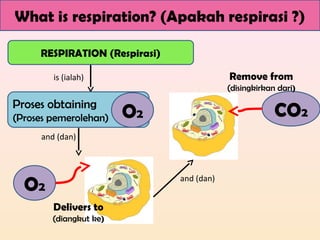
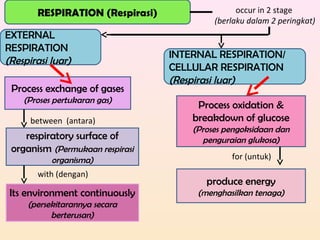
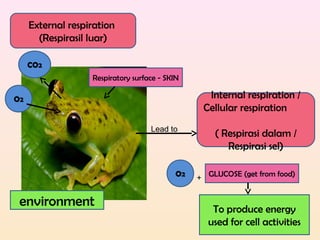
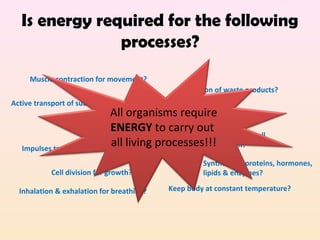
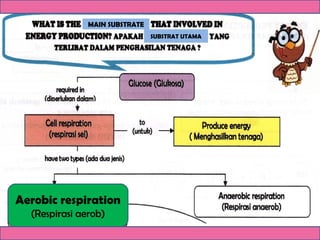
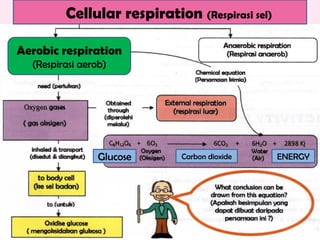
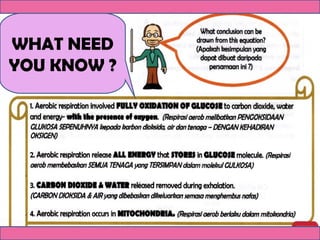
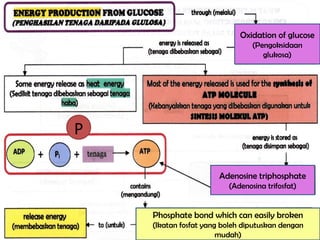
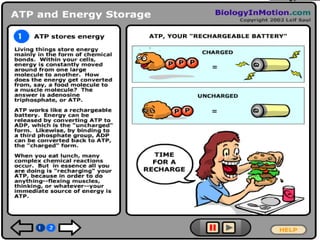
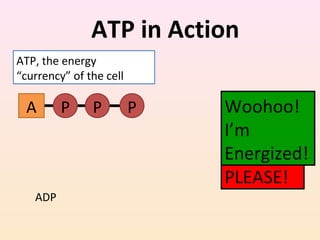
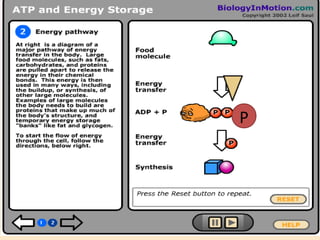
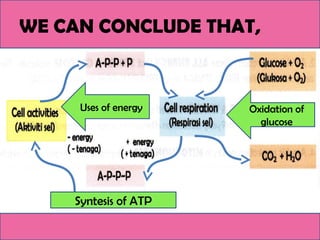
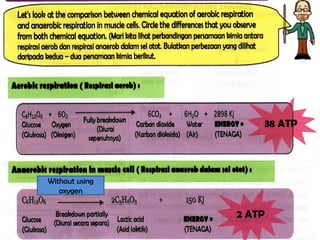
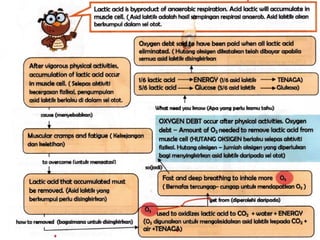
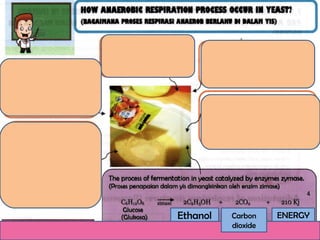
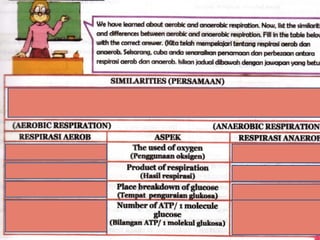
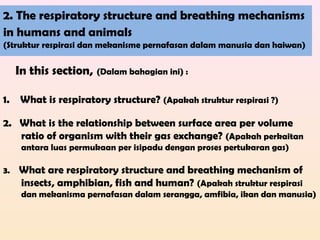
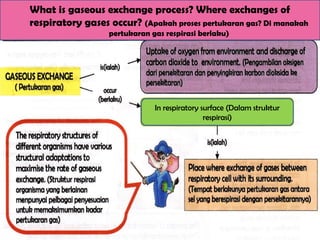
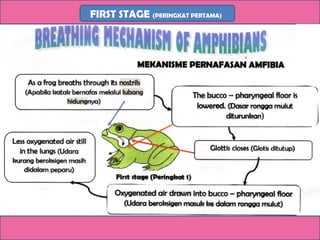
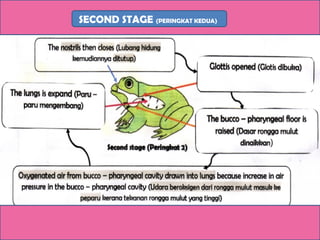
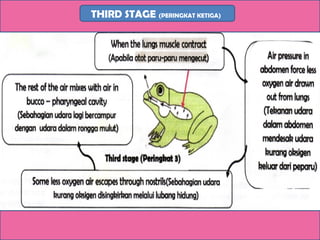
1) Respiration is the process by which organisms obtain oxygen and release carbon dioxide, allowing cells to produce energy through the breakdown of glucose in the form of ATP. Aerobic respiration uses oxygen to fully oxidize glucose to produce more ATP.
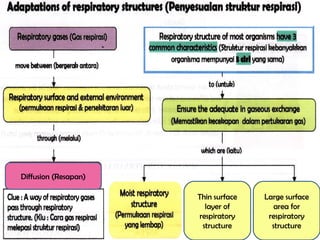
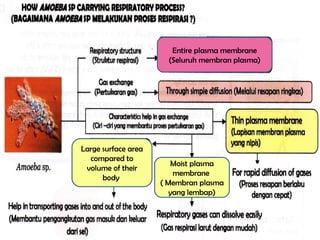
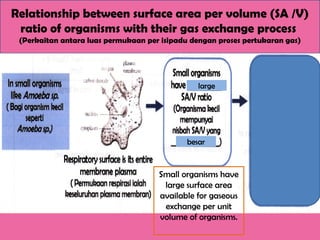
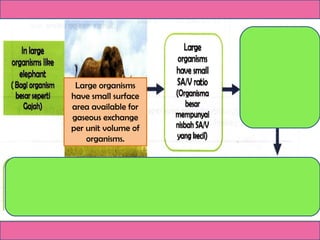
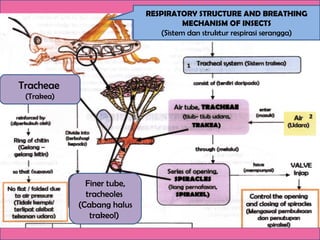
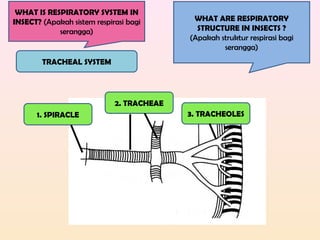
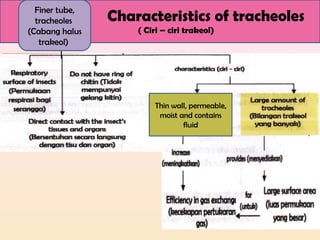
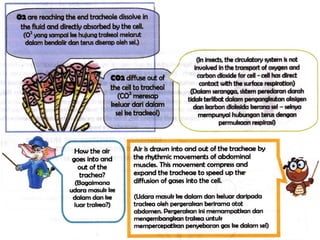
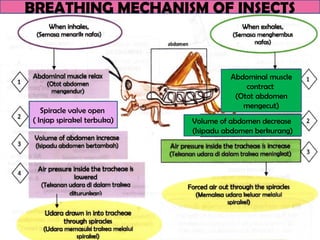
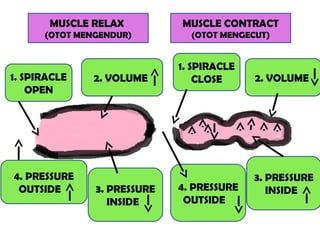
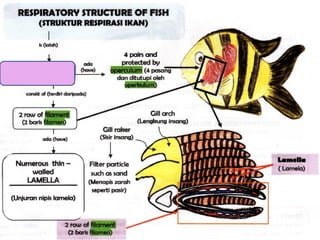
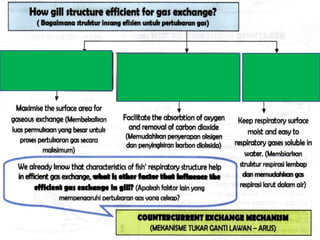
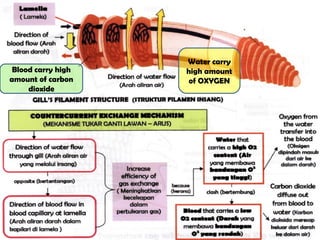
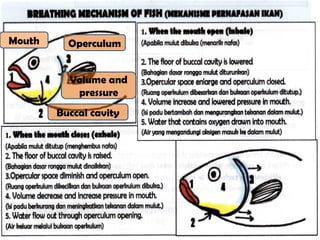
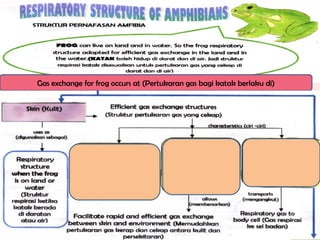
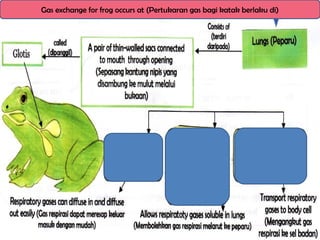
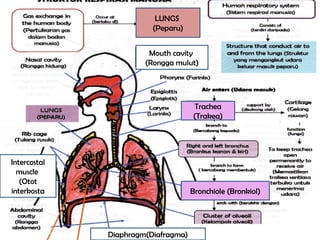
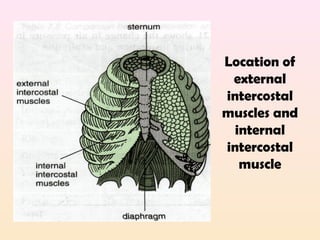
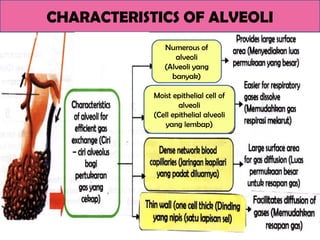
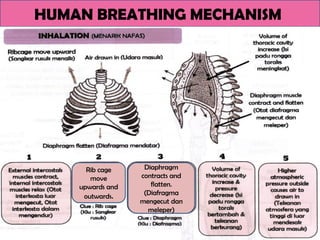
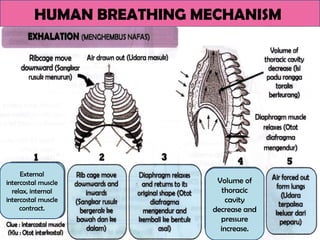
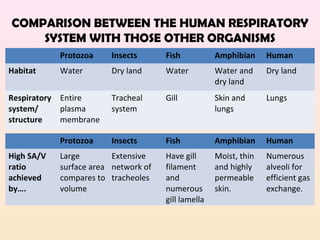
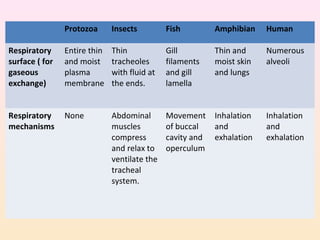
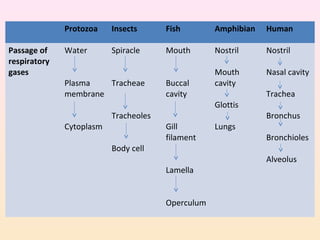
2) Respiratory structures vary between organisms depending on surface area to volume ratio requirements. Insects use a tracheal system of spiracles, tracheae and tracheoles to exchange gases. Humans use a lung system of nostrils, airways and alveoli with inhaling and exhaling breathing mechanisms.
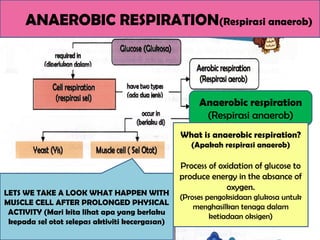
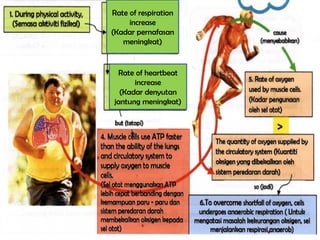
3) Cellular respiration uses oxygen to fully break down glucose into carbon dioxide and water, producing ATP through electron transport chains. Without oxygen, anaerobic respiration