Chapter 18: Enols,Chapter 18: Enols,
Enolates, Enals, andEnolates, Enals, and
EnonesEnones
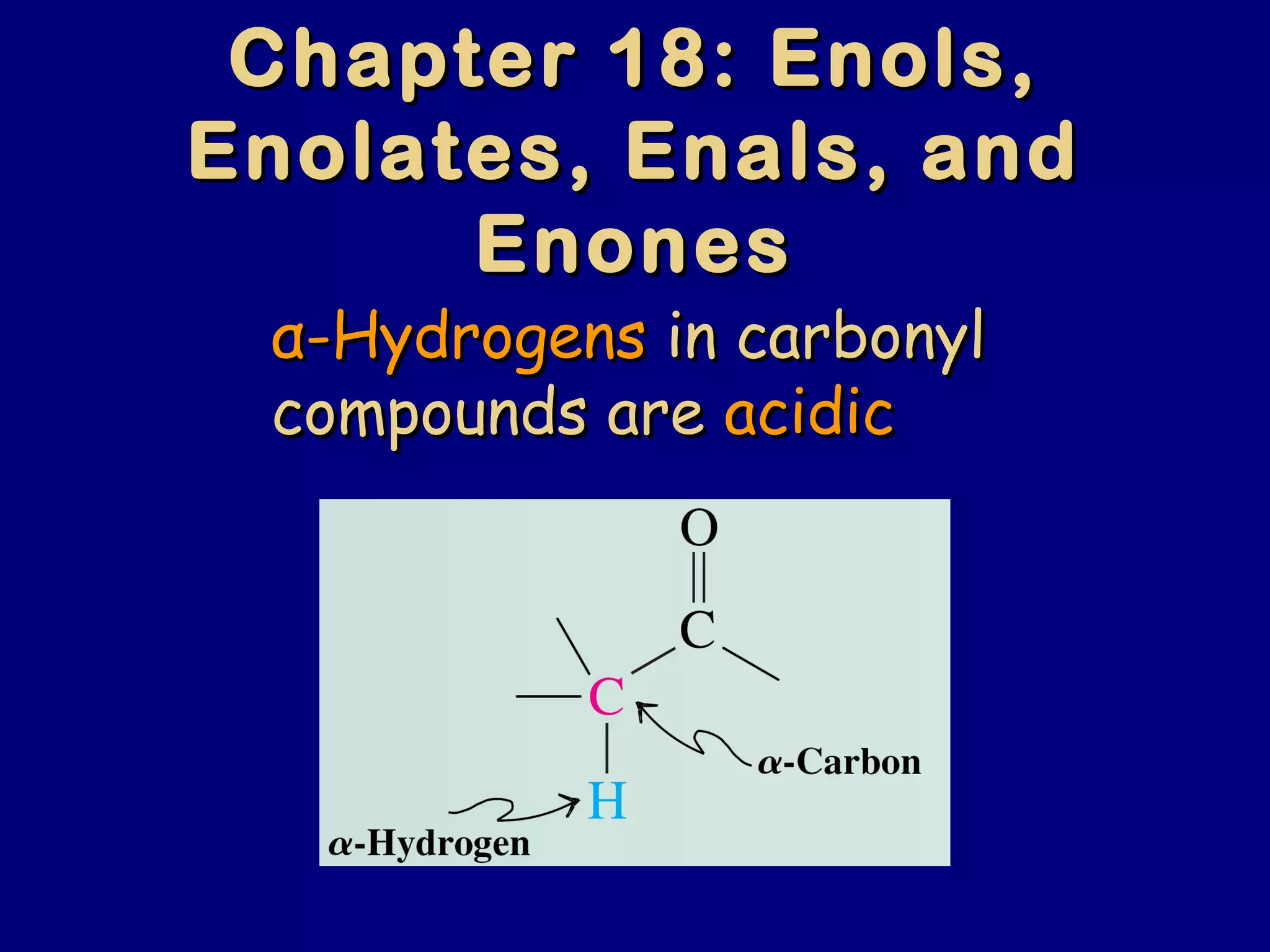
αα-Hydrogens-Hydrogens in carbonylin carbonyl
compounds arecompounds are acidicacidic
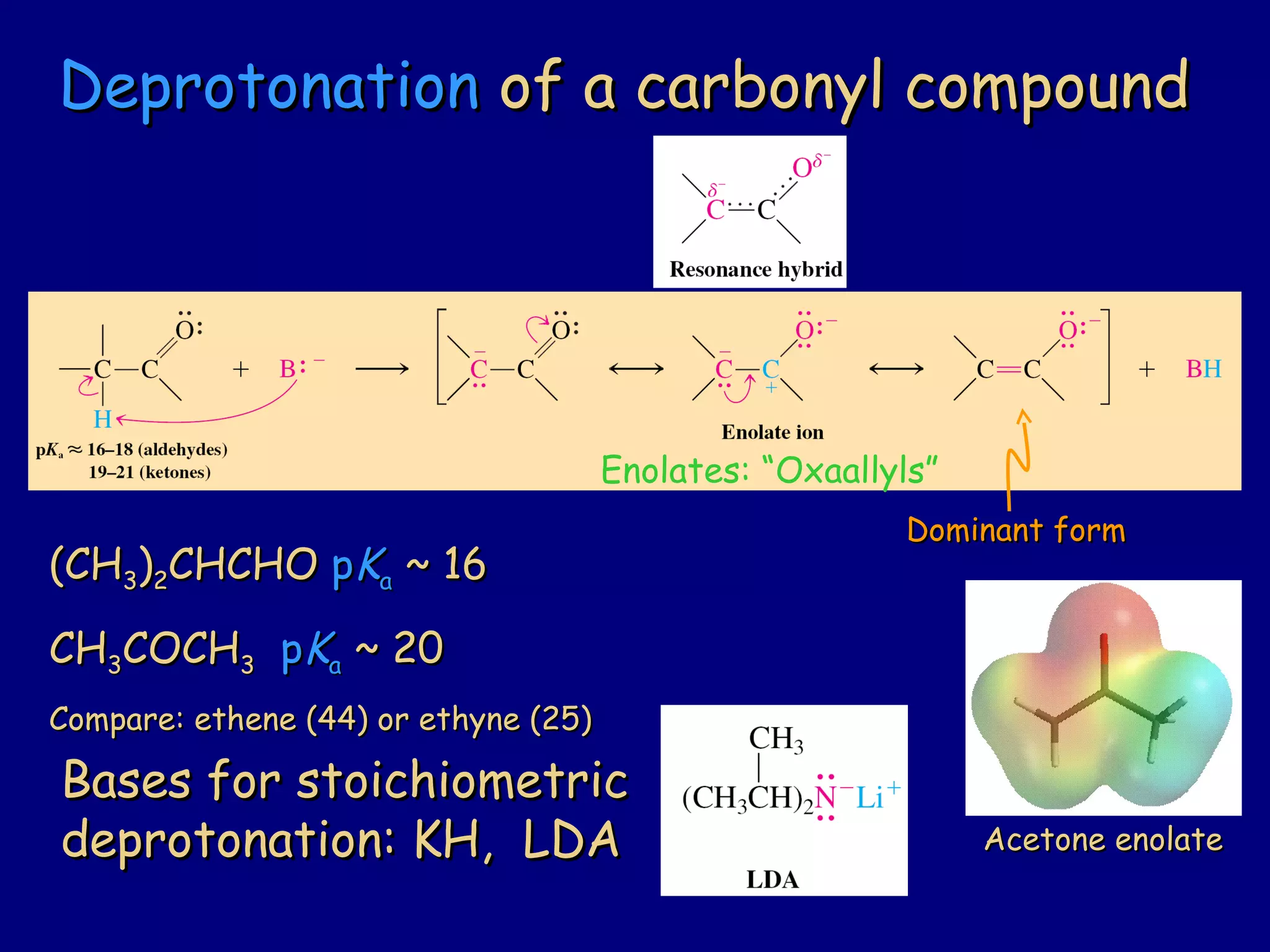
DeprotonationDeprotonation of a carbonyl compoundof a carbonyl compound
Bases for stoichiometricBases for stoichiometric
deprotonation: KH, LDAdeprotonation: KH, LDA
(CH(CH33))22CHCHOCHCHO ppKKaa ~ 16~ 16
CHCH33COCHCOCH33 ppKKaa ~ 20~ 20
Compare: ethene (44) or ethyne (25)Compare: ethene (44) or ethyne (25)
Dominant formDominant form
Enolates: “Oxaallyls”
Acetone enolateAcetone enolate
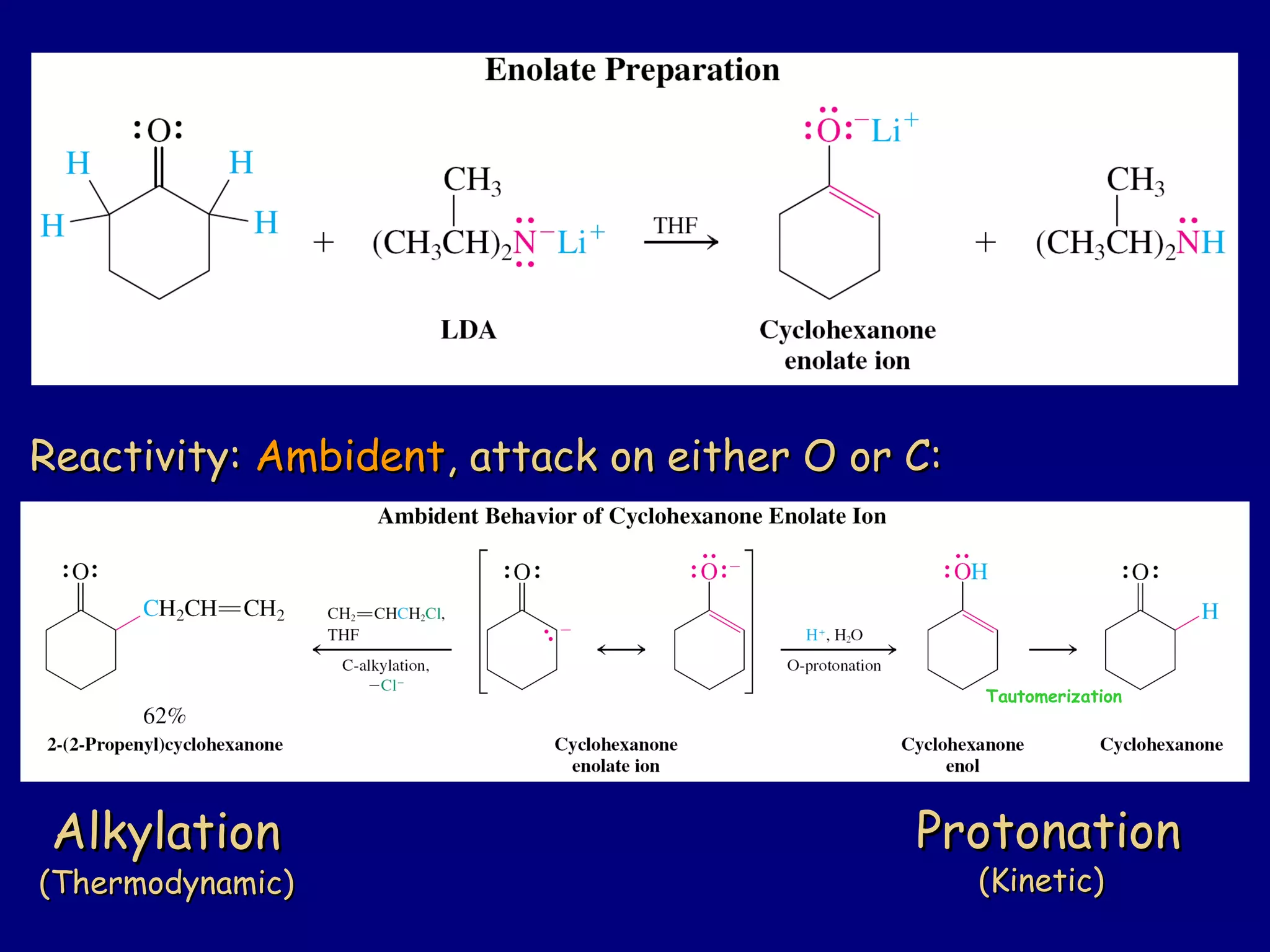
Reactivity:Reactivity: AmbidentAmbident, attack on either O or C:, attack on either O or C:
(Kinetic)(Kinetic)(Thermodynamic)(Thermodynamic)
AlkylationAlkylation ProtonationProtonation
Tautomerization
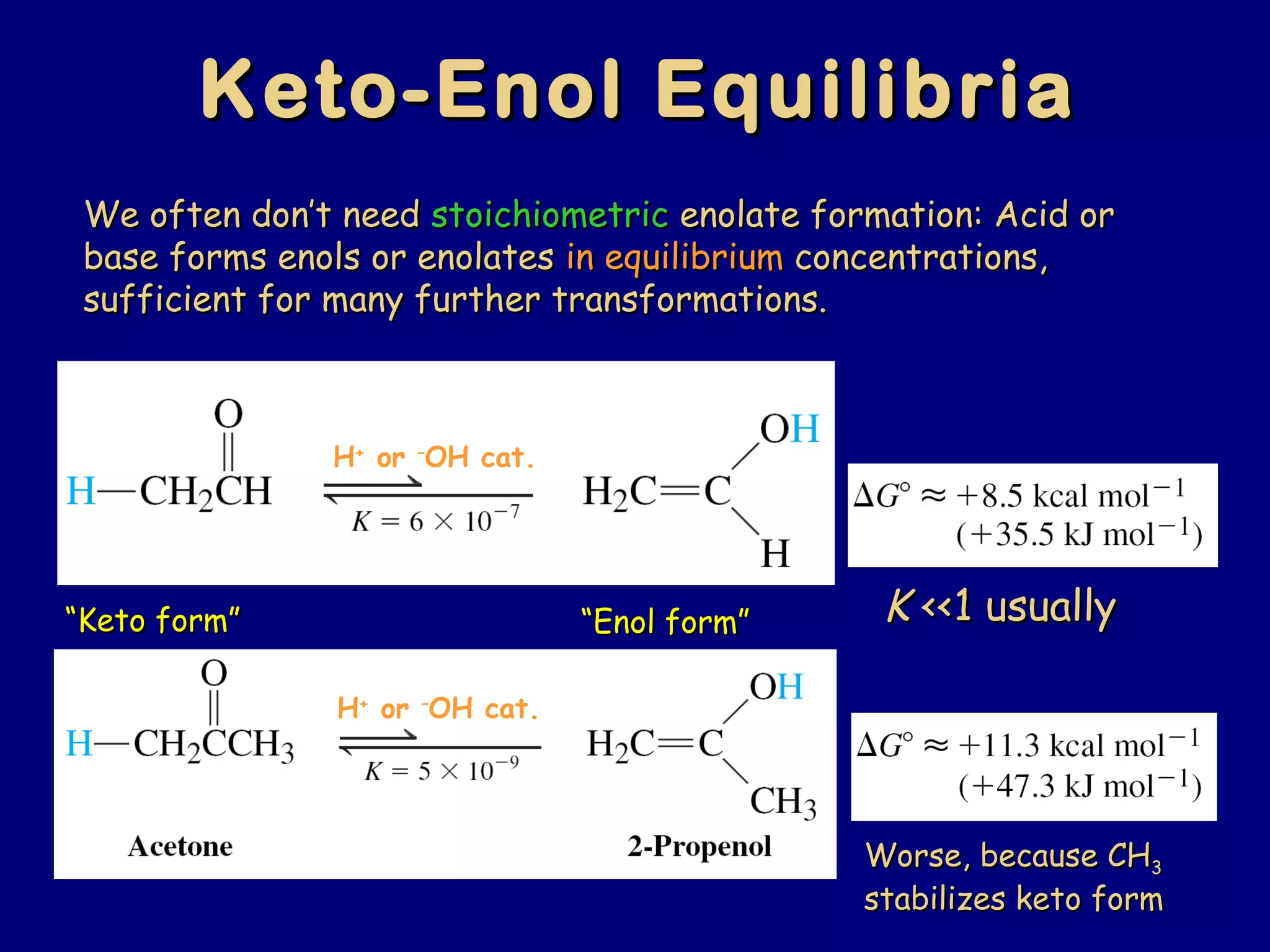
Keto-Enol EquilibriaKeto-Enol Equilibria
H+
or –
OH cat.
KK <<1 usually<<1 usually
We often don’t needWe often don’t need stoichiometricstoichiometric enolate formation: Acid orenolate formation: Acid or
base forms enols or enolatesbase forms enols or enolates in equilibriumin equilibrium concentrations,concentrations,
sufficient for many further transformations.sufficient for many further transformations.
H+
or –
OH cat.
Worse, because CHWorse, because CH33
stabilizes keto formstabilizes keto form
““Keto form”Keto form” ““Enol form”Enol form”
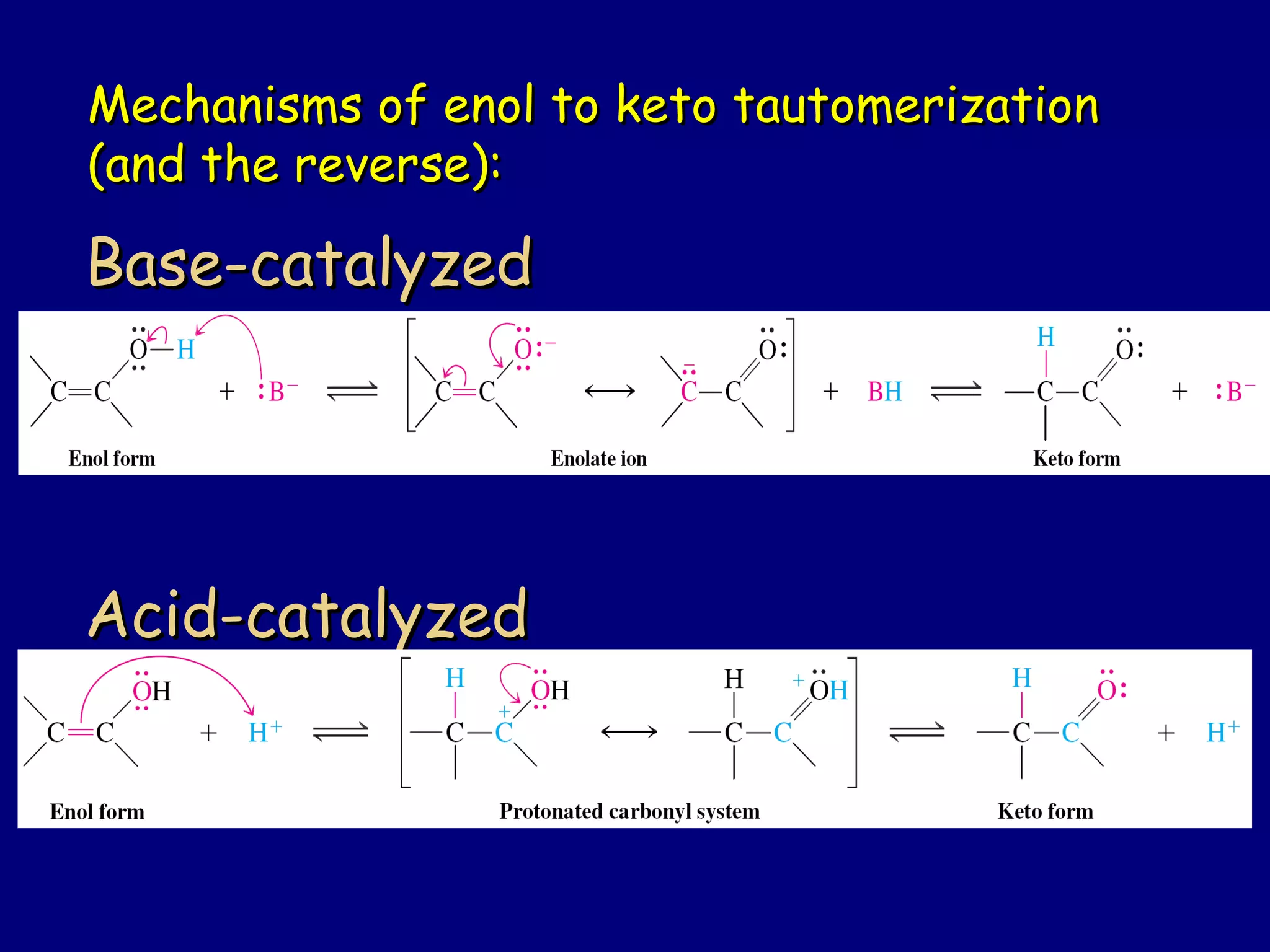
Mechanisms of enol to keto tautomerizationMechanisms of enol to keto tautomerization
(and the reverse):(and the reverse):
Acid-catalyzedAcid-catalyzed
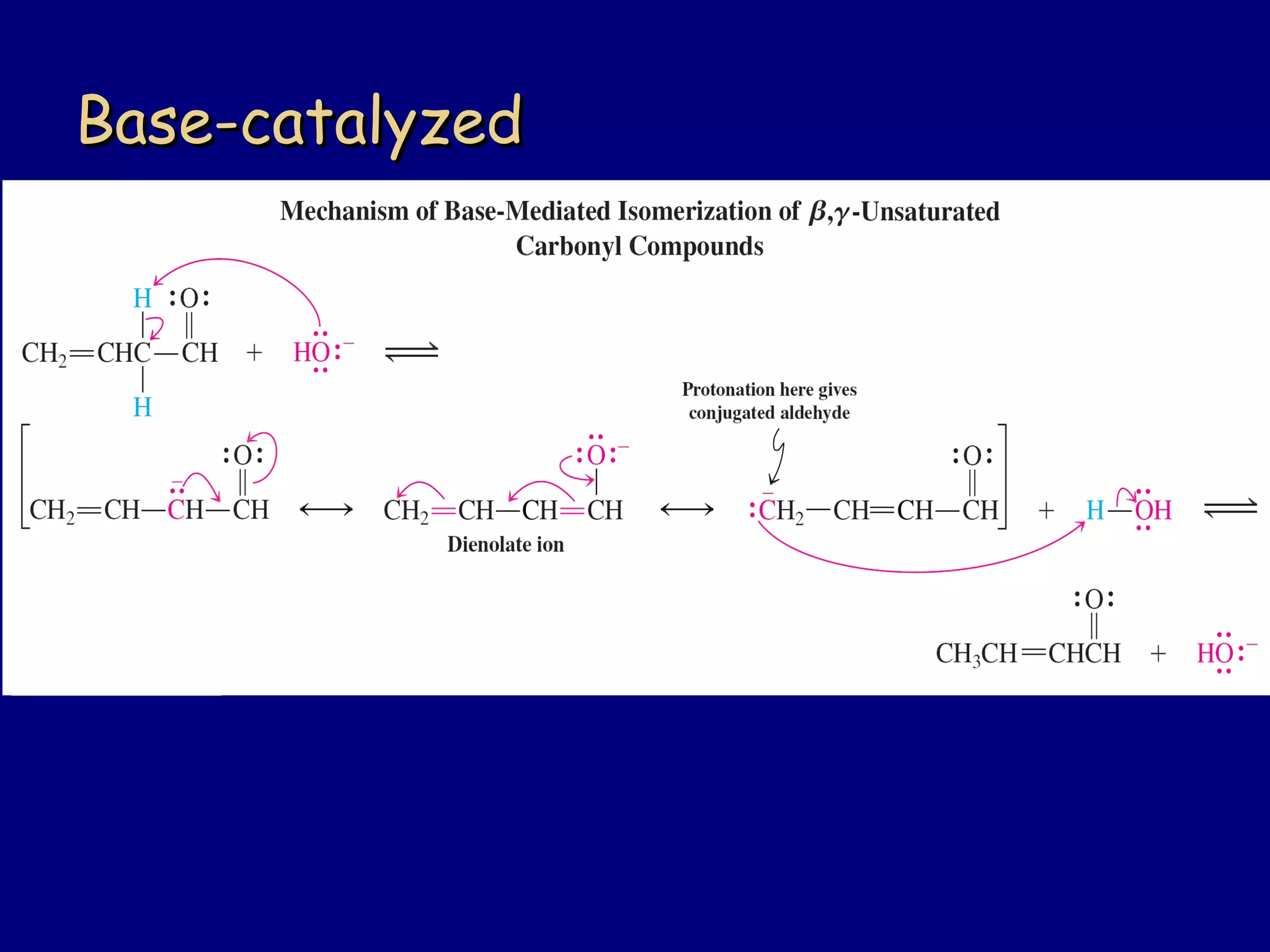
Base-catalyzedBase-catalyzed
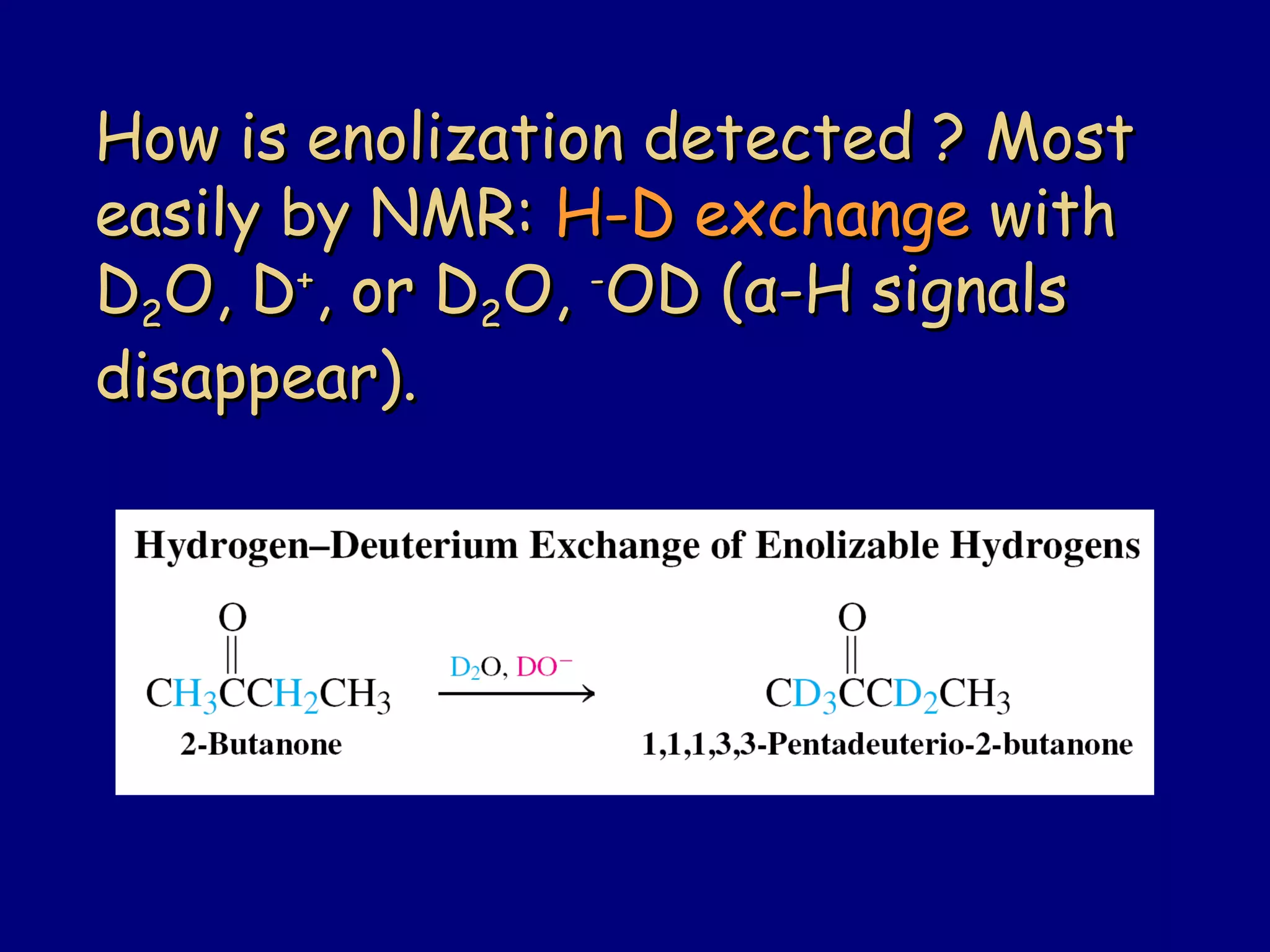
How is enolization detected ? MostHow is enolization detected ? Most
easily by NMR:easily by NMR: H-D exchangeH-D exchange withwith
DD22O, DO, D++
, or D, or D22O,O, --
OD (OD (αα-H signals-H signals
disappear).disappear).
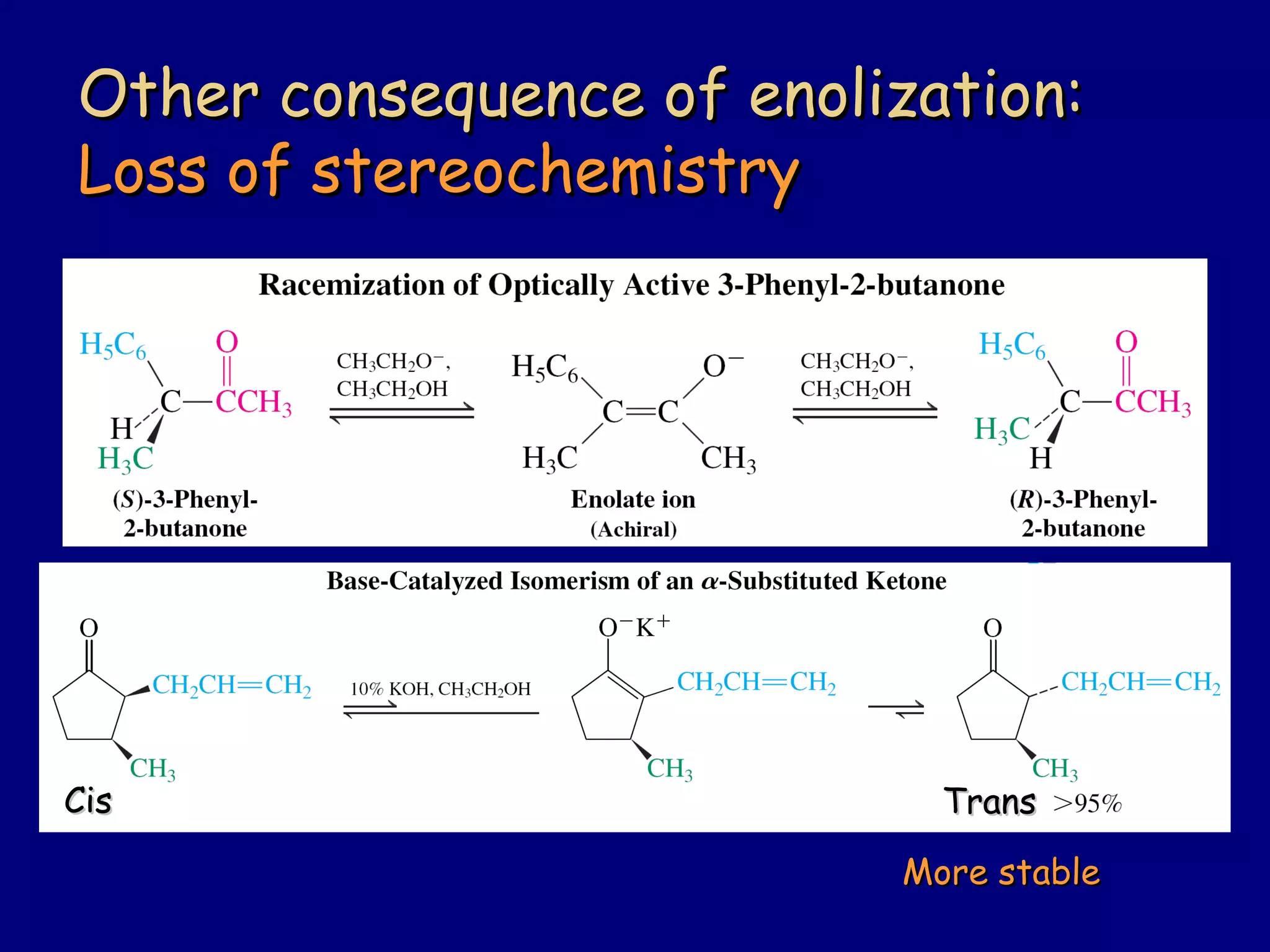
Other consequence of enolization:Other consequence of enolization:
Loss of stereochemistryLoss of stereochemistry
CisCis
More stableMore stable
TransTrans
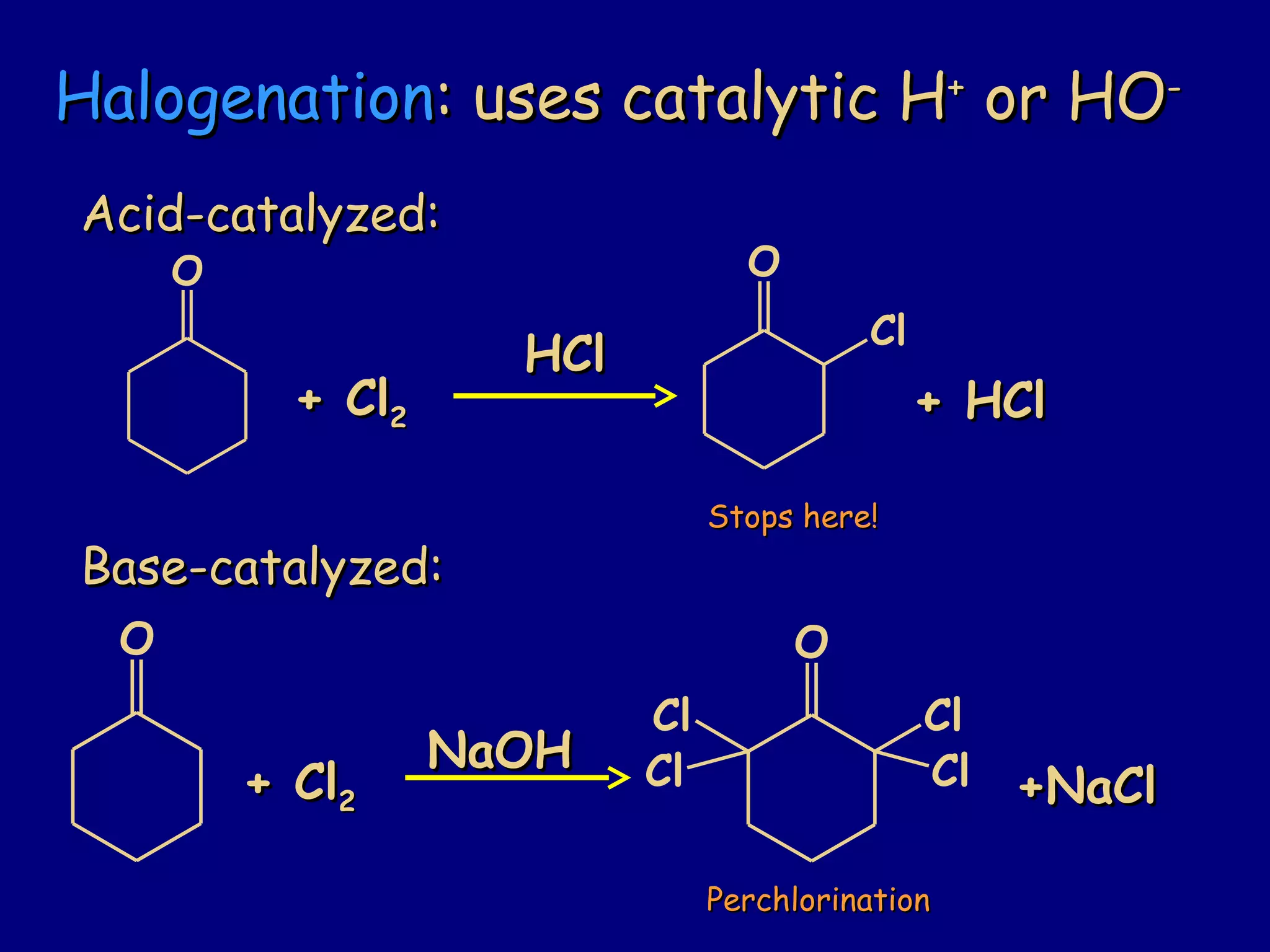
HalogenationHalogenation: uses catalytic H: uses catalytic H++
or HOor HO--
Acid-catalyzed:Acid-catalyzed:
Base-catalyzed:Base-catalyzed:
O O
Cl
+ Cl+ Cl22
HClHCl
+ HCl+ HCl
O
+ Cl+ Cl22
O
Cl
Cl
Cl
ClNaOHNaOH
+NaCl+NaCl
Stops here!Stops here!
PerchlorinationPerchlorination
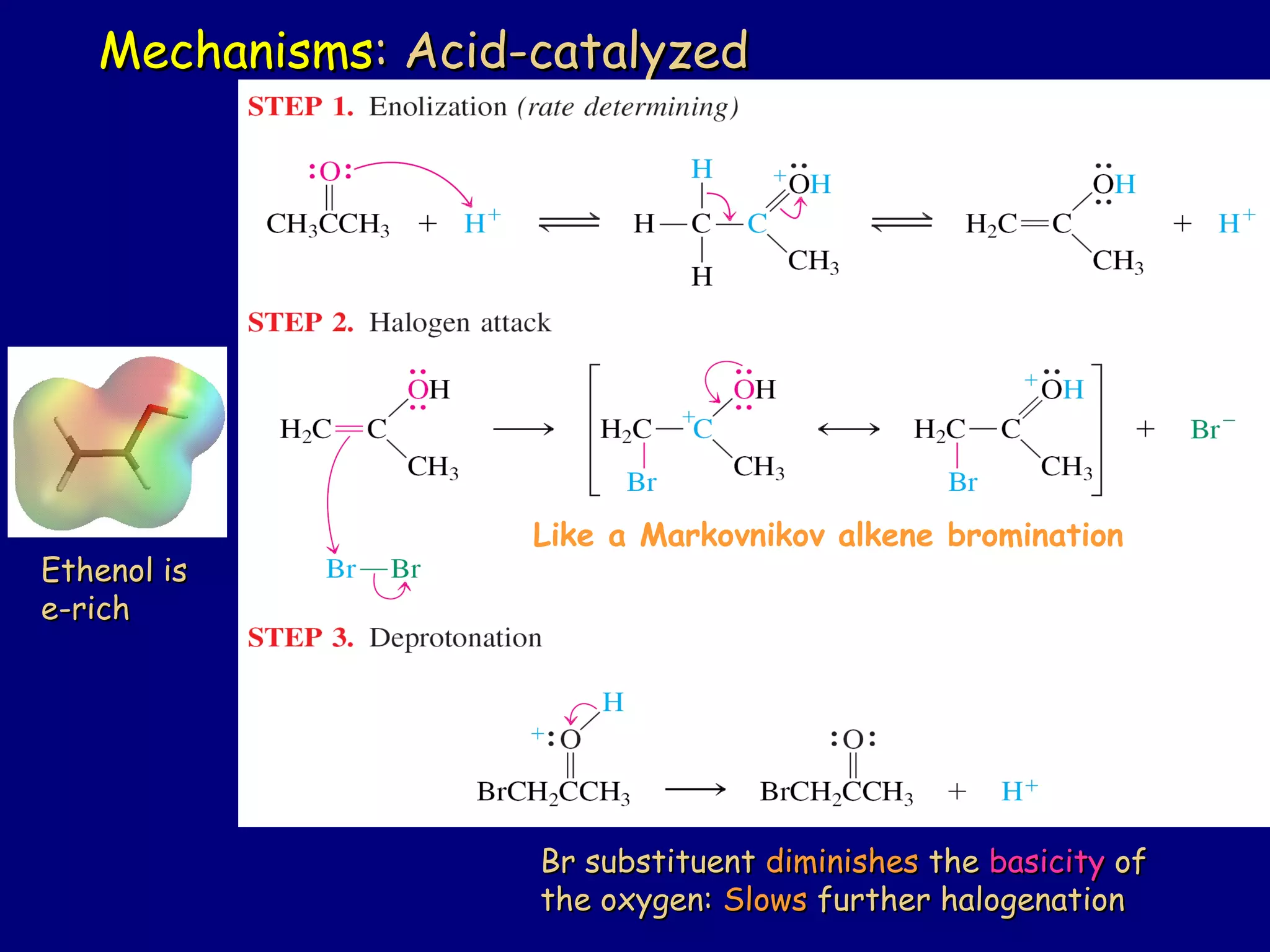
MechanismsMechanisms: Acid-catalyzed: Acid-catalyzed
Ethenol isEthenol is
e-riche-rich
Like a Markovnikov alkene bromination
Br substituentBr substituent diminishesdiminishes thethe basicitybasicity ofof
the oxygen:the oxygen: SlowsSlows further halogenationfurther halogenation
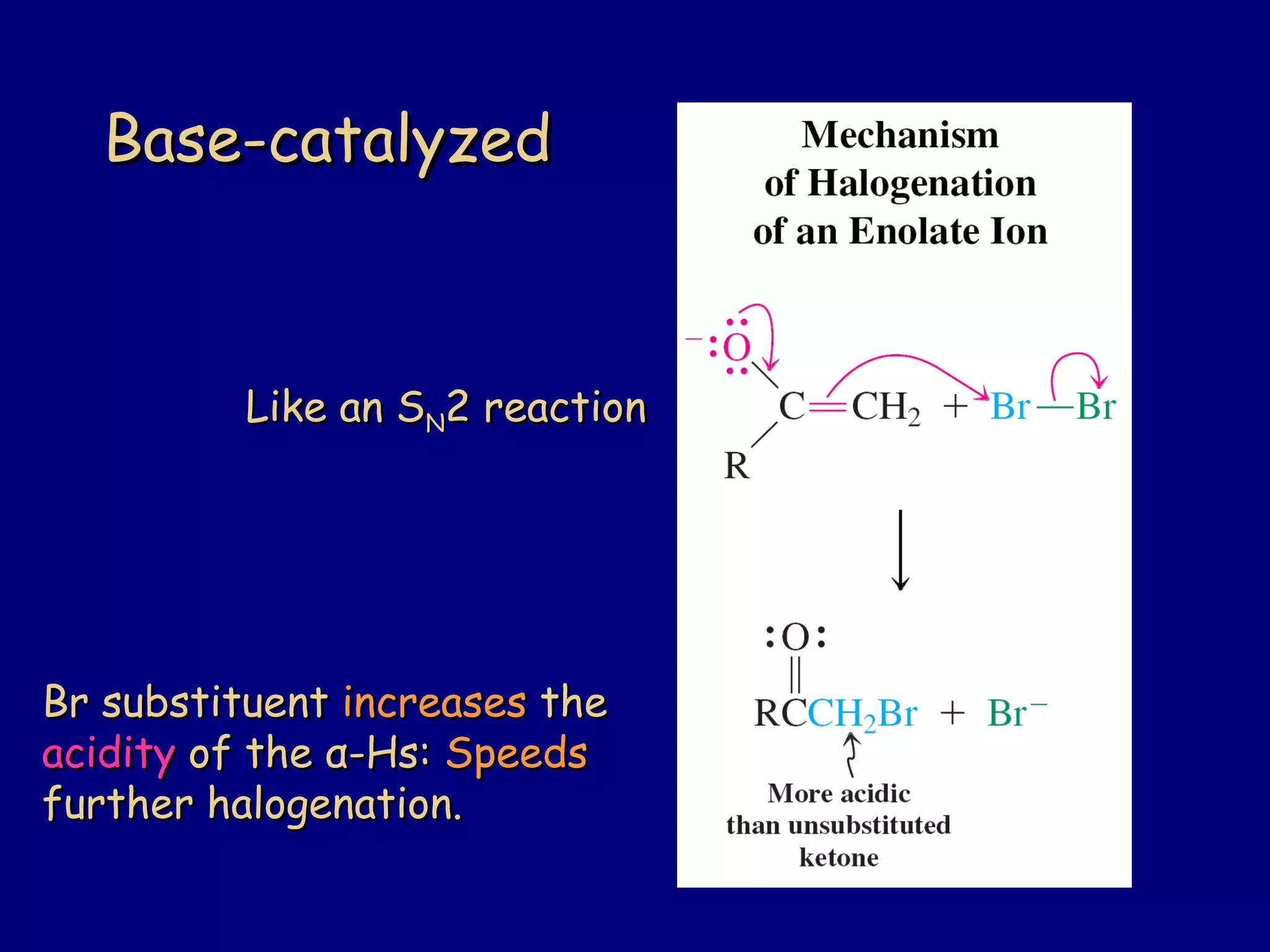
Base-catalyzedBase-catalyzed
Like an SLike an SNN2 reaction2 reaction
Br substituentBr substituent increasesincreases thethe
acidityacidity of theof the αα-Hs:-Hs: SpeedsSpeeds
further halogenation.further halogenation.
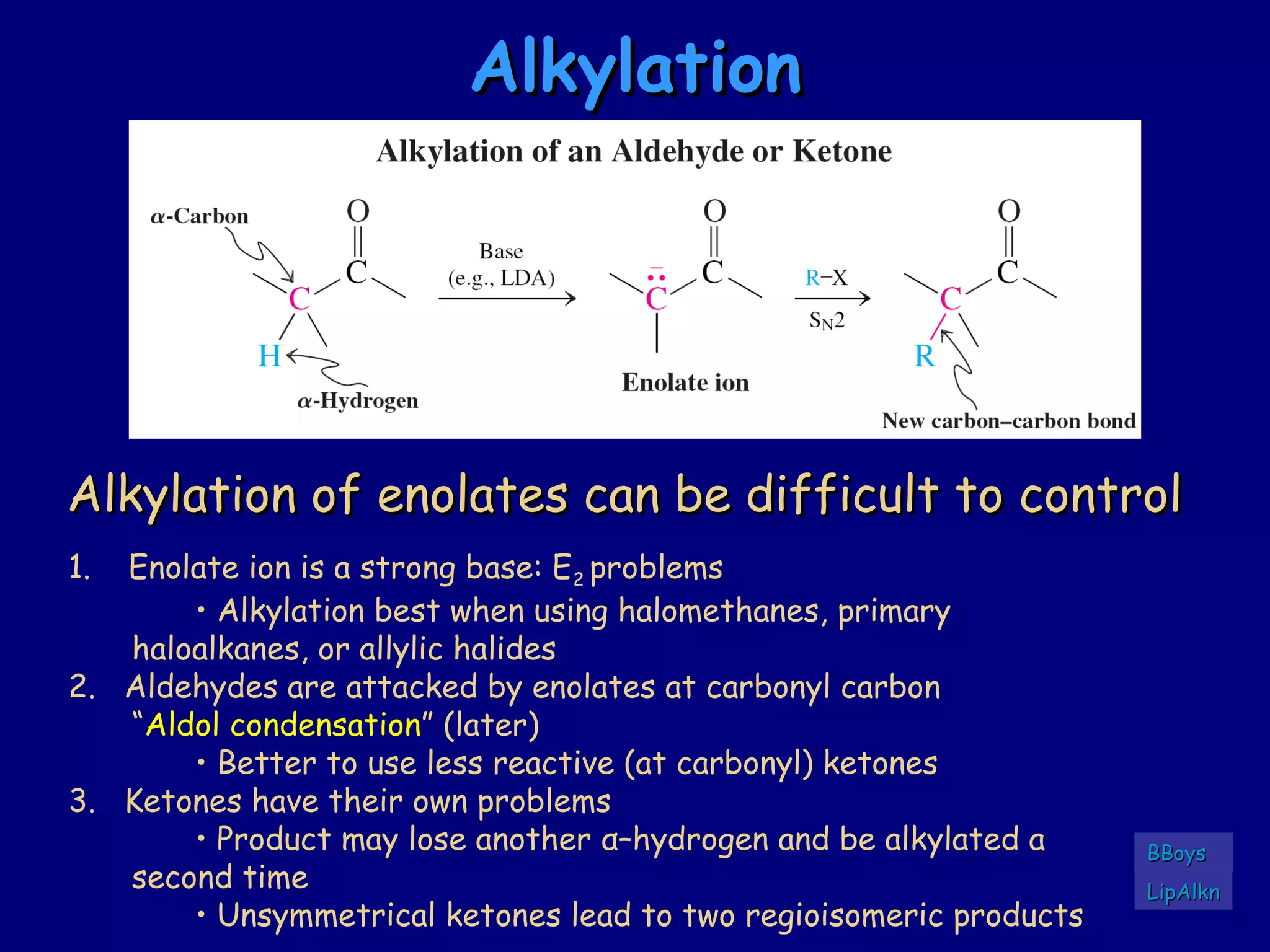
AlkylationAlkylation
Alkylation of enolates can be difficult to controlAlkylation of enolates can be difficult to control
1. Enolate ion is a strong base: E2 problems
• Alkylation best when using halomethanes, primary
haloalkanes, or allylic halides
2. Aldehydes are attacked by enolates at carbonyl carbon
“Aldol condensation” (later)
• Better to use less reactive (at carbonyl) ketones
3. Ketones have their own problems
• Product may lose another α–hydrogen and be alkylated a
second time
• Unsymmetrical ketones lead to two regioisomeric products
LipAlknLipAlkn
BBoysBBoys
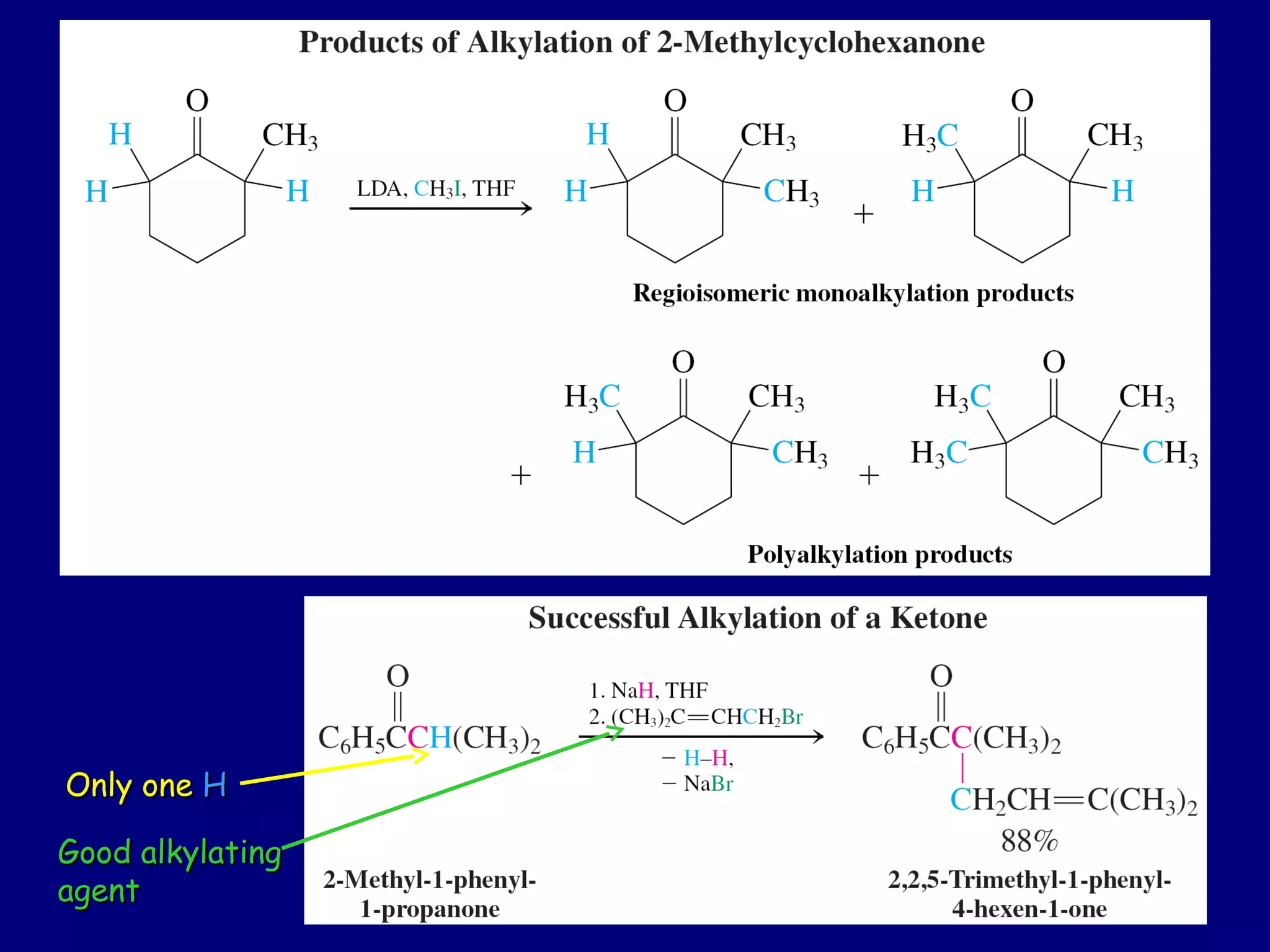
Only oneOnly one HH
Good alkylatingGood alkylating
agentagent
Solution to theseSolution to these
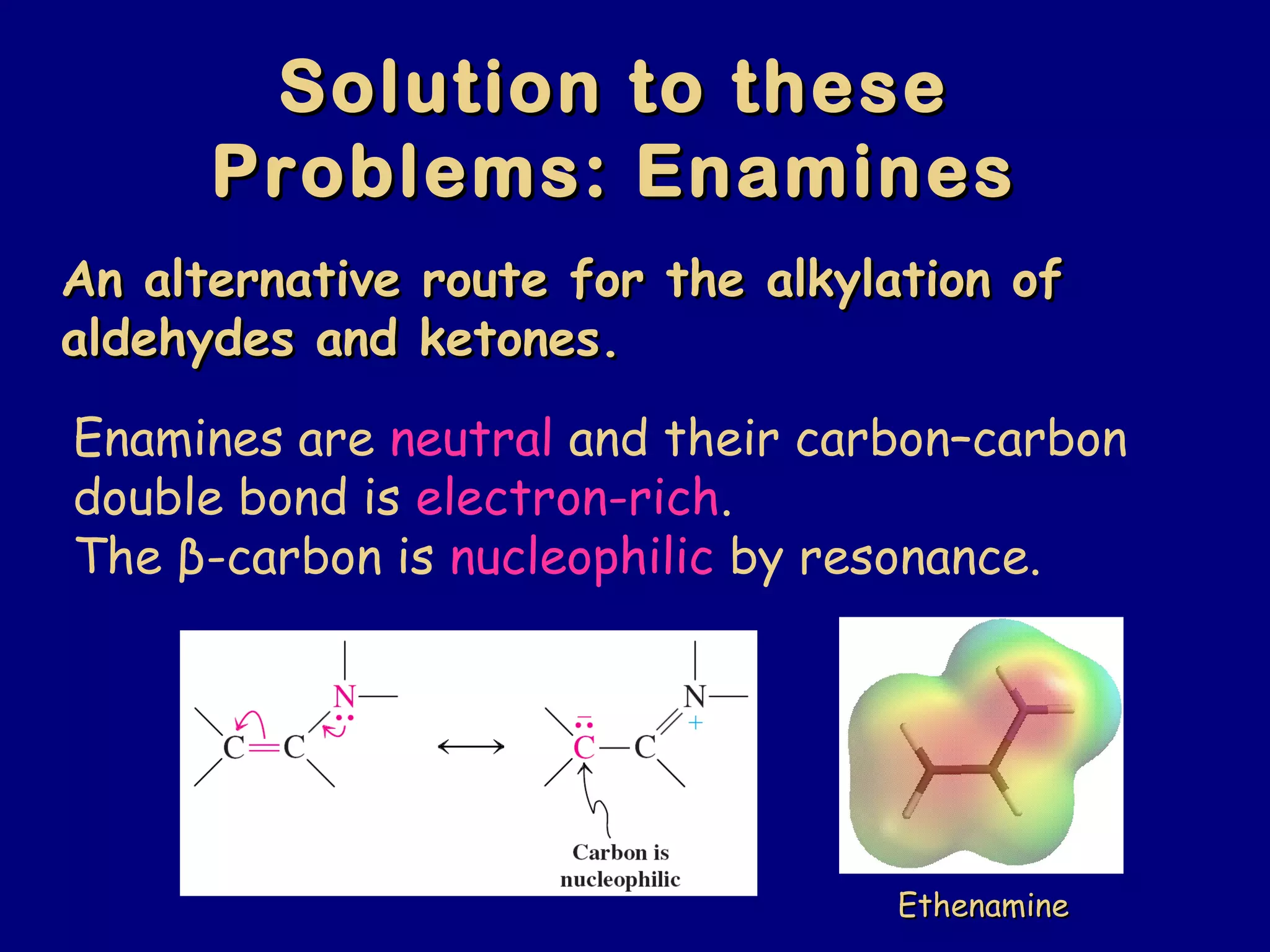
Problems: EnaminesProblems: Enamines
An alternative route for the alkylation ofAn alternative route for the alkylation of
aldehydes and ketones.aldehydes and ketones.
Enamines are neutral and their carbon–carbon
double bond is electron-rich.
The β-carbon is nucleophilic by resonance.
EthenamineEthenamine
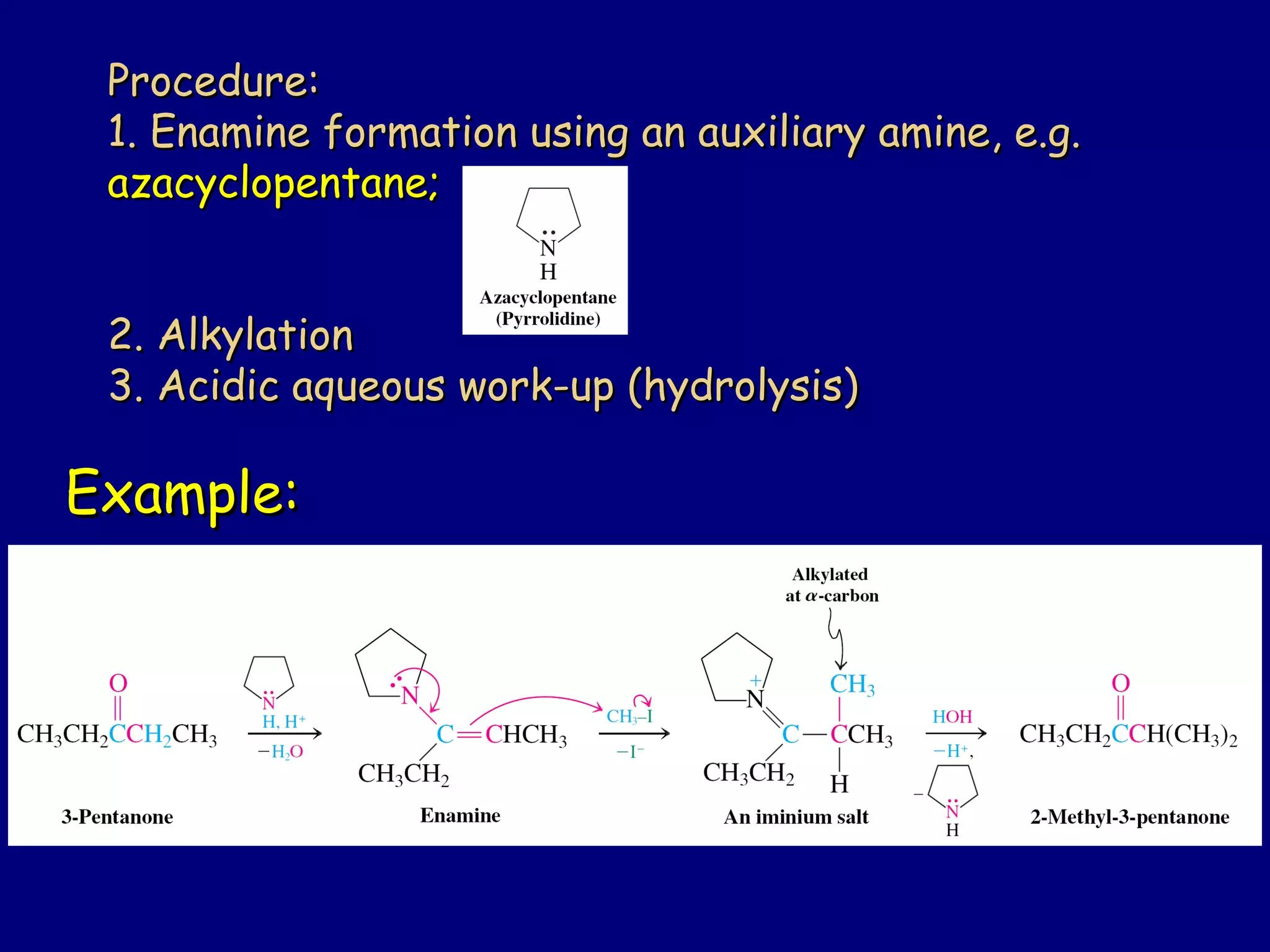
Example:Example:
Procedure:Procedure:
1. Enamine formation using an auxiliary amine, e.g.1. Enamine formation using an auxiliary amine, e.g.
azacyclopentane;azacyclopentane;
2. Alkylation2. Alkylation
3. Acidic aqueous work-up (hydrolysis)3. Acidic aqueous work-up (hydrolysis)
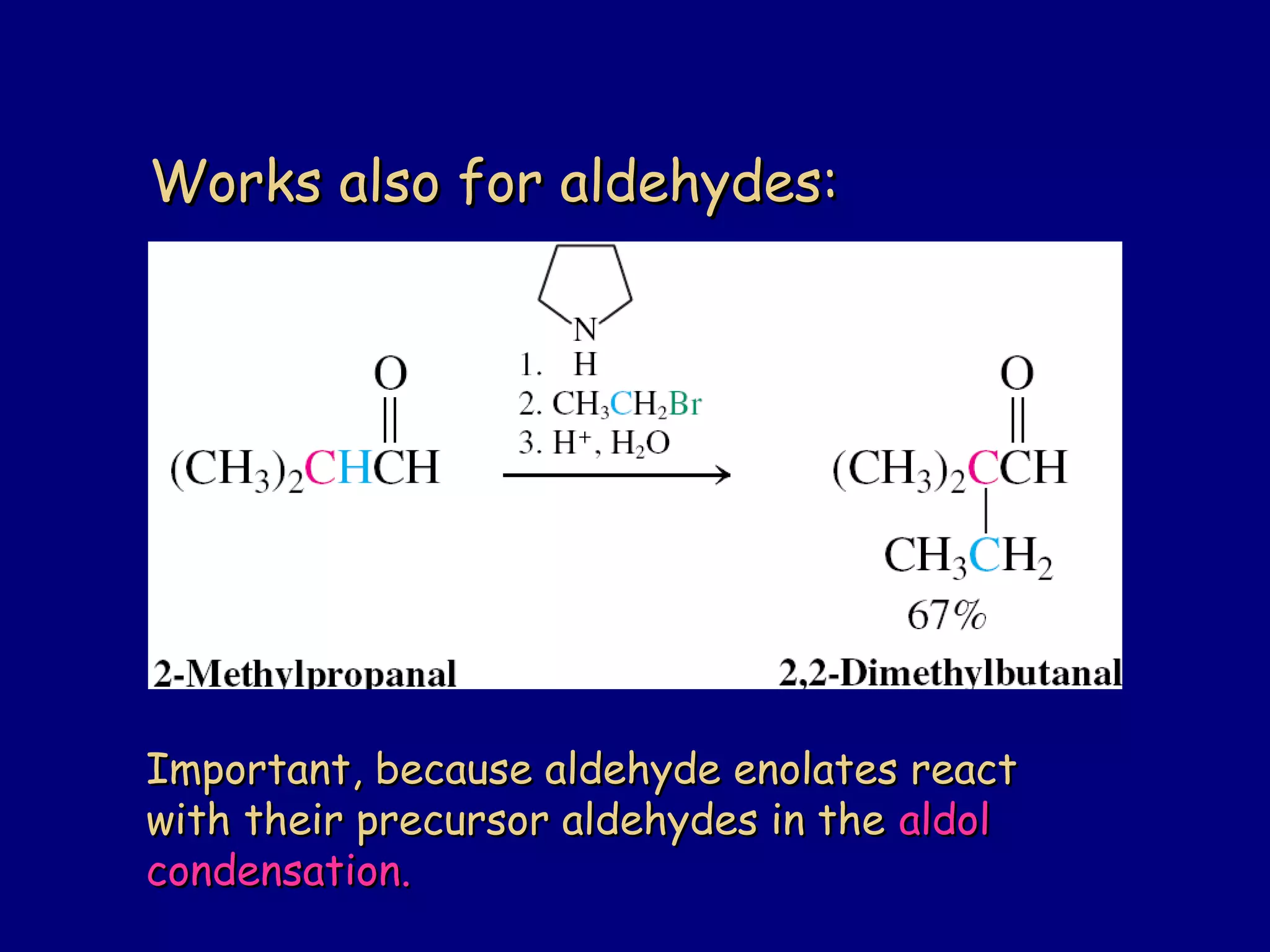
Works also for aldehydes:Works also for aldehydes:
Important, because aldehyde enolates reactImportant, because aldehyde enolates react
with their precursor aldehydes in thewith their precursor aldehydes in the aldolaldol
condensation.condensation.
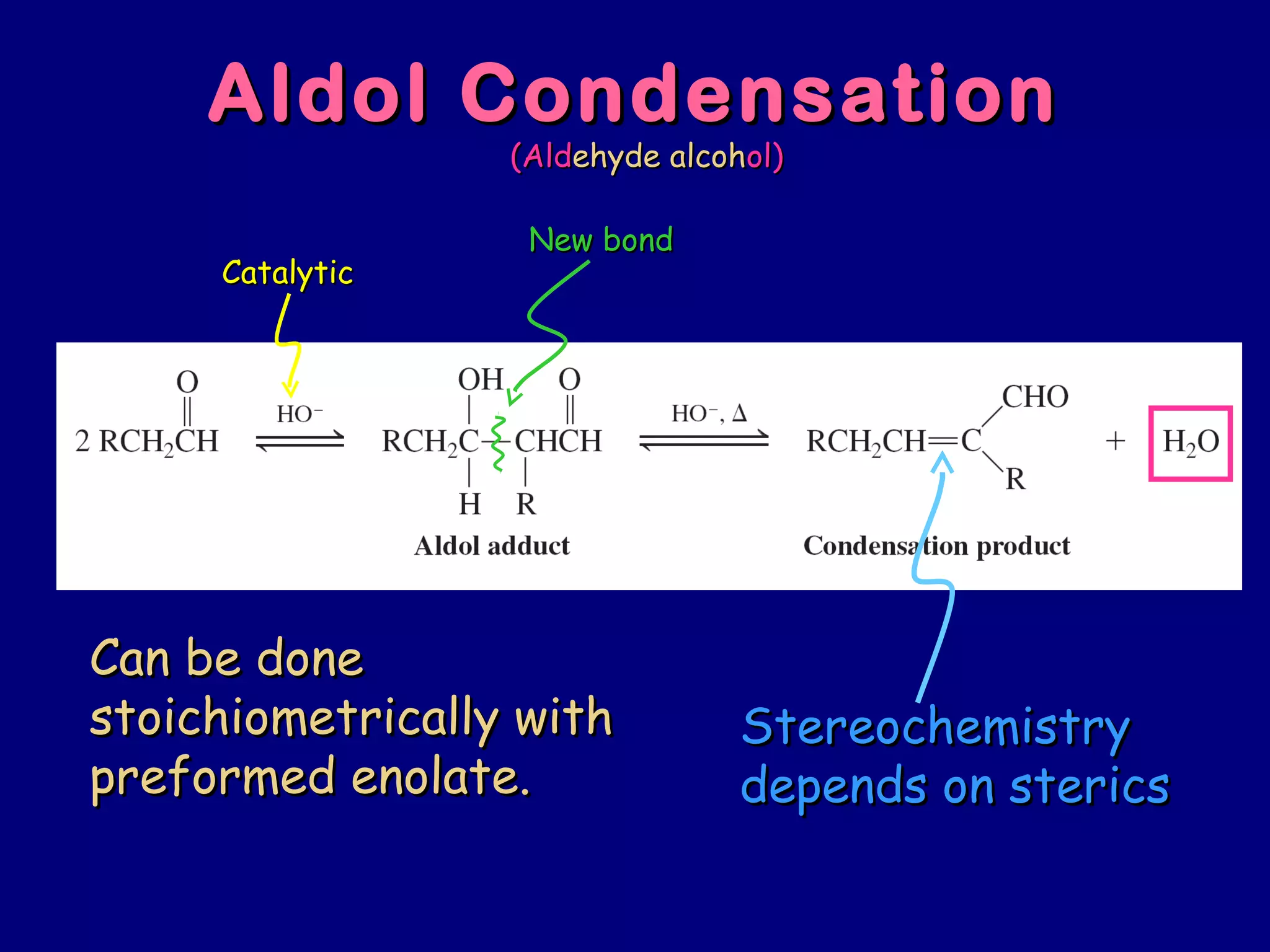
Aldol CondensationAldol Condensation
Can be doneCan be done
stoichiometrically withstoichiometrically with
preformed enolate.preformed enolate.
StereochemistryStereochemistry
depends on stericsdepends on sterics
New bondNew bond
CatalyticCatalytic
(Ald(Aldehyde alcohehyde alcohol)ol)
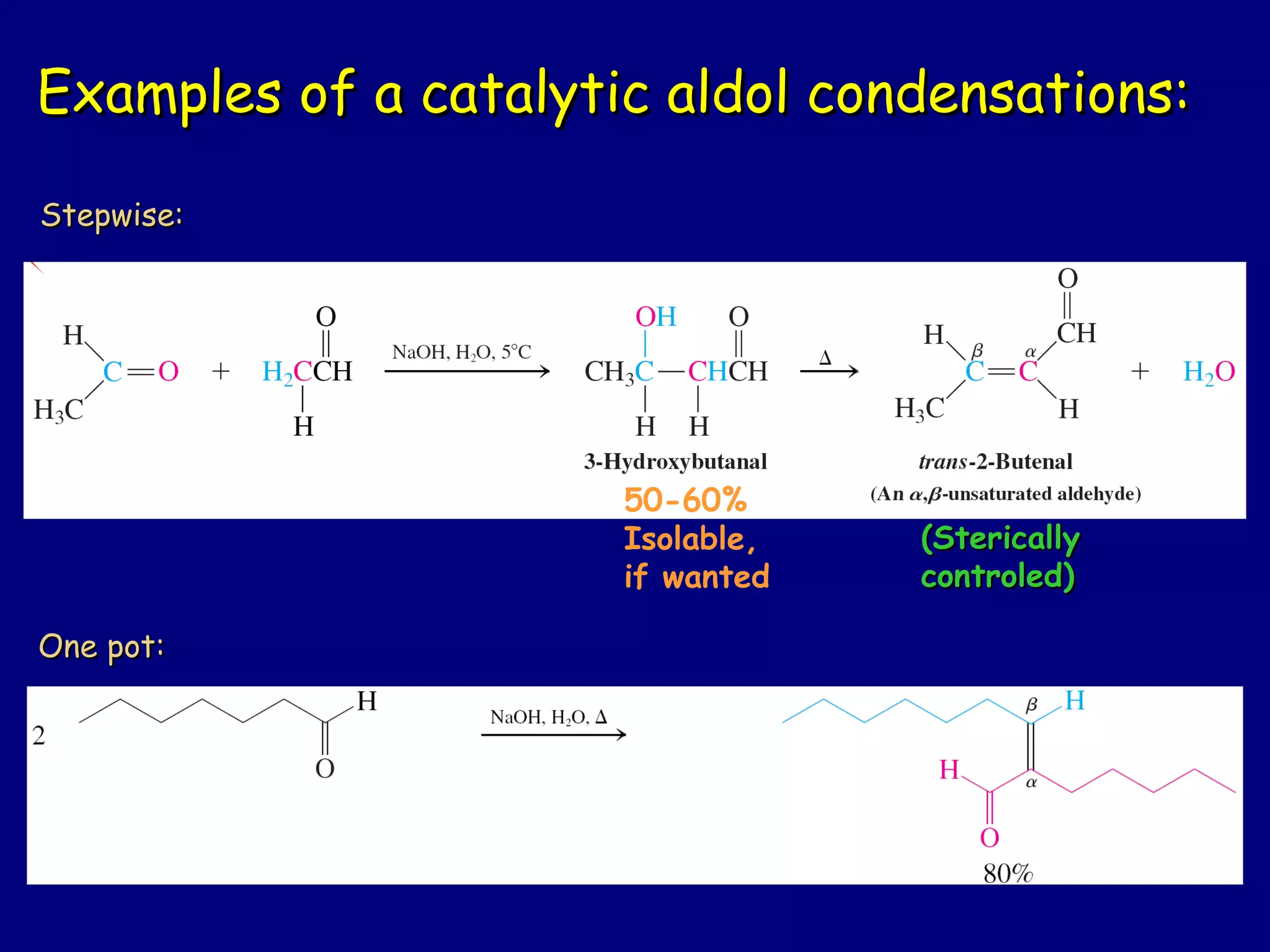
Examples of a catalytic aldol condensations:Examples of a catalytic aldol condensations:
50-60%
Isolable,
if wanted
(Sterically(Sterically
controled)controled)
Stepwise:Stepwise:
One pot:One pot:
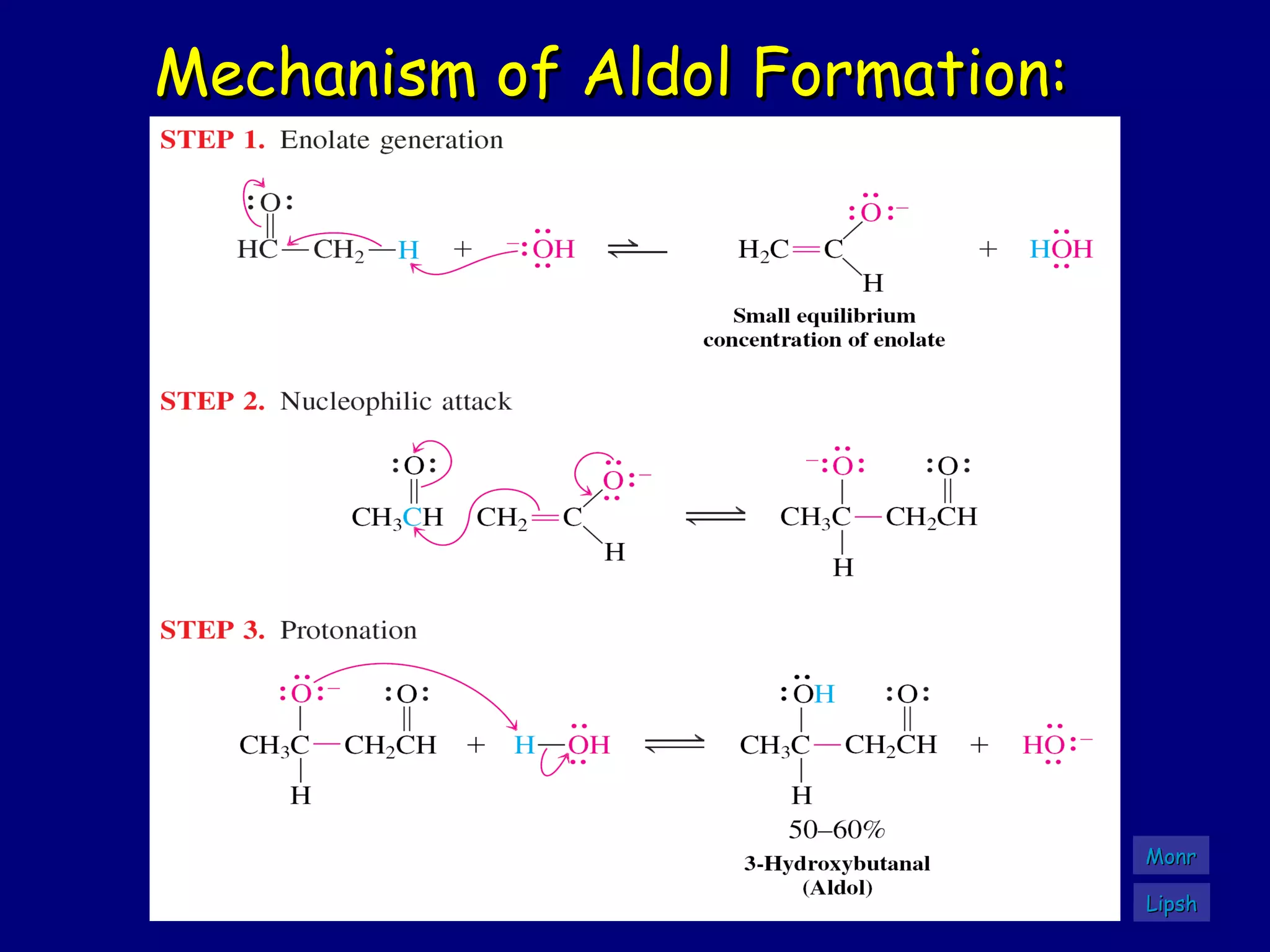
Mechanism of Aldol Formation:Mechanism of Aldol Formation:
LipshLipsh
MonrMonr
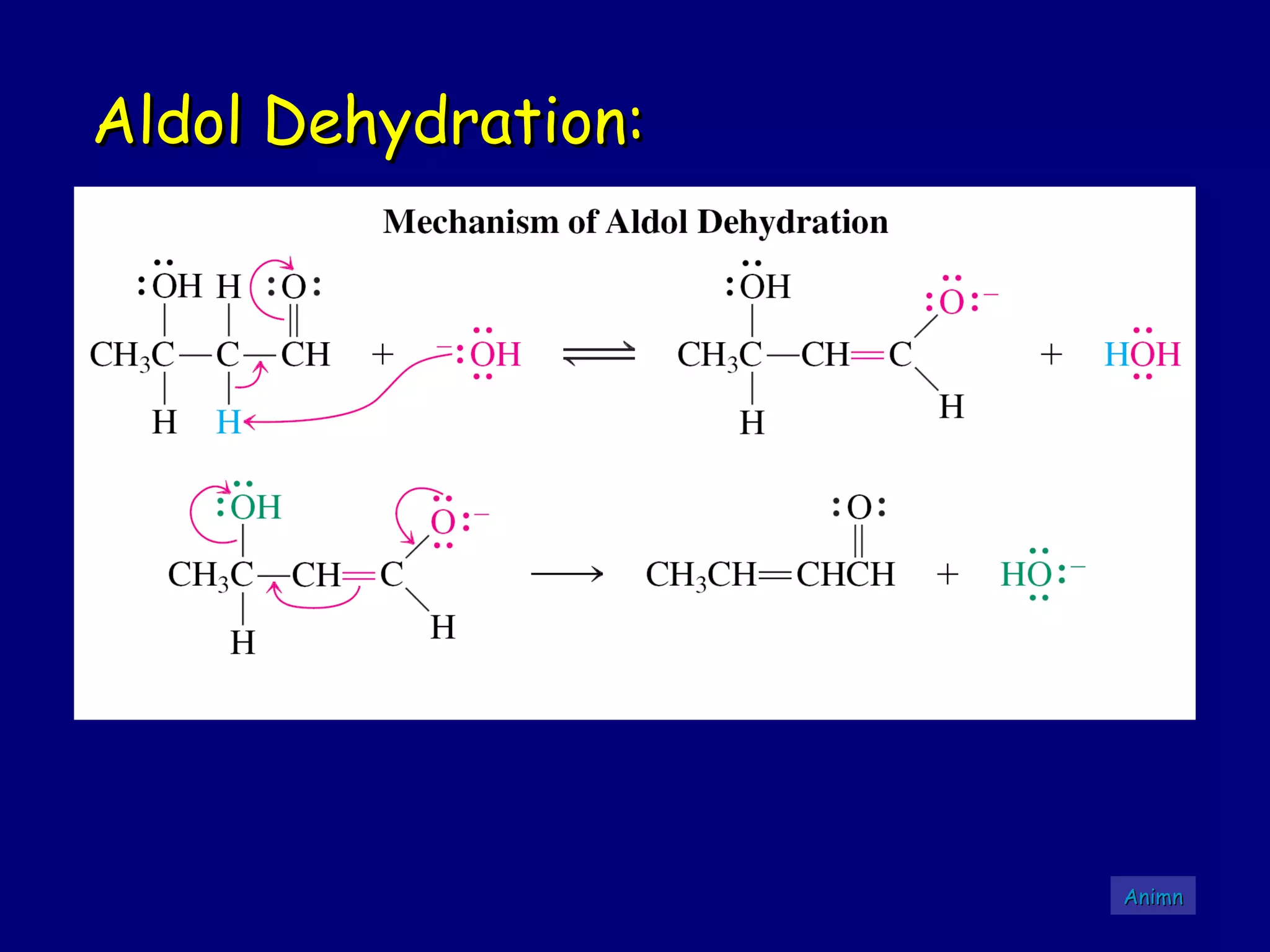
Aldol Dehydration:Aldol Dehydration:
AnimnAnimn
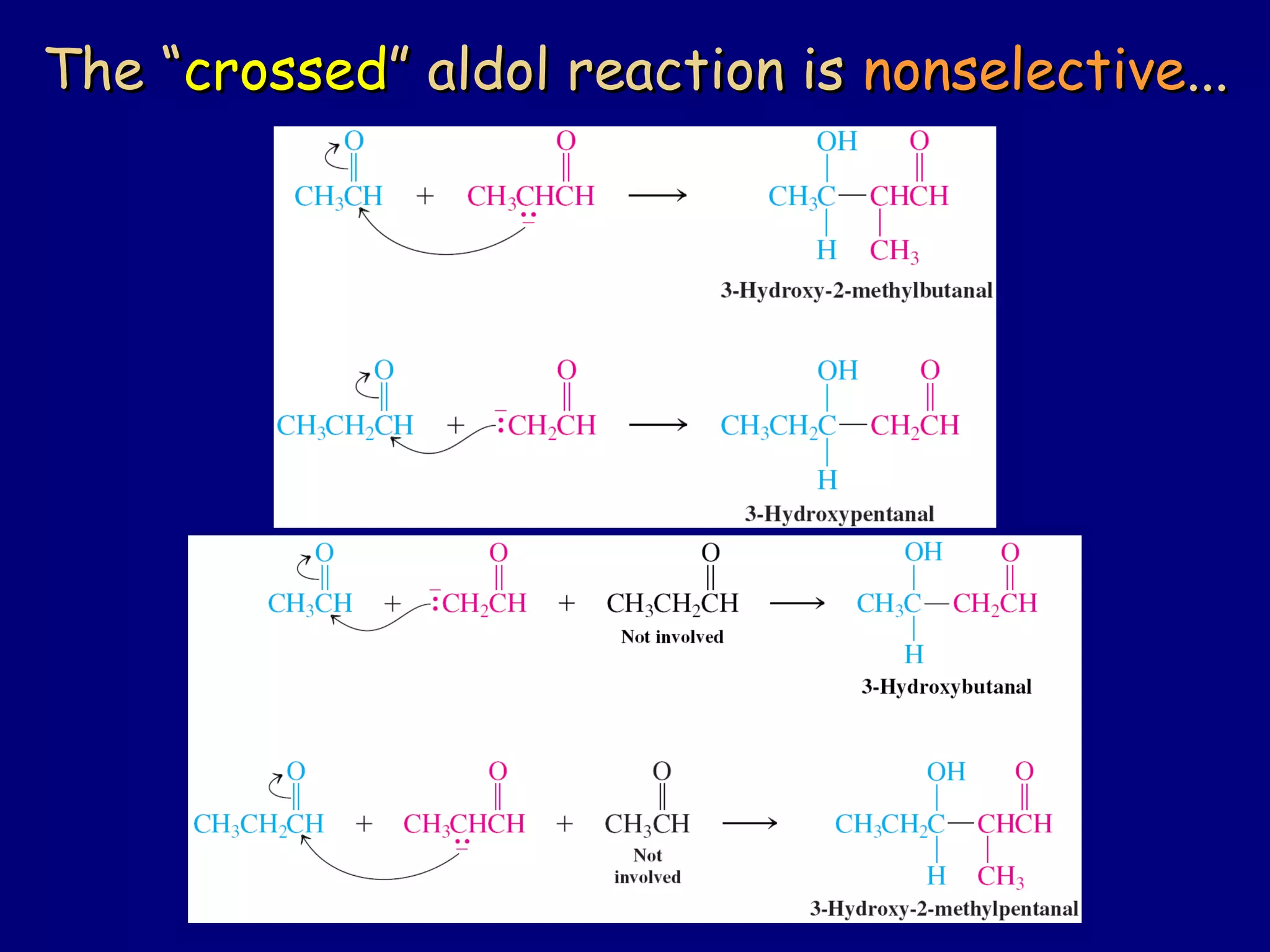
The “The “crossedcrossed” aldol reaction is” aldol reaction is nonselectivenonselective......
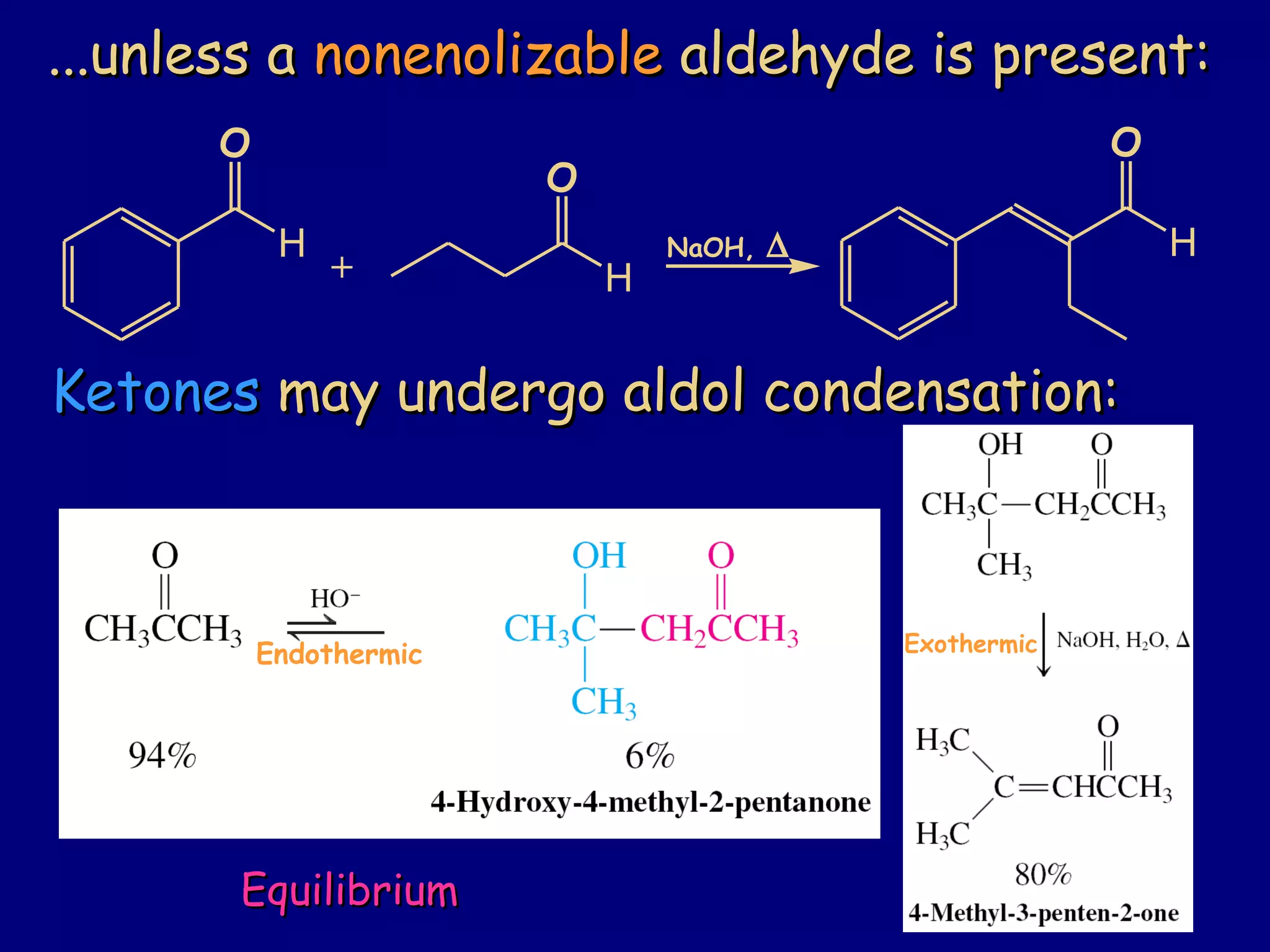
...unless a...unless a nonenolizablenonenolizable aldehyde is present:aldehyde is present:
O
O
O
H
H
H
+
NaOH, ∆
KetonesKetones may undergo aldol condensation:may undergo aldol condensation:
Endothermic
EquilibriumEquilibrium
Exothermic
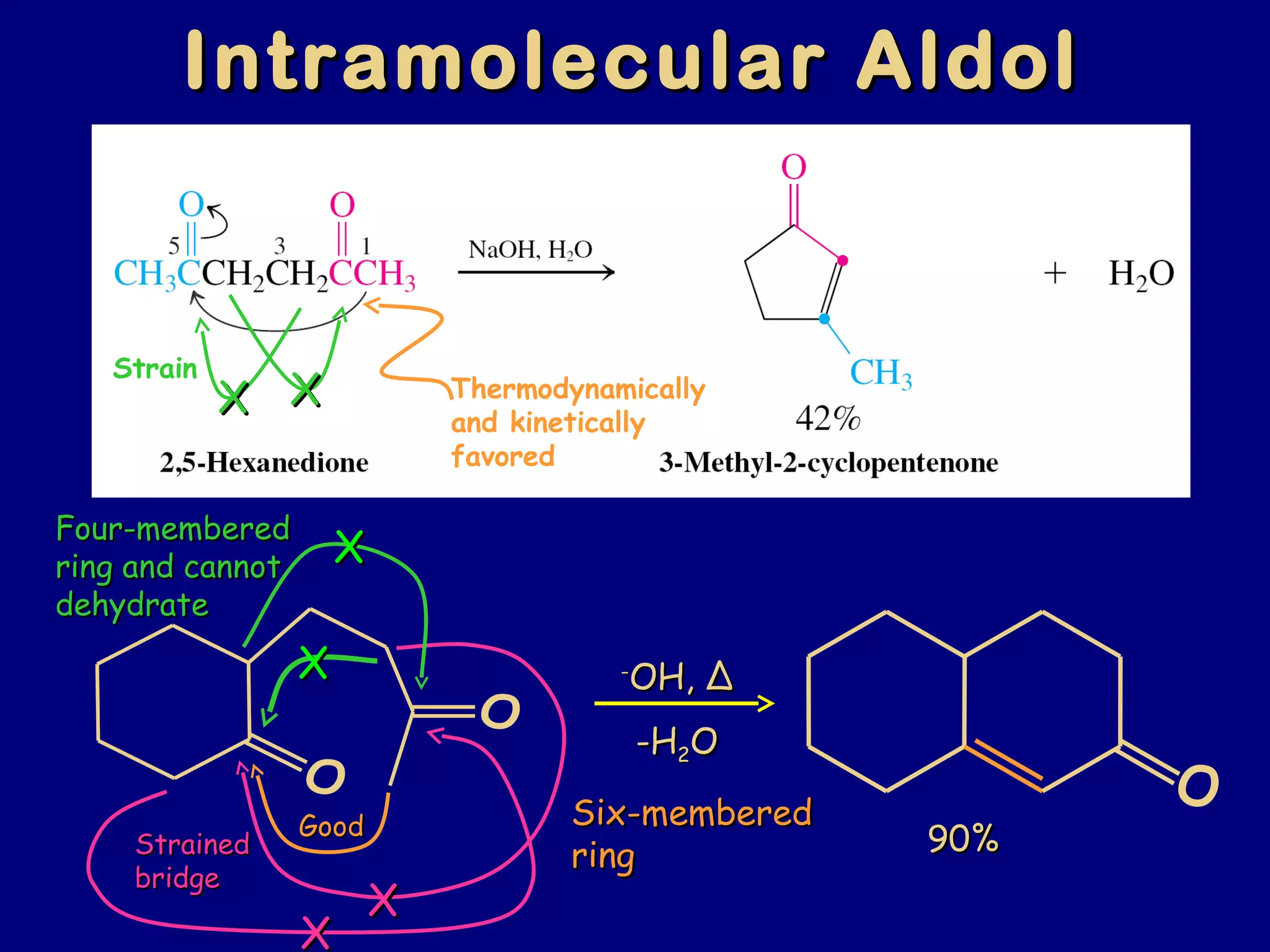
Intramolecular AldolIntramolecular Aldol
XX XX
Strain
Thermodynamically
and kinetically
favored
StrainedStrained
bridgebridge
O
O
XX
XX
XXFour-memberedFour-membered
ring and cannotring and cannot
dehydratedehydrate
--
OH,OH, ΔΔ
-H-H22OO
Six-memberedSix-membered
ringring 90%90%GoodGood
O
XX
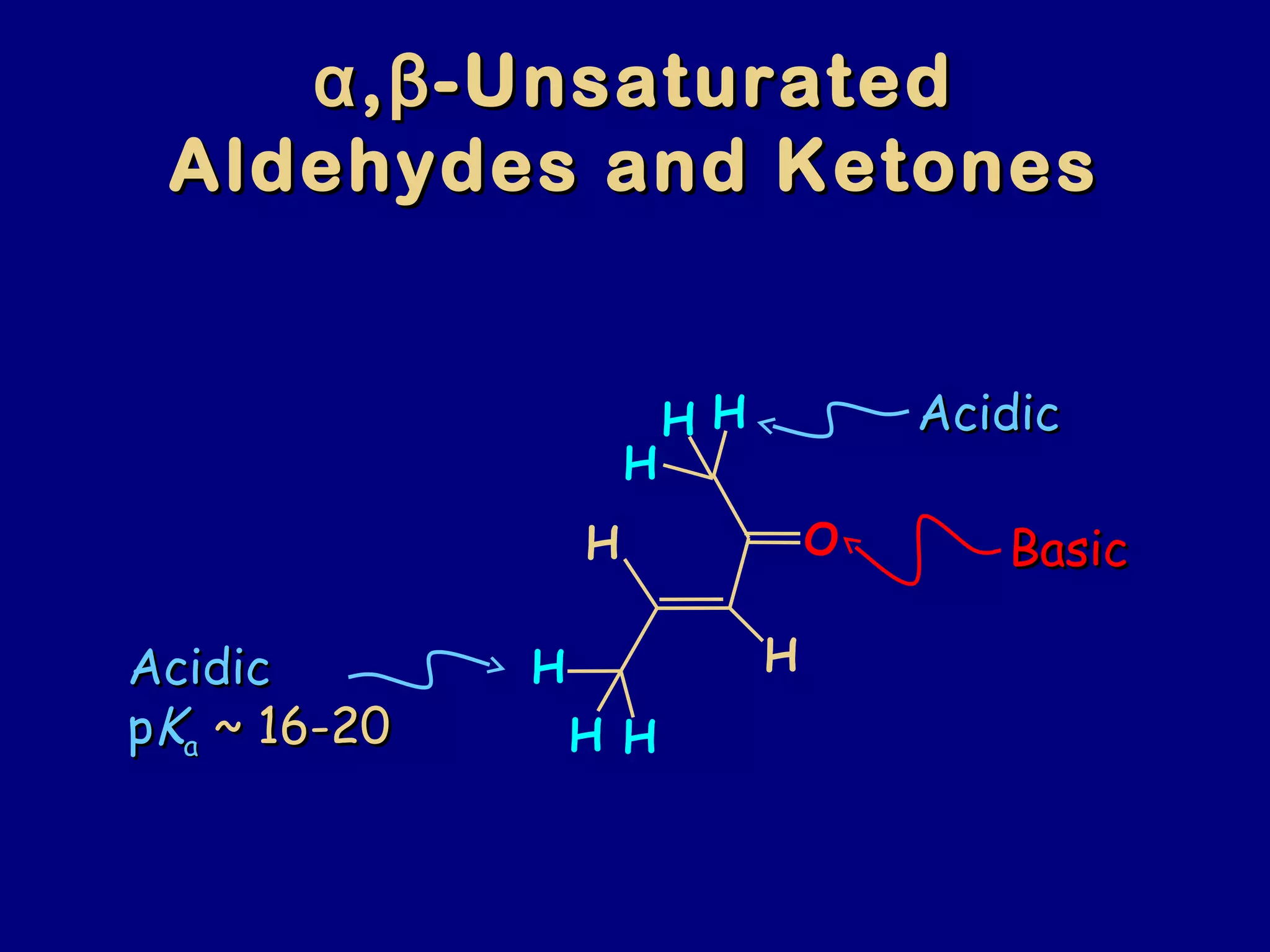
αα,,ββ-Unsaturated-Unsaturated
Aldehydes and KetonesAldehydes and Ketones
AcidicAcidic
BasicBasic
AcidicAcidic
ppKKaa ~ 16-20~ 16-20
O
HH
H
H
H
HH
H
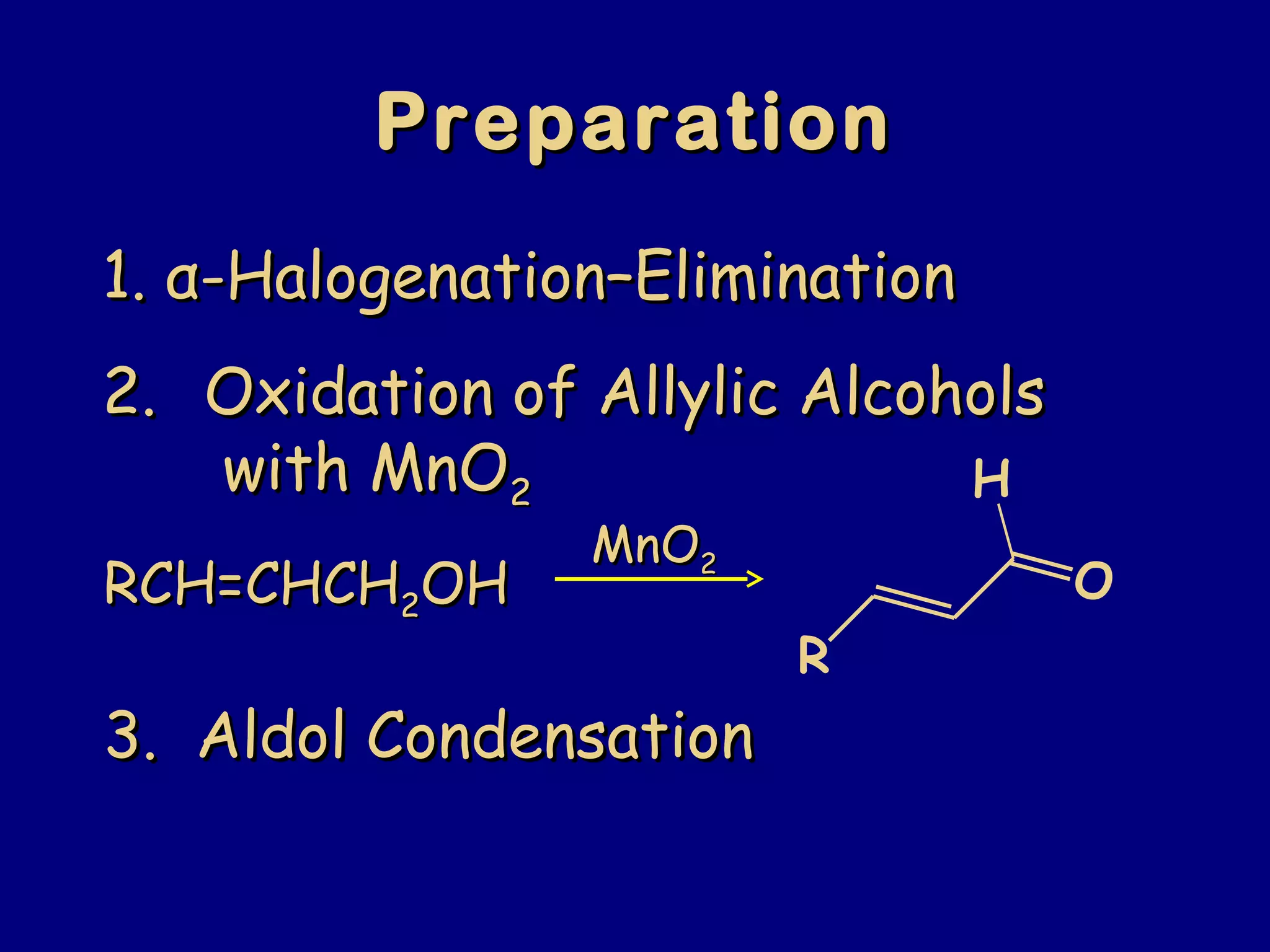
1.1. αα-Halogenation–Elimination-Halogenation–Elimination
2.2. Oxidation of Allylic AlcoholsOxidation of Allylic Alcohols
with MnOwith MnO22
RCH=CHCHRCH=CHCH22OHOH
MnOMnO22
PreparationPreparation
3. Aldol Condensation3. Aldol Condensation
O
R
H
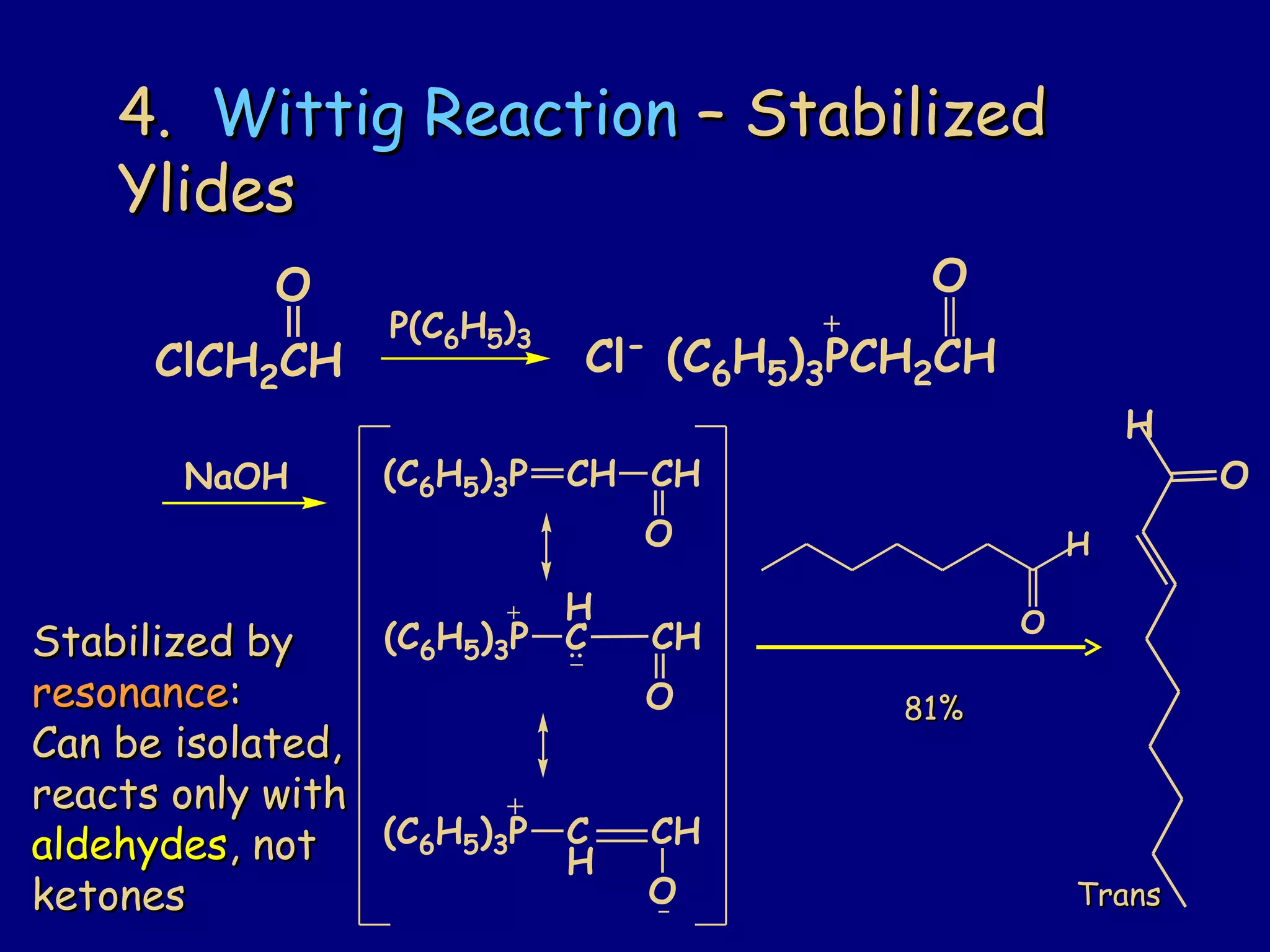
4.4. Wittig ReactionWittig Reaction – Stabilized– Stabilized
YlidesYlides
Stabilized byStabilized by
resonanceresonance::
Can be isolated,Can be isolated,
reacts only withreacts only with
aldehydesaldehydes, not, not
ketonesketones
ClCH2CH
O
P(C6H5)3
NaOH
Cl- (C6H5)3PCH2CH
O
+
(C6H5)3P CH CH
O
(C6H5)3P C
H
CH
O
(C6H5)3P
H
C CH
O
+
:
_
O
H
O
H
81%81%
TransTrans
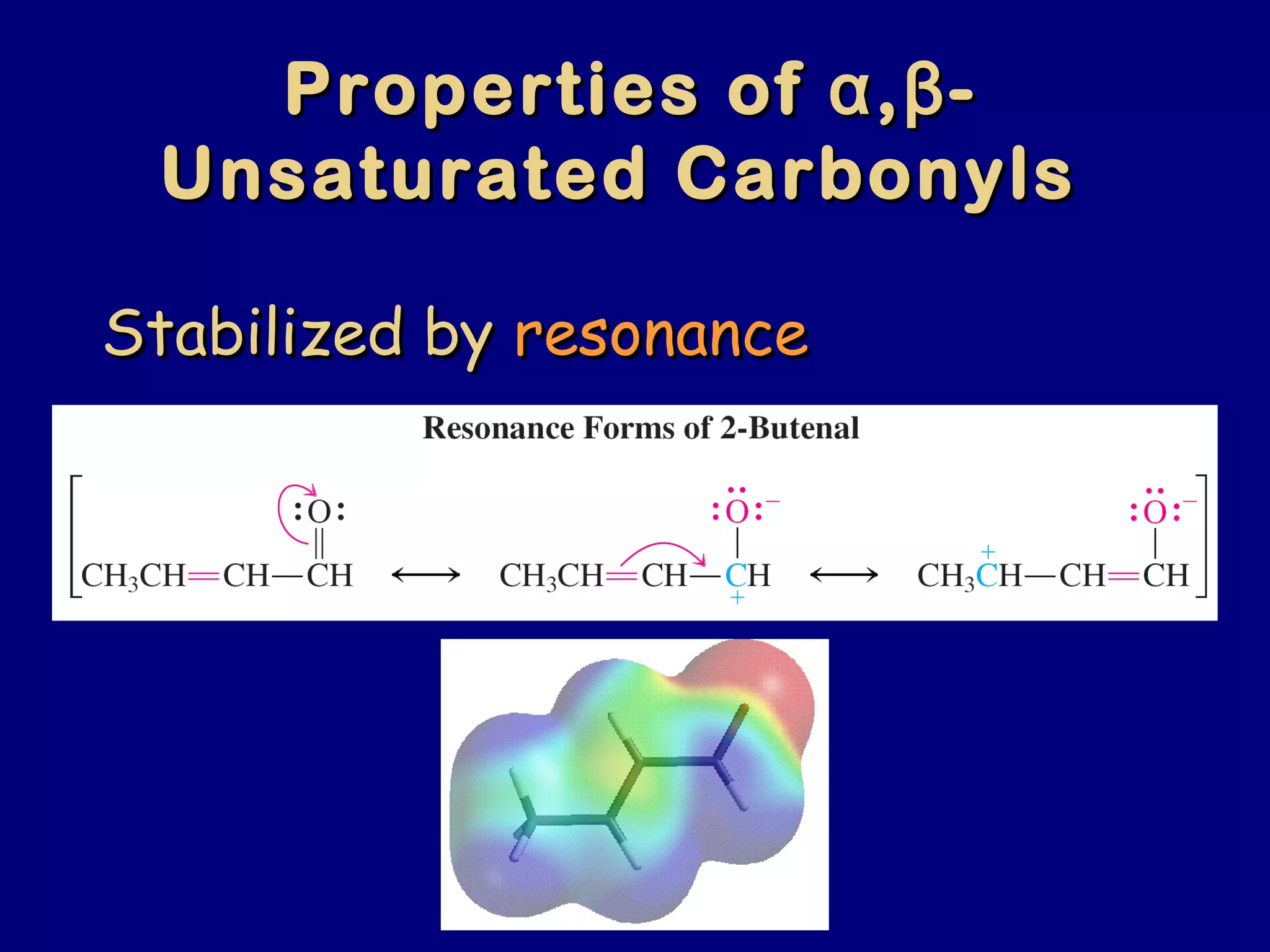
Stabilized byStabilized by resonanceresonance
Properties ofProperties of αα,,ββ--
Unsaturated CarbonylsUnsaturated Carbonyls
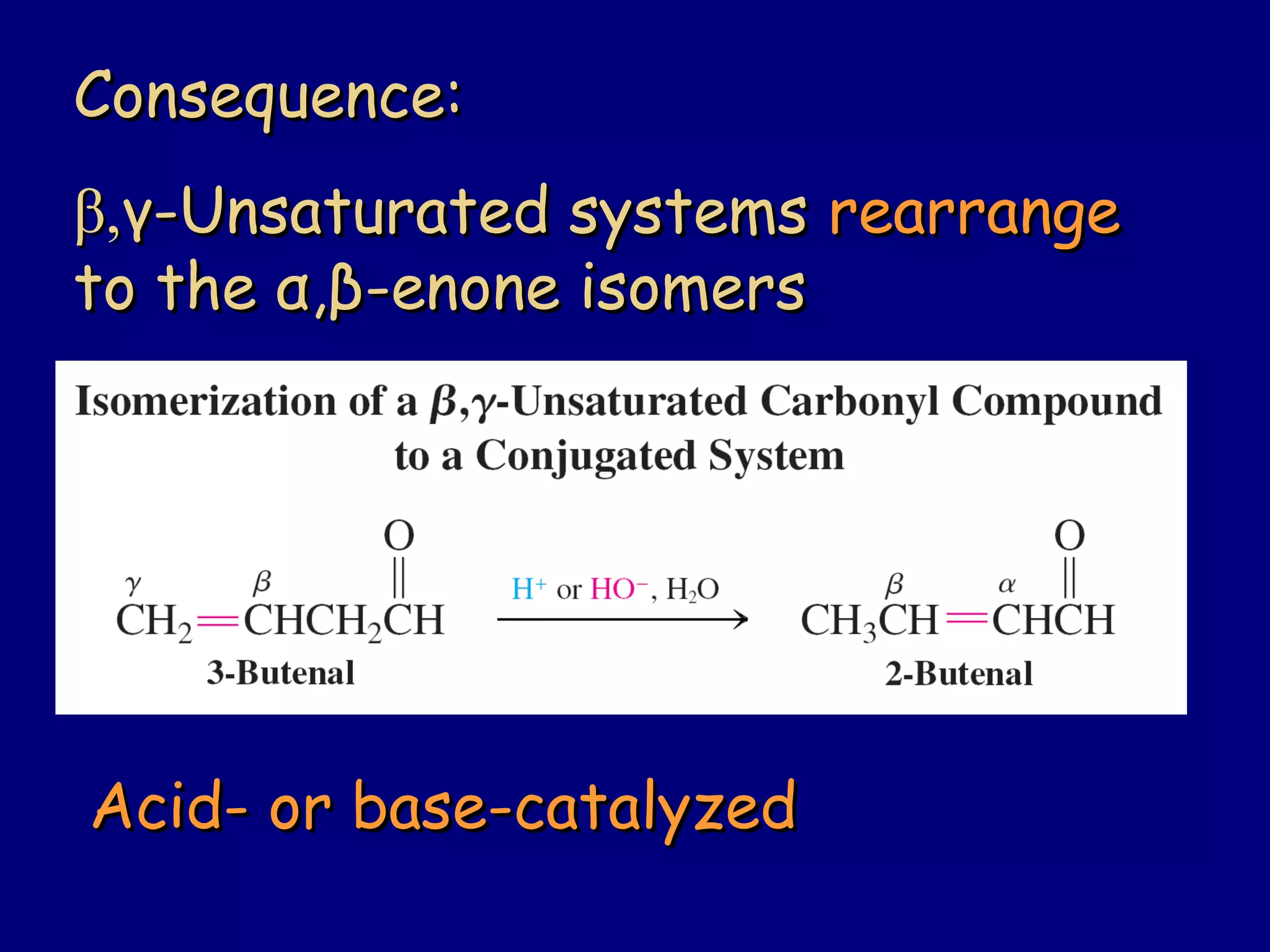
Consequence:Consequence:
ββ,,γγ-Unsaturated systems-Unsaturated systems rearrangerearrange
to theto the αα,,ββ-enone isomers-enone isomers
Acid- or base-catalyzedAcid- or base-catalyzed
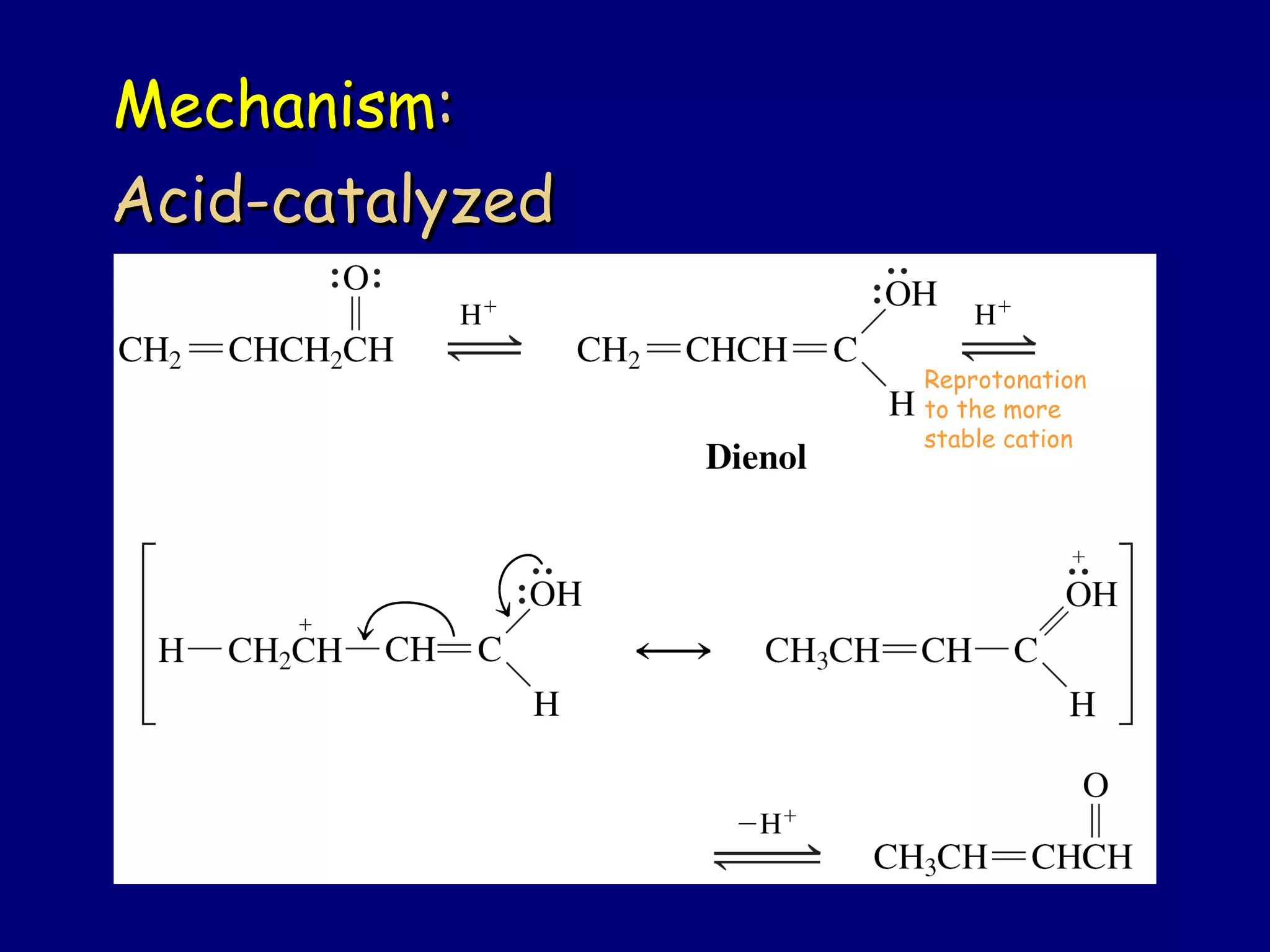
MechanismMechanism::
Acid-catalyzedAcid-catalyzed
Reprotonation
to the more
stable cation
Base-catalyzedBase-catalyzed
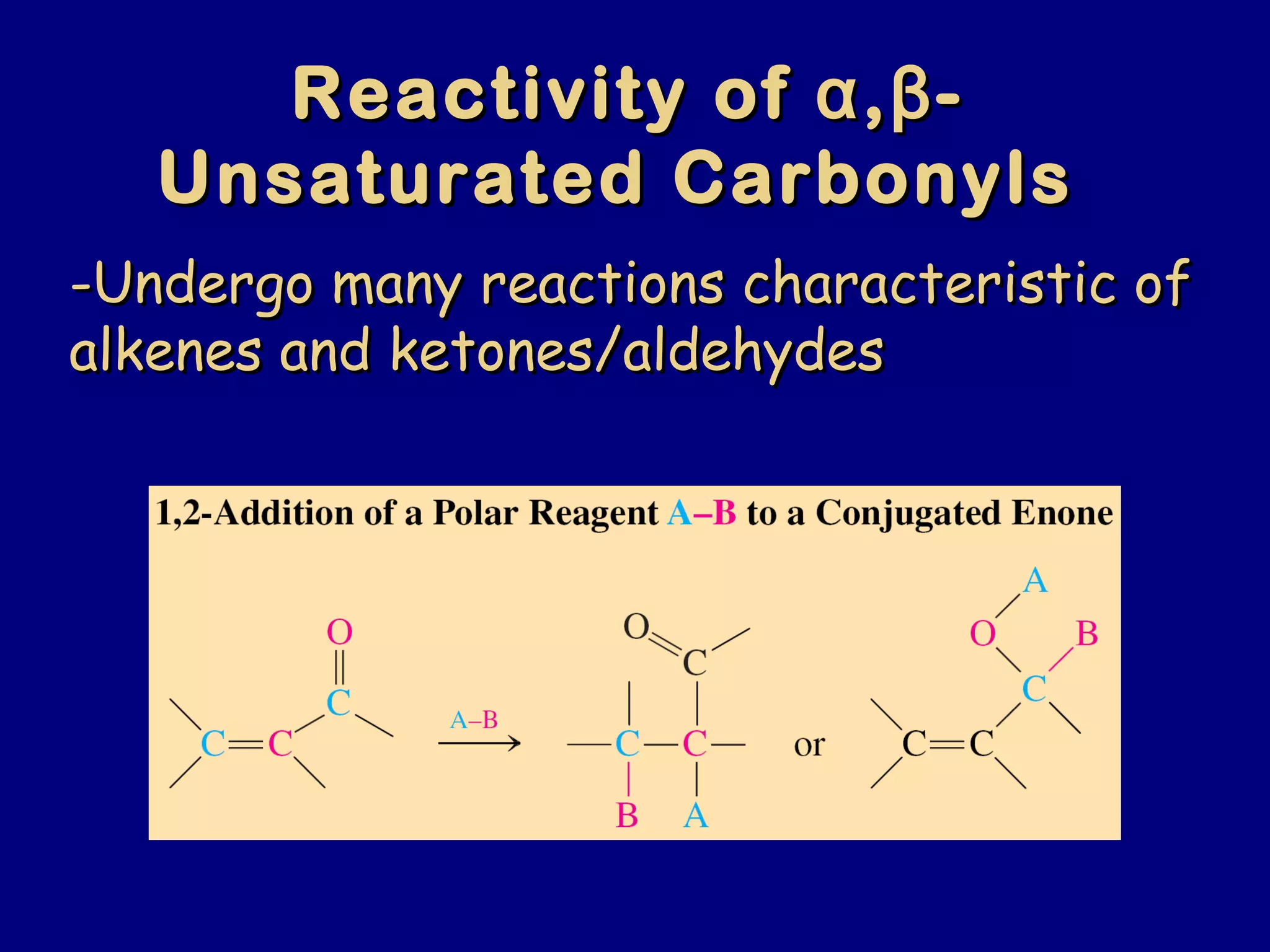
Reactivity ofReactivity of αα,,ββ--
Unsaturated CarbonylsUnsaturated Carbonyls
-Undergo many reactions characteristic of-Undergo many reactions characteristic of
alkenes and ketones/aldehydesalkenes and ketones/aldehydes
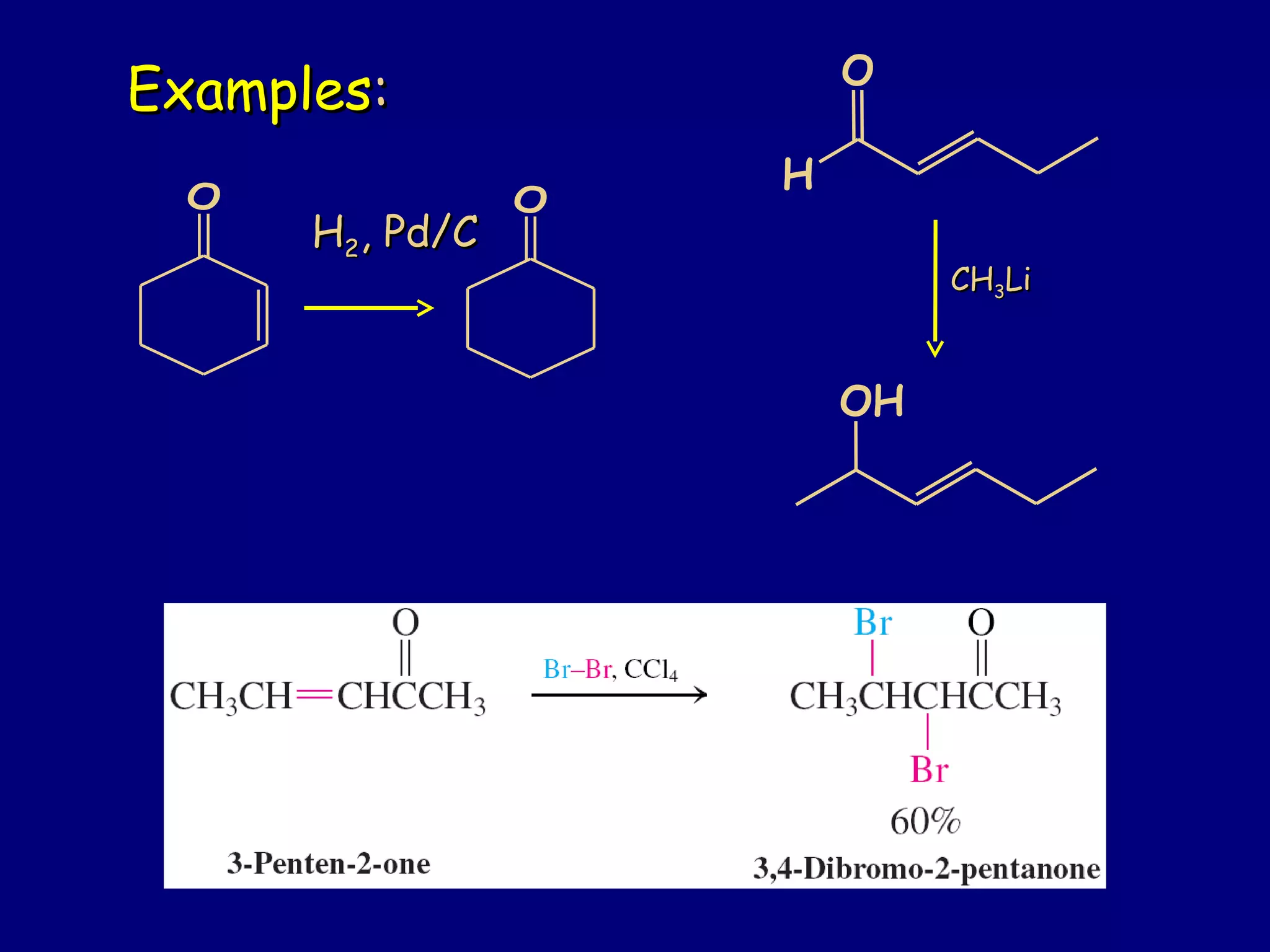
ExamplesExamples::
O O
HH22, Pd/C, Pd/C
CHCH33LiLi
O
OH
H
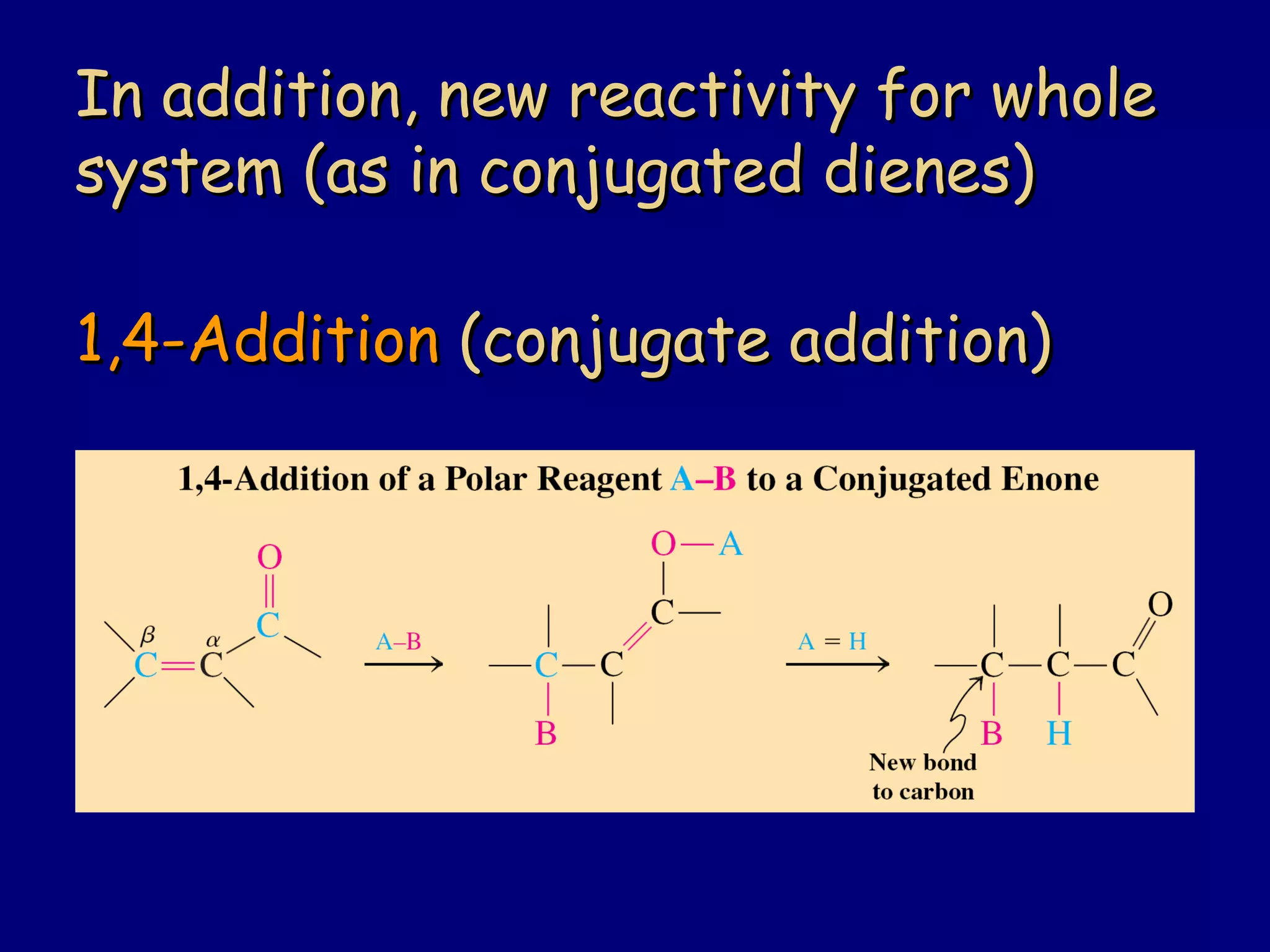
1,4-Addition1,4-Addition (conjugate addition)(conjugate addition)
In addition, new reactivity for wholeIn addition, new reactivity for whole
system (as in conjugated dienes)system (as in conjugated dienes)
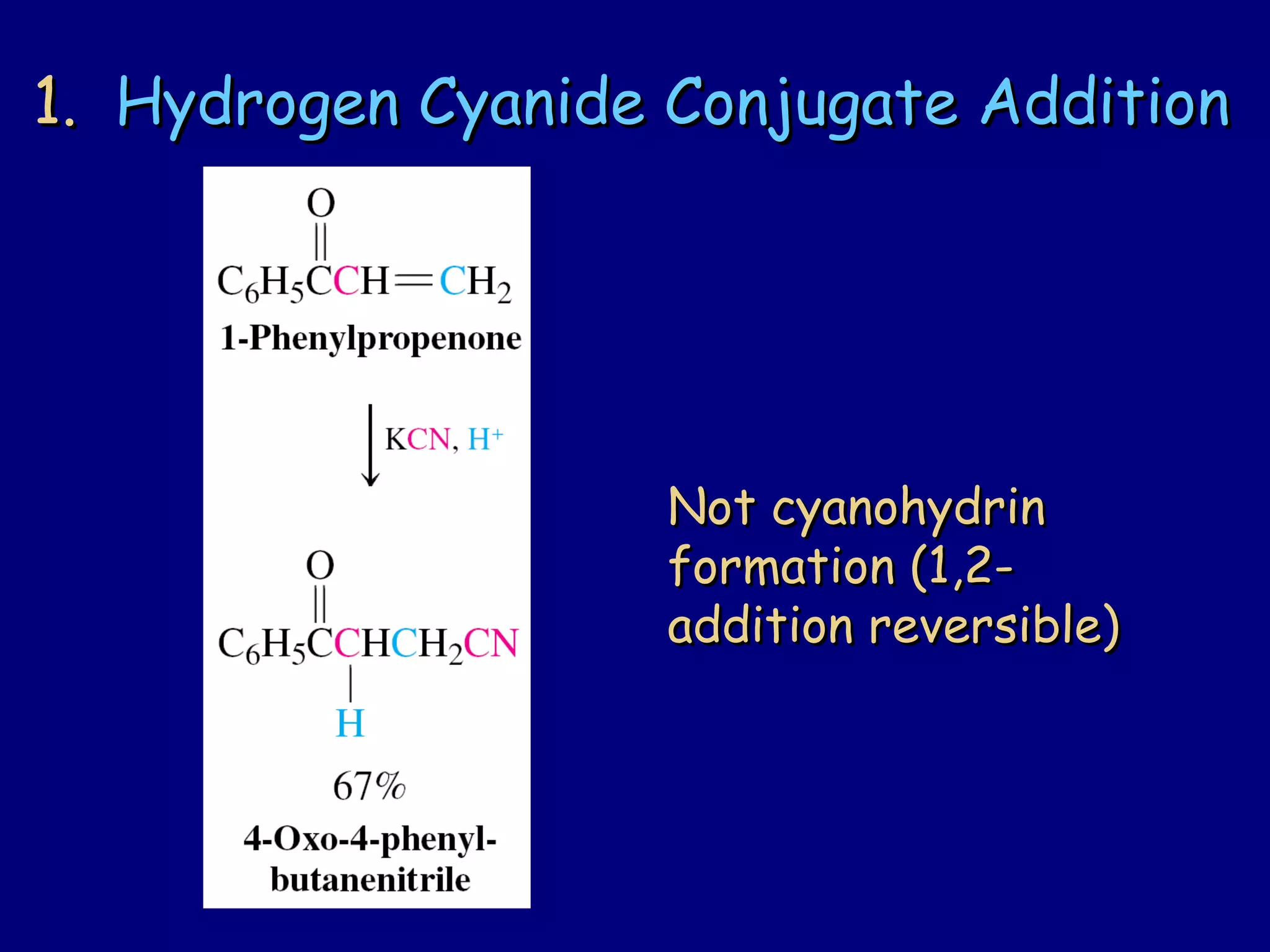
1.1. Hydrogen Cyanide Conjugate AdditionHydrogen Cyanide Conjugate Addition
Not cyanohydrinNot cyanohydrin
formation (1,2-formation (1,2-
addition reversible)addition reversible)
MechanismMechanism::
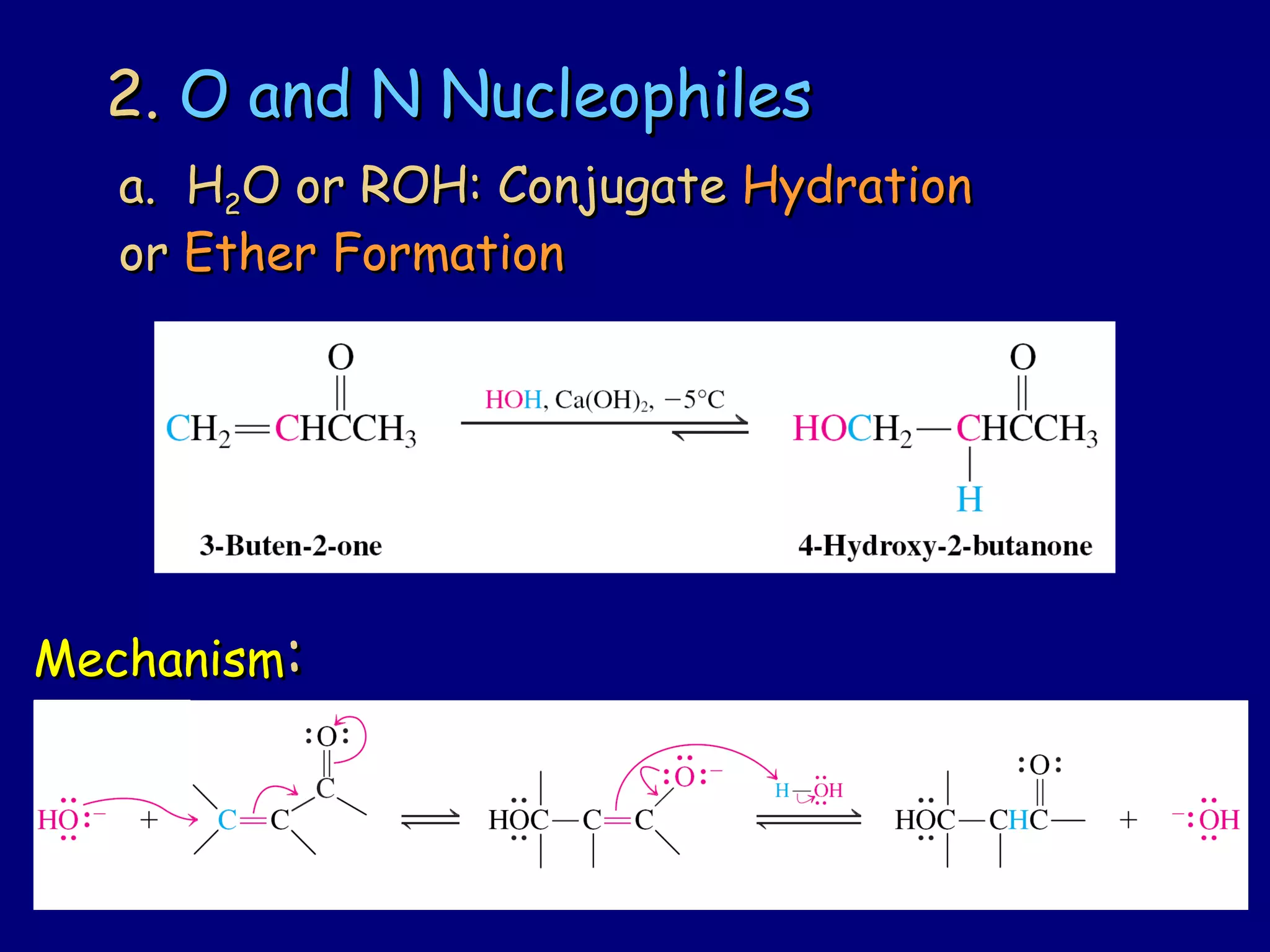
2.2. O and N NucleophilesO and N Nucleophiles
a. Ha. H22O or ROH: ConjugateO or ROH: Conjugate HydrationHydration
oror Ether FormationEther Formation
MechanismMechanism::
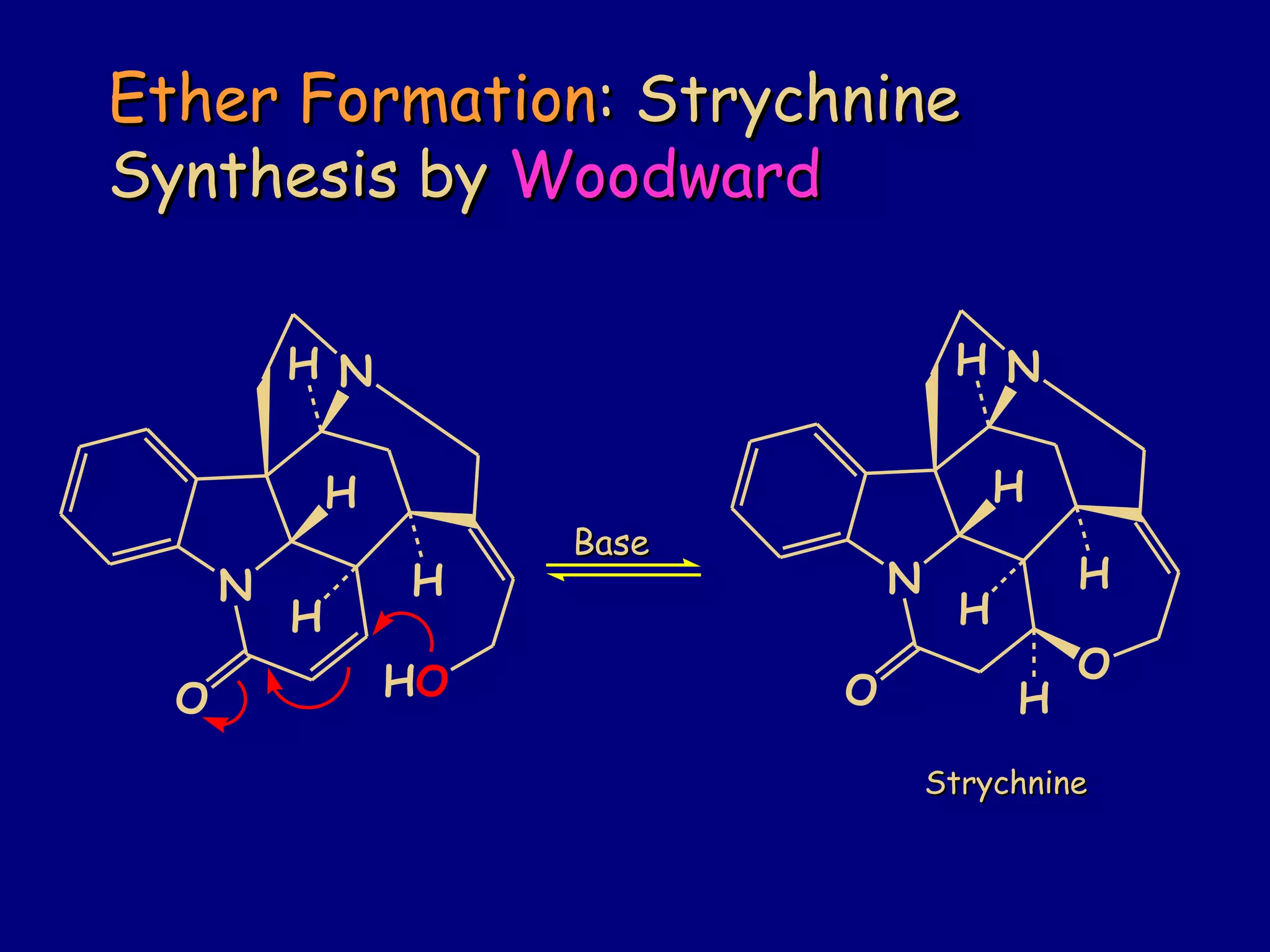
Ether FormationEther Formation: Strychnine: Strychnine
Synthesis bySynthesis by WoodwardWoodward
N
N
H
H
O
H
H
O
H
BaseBase
N
N
H
H
O
H
HO
H
StrychnineStrychnine
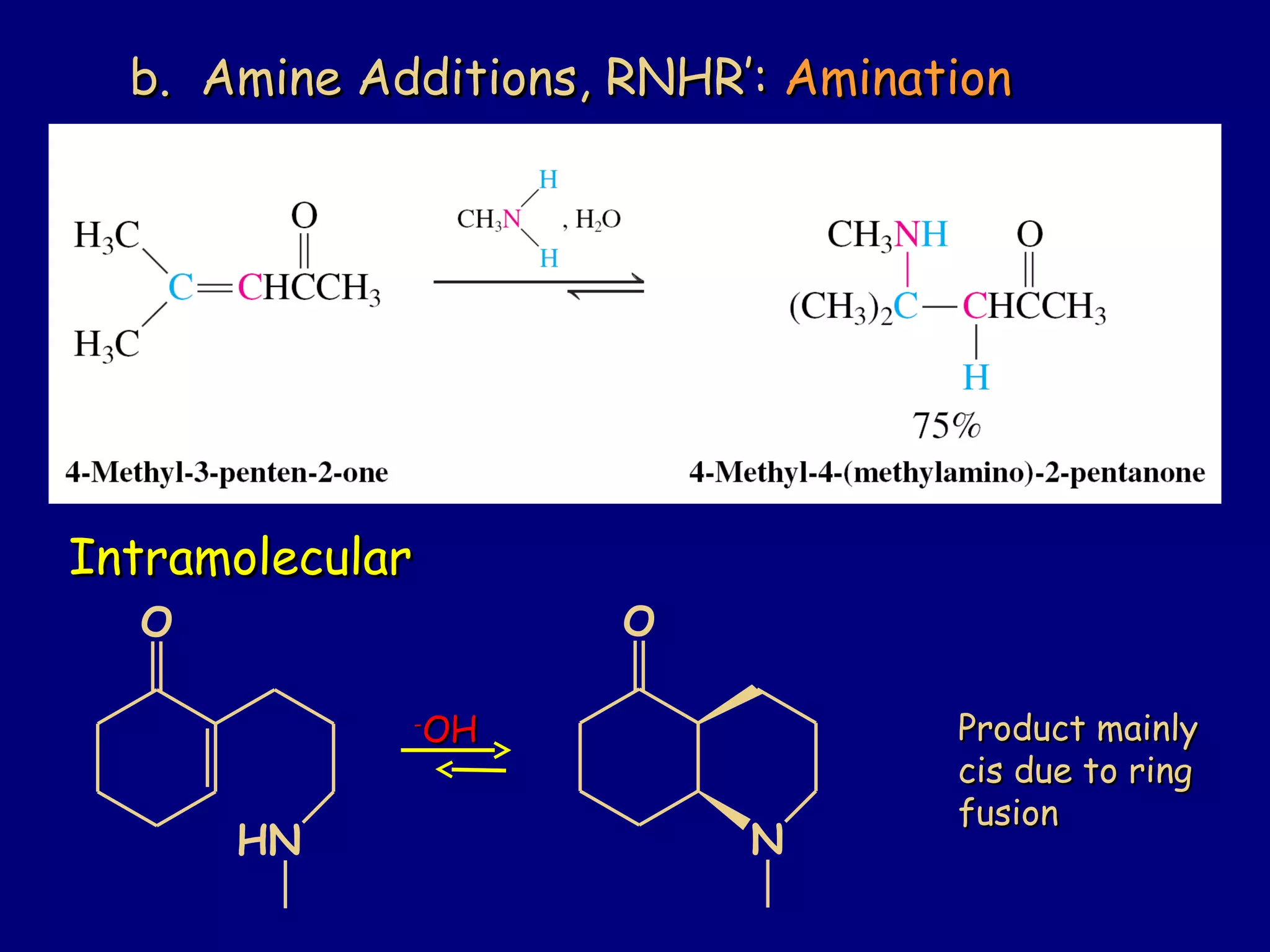
b. Amine Additions, RNHR’:b. Amine Additions, RNHR’: AminationAmination
IntramolecularIntramolecular
O
HN
O
N
--
OHOH Product mainlyProduct mainly
cis due to ringcis due to ring
fusionfusion
3.3. OrganometallicsOrganometallics
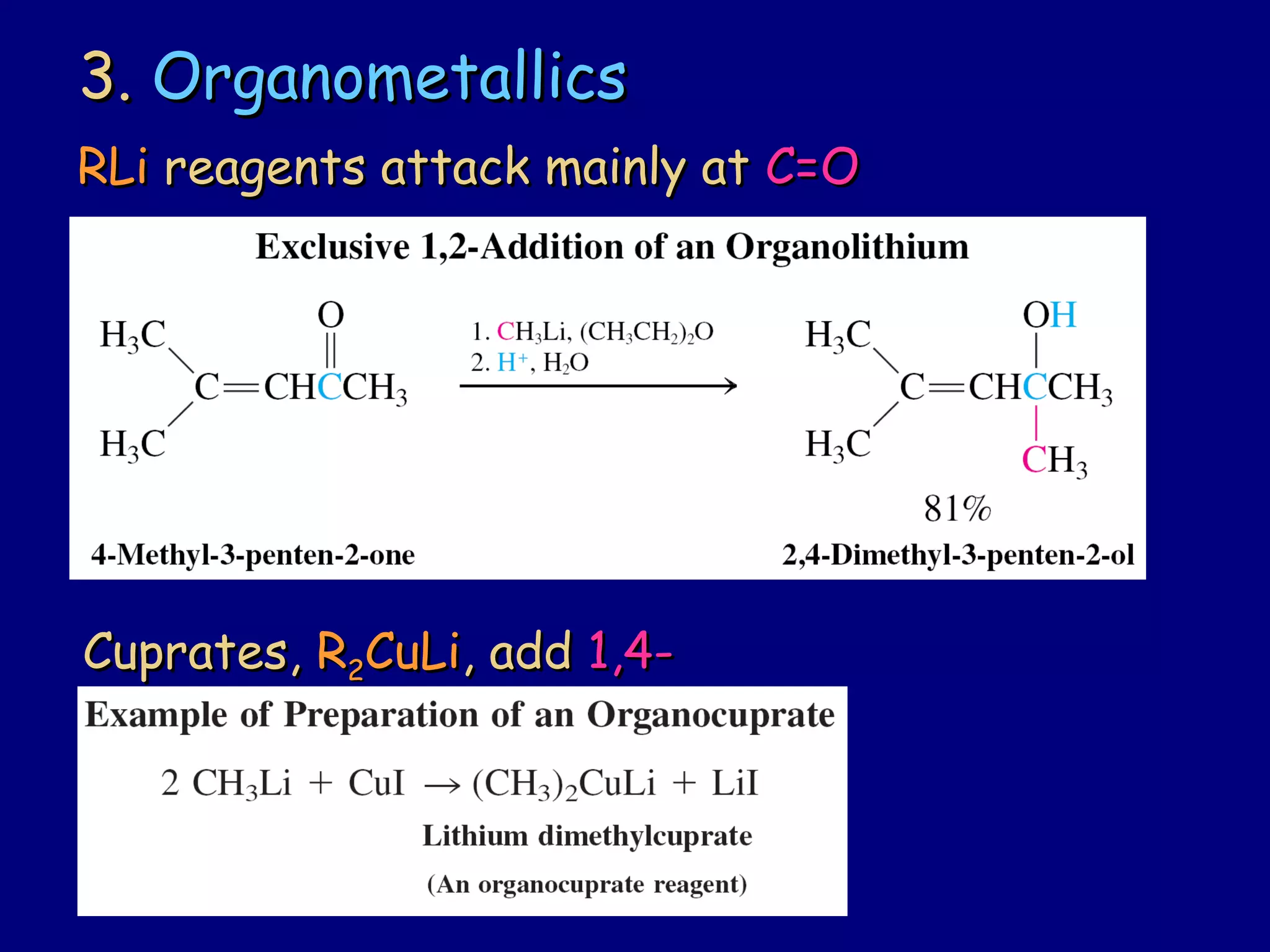
RLiRLi reagents attack mainly atreagents attack mainly at C=OC=O
Cuprates,Cuprates, RR22CuLiCuLi, add, add 1,4-1,4-
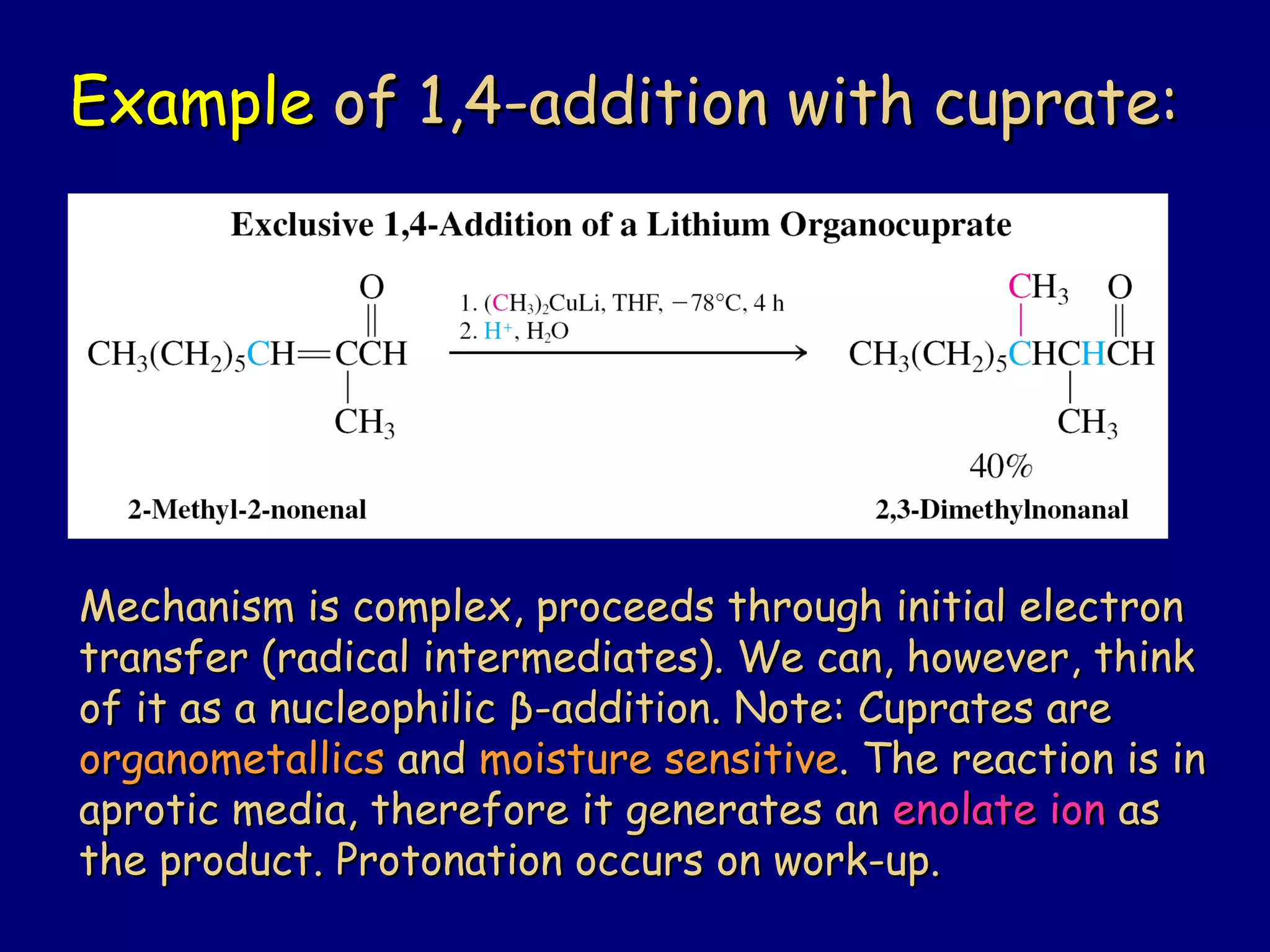
ExampleExample of 1,4-addition with cuprate:of 1,4-addition with cuprate:
Mechanism is complex, proceeds through initial electronMechanism is complex, proceeds through initial electron
transfer (radical intermediates). We can, however, thinktransfer (radical intermediates). We can, however, think
of it as a nucleophilicof it as a nucleophilic ββ-addition. Note: Cuprates are-addition. Note: Cuprates are
organometallicsorganometallics andand moisture sensitivemoisture sensitive. The reaction is in. The reaction is in
aprotic media, therefore it generates anaprotic media, therefore it generates an enolate ionenolate ion asas
the product. Protonation occurs on work-up.the product. Protonation occurs on work-up.
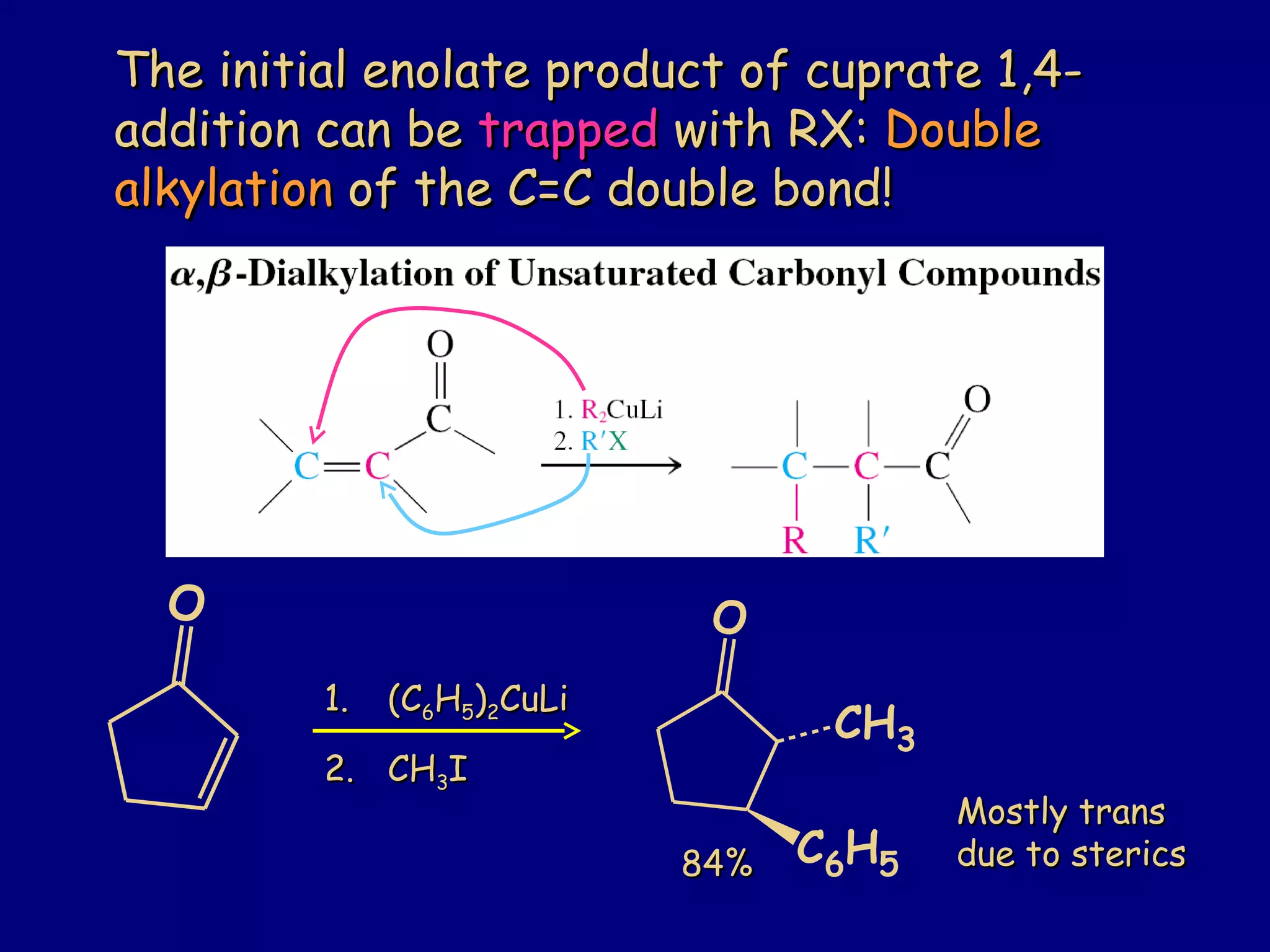
The initial enolate product of cuprate 1,4-The initial enolate product of cuprate 1,4-
addition can beaddition can be trappedtrapped with RX:with RX: DoubleDouble
alkylationalkylation of the C=C double bond!of the C=C double bond!
Mostly transMostly trans
due to stericsdue to sterics
O
CH3
C6H5
O
1.1. (C(C66HH55))22CuLiCuLi
2.2. CHCH33II
84%84%
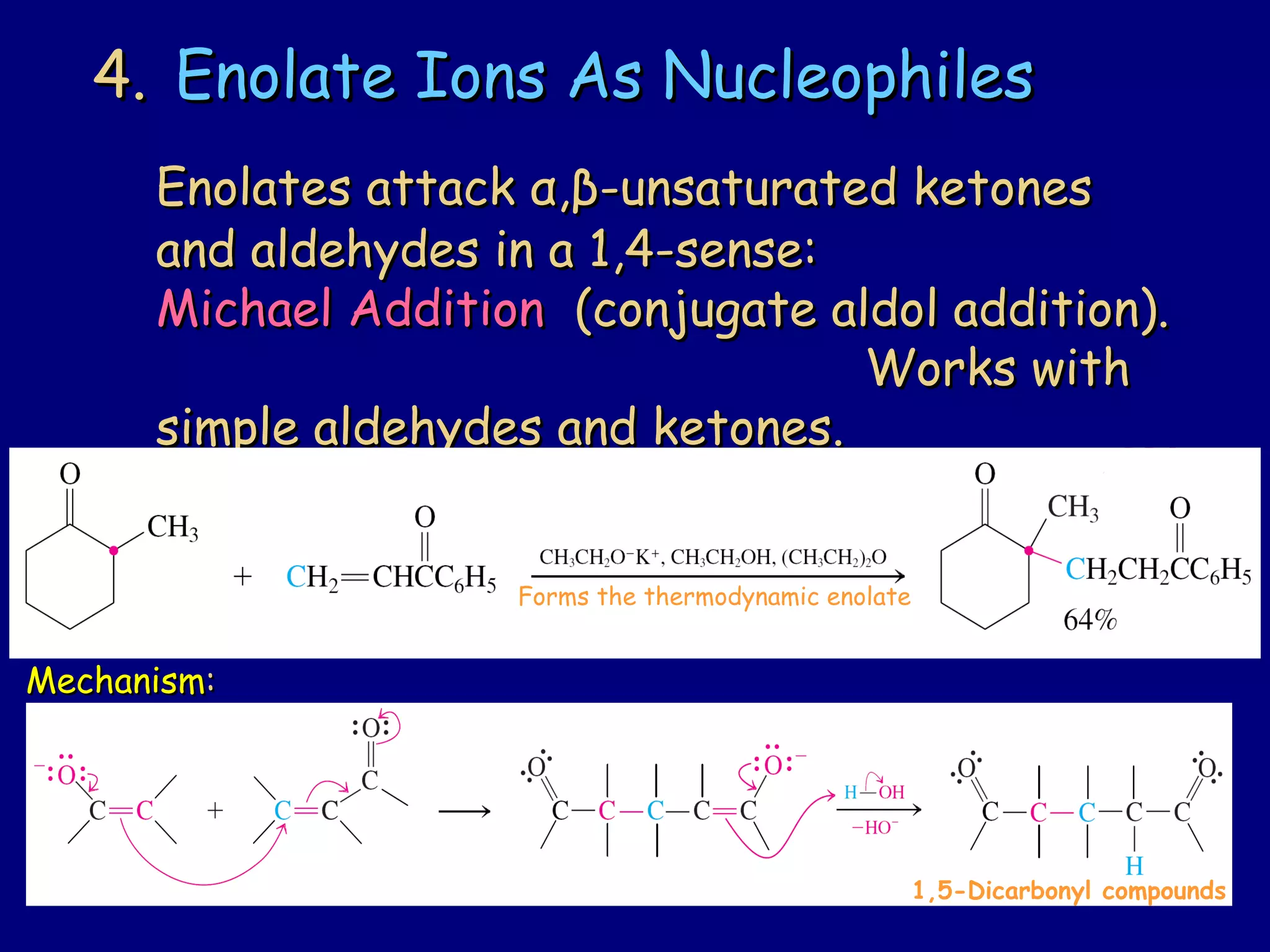
4.4. Enolate Ions As NucleophilesEnolate Ions As Nucleophiles
Enolates attackEnolates attack αα,,ββ-unsaturated ketones-unsaturated ketones
and aldehydes in a 1,4-sense:and aldehydes in a 1,4-sense:
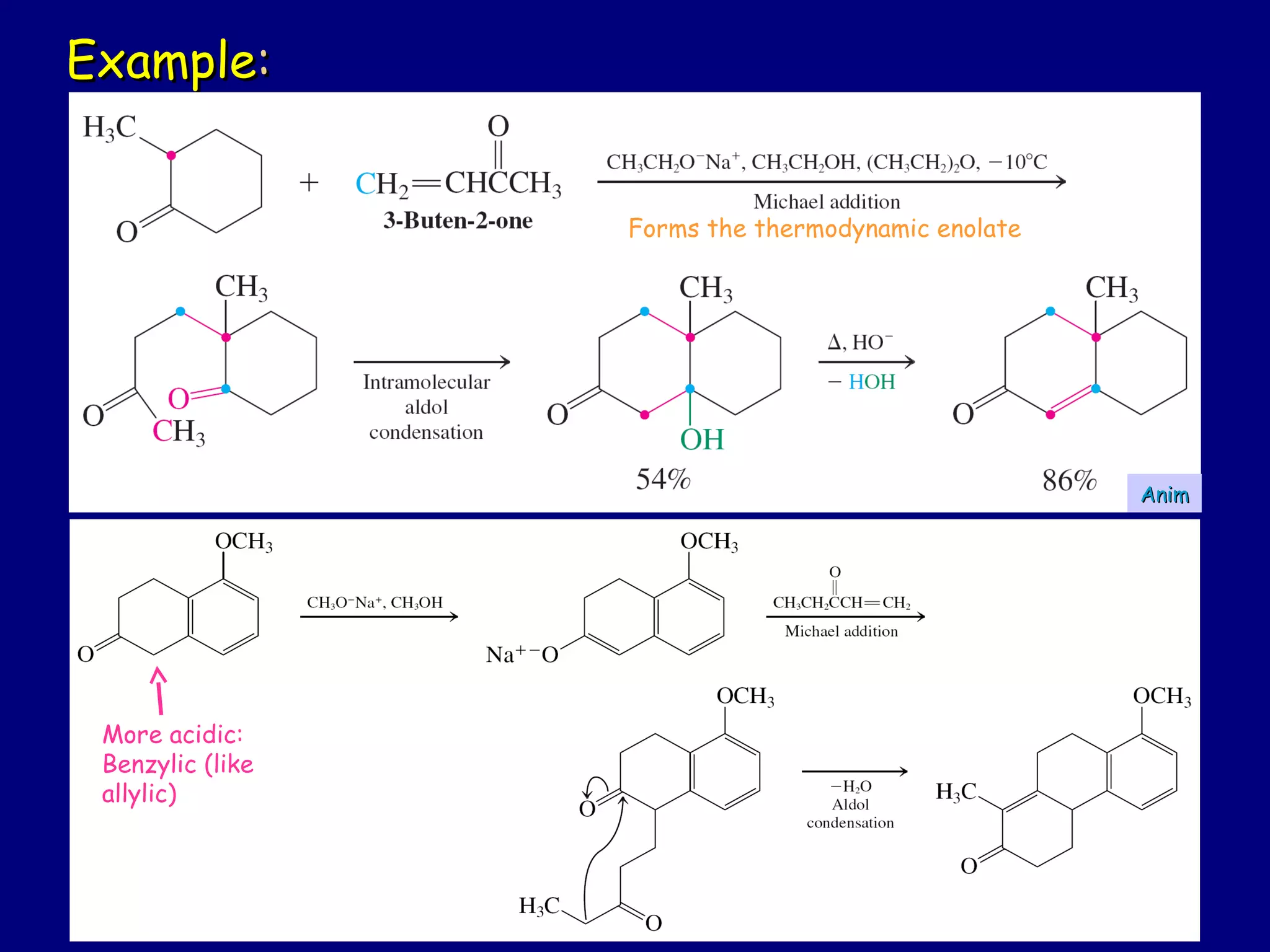
Michael AdditionMichael Addition (conjugate aldol addition).(conjugate aldol addition).
Works withWorks with
simple aldehydes and ketones.simple aldehydes and ketones.
MechanismMechanism::
1,5-Dicarbonyl compounds
Forms the thermodynamic enolate
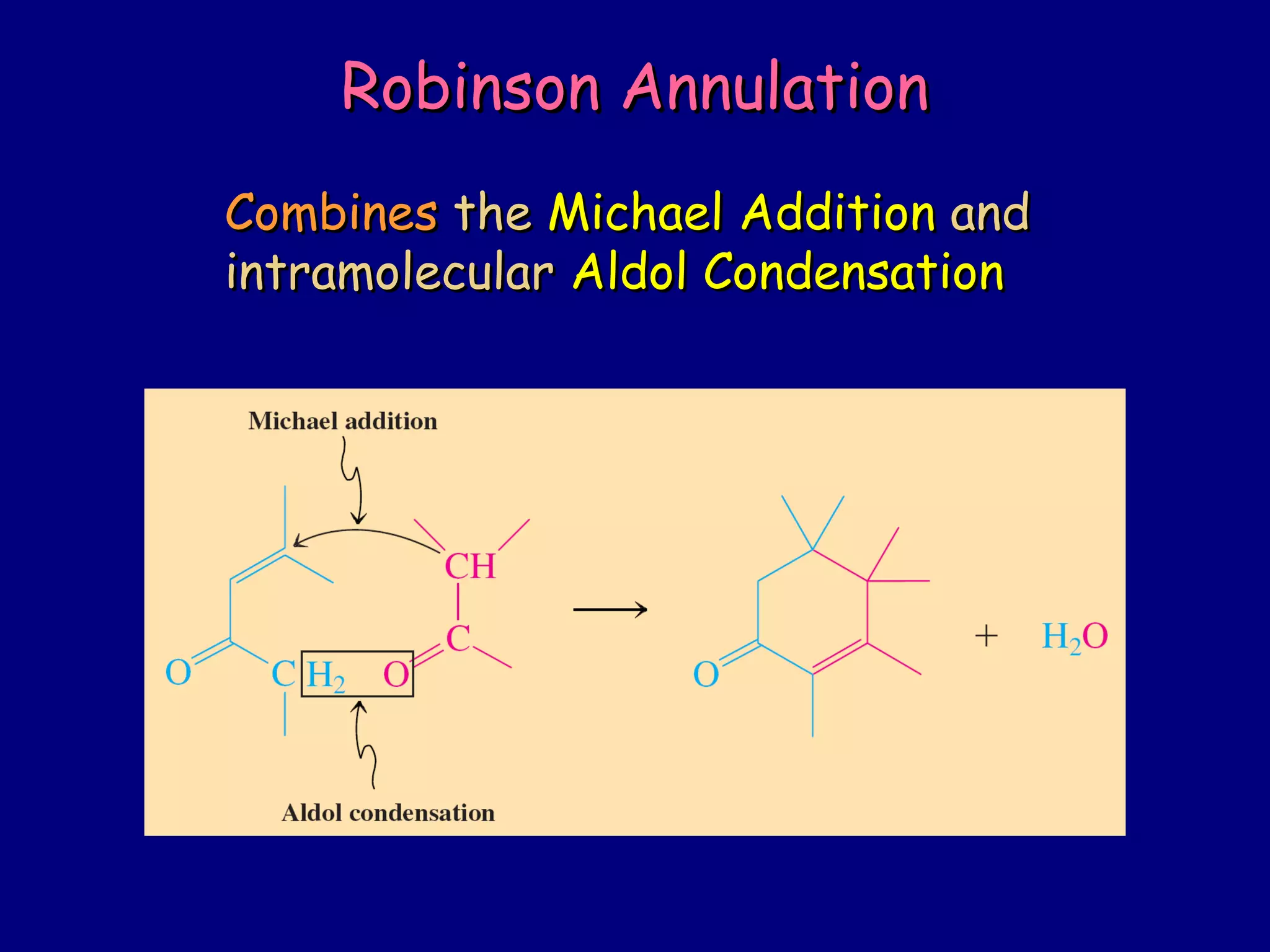
Robinson AnnulationRobinson Annulation
CombinesCombines thethe Michael AdditionMichael Addition andand
intramolecularintramolecular Aldol CondensationAldol Condensation
ExampleExample::
AnimAnim
More acidic:
Benzylic (like
allylic)
Forms the thermodynamic enolate
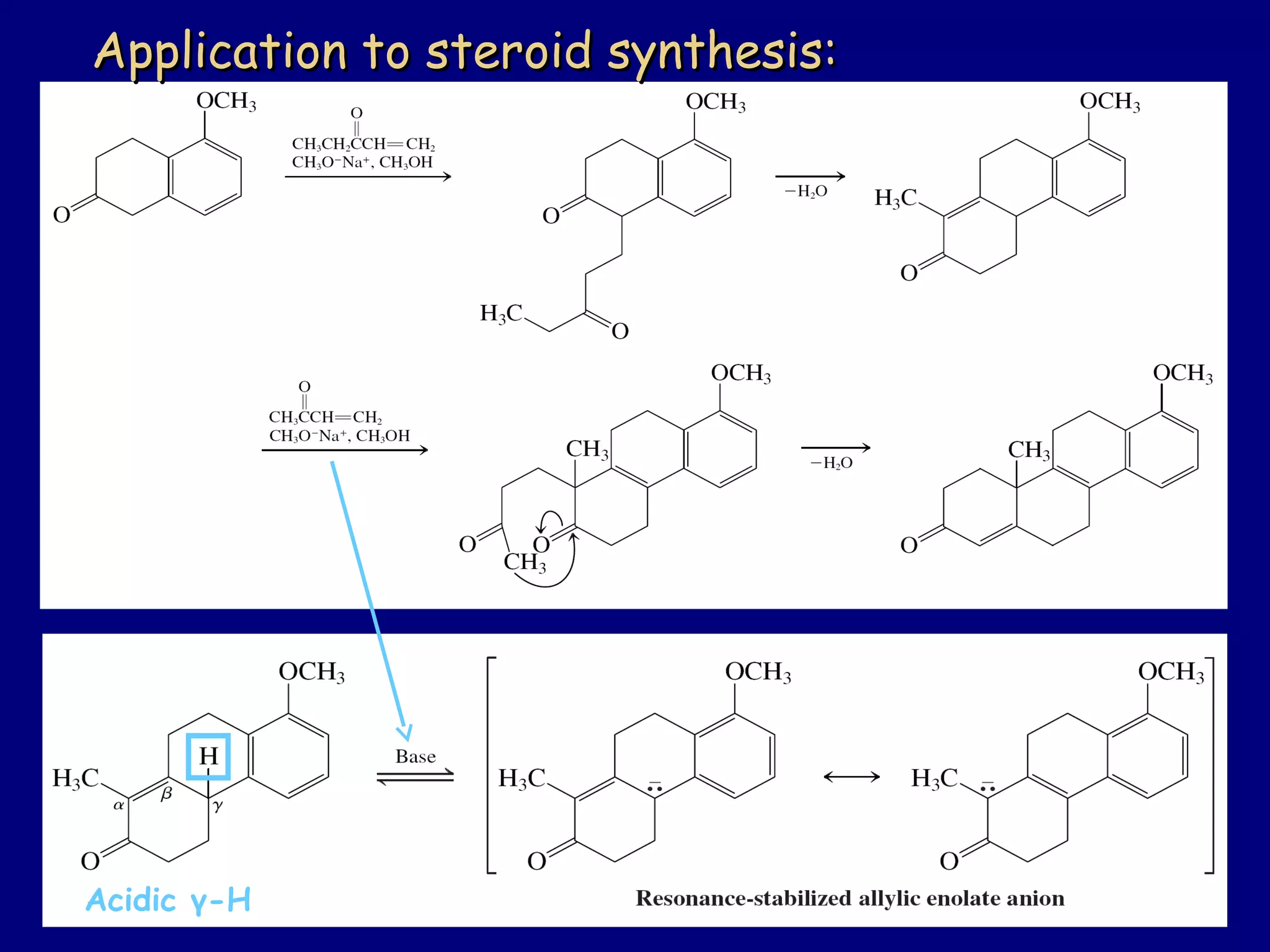
Application to steroid synthesis:Application to steroid synthesis:
Acidic γ-H
ConjugatedConjugated
Aldehydes andAldehydes and
VisionVision
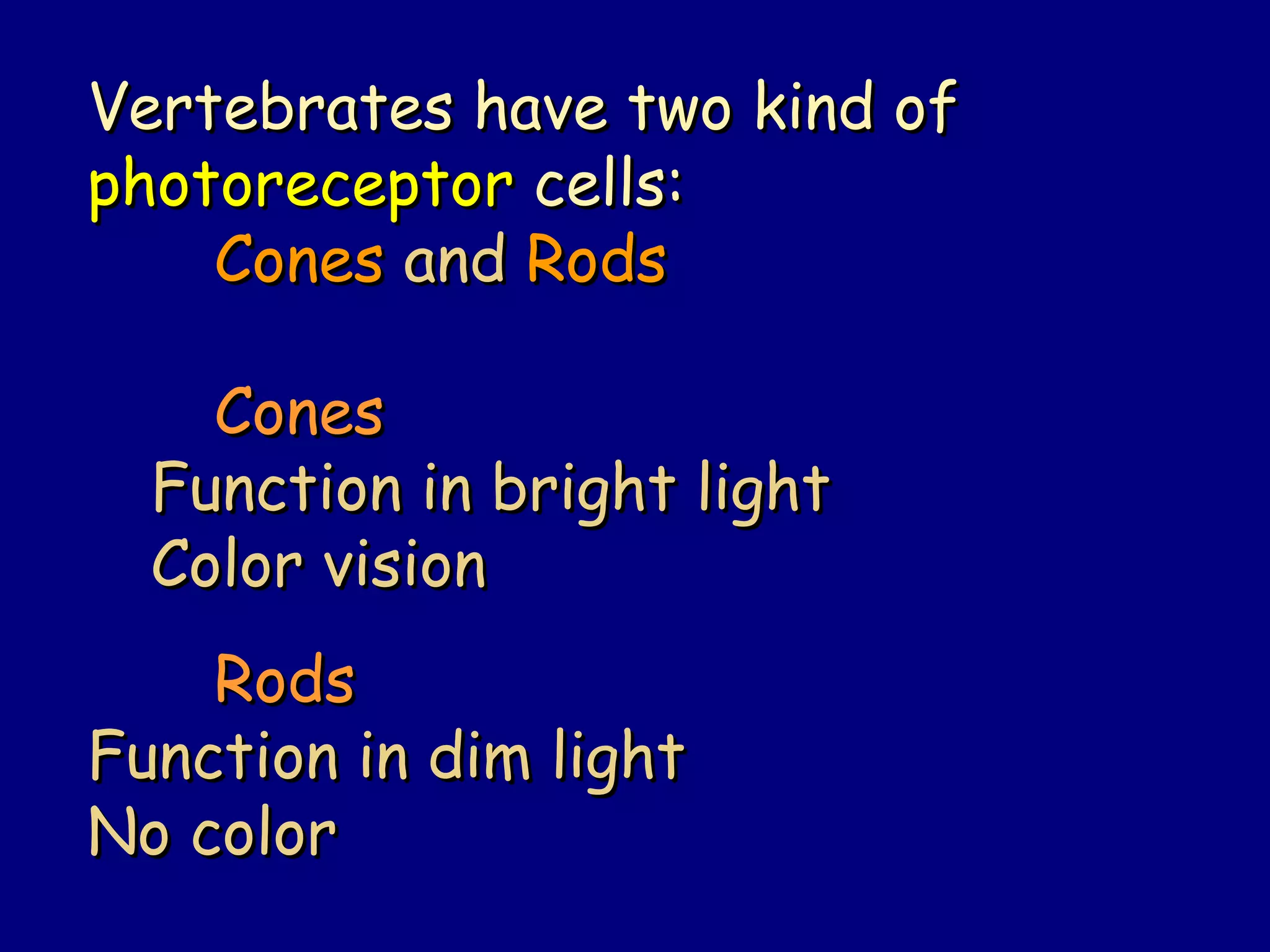
Vertebrates have two kind ofVertebrates have two kind of
photoreceptorphotoreceptor cells:cells:
ConesCones andand RodsRods
ConesCones
Function in bright lightFunction in bright light
Color visionColor vision
RodsRods
Function in dim lightFunction in dim light
No colorNo color
• Human retina has 3 million cones andHuman retina has 3 million cones and
100 million rods100 million rods
• A singleA single hhυυ of light can excite a rodof light can excite a rod
cell!cell!
• How?How?
• Rods covered with photoreceptorsRods covered with photoreceptors
• hhυυ  Atomic motionAtomic motion  NerveNerve
impulseimpulse
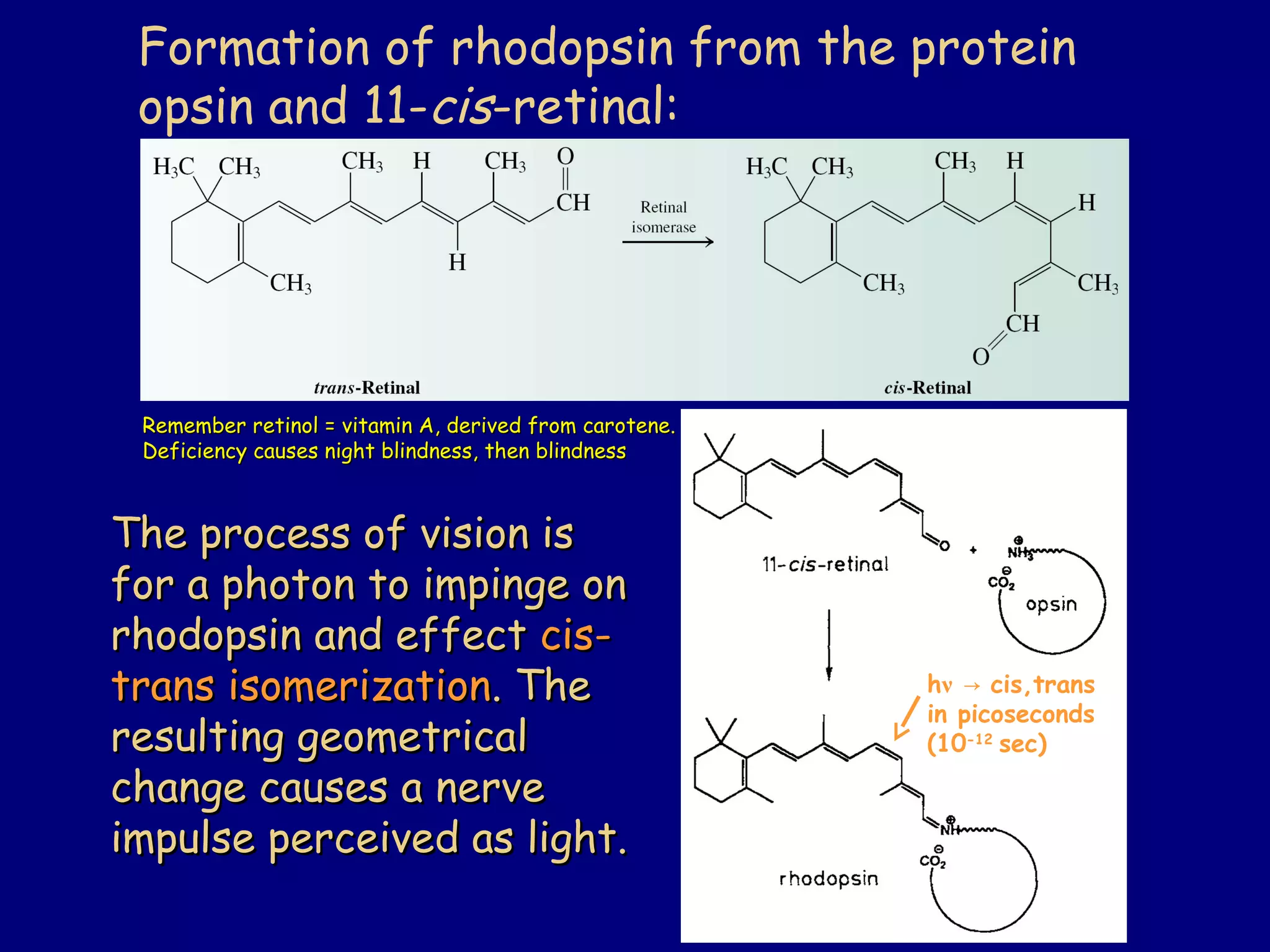
Formation of rhodopsin from the protein
opsin and 11-cis-retinal:
The process of vision isThe process of vision is
for a photon to impinge onfor a photon to impinge on
rhodopsin and effectrhodopsin and effect cis-cis-
trans isomerizationtrans isomerization. The. The
resulting geometricalresulting geometrical
change causes a nervechange causes a nerve
impulse perceived as light.impulse perceived as light.
Remember retinol = vitamin A, derived from carotene.Remember retinol = vitamin A, derived from carotene.
Deficiency causes night blindness, then blindnessDeficiency causes night blindness, then blindness
hν → cis,trans
in picoseconds
(10-12
sec)

Chapter18 140331233908-phpapp01

  • 1.
    Chapter 18: Enols,Chapter18: Enols, Enolates, Enals, andEnolates, Enals, and EnonesEnones αα-Hydrogens-Hydrogens in carbonylin carbonyl compounds arecompounds are acidicacidic
  • 2.
    DeprotonationDeprotonation of acarbonyl compoundof a carbonyl compound Bases for stoichiometricBases for stoichiometric deprotonation: KH, LDAdeprotonation: KH, LDA (CH(CH33))22CHCHOCHCHO ppKKaa ~ 16~ 16 CHCH33COCHCOCH33 ppKKaa ~ 20~ 20 Compare: ethene (44) or ethyne (25)Compare: ethene (44) or ethyne (25) Dominant formDominant form Enolates: “Oxaallyls” Acetone enolateAcetone enolate
  • 3.
    Reactivity:Reactivity: AmbidentAmbident, attackon either O or C:, attack on either O or C: (Kinetic)(Kinetic)(Thermodynamic)(Thermodynamic) AlkylationAlkylation ProtonationProtonation Tautomerization
  • 4.
    Keto-Enol EquilibriaKeto-Enol Equilibria H+ or– OH cat. KK <<1 usually<<1 usually We often don’t needWe often don’t need stoichiometricstoichiometric enolate formation: Acid orenolate formation: Acid or base forms enols or enolatesbase forms enols or enolates in equilibriumin equilibrium concentrations,concentrations, sufficient for many further transformations.sufficient for many further transformations. H+ or – OH cat. Worse, because CHWorse, because CH33 stabilizes keto formstabilizes keto form ““Keto form”Keto form” ““Enol form”Enol form”
  • 5.
    Mechanisms of enolto keto tautomerizationMechanisms of enol to keto tautomerization (and the reverse):(and the reverse): Acid-catalyzedAcid-catalyzed Base-catalyzedBase-catalyzed
  • 6.
    How is enolizationdetected ? MostHow is enolization detected ? Most easily by NMR:easily by NMR: H-D exchangeH-D exchange withwith DD22O, DO, D++ , or D, or D22O,O, -- OD (OD (αα-H signals-H signals disappear).disappear).
  • 7.
    Other consequence ofenolization:Other consequence of enolization: Loss of stereochemistryLoss of stereochemistry CisCis More stableMore stable TransTrans
  • 8.
    HalogenationHalogenation: uses catalyticH: uses catalytic H++ or HOor HO-- Acid-catalyzed:Acid-catalyzed: Base-catalyzed:Base-catalyzed: O O Cl + Cl+ Cl22 HClHCl + HCl+ HCl O + Cl+ Cl22 O Cl Cl Cl ClNaOHNaOH +NaCl+NaCl Stops here!Stops here! PerchlorinationPerchlorination
  • 9.
    MechanismsMechanisms: Acid-catalyzed: Acid-catalyzed EthenolisEthenol is e-riche-rich Like a Markovnikov alkene bromination Br substituentBr substituent diminishesdiminishes thethe basicitybasicity ofof the oxygen:the oxygen: SlowsSlows further halogenationfurther halogenation
  • 10.
    Base-catalyzedBase-catalyzed Like an SLikean SNN2 reaction2 reaction Br substituentBr substituent increasesincreases thethe acidityacidity of theof the αα-Hs:-Hs: SpeedsSpeeds further halogenation.further halogenation.
  • 11.
    AlkylationAlkylation Alkylation of enolatescan be difficult to controlAlkylation of enolates can be difficult to control 1. Enolate ion is a strong base: E2 problems • Alkylation best when using halomethanes, primary haloalkanes, or allylic halides 2. Aldehydes are attacked by enolates at carbonyl carbon “Aldol condensation” (later) • Better to use less reactive (at carbonyl) ketones 3. Ketones have their own problems • Product may lose another α–hydrogen and be alkylated a second time • Unsymmetrical ketones lead to two regioisomeric products LipAlknLipAlkn BBoysBBoys
  • 12.
    Only oneOnly oneHH Good alkylatingGood alkylating agentagent
  • 13.
    Solution to theseSolutionto these Problems: EnaminesProblems: Enamines An alternative route for the alkylation ofAn alternative route for the alkylation of aldehydes and ketones.aldehydes and ketones. Enamines are neutral and their carbon–carbon double bond is electron-rich. The β-carbon is nucleophilic by resonance. EthenamineEthenamine
  • 14.
    Example:Example: Procedure:Procedure: 1. Enamine formationusing an auxiliary amine, e.g.1. Enamine formation using an auxiliary amine, e.g. azacyclopentane;azacyclopentane; 2. Alkylation2. Alkylation 3. Acidic aqueous work-up (hydrolysis)3. Acidic aqueous work-up (hydrolysis)
  • 15.
    Works also foraldehydes:Works also for aldehydes: Important, because aldehyde enolates reactImportant, because aldehyde enolates react with their precursor aldehydes in thewith their precursor aldehydes in the aldolaldol condensation.condensation.
  • 16.
    Aldol CondensationAldol Condensation Canbe doneCan be done stoichiometrically withstoichiometrically with preformed enolate.preformed enolate. StereochemistryStereochemistry depends on stericsdepends on sterics New bondNew bond CatalyticCatalytic (Ald(Aldehyde alcohehyde alcohol)ol)
  • 17.
    Examples of acatalytic aldol condensations:Examples of a catalytic aldol condensations: 50-60% Isolable, if wanted (Sterically(Sterically controled)controled) Stepwise:Stepwise: One pot:One pot:
  • 18.
    Mechanism of AldolFormation:Mechanism of Aldol Formation: LipshLipsh MonrMonr
  • 19.
  • 20.
    The “The “crossedcrossed”aldol reaction is” aldol reaction is nonselectivenonselective......
  • 21.
    ...unless a...unless anonenolizablenonenolizable aldehyde is present:aldehyde is present: O O O H H H + NaOH, ∆ KetonesKetones may undergo aldol condensation:may undergo aldol condensation: Endothermic EquilibriumEquilibrium Exothermic
  • 22.
    Intramolecular AldolIntramolecular Aldol XXXX Strain Thermodynamically and kinetically favored StrainedStrained bridgebridge O O XX XX XXFour-memberedFour-membered ring and cannotring and cannot dehydratedehydrate -- OH,OH, ΔΔ -H-H22OO Six-memberedSix-membered ringring 90%90%GoodGood O XX
  • 23.
    αα,,ββ-Unsaturated-Unsaturated Aldehydes and KetonesAldehydesand Ketones AcidicAcidic BasicBasic AcidicAcidic ppKKaa ~ 16-20~ 16-20 O HH H H H HH H
  • 24.
    1.1. αα-Halogenation–Elimination-Halogenation–Elimination 2.2. Oxidationof Allylic AlcoholsOxidation of Allylic Alcohols with MnOwith MnO22 RCH=CHCHRCH=CHCH22OHOH MnOMnO22 PreparationPreparation 3. Aldol Condensation3. Aldol Condensation O R H
  • 25.
    4.4. Wittig ReactionWittigReaction – Stabilized– Stabilized YlidesYlides Stabilized byStabilized by resonanceresonance:: Can be isolated,Can be isolated, reacts only withreacts only with aldehydesaldehydes, not, not ketonesketones ClCH2CH O P(C6H5)3 NaOH Cl- (C6H5)3PCH2CH O + (C6H5)3P CH CH O (C6H5)3P C H CH O (C6H5)3P H C CH O + : _ O H O H 81%81% TransTrans
  • 26.
    Stabilized byStabilized byresonanceresonance Properties ofProperties of αα,,ββ-- Unsaturated CarbonylsUnsaturated Carbonyls
  • 27.
    Consequence:Consequence: ββ,,γγ-Unsaturated systems-Unsaturated systemsrearrangerearrange to theto the αα,,ββ-enone isomers-enone isomers Acid- or base-catalyzedAcid- or base-catalyzed
  • 28.
  • 29.
  • 30.
    Reactivity ofReactivity ofαα,,ββ-- Unsaturated CarbonylsUnsaturated Carbonyls -Undergo many reactions characteristic of-Undergo many reactions characteristic of alkenes and ketones/aldehydesalkenes and ketones/aldehydes
  • 31.
    ExamplesExamples:: O O HH22, Pd/C,Pd/C CHCH33LiLi O OH H
  • 32.
    1,4-Addition1,4-Addition (conjugate addition)(conjugateaddition) In addition, new reactivity for wholeIn addition, new reactivity for whole system (as in conjugated dienes)system (as in conjugated dienes)
  • 33.
    1.1. Hydrogen CyanideConjugate AdditionHydrogen Cyanide Conjugate Addition Not cyanohydrinNot cyanohydrin formation (1,2-formation (1,2- addition reversible)addition reversible)
  • 34.
  • 35.
    2.2. O andN NucleophilesO and N Nucleophiles a. Ha. H22O or ROH: ConjugateO or ROH: Conjugate HydrationHydration oror Ether FormationEther Formation MechanismMechanism::
  • 36.
    Ether FormationEther Formation:Strychnine: Strychnine Synthesis bySynthesis by WoodwardWoodward N N H H O H H O H BaseBase N N H H O H HO H StrychnineStrychnine
  • 37.
    b. Amine Additions,RNHR’:b. Amine Additions, RNHR’: AminationAmination IntramolecularIntramolecular O HN O N -- OHOH Product mainlyProduct mainly cis due to ringcis due to ring fusionfusion
  • 38.
    3.3. OrganometallicsOrganometallics RLiRLi reagentsattack mainly atreagents attack mainly at C=OC=O Cuprates,Cuprates, RR22CuLiCuLi, add, add 1,4-1,4-
  • 39.
    ExampleExample of 1,4-additionwith cuprate:of 1,4-addition with cuprate: Mechanism is complex, proceeds through initial electronMechanism is complex, proceeds through initial electron transfer (radical intermediates). We can, however, thinktransfer (radical intermediates). We can, however, think of it as a nucleophilicof it as a nucleophilic ββ-addition. Note: Cuprates are-addition. Note: Cuprates are organometallicsorganometallics andand moisture sensitivemoisture sensitive. The reaction is in. The reaction is in aprotic media, therefore it generates anaprotic media, therefore it generates an enolate ionenolate ion asas the product. Protonation occurs on work-up.the product. Protonation occurs on work-up.
  • 40.
    The initial enolateproduct of cuprate 1,4-The initial enolate product of cuprate 1,4- addition can beaddition can be trappedtrapped with RX:with RX: DoubleDouble alkylationalkylation of the C=C double bond!of the C=C double bond! Mostly transMostly trans due to stericsdue to sterics O CH3 C6H5 O 1.1. (C(C66HH55))22CuLiCuLi 2.2. CHCH33II 84%84%
  • 41.
    4.4. Enolate IonsAs NucleophilesEnolate Ions As Nucleophiles Enolates attackEnolates attack αα,,ββ-unsaturated ketones-unsaturated ketones and aldehydes in a 1,4-sense:and aldehydes in a 1,4-sense: Michael AdditionMichael Addition (conjugate aldol addition).(conjugate aldol addition). Works withWorks with simple aldehydes and ketones.simple aldehydes and ketones. MechanismMechanism:: 1,5-Dicarbonyl compounds Forms the thermodynamic enolate
  • 42.
    Robinson AnnulationRobinson Annulation CombinesCombinesthethe Michael AdditionMichael Addition andand intramolecularintramolecular Aldol CondensationAldol Condensation
  • 43.
  • 44.
    Application to steroidsynthesis:Application to steroid synthesis: Acidic γ-H
  • 45.
  • 46.
    Vertebrates have twokind ofVertebrates have two kind of photoreceptorphotoreceptor cells:cells: ConesCones andand RodsRods ConesCones Function in bright lightFunction in bright light Color visionColor vision RodsRods Function in dim lightFunction in dim light No colorNo color
  • 47.
    • Human retinahas 3 million cones andHuman retina has 3 million cones and 100 million rods100 million rods • A singleA single hhυυ of light can excite a rodof light can excite a rod cell!cell! • How?How? • Rods covered with photoreceptorsRods covered with photoreceptors • hhυυ  Atomic motionAtomic motion  NerveNerve impulseimpulse
  • 48.
    Formation of rhodopsinfrom the protein opsin and 11-cis-retinal: The process of vision isThe process of vision is for a photon to impinge onfor a photon to impinge on rhodopsin and effectrhodopsin and effect cis-cis- trans isomerizationtrans isomerization. The. The resulting geometricalresulting geometrical change causes a nervechange causes a nerve impulse perceived as light.impulse perceived as light. Remember retinol = vitamin A, derived from carotene.Remember retinol = vitamin A, derived from carotene. Deficiency causes night blindness, then blindnessDeficiency causes night blindness, then blindness hν → cis,trans in picoseconds (10-12 sec)