CHAPTER 8
                 LIPIDS

   Definition of Lipids
   Functions of Lipids
Classification of lipids:
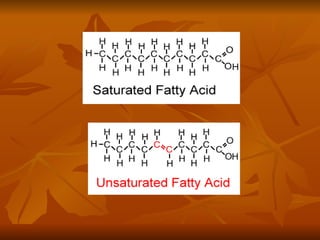
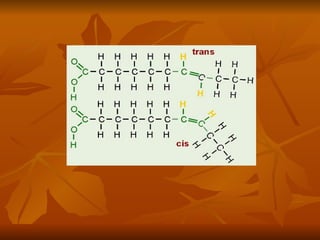
2. Fatty acids

          - Fatty acyls
          - made up of hydrocarbon chain
   terminates with a carboxylic group.
          - the carbon chain, typically
   between four to 24 carbons long, maybe
   saturated or unsaturated.
Biologically important fatty acids:
a. Eicosanoids
      -are signaling molecules made by
    oxygenation of twenty-carbon essential
    fatty acids (EFAs).
      -derive from either omega-3 (ω-3) or
    omega-6 (ω-6) EFA.
      - prostaglandins, prostacyclins,
      the thromboxanes and the
      leukotrienes.
   Prostaglandins: different types
       Some stimulate contraction of smooth muscle
        during menstruation and labor
       Others produce fever and inflammation and
        pain

   Thromboxanes: act in the formation of
    blood clot

   Leukotrienes: induces contraction of the
    muscle lining the lungs
       overproduction leads to asthma
2. Glycerolipids
     -are composed mainly of mono-, di- and
     tri- substituted glycerols, the most well-
     known being the fatty acid esters of
     glycerol (triglycerides).
-    - energy storage.
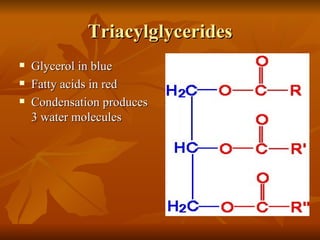
Triacylglycerides
   Glycerol in blue
   Fatty acids in red
   Condensation produces
    3 water molecules
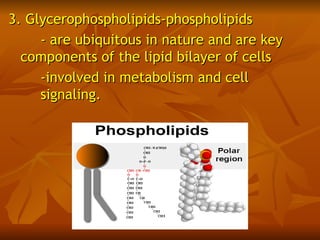
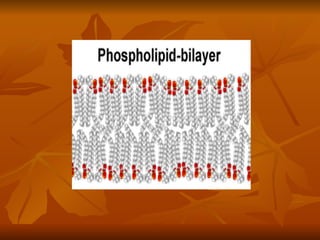
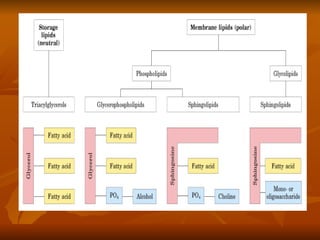
3. Glycerophospholipids-phospholipids
     - are ubiquitous in nature and are key
  components of the lipid bilayer of cells
     -involved in metabolism and cell
     signaling.
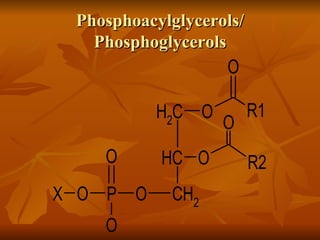
Phosphoacylglycerols/
   Phosphoglycerols
                   O

          H2C O          R1
                   O
    O      HC O          R2
X O P O     CH2
    O
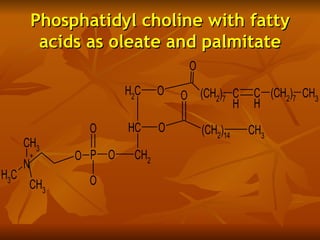
Phosphatidyl choline with fatty
           acids as oleate and palmitate
                                      O
                       H2C    O   O       (CH2)7 C    C (CH2)7 CH3
                                                 H    H
                 O     HC     O           (CH2)14    CH3
      CH3
       +       O P O    CH2
      N
H3C              O
       CH3
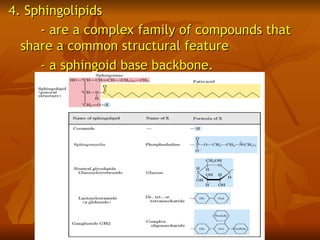
4. Sphingolipids
     - are a complex family of compounds that
  share a common structural feature
     - a sphingoid base backbone.
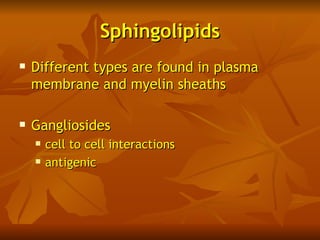
Sphingolipids
   Different types are found in plasma
    membrane and myelin sheaths

   Gangliosides
       cell to cell interactions
       antigenic
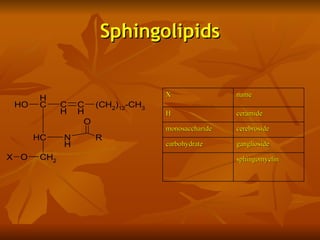
Sphingolipids


                                 X                name
      H
 HO   C      C   C (CH2)12-CH3
             H   H               H                ceramide
                  O
                                 monosaccharide   cerebroside
      HC     N      R
             H                   carbohydrate     ganglioside
X O    CH2                                        sphingomyelin
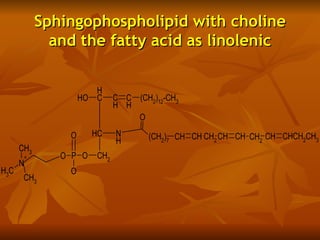
Sphingophospholipid with choline
              and the fatty acid as linolenic

                       H
                    HO C      C C (CH2)12-CH3
                              H H
                                  O

                O      HC     N       (CH2)7 CH CH CH2 CH CH CH2 CH CHCH2CH3
                              H
      CH3
       +       O P O    CH2
      N
H3C             O
       CH3
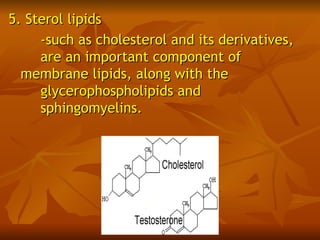
5. Sterol lipids
     -such as cholesterol and its derivatives,
     are an important component of
  membrane lipids, along with the
     glycerophospholipids and
     sphingomyelins.
Role of Cholesterol
   Keeps the lipids in membrane from
    aggregrating: Keeps the membrane intact
    as a bilayer
   Precursor to Bile Acids
       Act as detergents to dissolve dietary fats
       Fats can be broken better by enzymes
   Precursor to steroid hormones that
    regulate gene expression
   Precursor to Vitamin D
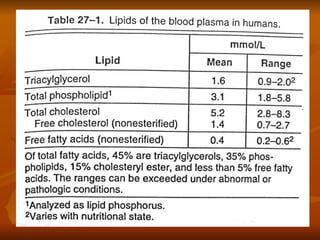
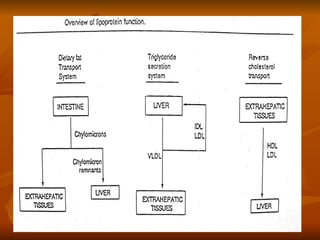
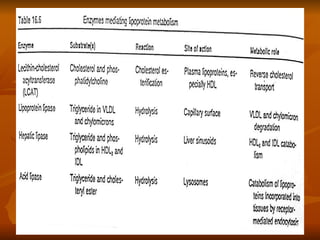
Good vs. Bad Cholesterol
   Related to lipoproteins (protein + lipid
    complexes)
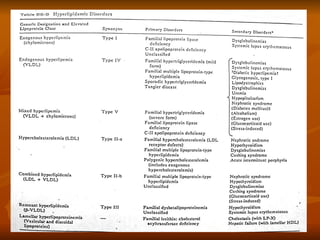
   Dietary excess fat is packaged into VLDL
   Fat cells (adipose cells) take these up convert
    to fatty acids
   Some VLDL is converted to LDL
   LDL is very rich in Cholesterol
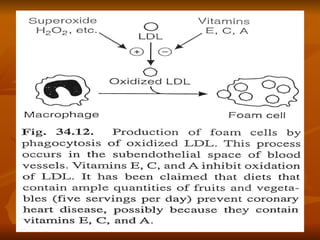
LDL VS. HDL
LDL
 Too much LDL can circulate in the blood

 Build up in arteries; lead to heart attack


    HDL
   Another lipoprotein that converts
    cholesterol into a lipoprotein that returns
    to the liver ; Removes cholesterol out of
    the bloodstream;
   believed to prevent heart attacks
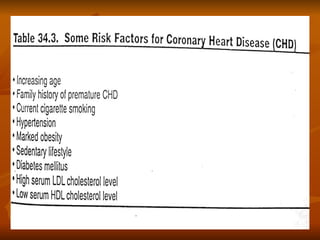
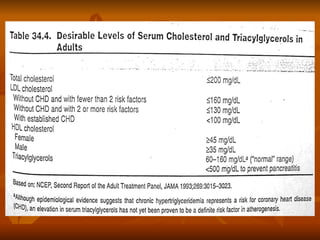
Ratio of LDL to HDL
   LDL cholesterol of less than 100 mg/dL is the
    optimal level. Less than 130 mg/dL is near
    optimal for most people.
   A high LDL level (more than 160 mg/dL or 130
    mg/dL or above if you have two or more risk
    factors for cardiovascular disease) reflects an
    increased risk of heart disease
   Low HDL cholesterol levels [less than 40 mg/dL]
    is thought to increase the risk for heart disease.
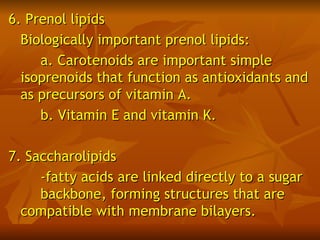
6. Prenol lipids
  Biologically important prenol lipids:
     a. Carotenoids are important simple
  isoprenoids that function as antioxidants and
  as precursors of vitamin A.
     b. Vitamin E and vitamin K.

7. Saccharolipids
     -fatty acids are linked directly to a sugar
     backbone, forming structures that are
  compatible with membrane bilayers.
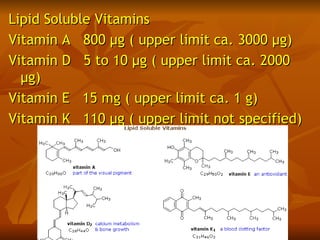
Lipid Soluble Vitamins
Vitamin A   800 μg ( upper limit ca. 3000 μg)
Vitamin D   5 to 10 μg ( upper limit ca. 2000
  μg)
Vitamin E   15 mg ( upper limit ca. 1 g)
Vitamin K   110 μg ( upper limit not specified)
Characteristics of Lipids:
 1. Amphiphatic
 2. Naturally occcuring
 3. Soluble in organic solvents but insoluble
 in water.
 4. Undergo saponification
 5. Undergo emulsification
Clinical Significance:
1. Tay-Sachs Disease-infantile form: rapidly
  progressing mental retardation,
  blindness, early mortality .
2. Gaucher Disease- hepatosplenomegaly,
  mental retardation in infantile form, long
  bone degeneration.
3. Fabry Disease-kidney failure, skin rashes
4. Fucosidosis-cerebral degeneration,
  thickened skin, muscle spasticity
5. Cholera- protein portion of ganglioside.
6. Hypercholesterolemia
     - Artherosclerosis
     -Coronary Heart Disease
     - Diabetes
     - Anorexia nervosa
1. Imbalance in the rate of
triacylglycerol formation and
export causes fatty liver.
     -Accumulation of lipid as
triacylglycerol in the liver causes
cirrhosis and impaired liver function.
Fatty liver falls into two categories:
a. Raised levels of plasma free fatty acids resulting
  from mobilization of fat from adipose tissue or
  from the hydrolysis of lipoprotein triacylglycerol
  by lipoprotein lipase in extrahepatic tissues. 
 Increasing amounts of free fatty acids are taken
  up by the liver and esterified. The production of
  VLDL does not keep pace with the influx of free
  fatty    acids,     allowing    triacylglycerol    to
  accumulate, causing fatty liver. 
 During starvation, quantity of triacylglycerol in
  the liver is increased, and ability to secret VLDL
  is impaired. This may be due to low levels of
  insulin.
a.   Due to a metabolic block in the production of
     plasma      lipoproteins,    thus    allowing
     triacylglycerol to accumulate. 

    Lesion could be due to: 
     1. A block in apolipoprotein synthesis
     2. A block in the synthesis of lipoprotein from
     lipid and apolipoprotein
     3. A failure in the secretory mechanism
     itself.
 
    In experimental animals, deficiency of
     choline, treatment with puromycin,
     ethionine, carbon tetrachloride, chloroform,
     phosphorous, lead, and arsenic causes fatty
     liver.
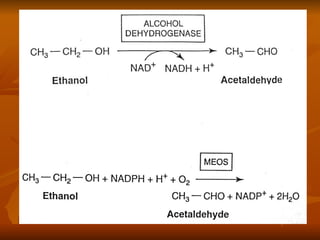
Ethanol also causes fatty liver:

   Alcoholism leads to fat
    accumulation in the liver,
    hyperlipidemia, and ultimately
    cirrhosis
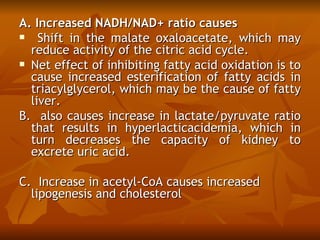
A. Increased NADH/NAD+ ratio causes
   Shift in the malate oxaloacetate, which may
  reduce activity of the citric acid cycle. 
 Net effect of inhibiting fatty acid oxidation is to
  cause increased esterification of fatty acids in
  triacylglycerol, which may be the cause of fatty
  liver. 
B. also causes increase in lactate/pyruvate ratio
  that results in hyperlacticacidemia, which in
  turn decreases the capacity of kidney to
  excrete uric acid.
 
C. Increase in acetyl-CoA causes increased
  lipogenesis and cholesterol
DAGHANG
SALAMAT!!!

Chapter 8 lipids

  • 1.
    CHAPTER 8 LIPIDS  Definition of Lipids  Functions of Lipids
  • 2.
    Classification of lipids: 2.Fatty acids - Fatty acyls - made up of hydrocarbon chain terminates with a carboxylic group. - the carbon chain, typically between four to 24 carbons long, maybe saturated or unsaturated.
  • 5.
    Biologically important fattyacids: a. Eicosanoids -are signaling molecules made by oxygenation of twenty-carbon essential fatty acids (EFAs). -derive from either omega-3 (ω-3) or omega-6 (ω-6) EFA. - prostaglandins, prostacyclins, the thromboxanes and the leukotrienes.
  • 6.
    Prostaglandins: different types  Some stimulate contraction of smooth muscle during menstruation and labor  Others produce fever and inflammation and pain  Thromboxanes: act in the formation of blood clot  Leukotrienes: induces contraction of the muscle lining the lungs  overproduction leads to asthma
  • 7.
    2. Glycerolipids -are composed mainly of mono-, di- and tri- substituted glycerols, the most well- known being the fatty acid esters of glycerol (triglycerides). - - energy storage.
  • 8.
    Triacylglycerides  Glycerol in blue  Fatty acids in red  Condensation produces 3 water molecules
  • 9.
    3. Glycerophospholipids-phospholipids - are ubiquitous in nature and are key components of the lipid bilayer of cells -involved in metabolism and cell signaling.
  • 11.
    Phosphoacylglycerols/ Phosphoglycerols O H2C O R1 O O HC O R2 X O P O CH2 O
  • 12.
    Phosphatidyl choline withfatty acids as oleate and palmitate O H2C O O (CH2)7 C C (CH2)7 CH3 H H O HC O (CH2)14 CH3 CH3 + O P O CH2 N H3C O CH3
  • 13.
    4. Sphingolipids - are a complex family of compounds that share a common structural feature - a sphingoid base backbone.
  • 14.
    Sphingolipids  Different types are found in plasma membrane and myelin sheaths  Gangliosides  cell to cell interactions  antigenic
  • 15.
    Sphingolipids X name H HO C C C (CH2)12-CH3 H H H ceramide O monosaccharide cerebroside HC N R H carbohydrate ganglioside X O CH2 sphingomyelin
  • 16.
    Sphingophospholipid with choline and the fatty acid as linolenic H HO C C C (CH2)12-CH3 H H O O HC N (CH2)7 CH CH CH2 CH CH CH2 CH CHCH2CH3 H CH3 + O P O CH2 N H3C O CH3
  • 17.
    5. Sterol lipids -such as cholesterol and its derivatives, are an important component of membrane lipids, along with the glycerophospholipids and sphingomyelins.
  • 18.
    Role of Cholesterol  Keeps the lipids in membrane from aggregrating: Keeps the membrane intact as a bilayer  Precursor to Bile Acids  Act as detergents to dissolve dietary fats  Fats can be broken better by enzymes  Precursor to steroid hormones that regulate gene expression  Precursor to Vitamin D
  • 19.
    Good vs. BadCholesterol  Related to lipoproteins (protein + lipid complexes)  Dietary excess fat is packaged into VLDL  Fat cells (adipose cells) take these up convert to fatty acids  Some VLDL is converted to LDL  LDL is very rich in Cholesterol
  • 20.
    LDL VS. HDL LDL Too much LDL can circulate in the blood  Build up in arteries; lead to heart attack HDL  Another lipoprotein that converts cholesterol into a lipoprotein that returns to the liver ; Removes cholesterol out of the bloodstream;  believed to prevent heart attacks
  • 21.
    Ratio of LDLto HDL  LDL cholesterol of less than 100 mg/dL is the optimal level. Less than 130 mg/dL is near optimal for most people.  A high LDL level (more than 160 mg/dL or 130 mg/dL or above if you have two or more risk factors for cardiovascular disease) reflects an increased risk of heart disease  Low HDL cholesterol levels [less than 40 mg/dL] is thought to increase the risk for heart disease.
  • 22.
    6. Prenol lipids Biologically important prenol lipids: a. Carotenoids are important simple isoprenoids that function as antioxidants and as precursors of vitamin A. b. Vitamin E and vitamin K. 7. Saccharolipids -fatty acids are linked directly to a sugar backbone, forming structures that are compatible with membrane bilayers.
  • 24.
    Lipid Soluble Vitamins VitaminA   800 μg ( upper limit ca. 3000 μg) Vitamin D   5 to 10 μg ( upper limit ca. 2000 μg) Vitamin E   15 mg ( upper limit ca. 1 g) Vitamin K   110 μg ( upper limit not specified)
  • 25.
    Characteristics of Lipids: 1. Amphiphatic 2. Naturally occcuring 3. Soluble in organic solvents but insoluble in water. 4. Undergo saponification 5. Undergo emulsification
  • 26.
    Clinical Significance: 1. Tay-SachsDisease-infantile form: rapidly progressing mental retardation, blindness, early mortality . 2. Gaucher Disease- hepatosplenomegaly, mental retardation in infantile form, long bone degeneration. 3. Fabry Disease-kidney failure, skin rashes 4. Fucosidosis-cerebral degeneration, thickened skin, muscle spasticity
  • 27.
    5. Cholera- proteinportion of ganglioside. 6. Hypercholesterolemia - Artherosclerosis -Coronary Heart Disease - Diabetes - Anorexia nervosa
  • 34.
    1. Imbalance inthe rate of triacylglycerol formation and export causes fatty liver. -Accumulation of lipid as triacylglycerol in the liver causes cirrhosis and impaired liver function.
  • 35.
    Fatty liver fallsinto two categories: a. Raised levels of plasma free fatty acids resulting from mobilization of fat from adipose tissue or from the hydrolysis of lipoprotein triacylglycerol by lipoprotein lipase in extrahepatic tissues.   Increasing amounts of free fatty acids are taken up by the liver and esterified. The production of VLDL does not keep pace with the influx of free fatty acids, allowing triacylglycerol to accumulate, causing fatty liver.   During starvation, quantity of triacylglycerol in the liver is increased, and ability to secret VLDL is impaired. This may be due to low levels of insulin.
  • 36.
    a. Due to a metabolic block in the production of plasma lipoproteins, thus allowing triacylglycerol to accumulate.   Lesion could be due to:  1. A block in apolipoprotein synthesis 2. A block in the synthesis of lipoprotein from lipid and apolipoprotein 3. A failure in the secretory mechanism itself.    In experimental animals, deficiency of choline, treatment with puromycin, ethionine, carbon tetrachloride, chloroform, phosphorous, lead, and arsenic causes fatty liver.
  • 37.
    Ethanol also causesfatty liver:  Alcoholism leads to fat accumulation in the liver, hyperlipidemia, and ultimately cirrhosis
  • 39.
    A. Increased NADH/NAD+ratio causes  Shift in the malate oxaloacetate, which may reduce activity of the citric acid cycle.   Net effect of inhibiting fatty acid oxidation is to cause increased esterification of fatty acids in triacylglycerol, which may be the cause of fatty liver.  B. also causes increase in lactate/pyruvate ratio that results in hyperlacticacidemia, which in turn decreases the capacity of kidney to excrete uric acid.   C. Increase in acetyl-CoA causes increased lipogenesis and cholesterol
  • 41.