Topic:
Glycoprotein
Name: Muhammad Tufail
What is Glycoprotein ?
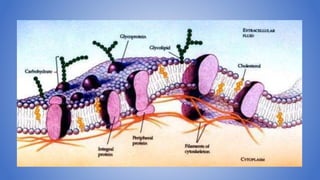
Glycoproteins are proteins that contain
oligosaccharide chains (glycans) covalently
attached to polypeptide side-chains.
Glycosylation:
The carbohydrate is attached to the protein
during the following modifications: Co-translational
modification & Post-translational
modification.
 In proteins that have segments extending
extracellularly, the extracellular segments are
often glycosylated.
CLASSIFICATION OF GLYCOPROTEINS:
3 Major Classes:
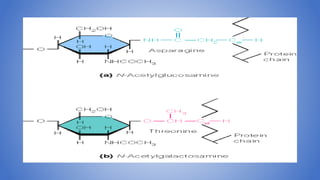
1)N-linkage (N -acetylglucosamine to asparagine)
2)O-linkage (N -acetylgalactosamine to serine)
3)Glycosyl-phosphatidyl-inositol (GPI) linkage
CLASSIFICATION OF GLYCOPROTEINS:
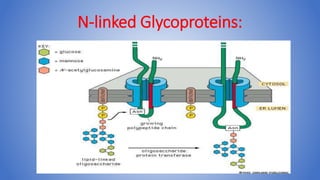
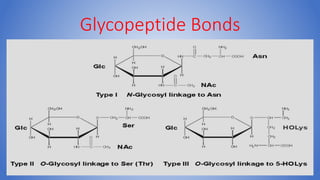
N-Glycosidic linkage (ie, N-linked), involving the amide nitrogen
of asparagine and N -acetylglucosamine (GlcNAc-Asn)
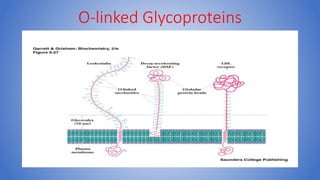
O-Glycosidic linkage (ie, O-linked), involving the hydroxyl side
chain of serine or threonine and a sugar such as N -acetylgalactosamine
(GalNAc-Ser[Thr])
 Linked to the carboxyl terminal amino acid of a protein via a
phosphoryl-ethanolamine moiety joined to an
oligosaccharide (glycan), linked via glucosamine to
phosphatidylinositol (PI).
1)N-linked Glycans:
Important N-linked Glycans :
• are found in ovalbumin and the immunoglobulins.
• Part of the recognition of immunoglobulins is due to the
sequence of the oligosaccharide chains of the glycans.
• A very important further use of N-linked oligosaccharides is in
intracellular targeting in eukaryotic organisms.
• Proteins destined for certain organelles or for excretion from
the cell are marked specifically by oligosaccharides during
posttranslational processing to ensure they arrive at their proper
destinations
N-linked Glycoproteins:
2)O-Linked Glycans:
• Mucins, which are found extensively in salivary
secretions, contain many short O-linked glycans.
• Increase the viscosity of the fluids in which they
are dissolved.
• Function is intracellular targeting and molecular
and cellular identification.
• Example: blood group antigens.
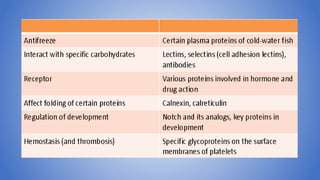
• Antarctic fish contain a glycoprotein that serves
as an "antifreeze", preventing the freezing of
body fluids, even in extremely cold water
O-linked Glycoproteins
Glycopeptide Bonds
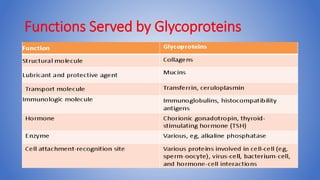
Functions Served by Glycoproteins
Functions
1)Structural :
Glycoproteins are found throughout matrices. They act as receptors on cell
surfaces that bring other cells and proteins (collagen) together giving
strength and support to a matrix.
Proteoglycan-linking glycoproteins cross links proteoglycan molecules and
is involved in the formation of the ordered structure within cartilage tissue.
In nerve tissue glycoproteins are abundant in gray matter and appear to be
associated with synaptosomes, axons, and microsomes.
 In certain bacteria the slime layer that surrounds the outermost
components of cell walls are made up of glycoproteins of high molecular
weight.
2)Protection:
High molecular weight polymers called mucins are found on
internal epithelial surfaces.
1- They form a highly viscous gel that protects epithelium form
chemical, physical, and microbial disturbances. Examples of mucin sites
are the human digestive tract, urinary tract, and respiratory tracts.
2- Mucins are also found on the outer body surfaces of fish to protect
the skin.
3- Not only does mucin serve the function of protection, but it also acts
as a lubricant.
4- Human lacrimal glands produce a glycoprotein which protects the
corneal epithelium from desiccation and foreign particles.
5- Human sweat glands secrete glycoproteins which protect the skin
from the other excretory products that could harm the skin.
3)Reproduction:
1- Glycoproteins found on the surface of spermatozoa appear
to increase a sperm cell's attraction for the egg by altering the
electrophoretic mobility of the plasma membrane.
2- Actual binding of the sperm cell to the egg is mediated by
linked glycoproteins serving as receptors on the surface of each
the two membranes.
3- The zona pellucida is an envelope made of glycoprotein that
surrounds the egg and prevents polyspermy from occurring
after the first sperm cell has penetrated the egg's plasma
membrane.
4- Hen ovalbumin is a glycoprotein found in egg white that
serves as a food storage unit for the embryo.
4)Hormones:
1-There are many glycoproteins that function as hormones such as
human chorionic gonadotropin (HCG) which is present in human
pregnancy urine.
2- Another example is erythropoietin which regulates erythrocyte
production.
5)Enzymes:
Glycoprotein enzymes are of three types. These are:
oxidoreductases, transferases, and hydrolases.
Clinical Significances of Glycoproteins:
Glycoproteins on cell surfaces are important for communication
between cells, for maintaining cell structure and for self-recognition
by the immune system.
The alteration of cell-surface glycoproteins can, therefore, produce
profound physiological effects, of which several are listed below.
1. The ABO blood group antigens are the
carbohydrate moieties of glycolipids on the
surface of cells as well as the carbohydrate
portion of serum glycoproteins.
a) When the ABO carbohydrates are associated with
protein in the form of glycoproteins they are
found in the serum and are referred to as the
secreted forms.
b) Some individuals produce the glycoprotein forms
of the ABO antigens while others do not.
c) This property distinguishes secretors from nonsecretors,
a property that has forensic
importance such as in cases of rape.
2. The truncation of erythrocyte surface
glycoproteins leads to cell clumping, as in
congenital dyserythropoietic anemia type II. Also
referred to as HEMPAS (hereditary erythroblastic
multinuclearity with positive acidified-serum
test).
3. Several viruses, bacteria and parasites have
exploited the presence of cell-surface
carbohydrates, principally associated with protein
(glycoproteins), using them as portals of entry
into the cell.
Example:
i) The malarial parasite Plasmodium vivax, binds
to the erythrocyte chemokine receptor known
as the Duffy blood group antigen (also known
as the erythrocyte receptor for interleukin-8)
to infect erythrocytes.
ii)Rabies virus binds to cells through interactions
with neural cell adhesion molecule (N-CAM).
I-Cell disease:-
• Deficiency of GlcNAc phosphotransferase,
• Resulting in abnormal targeting of certain lysosomal enzymes.
• Characterized by:
 severe psychomotor retardation,
 skeletal abnormalities,
 coarse facial features,
 painful restricted joint movement, and
 early mortality.

Glycoprotein

  • 1.
  • 2.
    What is Glycoprotein? Glycoproteins are proteins that contain oligosaccharide chains (glycans) covalently attached to polypeptide side-chains. Glycosylation: The carbohydrate is attached to the protein during the following modifications: Co-translational modification & Post-translational modification.  In proteins that have segments extending extracellularly, the extracellular segments are often glycosylated.
  • 4.
    CLASSIFICATION OF GLYCOPROTEINS: 3Major Classes: 1)N-linkage (N -acetylglucosamine to asparagine) 2)O-linkage (N -acetylgalactosamine to serine) 3)Glycosyl-phosphatidyl-inositol (GPI) linkage
  • 5.
    CLASSIFICATION OF GLYCOPROTEINS: N-Glycosidiclinkage (ie, N-linked), involving the amide nitrogen of asparagine and N -acetylglucosamine (GlcNAc-Asn) O-Glycosidic linkage (ie, O-linked), involving the hydroxyl side chain of serine or threonine and a sugar such as N -acetylgalactosamine (GalNAc-Ser[Thr])  Linked to the carboxyl terminal amino acid of a protein via a phosphoryl-ethanolamine moiety joined to an oligosaccharide (glycan), linked via glucosamine to phosphatidylinositol (PI).
  • 6.
    1)N-linked Glycans: Important N-linkedGlycans : • are found in ovalbumin and the immunoglobulins. • Part of the recognition of immunoglobulins is due to the sequence of the oligosaccharide chains of the glycans. • A very important further use of N-linked oligosaccharides is in intracellular targeting in eukaryotic organisms. • Proteins destined for certain organelles or for excretion from the cell are marked specifically by oligosaccharides during posttranslational processing to ensure they arrive at their proper destinations
  • 7.
  • 8.
    2)O-Linked Glycans: • Mucins,which are found extensively in salivary secretions, contain many short O-linked glycans. • Increase the viscosity of the fluids in which they are dissolved. • Function is intracellular targeting and molecular and cellular identification. • Example: blood group antigens. • Antarctic fish contain a glycoprotein that serves as an "antifreeze", preventing the freezing of body fluids, even in extremely cold water
  • 9.
  • 11.
  • 12.
    Functions Served byGlycoproteins
  • 14.
    Functions 1)Structural : Glycoproteins arefound throughout matrices. They act as receptors on cell surfaces that bring other cells and proteins (collagen) together giving strength and support to a matrix. Proteoglycan-linking glycoproteins cross links proteoglycan molecules and is involved in the formation of the ordered structure within cartilage tissue. In nerve tissue glycoproteins are abundant in gray matter and appear to be associated with synaptosomes, axons, and microsomes.  In certain bacteria the slime layer that surrounds the outermost components of cell walls are made up of glycoproteins of high molecular weight.
  • 15.
    2)Protection: High molecular weightpolymers called mucins are found on internal epithelial surfaces. 1- They form a highly viscous gel that protects epithelium form chemical, physical, and microbial disturbances. Examples of mucin sites are the human digestive tract, urinary tract, and respiratory tracts. 2- Mucins are also found on the outer body surfaces of fish to protect the skin. 3- Not only does mucin serve the function of protection, but it also acts as a lubricant. 4- Human lacrimal glands produce a glycoprotein which protects the corneal epithelium from desiccation and foreign particles. 5- Human sweat glands secrete glycoproteins which protect the skin from the other excretory products that could harm the skin.
  • 16.
    3)Reproduction: 1- Glycoproteins foundon the surface of spermatozoa appear to increase a sperm cell's attraction for the egg by altering the electrophoretic mobility of the plasma membrane. 2- Actual binding of the sperm cell to the egg is mediated by linked glycoproteins serving as receptors on the surface of each the two membranes. 3- The zona pellucida is an envelope made of glycoprotein that surrounds the egg and prevents polyspermy from occurring after the first sperm cell has penetrated the egg's plasma membrane. 4- Hen ovalbumin is a glycoprotein found in egg white that serves as a food storage unit for the embryo.
  • 17.
    4)Hormones: 1-There are manyglycoproteins that function as hormones such as human chorionic gonadotropin (HCG) which is present in human pregnancy urine. 2- Another example is erythropoietin which regulates erythrocyte production. 5)Enzymes: Glycoprotein enzymes are of three types. These are: oxidoreductases, transferases, and hydrolases.
  • 18.
    Clinical Significances ofGlycoproteins: Glycoproteins on cell surfaces are important for communication between cells, for maintaining cell structure and for self-recognition by the immune system. The alteration of cell-surface glycoproteins can, therefore, produce profound physiological effects, of which several are listed below.
  • 19.
    1. The ABOblood group antigens are the carbohydrate moieties of glycolipids on the surface of cells as well as the carbohydrate portion of serum glycoproteins. a) When the ABO carbohydrates are associated with protein in the form of glycoproteins they are found in the serum and are referred to as the secreted forms. b) Some individuals produce the glycoprotein forms of the ABO antigens while others do not. c) This property distinguishes secretors from nonsecretors, a property that has forensic importance such as in cases of rape.
  • 20.
    2. The truncationof erythrocyte surface glycoproteins leads to cell clumping, as in congenital dyserythropoietic anemia type II. Also referred to as HEMPAS (hereditary erythroblastic multinuclearity with positive acidified-serum test). 3. Several viruses, bacteria and parasites have exploited the presence of cell-surface carbohydrates, principally associated with protein (glycoproteins), using them as portals of entry into the cell.
  • 21.
    Example: i) The malarialparasite Plasmodium vivax, binds to the erythrocyte chemokine receptor known as the Duffy blood group antigen (also known as the erythrocyte receptor for interleukin-8) to infect erythrocytes. ii)Rabies virus binds to cells through interactions with neural cell adhesion molecule (N-CAM).
  • 22.
    I-Cell disease:- • Deficiencyof GlcNAc phosphotransferase, • Resulting in abnormal targeting of certain lysosomal enzymes. • Characterized by:  severe psychomotor retardation,  skeletal abnormalities,  coarse facial features,  painful restricted joint movement, and  early mortality.