Chapter 8
Implementing Strategies:
Marketing,
Finance/Accounting,
R&D, and MIS Issues
By:
Monica Rosella
Icha Mutiara
LEARNING OBJECTIVES
Explain market segmentation
and product positioning as
strategy-implementation tools
Discuss procedures for
determining the worth of a
business
Explain why projected financial
statement analysis is a central
strategy-implementation tool
Discuss the nature and role of
research and development in
strategy implementation
Explain how management information
systems can determine the success of
strategy implementation efforts
Explain how to evaluate the
attractiveness of debt versus stock as
a source of capital to implement
strategies
Marketing
Issues
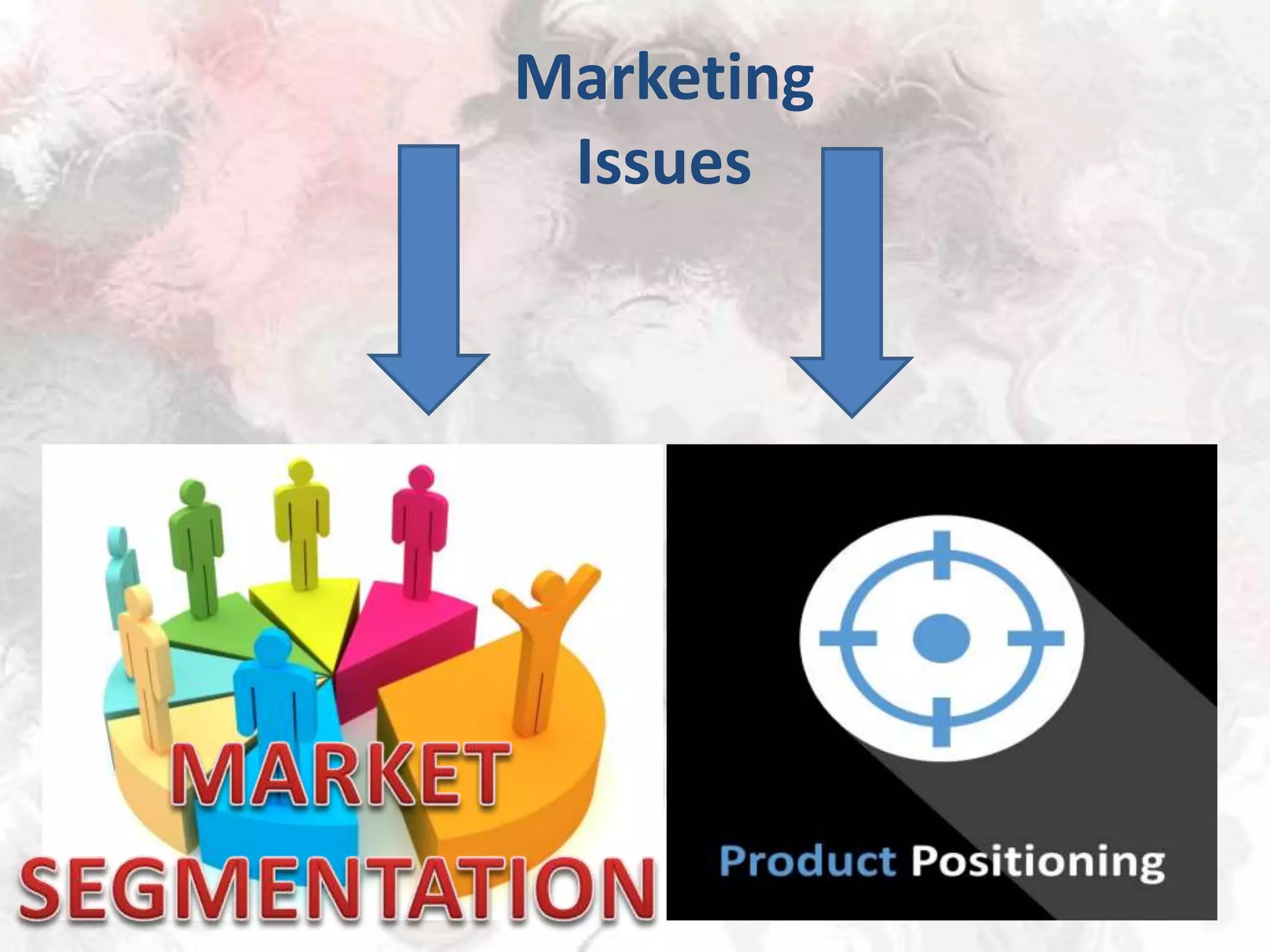
MARKET
SEGMENTATION
Market segmentation is widely
used in implementing strategies,
especially for small and
specialized firms.
Two variables are of central
importance to strategy
implementation: market
segmentation and product
positioning
Market Segmentation
Market Segment
Basis Psychographic
Behavioral
Geographic
Demographic
MARKET SEGMENTATION
• IMPORTANT OF MARKET SEGMENTATION
It is required to
successfully implement
market development,
product development,
market penetration, and
diversification strategies
It allows a firm
to operate with
limited
resources
It enables small
firms to
compete with
large firm
Market Segmentation decisions
directly affect marketing mix variables
PRODUCT PRICE
PROMOTION PLACE
MARKETING
MIX
Product
Positioning
After markets have been segmented
so that the firm can target particular
customer groups, the next step is to
find out what customers want and
expect.
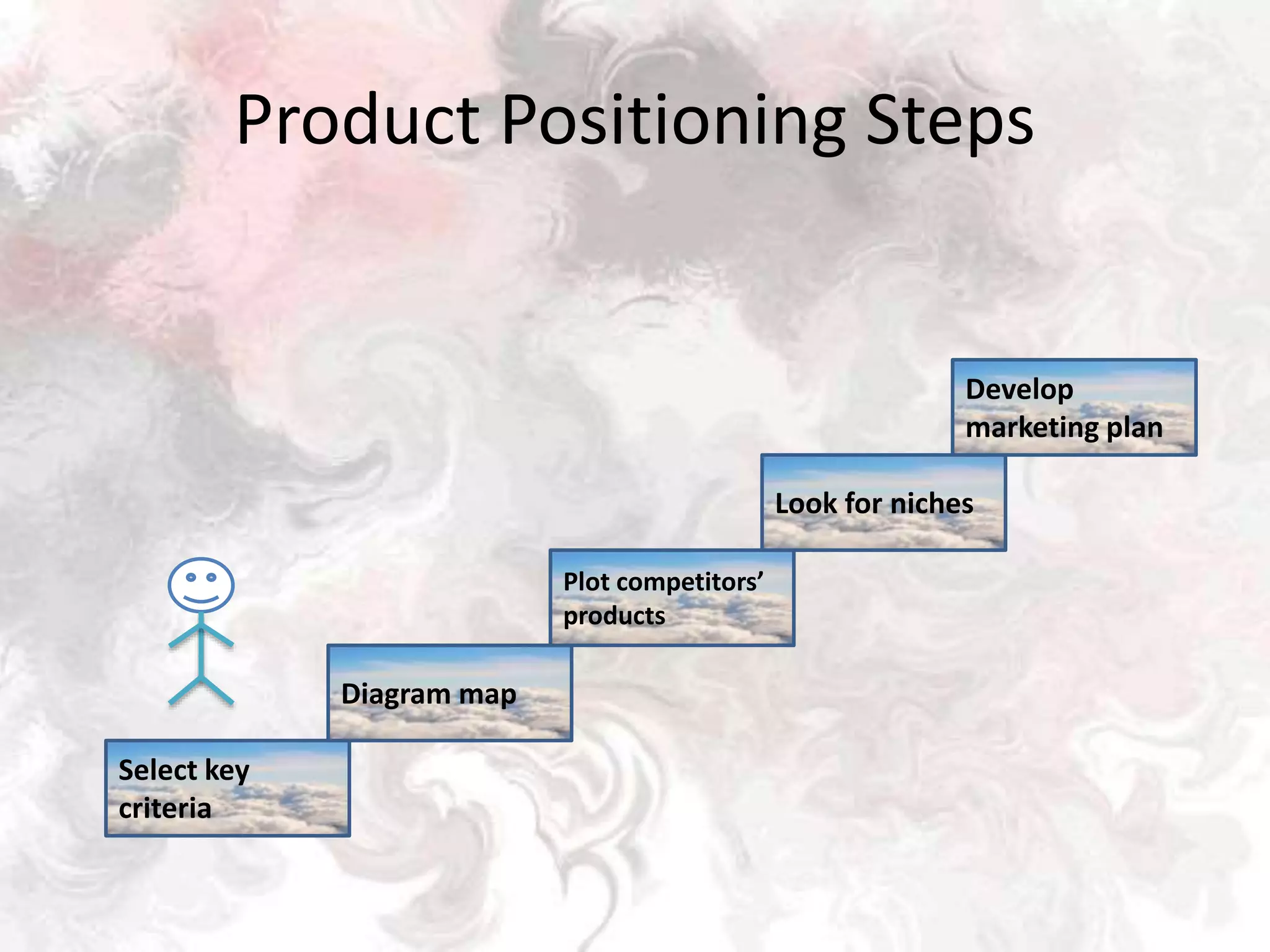
Product Positioning Steps
Select key
criteria
Diagram map
Plot competitors’
products
Look for niches
Develop
marketing plan
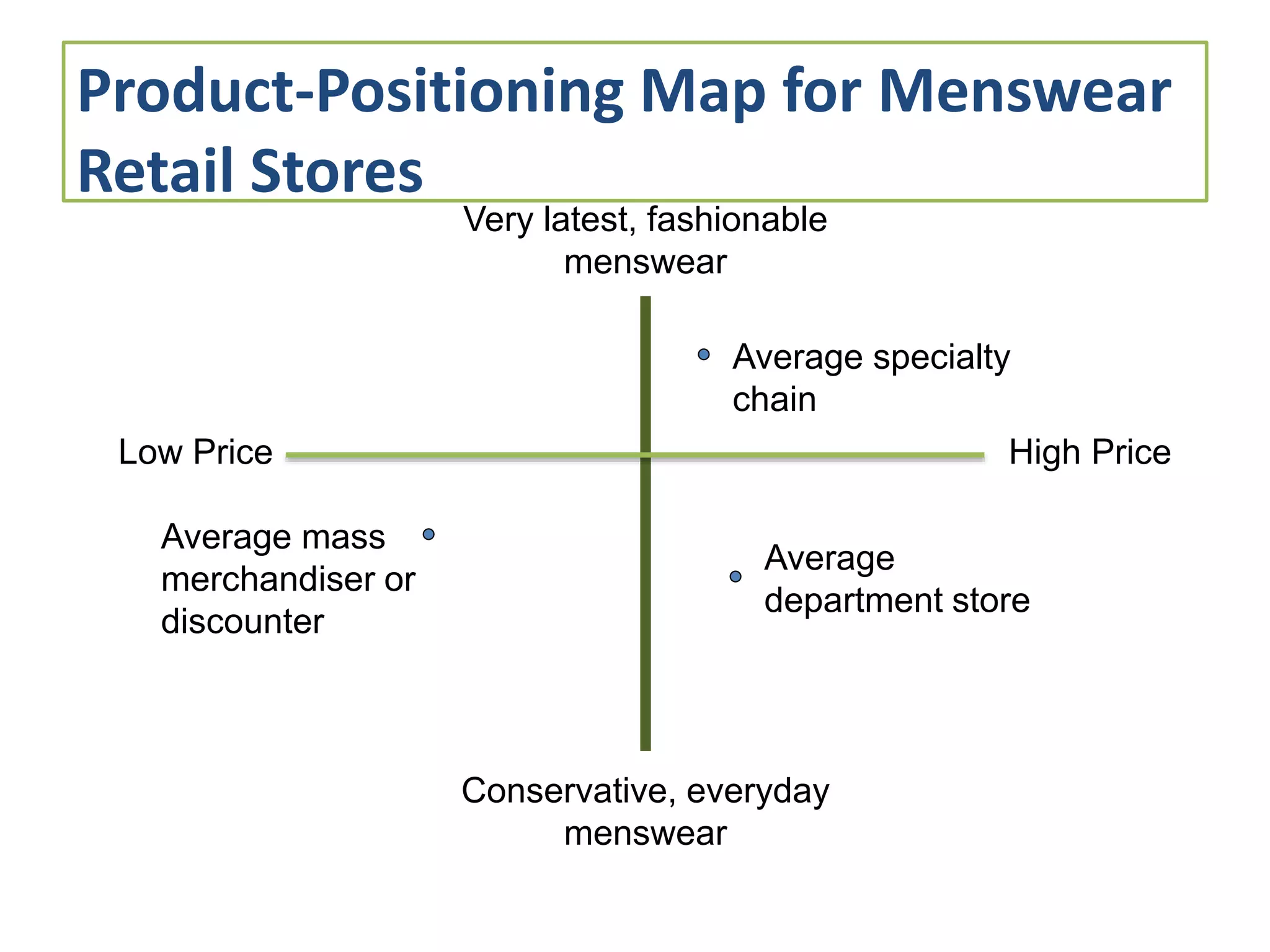
Product-Positioning Map for Menswear
Retail Stores
Very latest, fashionable
menswear
Conservative, everyday
menswear
Low Price High Price
Average
department store
Average specialty
chain
Average mass
merchandiser or
discounter
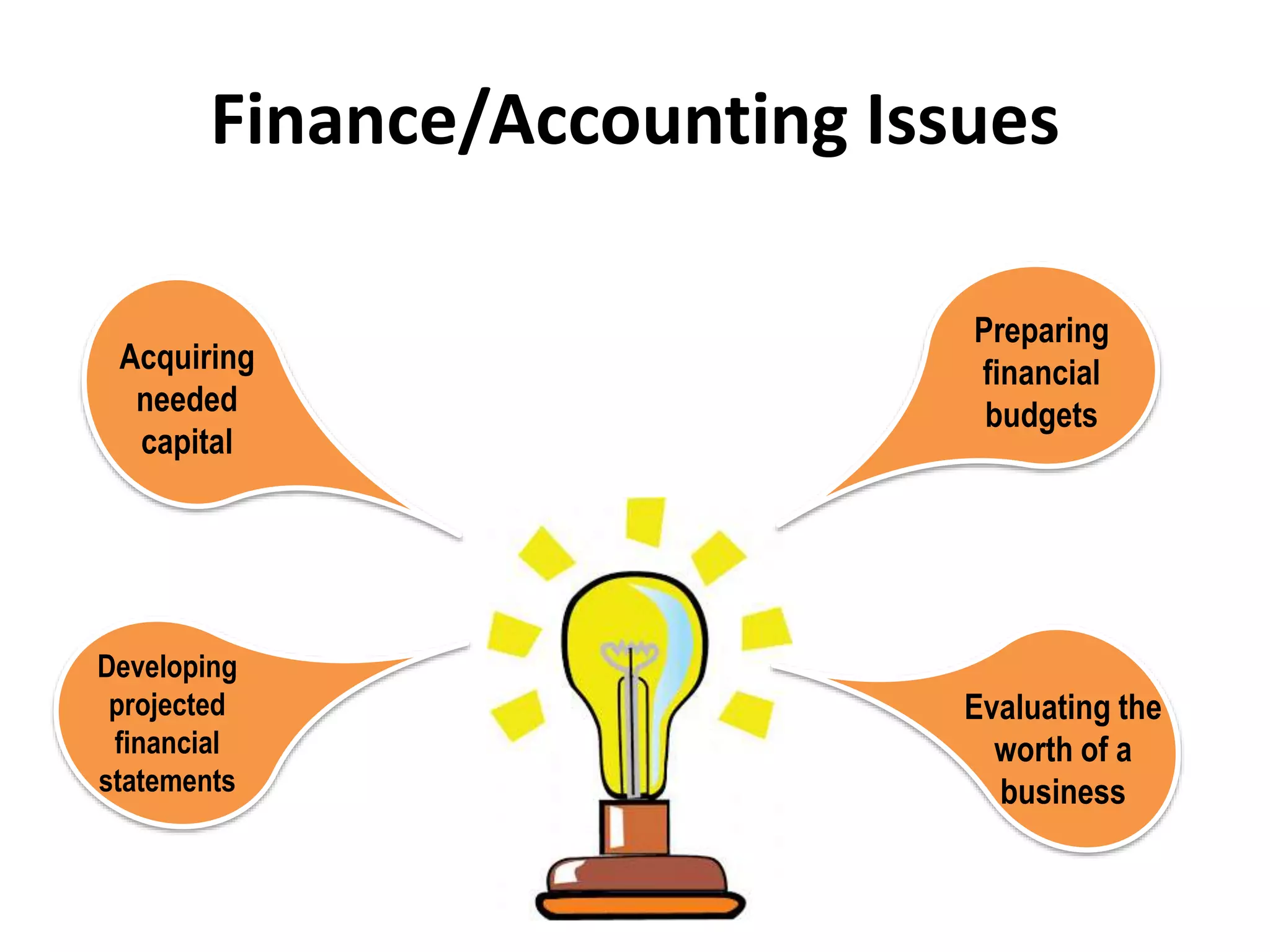
Finance/Accounting Issues
Acquiring
needed
capital
Developing
projected
financial
statements
Preparing
financial
budgets
Evaluating the
worth of a
business
Acquiring Needed Capital
EQUITY DEBT
COMMON
STOCK
- BONDS
- BORROW
FROM
LENDER
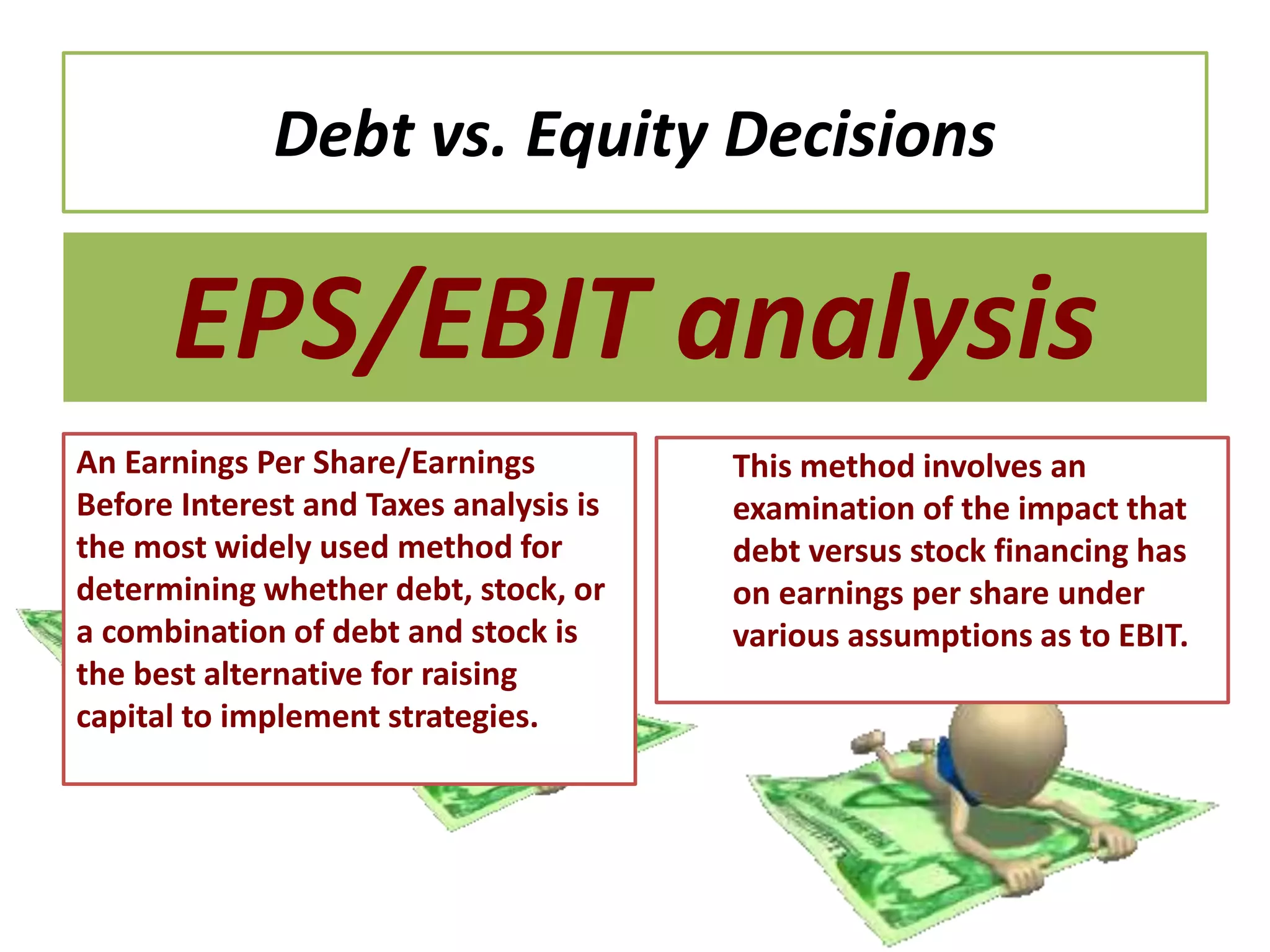
Debt vs. Equity Decisions
EPS/EBIT analysis
An Earnings Per Share/Earnings
Before Interest and Taxes analysis is
the most widely used method for
determining whether debt, stock, or
a combination of debt and stock is
the best alternative for raising
capital to implement strategies.
This method involves an
examination of the impact that
debt versus stock financing has
on earnings per share under
various assumptions as to EBIT.
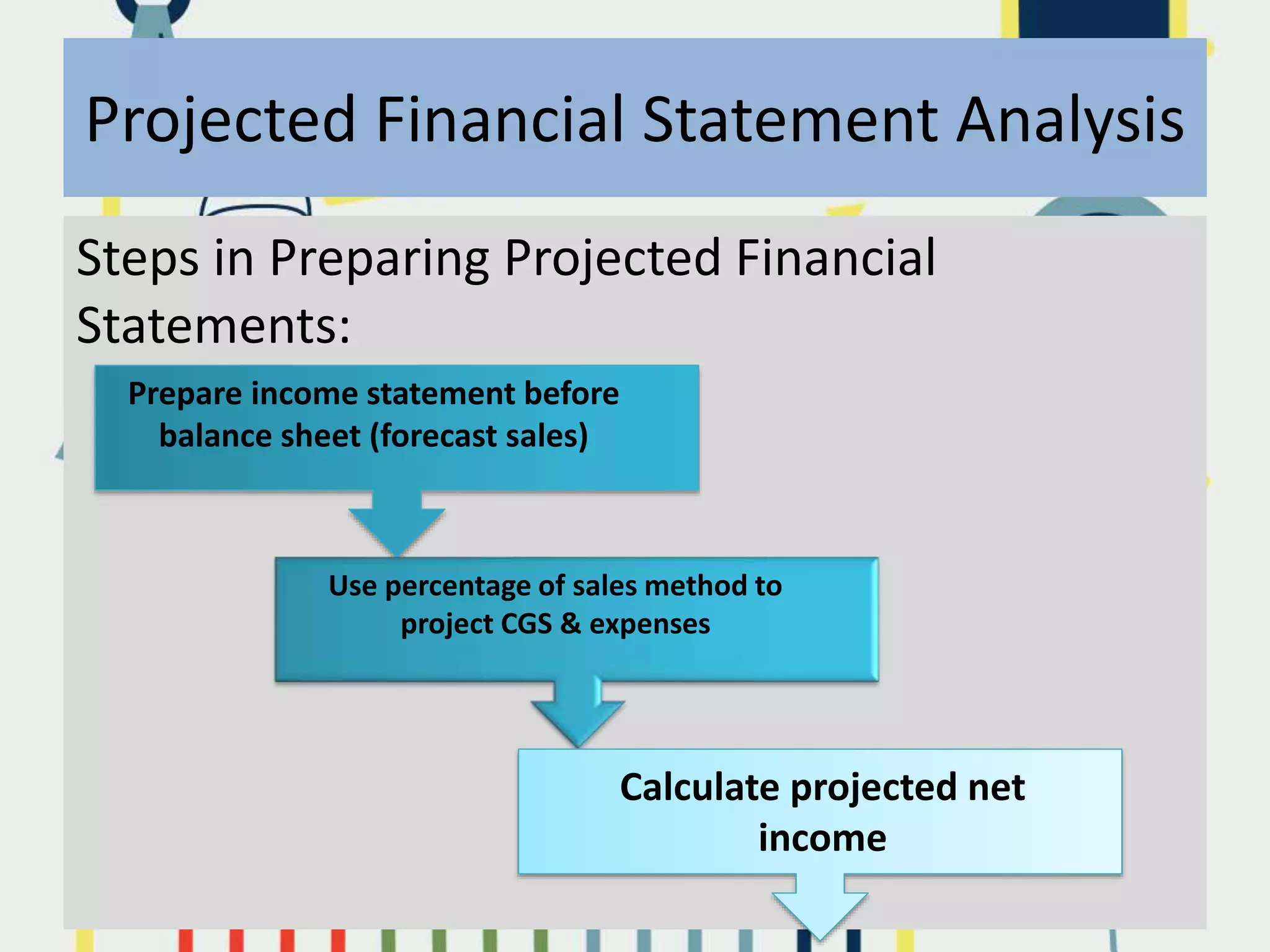
Projected Financial Statement Analysis
Steps in Preparing Projected Financial
Statements:
Prepare income statement before
balance sheet (forecast sales)
Use percentage of sales method to
project CGS & expenses
Calculate projected net
income
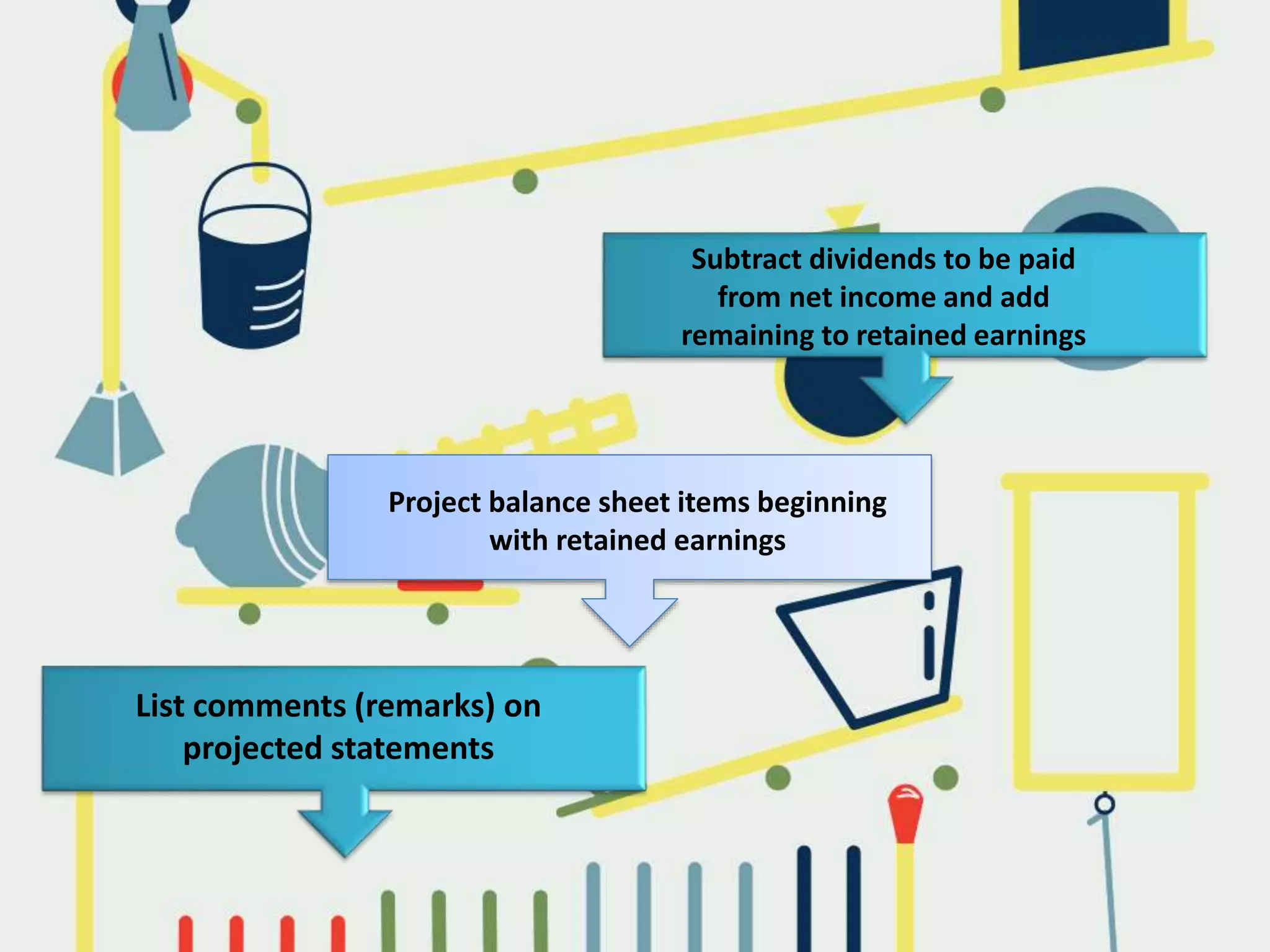
Subtract dividends to be paid
from net income and add
remaining to retained earnings
Project balance sheet items beginning
with retained earnings
List comments (remarks) on
projected statements
PREPARING :
Financial Budget
Details how funds
will be obtained and
spent for a specified
period of time
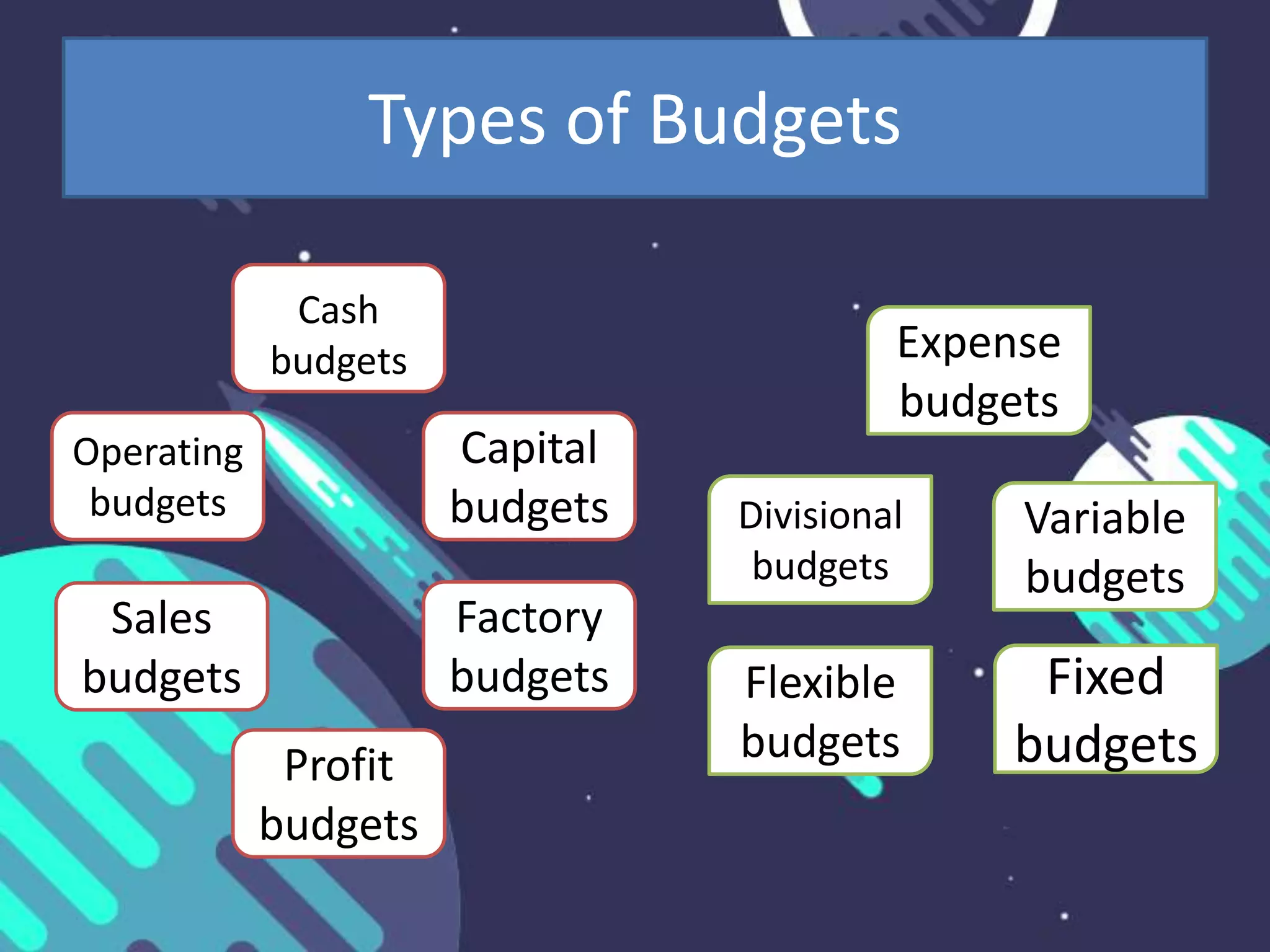
Types of Budgets
Cash
budgets
Operating
budgets
Capital
budgets
Sales
budgets
Factory
budgets
Profit
budgets
Flexible
budgets
Fixed
budgets
Divisional
budgets
Variable
budgets
Expense
budgets
Evaluating the worth of a business is central to strategy
implementation because integrative, intensive, and
diversification strategies are often implemented by
acquiring other firms.
Research & Development
New products and improvement of existing
products that allow for effective strategy
implementation
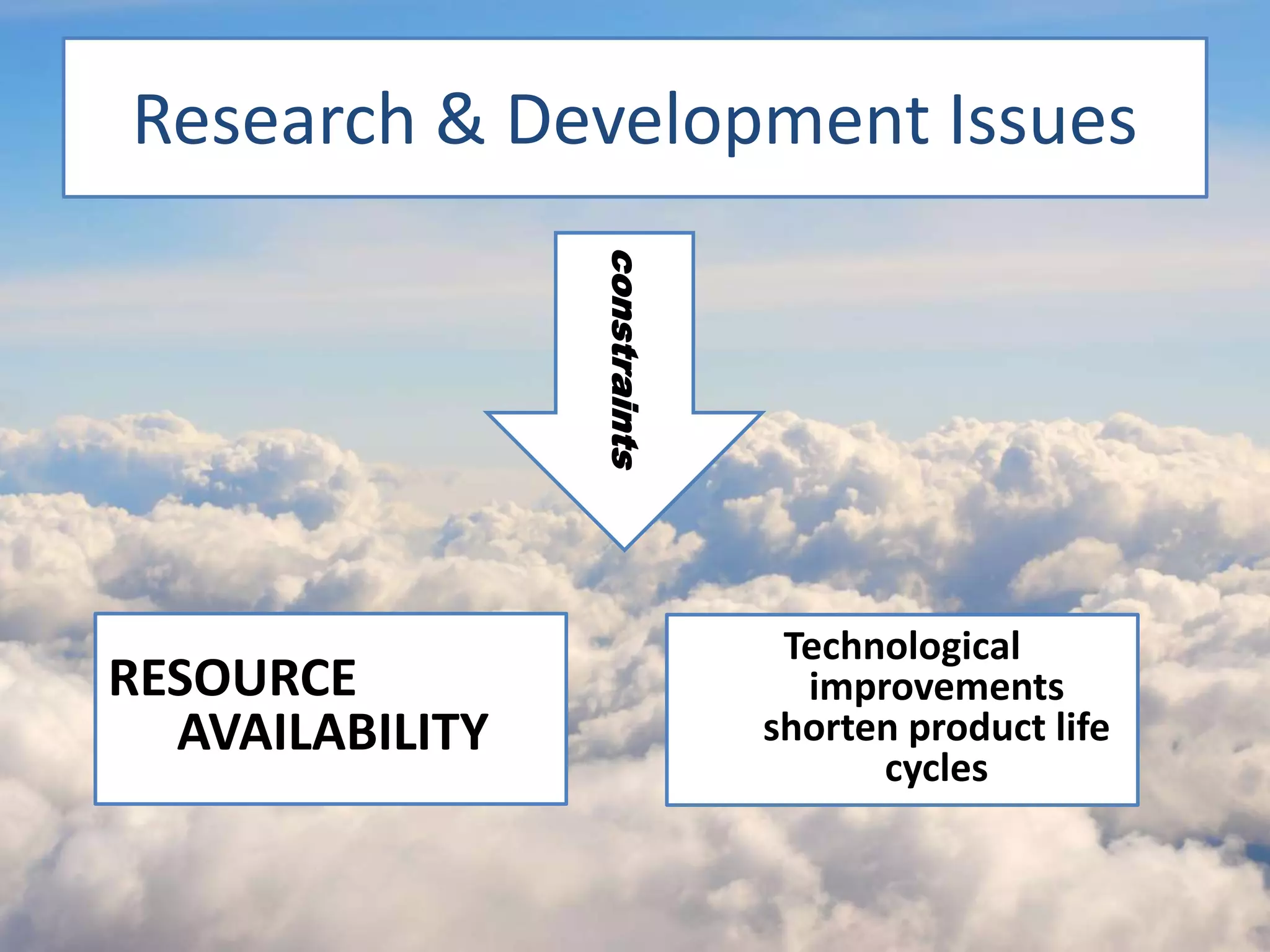
Research & Development Issues
constraints
RESOURCE
AVAILABILITY
Technological
improvements
shorten product life
cycles
R&D APPROACHES
BE THE FIRST WITH NEW
TECHNOLOGICAL PRODUCT
Be a low-cost
producer
BE AN INNOVATIVE
Management Information Systems
(MIS)
Having an effective management
information system (MIS) may be the
most important factor in
differentiating successful from
unsuccessful firms.
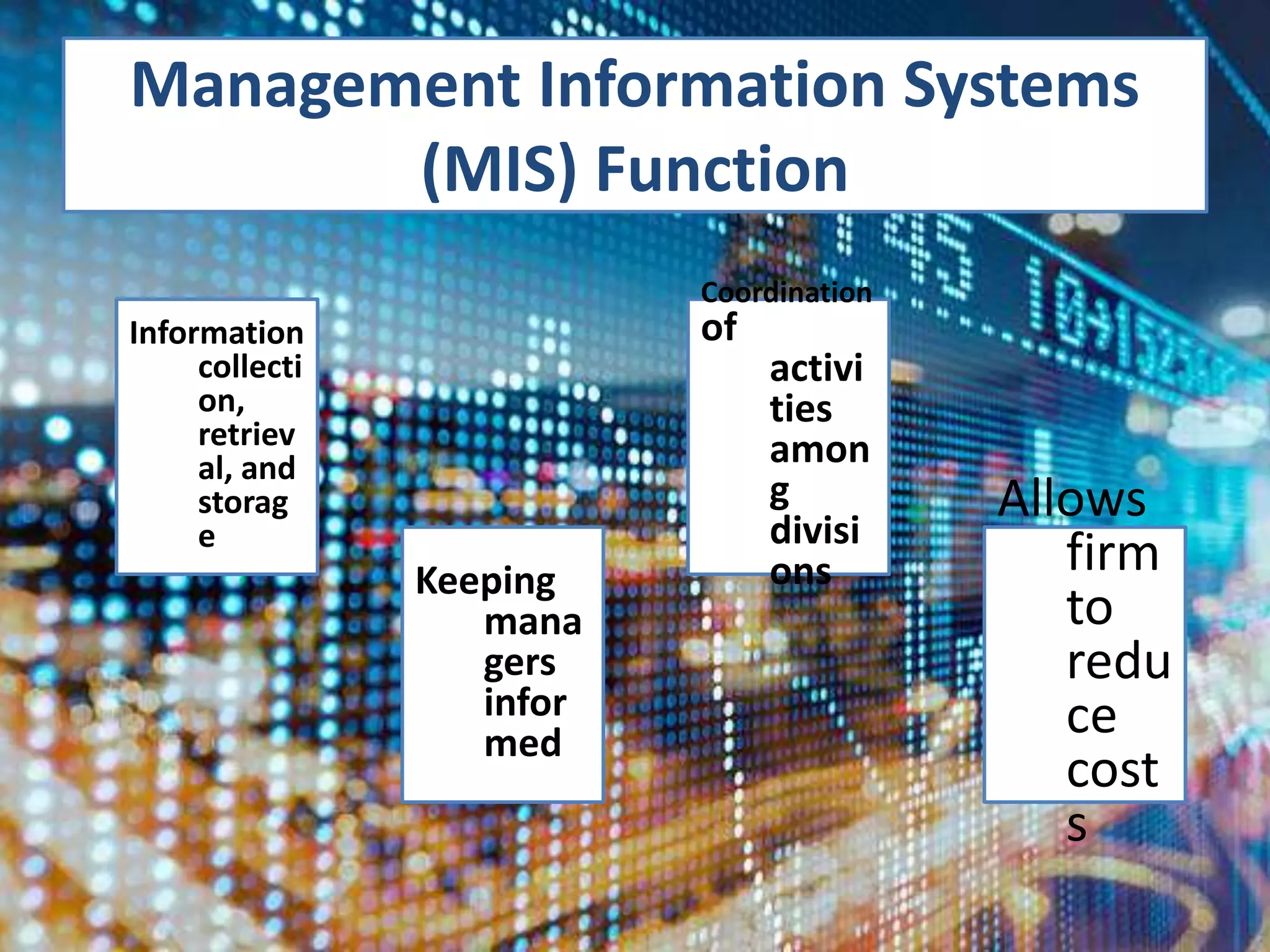
Management Information Systems
(MIS) Function
Information
collecti
on,
retriev
al, and
storag
e
Keeping
mana
gers
infor
med
Coordination
of
activi
ties
amon
g
divisi
ons
Allows
firm
to
redu
ce
cost
s
CONCLUSION
Successful strategy implementation depends on
cooperation among all functional and divisional
managers in an organization.

chapter 8 " Implementing strategies: Marketing, Finance/Accounting, R&D, and MIS Issues