Chapter 7: Performance and Fitness
Human Performance:
    A Function of Fitness
Human Performance: A Function of Fitness
•What 2 RESOURCES does your body require to
 carry out daily activities?

 ▫ Matter:
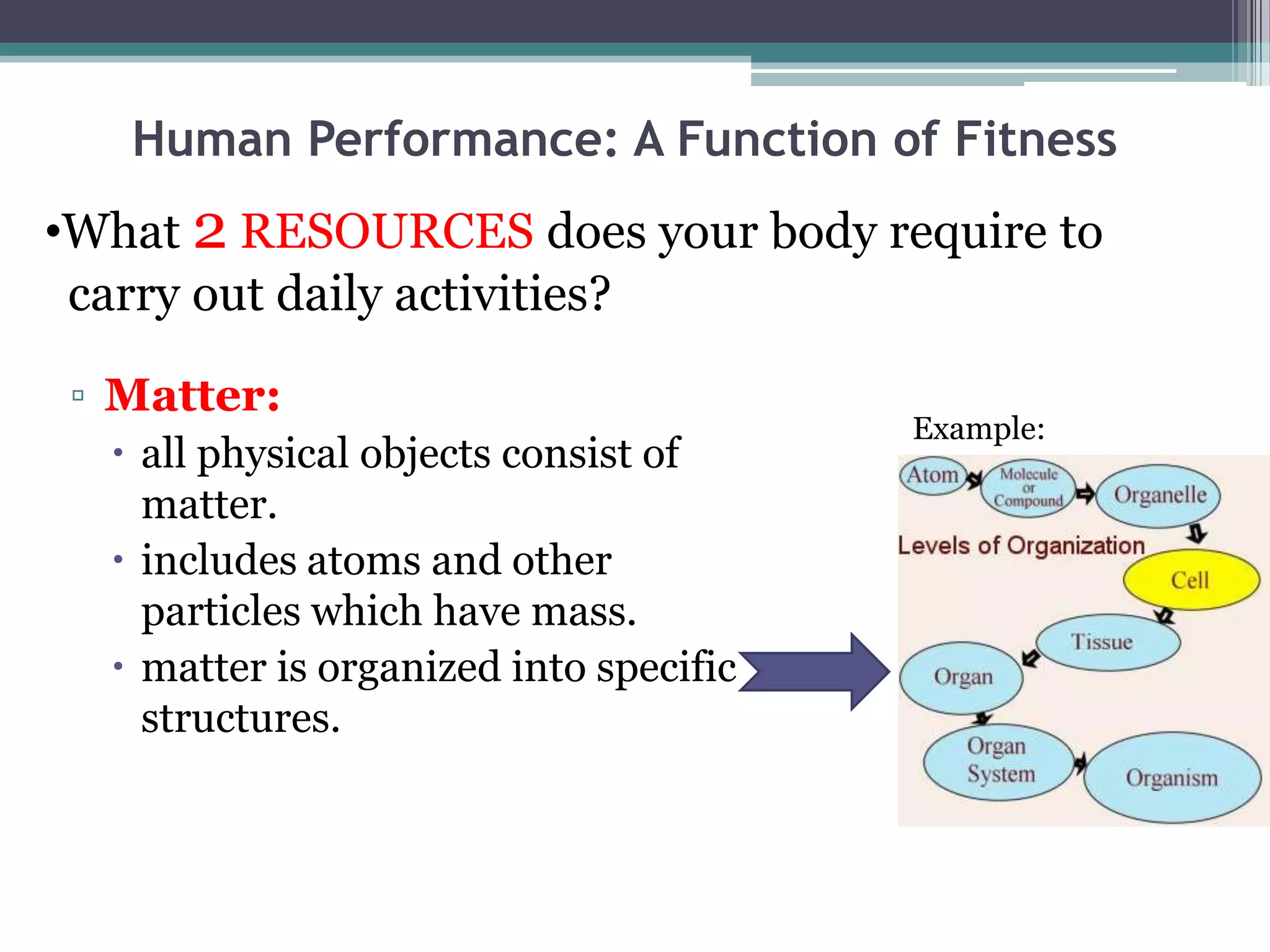
                                        Example:
   all physical objects consist of
    matter.
   includes atoms and other
    particles which have mass.
   matter is organized into specific
    structures.
Human Performance: A Function of Fitness

▫ Energy:
  Energy is needed to organize matter and perform work.
  All cells in your body require energy.
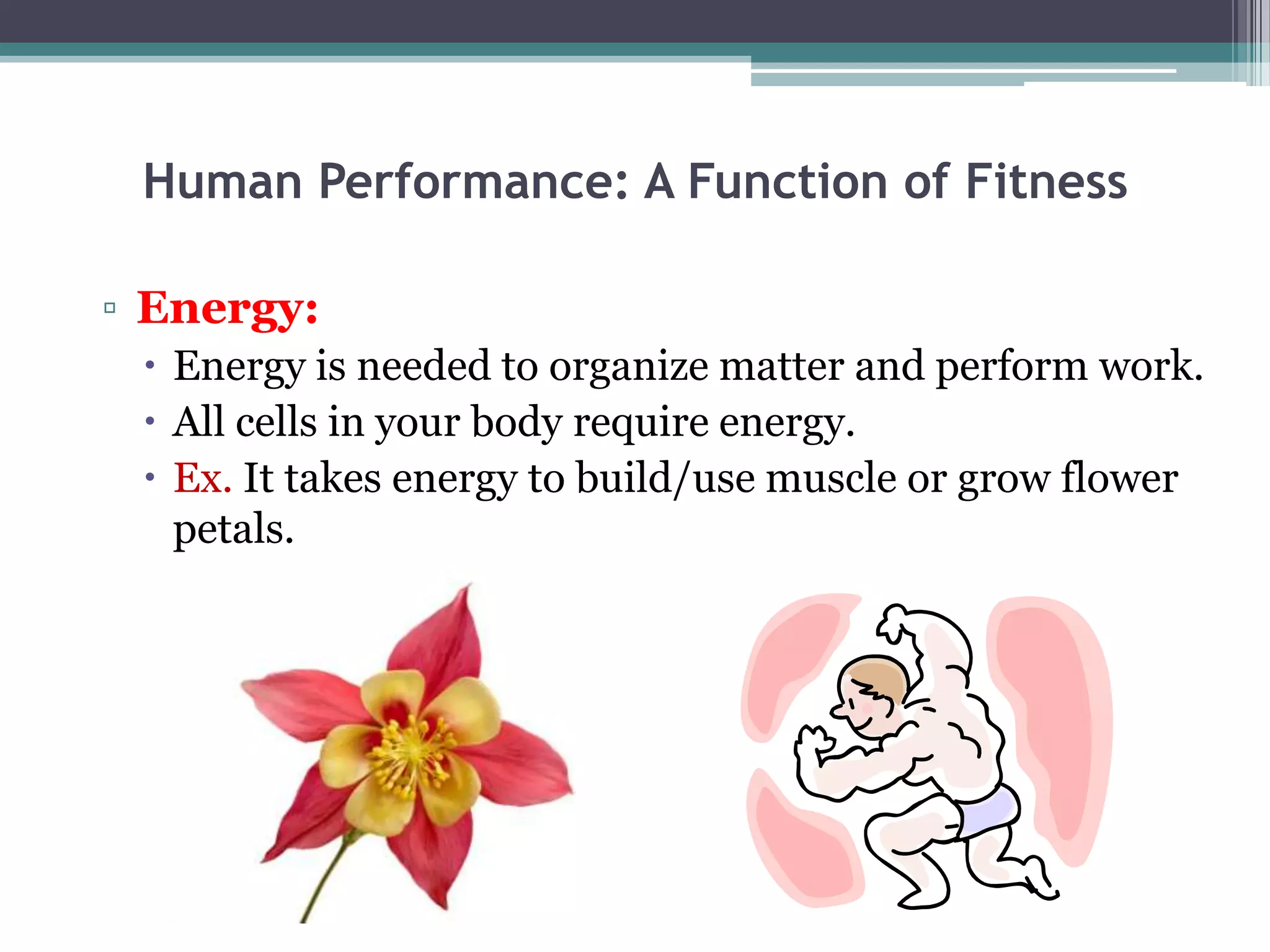
  Ex. It takes energy to build/use muscle or grow flower
   petals.
Human Performance: A Function of Fitness
If all people require energy and matter, why
are some people more athletic than others?

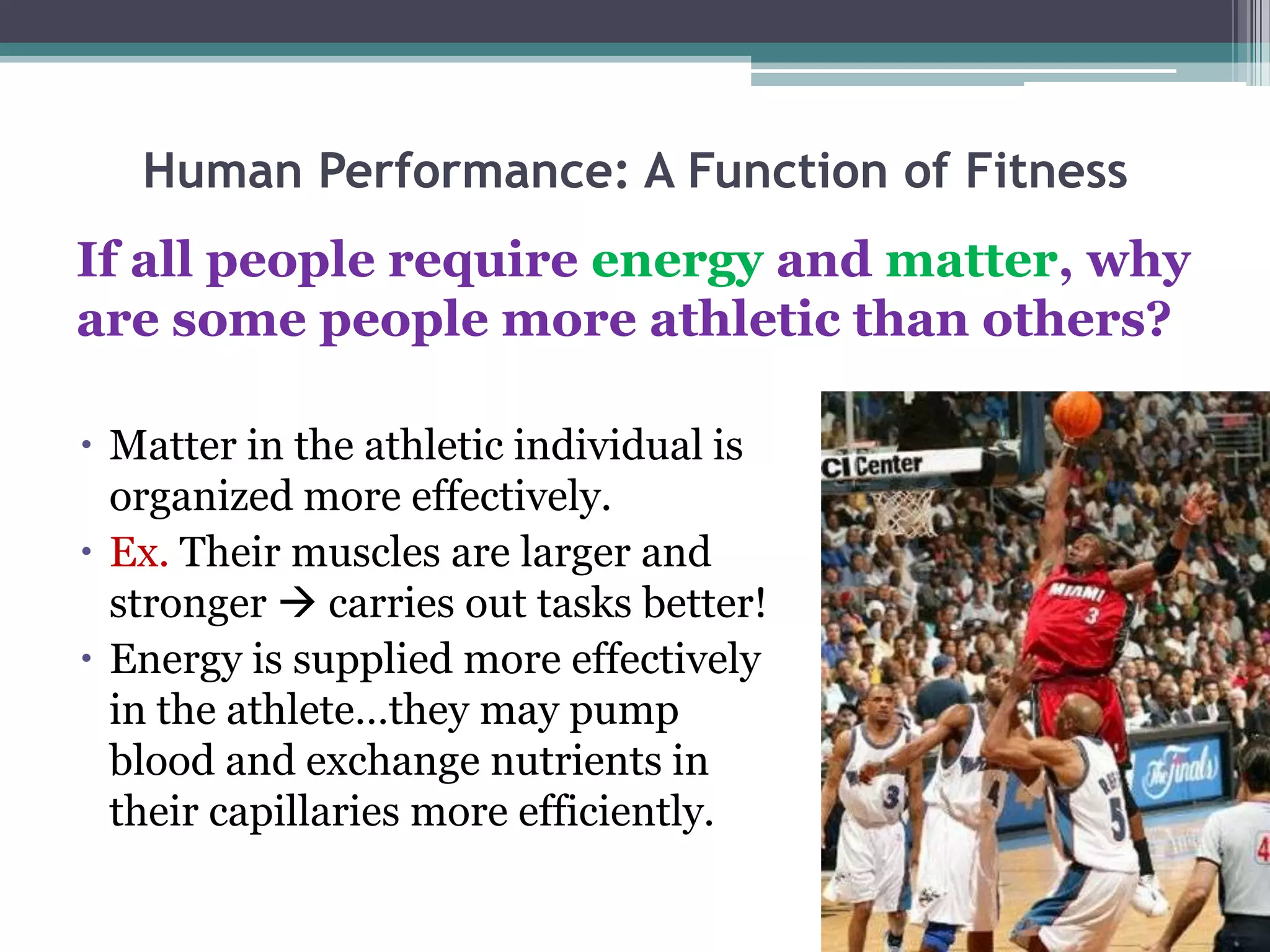
 Matter in the athletic individual is
  organized more effectively.
 Ex. Their muscles are larger and
  stronger  carries out tasks better!
 Energy is supplied more effectively
  in the athlete…they may pump
  blood and exchange nutrients in
  their capillaries more efficiently.
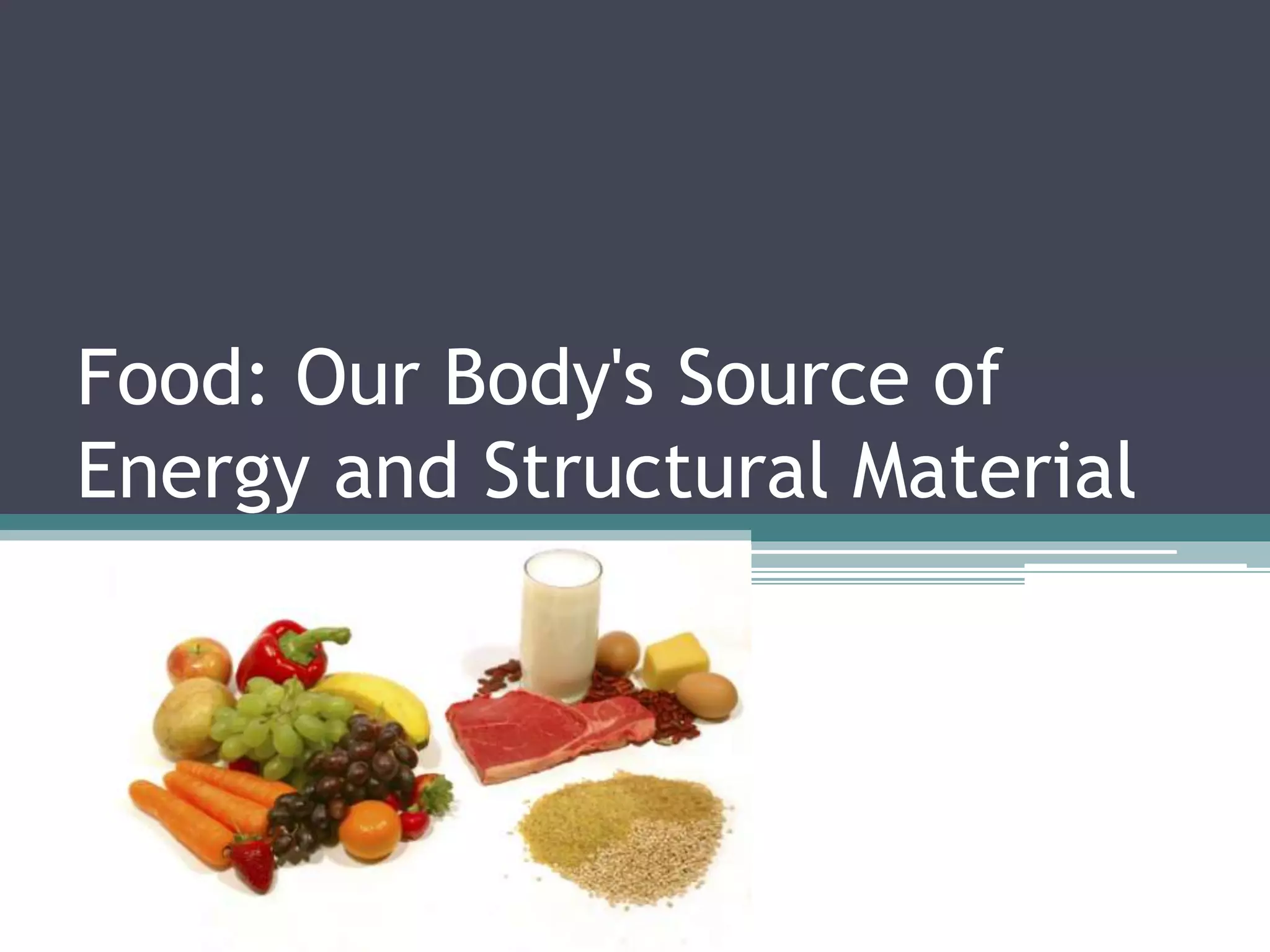
Food: Our Body's Source of
Energy and Structural Material
Food: Our Body's Source of Energy
       and Structural Material
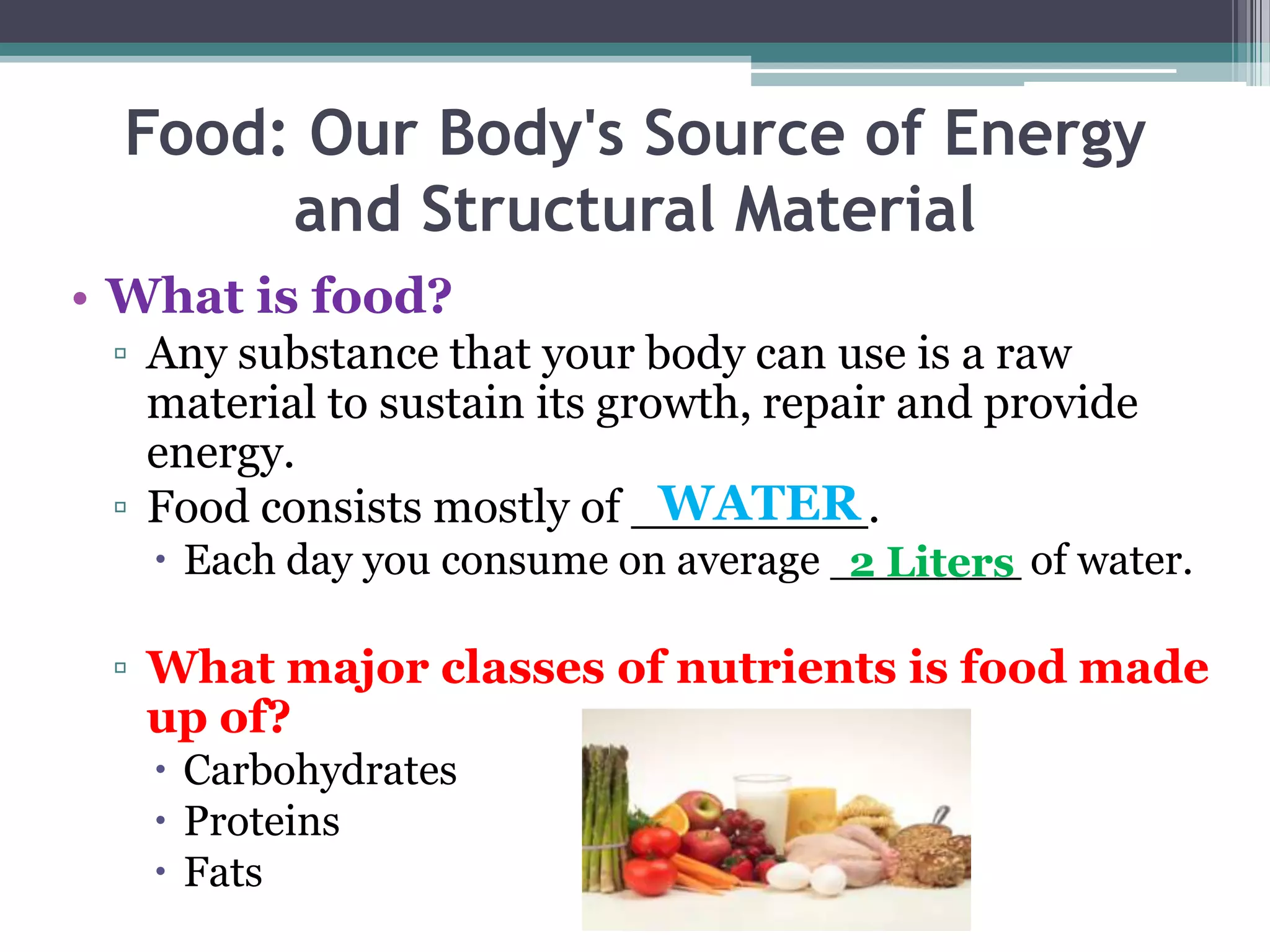
• What is food?
 ▫ Any substance that your body can use is a raw
   material to sustain its growth, repair and provide
   energy.
                              WATER
 ▫ Food consists mostly of ________.
    Each day you consume on average _______ of water.
                                      2 Liters

 ▫ What major classes of nutrients is food made
   up of?
    Carbohydrates
    Proteins
    Fats
Food: Our Body's Source of Energy
      and Structural Material
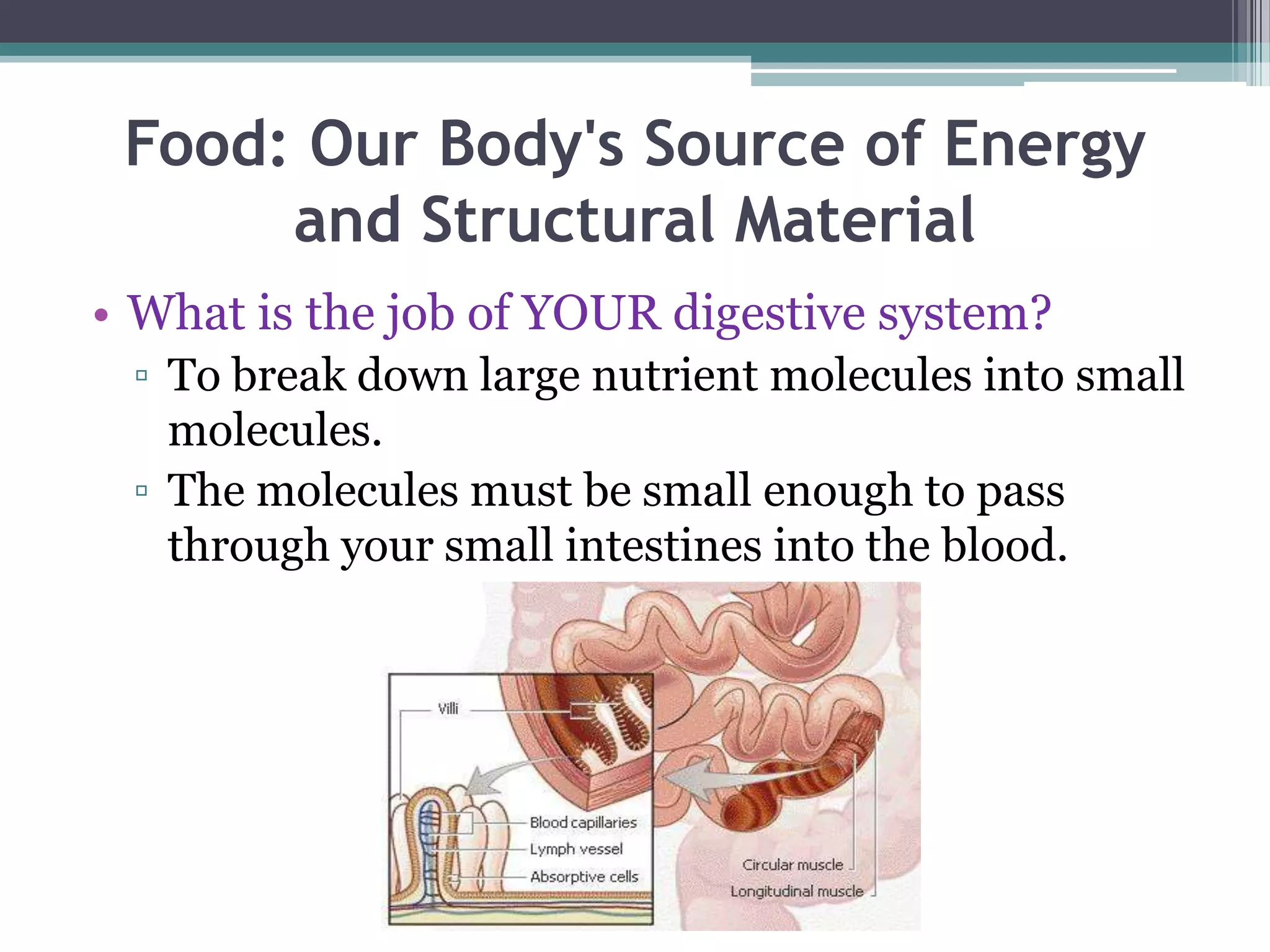
• What is the job of YOUR digestive system?
 ▫ To break down large nutrient molecules into small
   molecules.
 ▫ The molecules must be small enough to pass
   through your small intestines into the blood.
Food: Our Body's Source of Energy
         and Structural Material
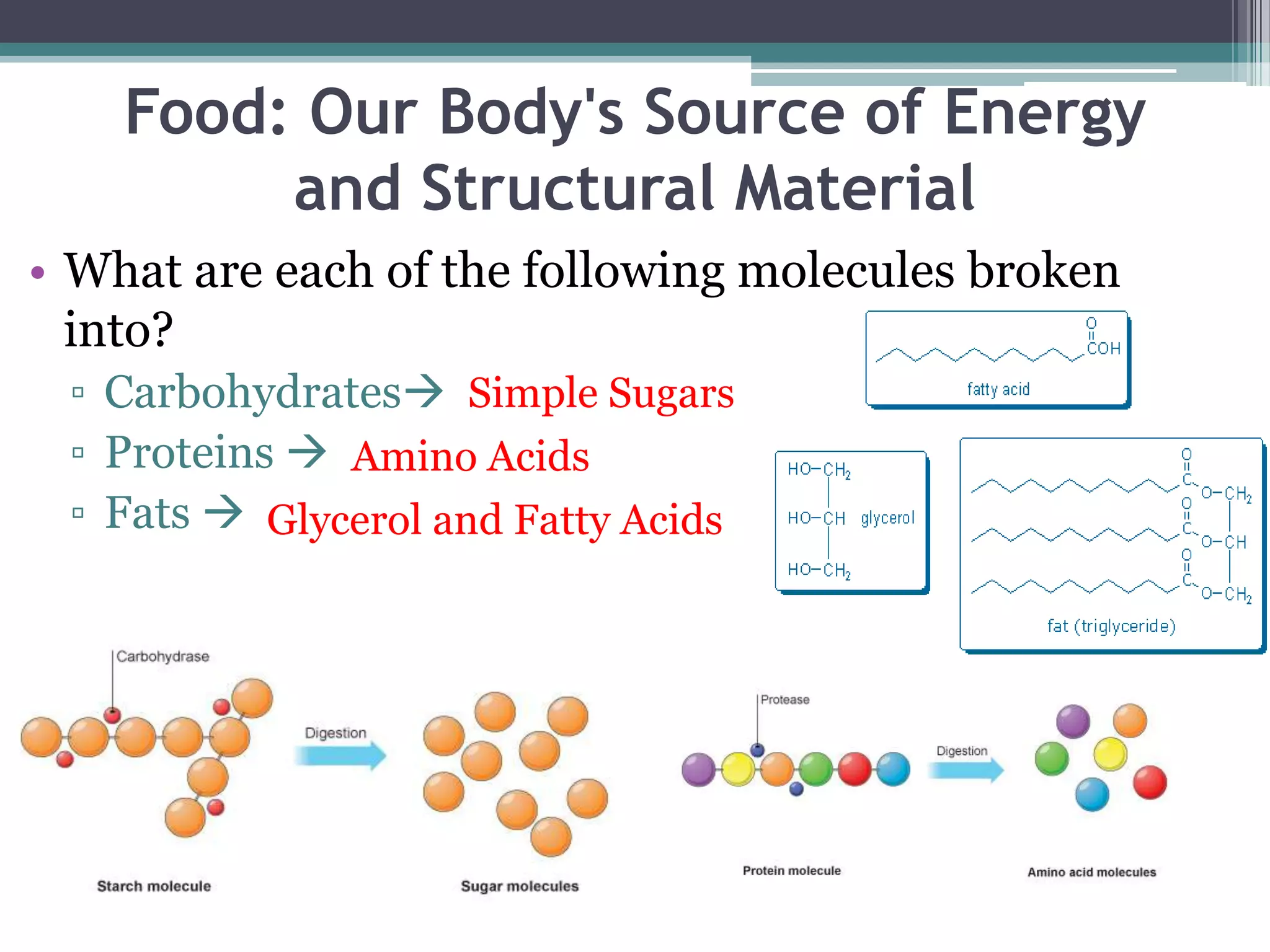
• What are each of the following molecules broken
  into?
 ▫ Carbohydrates Simple Sugars
 ▫ Proteins  Amino Acids
 ▫ Fats  Glycerol and Fatty Acids
Food: Our Body's Source of Energy
       and Structural Material
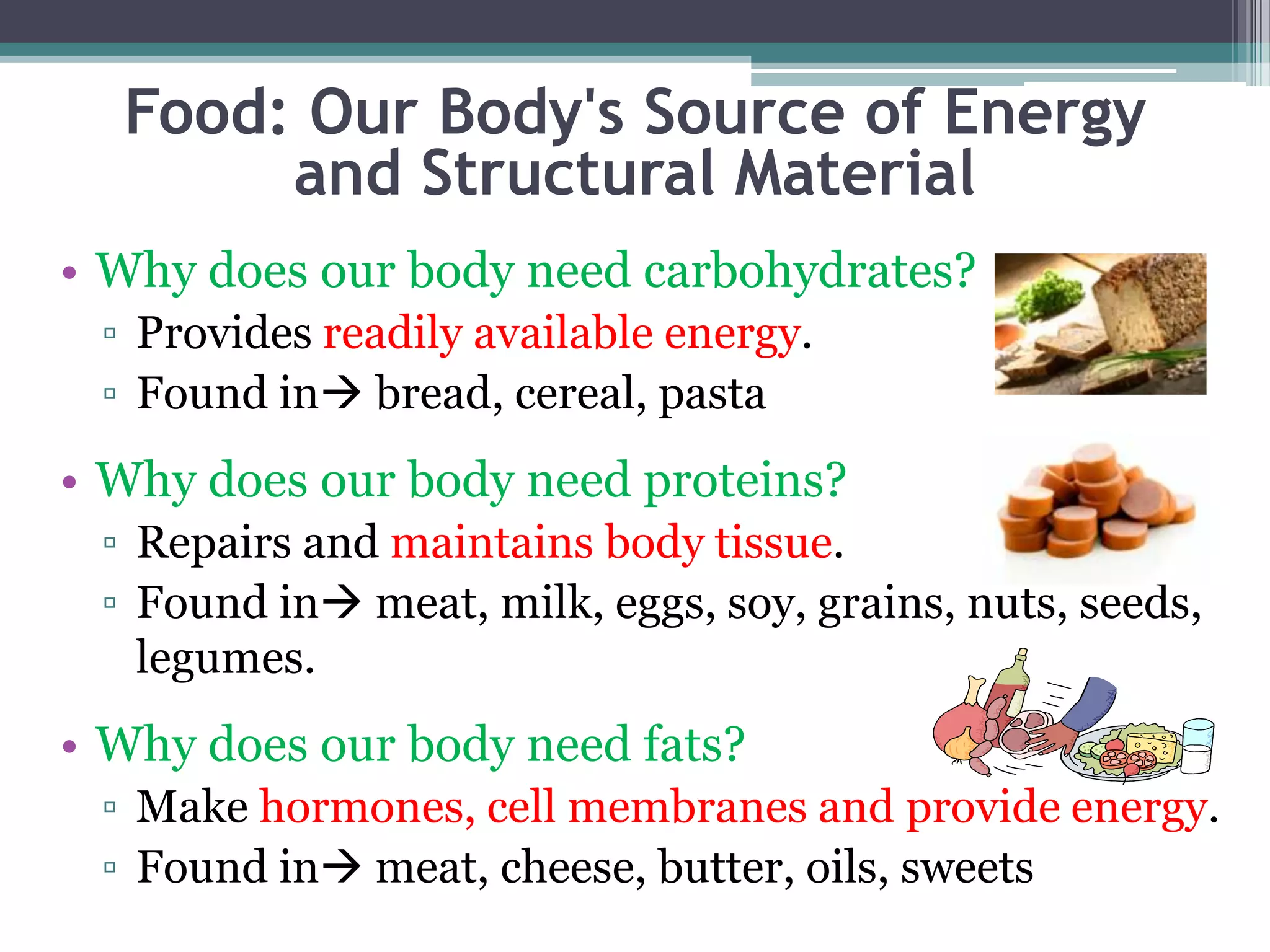
• Why does our body need carbohydrates?
 ▫ Provides readily available energy.
 ▫ Found in bread, cereal, pasta
• Why does our body need proteins?
 ▫ Repairs and maintains body tissue.
 ▫ Found in meat, milk, eggs, soy, grains, nuts, seeds,
   legumes.
• Why does our body need fats?
 ▫ Make hormones, cell membranes and provide energy.
 ▫ Found in meat, cheese, butter, oils, sweets
Food: Our Body's Source of Energy
      and Structural Material
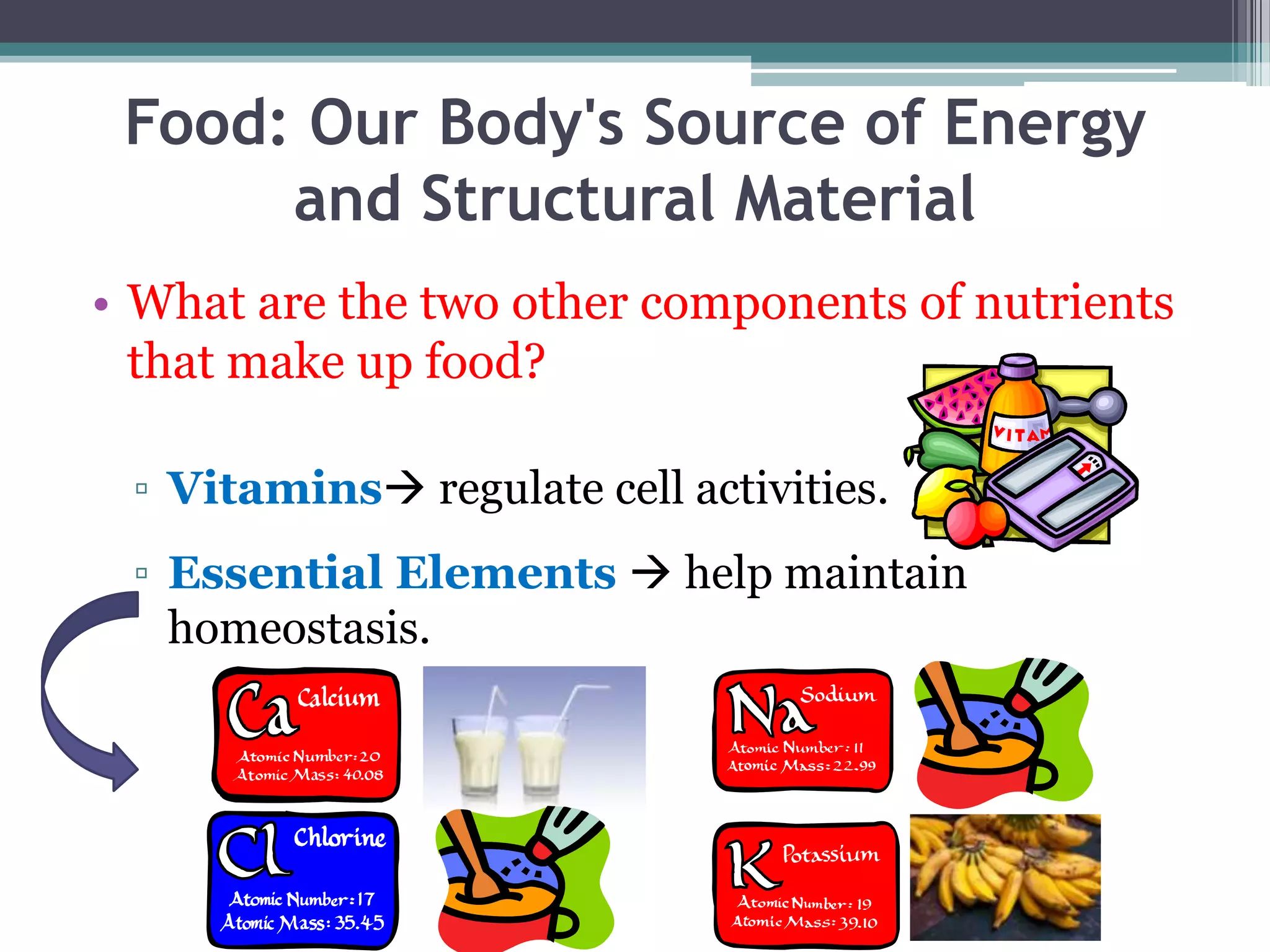
• What are the two other components of nutrients
  that make up food?

 ▫ Vitamins regulate cell activities.
 ▫ Essential Elements  help maintain
   homeostasis.
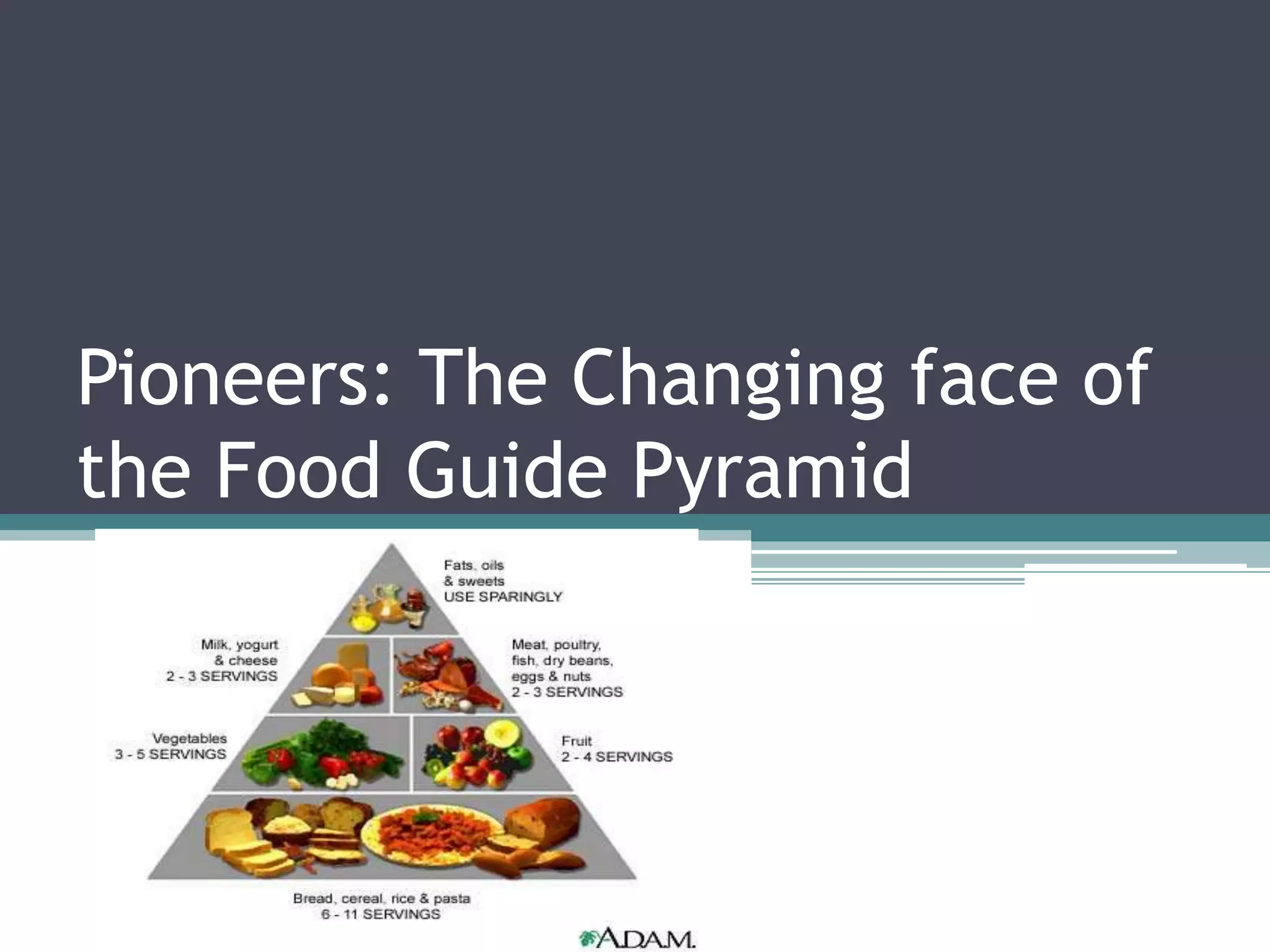
Pioneers: The Changing face of
the Food Guide Pyramid
Food Guide Pyramid
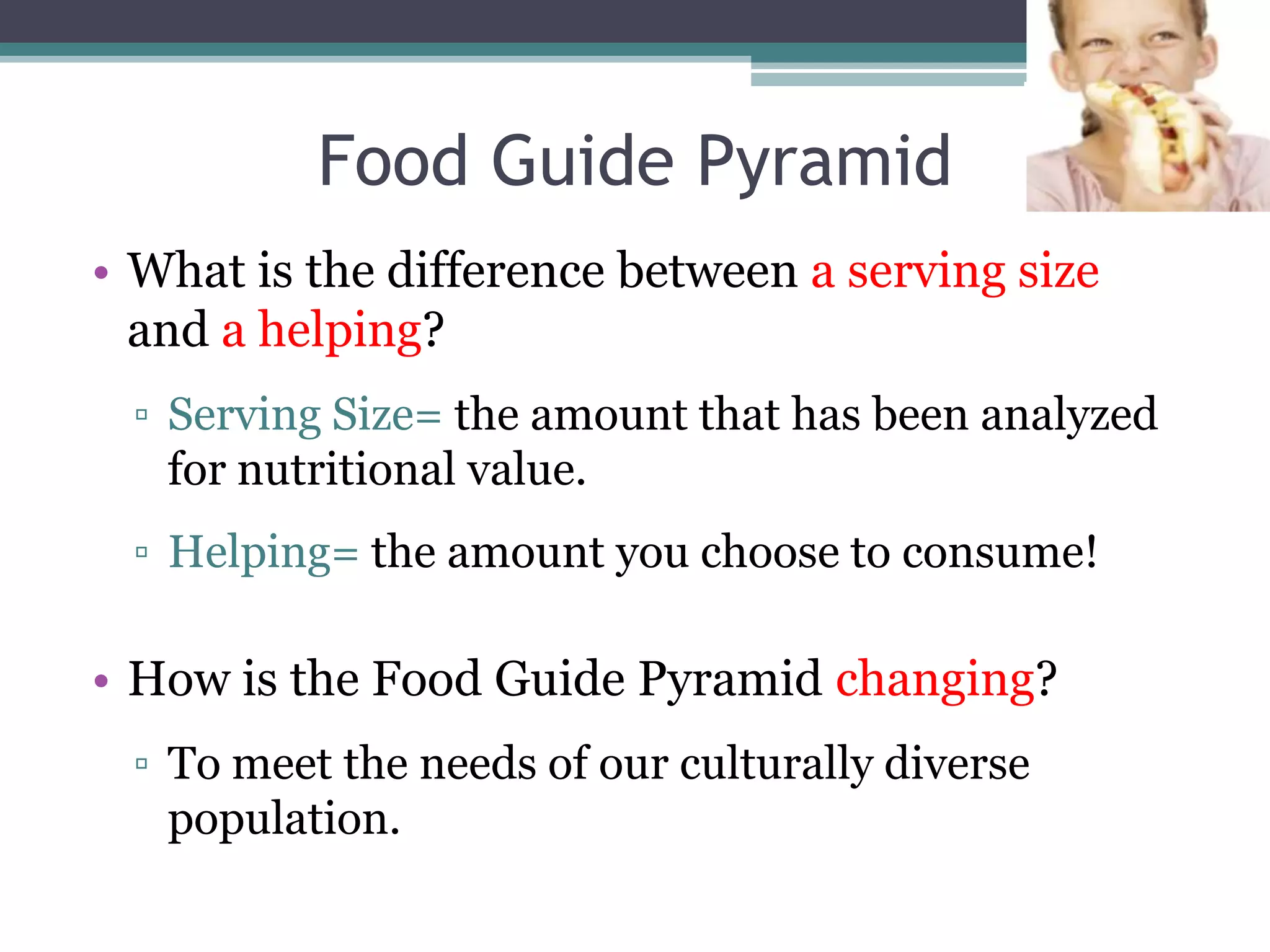
• What is the difference between a serving size
  and a helping?
 ▫ Serving Size= the amount that has been analyzed
   for nutritional value.
 ▫ Helping= the amount you choose to consume!

• How is the Food Guide Pyramid changing?
 ▫ To meet the needs of our culturally diverse
   population.
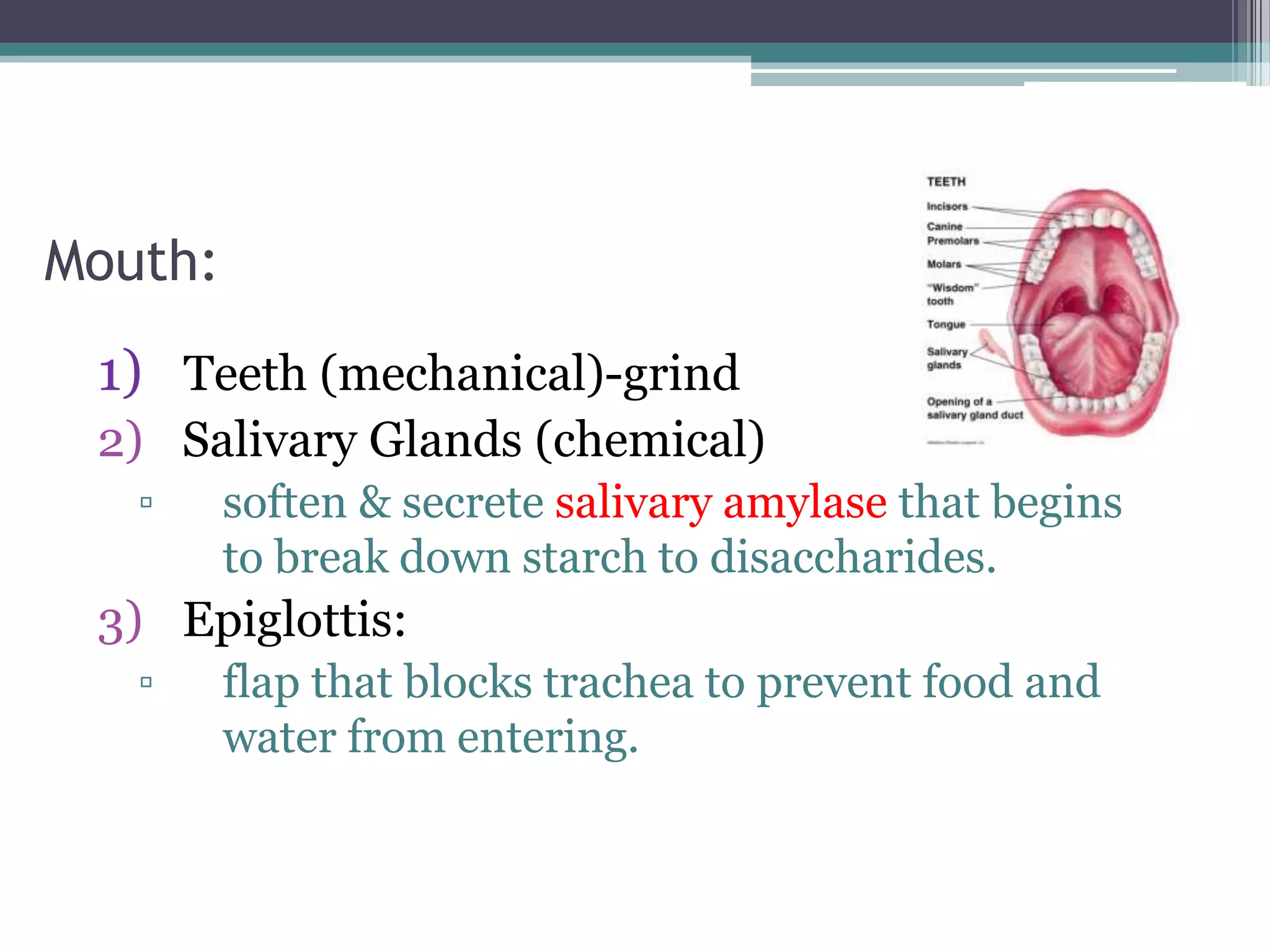
Mouth:
 1) Teeth (mechanical)-grind
 2) Salivary Glands (chemical)
   ▫     soften & secrete salivary amylase that begins
         to break down starch to disaccharides.
 3) Epiglottis:
   ▫     flap that blocks trachea to prevent food and
         water from entering.
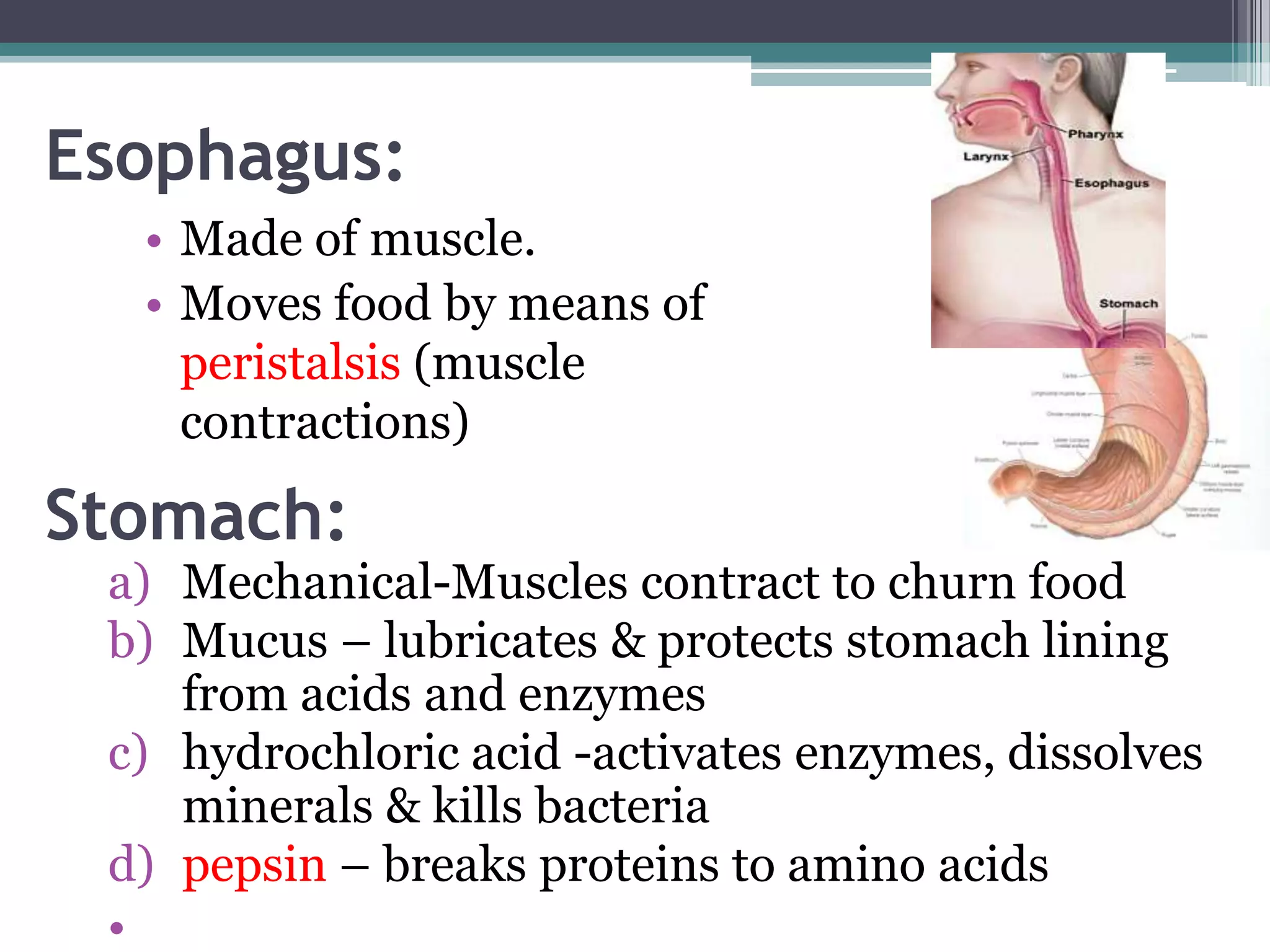
Esophagus:
  • Made of muscle.
  • Moves food by means of
    peristalsis (muscle
    contractions)

Stomach:
 a) Mechanical-Muscles contract to churn food
 b) Mucus – lubricates & protects stomach lining
    from acids and enzymes
 c) hydrochloric acid -activates enzymes, dissolves
    minerals & kills bacteria
 d) pepsin – breaks proteins to amino acids
 •
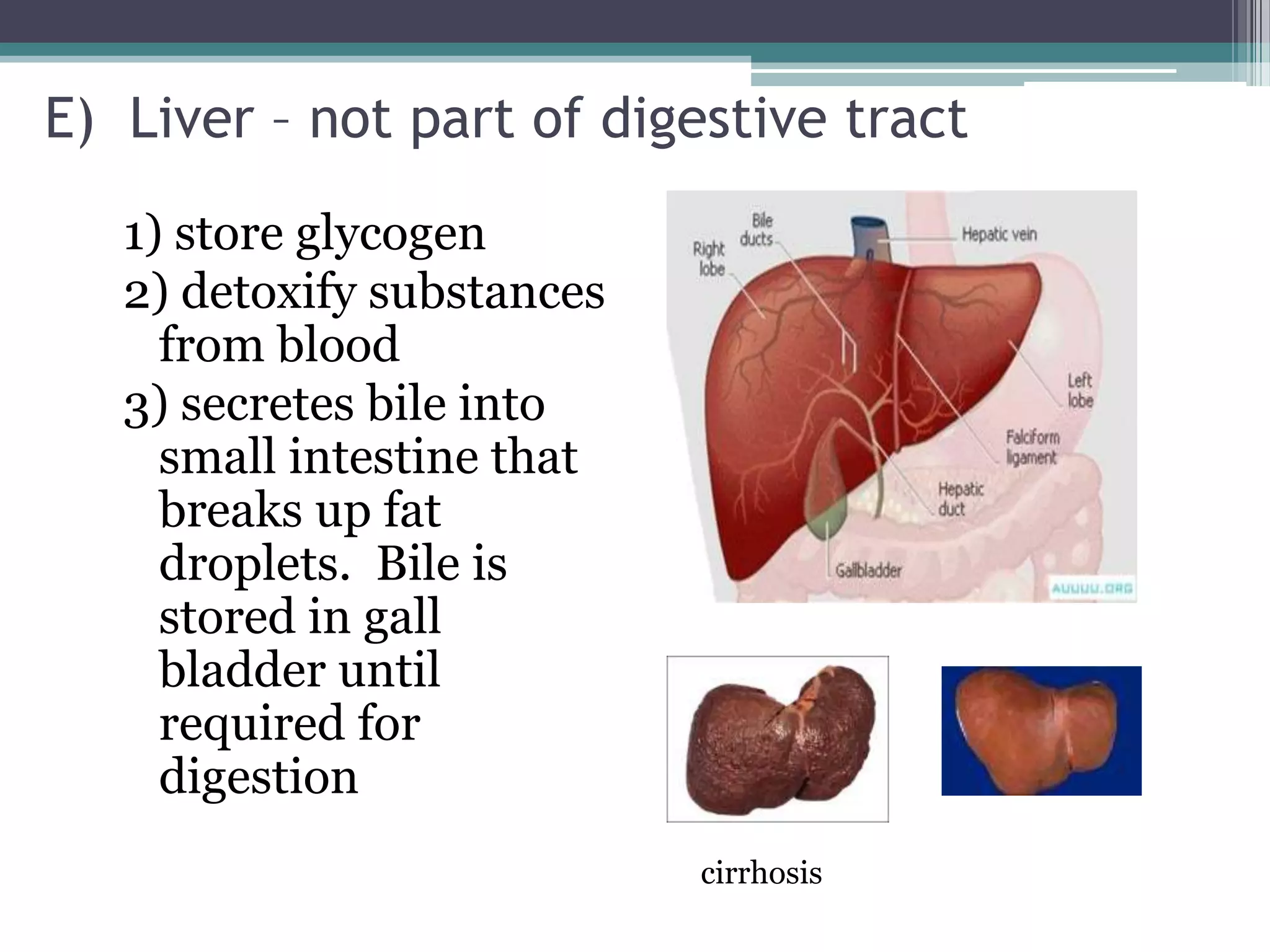
E) Liver – not part of digestive tract
   1) store glycogen
   2) detoxify substances
     from blood
   3) secretes bile into
     small intestine that
     breaks up fat
     droplets. Bile is
     stored in gall
     bladder until
     required for
     digestion
                            cirrhosis
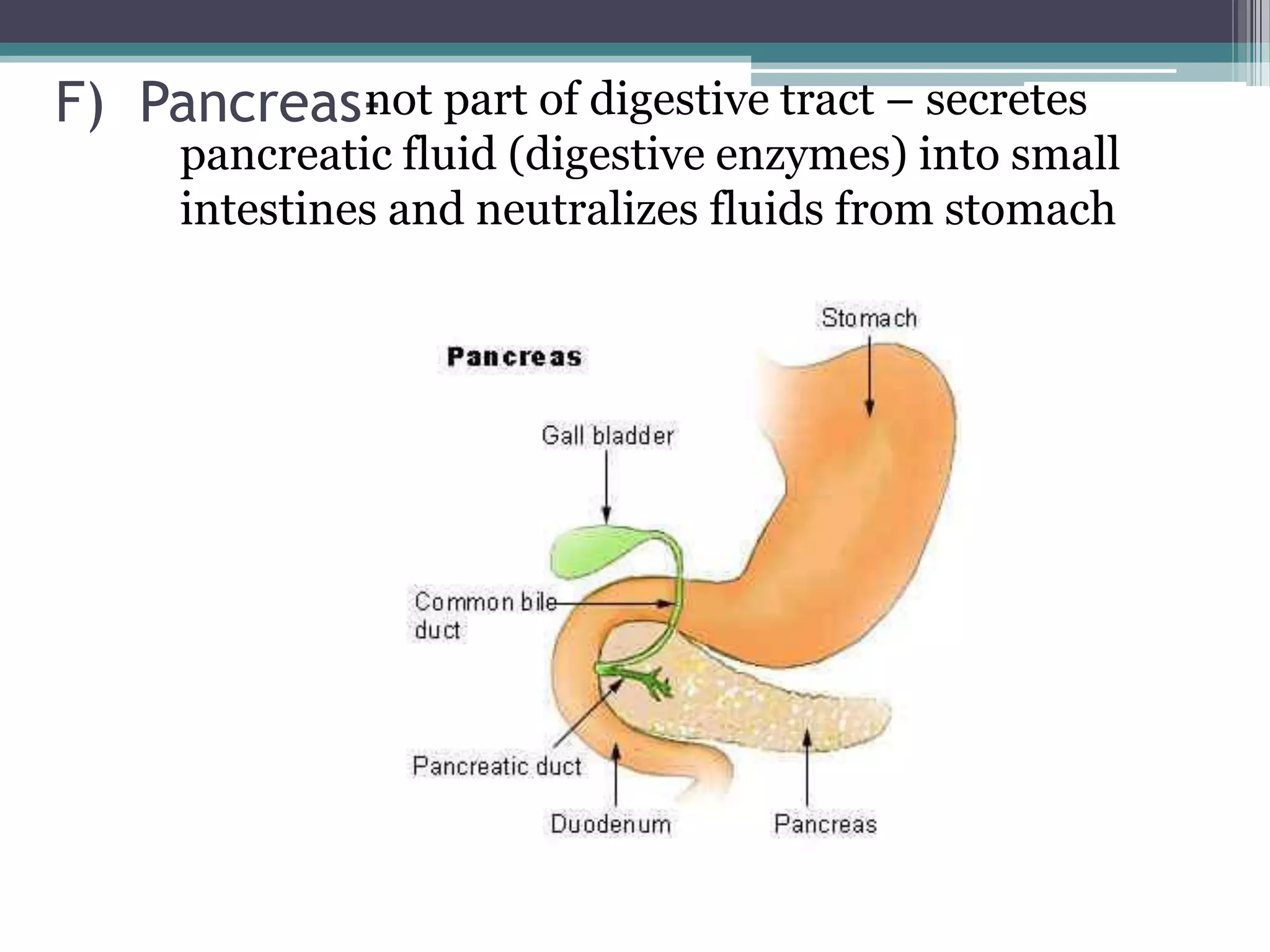
F) Pancreas- ot part of digestive tract – secretes
           n
      pancreatic fluid (digestive enzymes) into small
      intestines and neutralizes fluids from stomach
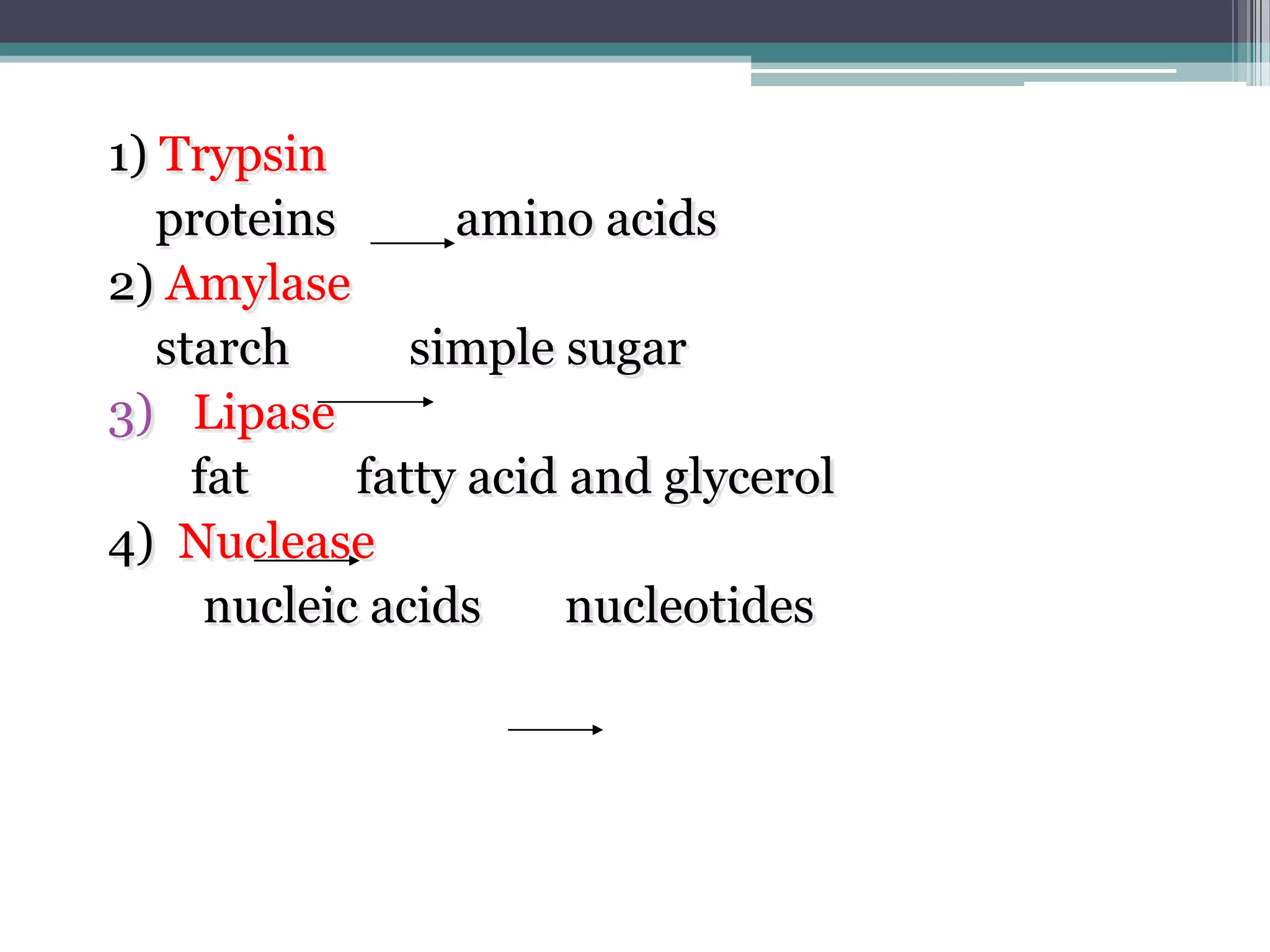
1) Trypsin
   proteins       amino acids
2) Amylase
   starch       simple sugar
3) Lipase
     fat     fatty acid and glycerol
4) Nuclease
      nucleic acids     nucleotides
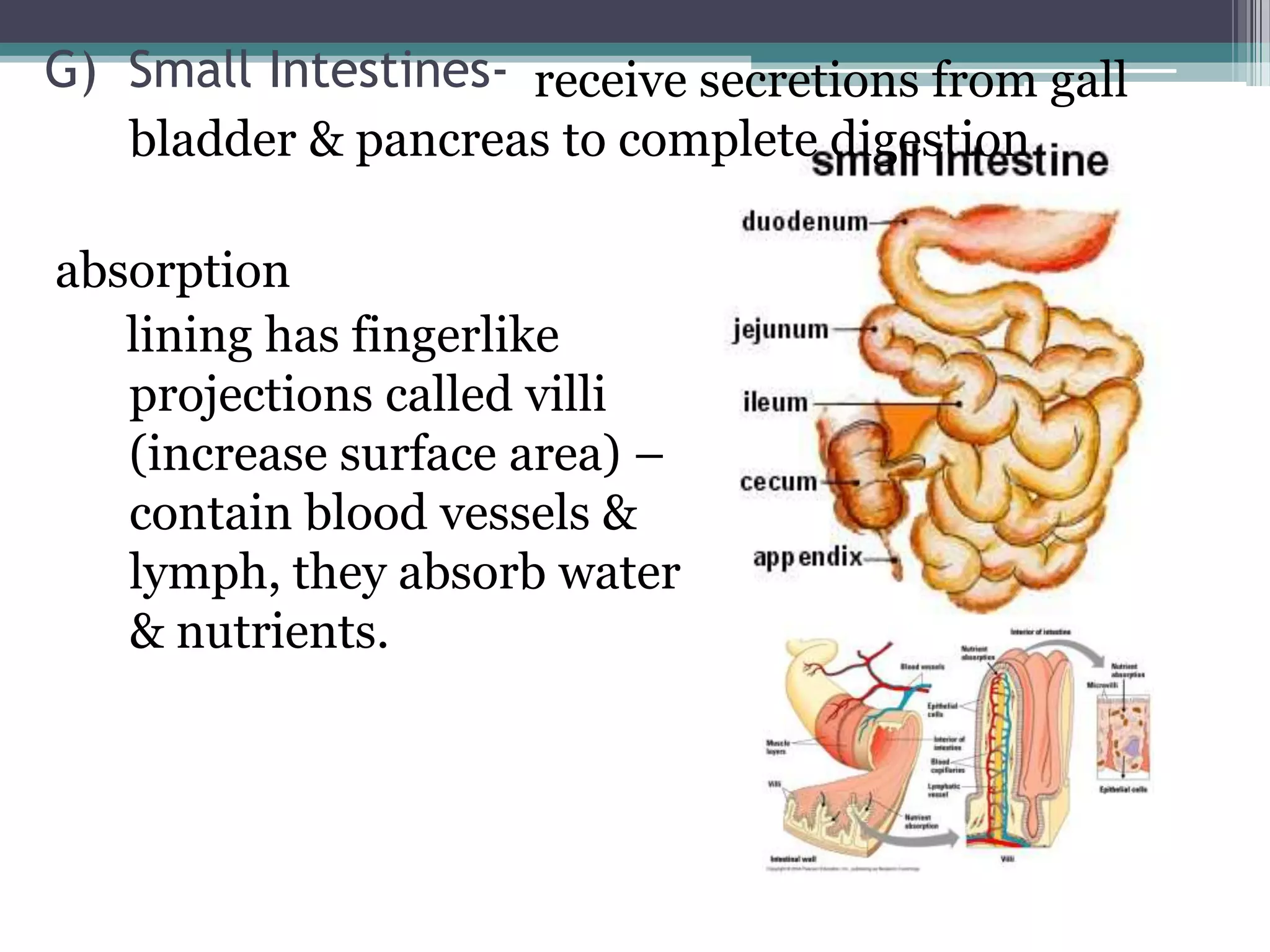
G) Small Intestines- receive secretions from gall
   bladder & pancreas to complete digestion

absorption
   lining has fingerlike
   projections called villi
   (increase surface area) –
   contain blood vessels &
   lymph, they absorb water
   & nutrients.
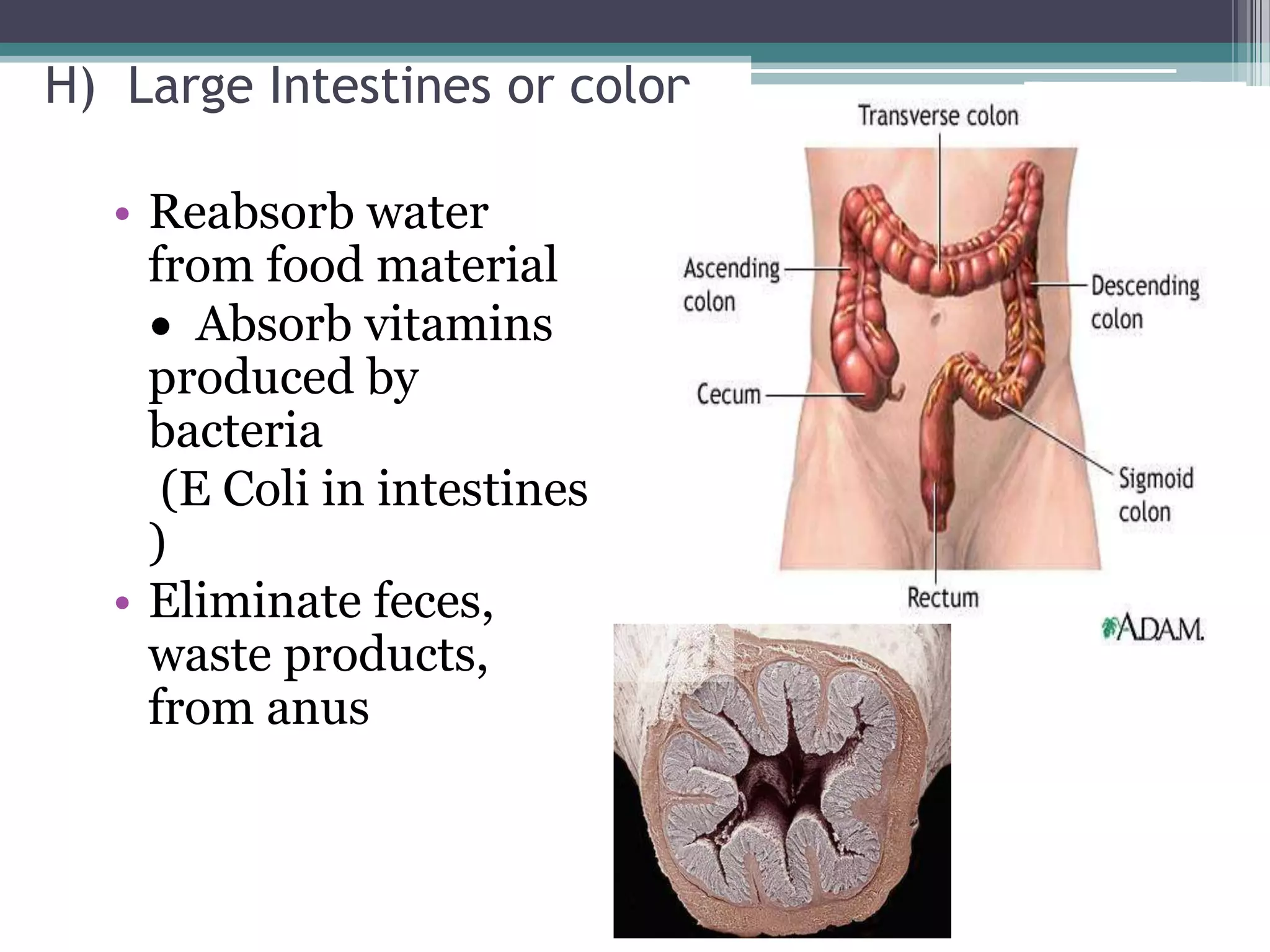
H) Large Intestines or colon-

  • Reabsorb water
    from food material
       Absorb vitamins
    produced by
    bacteria
     (E Coli in intestines
    )
  • Eliminate feces,
    waste products,
    from anus
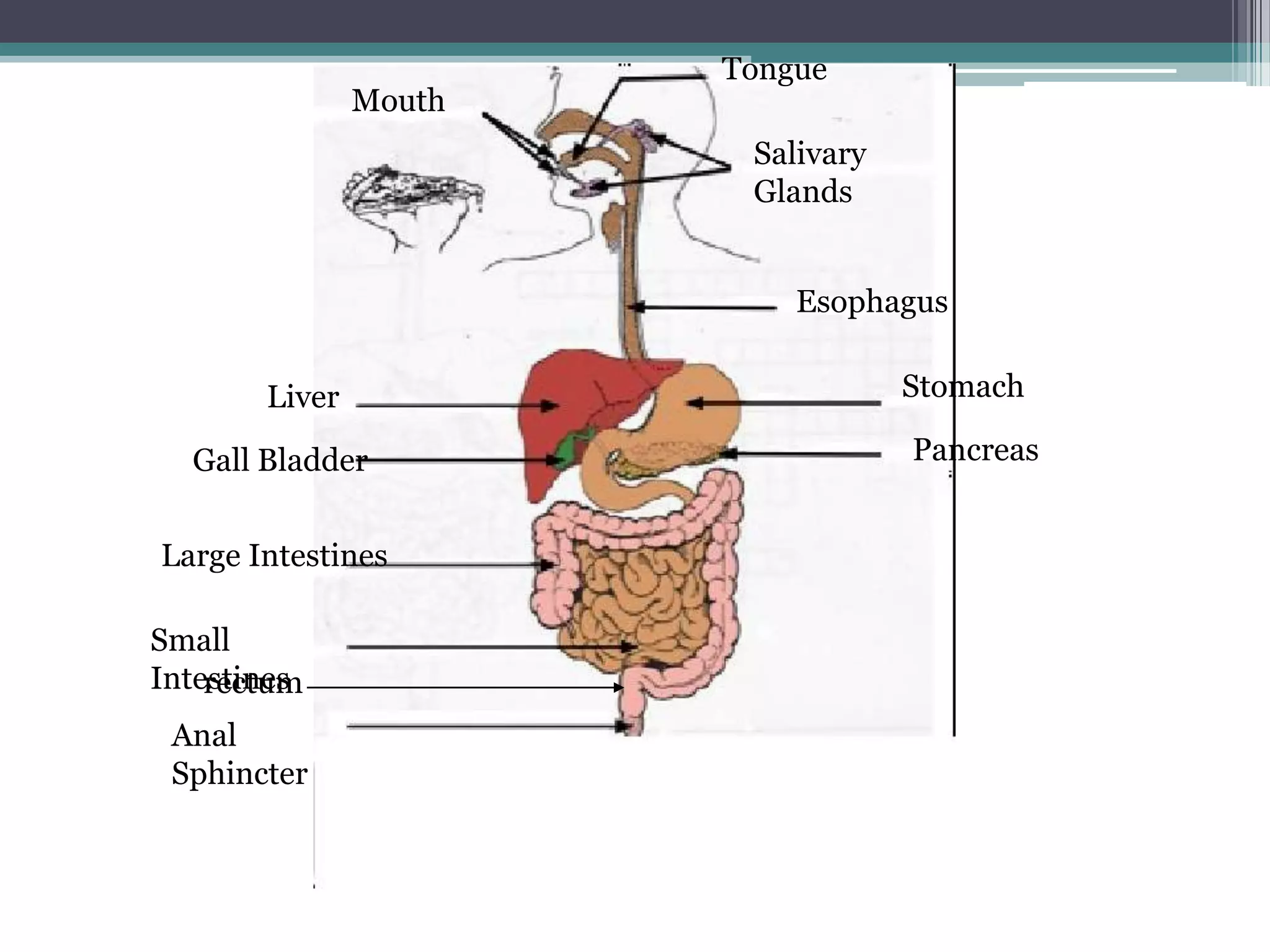
Tongue
               Mouth
                        Salivary
                        Glands


                           Esophagus


       Liver                       Stomach

  Gall Bladder                     Pancreas


Large Intestines

Small
Intestines
    rectum
 Anal
 Sphincter
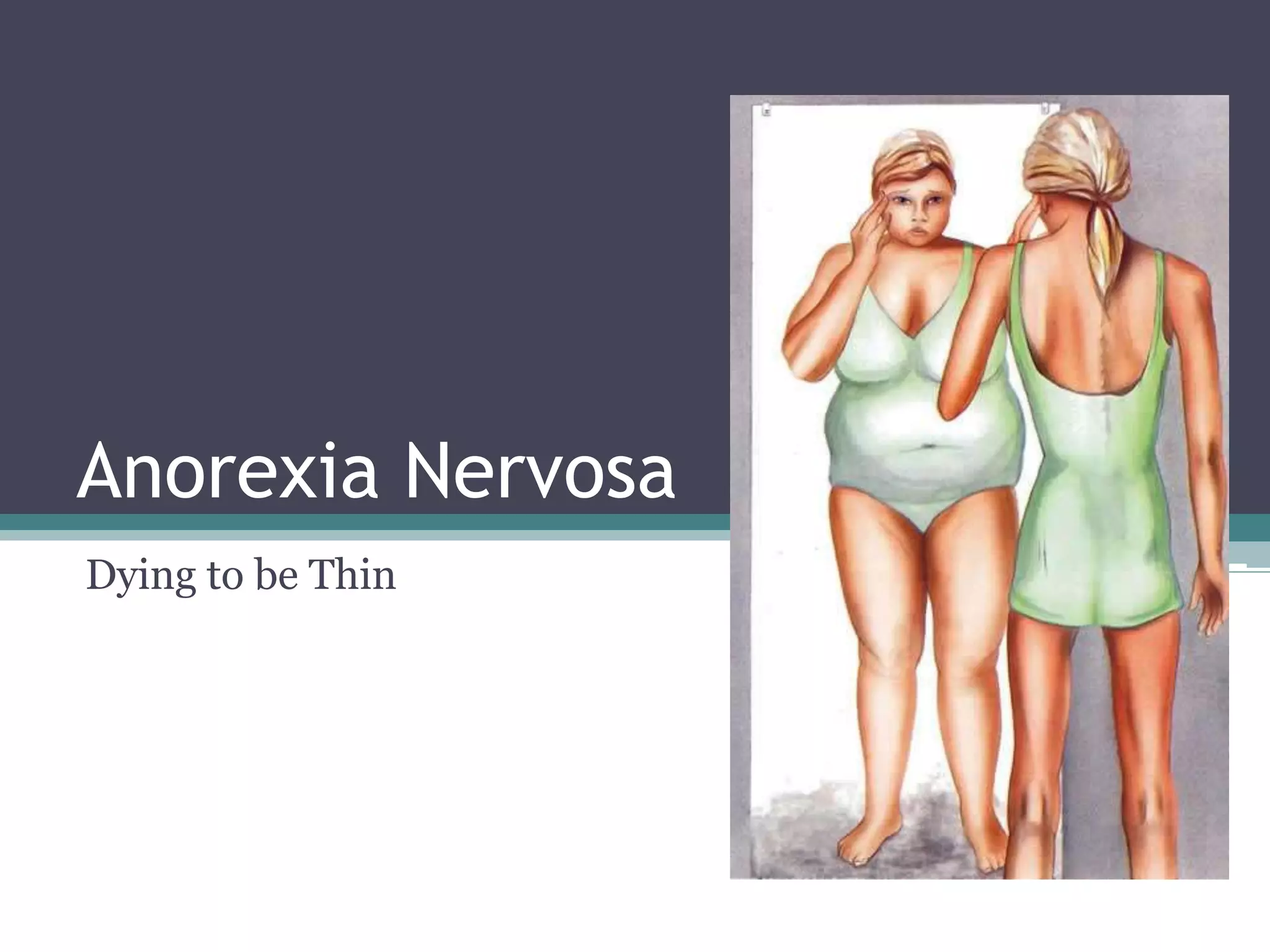
Anorexia Nervosa
Dying to be Thin
Anorexia Nervosa
Affects ___________ people (mostly teenage girls) in the United
           1 million
States.

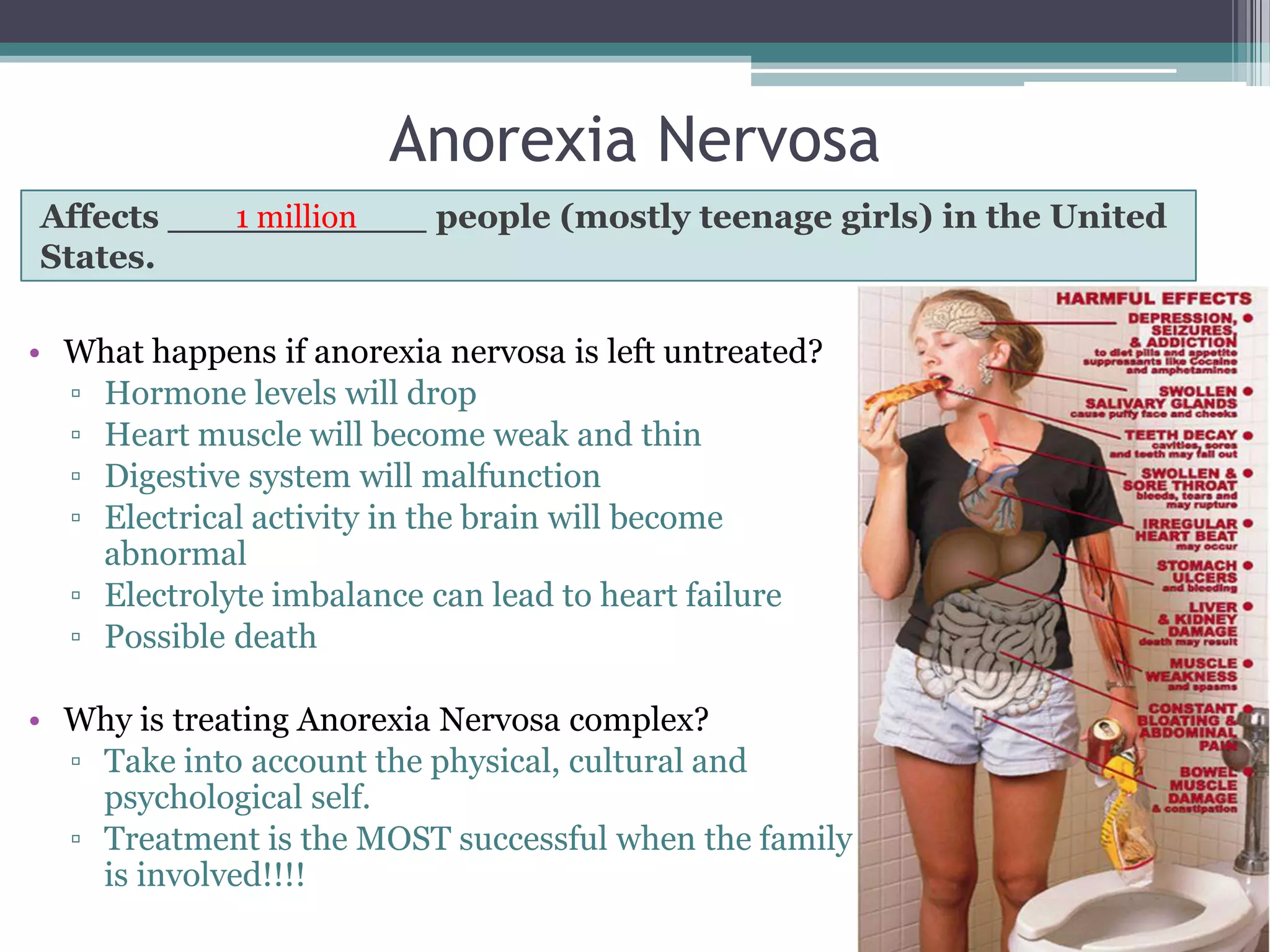
• What happens if anorexia nervosa is left untreated?
  ▫ Hormone levels will drop
  ▫ Heart muscle will become weak and thin
  ▫ Digestive system will malfunction
  ▫ Electrical activity in the brain will become
    abnormal
  ▫ Electrolyte imbalance can lead to heart failure
  ▫ Possible death

• Why is treating Anorexia Nervosa complex?
  ▫ Take into account the physical, cultural and
    psychological self.
  ▫ Treatment is the MOST successful when the family
    is involved!!!!

Chapter 7 notes

  • 1.
    Chapter 7: Performanceand Fitness Human Performance: A Function of Fitness
  • 2.
    Human Performance: AFunction of Fitness •What 2 RESOURCES does your body require to carry out daily activities? ▫ Matter: Example:  all physical objects consist of matter.  includes atoms and other particles which have mass.  matter is organized into specific structures.
  • 3.
    Human Performance: AFunction of Fitness ▫ Energy:  Energy is needed to organize matter and perform work.  All cells in your body require energy.  Ex. It takes energy to build/use muscle or grow flower petals.
  • 4.
    Human Performance: AFunction of Fitness If all people require energy and matter, why are some people more athletic than others?  Matter in the athletic individual is organized more effectively.  Ex. Their muscles are larger and stronger  carries out tasks better!  Energy is supplied more effectively in the athlete…they may pump blood and exchange nutrients in their capillaries more efficiently.
  • 5.
    Food: Our Body'sSource of Energy and Structural Material
  • 6.
    Food: Our Body'sSource of Energy and Structural Material • What is food? ▫ Any substance that your body can use is a raw material to sustain its growth, repair and provide energy. WATER ▫ Food consists mostly of ________.  Each day you consume on average _______ of water. 2 Liters ▫ What major classes of nutrients is food made up of?  Carbohydrates  Proteins  Fats
  • 7.
    Food: Our Body'sSource of Energy and Structural Material • What is the job of YOUR digestive system? ▫ To break down large nutrient molecules into small molecules. ▫ The molecules must be small enough to pass through your small intestines into the blood.
  • 8.
    Food: Our Body'sSource of Energy and Structural Material • What are each of the following molecules broken into? ▫ Carbohydrates Simple Sugars ▫ Proteins  Amino Acids ▫ Fats  Glycerol and Fatty Acids
  • 9.
    Food: Our Body'sSource of Energy and Structural Material • Why does our body need carbohydrates? ▫ Provides readily available energy. ▫ Found in bread, cereal, pasta • Why does our body need proteins? ▫ Repairs and maintains body tissue. ▫ Found in meat, milk, eggs, soy, grains, nuts, seeds, legumes. • Why does our body need fats? ▫ Make hormones, cell membranes and provide energy. ▫ Found in meat, cheese, butter, oils, sweets
  • 10.
    Food: Our Body'sSource of Energy and Structural Material • What are the two other components of nutrients that make up food? ▫ Vitamins regulate cell activities. ▫ Essential Elements  help maintain homeostasis.
  • 11.
    Pioneers: The Changingface of the Food Guide Pyramid
  • 12.
    Food Guide Pyramid •What is the difference between a serving size and a helping? ▫ Serving Size= the amount that has been analyzed for nutritional value. ▫ Helping= the amount you choose to consume! • How is the Food Guide Pyramid changing? ▫ To meet the needs of our culturally diverse population.
  • 14.
    Mouth: 1) Teeth(mechanical)-grind 2) Salivary Glands (chemical) ▫ soften & secrete salivary amylase that begins to break down starch to disaccharides. 3) Epiglottis: ▫ flap that blocks trachea to prevent food and water from entering.
  • 15.
    Esophagus: •Made of muscle. • Moves food by means of peristalsis (muscle contractions) Stomach: a) Mechanical-Muscles contract to churn food b) Mucus – lubricates & protects stomach lining from acids and enzymes c) hydrochloric acid -activates enzymes, dissolves minerals & kills bacteria d) pepsin – breaks proteins to amino acids •
  • 16.
    E) Liver –not part of digestive tract 1) store glycogen 2) detoxify substances from blood 3) secretes bile into small intestine that breaks up fat droplets. Bile is stored in gall bladder until required for digestion cirrhosis
  • 17.
    F) Pancreas- otpart of digestive tract – secretes n pancreatic fluid (digestive enzymes) into small intestines and neutralizes fluids from stomach
  • 18.
    1) Trypsin proteins amino acids 2) Amylase starch simple sugar 3) Lipase fat fatty acid and glycerol 4) Nuclease nucleic acids nucleotides
  • 19.
    G) Small Intestines-receive secretions from gall bladder & pancreas to complete digestion absorption lining has fingerlike projections called villi (increase surface area) – contain blood vessels & lymph, they absorb water & nutrients.
  • 20.
    H) Large Intestinesor colon- • Reabsorb water from food material Absorb vitamins produced by bacteria (E Coli in intestines ) • Eliminate feces, waste products, from anus
  • 21.
    Tongue Mouth Salivary Glands Esophagus Liver Stomach Gall Bladder Pancreas Large Intestines Small Intestines rectum Anal Sphincter
  • 22.
  • 23.
    Anorexia Nervosa Affects ___________people (mostly teenage girls) in the United 1 million States. • What happens if anorexia nervosa is left untreated? ▫ Hormone levels will drop ▫ Heart muscle will become weak and thin ▫ Digestive system will malfunction ▫ Electrical activity in the brain will become abnormal ▫ Electrolyte imbalance can lead to heart failure ▫ Possible death • Why is treating Anorexia Nervosa complex? ▫ Take into account the physical, cultural and psychological self. ▫ Treatment is the MOST successful when the family is involved!!!!