PRODUCTION
THEORY
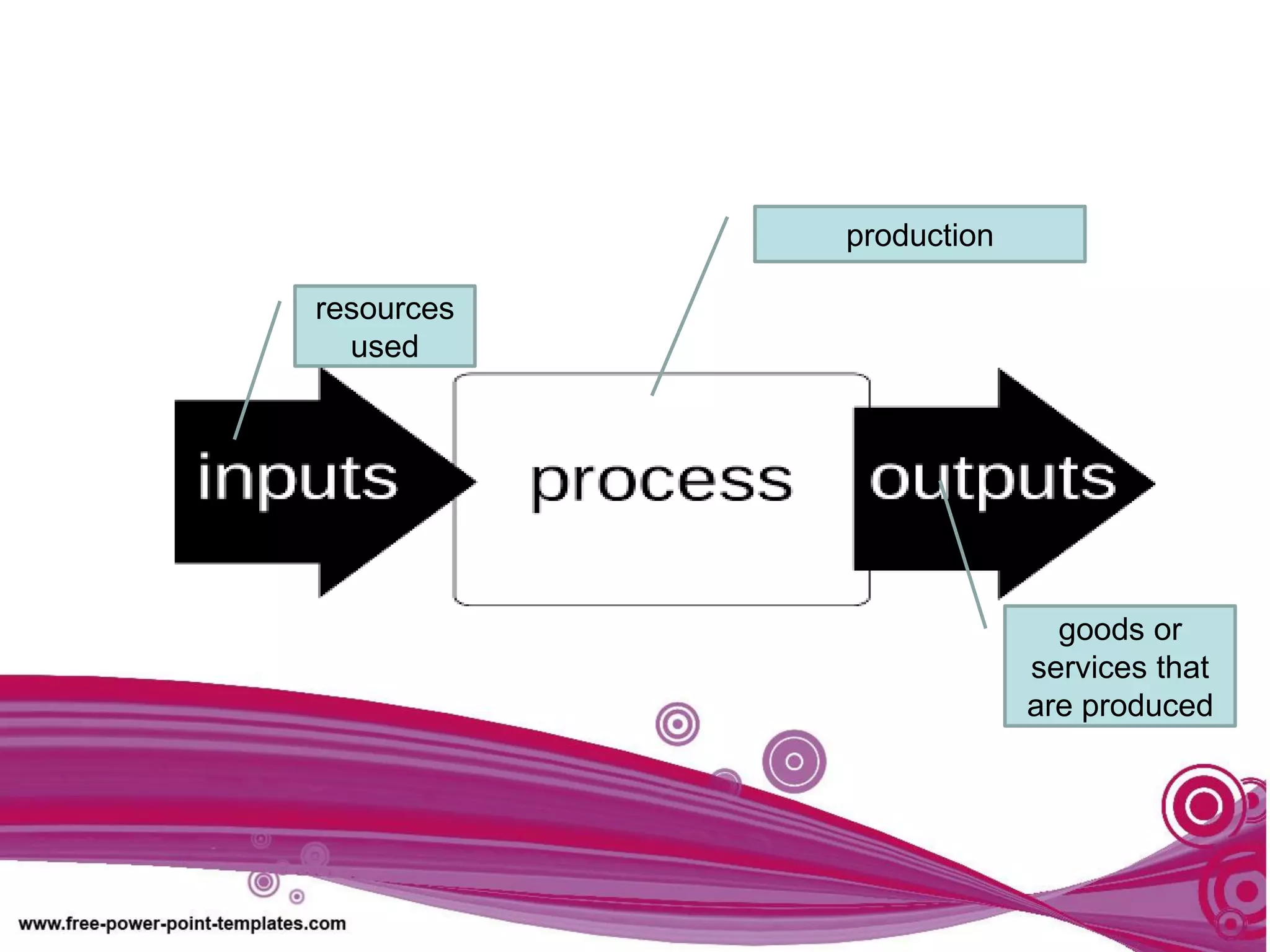
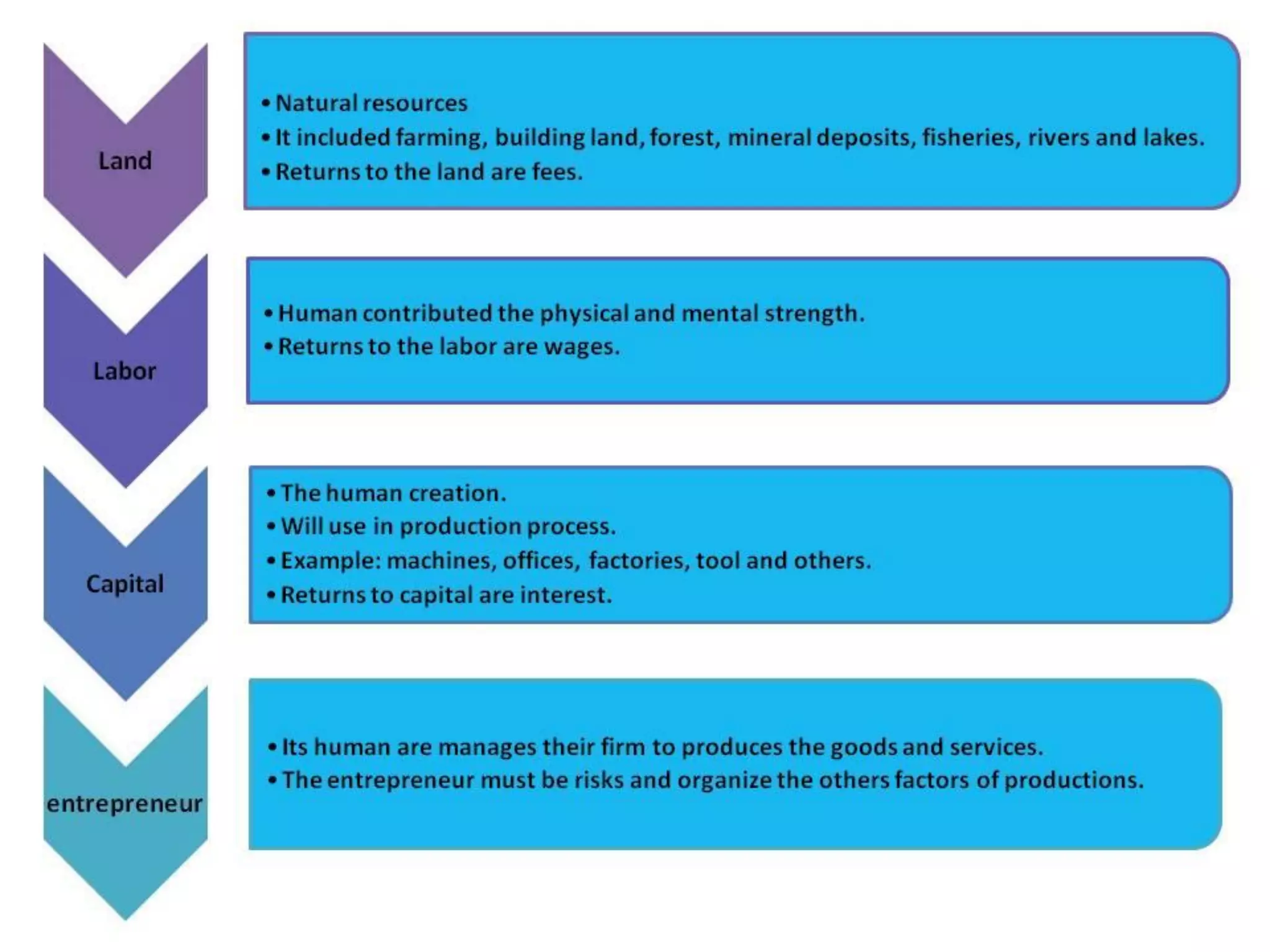
production
resources
used
goods or
services that
are produced
Factor of Production
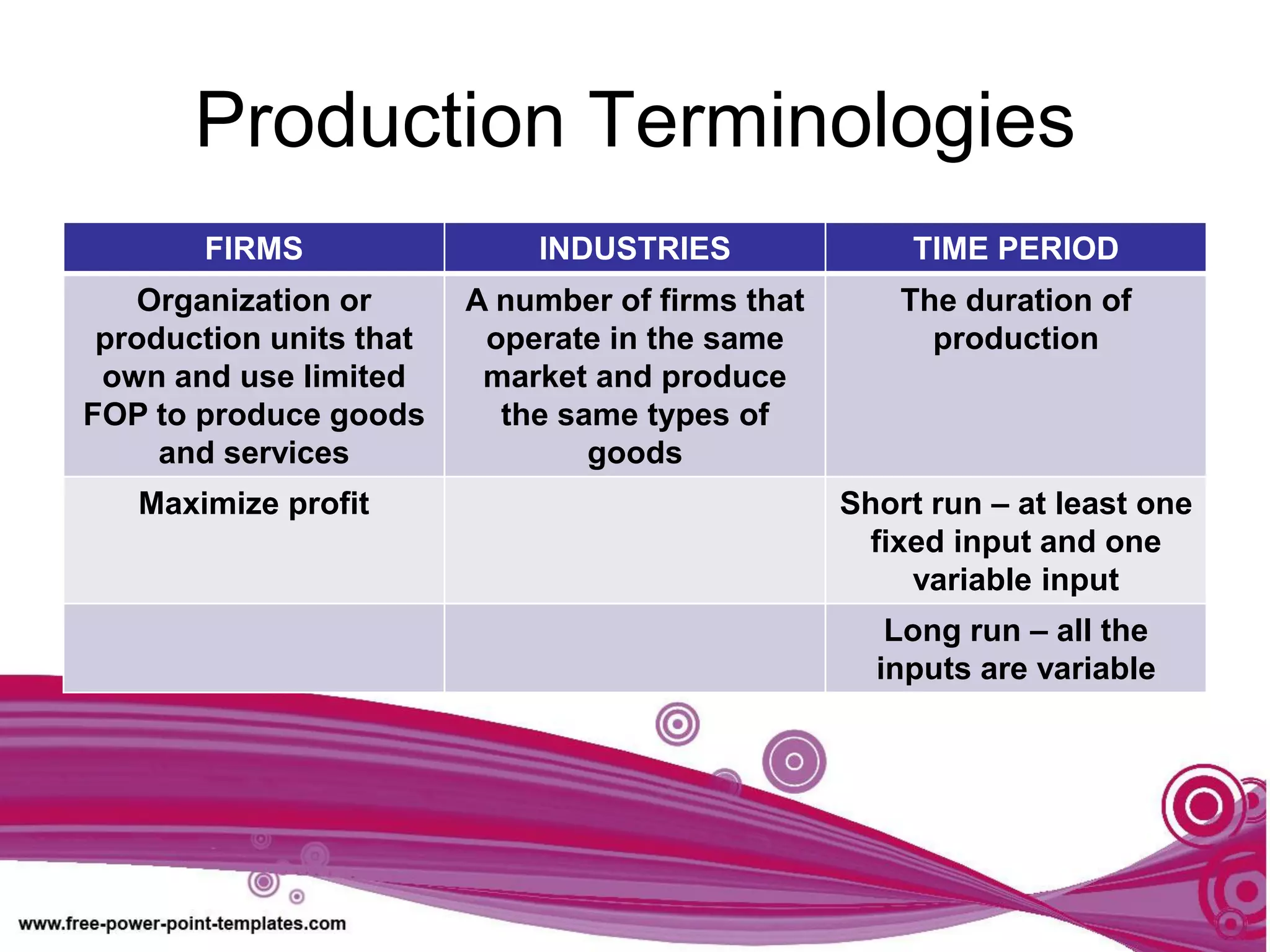
Production Terminologies
FIRMS INDUSTRIES TIME PERIOD
Organization or
production units that
own and use limited
FOP to produce goods
and services
A number of firms that
operate in the same
market and produce
the same types of
goods
The duration of
production
Maximize profit Short run – at least one
fixed input and one
variable input
Long run – all the
inputs are variable
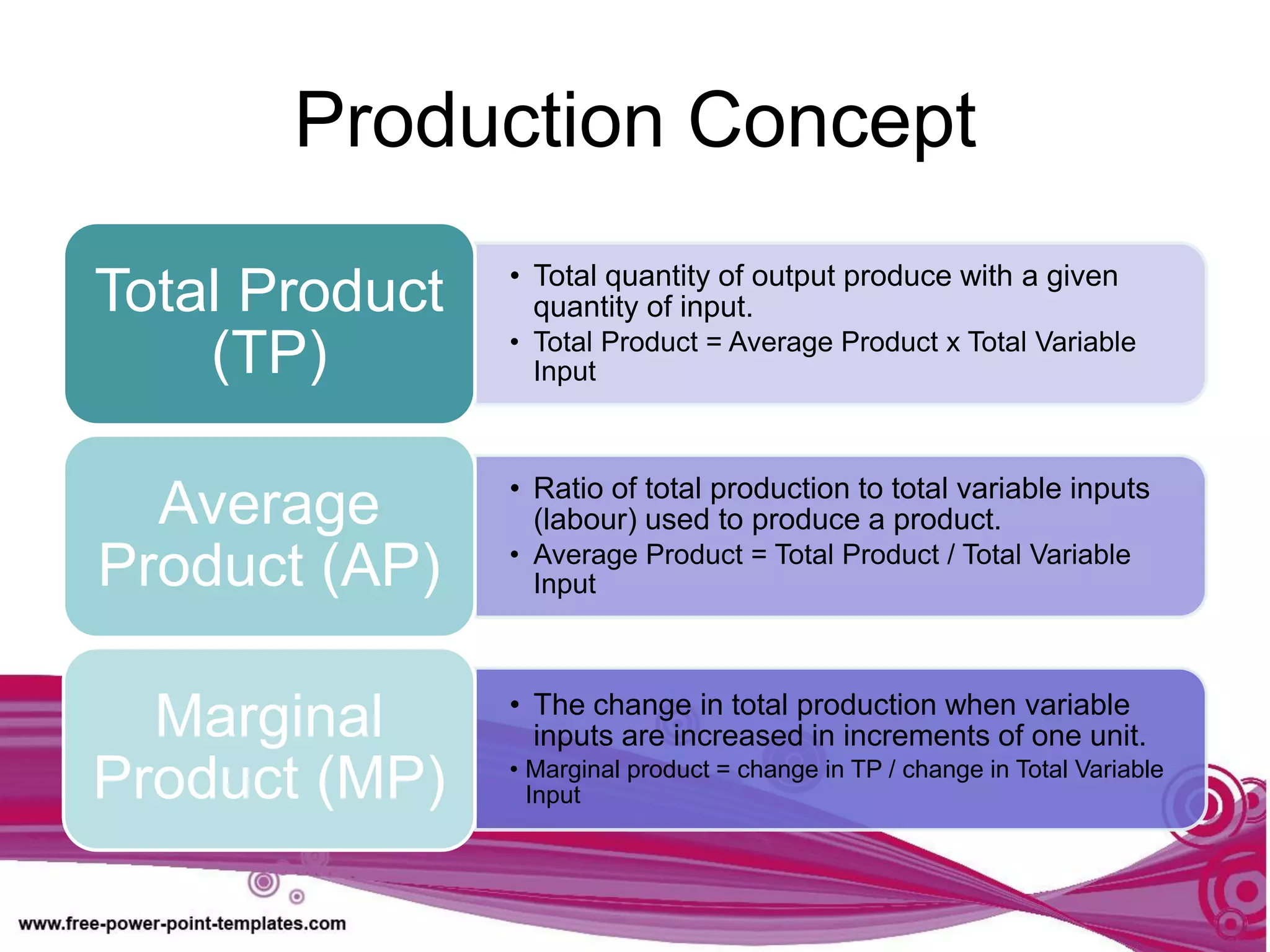
Production Concept
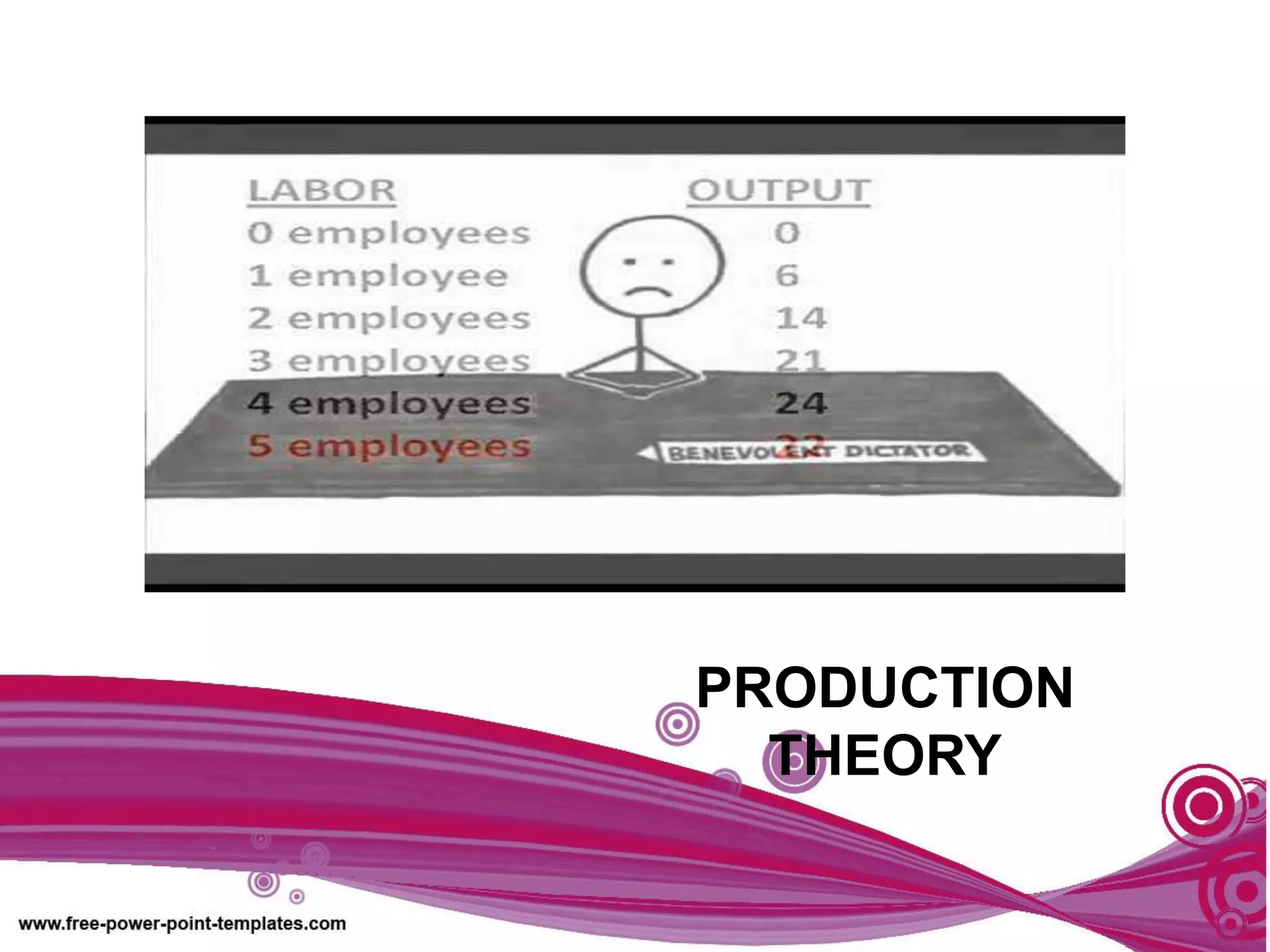
• Total quantity of output produce with a given
quantity of input.
• Total Product = Average Product x Total Variable
Input
Total Product
(TP)
• Ratio of total production to total variable inputs
(labour) used to produce a product.
• Average Product = Total Product / Total Variable
Input
Average
Product (AP)
• The change in total production when variable
inputs are increased in increments of one unit.
• Marginal product = change in TP / change in Total Variable
Input
Marginal
Product (MP)
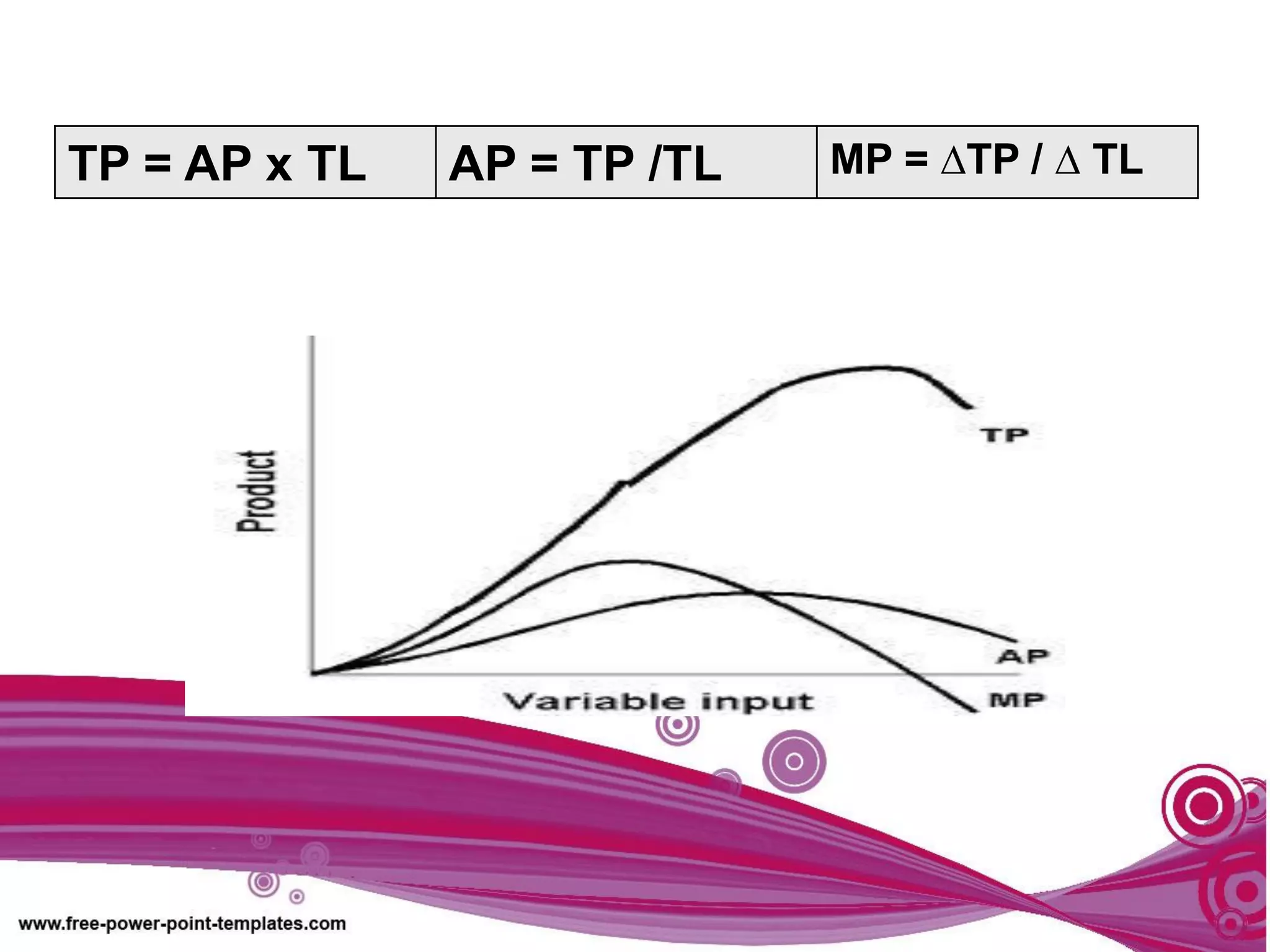
TP = AP x TL AP = TP /TL MP = ∆TP / ∆ TL
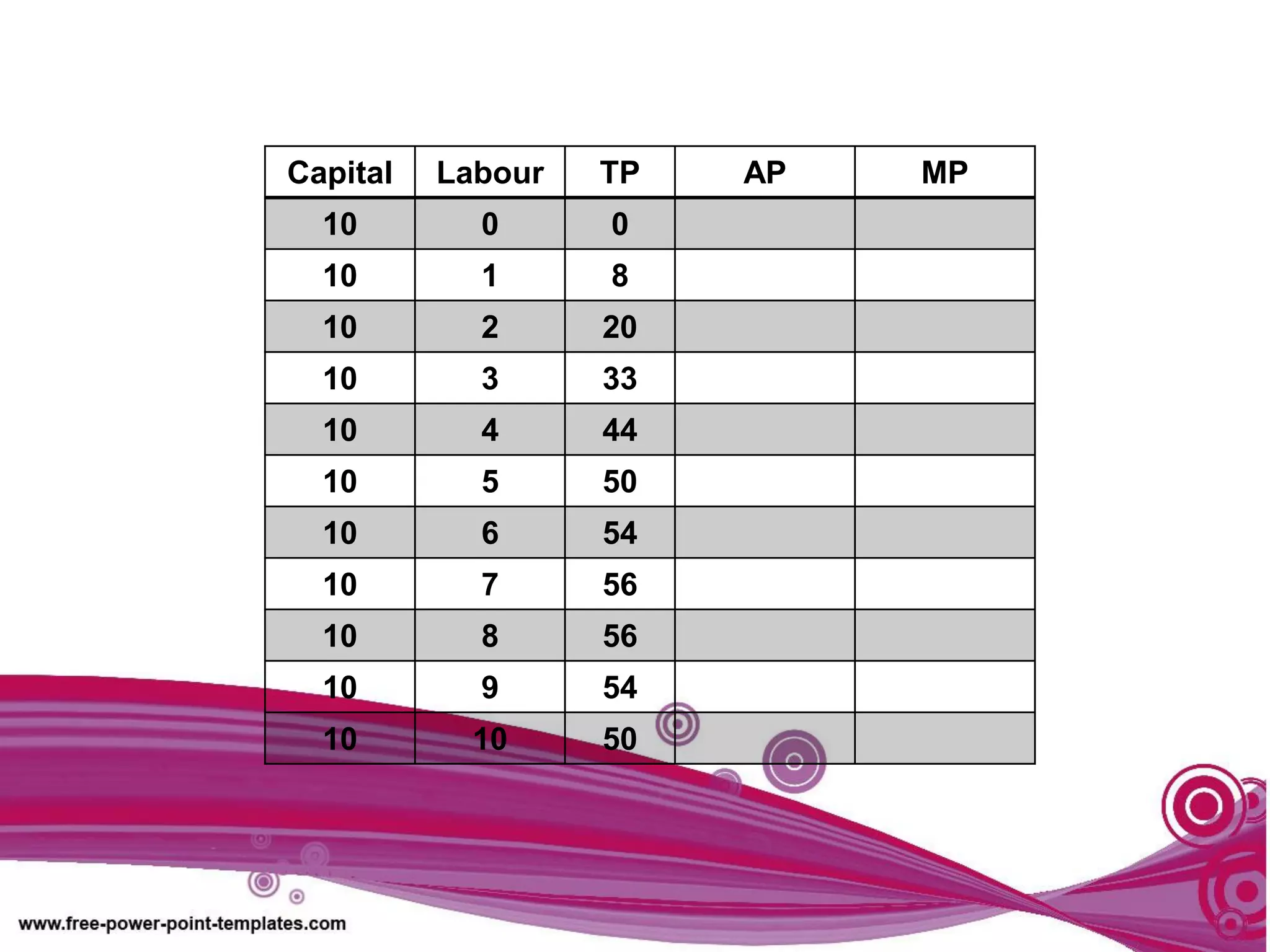
Capital Labour TP AP MP
10 0 0
10 1 8
10 2 20
10 3 33
10 4 44
10 5 50
10 6 54
10 7 56
10 8 56
10 9 54
10 10 50
Fill in the blank table and plot TP, AP
and MP in graph paper
Answer
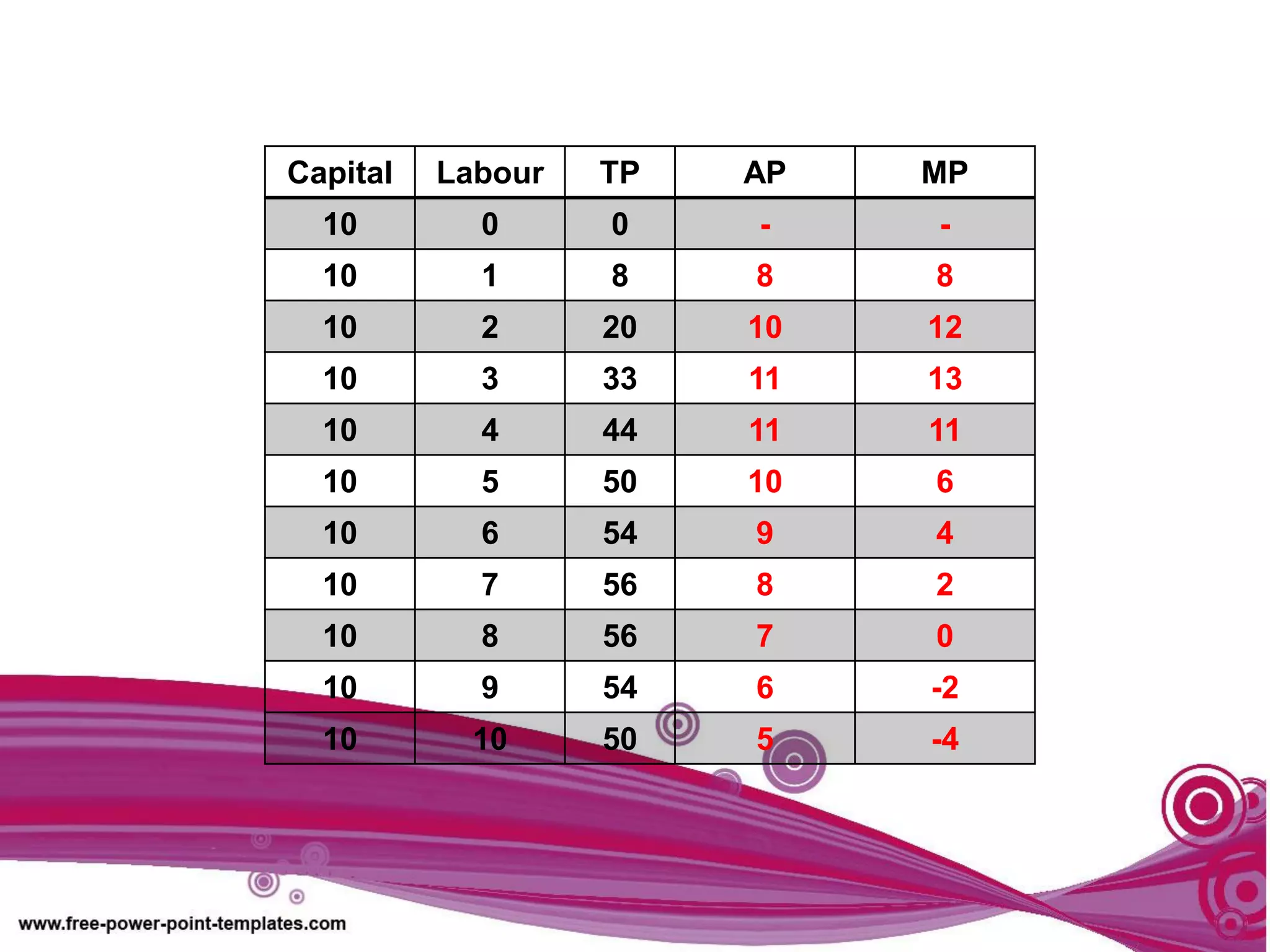
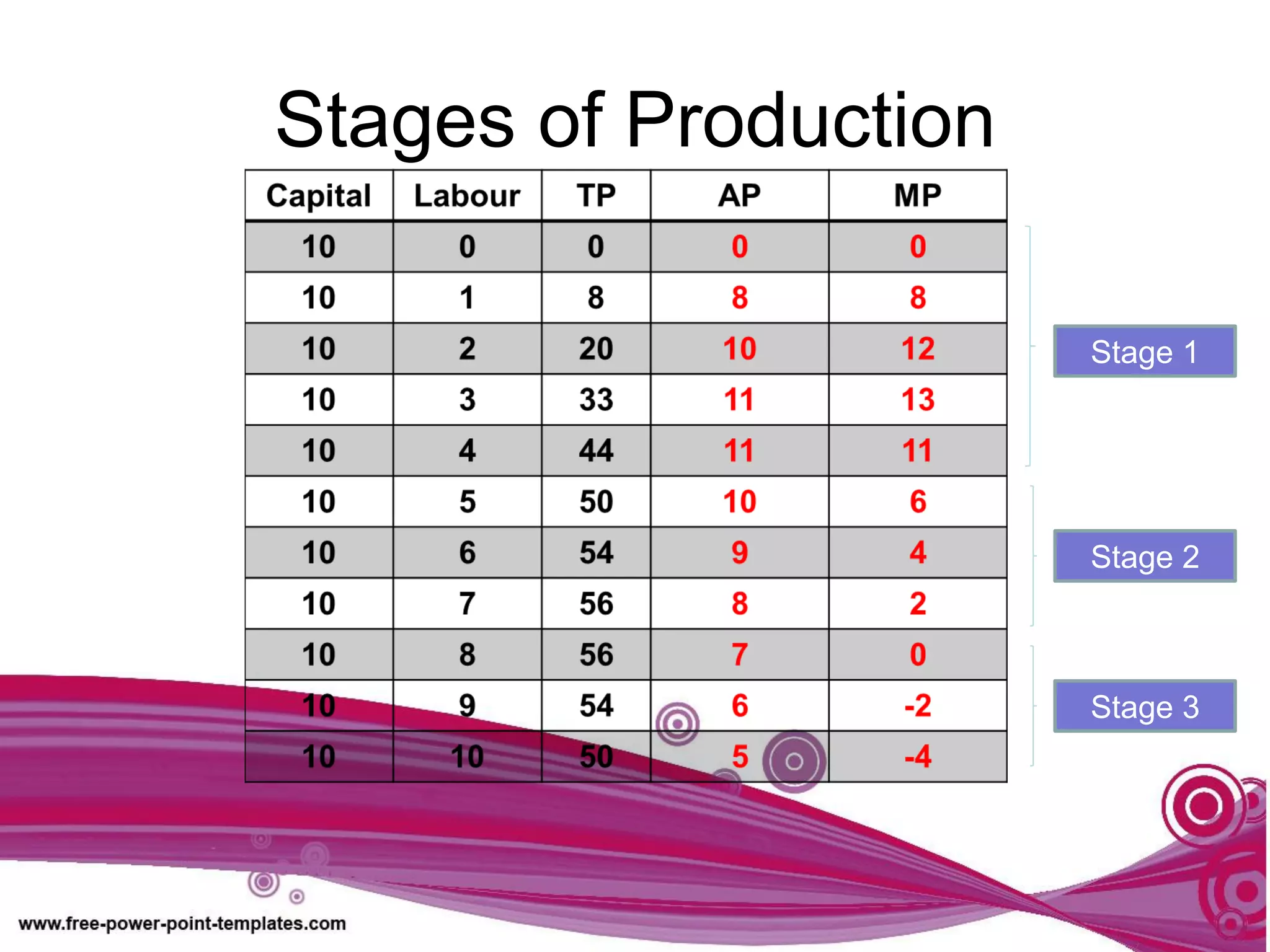
Capital Labour TP AP MP
10 0 0 - -
10 1 8 8 8
10 2 20 10 12
10 3 33 11 13
10 4 44 11 11
10 5 50 10 6
10 6 54 9 4
10 7 56 8 2
10 8 56 7 0
10 9 54 6 -2
10 10 50 5 -4
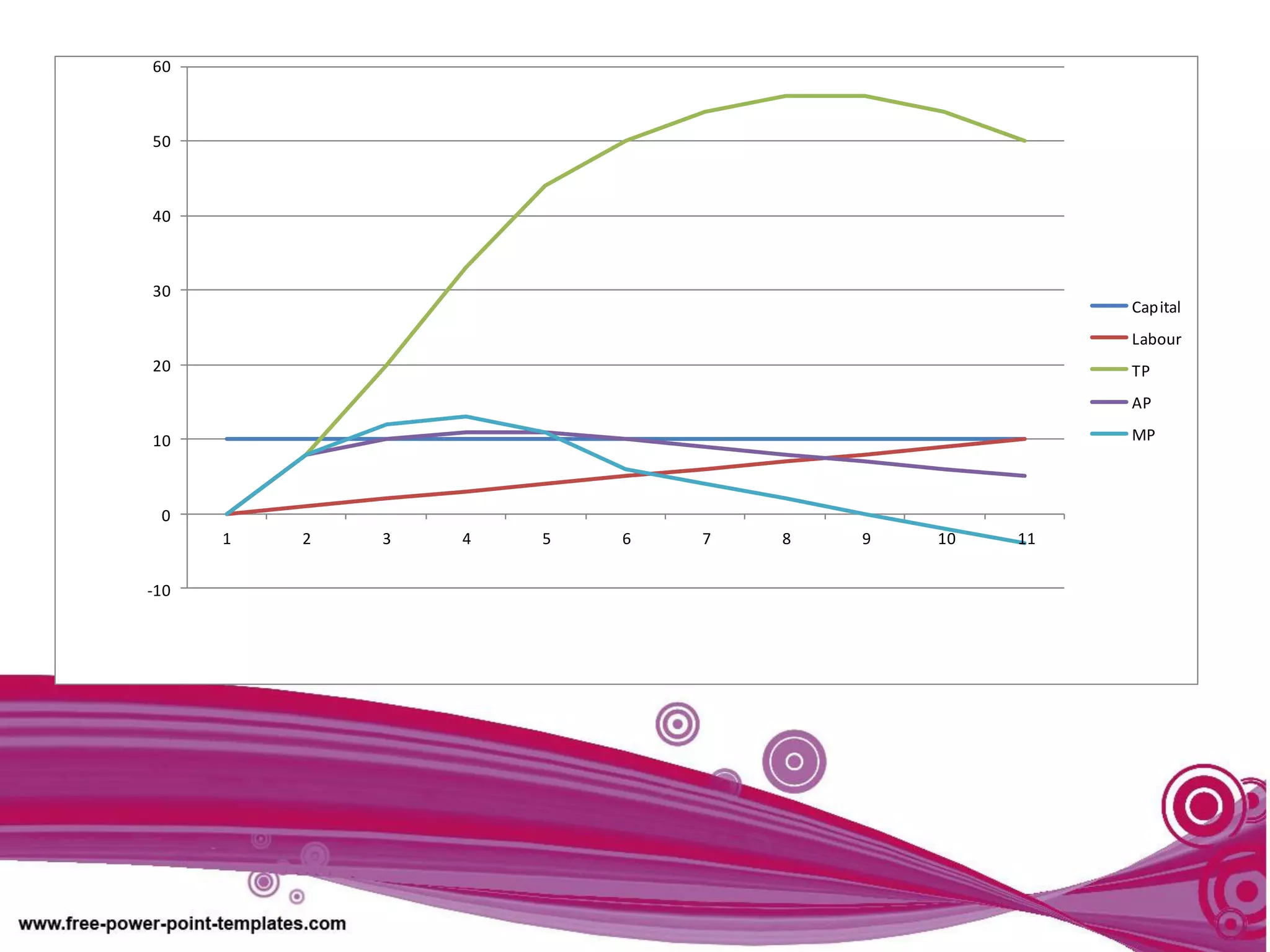
-10
0
10
20
30
40
50
60
1 2 3 4 5 6 7 8 9 10 11
Capital
Labour
TP
AP
MP
Stages of Production
Stage 1
Stage 2
Stage 3
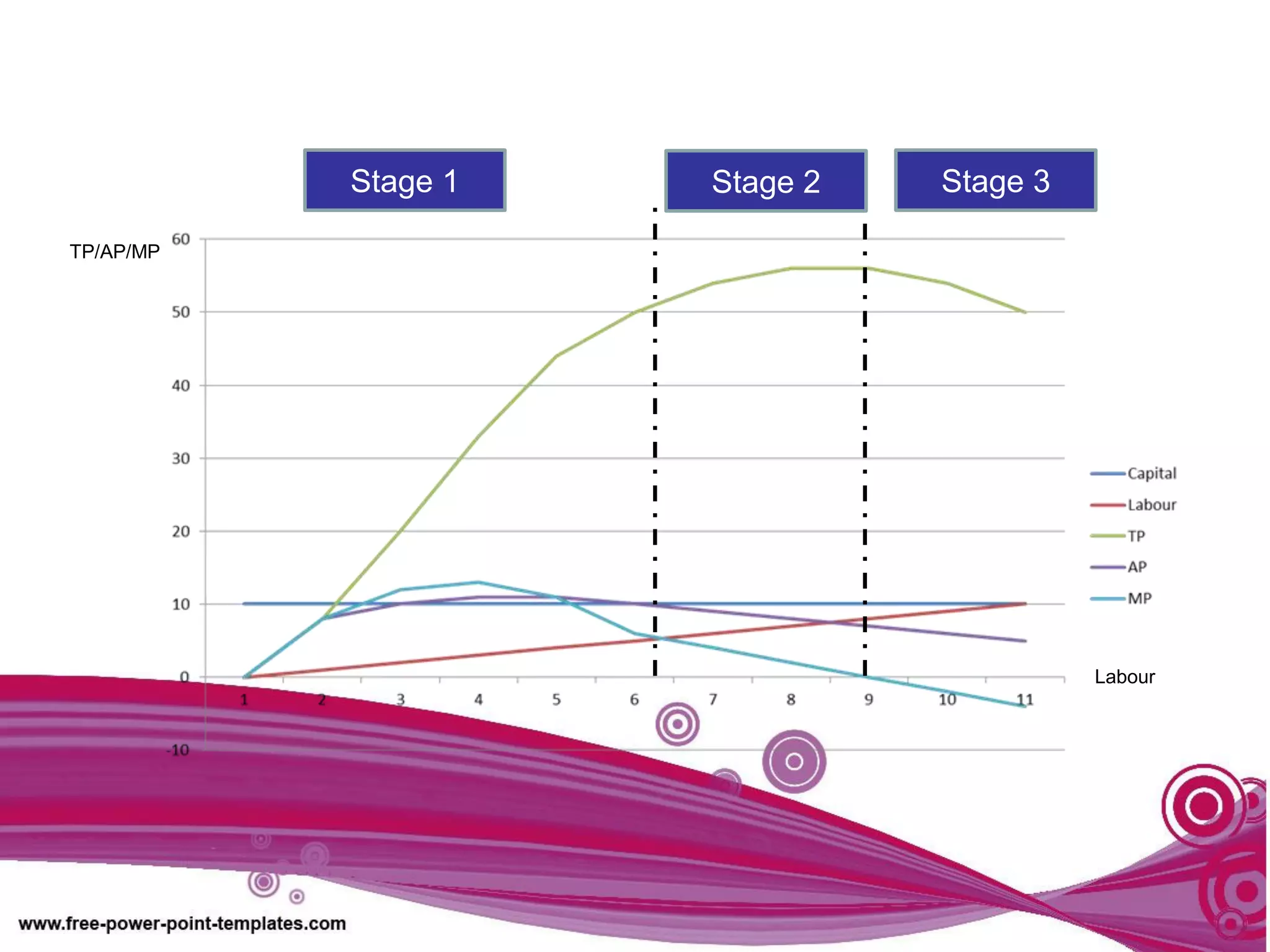
Stage 1 Stage 2 Stage 3
Labour
TP/AP/MP
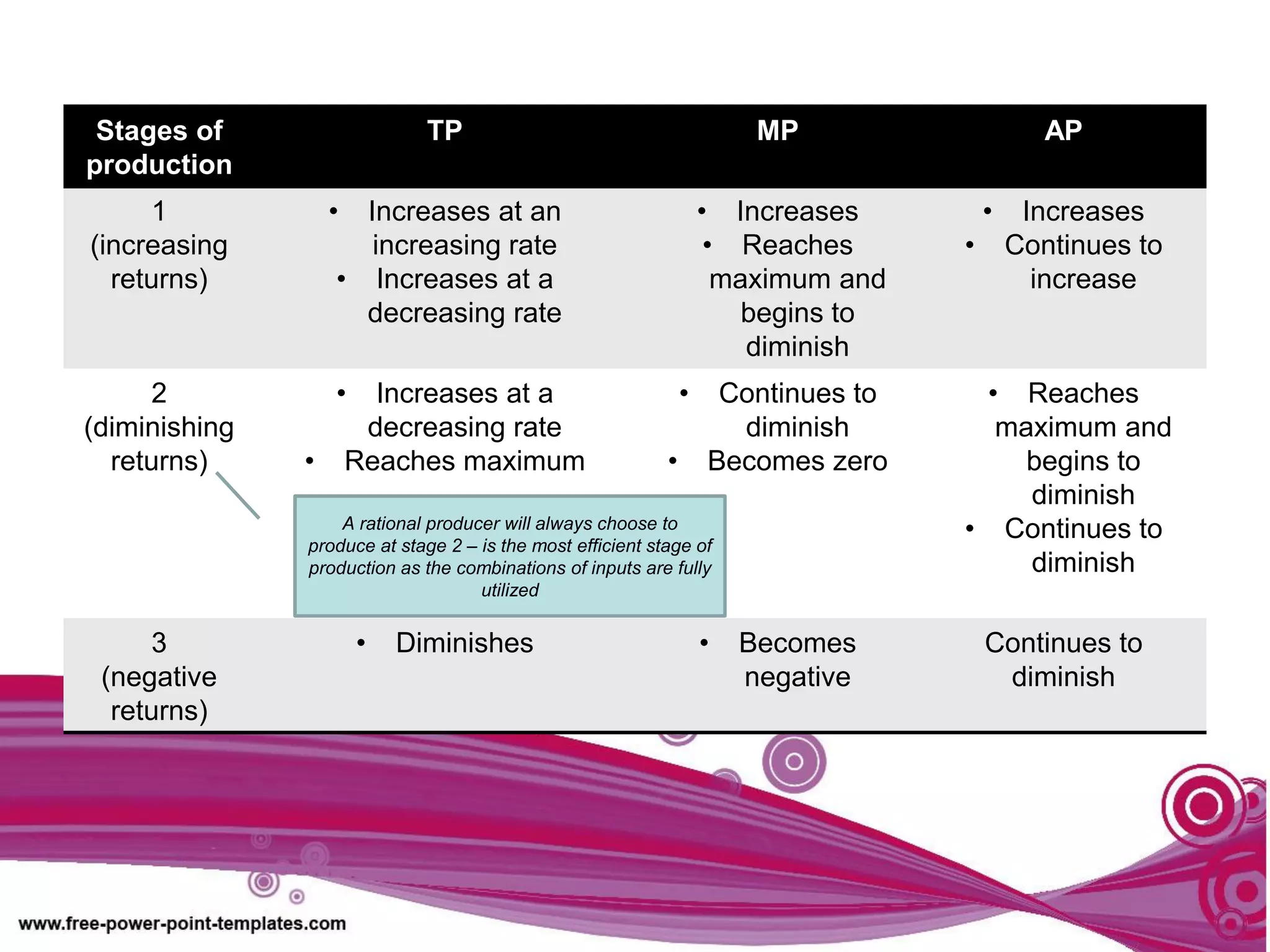
Stages of
production
TP MP AP
1
(increasing
returns)
• Increases at an
increasing rate
• Increases at a
decreasing rate
• Increases
• Reaches
maximum and
begins to
diminish
• Increases
• Continues to
increase
2
(diminishing
returns)
• Increases at a
decreasing rate
• Reaches maximum
• Continues to
diminish
• Becomes zero
• Reaches
maximum and
begins to
diminish
• Continues to
diminish
3
(negative
returns)
• Diminishes • Becomes
negative
Continues to
diminish
A rational producer will always choose to
produce at stage 2 – is the most efficient stage of
production as the combinations of inputs are fully
utilized
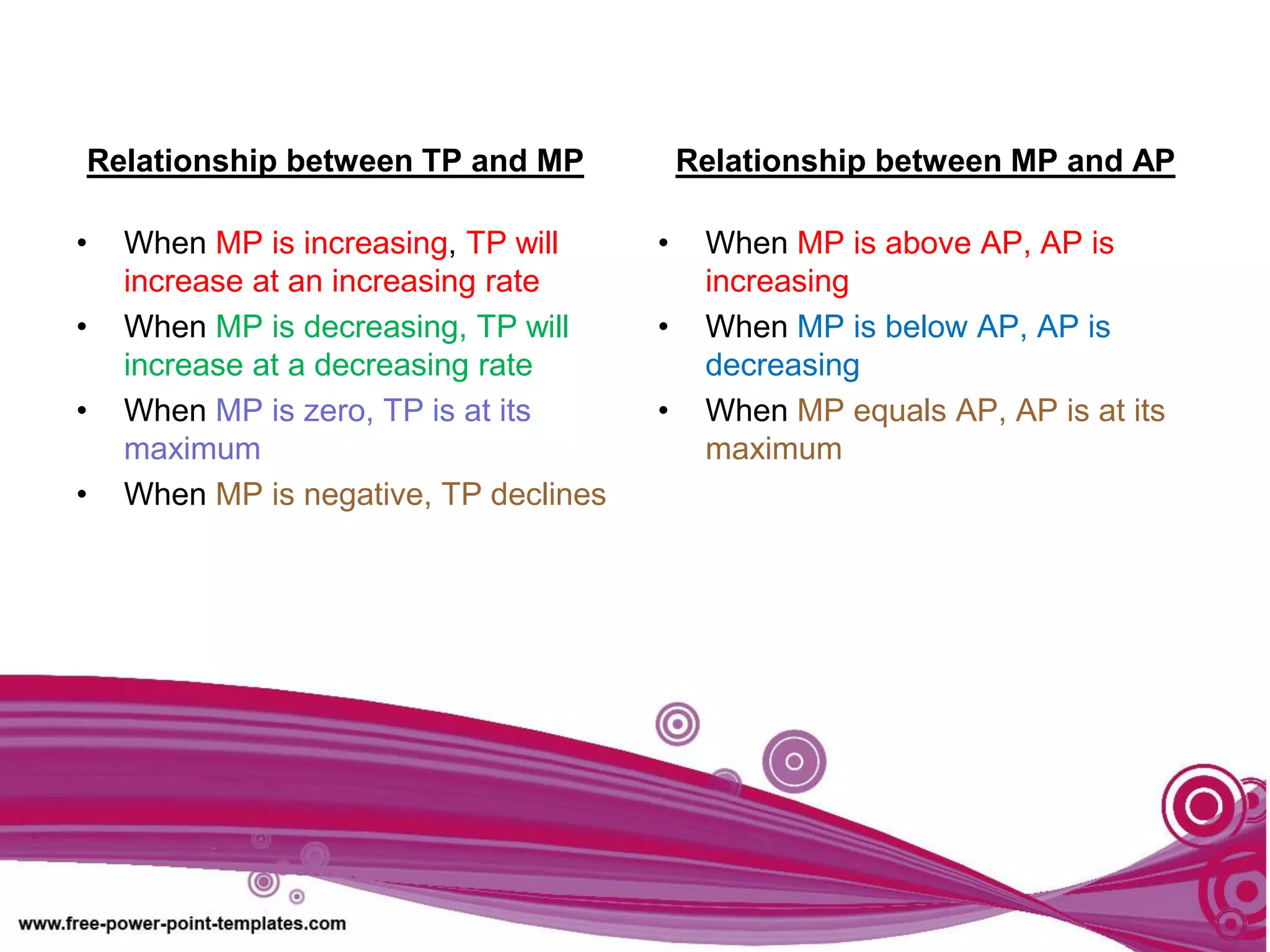
Relationship between TP and MP
• When MP is increasing, TP will
increase at an increasing rate
• When MP is decreasing, TP will
increase at a decreasing rate
• When MP is zero, TP is at its
maximum
• When MP is negative, TP declines
Relationship between MP and AP
• When MP is above AP, AP is
increasing
• When MP is below AP, AP is
decreasing
• When MP equals AP, AP is at its
maximum
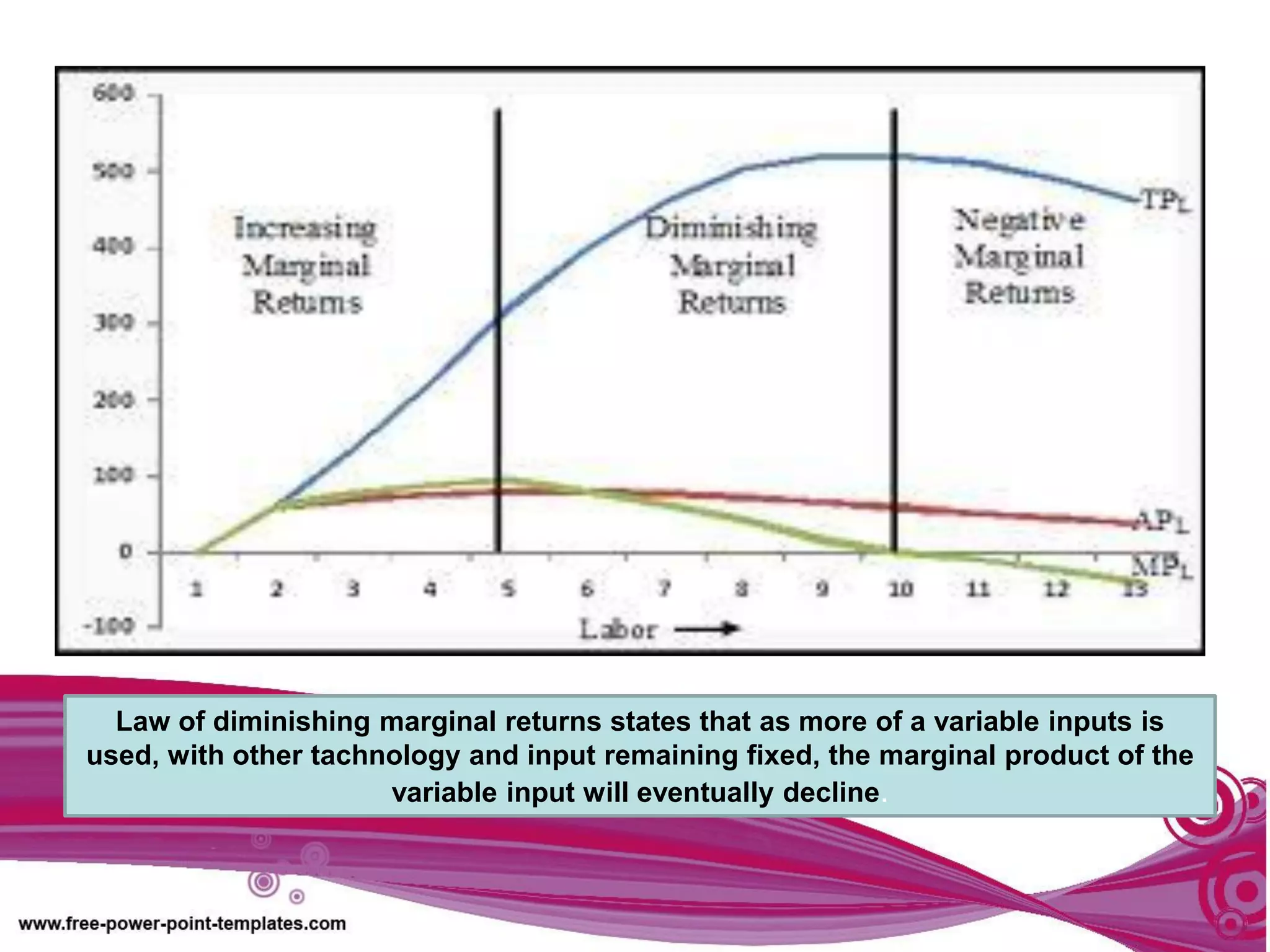
Law of diminishing marginal returns states that as more of a variable inputs is
used, with other tachnology and input remaining fixed, the marginal product of the
variable input will eventually decline.
Production Theory

Production Theory

  • 1.
  • 2.
  • 3.
  • 6.
    Production Terminologies FIRMS INDUSTRIESTIME PERIOD Organization or production units that own and use limited FOP to produce goods and services A number of firms that operate in the same market and produce the same types of goods The duration of production Maximize profit Short run – at least one fixed input and one variable input Long run – all the inputs are variable
  • 7.
    Production Concept • Totalquantity of output produce with a given quantity of input. • Total Product = Average Product x Total Variable Input Total Product (TP) • Ratio of total production to total variable inputs (labour) used to produce a product. • Average Product = Total Product / Total Variable Input Average Product (AP) • The change in total production when variable inputs are increased in increments of one unit. • Marginal product = change in TP / change in Total Variable Input Marginal Product (MP)
  • 8.
    TP = APx TL AP = TP /TL MP = ∆TP / ∆ TL
  • 9.
    Capital Labour TPAP MP 10 0 0 10 1 8 10 2 20 10 3 33 10 4 44 10 5 50 10 6 54 10 7 56 10 8 56 10 9 54 10 10 50
  • 10.
    Fill in theblank table and plot TP, AP and MP in graph paper
  • 11.
  • 12.
    Capital Labour TPAP MP 10 0 0 - - 10 1 8 8 8 10 2 20 10 12 10 3 33 11 13 10 4 44 11 11 10 5 50 10 6 10 6 54 9 4 10 7 56 8 2 10 8 56 7 0 10 9 54 6 -2 10 10 50 5 -4
  • 13.
    -10 0 10 20 30 40 50 60 1 2 34 5 6 7 8 9 10 11 Capital Labour TP AP MP
  • 14.
    Stages of Production Stage1 Stage 2 Stage 3
  • 15.
    Stage 1 Stage2 Stage 3 Labour TP/AP/MP
  • 16.
    Stages of production TP MPAP 1 (increasing returns) • Increases at an increasing rate • Increases at a decreasing rate • Increases • Reaches maximum and begins to diminish • Increases • Continues to increase 2 (diminishing returns) • Increases at a decreasing rate • Reaches maximum • Continues to diminish • Becomes zero • Reaches maximum and begins to diminish • Continues to diminish 3 (negative returns) • Diminishes • Becomes negative Continues to diminish A rational producer will always choose to produce at stage 2 – is the most efficient stage of production as the combinations of inputs are fully utilized
  • 17.
    Relationship between TPand MP • When MP is increasing, TP will increase at an increasing rate • When MP is decreasing, TP will increase at a decreasing rate • When MP is zero, TP is at its maximum • When MP is negative, TP declines Relationship between MP and AP • When MP is above AP, AP is increasing • When MP is below AP, AP is decreasing • When MP equals AP, AP is at its maximum
  • 18.
    Law of diminishingmarginal returns states that as more of a variable inputs is used, with other tachnology and input remaining fixed, the marginal product of the variable input will eventually decline.