Prof. Tatikonda G. S.
 The determination of rate per unit of a
particular item of work, from the cost of
quantities of materials, the cost of laborers
and other miscellaneous petty expenses
required for its completion is known as the
Analysis of Rates.
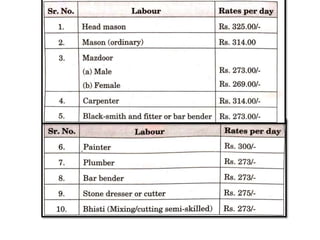
 The rates of materials and labor vary from
place to place and hence the rates of
different items of works also vary from
place to place.
 To work out the actual cost of per unit of the
items.
 To work out the economical use of materials
and processes in completing the particulars
item.
 To work out the cost of extra items which are
not provided in the contract bond, but are to
be done as per the directions of the client.
 To revise the schedule of rates due to increase
in the cost of material and labour or due to
change in technique
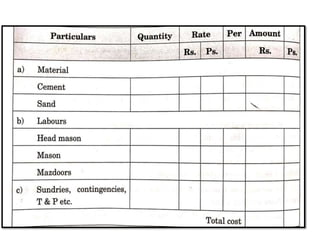
 Details of all operations involved in carrying
out the work
 The quantities of materials and their costs
 The number of different categories of
laborers required, their working capacity
and daily wages.
1. Major Factors :-
a) Material
b) Labour
2. Minor Factors : -
a) Special Equipment
b) Place of work
c) Nature of work
d) Conditions of Contract
e) Profit of the contractor
f) Specification
g) Site Condition
h) Miscellaneous
 Lead: The horizontal distance between the
trench pit and the place where excavated
earth is placed is called as lead. The unit of
lead is 50 m for a distance up to 500 m, 500 m
for a distance exceeding 500 m up to 5 km and
1 km for distance exceeds 5 km.
 Lift: It is the depth of excavation or the
vertical movement of material. Generally
lift is taken as 1.5 m below ground level. Extra
lift shall be measured in unit of 1.5 m or part
thereof.
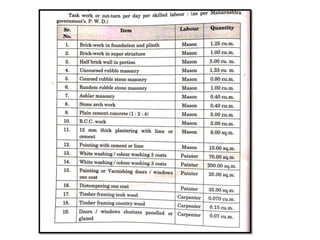
The capacity of a skilled labour to do the
quantity of work per day called task work. Task work
is depends on the nature, size, height, situation, location,
climate condition, techniques adopted, wages paid.
Factors Affecting Task Work:-
 Out turn of skilled labour depends on the nature, size,
height, situation, location, Climatic condition, technique
adopted, wages paid etc.
 Availability of skilled labour.
 A well-organized work increases the out turn of labour.
 Job satisfaction and working condition may increase the
out turn work. If the work is allotted on piece work
basis then the daily wages output of labour increases.
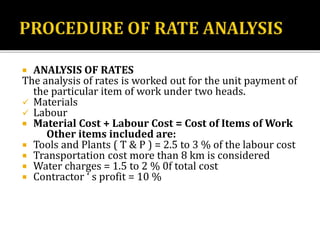
 ANALYSIS OF RATES
The analysis of rates is worked out for the unit payment of
the particular item of work under two heads.
 Materials
 Labour
 Material Cost + Labour Cost = Cost of Items of Work
Other items included are:
 Tools and Plants ( T & P ) = 2.5 to 3 % of the labour cost
 Transportation cost more than 8 km is considered
 Water charges = 1.5 to 2 % 0f total cost
 Contractor ‘ s profit = 10 %
rate analysis

rate analysis

  • 1.
  • 2.
     The determinationof rate per unit of a particular item of work, from the cost of quantities of materials, the cost of laborers and other miscellaneous petty expenses required for its completion is known as the Analysis of Rates.  The rates of materials and labor vary from place to place and hence the rates of different items of works also vary from place to place.
  • 3.
     To workout the actual cost of per unit of the items.  To work out the economical use of materials and processes in completing the particulars item.  To work out the cost of extra items which are not provided in the contract bond, but are to be done as per the directions of the client.  To revise the schedule of rates due to increase in the cost of material and labour or due to change in technique
  • 4.
     Details ofall operations involved in carrying out the work  The quantities of materials and their costs  The number of different categories of laborers required, their working capacity and daily wages.
  • 5.
    1. Major Factors:- a) Material b) Labour 2. Minor Factors : - a) Special Equipment b) Place of work c) Nature of work d) Conditions of Contract e) Profit of the contractor f) Specification g) Site Condition h) Miscellaneous
  • 6.
     Lead: Thehorizontal distance between the trench pit and the place where excavated earth is placed is called as lead. The unit of lead is 50 m for a distance up to 500 m, 500 m for a distance exceeding 500 m up to 5 km and 1 km for distance exceeds 5 km.  Lift: It is the depth of excavation or the vertical movement of material. Generally lift is taken as 1.5 m below ground level. Extra lift shall be measured in unit of 1.5 m or part thereof.
  • 7.
    The capacity ofa skilled labour to do the quantity of work per day called task work. Task work is depends on the nature, size, height, situation, location, climate condition, techniques adopted, wages paid. Factors Affecting Task Work:-  Out turn of skilled labour depends on the nature, size, height, situation, location, Climatic condition, technique adopted, wages paid etc.  Availability of skilled labour.  A well-organized work increases the out turn of labour.  Job satisfaction and working condition may increase the out turn work. If the work is allotted on piece work basis then the daily wages output of labour increases.
  • 10.
     ANALYSIS OFRATES The analysis of rates is worked out for the unit payment of the particular item of work under two heads.  Materials  Labour  Material Cost + Labour Cost = Cost of Items of Work Other items included are:  Tools and Plants ( T & P ) = 2.5 to 3 % of the labour cost  Transportation cost more than 8 km is considered  Water charges = 1.5 to 2 % 0f total cost  Contractor ‘ s profit = 10 %