CHAPTER II: REVIEW OF
RELATED LITERATURE
LEARNING OBJECTIVES
 What is meant by literature
review?
 Functions of literature review
 Steps of literature review
1-2
LITERATURE REVIEW
is the documentation of a
comprehensive review of the
published and unpublished work
in the areas of specific interest to
the researcher.
FUNCTIONS OF RRL
Bring clarity and focus to your
research problem
 Improve your methodology
Broaden your knowledge base in
your research area
Contextualise your findings 1-10
helps you know what other
researchers have found in
regard to the same or similar
questions
FUNCTIONS OF RRL
Procedures for
Reviewing the
Literature
PROCEDURES FOR REVIEWING
THE LITERATURE
1. search for existing literature in
your area of study;
2. review the literature selected;
3. develop a theoretical framework;
PROCEDURES FOR REVIEWING THE LITERATURE
4. develop a conceptual
framework;
5. writing up the literature
reviewed
How to
Look for
Literature
1. The researcher’s motivation
(Rationale) in conducting the study.
2. Objectives of the study.
3. Variables involved in the study.
4. Research Design
5. Quantitative analysis
6. Major Results and Conclusion.
How to look for Related Literature?
Within the
past 10 years
Qualified Literature:
Organizing
Chapter II:
RRL
Organizing Chapter II
1.Chronological Order
- Depending on the
year published (latest to
oldest)
Organizing Chapter II
2. By Part
-Classified as foreign
and Local literature
Organizing Chapter II
3. Thematic Organization
– by variable and accordance with
the statement of the problem.
(combination of several strategies)
Example
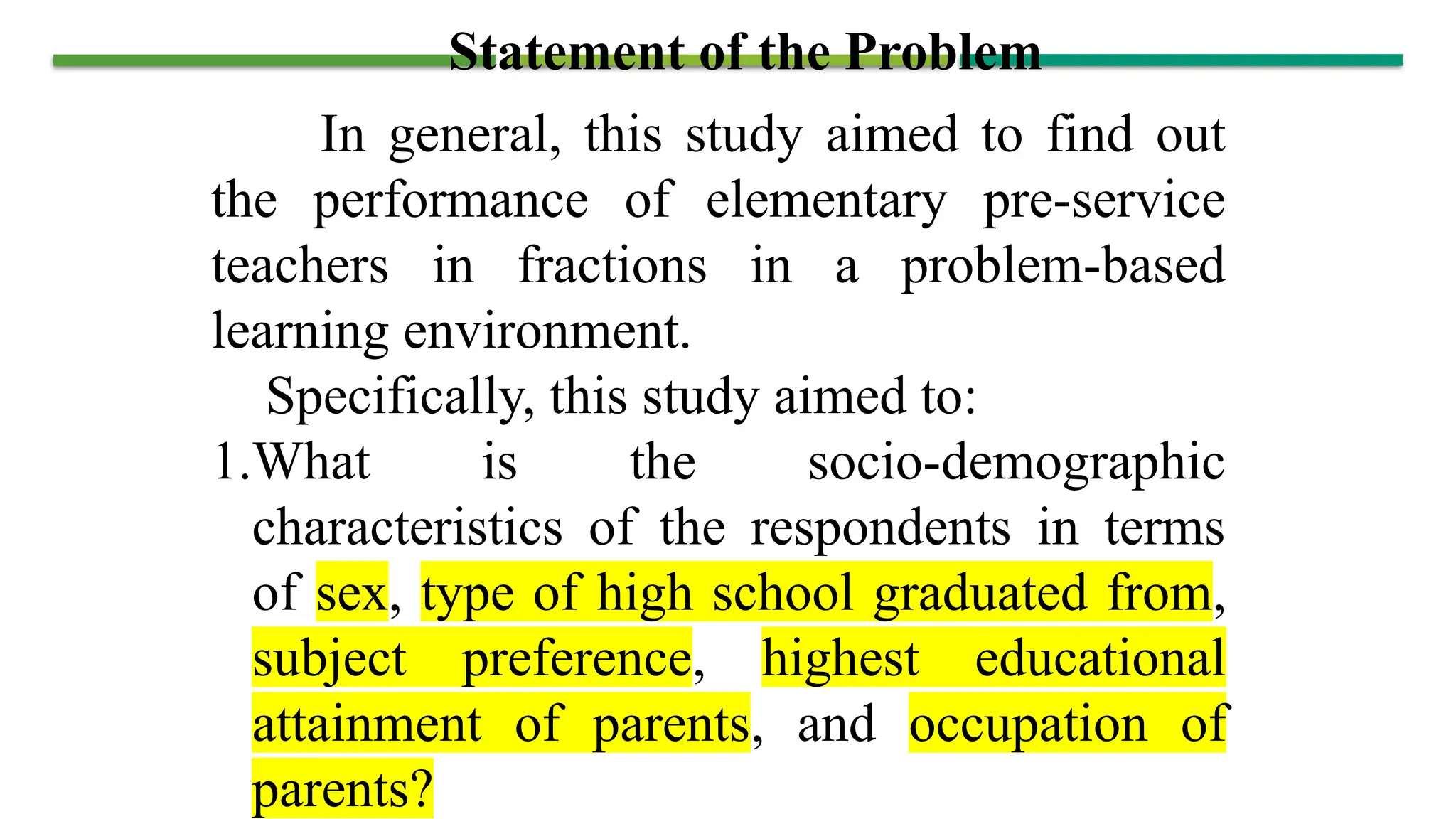
Statement of the Problem
In general, this study aimed to find out
the performance of elementary pre-service
teachers in fractions in a problem-based
learning environment.
Specifically, this study aimed to:
1.What is the socio-demographic
characteristics of the respondents in terms
of sex, type of high school graduated from,
subject preference, highest educational
attainment of parents, and occupation of
parents?
2. What is the affective attributes
of the respondents in terms of
mathematics self-efficacy and
math anxiety?
3. What is the pre and post
mathematics performances of the
respondents?
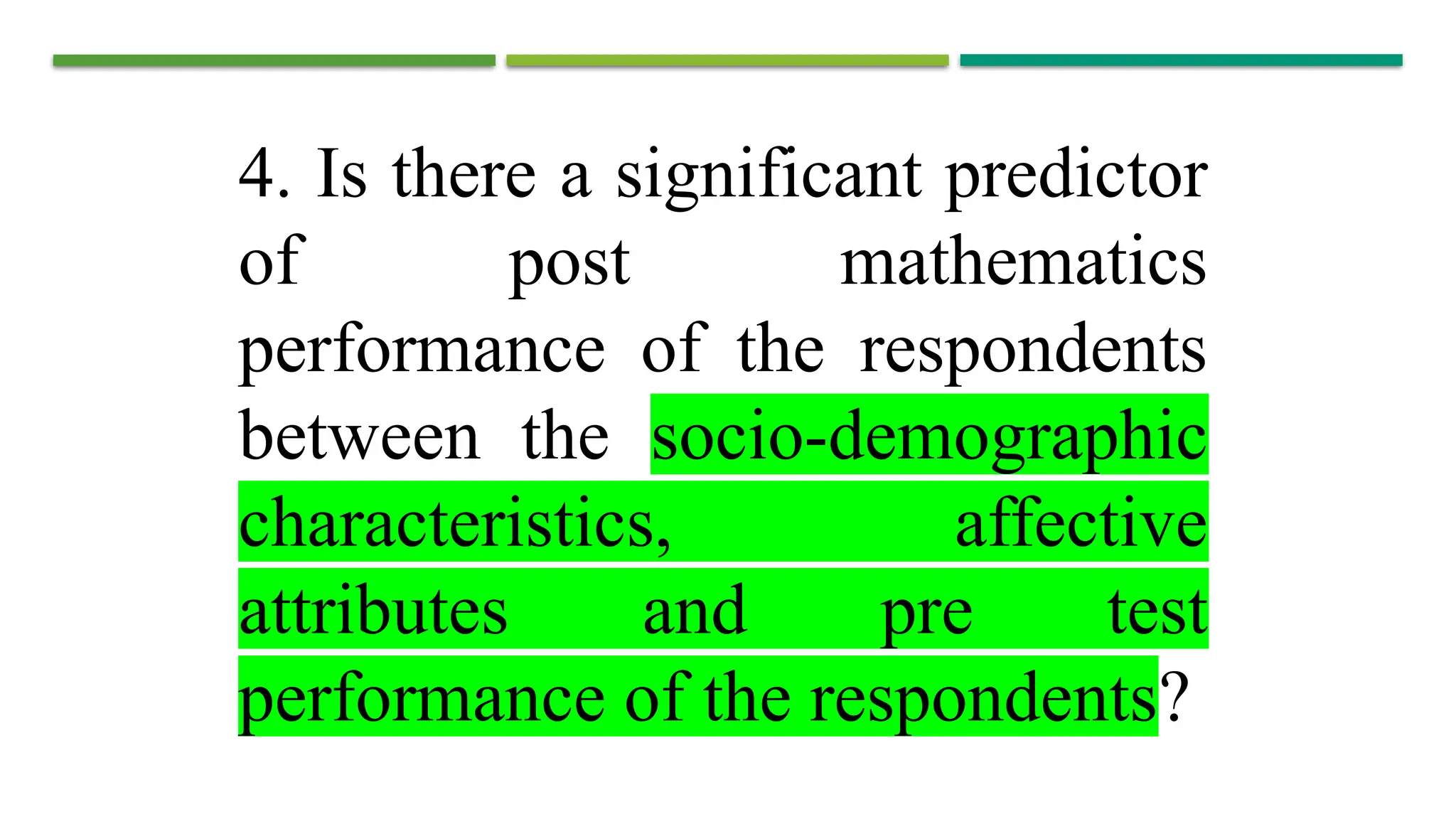
4. Is there a significant predictor
of post mathematics
performance of the respondents
between the socio-demographic
characteristics, affective
attributes and pre test
performance of the respondents?
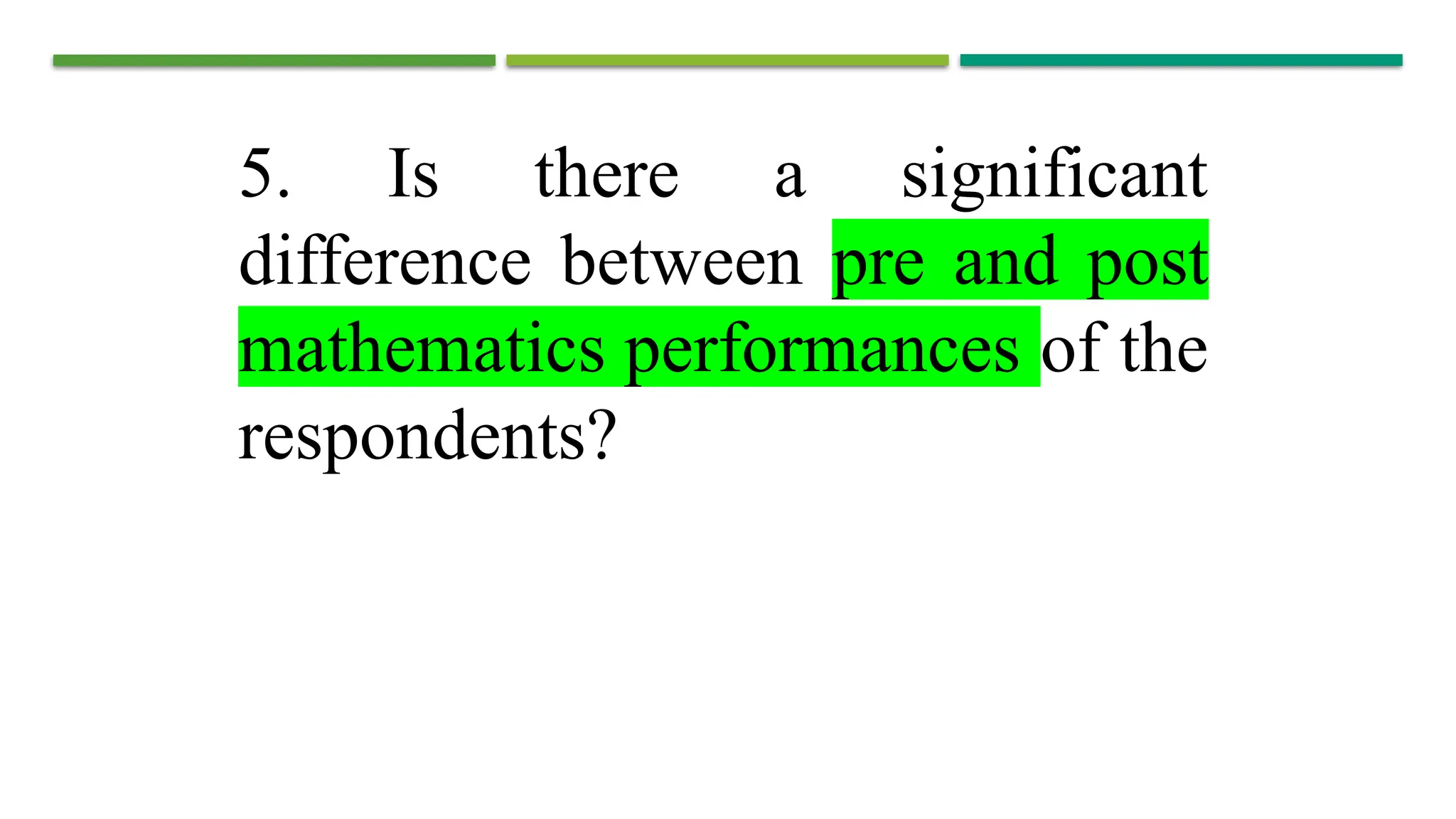
5. Is there a significant
difference between pre and post
mathematics performances of the
respondents?
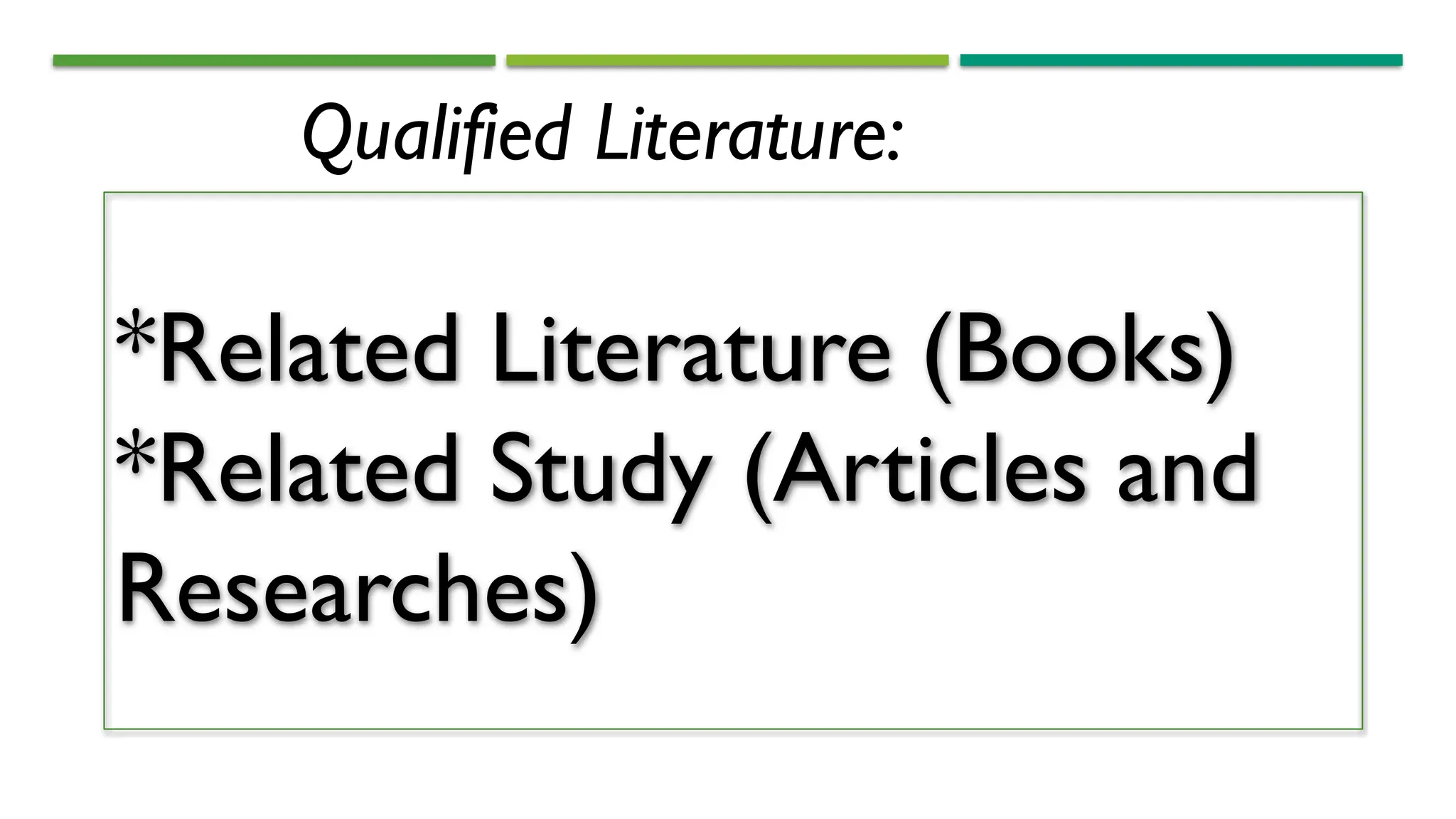
Qualified
Literature
*Related Literature (Books)
*Related Study (Articles and
Researches)
Qualified Literature:
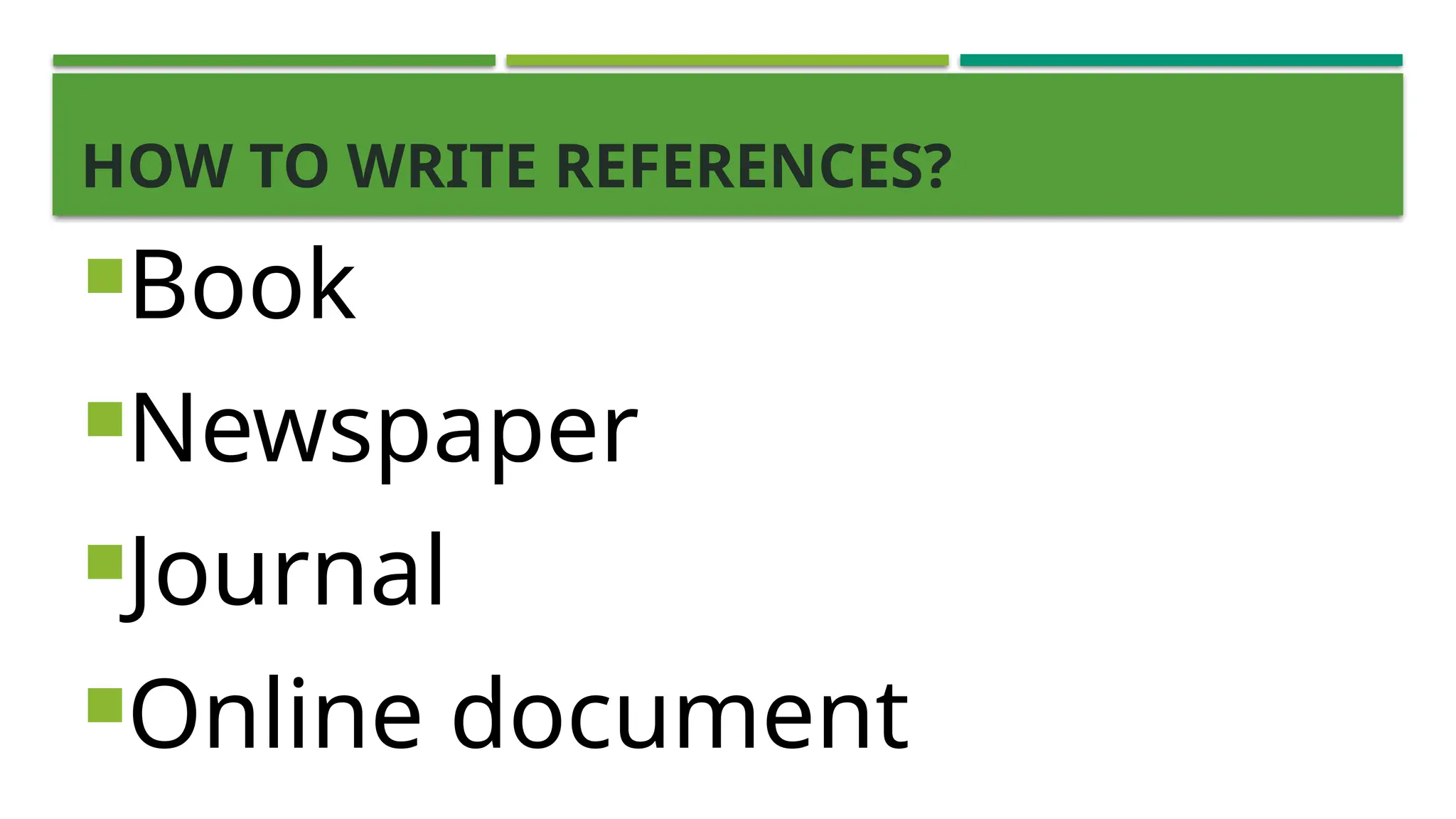
HOW TO WRITE REFERENCES?
Book
Newspaper
Journal
Online document
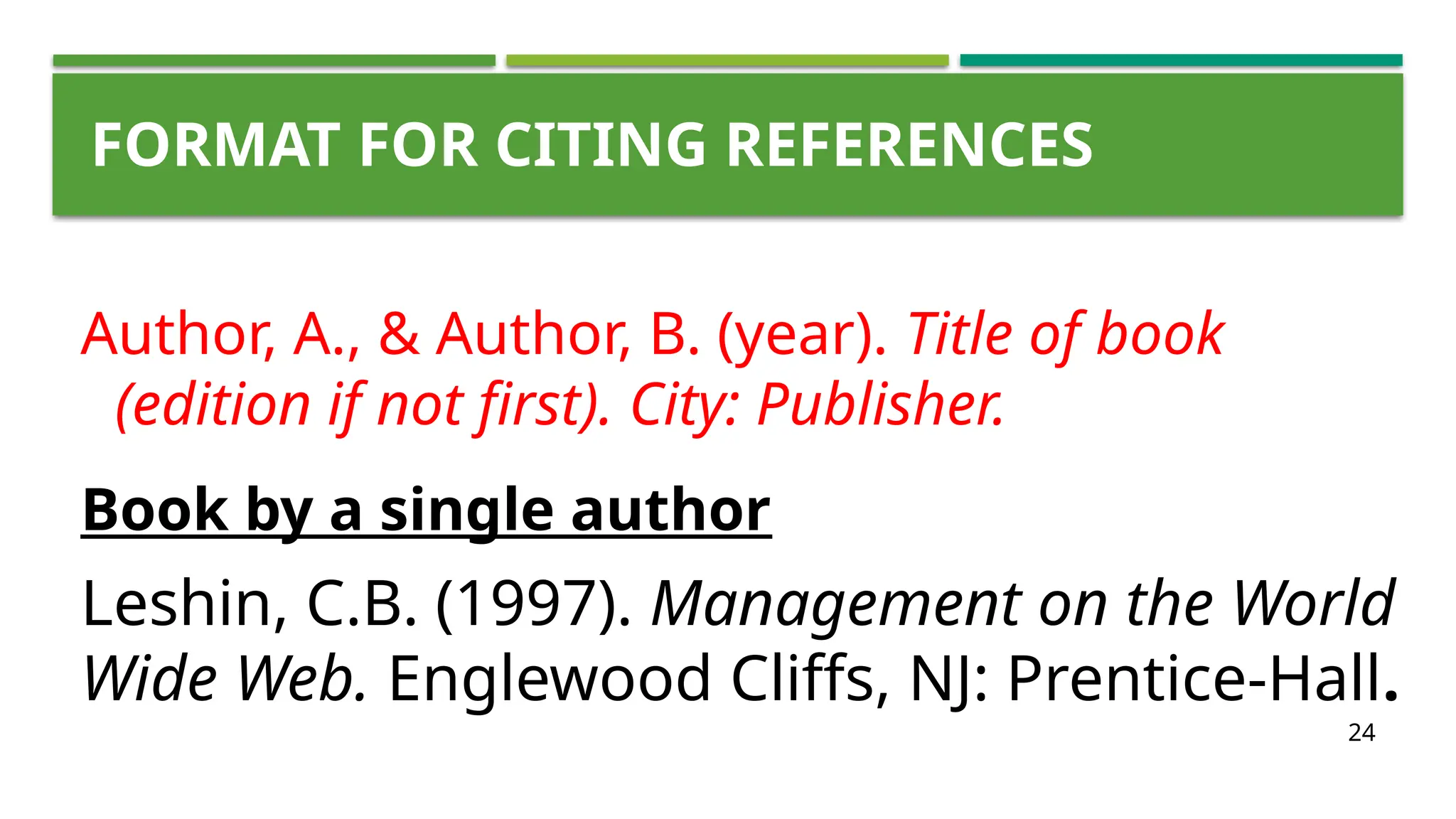
FORMAT FOR CITING REFERENCES
24
Author, A., & Author, B. (year). Title of book
(edition if not first). City: Publisher.
Book by a single author
Leshin, C.B. (1997). Management on the World
Wide Web. Englewood Cliffs, NJ: Prentice-Hall.
25
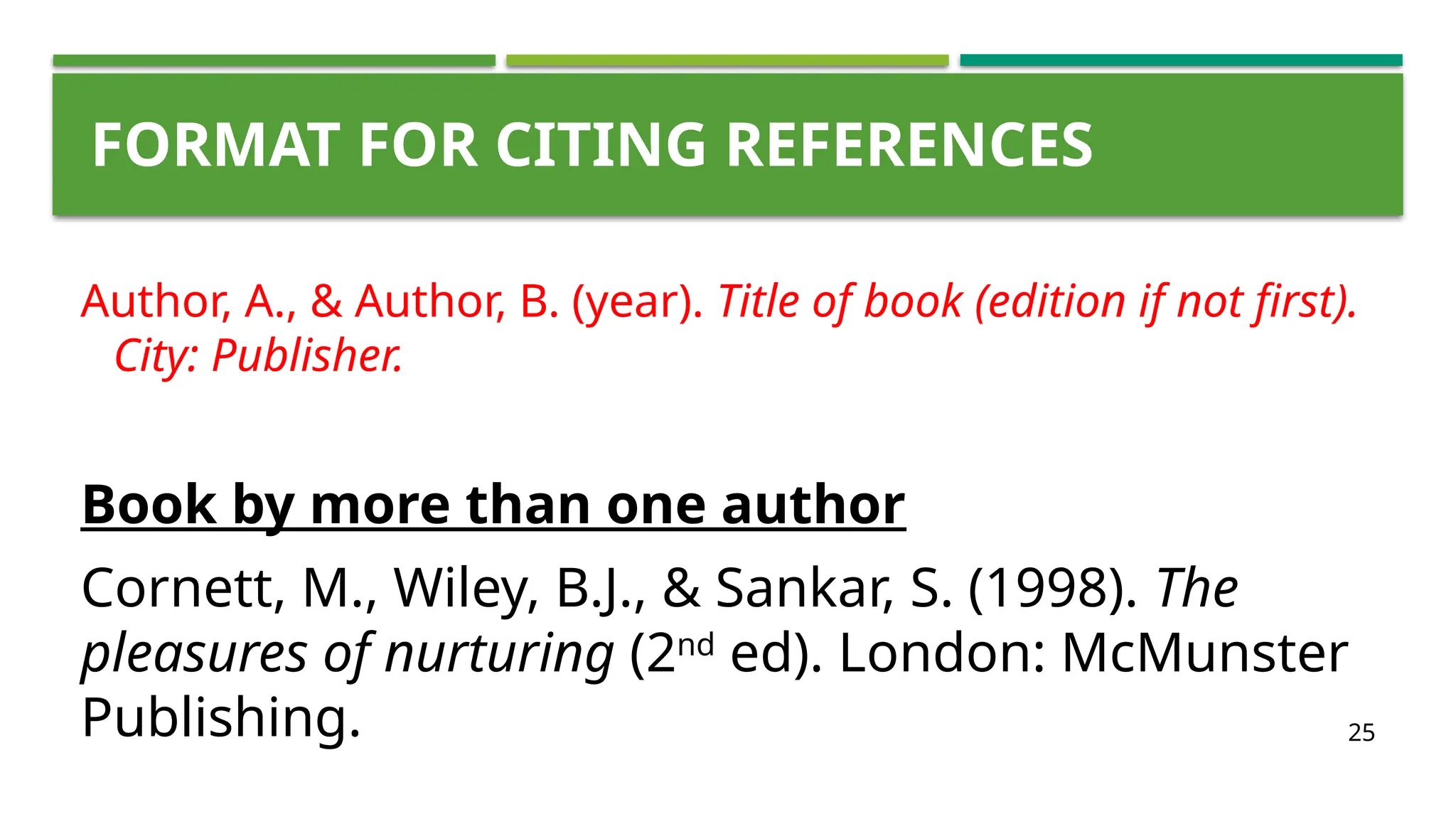
Author, A., & Author, B. (year). Title of book (edition if not first).
City: Publisher.
Book by more than one author
Cornett, M., Wiley, B.J., & Sankar, S. (1998). The
pleasures of nurturing (2nd
ed). London: McMunster
Publishing.
FORMAT FOR CITING REFERENCES
26
Journal Article
Author, A., & Author, B. (year). Title of article. Title of
Journal, volume number (issue number), page numbers.
Barry, H. (1996). Cross-cultural research
with matched pairs of societies. Journal
of Social Psychology, 79 (1), 25-33.
FORMAT FOR CITING REFERENCES
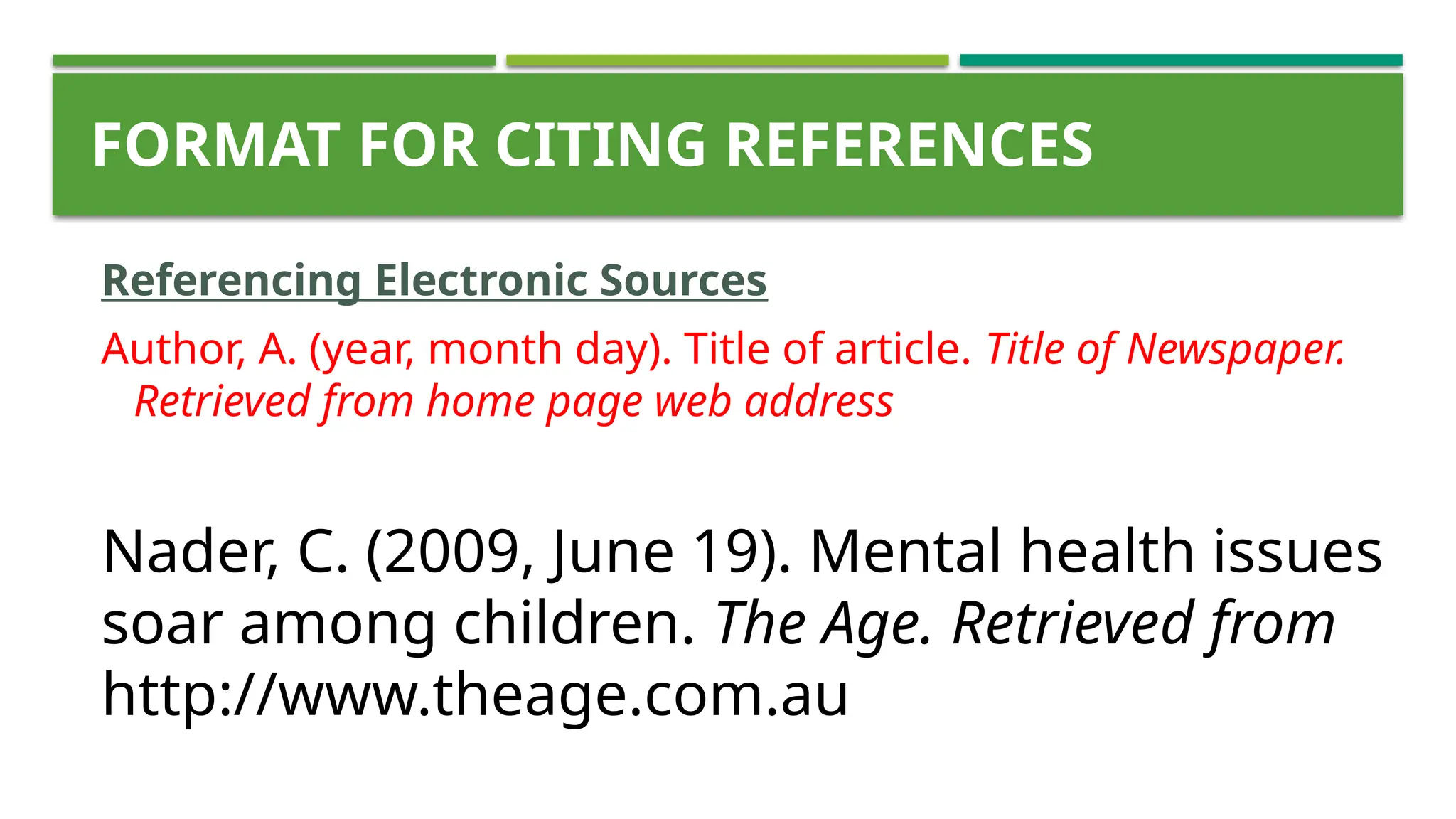
Referencing Electronic Sources
Author, A. (year, month day). Title of article. Title of Newspaper.
Retrieved from home page web address
Nader, C. (2009, June 19). Mental health issues
soar among children. The Age. Retrieved from
http://www.theage.com.au
FORMAT FOR CITING REFERENCES
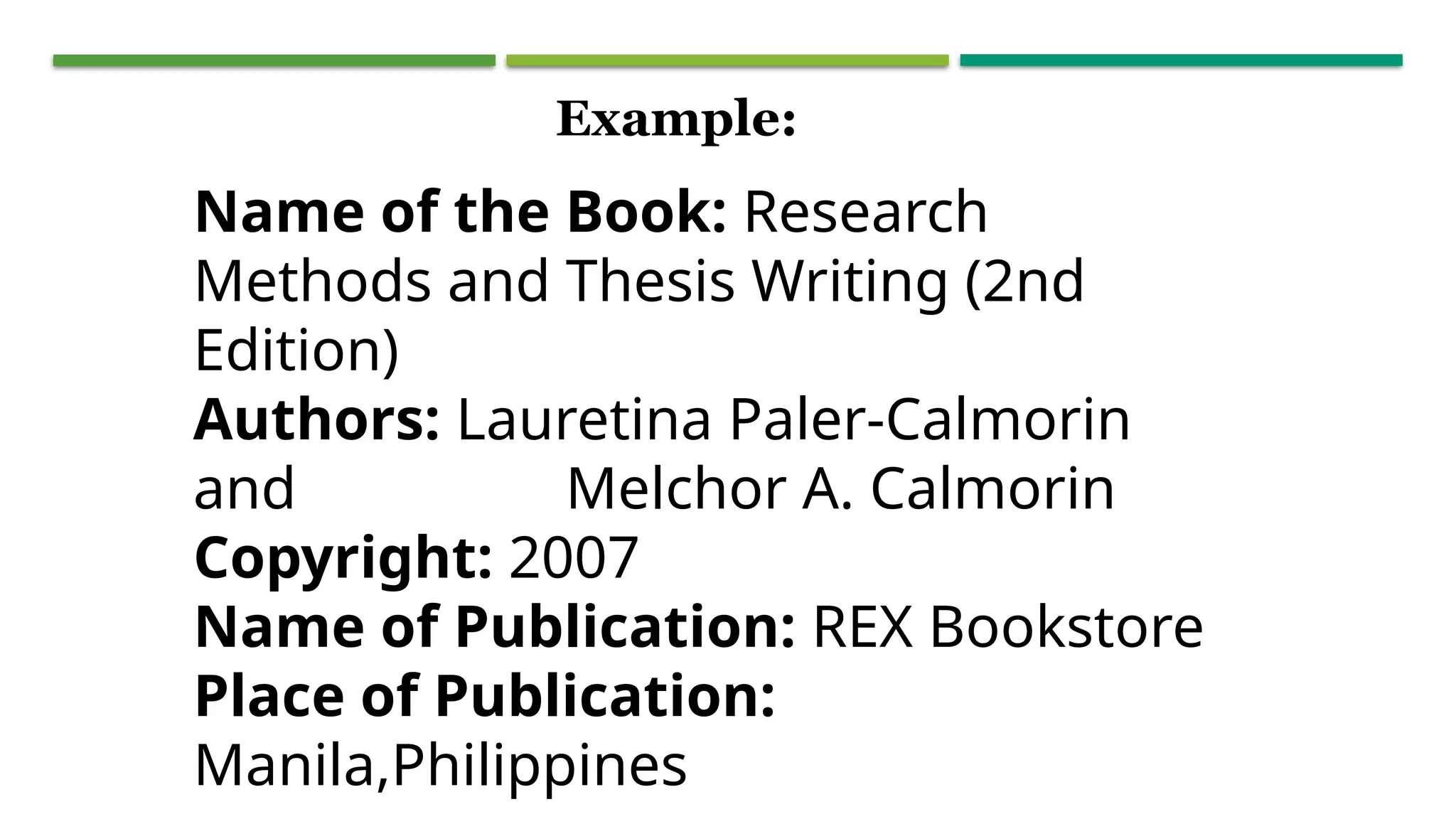
Name of the Book: Research
Methods and Thesis Writing (2nd
Edition)
Authors: Lauretina Paler-Calmorin
and Melchor A. Calmorin
Copyright: 2007
Name of Publication: REX Bookstore
Place of Publication:
Manila,Philippines
Example:
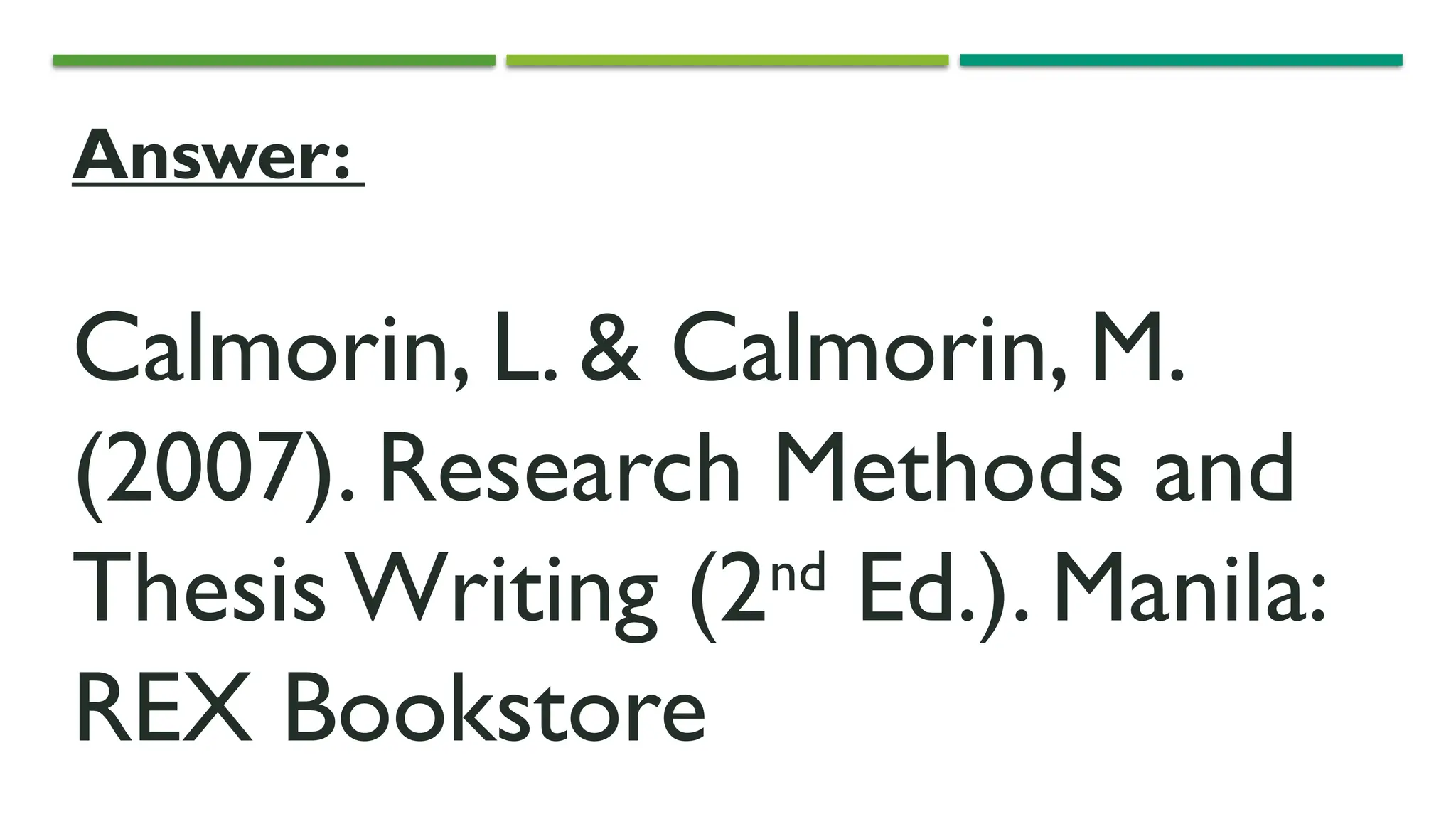
Answer:
Calmorin, L. & Calmorin, M.
(2007). Research Methods and
Thesis Writing (2nd
Ed.). Manila:
REX Bookstore
REFERENCES
REFERENCE
Reference is a list which
contains all the sources which
have been sought or cited while
writing the article or assignment.
TYPES OF
REFERENCES
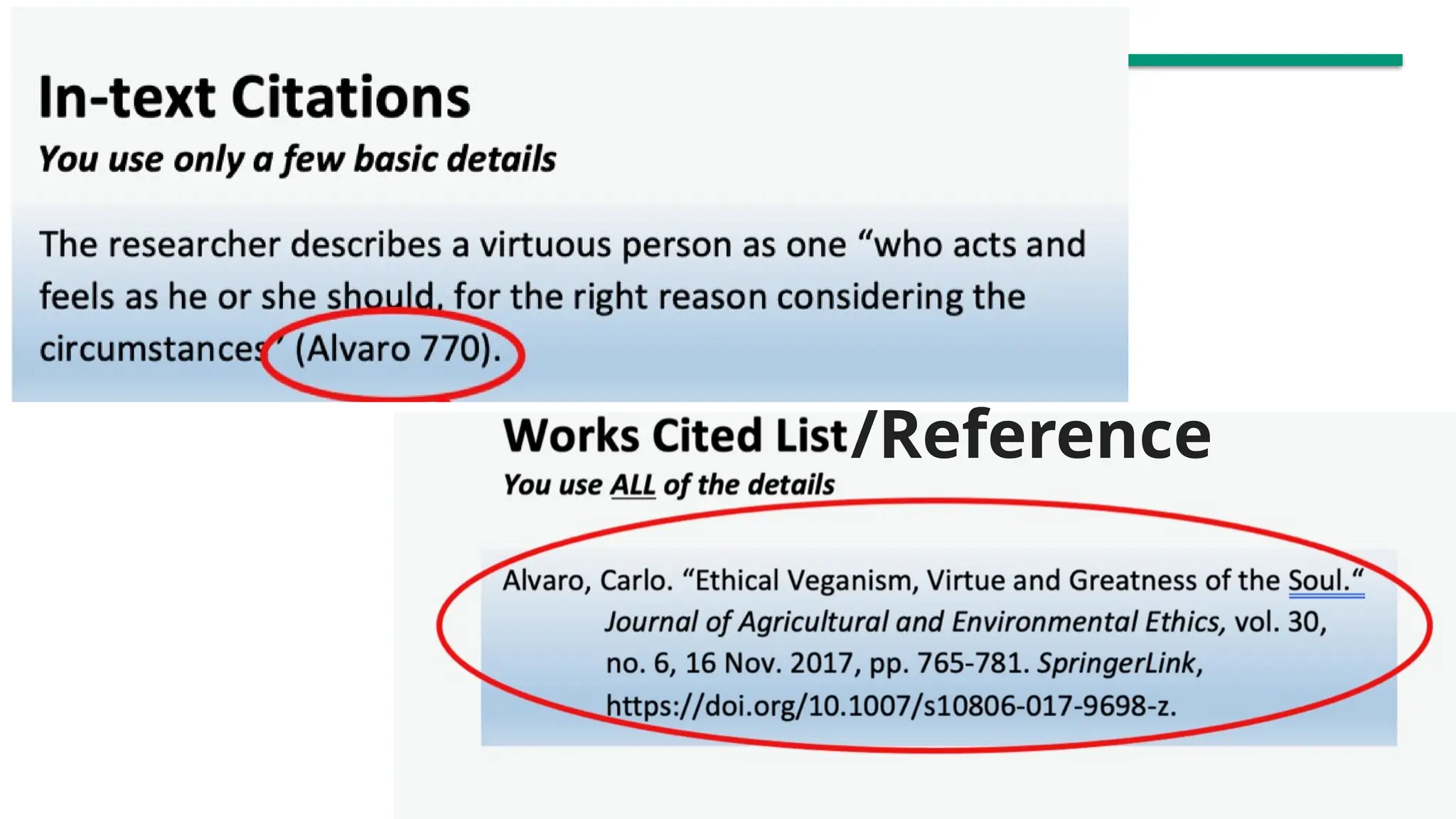
/Reference
TYPES OF SOURCES
1. Primary Sources - research
publications where researches
report their findings.
Ex.Thesis, Research, Journal
TYPES OF SOURCES
2. Secondary Source - publications
in which authors describe the work
of others.
Example: Textbook, Encyclopedia,
research review, Periodicals
TYPES OF SOURCES
STYLES OF
REFERENCING
STYLES OF REFERENCING
• APA (American Psychological
Association)
• MLA (Modern language Association)
• HARVARD (HVD)
STYLES OF REFERENCING
Author-date styles
(APA, MLA, and
Harvard)
APA
• is an author/date-based style.This means
emphasis is placed on the author and the
date of a piece of work to uniquely identify
it.
Example: King, M. (2000).Wrestling with the angel:A
life of Janet Frame.Auckland, New Zealand:Viking.
MLA
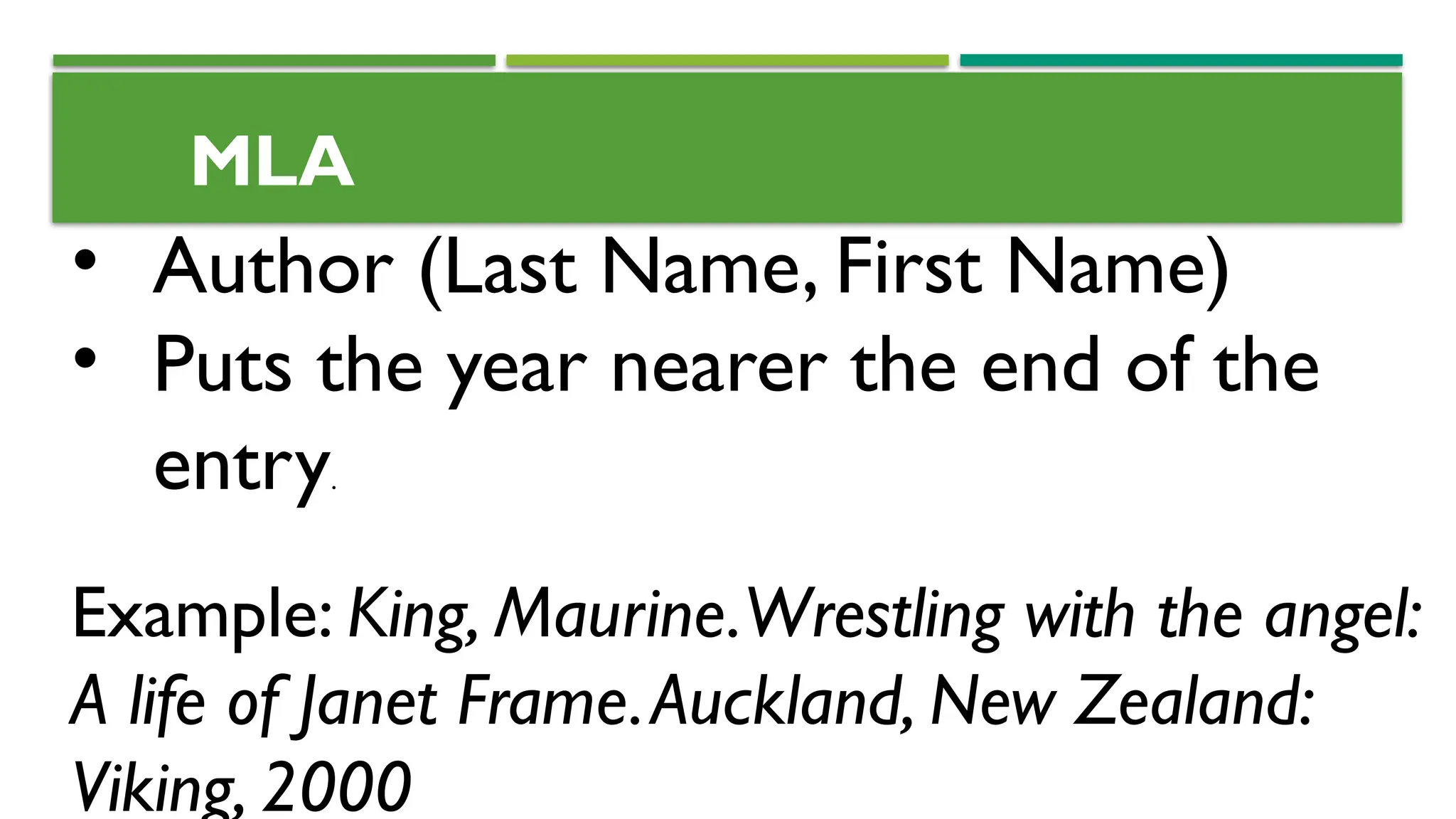
• Author (Last Name, First Name)
• Puts the year nearer the end of the
entry.
Example: King, Maurine.Wrestling with the angel:
A life of Janet Frame.Auckland, New Zealand:
Viking, 2000
HARVARD
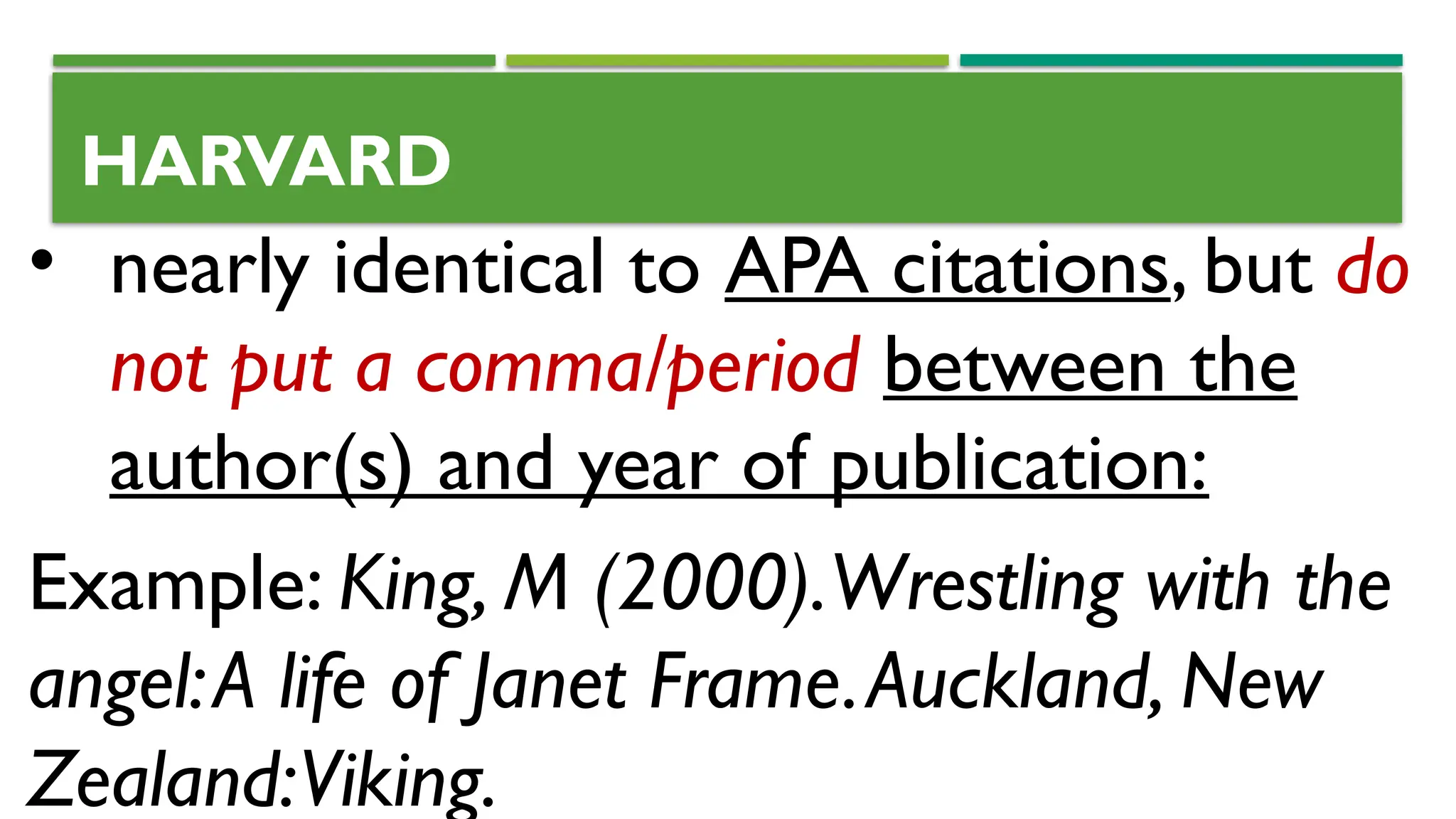
• nearly identical to APA citations, but do
not put a comma/period between the
author(s) and year of publication:
Example: King, M (2000).Wrestling with the
angel:A life of Janet Frame.Auckland, New
Zealand:Viking.
CHAPTER 2 - RRL - Practical Research 2 - SHS

CHAPTER 2 - RRL - Practical Research 2 - SHS

  • 1.
    CHAPTER II: REVIEWOF RELATED LITERATURE
  • 2.
    LEARNING OBJECTIVES  Whatis meant by literature review?  Functions of literature review  Steps of literature review 1-2
  • 3.
    LITERATURE REVIEW is thedocumentation of a comprehensive review of the published and unpublished work in the areas of specific interest to the researcher.
  • 4.
    FUNCTIONS OF RRL Bringclarity and focus to your research problem  Improve your methodology Broaden your knowledge base in your research area Contextualise your findings 1-10
  • 5.
    helps you knowwhat other researchers have found in regard to the same or similar questions FUNCTIONS OF RRL
  • 6.
  • 7.
    PROCEDURES FOR REVIEWING THELITERATURE 1. search for existing literature in your area of study; 2. review the literature selected; 3. develop a theoretical framework;
  • 8.
    PROCEDURES FOR REVIEWINGTHE LITERATURE 4. develop a conceptual framework; 5. writing up the literature reviewed
  • 9.
  • 10.
    1. The researcher’smotivation (Rationale) in conducting the study. 2. Objectives of the study. 3. Variables involved in the study. 4. Research Design 5. Quantitative analysis 6. Major Results and Conclusion. How to look for Related Literature?
  • 11.
    Within the past 10years Qualified Literature:
  • 12.
  • 13.
    Organizing Chapter II 1.ChronologicalOrder - Depending on the year published (latest to oldest)
  • 14.
    Organizing Chapter II 2.By Part -Classified as foreign and Local literature
  • 15.
    Organizing Chapter II 3.Thematic Organization – by variable and accordance with the statement of the problem. (combination of several strategies)
  • 16.
  • 17.
    Statement of theProblem In general, this study aimed to find out the performance of elementary pre-service teachers in fractions in a problem-based learning environment. Specifically, this study aimed to: 1.What is the socio-demographic characteristics of the respondents in terms of sex, type of high school graduated from, subject preference, highest educational attainment of parents, and occupation of parents?
  • 18.
    2. What isthe affective attributes of the respondents in terms of mathematics self-efficacy and math anxiety? 3. What is the pre and post mathematics performances of the respondents?
  • 19.
    4. Is therea significant predictor of post mathematics performance of the respondents between the socio-demographic characteristics, affective attributes and pre test performance of the respondents?
  • 20.
    5. Is therea significant difference between pre and post mathematics performances of the respondents?
  • 21.
  • 22.
    *Related Literature (Books) *RelatedStudy (Articles and Researches) Qualified Literature:
  • 23.
    HOW TO WRITEREFERENCES? Book Newspaper Journal Online document
  • 24.
    FORMAT FOR CITINGREFERENCES 24 Author, A., & Author, B. (year). Title of book (edition if not first). City: Publisher. Book by a single author Leshin, C.B. (1997). Management on the World Wide Web. Englewood Cliffs, NJ: Prentice-Hall.
  • 25.
    25 Author, A., &Author, B. (year). Title of book (edition if not first). City: Publisher. Book by more than one author Cornett, M., Wiley, B.J., & Sankar, S. (1998). The pleasures of nurturing (2nd ed). London: McMunster Publishing. FORMAT FOR CITING REFERENCES
  • 26.
    26 Journal Article Author, A.,& Author, B. (year). Title of article. Title of Journal, volume number (issue number), page numbers. Barry, H. (1996). Cross-cultural research with matched pairs of societies. Journal of Social Psychology, 79 (1), 25-33. FORMAT FOR CITING REFERENCES
  • 27.
    Referencing Electronic Sources Author,A. (year, month day). Title of article. Title of Newspaper. Retrieved from home page web address Nader, C. (2009, June 19). Mental health issues soar among children. The Age. Retrieved from http://www.theage.com.au FORMAT FOR CITING REFERENCES
  • 28.
    Name of theBook: Research Methods and Thesis Writing (2nd Edition) Authors: Lauretina Paler-Calmorin and Melchor A. Calmorin Copyright: 2007 Name of Publication: REX Bookstore Place of Publication: Manila,Philippines Example:
  • 29.
    Answer: Calmorin, L. &Calmorin, M. (2007). Research Methods and Thesis Writing (2nd Ed.). Manila: REX Bookstore
  • 30.
  • 31.
    REFERENCE Reference is alist which contains all the sources which have been sought or cited while writing the article or assignment.
  • 32.
  • 33.
  • 34.
  • 35.
    1. Primary Sources- research publications where researches report their findings. Ex.Thesis, Research, Journal TYPES OF SOURCES
  • 36.
    2. Secondary Source- publications in which authors describe the work of others. Example: Textbook, Encyclopedia, research review, Periodicals TYPES OF SOURCES
  • 37.
  • 38.
    STYLES OF REFERENCING •APA (American Psychological Association) • MLA (Modern language Association) • HARVARD (HVD)
  • 39.
    STYLES OF REFERENCING Author-datestyles (APA, MLA, and Harvard)
  • 40.
    APA • is anauthor/date-based style.This means emphasis is placed on the author and the date of a piece of work to uniquely identify it. Example: King, M. (2000).Wrestling with the angel:A life of Janet Frame.Auckland, New Zealand:Viking.
  • 41.
    MLA • Author (LastName, First Name) • Puts the year nearer the end of the entry. Example: King, Maurine.Wrestling with the angel: A life of Janet Frame.Auckland, New Zealand: Viking, 2000
  • 42.
    HARVARD • nearly identicalto APA citations, but do not put a comma/period between the author(s) and year of publication: Example: King, M (2000).Wrestling with the angel:A life of Janet Frame.Auckland, New Zealand:Viking.