PRESENTED BY- SHREET MISHRA
CLASS-9 TH B(2 ND SHIFT)

2012-2013

ROOL NO.-25
SCHOOL-KENDRIYA VIDYALAYA, GOMTINAGAR,
LUCKNOW
WHAT IS MATTER?
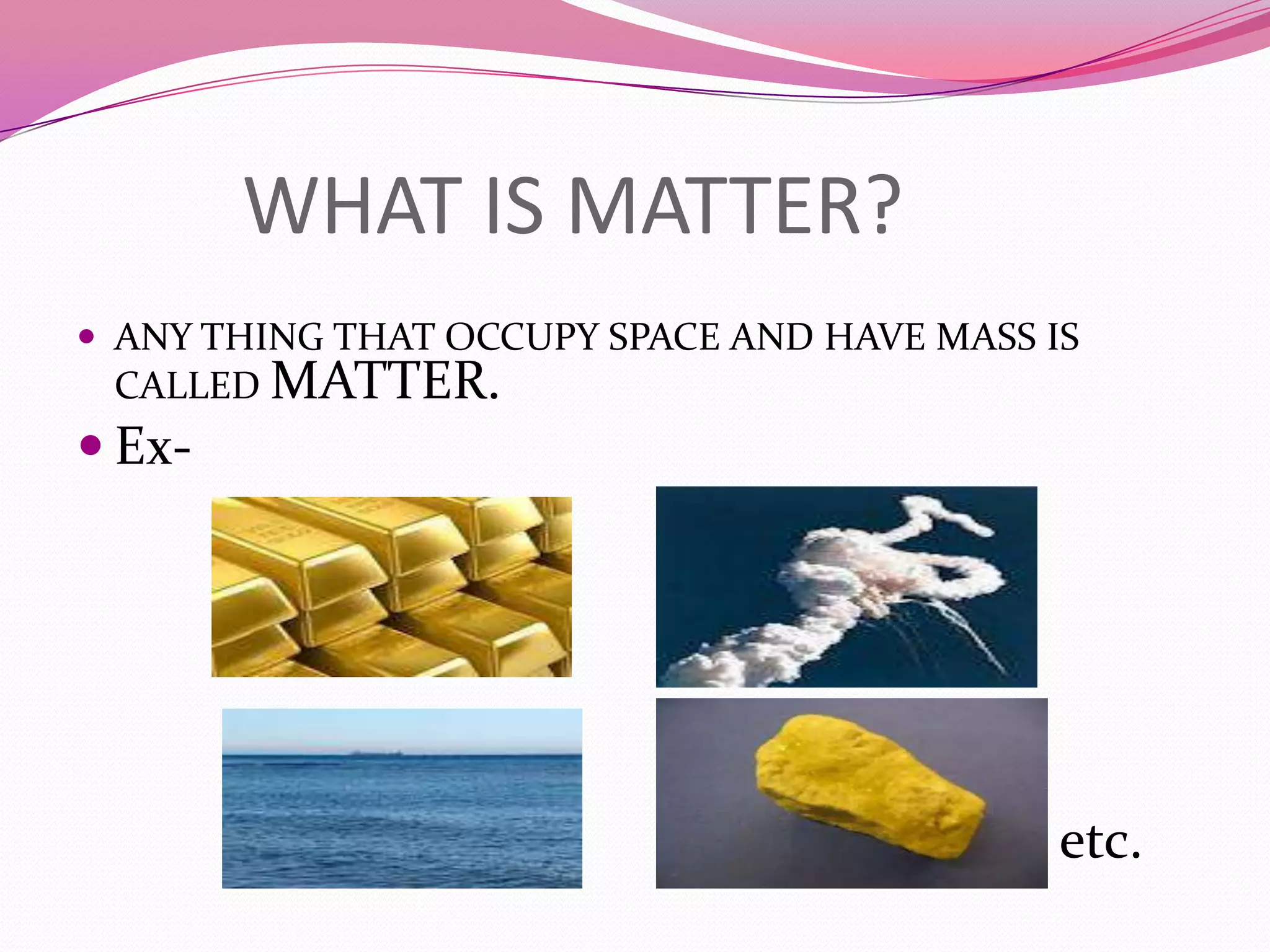
 ANY THING THAT OCCUPY SPACE AND HAVE MASS IS

CALLED MATTER.

 Ex-

etc.
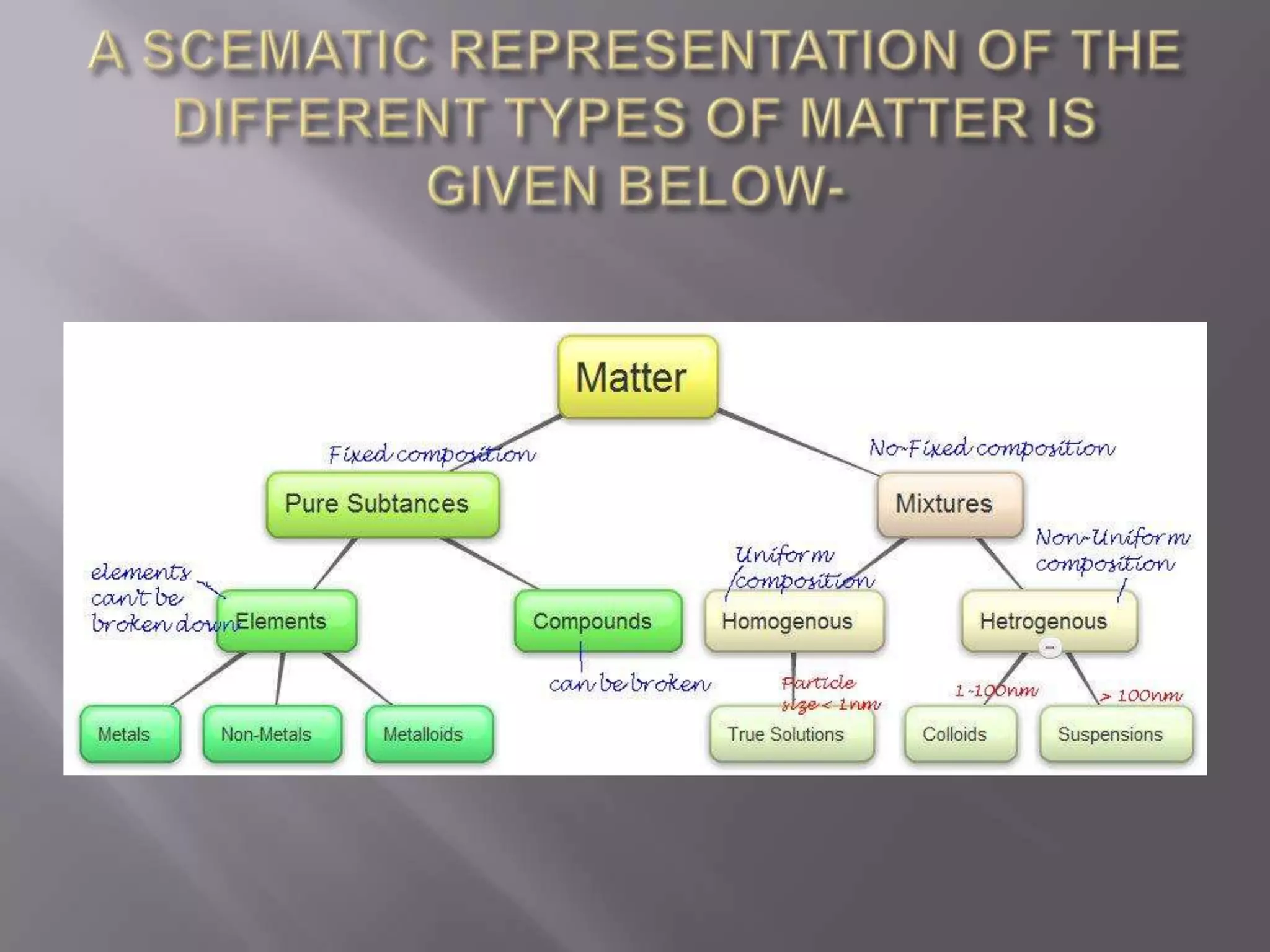
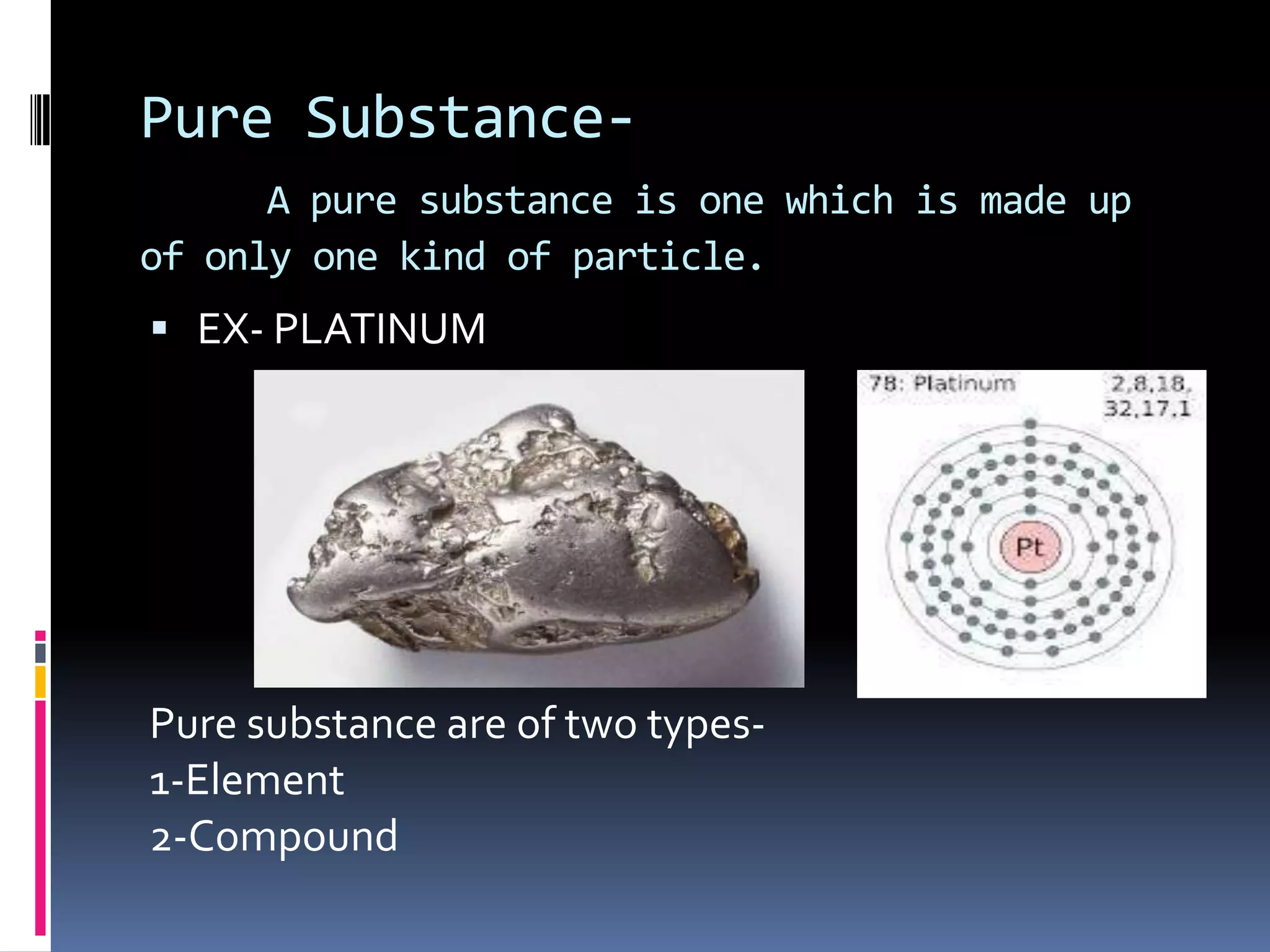
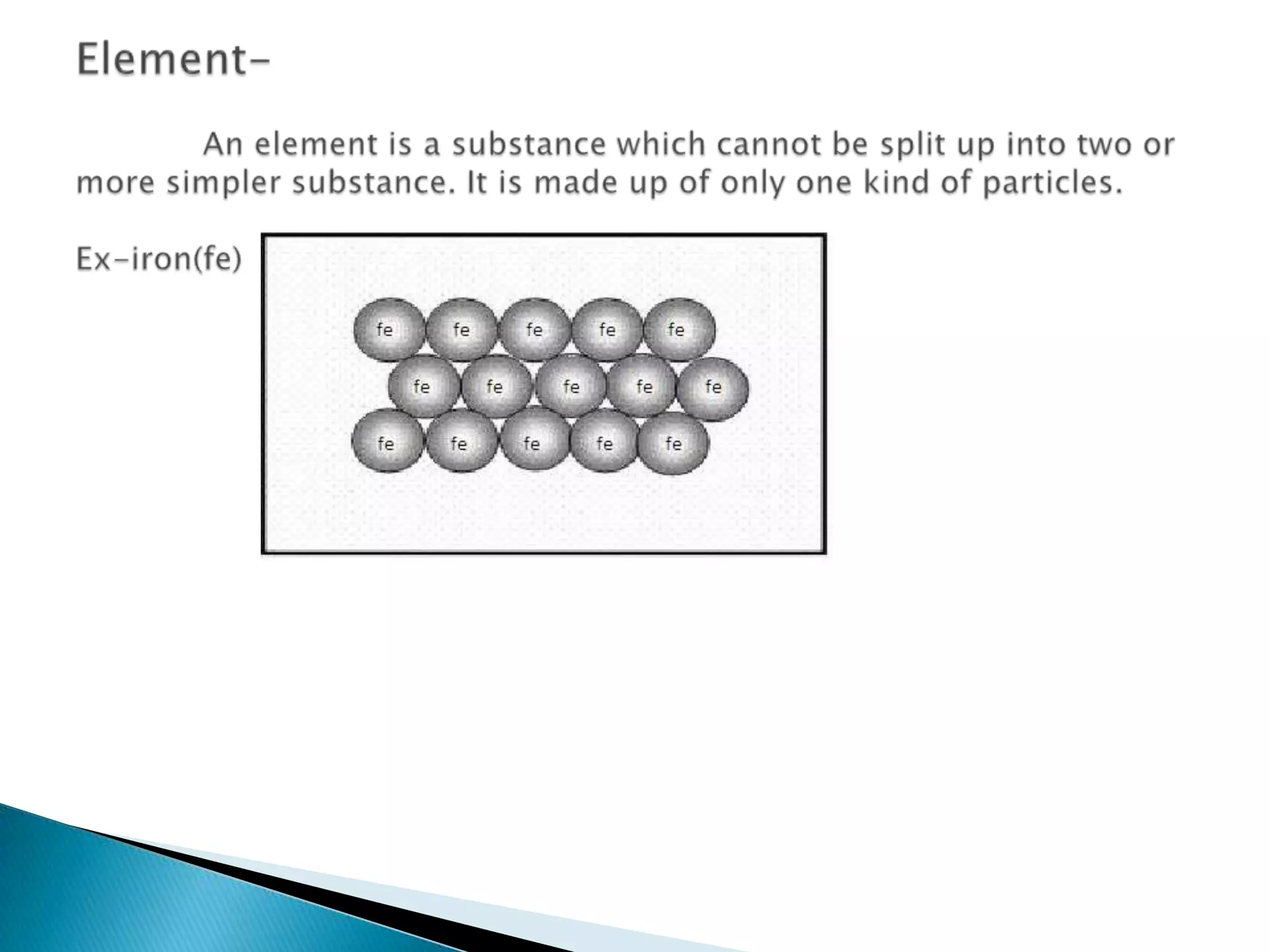
Pure SubstanceA pure substance is one which is made up
of only one kind of particle.

 EX- PLATINUM

Pure substance are of two types1-Element
2-Compound
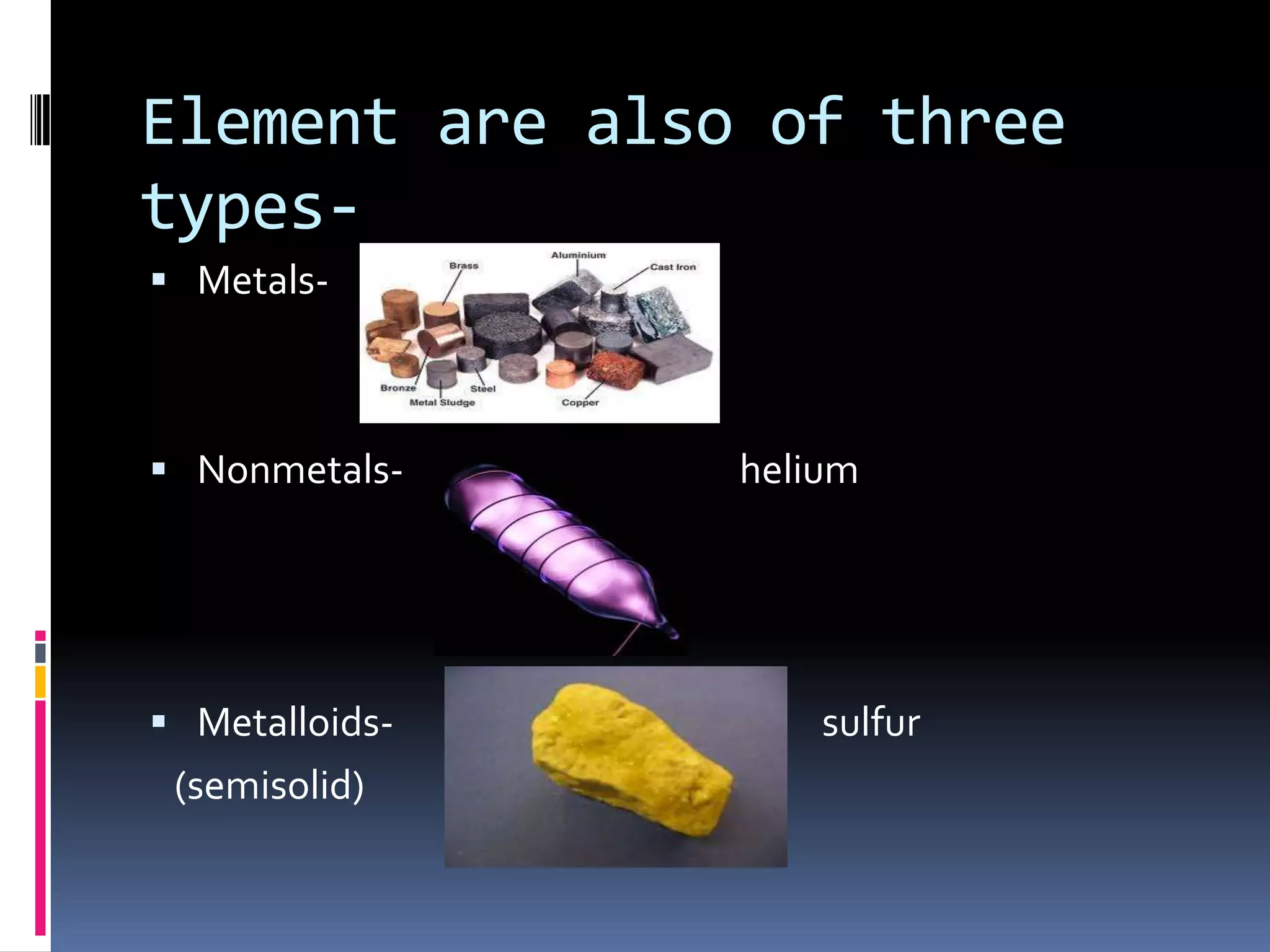
Element are also of three
types Metals-

 Nonmetals-

 Metalloids-

(semisolid)

helium

sulfur
CompoundA compound is a substance which is made up of
two or more element chemically combined in a fixed ratio by
mass. Ex-water(H2O)

NOTE- A compound can be broken into two or more element but
not by physical processes.
Mixture of salt and water

Mixture are of two types-

1-Homogeneous Mixture
2-Heterogeneous Mixture
Homogeneous Mixture
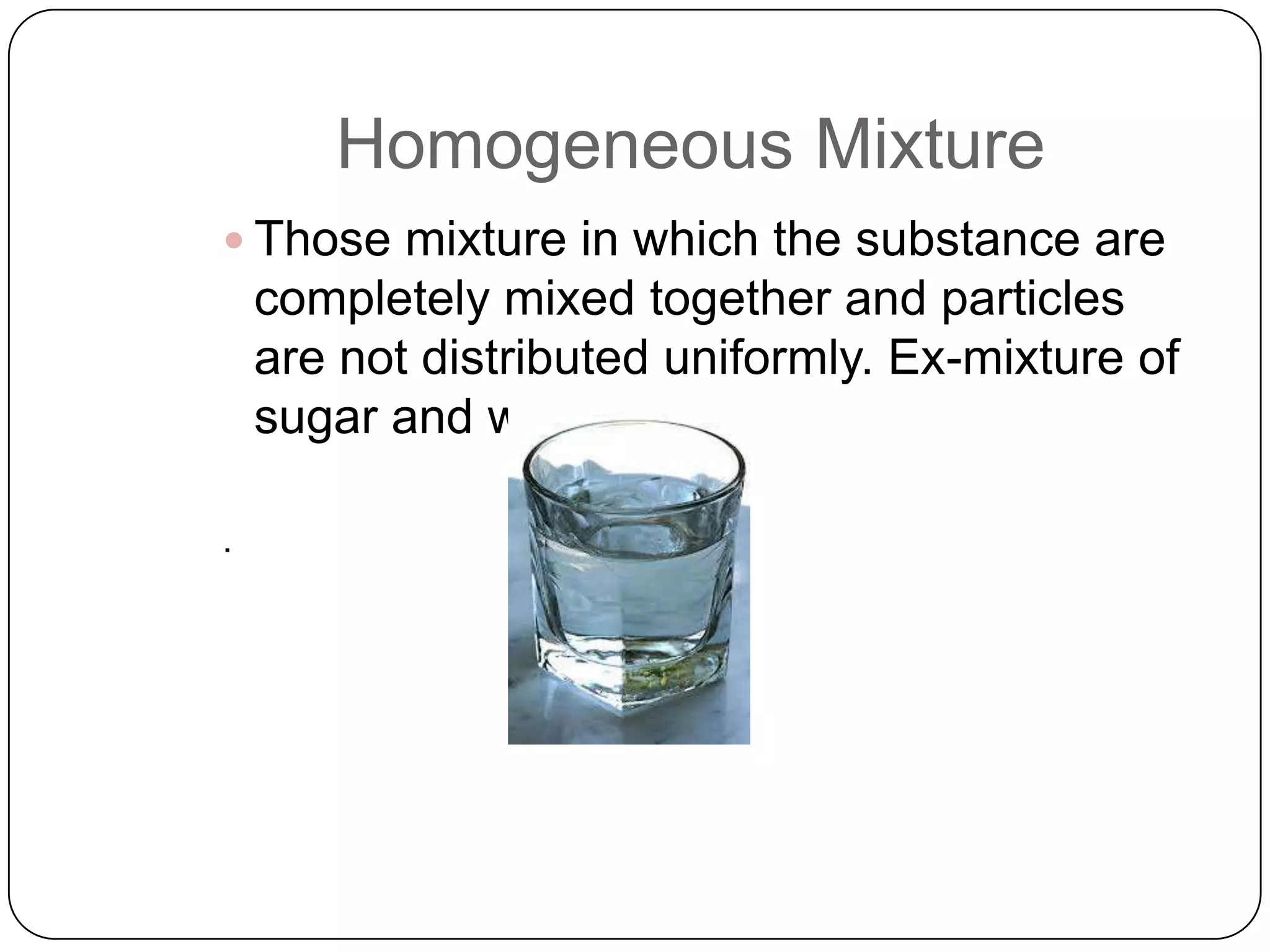
 Those mixture in which the substance are

completely mixed together and particles
are not distributed uniformly. Ex-mixture of
sugar and water.
Heterogeneous Mixture
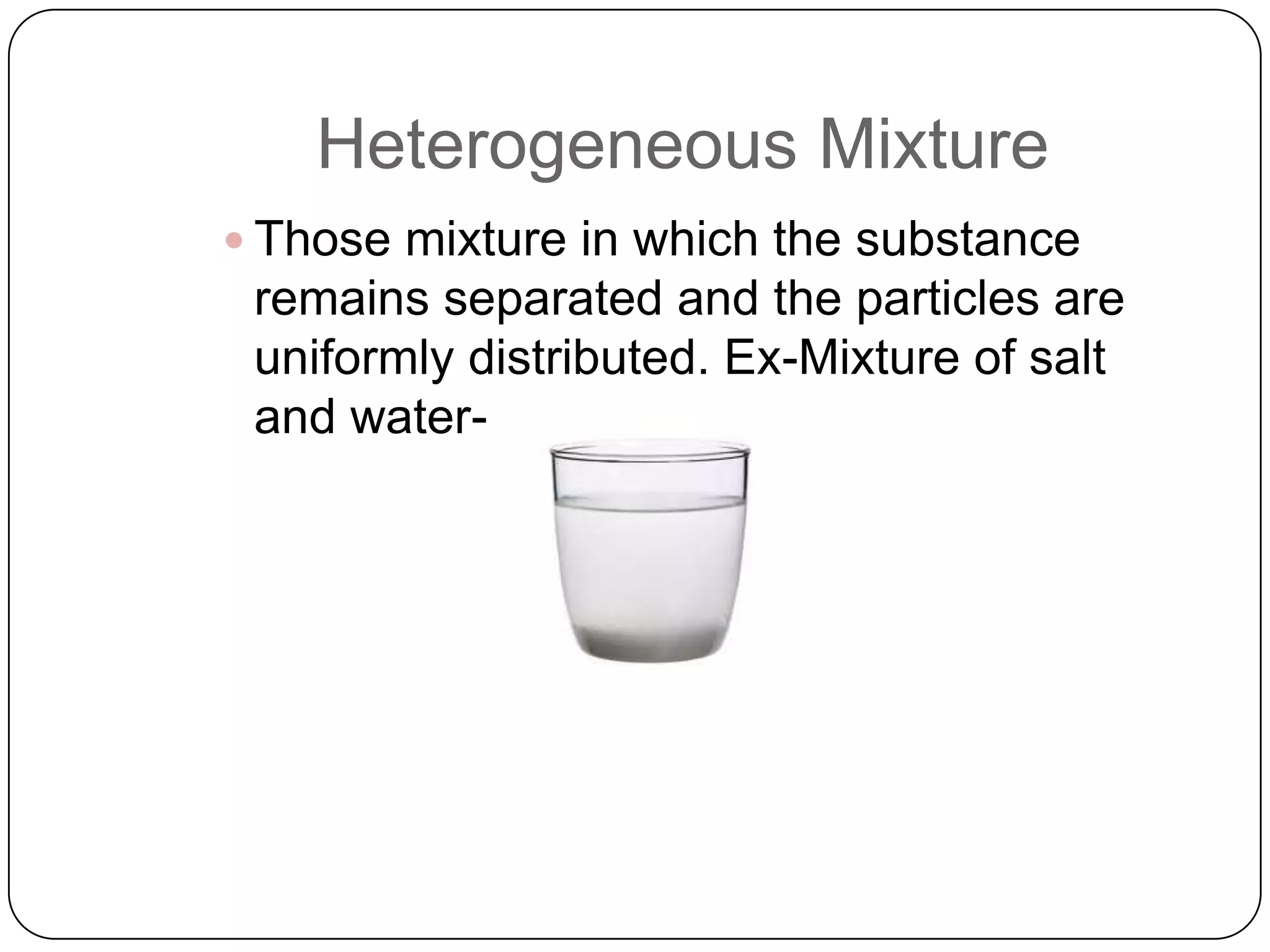
 Those mixture in which the substance

remains separated and the particles are
uniformly distributed. Ex-Mixture of salt
and water-
Solution
 It is a homogeneous mixture of two or more substances.
 It has two parts-

1-solute-substance in lesser quantity in solution.
2-solvent-substance in larger quantity in solution
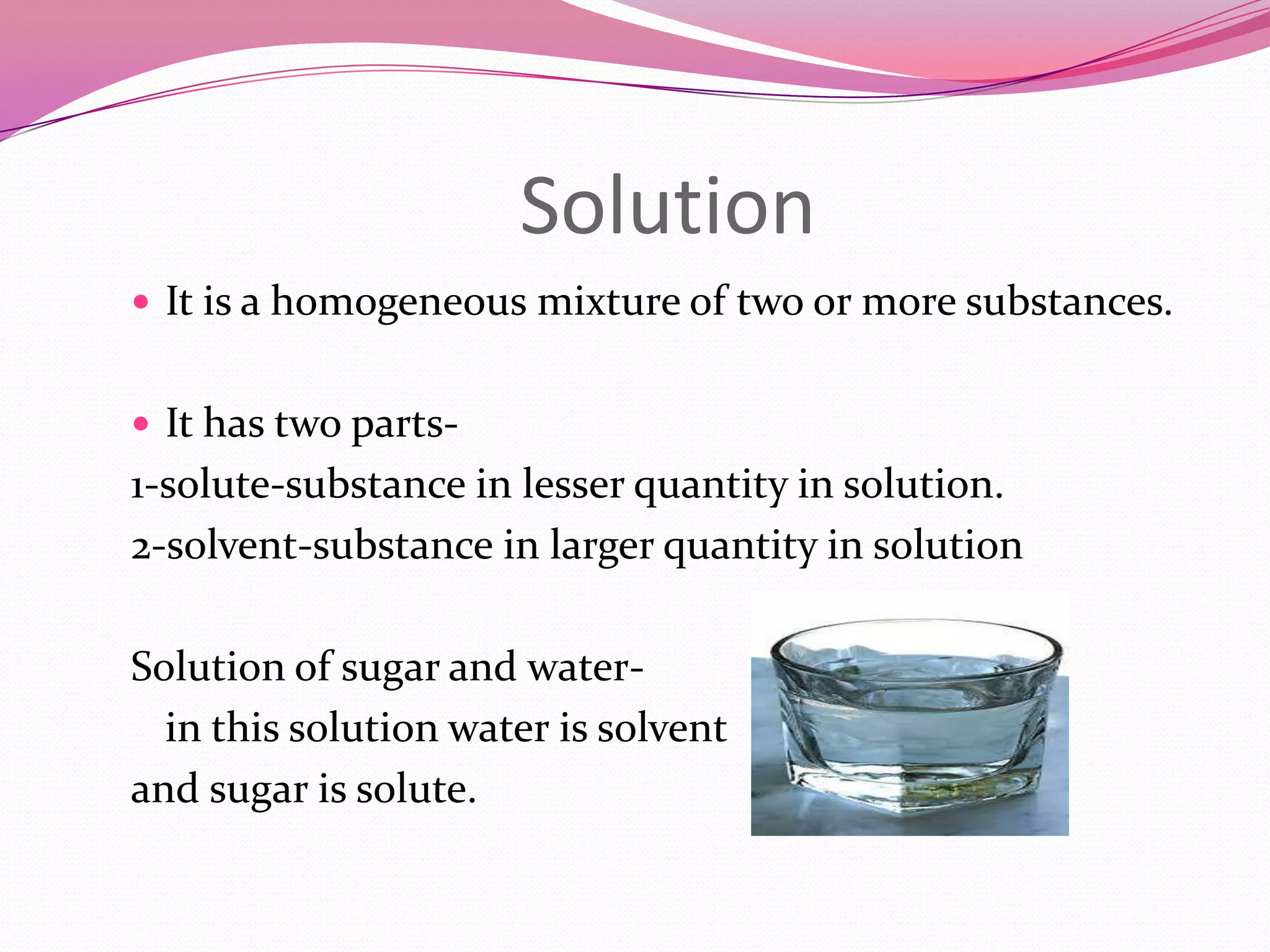
Solution of sugar and waterin this solution water is solvent
and sugar is solute.
True Solution
Characteristics of true solution are1-Particle size is less then 1mm.
2-The particle will show Brownian movement.
3-Electrophoresing will happen.
Types of solution1-Aqueous solution- solution having water as
solvent.

2-Non-aqueous solution- solution having
substance other than water as solvent.

3-Saturated solution-It is a solution in which
no further solute can be dissolve at a given
temperature.
4-Unsaturated solution-It is a solution in
which more solute can be dissolve at a
given temperature.
SOLUBILITY
 The

maximum amount of a solute which can be
dissolved in 100 grams of a solvent at a
specified temperature is known as solubility of
that solute in that solvent(at a given
temperature).
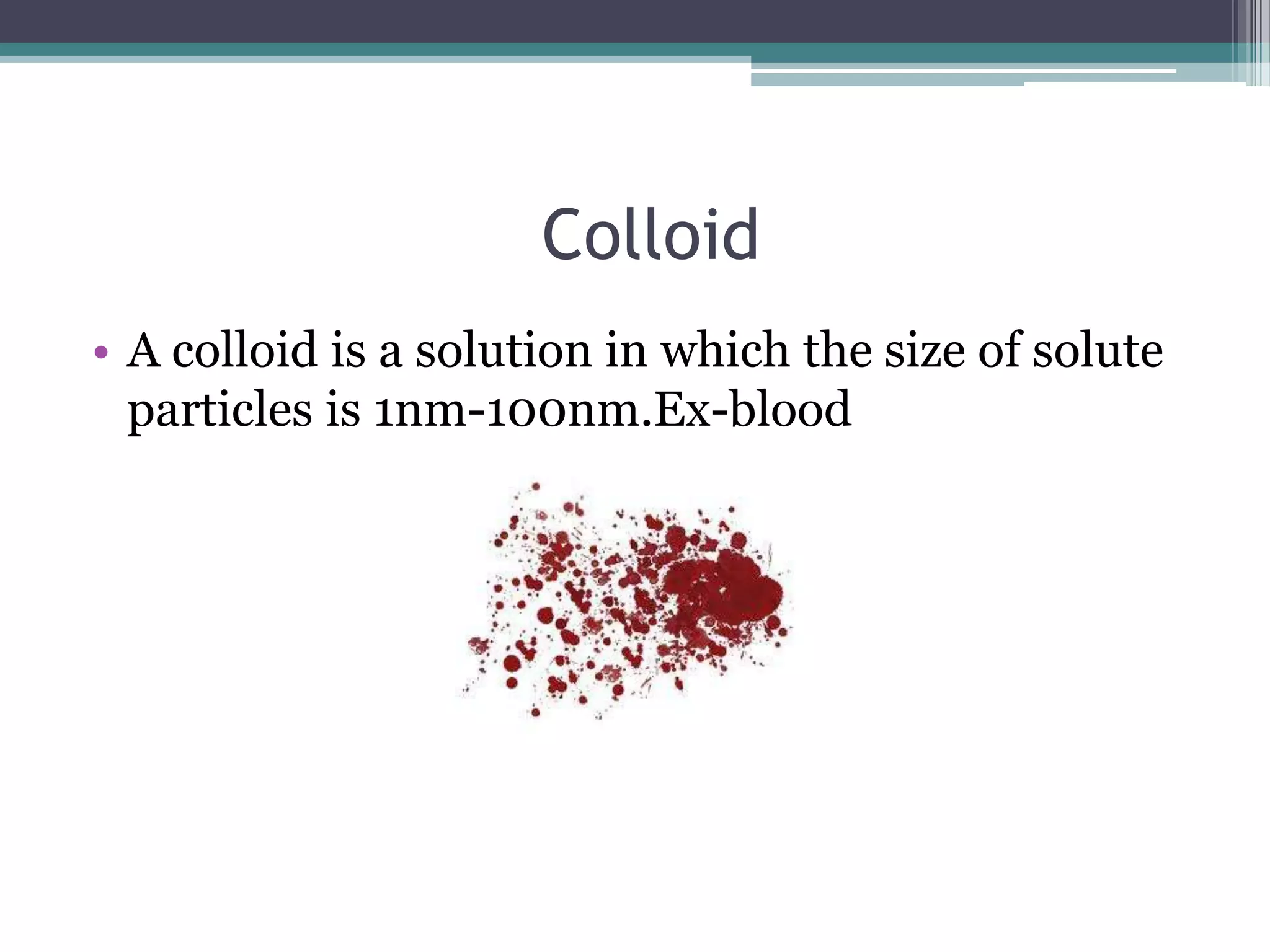
Colloid
• A colloid is a solution in which the size of solute
particles is 1nm-100nm.Ex-blood
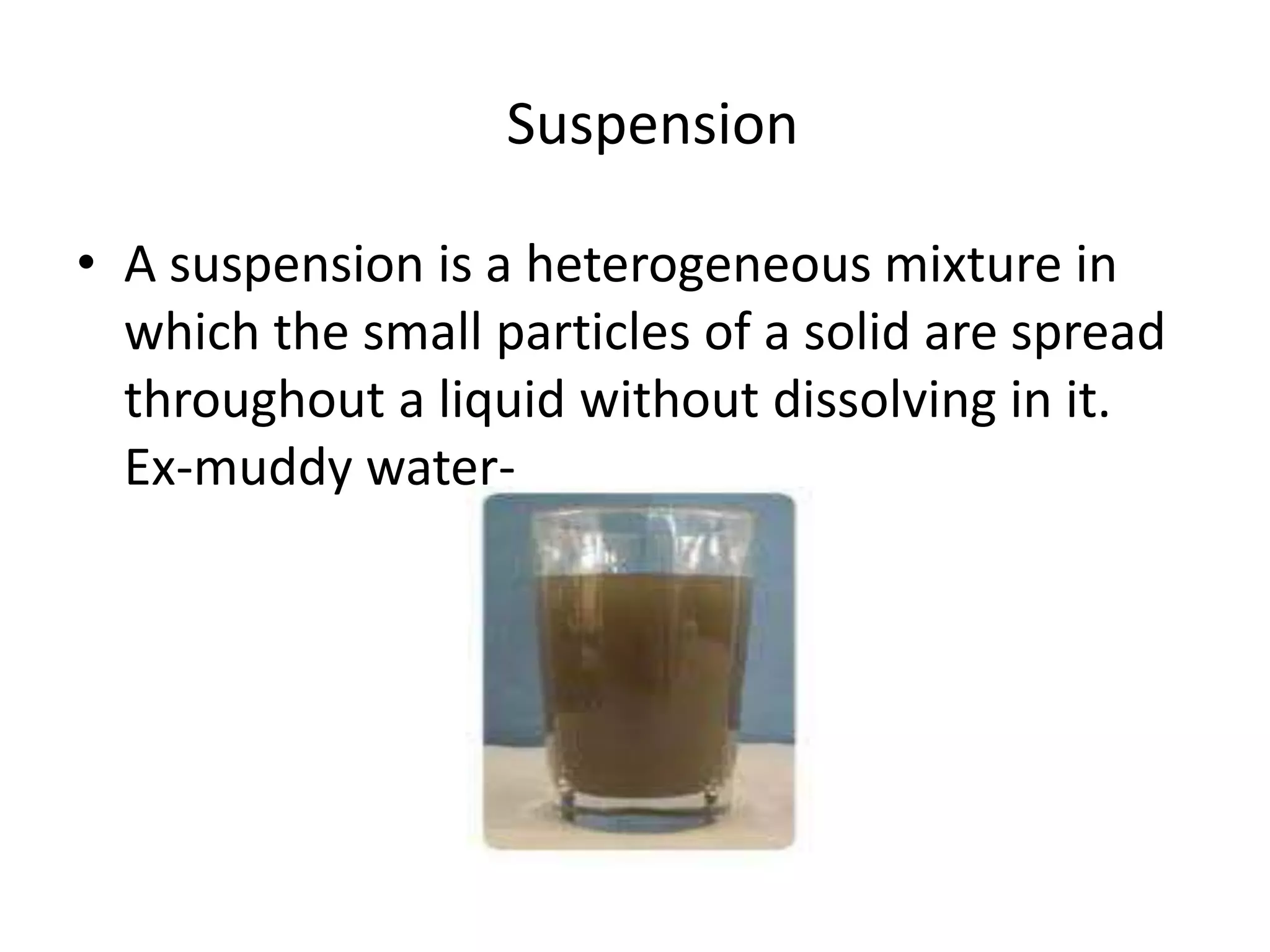
Suspension
• A suspension is a heterogeneous mixture in
which the small particles of a solid are spread
throughout a liquid without dissolving in it.
Ex-muddy water-
processes of separation
Some processes of separation are1-Evaporation
2-Sublimation
3-Centrifugation
4-seperating funnel
5-Distiallation
6-Fractinal Distillation
7-Cystalisation
8-Chromotography
9-Electrolysis

1-EVAPORATION


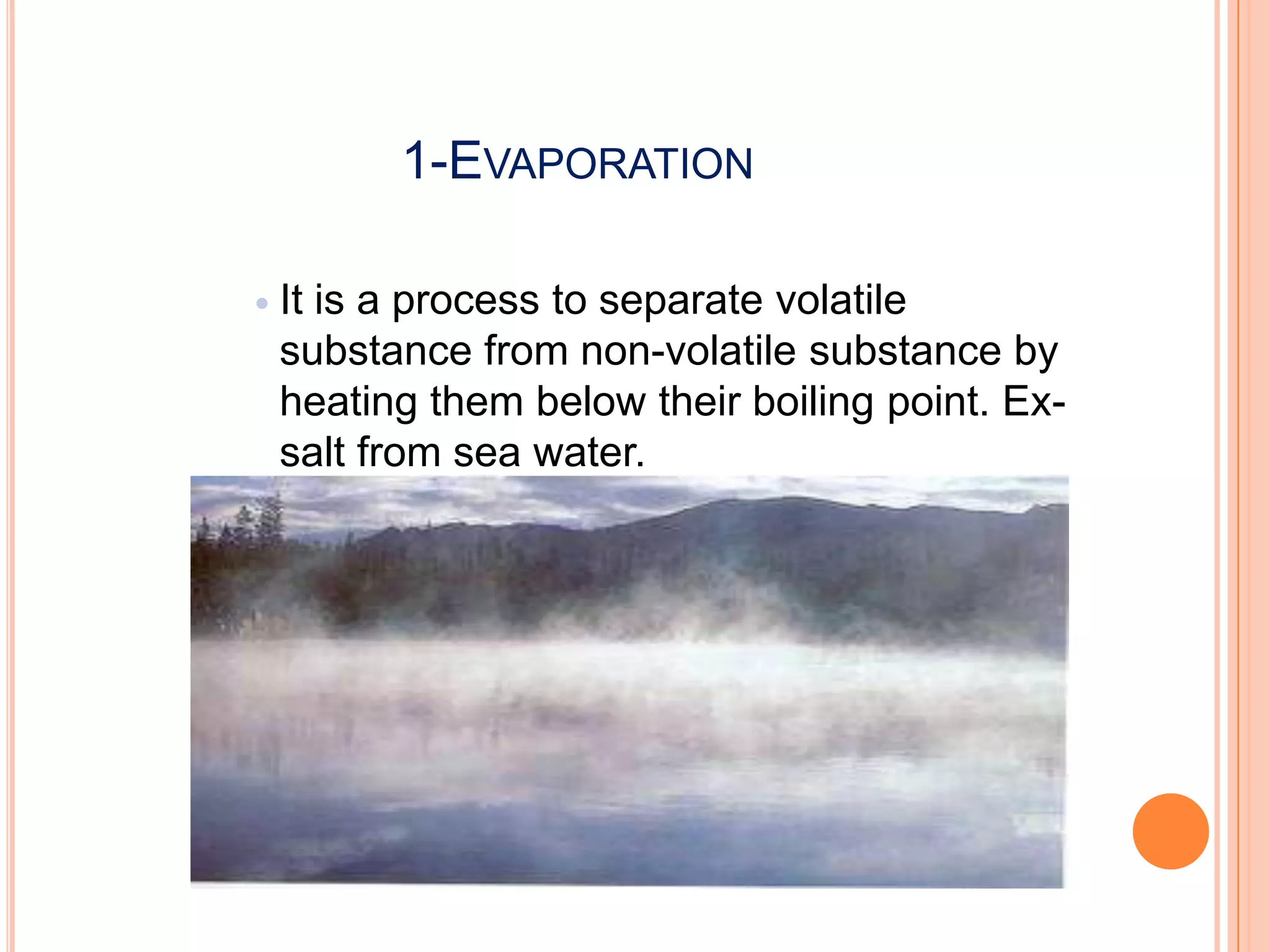
It is a process to separate volatile
substance from non-volatile substance by
heating them below their boiling point. Exsalt from sea water.
2-Sublimation
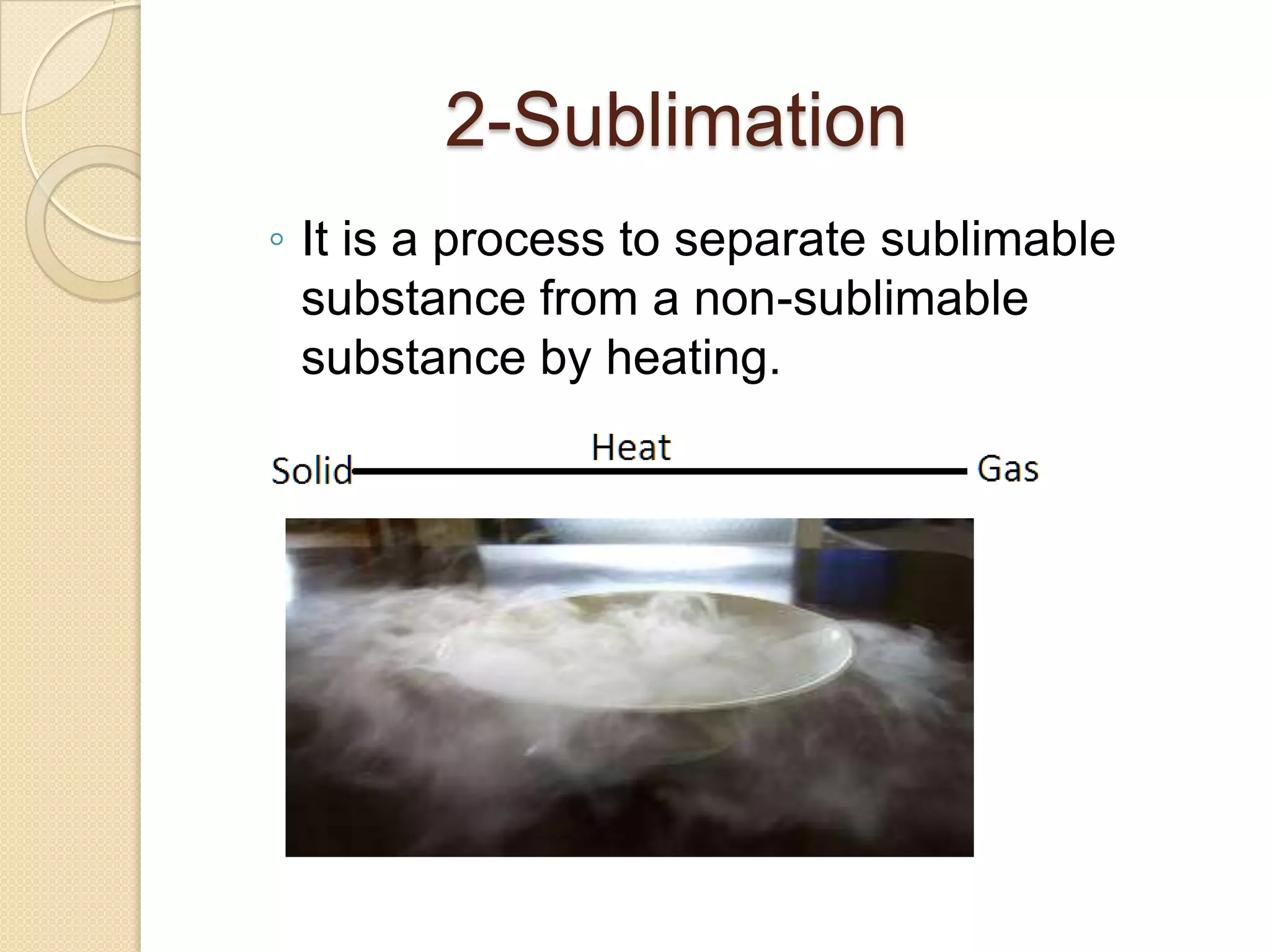
◦ It is a process to separate sublimable
substance from a non-sublimable
substance by heating.
3-Centrifugation
◦ It is a process to separate minute
suspended particles from liquid when
spun rapidly. The heavier particles are
forced to bottom and lighter ones towards
top.
◦ Ex- separation of ghee from curd


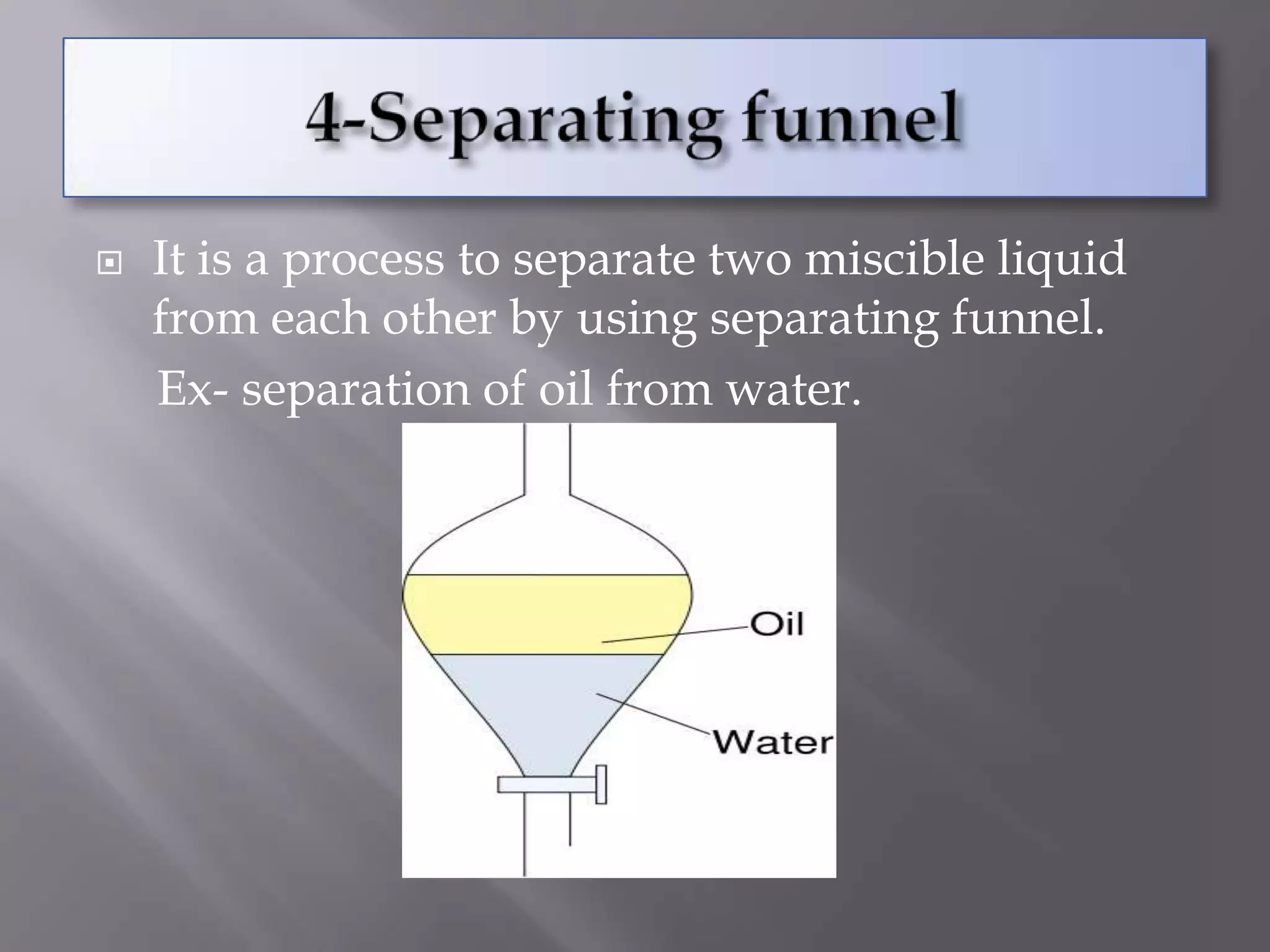
It is a process to separate two miscible liquid
from each other by using separating funnel.
Ex- separation of oil from water.


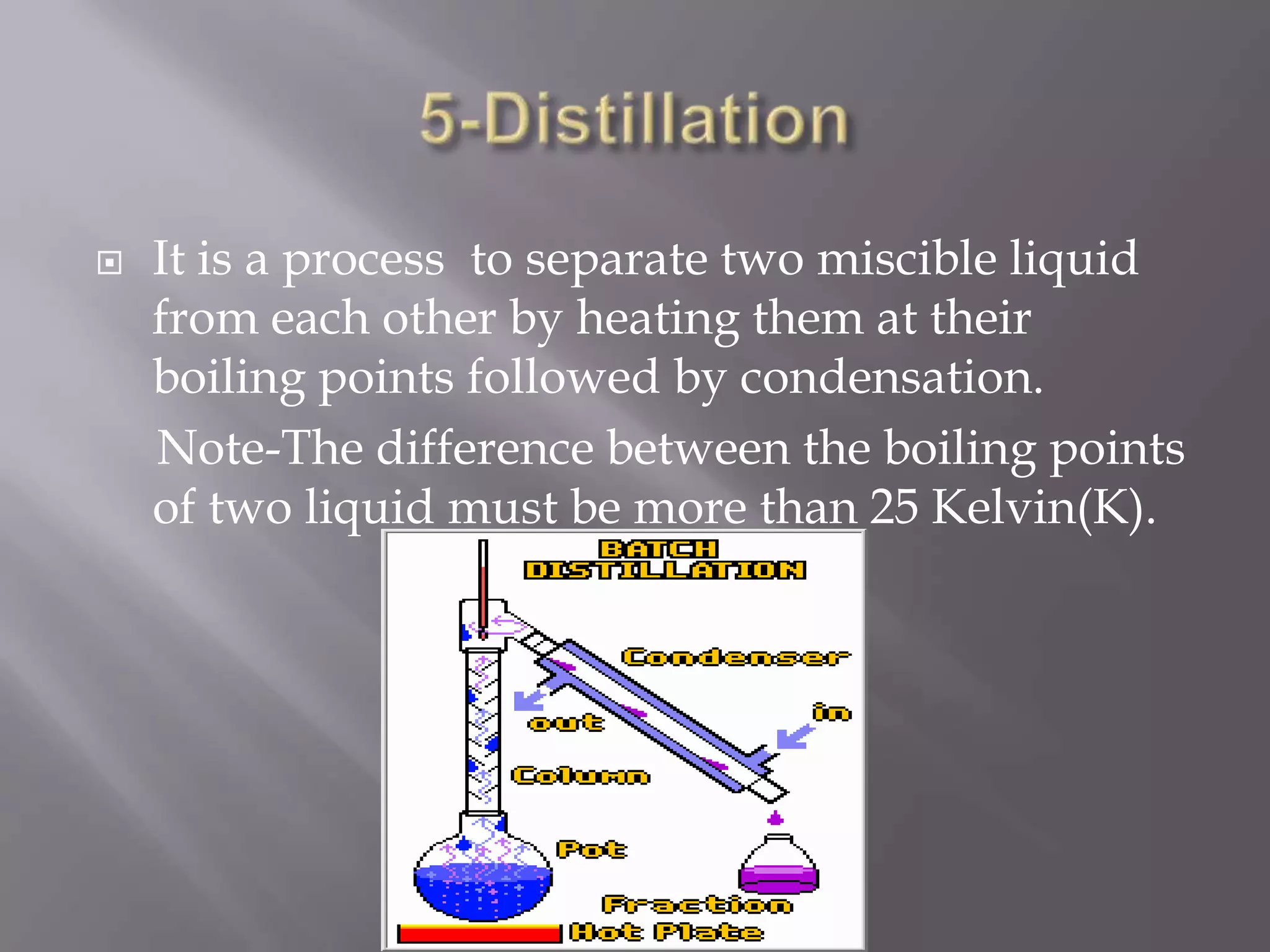
It is a process to separate two miscible liquid
from each other by heating them at their
boiling points followed by condensation.
Note-The difference between the boiling points
of two liquid must be more than 25 Kelvin(K).
6-FRACTIONAL
DISTILLATION
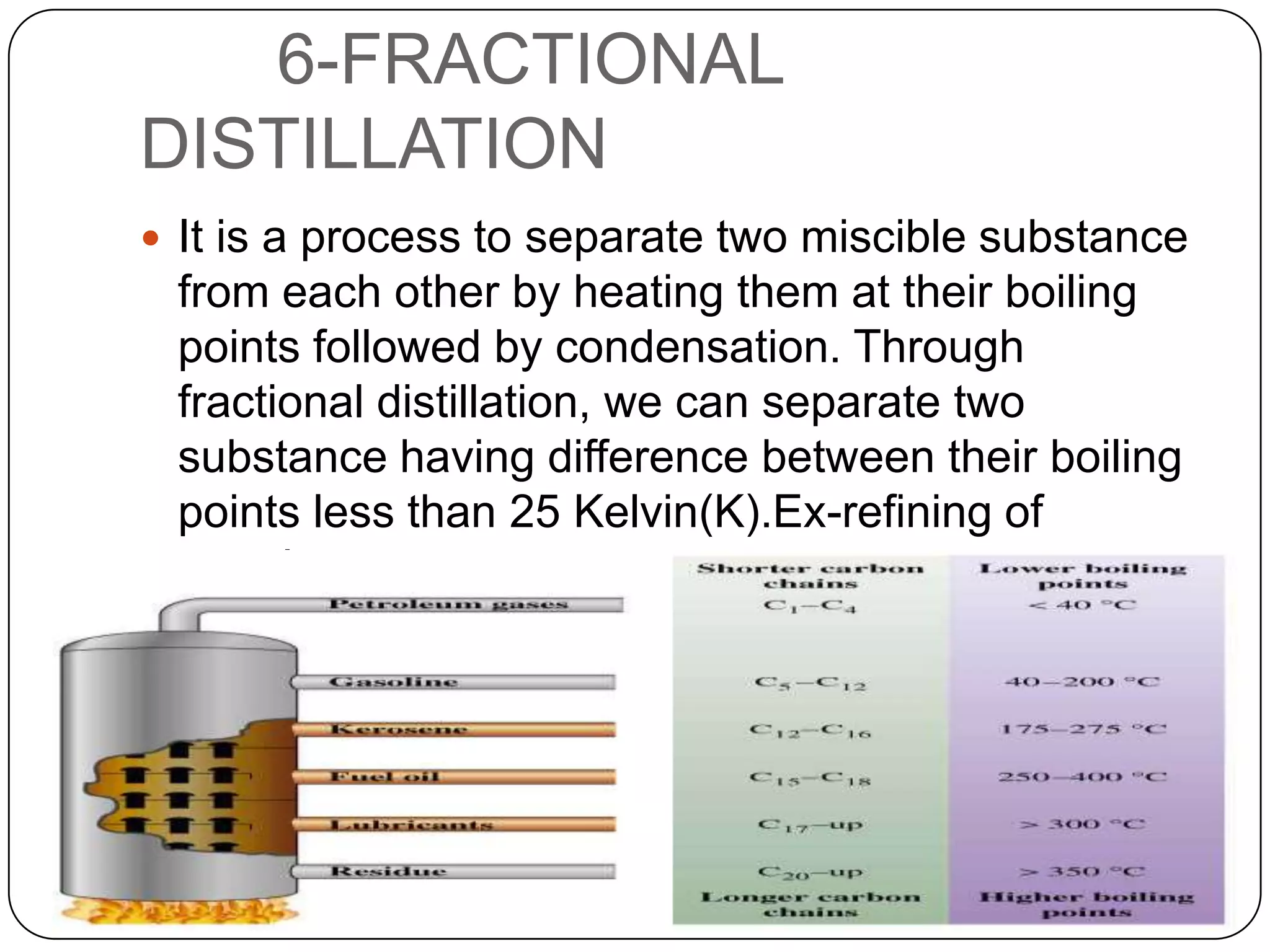
 It is a process to separate two miscible substance

from each other by heating them at their boiling
points followed by condensation. Through
fractional distillation, we can separate two
substance having difference between their boiling
points less than 25 Kelvin(K).Ex-refining of
petroleum
7-crystalisation
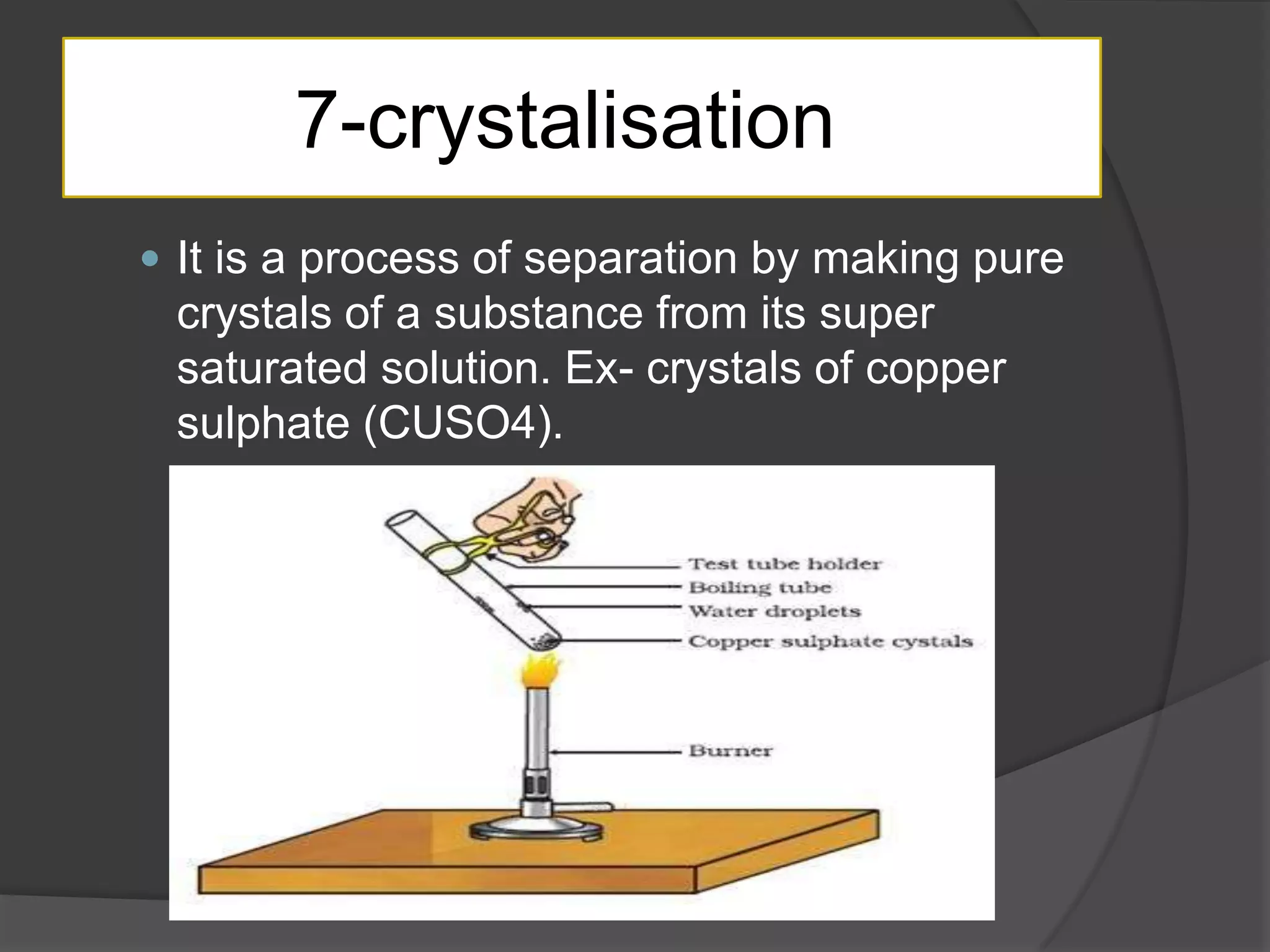
 It is a process of separation by making pure

crystals of a substance from its super
saturated solution. Ex- crystals of copper
sulphate (CUSO4).
◦ It is a process to separate different colours soluble
in same liquid.
Ex- 1-Separation of drug from blood.
2-Separation of chlorophyll from leaves.
3-Separation of colours from die.
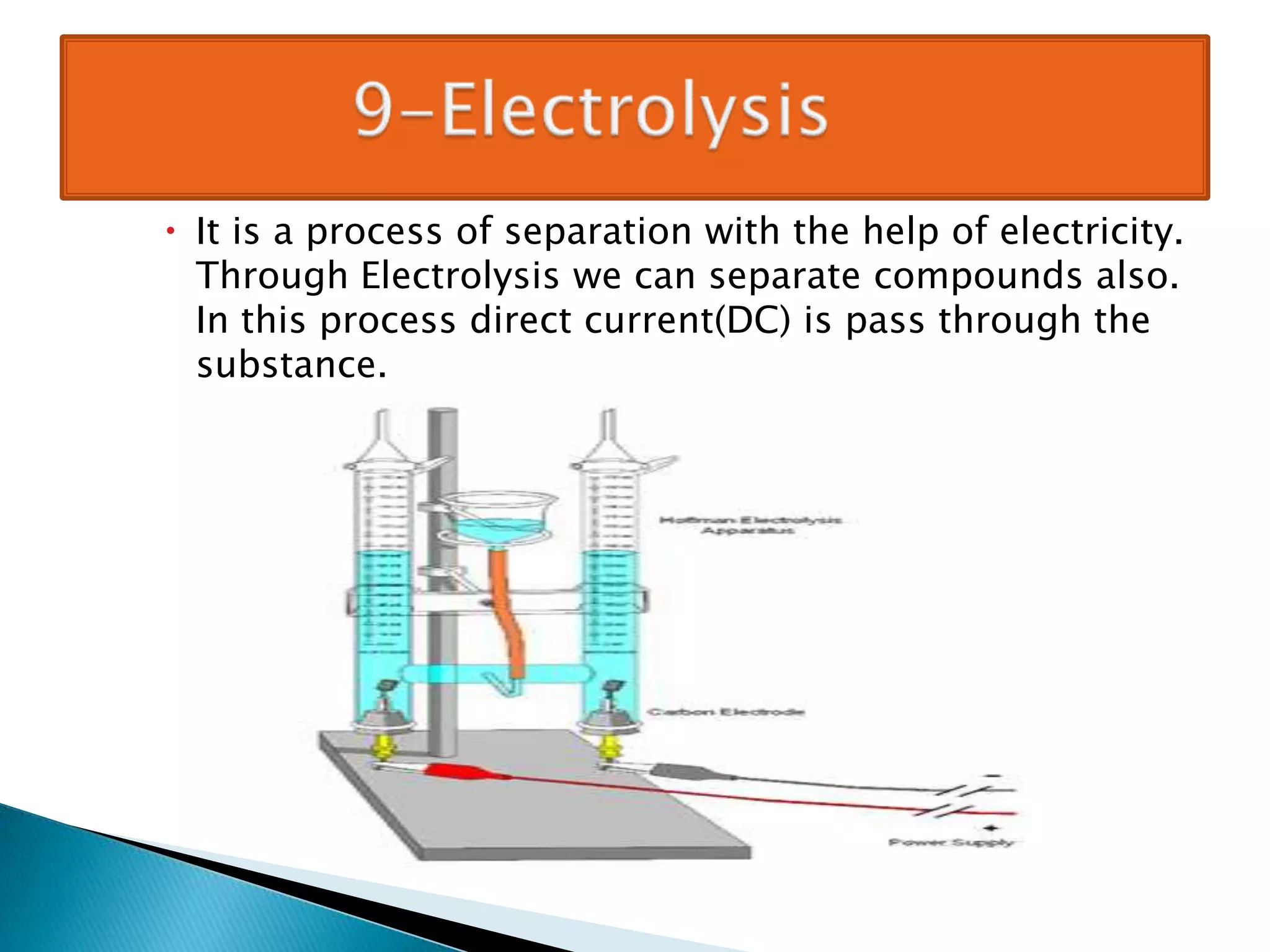
 It is a process of separation with the help of electricity.
Through Electrolysis we can separate compounds also.
In this process direct current(DC) is pass through the
substance.
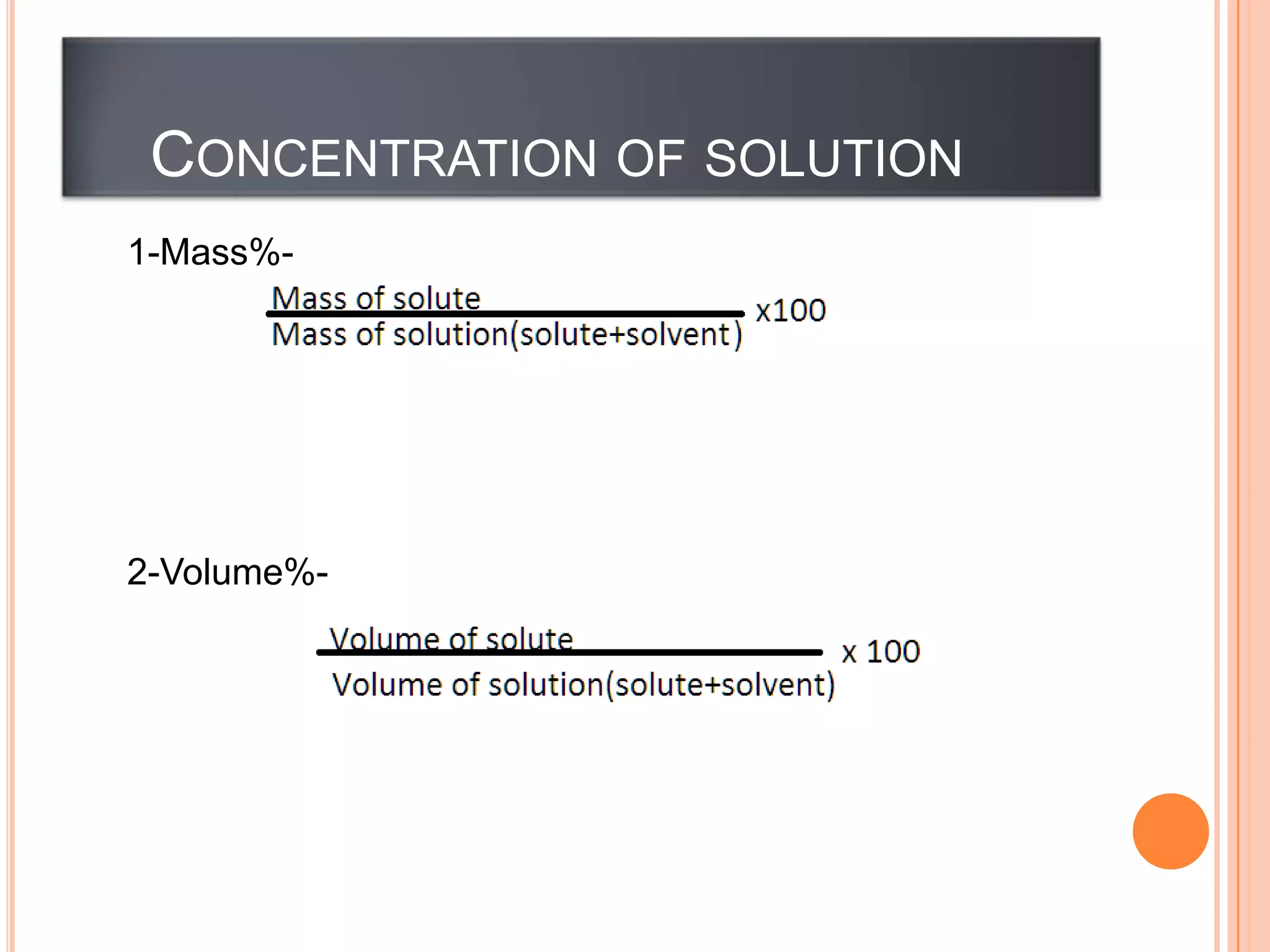
CONCENTRATION OF SOLUTION
1-Mass%-

2-Volume%-
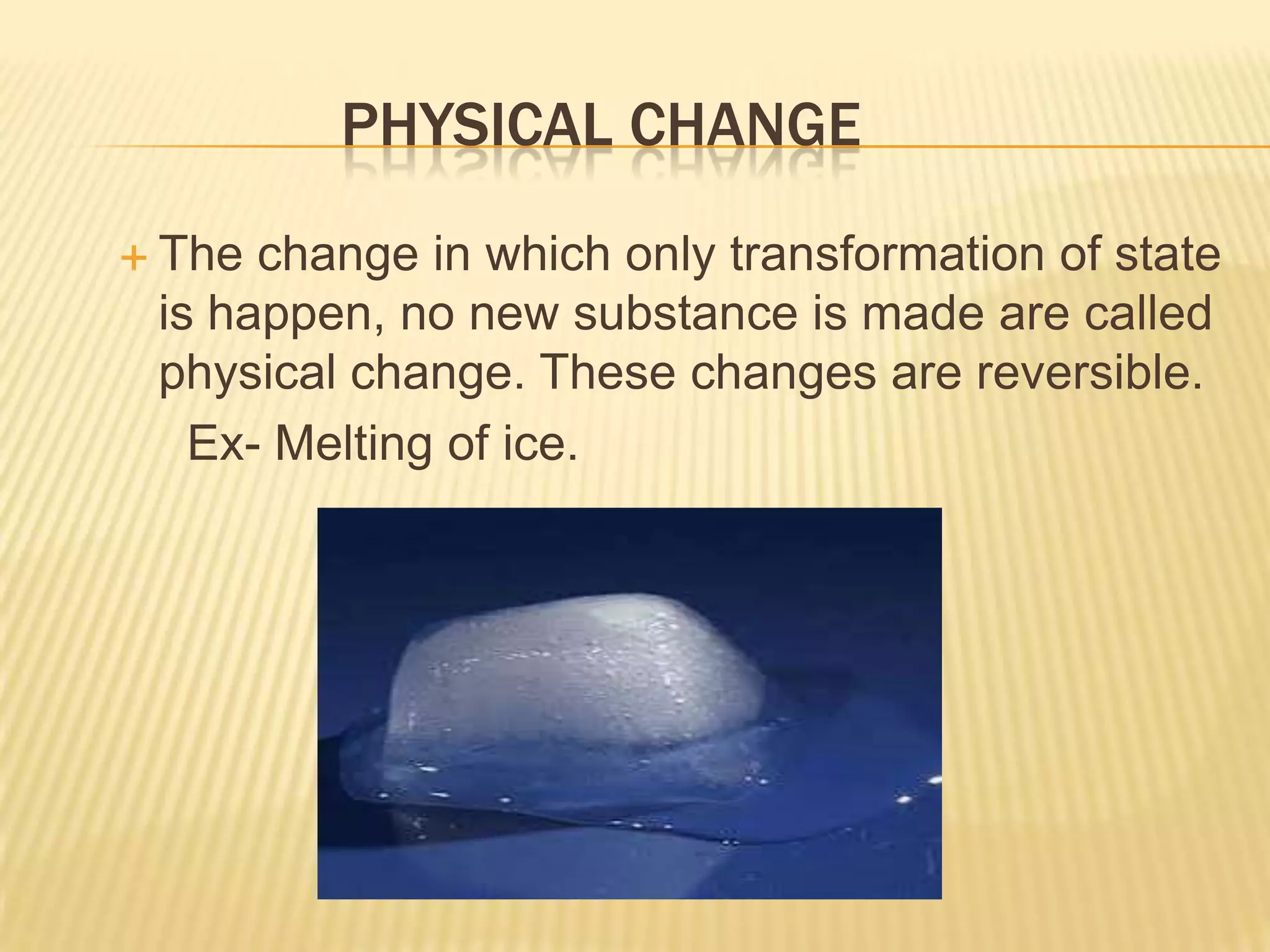
PHYSICAL CHANGE
 The

change in which only transformation of state
is happen, no new substance is made are called
physical change. These changes are reversible.
Ex- Melting of ice.
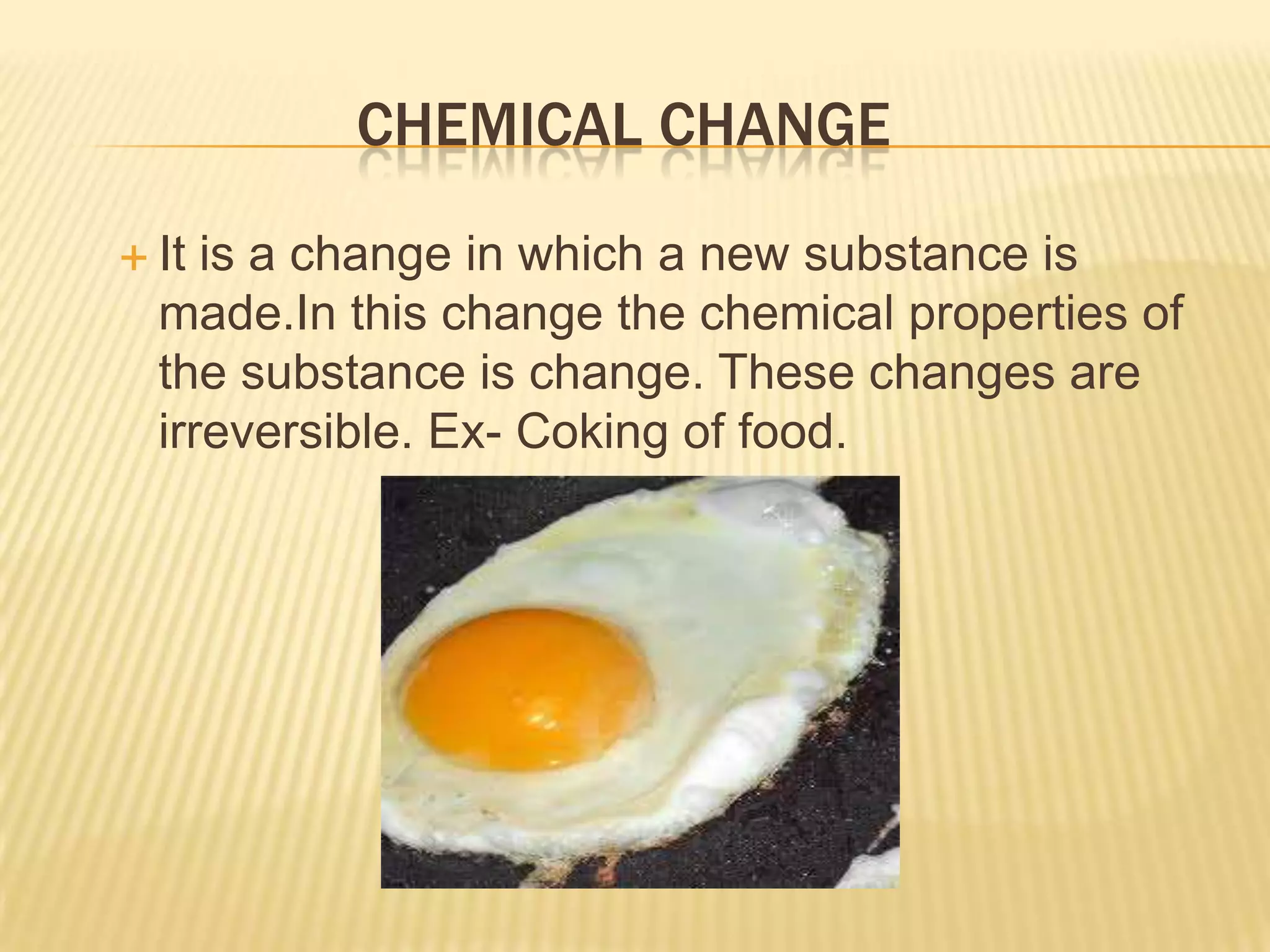
CHEMICAL CHANGE
 It

is a change in which a new substance is
made.In this change the chemical properties of
the substance is change. These changes are
irreversible. Ex- Coking of food.
The

END
THANKYOU

Chapter 2 - is matter around us pure

  • 1.
    PRESENTED BY- SHREETMISHRA CLASS-9 TH B(2 ND SHIFT) 2012-2013 ROOL NO.-25 SCHOOL-KENDRIYA VIDYALAYA, GOMTINAGAR, LUCKNOW
  • 2.
    WHAT IS MATTER? ANY THING THAT OCCUPY SPACE AND HAVE MASS IS CALLED MATTER.  Ex- etc.
  • 4.
    Pure SubstanceA puresubstance is one which is made up of only one kind of particle.  EX- PLATINUM Pure substance are of two types1-Element 2-Compound
  • 6.
    Element are alsoof three types Metals-  Nonmetals-  Metalloids- (semisolid) helium sulfur
  • 7.
    CompoundA compound isa substance which is made up of two or more element chemically combined in a fixed ratio by mass. Ex-water(H2O) NOTE- A compound can be broken into two or more element but not by physical processes.
  • 8.
    Mixture of saltand water Mixture are of two types- 1-Homogeneous Mixture 2-Heterogeneous Mixture
  • 9.
    Homogeneous Mixture  Thosemixture in which the substance are completely mixed together and particles are not distributed uniformly. Ex-mixture of sugar and water.
  • 10.
    Heterogeneous Mixture  Thosemixture in which the substance remains separated and the particles are uniformly distributed. Ex-Mixture of salt and water-
  • 11.
    Solution  It isa homogeneous mixture of two or more substances.  It has two parts- 1-solute-substance in lesser quantity in solution. 2-solvent-substance in larger quantity in solution Solution of sugar and waterin this solution water is solvent and sugar is solute.
  • 12.
    True Solution Characteristics oftrue solution are1-Particle size is less then 1mm. 2-The particle will show Brownian movement. 3-Electrophoresing will happen.
  • 13.
    Types of solution1-Aqueoussolution- solution having water as solvent. 2-Non-aqueous solution- solution having substance other than water as solvent. 3-Saturated solution-It is a solution in which no further solute can be dissolve at a given temperature. 4-Unsaturated solution-It is a solution in which more solute can be dissolve at a given temperature.
  • 14.
    SOLUBILITY  The maximum amountof a solute which can be dissolved in 100 grams of a solvent at a specified temperature is known as solubility of that solute in that solvent(at a given temperature).
  • 15.
    Colloid • A colloidis a solution in which the size of solute particles is 1nm-100nm.Ex-blood
  • 16.
    Suspension • A suspensionis a heterogeneous mixture in which the small particles of a solid are spread throughout a liquid without dissolving in it. Ex-muddy water-
  • 17.
    processes of separation Someprocesses of separation are1-Evaporation 2-Sublimation 3-Centrifugation 4-seperating funnel 5-Distiallation 6-Fractinal Distillation 7-Cystalisation 8-Chromotography 9-Electrolysis 
  • 18.
    1-EVAPORATION  It is aprocess to separate volatile substance from non-volatile substance by heating them below their boiling point. Exsalt from sea water.
  • 19.
    2-Sublimation ◦ It isa process to separate sublimable substance from a non-sublimable substance by heating.
  • 20.
    3-Centrifugation ◦ It isa process to separate minute suspended particles from liquid when spun rapidly. The heavier particles are forced to bottom and lighter ones towards top. ◦ Ex- separation of ghee from curd
  • 21.
     It is aprocess to separate two miscible liquid from each other by using separating funnel. Ex- separation of oil from water.
  • 22.
     It is aprocess to separate two miscible liquid from each other by heating them at their boiling points followed by condensation. Note-The difference between the boiling points of two liquid must be more than 25 Kelvin(K).
  • 23.
    6-FRACTIONAL DISTILLATION  It isa process to separate two miscible substance from each other by heating them at their boiling points followed by condensation. Through fractional distillation, we can separate two substance having difference between their boiling points less than 25 Kelvin(K).Ex-refining of petroleum
  • 24.
    7-crystalisation  It isa process of separation by making pure crystals of a substance from its super saturated solution. Ex- crystals of copper sulphate (CUSO4).
  • 25.
    ◦ It isa process to separate different colours soluble in same liquid. Ex- 1-Separation of drug from blood. 2-Separation of chlorophyll from leaves. 3-Separation of colours from die.
  • 26.
     It isa process of separation with the help of electricity. Through Electrolysis we can separate compounds also. In this process direct current(DC) is pass through the substance.
  • 27.
  • 28.
    PHYSICAL CHANGE  The changein which only transformation of state is happen, no new substance is made are called physical change. These changes are reversible. Ex- Melting of ice.
  • 29.
    CHEMICAL CHANGE  It isa change in which a new substance is made.In this change the chemical properties of the substance is change. These changes are irreversible. Ex- Coking of food.
  • 30.