Steps in the Entrepreneurial Process

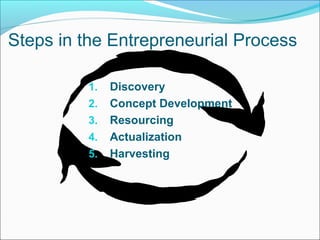
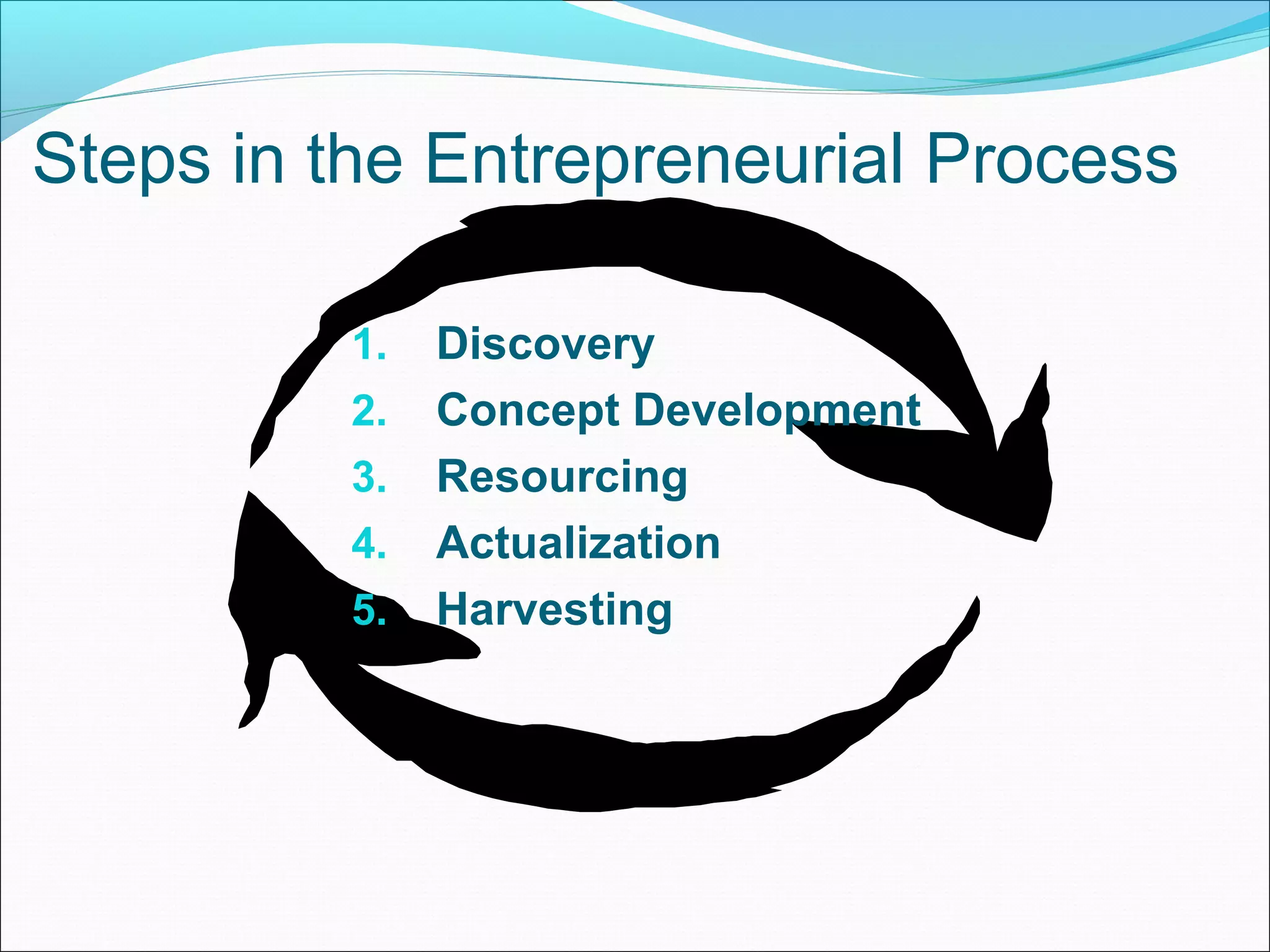
          1.   Discovery
          2.   Concept Development
          3.   Resourcing
          4.   Actualization
          5.   Harvesting
Steps in the Entrepreneurial Process

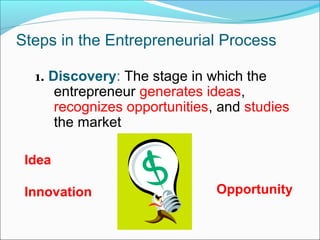
  1. Discovery: The stage in which the
      entrepreneur generates ideas,
      recognizes opportunities, and studies
      the market

 Idea

 Innovation                    Opportunity
What is An Idea, Opportunity and Innovation ?
An idea is a concept for a product or service that doesnít
exist or is not currently available in a market niche. It
may be a brand-new concept or an improvement of a
current product or service.

In contrast, an opportunity is an idea for a new product or
service with a market that is willing to pay for that
product or service so that it can form the basis of a
profitable business.

Innovation is the process of making changes to something
that adds value to customers.
                                                             2-3
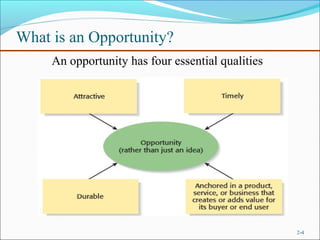
What is an Opportunity?
     An opportunity has four essential qualities


                                                   2-4
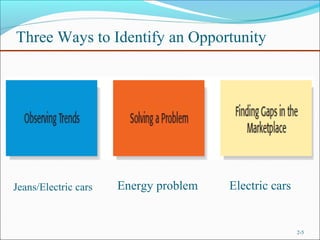
Three Ways to Identify an Opportunity


Jeans/Electric cars   Energy problem   Electric cars


                                                       2-5
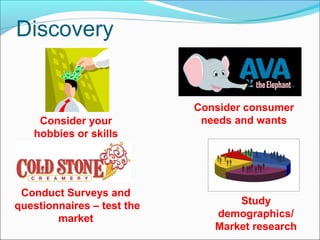
Discovery


                            Consider consumer
    Consider your            needs and wants
   hobbies or skills


 Conduct Surveys and
questionnaires – test the          Study
        market                 demographics/
                               Market research
Steps in the Entrepreneurial Process

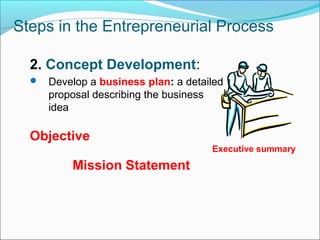
  2. Concept Development:
     Develop a business plan: a detailed
      proposal describing the business
      idea

  Objective
                                      Executive summary

          Mission Statement
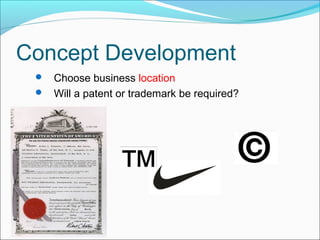
Concept Development
  Choose business location
  Will a patent or trademark be required?
Steps in the Entrepreneurial Process

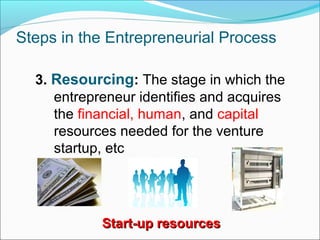
  3. Resourcing: The stage in which the
     entrepreneur identifies and acquires
     the financial, human, and capital
     resources needed for the venture
     startup, etc


            Start-up resources
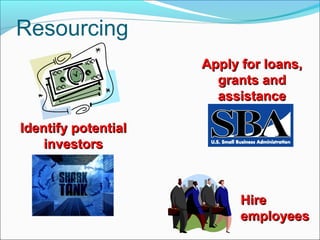
Resourcing
                     Apply for loans,
                       grants and
                       assistance

Identify potential
    investors


                           Hire
                           employees
Steps in the Entrepreneurial
Process
 4. Actualization: The stage in which
   the entrepreneur operates the
   business and utilizes resources to
   achieve its goals/objectives.

             $$ Grand Opening $$

            Day-to-Day Operations
Steps in the Entrepreneurial
Process
 5. Harvesting: The stage in which the
    entrepreneur decides on business’s
    future growth/ development, or
    demise
         What is your 5-year or 10-year plan?

   Consider adding locations or providing different
                  products/services

                 Will you go public?
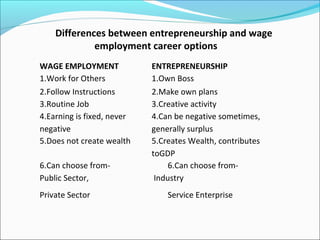
Differences between entrepreneurship and wage
             employment career options
WAGE EMPLOYMENT             ENTREPRENEURSHIP
1.Work for Others           1.Own Boss
2.Follow Instructions       2.Make own plans
3.Routine Job               3.Creative activity
4.Earning is fixed, never   4.Can be negative sometimes,
negative                    generally surplus
5.Does not create wealth    5.Creates Wealth, contributes
                            toGDP
6.Can choose from-               6.Can choose from-
Public Sector,               Industry
Private Sector                  Service Enterprise
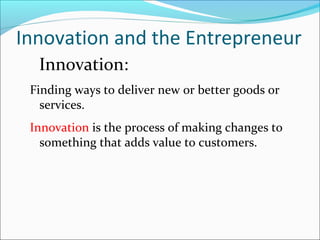
Innovation and the Entrepreneur
  Innovation:
 Finding ways to deliver new or better goods or
   services.
 Innovation is the process of making changes to
   something that adds value to customers.
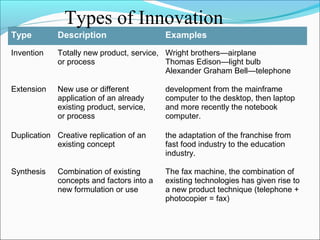
Types of Innovation
Type         Description                   Examples
Invention    Totally new product, service, Wright brothers—airplane
             or process                    Thomas Edison—light bulb
                                           Alexander Graham Bell—telephone

Extension    New use or different          development from the mainframe
             application of an already     computer to the desktop, then laptop
             existing product, service,    and more recently the notebook
             or process                    computer.

Duplication Creative replication of an     the adaptation of the franchise from
            existing concept               fast food industry to the education
                                           industry.

Synthesis    Combination of existing       The fax machine, the combination of
             concepts and factors into a   existing technologies has given rise to
             new formulation or use        a new product technique (telephone +
                                           photocopier = fax)
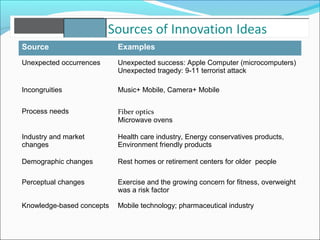
Source                     Examples
Unexpected occurrences     Unexpected success: Apple Computer (microcomputers)
                           Unexpected tragedy: 9-11 terrorist attack

Incongruities              Music+ Mobile, Camera+ Mobile


Process needs              Fiber optics
                           Microwave ovens

Industry and market        Health care industry, Energy conservatives products,
changes                    Environment friendly products

Demographic changes        Rest homes or retirement centers for older people

Perceptual changes         Exercise and the growing concern for fitness, overweight
                           was a risk factor

Knowledge-based concepts   Mobile technology; pharmaceutical industry
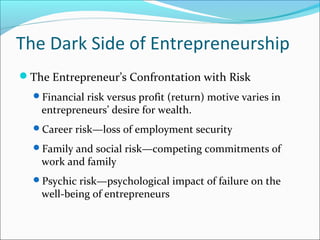
The Dark Side of Entrepreneurship
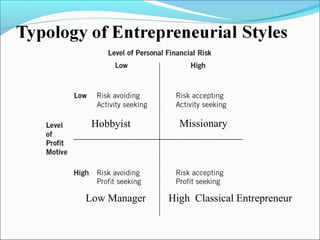
The Entrepreneur’s Confrontation with Risk
  Financial risk versus profit (return) motive varies in
    entrepreneurs’ desire for wealth.
  Career risk—loss of employment security

  Family and social risk—competing commitments of
    work and family
  Psychic risk—psychological impact of failure on the
    well-being of entrepreneurs
Hobbyist       Missionary


Low Manager   High Classical Entrepreneur
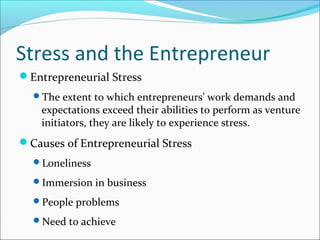
Stress and the Entrepreneur
Entrepreneurial Stress
  The extent to which entrepreneurs’ work demands and
    expectations exceed their abilities to perform as venture
    initiators, they are likely to experience stress.
Causes of Entrepreneurial Stress
  Loneliness

  Immersion in business

  People problems

  Need to achieve
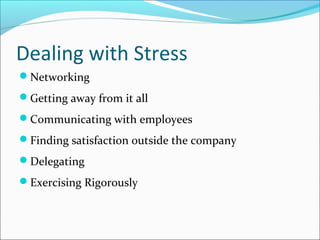
Dealing with Stress
Networking
Getting away from it all
Communicating with employees
Finding satisfaction outside the company
Delegating
Exercising Rigorously

Chapter 2 entrepreneurship (lecture 2)

  • 1.
    Steps in theEntrepreneurial Process 1. Discovery 2. Concept Development 3. Resourcing 4. Actualization 5. Harvesting
  • 2.
    Steps in theEntrepreneurial Process 1. Discovery: The stage in which the entrepreneur generates ideas, recognizes opportunities, and studies the market Idea Innovation Opportunity
  • 3.
    What is AnIdea, Opportunity and Innovation ? An idea is a concept for a product or service that doesnít exist or is not currently available in a market niche. It may be a brand-new concept or an improvement of a current product or service. In contrast, an opportunity is an idea for a new product or service with a market that is willing to pay for that product or service so that it can form the basis of a profitable business. Innovation is the process of making changes to something that adds value to customers. 2-3
  • 4.
    What is anOpportunity? An opportunity has four essential qualities 2-4
  • 5.
    Three Ways toIdentify an Opportunity Jeans/Electric cars Energy problem Electric cars 2-5
  • 6.
    Discovery Consider consumer Consider your needs and wants hobbies or skills Conduct Surveys and questionnaires – test the Study market demographics/ Market research
  • 7.
    Steps in theEntrepreneurial Process 2. Concept Development:  Develop a business plan: a detailed proposal describing the business idea Objective Executive summary Mission Statement
  • 9.
    Concept Development Choose business location  Will a patent or trademark be required?
  • 11.
    Steps in theEntrepreneurial Process 3. Resourcing: The stage in which the entrepreneur identifies and acquires the financial, human, and capital resources needed for the venture startup, etc Start-up resources
  • 12.
    Resourcing Apply for loans, grants and assistance Identify potential investors Hire employees
  • 13.
    Steps in theEntrepreneurial Process 4. Actualization: The stage in which the entrepreneur operates the business and utilizes resources to achieve its goals/objectives. $$ Grand Opening $$ Day-to-Day Operations
  • 14.
    Steps in theEntrepreneurial Process 5. Harvesting: The stage in which the entrepreneur decides on business’s future growth/ development, or demise What is your 5-year or 10-year plan? Consider adding locations or providing different products/services Will you go public?
  • 15.
    Differences between entrepreneurshipand wage employment career options WAGE EMPLOYMENT ENTREPRENEURSHIP 1.Work for Others 1.Own Boss 2.Follow Instructions 2.Make own plans 3.Routine Job 3.Creative activity 4.Earning is fixed, never 4.Can be negative sometimes, negative generally surplus 5.Does not create wealth 5.Creates Wealth, contributes toGDP 6.Can choose from- 6.Can choose from- Public Sector, Industry Private Sector Service Enterprise
  • 16.
    Innovation and theEntrepreneur Innovation: Finding ways to deliver new or better goods or services. Innovation is the process of making changes to something that adds value to customers.
  • 17.
    Types of Innovation Type Description Examples Invention Totally new product, service, Wright brothers—airplane or process Thomas Edison—light bulb Alexander Graham Bell—telephone Extension New use or different development from the mainframe application of an already computer to the desktop, then laptop existing product, service, and more recently the notebook or process computer. Duplication Creative replication of an the adaptation of the franchise from existing concept fast food industry to the education industry. Synthesis Combination of existing The fax machine, the combination of concepts and factors into a existing technologies has given rise to new formulation or use a new product technique (telephone + photocopier = fax)
  • 18.
    Source Examples Unexpected occurrences Unexpected success: Apple Computer (microcomputers) Unexpected tragedy: 9-11 terrorist attack Incongruities Music+ Mobile, Camera+ Mobile Process needs Fiber optics Microwave ovens Industry and market Health care industry, Energy conservatives products, changes Environment friendly products Demographic changes Rest homes or retirement centers for older people Perceptual changes Exercise and the growing concern for fitness, overweight was a risk factor Knowledge-based concepts Mobile technology; pharmaceutical industry
  • 19.
    The Dark Sideof Entrepreneurship The Entrepreneur’s Confrontation with Risk Financial risk versus profit (return) motive varies in entrepreneurs’ desire for wealth. Career risk—loss of employment security Family and social risk—competing commitments of work and family Psychic risk—psychological impact of failure on the well-being of entrepreneurs
  • 20.
    Hobbyist Missionary Low Manager High Classical Entrepreneur
  • 21.
    Stress and theEntrepreneur Entrepreneurial Stress The extent to which entrepreneurs’ work demands and expectations exceed their abilities to perform as venture initiators, they are likely to experience stress. Causes of Entrepreneurial Stress Loneliness Immersion in business People problems Need to achieve
  • 22.
    Dealing with Stress Networking Gettingaway from it all Communicating with employees Finding satisfaction outside the company Delegating Exercising Rigorously