Chapter 2 – Current Issues in Earth and Environmental Science  Why is the Earth in trouble?
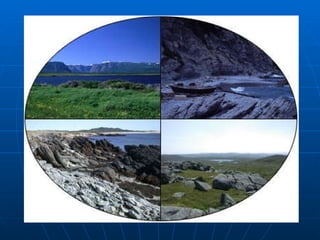
I.  Introduction  A. What is Earth Science?  1. Definition – the study of the Earth,  its history, its changes, and its place in the universe
 
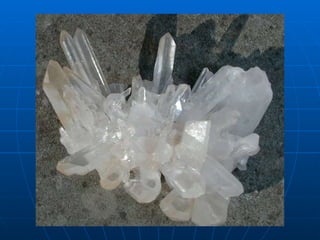
2. Branches of Earth Science  a.  Geology  – Earth’s origin, history, and structure
 
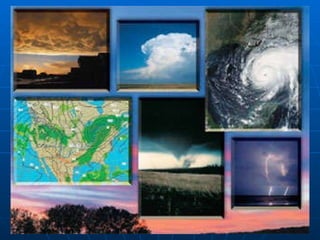
b.  Meteorology  – Earth’s atmosphere, weather, and climate
 
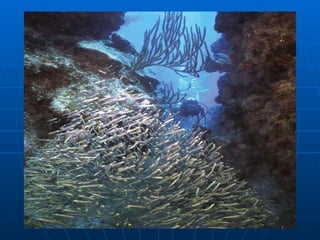
c.  Oceanography  - Earth’s oceans, including physical features, life forms, and natural resources
 
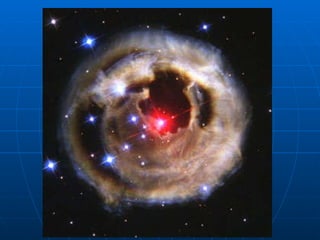
d.  Astronomy  – the position, composition, size, and other characteristics of the planets, stars, and objects in space
 
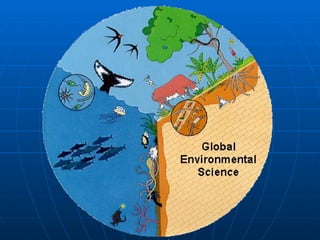
B. What is Environmental Science?  1. Definition – the study of the environments in which organisms live and  how they interact
 
2.  An  integrated science  that includes elements of biology, chemistry, and physics  3. Incorporates the  impact of human activities , both planned and unplanned, on the environment
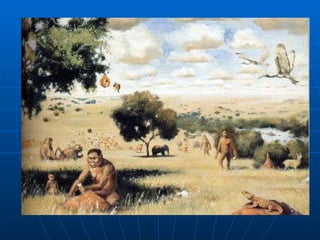
II. History of Human Influence on the Earth  A. Hunter-Gatherer Society  1. Humans lived as hunter-gatherers from the time of their appearance on Earth (60,000-90,000 years ago) until about  12,000  years ago
 
2. Ways of life:  a. Nomadic –  moved around  to find enough food for survival  b. Used  earth wisdom  – expert knowledge of natural surroundings (which animals and plants can be eaten or used as medicines, where to find water, how to predict the weather)  c. Used  sunlight, fire, and muscle power  for sources of energy
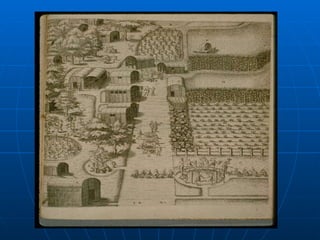
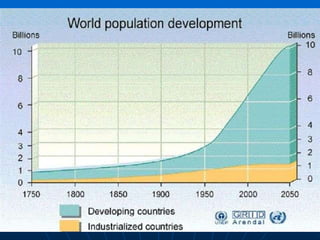
B. Agricultural Revolution  1. Occurred about  10,000-12,000  years ago  2. Ways of Life:  a. Settled into communities and had larger families; eventually urbanization ( development of cities ) became practical – led to the first surge in  human population growth
 
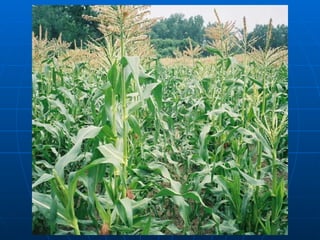
b. Cultivated plants and domesticated animals for human  use Ex.  wheat, rice, cows, horses c. Cleared vast amounts of land and used more  non-renewable resources
 
C. Industrial Revolution  1. Began in the  mid 1700’s  2. Ways of life:  a. Human population grew  exponentially  b.  Production, commerce, trade, and distribution of goods  all expanded rapidly  c. Became heavily dependent on non-renewable resources and fossil fuels, resulting in increased  air, water, and land pollution
 
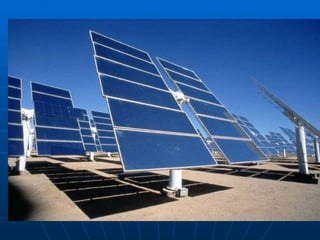
III. Current Environmental Issues  A. Resource Consumption  1. Renewable vs. Non-renewable  a.  Renewable  resources are those that are inexhaustible on a human time scale; ex.  solar energy
 
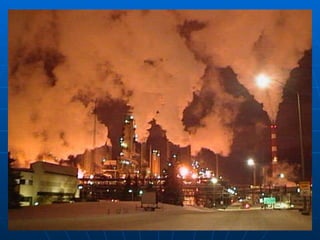
b.  Non-renewable  resources exist in a fixed quantity and can be exhausted; ex.  fossil fuels, metals
 
c.  Potentially renewable  resources can be replenished, as long as they are not used at a rate higher than the rate of replenishment; ex.  trees, fertile soil, fresh water
 
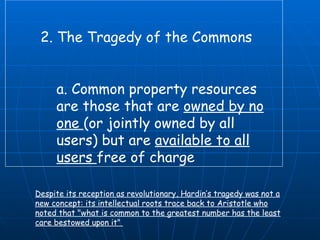
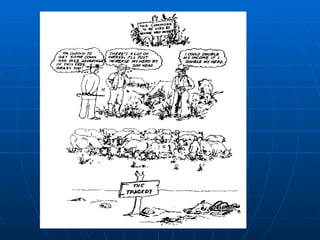
2. The Tragedy of the Commons  a. Common property resources are those that are  owned by no one  (or jointly owned by all users) but are  available to all users  free of charge  Despite its reception as revolutionary, Hardin’s tragedy was not a new concept: its intellectual roots trace back to Aristotle who noted that "what is common to the greatest number has the least care bestowed upon it"
 
b. Examples include  clean air, the open ocean, and public lands  c. The cumulative effect of many people exploiting a common property resource will eventually  exhaust or ruin it
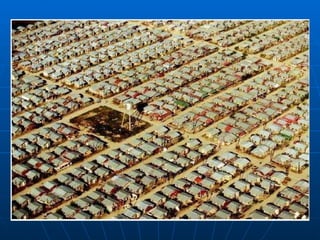
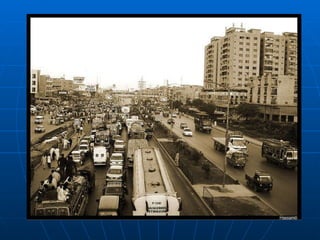
3. More people =  less resources  - An increase in the  human population  leads to the use of more natural resources, however, the quantity of these non-renewable resources is not increasing


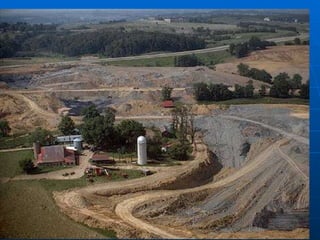
4. Results in damage to the Earth from  extraction and processing  - Natural resources must be obtained by  mining the earth or seas , and  vast quantities of energy  must be used to process these resources and convert them to useful products
 
B. Pollution  1. Definition – any addition to air, water, soil, or food that  threatens the health, survival, or activities of humans or other living organisms
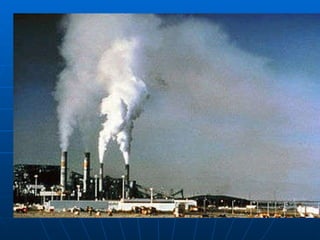
2. More people =  more pollution  a. Air pollution  Pollutants can be added to the atmosphere from  automobiles, industry, power plants , and other source ii. Air pollutants can lead to other problems such as  ozone depletion, acid precipitation, and climate change
 
 
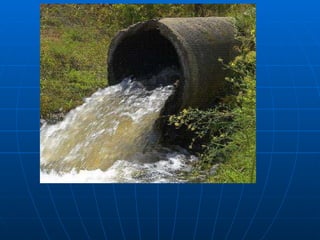
b. Water pollution  i. Pollutants may be added to our water from  direct sources  such as industries or animal waste  ii. Land pollution can become water pollution as it  runs off  into our water or  infiltrates  into our groundwater
 
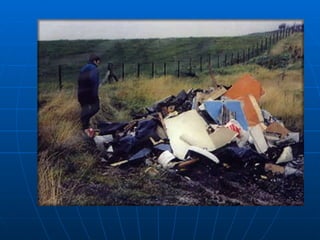
c. Land pollution  i. Pollutants may be added to our land directly (ie.  pesticides )  ii. People produce  large amounts of waste , much of it hazardous, which may be considered pollution
 
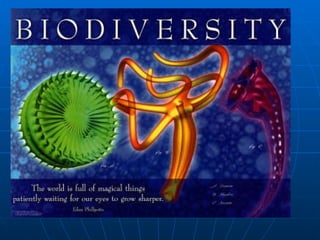
C. Biodiversity loss  1.  Biodiversity  – the variety of different species on Earth, the genetic variability of those species, and the variety of ecosystems in which they exist
 
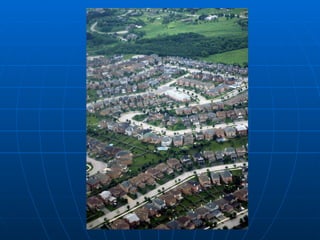
2. More people =  less biodiversity  a. With human population growth, more land is needed for  development and agriculture  b. The main reason for loss of biodiversity is  habitat loss or degradation
 
IV. Sustainability  A. Definition –  the ability of a system to survive and function over a specified period of time
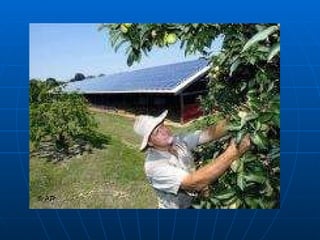
B. Our goal is to become a “ sustainable society ” – one that manages its economy and population size without exceeding the Earth’s ability to absorb environmental impact, replenish resources, and sustain humans and other forms of life indefinitely
 
C. We can use Earth and Environmental science to learn more about how  nature sustains itself  and how to  mimic these processes  in human cultures

Chapter 2 current issues

  • 1.
    Chapter 2 –Current Issues in Earth and Environmental Science Why is the Earth in trouble?
  • 2.
    I. Introduction A. What is Earth Science? 1. Definition – the study of the Earth, its history, its changes, and its place in the universe
  • 3.
  • 4.
    2. Branches ofEarth Science a. Geology – Earth’s origin, history, and structure
  • 5.
  • 6.
    b. Meteorology – Earth’s atmosphere, weather, and climate
  • 7.
  • 8.
    c. Oceanography - Earth’s oceans, including physical features, life forms, and natural resources
  • 9.
  • 10.
    d. Astronomy – the position, composition, size, and other characteristics of the planets, stars, and objects in space
  • 11.
  • 12.
    B. What isEnvironmental Science? 1. Definition – the study of the environments in which organisms live and how they interact
  • 13.
  • 14.
    2. An integrated science that includes elements of biology, chemistry, and physics 3. Incorporates the impact of human activities , both planned and unplanned, on the environment
  • 15.
    II. History ofHuman Influence on the Earth A. Hunter-Gatherer Society 1. Humans lived as hunter-gatherers from the time of their appearance on Earth (60,000-90,000 years ago) until about 12,000 years ago
  • 16.
  • 17.
    2. Ways oflife: a. Nomadic – moved around to find enough food for survival b. Used earth wisdom – expert knowledge of natural surroundings (which animals and plants can be eaten or used as medicines, where to find water, how to predict the weather) c. Used sunlight, fire, and muscle power for sources of energy
  • 18.
    B. Agricultural Revolution 1. Occurred about 10,000-12,000 years ago 2. Ways of Life: a. Settled into communities and had larger families; eventually urbanization ( development of cities ) became practical – led to the first surge in human population growth
  • 19.
  • 20.
    b. Cultivated plantsand domesticated animals for human use Ex. wheat, rice, cows, horses c. Cleared vast amounts of land and used more non-renewable resources
  • 21.
  • 22.
    C. Industrial Revolution 1. Began in the mid 1700’s 2. Ways of life: a. Human population grew exponentially b. Production, commerce, trade, and distribution of goods all expanded rapidly c. Became heavily dependent on non-renewable resources and fossil fuels, resulting in increased air, water, and land pollution
  • 23.
  • 24.
    III. Current EnvironmentalIssues A. Resource Consumption 1. Renewable vs. Non-renewable a. Renewable resources are those that are inexhaustible on a human time scale; ex. solar energy
  • 25.
  • 26.
    b. Non-renewable resources exist in a fixed quantity and can be exhausted; ex. fossil fuels, metals
  • 27.
  • 28.
    c. Potentiallyrenewable resources can be replenished, as long as they are not used at a rate higher than the rate of replenishment; ex. trees, fertile soil, fresh water
  • 29.
  • 30.
    2. The Tragedyof the Commons a. Common property resources are those that are owned by no one (or jointly owned by all users) but are available to all users free of charge Despite its reception as revolutionary, Hardin’s tragedy was not a new concept: its intellectual roots trace back to Aristotle who noted that "what is common to the greatest number has the least care bestowed upon it"
  • 31.
  • 32.
    b. Examples include clean air, the open ocean, and public lands c. The cumulative effect of many people exploiting a common property resource will eventually exhaust or ruin it
  • 33.
    3. More people= less resources - An increase in the human population leads to the use of more natural resources, however, the quantity of these non-renewable resources is not increasing
  • 34.
  • 35.
  • 36.
  • 37.
    4. Results indamage to the Earth from extraction and processing - Natural resources must be obtained by mining the earth or seas , and vast quantities of energy must be used to process these resources and convert them to useful products
  • 38.
  • 39.
    B. Pollution 1. Definition – any addition to air, water, soil, or food that threatens the health, survival, or activities of humans or other living organisms
  • 40.
    2. More people= more pollution a. Air pollution Pollutants can be added to the atmosphere from automobiles, industry, power plants , and other source ii. Air pollutants can lead to other problems such as ozone depletion, acid precipitation, and climate change
  • 41.
  • 42.
  • 43.
    b. Water pollution i. Pollutants may be added to our water from direct sources such as industries or animal waste ii. Land pollution can become water pollution as it runs off into our water or infiltrates into our groundwater
  • 44.
  • 45.
    c. Land pollution i. Pollutants may be added to our land directly (ie. pesticides ) ii. People produce large amounts of waste , much of it hazardous, which may be considered pollution
  • 46.
  • 47.
    C. Biodiversity loss 1. Biodiversity – the variety of different species on Earth, the genetic variability of those species, and the variety of ecosystems in which they exist
  • 48.
  • 49.
    2. More people= less biodiversity a. With human population growth, more land is needed for development and agriculture b. The main reason for loss of biodiversity is habitat loss or degradation
  • 50.
  • 51.
    IV. Sustainability A. Definition – the ability of a system to survive and function over a specified period of time
  • 52.
    B. Our goalis to become a “ sustainable society ” – one that manages its economy and population size without exceeding the Earth’s ability to absorb environmental impact, replenish resources, and sustain humans and other forms of life indefinitely
  • 53.
  • 54.
    C. We canuse Earth and Environmental science to learn more about how nature sustains itself and how to mimic these processes in human cultures