THE RECONSTRUCTION 
Chapter 17
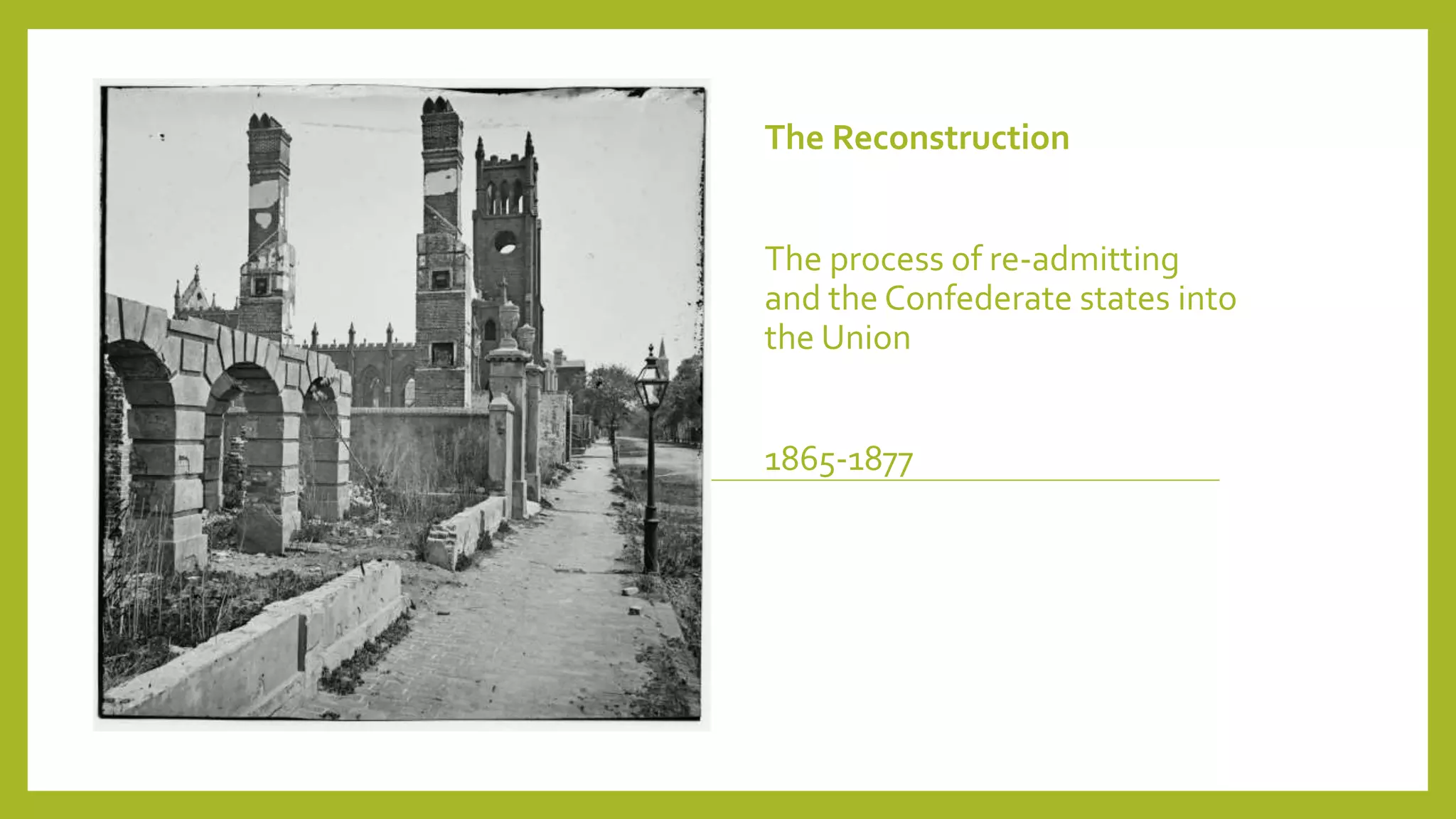
The Reconstruction 
The process of re-admitting 
and the Confederate states into 
the Union 
1865-1877
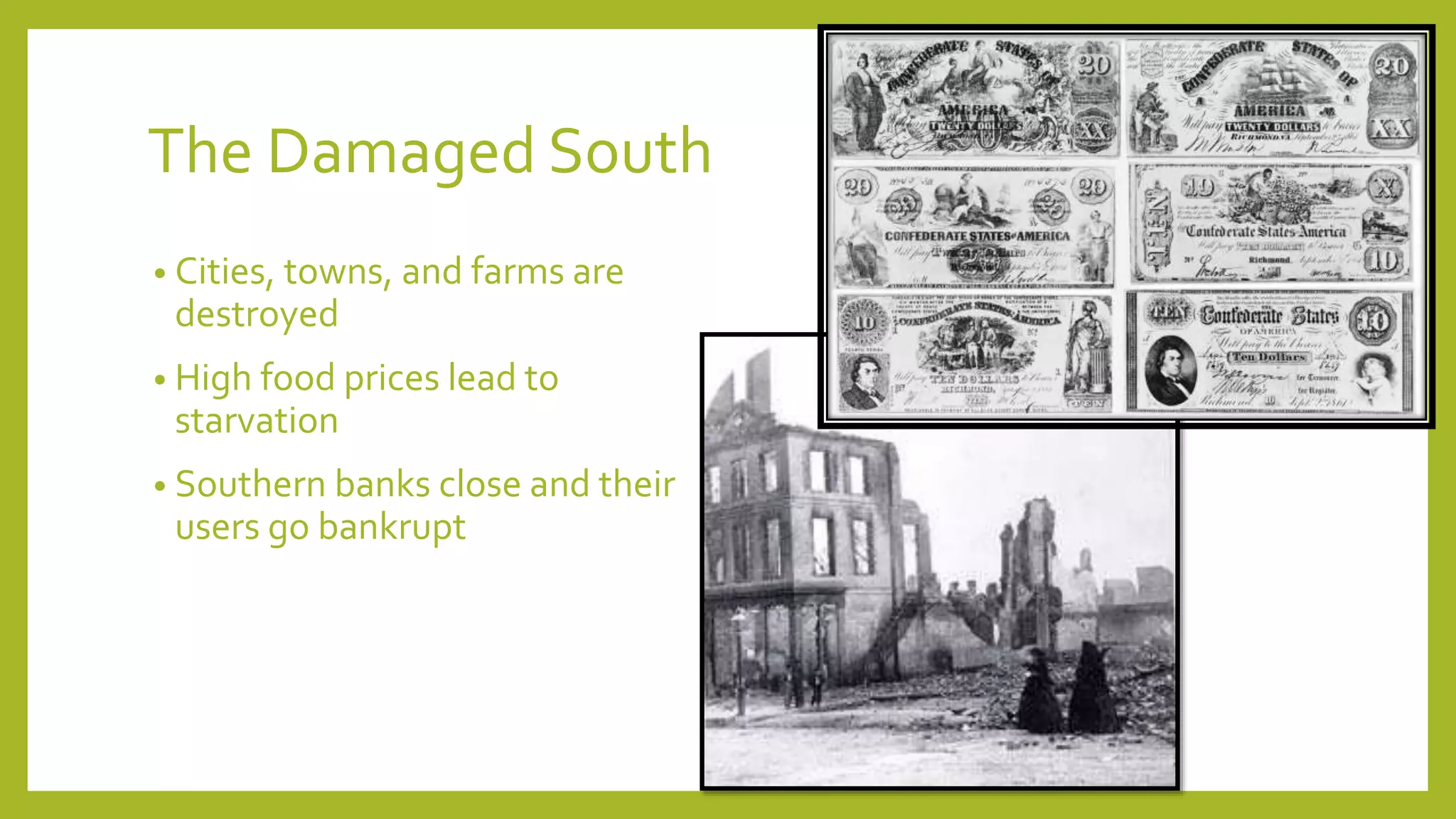
The Damaged South 
• Cities, towns, and farms are 
destroyed 
• High food prices lead to 
starvation 
• Southern banks close and their 
users go bankrupt
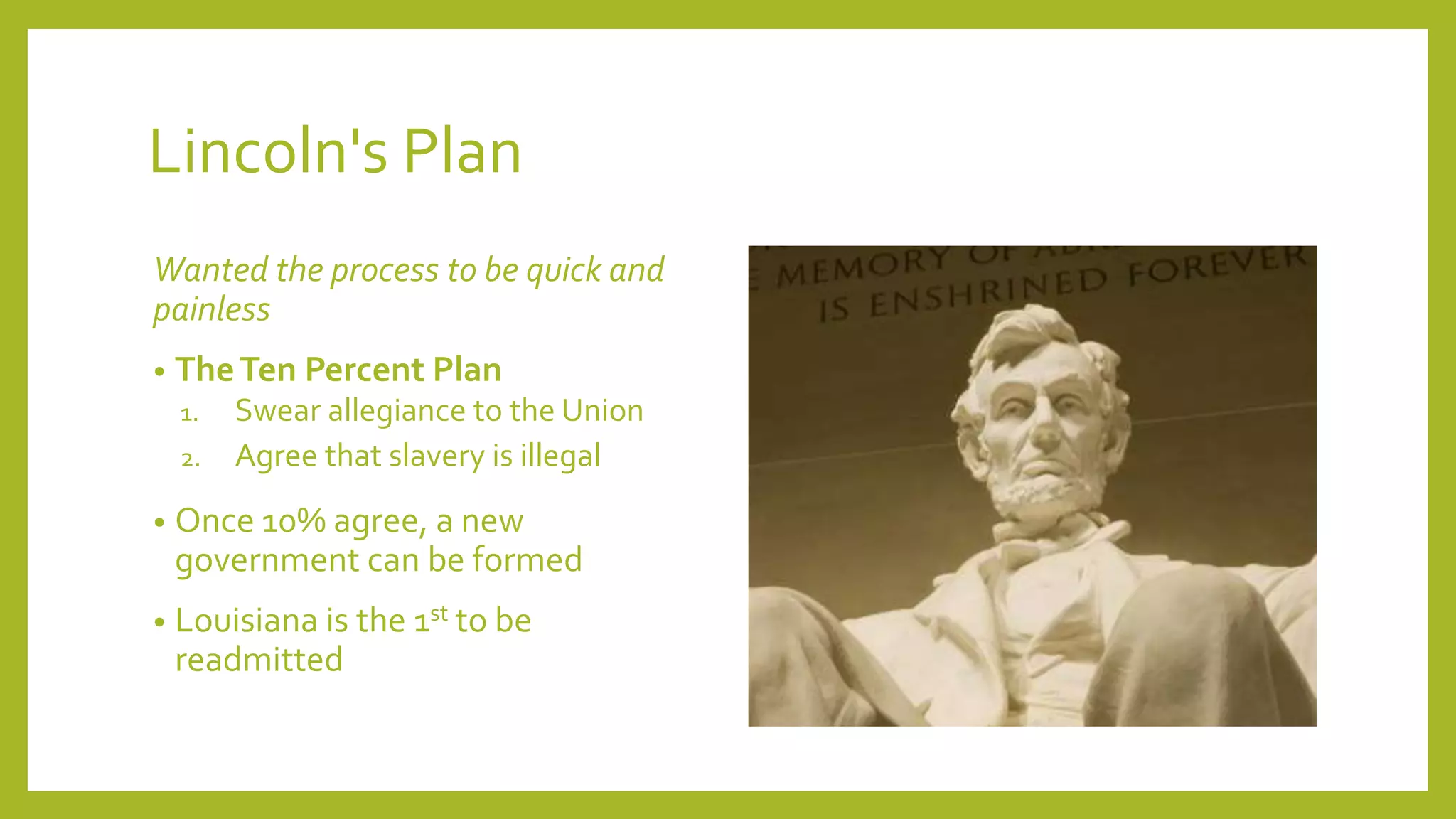
Lincoln's Plan 
Wanted the process to be quick and 
painless 
• TheTen Percent Plan 
1. Swear allegiance to the Union 
2. Agree that slavery is illegal 
• Once 10% agree, a new 
government can be formed 
• Louisiana is the 1st to be 
readmitted
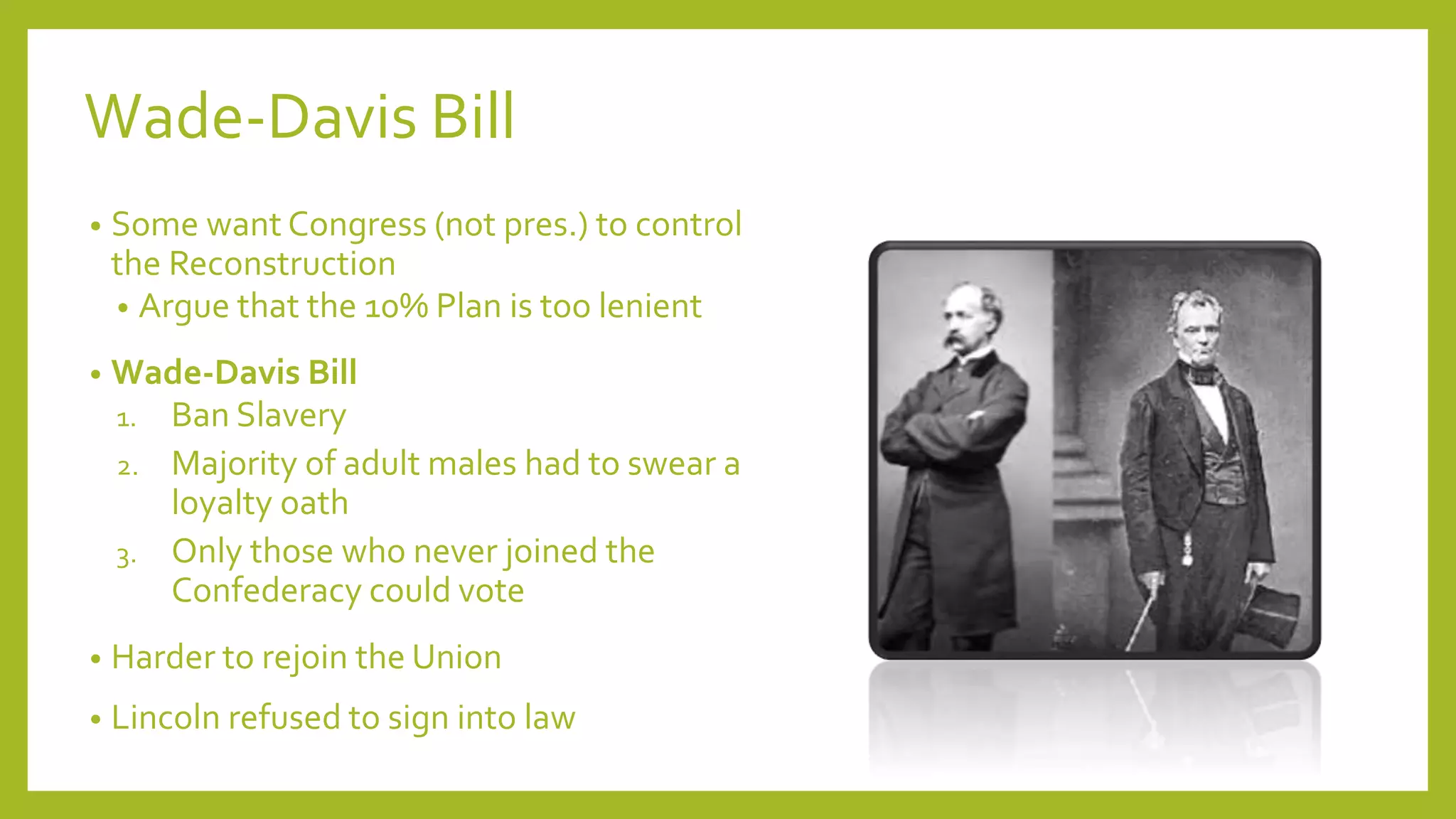
Wade-Davis Bill 
• Some want Congress (not pres.) to control 
the Reconstruction 
• Argue that the 10% Plan is too lenient 
• Wade-Davis Bill 
1. Ban Slavery 
2. Majority of adult males had to swear a 
loyalty oath 
3. Only those who never joined the 
Confederacy could vote 
• Harder to rejoin the Union 
• Lincoln refused to sign into law
Freedom for African Americans 
Slavery Ends 
Thirteenth Amendment is 
proposed 
• Made slavery illegal in the 
United States 
• January 31, 1865 – proposed 
• December 18, 1865 – ratified 
• Some (William Lloyd Garrison) say their 
work is done, others (Frederick Douglass) 
say it’s not until “the black man has the 
ballot [vote]”
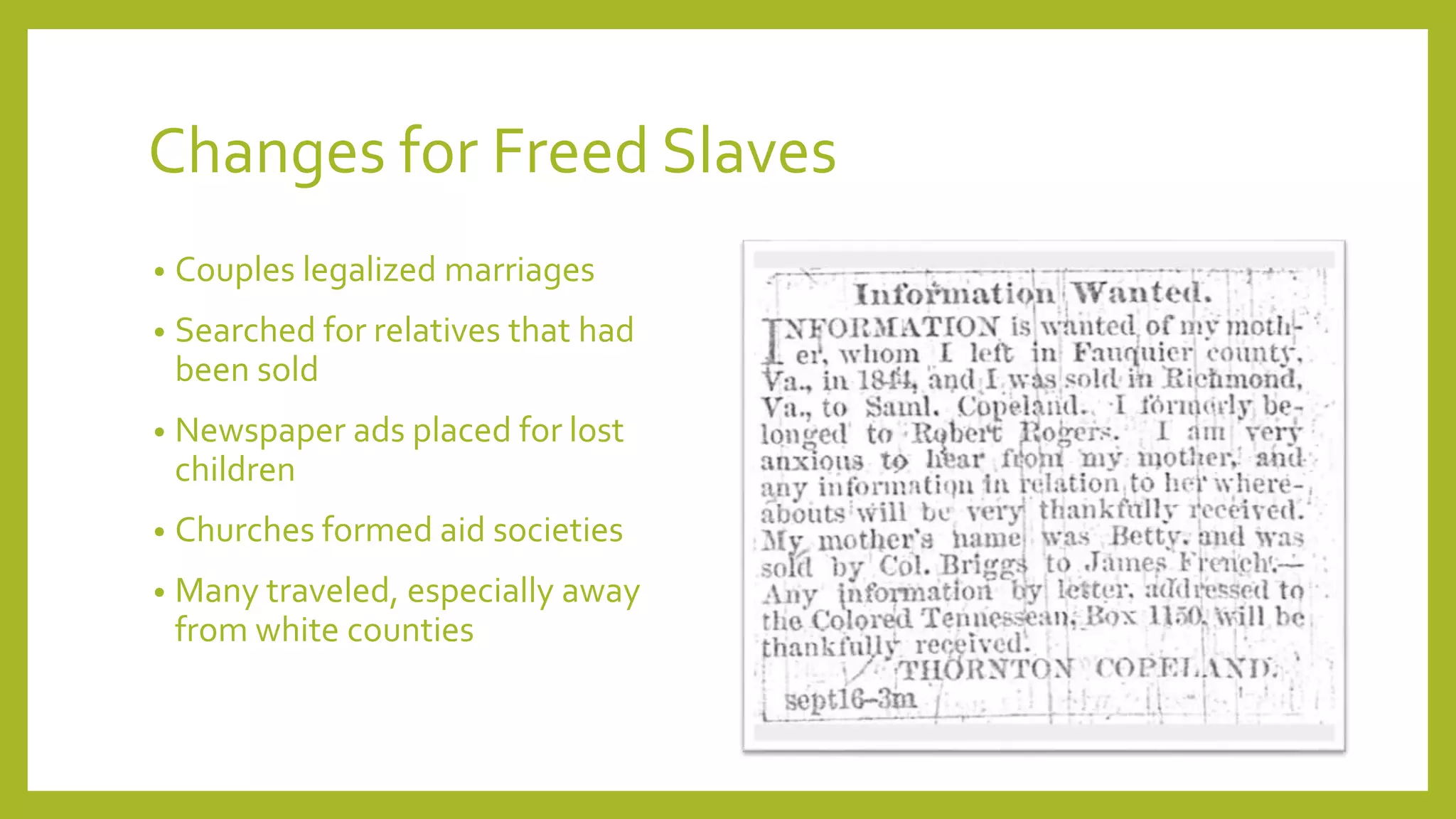
Changes for Freed Slaves 
• Couples legalized marriages 
• Searched for relatives that had 
been sold 
• Newspaper ads placed for lost 
children 
• Churches formed aid societies 
• Many traveled, especially away 
from white counties
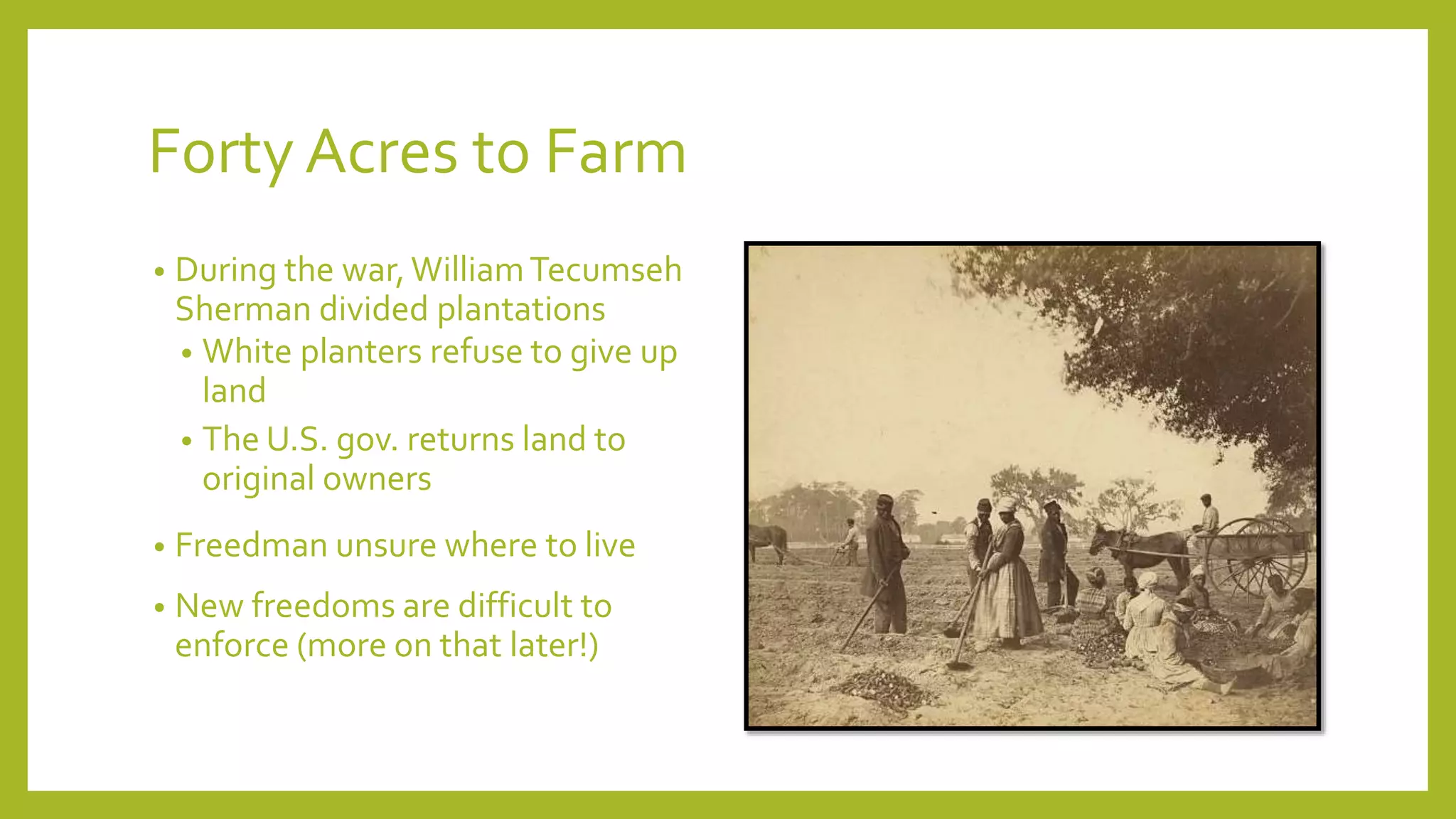
Forty Acres to Farm 
• During the war, William Tecumseh 
Sherman divided plantations 
• White planters refuse to give up 
land 
• The U.S. gov. returns land to 
original owners 
• Freedman unsure where to live 
• New freedoms are difficult to 
enforce (more on that later!)
THE RECONSTRUCTION 
Chapter 17 
Cumulative Project
Freedman’s Bureau 
• Gov. agency that provided relief 
for freed people and certain poor 
people in the South 
• 900 agents for the ENTIRE 
SOUTH 
• Distribute food 
• Provide education 
• Legal help for freed people
Freedman’s Bureau: Education 
• Also establishes universities for 
African Americans 
• Working adults go to evening 
classes 
• Education will help protect 
rights and provide better jobs 
• Many white southerners don’t 
believe freed people should be 
educated
Lincoln’s Assassination 
• April 14, 1865 
• President Lincoln attends a play at 
Ford’s Theater in Washington D.C. 
• Shot by John Wilkes Booth 
• Southern who was against 
Lincoln’s policies 
• Died the next morning 
Vice President Andrew Johnson 
sworn in as president
Andrew Johnson’s Reconstruction Plan 
• Similar to Lincoln’s 
• Wealthy southerners and former 
Confederate officers must receive 
presidential pardon to be free of 
“charges” 
• BUT, he pardons more than 7,000 
people by 1866
New State Governments 
• Johnson (D) was placed on 
Lincoln’s (R ) ticket to appeal to 
the border states 
• Former slaveholder 
• Democrat 
• Johnson’s plan to form “new 
states” in the south was 
questioned by Congress
New State Governments (cont.) 
• President Johnson’s Plan 
1. President appoints temporary 
governor 
2. States must revise 
constitutions 
3. Voters elect state and federal 
representative 
1. Government must declare 
secession was illegal 
2. Must ratify 13thAmendment
New State Governments (Part 3) 
• 1865: All but Texas are in the 
Union, according to the president 
• Northern Republicans are upset, 
Southern representatives were 
leaders of the Confederacy 
• Congress refuses to readmit 
southern states into the Union
Opening Journal (in your notes) 
A member of Congress, you belong to the same political party as the 
president. But you strongly disagree with his ideas about 
Reconstruction and civil rights for African Americans. Now some of the 
president’s opponents are trying to remove him from office. You do 
not think he is a good president. On the other hand, you think 
removing him would be bad for the unity of the country. 
Do you vote to remove the president? 
Answer in complete sentences and give a detailed explanation for your 
answer.
THE FIGHT OVER 
RECONSTRUCTION 
Section 2
Opposition to President Johnson: 
Black Codes 
Setting: 1866 
• Congress disagrees on rules for 
accepting states into the Union 
• New southern states are passing 
laws that deny African Americans 
civil rights 
• Black Codes 
• Example: Could be arrested if 
unemployed; illegal to own a 
gun, only allowed to rent in cities
Opposition to President Johnson: 
Radical Republicans 
“Normal” Republicans: 
• Angered by black codes, but more 
focused on southern states loyalty 
• Wanted equal rights, but didn’t want 
federal involvement 
Radical Republicans 
• want the federal gov. to force change 
• Thaddeus Stevens & Charles Sumner 
• Gain support in Congress when Johnson 
ignored black codes
Johnson vs. Congress: 
Civil Rights Act of 1866 
Pres. Johnson vetoes Freedman’s Bureau 
Bill 
Civil Rights Act of 1866 
• Congresses response 
• Gives African Americans the same legal 
rights as white Americans 
• Johnson vetoes, but congress overrides 
his veto 
• Propose the Fourteenth Amendment 
to keep ideas constitutional
The Fourteenth Amendment 
1. All born within the U.S. are citizens (except Native 
Americans) 
2. Citizens have equal protection of the law 
3. States can’t take away rights without a trial 
4. Banned former C. officers from government office 
5. State laws can be reviewed by a federal court 
6. Congress can pass any needed law to enforce the 
amendment
1866 Election 
• Johnson & Democrats appose 14th 
Amendment 
• Civil Rights is a key issue in 1866 
congressional election 
Johnson’s Campaign 
• Gets into fights with audience members 
• Two major race riots break out in the south 
Republicans gain the majority in Congress
Reconstruction Acts 
• Divided the south into 5 districts 
• U.S. military commander controlled each 
district 
To be readmitted… 
1. Write a new constitution 
2. Give African American men the right 
to vote
President Johnson is Almost 
Impeached 
• Johnson argues that the Reconstruction 
Act is overuse of federal power 
• Congress passes a law that limits 
president’s power 
• Johnson breaks the law 
• But to trial and found guilty by Congress, 
but one vote short in the Senate 
• Impeachment – the process used by a 
law-making body to bring charges 
against a public official

Chapter 17: The Reconstruction

  • 1.
  • 2.
    The Reconstruction Theprocess of re-admitting and the Confederate states into the Union 1865-1877
  • 3.
    The Damaged South • Cities, towns, and farms are destroyed • High food prices lead to starvation • Southern banks close and their users go bankrupt
  • 4.
    Lincoln's Plan Wantedthe process to be quick and painless • TheTen Percent Plan 1. Swear allegiance to the Union 2. Agree that slavery is illegal • Once 10% agree, a new government can be formed • Louisiana is the 1st to be readmitted
  • 5.
    Wade-Davis Bill •Some want Congress (not pres.) to control the Reconstruction • Argue that the 10% Plan is too lenient • Wade-Davis Bill 1. Ban Slavery 2. Majority of adult males had to swear a loyalty oath 3. Only those who never joined the Confederacy could vote • Harder to rejoin the Union • Lincoln refused to sign into law
  • 6.
    Freedom for AfricanAmericans Slavery Ends Thirteenth Amendment is proposed • Made slavery illegal in the United States • January 31, 1865 – proposed • December 18, 1865 – ratified • Some (William Lloyd Garrison) say their work is done, others (Frederick Douglass) say it’s not until “the black man has the ballot [vote]”
  • 7.
    Changes for FreedSlaves • Couples legalized marriages • Searched for relatives that had been sold • Newspaper ads placed for lost children • Churches formed aid societies • Many traveled, especially away from white counties
  • 8.
    Forty Acres toFarm • During the war, William Tecumseh Sherman divided plantations • White planters refuse to give up land • The U.S. gov. returns land to original owners • Freedman unsure where to live • New freedoms are difficult to enforce (more on that later!)
  • 9.
    THE RECONSTRUCTION Chapter17 Cumulative Project
  • 10.
    Freedman’s Bureau •Gov. agency that provided relief for freed people and certain poor people in the South • 900 agents for the ENTIRE SOUTH • Distribute food • Provide education • Legal help for freed people
  • 11.
    Freedman’s Bureau: Education • Also establishes universities for African Americans • Working adults go to evening classes • Education will help protect rights and provide better jobs • Many white southerners don’t believe freed people should be educated
  • 12.
    Lincoln’s Assassination •April 14, 1865 • President Lincoln attends a play at Ford’s Theater in Washington D.C. • Shot by John Wilkes Booth • Southern who was against Lincoln’s policies • Died the next morning Vice President Andrew Johnson sworn in as president
  • 13.
    Andrew Johnson’s ReconstructionPlan • Similar to Lincoln’s • Wealthy southerners and former Confederate officers must receive presidential pardon to be free of “charges” • BUT, he pardons more than 7,000 people by 1866
  • 14.
    New State Governments • Johnson (D) was placed on Lincoln’s (R ) ticket to appeal to the border states • Former slaveholder • Democrat • Johnson’s plan to form “new states” in the south was questioned by Congress
  • 15.
    New State Governments(cont.) • President Johnson’s Plan 1. President appoints temporary governor 2. States must revise constitutions 3. Voters elect state and federal representative 1. Government must declare secession was illegal 2. Must ratify 13thAmendment
  • 16.
    New State Governments(Part 3) • 1865: All but Texas are in the Union, according to the president • Northern Republicans are upset, Southern representatives were leaders of the Confederacy • Congress refuses to readmit southern states into the Union
  • 17.
    Opening Journal (inyour notes) A member of Congress, you belong to the same political party as the president. But you strongly disagree with his ideas about Reconstruction and civil rights for African Americans. Now some of the president’s opponents are trying to remove him from office. You do not think he is a good president. On the other hand, you think removing him would be bad for the unity of the country. Do you vote to remove the president? Answer in complete sentences and give a detailed explanation for your answer.
  • 18.
    THE FIGHT OVER RECONSTRUCTION Section 2
  • 19.
    Opposition to PresidentJohnson: Black Codes Setting: 1866 • Congress disagrees on rules for accepting states into the Union • New southern states are passing laws that deny African Americans civil rights • Black Codes • Example: Could be arrested if unemployed; illegal to own a gun, only allowed to rent in cities
  • 20.
    Opposition to PresidentJohnson: Radical Republicans “Normal” Republicans: • Angered by black codes, but more focused on southern states loyalty • Wanted equal rights, but didn’t want federal involvement Radical Republicans • want the federal gov. to force change • Thaddeus Stevens & Charles Sumner • Gain support in Congress when Johnson ignored black codes
  • 21.
    Johnson vs. Congress: Civil Rights Act of 1866 Pres. Johnson vetoes Freedman’s Bureau Bill Civil Rights Act of 1866 • Congresses response • Gives African Americans the same legal rights as white Americans • Johnson vetoes, but congress overrides his veto • Propose the Fourteenth Amendment to keep ideas constitutional
  • 22.
    The Fourteenth Amendment 1. All born within the U.S. are citizens (except Native Americans) 2. Citizens have equal protection of the law 3. States can’t take away rights without a trial 4. Banned former C. officers from government office 5. State laws can be reviewed by a federal court 6. Congress can pass any needed law to enforce the amendment
  • 23.
    1866 Election •Johnson & Democrats appose 14th Amendment • Civil Rights is a key issue in 1866 congressional election Johnson’s Campaign • Gets into fights with audience members • Two major race riots break out in the south Republicans gain the majority in Congress
  • 24.
    Reconstruction Acts •Divided the south into 5 districts • U.S. military commander controlled each district To be readmitted… 1. Write a new constitution 2. Give African American men the right to vote
  • 25.
    President Johnson isAlmost Impeached • Johnson argues that the Reconstruction Act is overuse of federal power • Congress passes a law that limits president’s power • Johnson breaks the law • But to trial and found guilty by Congress, but one vote short in the Senate • Impeachment – the process used by a law-making body to bring charges against a public official