Light detection
 
 
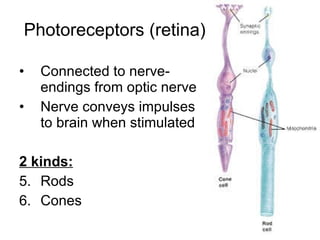
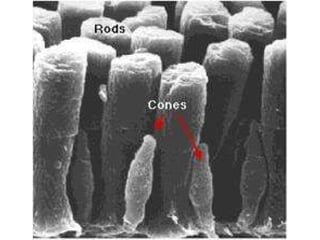
Photoreceptors (retina) Connected to nerve-endings from optic nerve Nerve conveys impulses to brain when stimulated 2 kinds: Rods  Cones
Question: Have you experienced occasions when you are not able to see for a short period of time? When does this situation normally take place?
Rods Contain  visual purple Pigment concerned with vision in  dim light Light detection by visual purple by  bleaching From bright    dark place unable to distinguish objects for a while (because takes time for visual purple to reform) Requires  vitamin A  (deficiency    night-blindness)
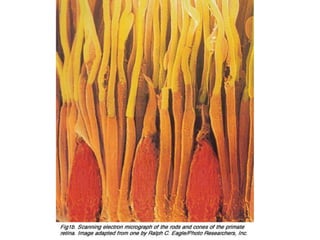
Cones Less sensitive to light  Inefficient in dim light Concerned with  bright light  and  c o l o u r  vision 3 types: (each contain a different pigment) Red Blue Green Pigments absorb light of different wavelengths Taken together, cones allow us to see  spectrum  of colours
 
 
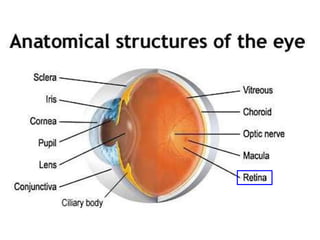
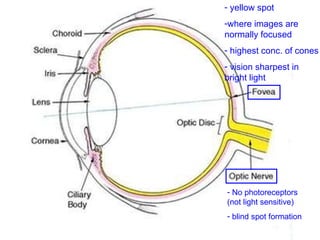
yellow spot  where images are normally focused highest conc. of cones vision sharpest in bright light No photoreceptors (not light sensitive) blind spot formation
Fovea centralis yellow spot where images are normally focused only contains cones concentration of cones  highest  at this point Therefore  vision is sharpest  in bright light when images are focused onto the yellow spot
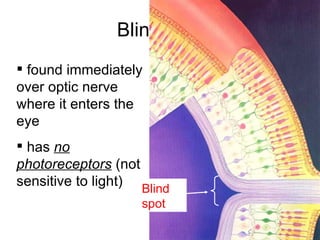
Blind spot found immediately over optic nerve where it enters the eye has  no photoreceptors  (not sensitive to light) Blind spot
Vision
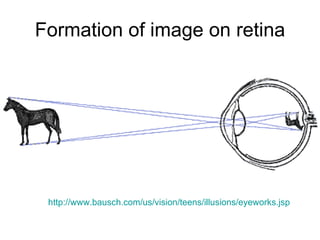
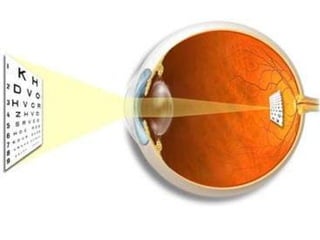
Formation of image on retina http:// www.bausch.com/us/vision/teens/illusions/eyeworks.jsp
Image formed on retina Inverted (upside down) Reversed (back to front) Diminished (smaller in size than the object being observed)
 
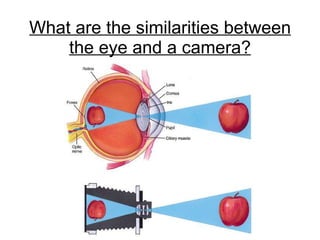
What are the similarities between the eye and a camera?
Processing by brain Impulses produced by light falling on the rods and cones are transmitted via the optic nerves to rear of cerebrum Brain interprets these impulses so we see the object the right way up and the right size

Chapter 14 The Human Eye Lesson 2 - Light Detection

  • 1.
  • 2.
  • 3.
  • 4.
    Photoreceptors (retina) Connectedto nerve-endings from optic nerve Nerve conveys impulses to brain when stimulated 2 kinds: Rods Cones
  • 5.
    Question: Have youexperienced occasions when you are not able to see for a short period of time? When does this situation normally take place?
  • 6.
    Rods Contain visual purple Pigment concerned with vision in dim light Light detection by visual purple by bleaching From bright  dark place unable to distinguish objects for a while (because takes time for visual purple to reform) Requires vitamin A (deficiency  night-blindness)
  • 7.
    Cones Less sensitiveto light Inefficient in dim light Concerned with bright light and c o l o u r vision 3 types: (each contain a different pigment) Red Blue Green Pigments absorb light of different wavelengths Taken together, cones allow us to see spectrum of colours
  • 8.
  • 9.
  • 10.
    yellow spot where images are normally focused highest conc. of cones vision sharpest in bright light No photoreceptors (not light sensitive) blind spot formation
  • 11.
    Fovea centralis yellowspot where images are normally focused only contains cones concentration of cones highest at this point Therefore vision is sharpest in bright light when images are focused onto the yellow spot
  • 12.
    Blind spot foundimmediately over optic nerve where it enters the eye has no photoreceptors (not sensitive to light) Blind spot
  • 13.
  • 14.
    Formation of imageon retina http:// www.bausch.com/us/vision/teens/illusions/eyeworks.jsp
  • 15.
    Image formed onretina Inverted (upside down) Reversed (back to front) Diminished (smaller in size than the object being observed)
  • 16.
  • 17.
    What are thesimilarities between the eye and a camera?
  • 18.
    Processing by brainImpulses produced by light falling on the rods and cones are transmitted via the optic nerves to rear of cerebrum Brain interprets these impulses so we see the object the right way up and the right size