I.     Reconstruction
a)    Introduction
b)    Black code
c)    Section
II.    Segregation
a)    Introduction
b)    Jim Crow
c)    Plessy V. Ferguson
 Inrtroduction
The Reconstruction Era saw the advent of new freedom
  for African Americans, but the period ended with the
  establishment of Jim Crow laws in the South.
It’s a history phenomenon in United States after civil war
  reconstruction allowed the cessation of slavery in
  thesouthern United States and
  allowed the réconsiliationnorthern and southern United
  States. It allowed blacks to betreated the same way
  as whites. However there are inequalities of law
  have therefore been developed
Even after the Emancipation Proclamation, two more years
     of war, service by African American troops, and the
       defeat of the Confederacy, the nation was still
   unprepared to deal with the question of full citizenship
  for its newly freed black population. The Reconstruction
    implemented by Congress, which lasted from 1866 to
    1877, was aimed at reorganizing the Southern states
  after the Civil War, providing the means for readmitting
    them into the Union, and defining the means by which
      whites and blacks could live together in a nonslave
    society. The South, however, saw Reconstruction as a
 humiliating, even vengeful imposition and did not welcome
                              it.
Article XV. We forbid slaves from carrying any offensive
 weapons or large sticks, at the risk of being whipped and
 having the weapons confiscated. The weapons shall then
  belong to he who confiscated them. The sole exception
   shall be made for those who have been sent by their
   masters to hunt and who are carrying either a letter
          from their masters or his known mark.
When Congress took over Reconstruction after the Civil War, they passed
    the Fifteenth Amendment to guarantee voting rights for African
     Americans. In addition to achieving social justice, Republicans in
 Congress hoped to solidify their power base in the South--they naturally
   believed that former slaves would vote for the Republican party, the
                        party of Abraham Lincoln.
White Southerners eventually found ways to circumvent the amendment,
 for instance, by imposing poll taxes on would-be voters. Congress passed
 the Fifteenth Amendment in 1869, and the states followed in 1870. The
                     text of the amendment follows:
                               Section 1.
The right of citizens of the United States to vote shall not be denied or
 abridged by the United States or by any State on account of race, color,
                     or previous condition of servitude.
                               Section 2.
The Congress shall have the power to enforce this article by appropriate
                               legislation.
Racial segregation is the separation of humans into racial
     group in daily life. It may apply to activities such as
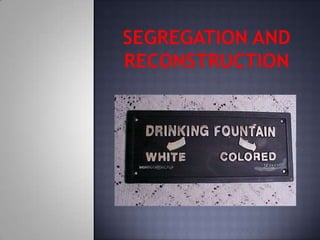
   eating in a restaurant, drinking from a water fountain,
      using a public toilet, attending school, going to the
        movies, or in the rental or purchase of a home.
The late 19th and early 20th centuries witnessed the rise
  of Jim Crow laws in the South and de facto segregation
   in the North. Explore the major themes and events of
           this period in African-American history.
Jim Crow laws, or Jim Crow for short, maintained racial
   segregation in the South beginning in the late 1800s.
Under Jim Crow, whites and blacks drank from different
    water fountains, used different bathrooms and sat
  separately on public transportation and in restaurants.
 Jim Crow owes its name to a 19th century minstrel song
    called “Jump Jim Crow,” popularized by a minstrel
 performer named Thomas “Daddy” Rice who appeared in
                         blackface
Amendments of the Constitution." The Plessy decision set the
  precedent that "separate" facilities for blacks and whites
     were constitutional as long as they were "equal." The
 "separate but equal" doctrine was quickly extended to cover
   many areas of public life, such as restaurants, theaters,
 restrooms, and public schools. The doctrine was a fiction, as
     facilities for blacks were always inferior to those for
   whites. Not until 1954, in the equally important Brown v.
    Board of Education of Topeka, would the "separate but
                 equal" doctrine be struck down.

Segregation and reconstruction

  • 2.
    I. Reconstruction a) Introduction b) Black code c) Section II. Segregation a) Introduction b) Jim Crow c) Plessy V. Ferguson
  • 3.
     Inrtroduction The ReconstructionEra saw the advent of new freedom for African Americans, but the period ended with the establishment of Jim Crow laws in the South. It’s a history phenomenon in United States after civil war reconstruction allowed the cessation of slavery in thesouthern United States and allowed the réconsiliationnorthern and southern United States. It allowed blacks to betreated the same way as whites. However there are inequalities of law have therefore been developed
  • 4.
    Even after theEmancipation Proclamation, two more years of war, service by African American troops, and the defeat of the Confederacy, the nation was still unprepared to deal with the question of full citizenship for its newly freed black population. The Reconstruction implemented by Congress, which lasted from 1866 to 1877, was aimed at reorganizing the Southern states after the Civil War, providing the means for readmitting them into the Union, and defining the means by which whites and blacks could live together in a nonslave society. The South, however, saw Reconstruction as a humiliating, even vengeful imposition and did not welcome it.
  • 5.
    Article XV. Weforbid slaves from carrying any offensive weapons or large sticks, at the risk of being whipped and having the weapons confiscated. The weapons shall then belong to he who confiscated them. The sole exception shall be made for those who have been sent by their masters to hunt and who are carrying either a letter from their masters or his known mark.
  • 6.
    When Congress tookover Reconstruction after the Civil War, they passed the Fifteenth Amendment to guarantee voting rights for African Americans. In addition to achieving social justice, Republicans in Congress hoped to solidify their power base in the South--they naturally believed that former slaves would vote for the Republican party, the party of Abraham Lincoln. White Southerners eventually found ways to circumvent the amendment, for instance, by imposing poll taxes on would-be voters. Congress passed the Fifteenth Amendment in 1869, and the states followed in 1870. The text of the amendment follows: Section 1. The right of citizens of the United States to vote shall not be denied or abridged by the United States or by any State on account of race, color, or previous condition of servitude. Section 2. The Congress shall have the power to enforce this article by appropriate legislation.
  • 7.
    Racial segregation isthe separation of humans into racial group in daily life. It may apply to activities such as eating in a restaurant, drinking from a water fountain, using a public toilet, attending school, going to the movies, or in the rental or purchase of a home. The late 19th and early 20th centuries witnessed the rise of Jim Crow laws in the South and de facto segregation in the North. Explore the major themes and events of this period in African-American history.
  • 8.
    Jim Crow laws,or Jim Crow for short, maintained racial segregation in the South beginning in the late 1800s. Under Jim Crow, whites and blacks drank from different water fountains, used different bathrooms and sat separately on public transportation and in restaurants. Jim Crow owes its name to a 19th century minstrel song called “Jump Jim Crow,” popularized by a minstrel performer named Thomas “Daddy” Rice who appeared in blackface
  • 9.
    Amendments of theConstitution." The Plessy decision set the precedent that "separate" facilities for blacks and whites were constitutional as long as they were "equal." The "separate but equal" doctrine was quickly extended to cover many areas of public life, such as restaurants, theaters, restrooms, and public schools. The doctrine was a fiction, as facilities for blacks were always inferior to those for whites. Not until 1954, in the equally important Brown v. Board of Education of Topeka, would the "separate but equal" doctrine be struck down.