Class 11
Business Studies
Chapter - 11
International Trade - I
External Trade
or
Foreign Trade
or
International Business
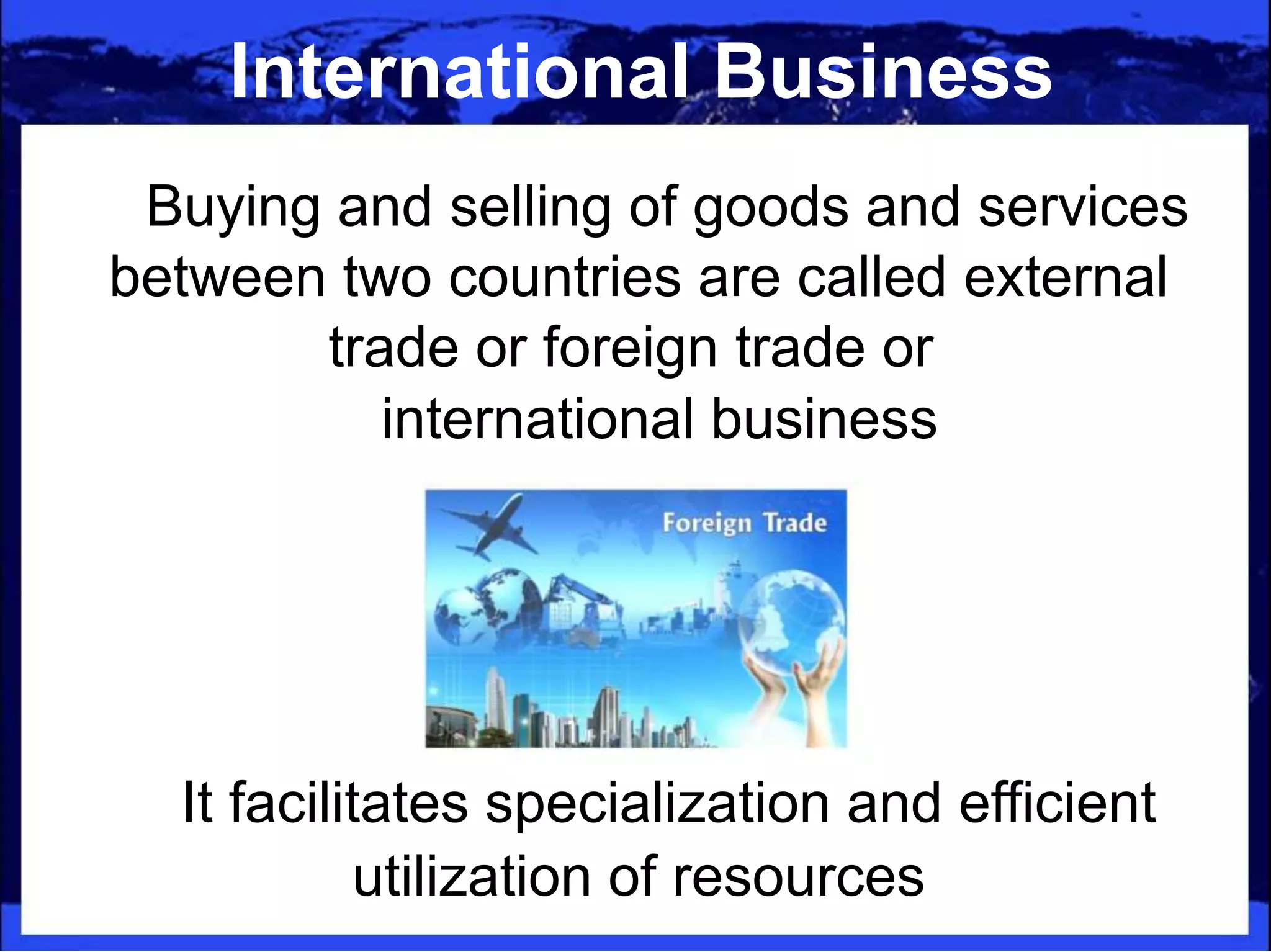
Buying and selling of goods and services
between two countries are called external
trade or foreign trade or
international business
It facilitates specialization and efficient
utilization of resources
International Business
Reasons for International Business
Some countries being in a better position
to produce better quality products or at lower
costs than what other nations can do
Oil
Extraction
Differences between
Domestic Business
&
International Business
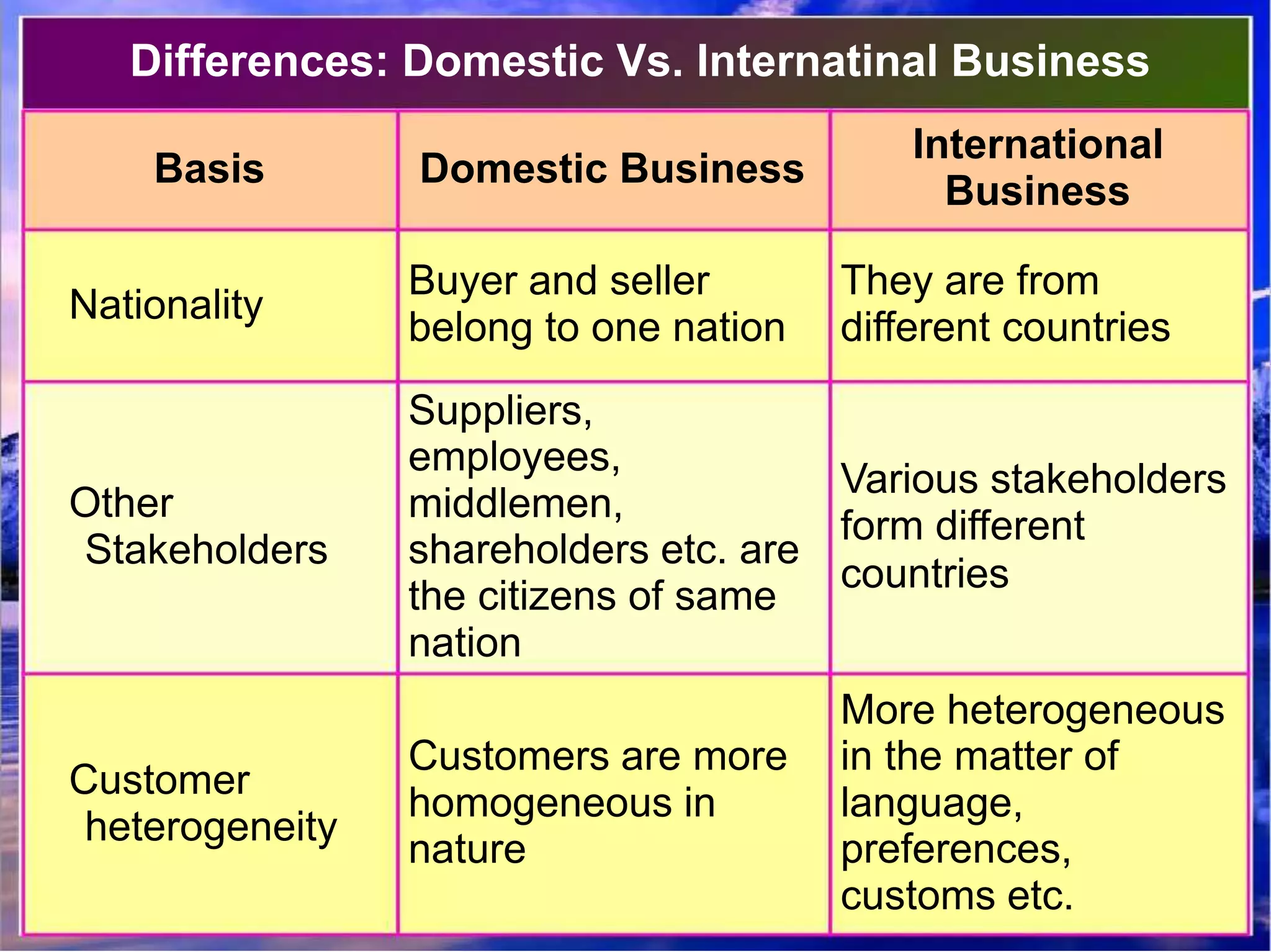
Differences: Domestic Vs. Internatinal Business
Basis Domestic Business
International
Business
Nationality
Buyer and seller
belong to one nation
They are from
different countries
Suppliers,
Other
Stakeholders
employees,
middlemen,
shareholders etc. are
the citizens of same
nation
Various stakeholders
form different
countries
More heterogeneous
Customer
heterogeneity
Customers are more
homogeneous in
nature
in the matter of
language,
preferences,
customs etc.
Differences: Domestic Vs. Internatinal Business
Basis
Business system and
practices
Domestic
Business
Relatively same
system
International
Business
Different systems
and practices are
followed
Political system and Subject to the same Subject to different
risk country countries
Business regulations
and policies
Currency
Subject to the rules,
laws, taxation policies
of the same nation
Currency of the
domestic country
Subject to the rules
and policies
prevailing the
concerned nations
Currencies of more
than one countries
Scope of International Business
1 Merchandise exports and imports
Merchandise means tangible goods
ie, thosethat can be seen and touched
Scope of International Business
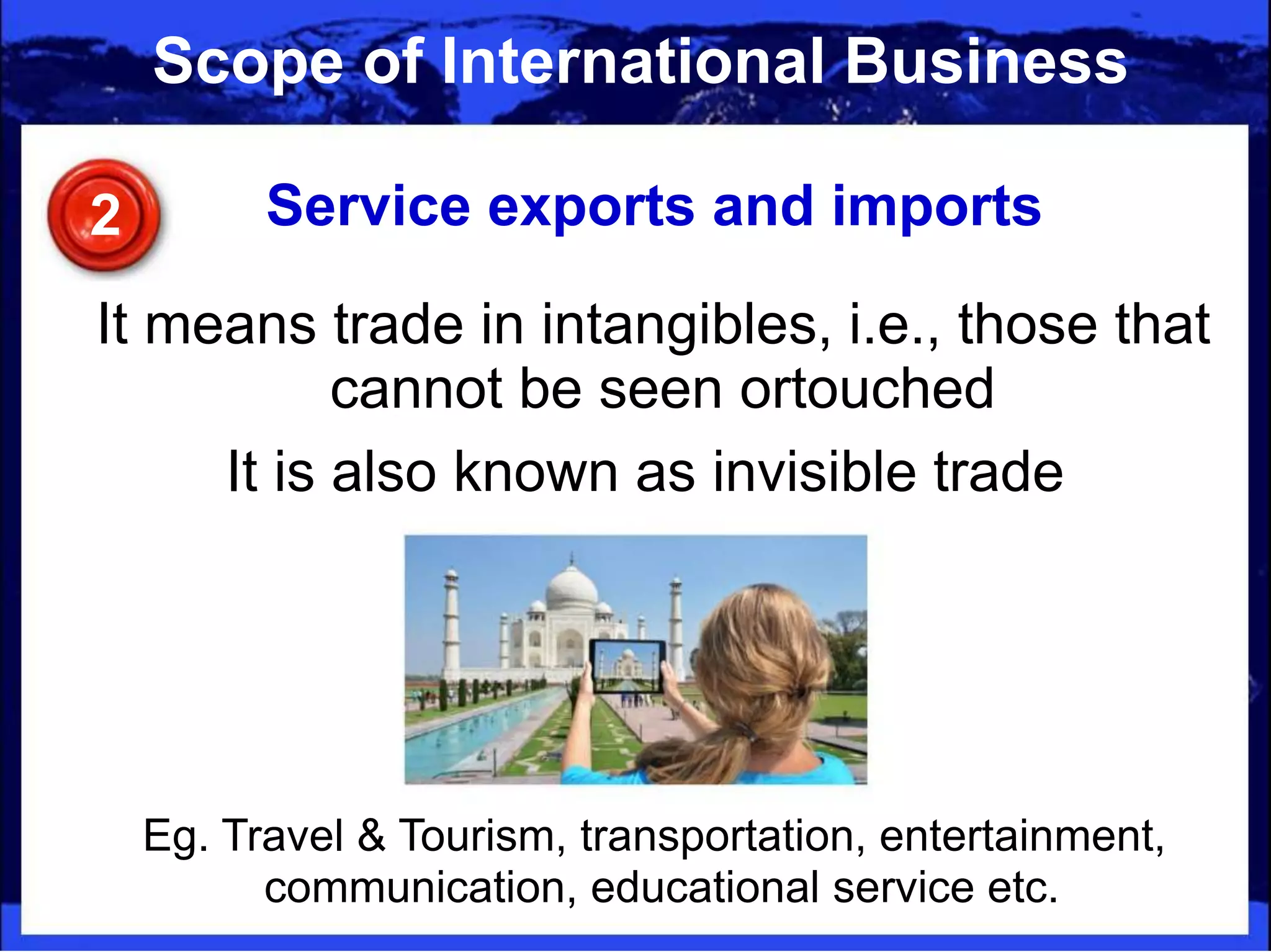
2 Service exports and imports
It means trade in intangibles, i.e., those that
cannot be seen ortouched
It is also known as invisible trade
Eg. Travel & Tourism, transportation, entertainment,
communication, educational service etc.
Scope of International Business
3 Licensing and franchising
Permitting a person/firm in a foreign country
to produce andsell goods under your
trademarks, patents or copyrights for a fee
Eg. Pepsi, Coca-Cola etc.
Franchising is similar to licensing with the difference
that it is connected with services
Eg.Mc Donald (fast food restaurants), KFC etc.
Scope of International Business
4 Foreign Investments
It means investment abroad in exchange for
financial return
It can be in FDI (Foreign Direct Investment)- directly
invested in properties, and FPI (Foreign Portfolio
Investment)- investing by way of acquiring shares or
granting loans
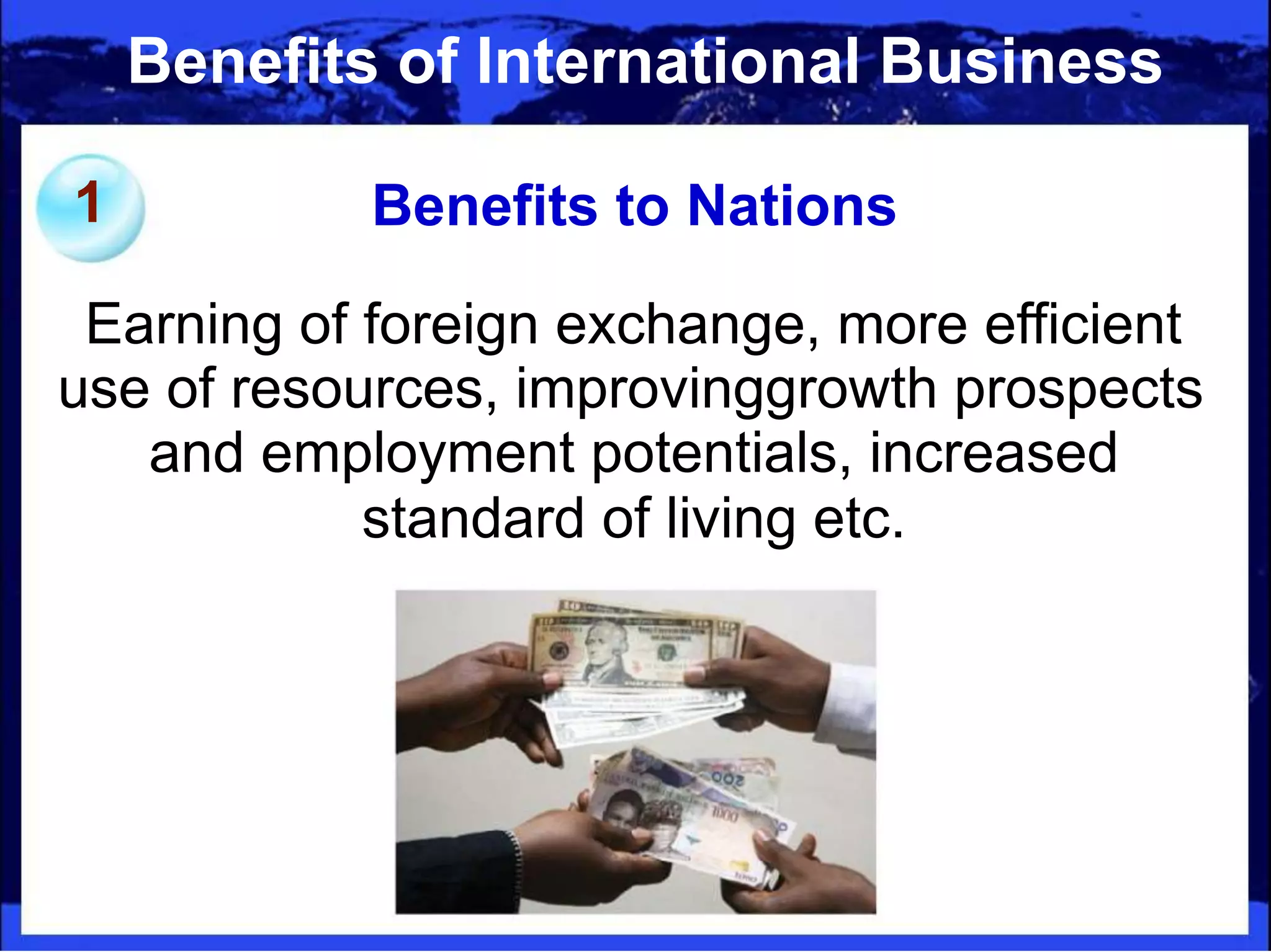
Benefits of International Business
1 Benefits to Nations
Earning of foreign exchange, more efficient
use of resources, improvinggrowth prospects
and employment potentials, increased
standard of living etc.
Benefits of International Business
2 Benefits to Firms
Higher profits, increased capacity utilization,
prospects for growth, way out to intense
competition in domestic market, improved
business vision etc.
Modes of Entry into International Business
1. Exporting and Importing
2. Contract Manufacturing
3. Licensing and Franchising
4. Joint Ventures
5. Wholly owned subsidiaries
Thank You

Chapter 11 International Trade.pptx

  • 1.
  • 2.
  • 3.
  • 4.
    International Business Buying andselling of goods and services between two countries are called external trade or foreign trade or international business It facilitates specialization and efficient utilization of resources
  • 5.
    International Business Reasons forInternational Business Some countries being in a better position to produce better quality products or at lower costs than what other nations can do Oil Extraction
  • 6.
  • 7.
    Differences: Domestic Vs.Internatinal Business Basis Domestic Business International Business Nationality Buyer and seller belong to one nation They are from different countries Suppliers, Other Stakeholders employees, middlemen, shareholders etc. are the citizens of same nation Various stakeholders form different countries More heterogeneous Customer heterogeneity Customers are more homogeneous in nature in the matter of language, preferences, customs etc.
  • 8.
    Differences: Domestic Vs.Internatinal Business Basis Business system and practices Domestic Business Relatively same system International Business Different systems and practices are followed Political system and Subject to the same Subject to different risk country countries Business regulations and policies Currency Subject to the rules, laws, taxation policies of the same nation Currency of the domestic country Subject to the rules and policies prevailing the concerned nations Currencies of more than one countries
  • 9.
    Scope of InternationalBusiness 1 Merchandise exports and imports Merchandise means tangible goods ie, thosethat can be seen and touched
  • 10.
    Scope of InternationalBusiness 2 Service exports and imports It means trade in intangibles, i.e., those that cannot be seen ortouched It is also known as invisible trade Eg. Travel & Tourism, transportation, entertainment, communication, educational service etc.
  • 11.
    Scope of InternationalBusiness 3 Licensing and franchising Permitting a person/firm in a foreign country to produce andsell goods under your trademarks, patents or copyrights for a fee Eg. Pepsi, Coca-Cola etc. Franchising is similar to licensing with the difference that it is connected with services Eg.Mc Donald (fast food restaurants), KFC etc.
  • 12.
    Scope of InternationalBusiness 4 Foreign Investments It means investment abroad in exchange for financial return It can be in FDI (Foreign Direct Investment)- directly invested in properties, and FPI (Foreign Portfolio Investment)- investing by way of acquiring shares or granting loans
  • 13.
    Benefits of InternationalBusiness 1 Benefits to Nations Earning of foreign exchange, more efficient use of resources, improvinggrowth prospects and employment potentials, increased standard of living etc.
  • 14.
    Benefits of InternationalBusiness 2 Benefits to Firms Higher profits, increased capacity utilization, prospects for growth, way out to intense competition in domestic market, improved business vision etc.
  • 15.
    Modes of Entryinto International Business 1. Exporting and Importing 2. Contract Manufacturing 3. Licensing and Franchising 4. Joint Ventures 5. Wholly owned subsidiaries
  • 16.