Chapter 1
                                     Union-Management
                                     Relationships in Perspective


Copyright © 2009 Cengage Learning.                         PowerPoint Presentation by Charlie Cook
All rights reserved.                                              The University of West Alabama
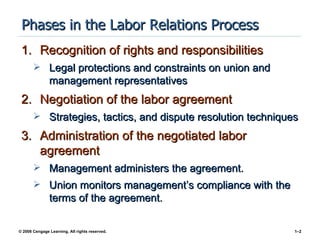
Phases in the Labor Relations Process
 1. Recognition of rights and responsibilities
        Legal protections and constraints on union and
               management representatives
 2. Negotiation of the labor agreement
        Strategies, tactics, and dispute resolution techniques

 3. Administration of the negotiated labor
    agreement
        Management administers the agreement.
        Union monitors management’s compliance with the
               terms of the agreement.

© 2008 Cengage Learning. All rights reserved.                 1–2
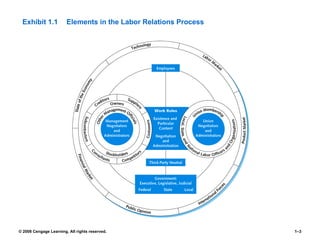
Exhibit 1.1            Elements in the Labor Relations Process


© 2008 Cengage Learning. All rights reserved.                     1–3
Labor Relations’ Focal Point: Work Rules
 • Work Rule Categories
        Rules governing compensation
                 Wages, overtime payments, vacations, shift premiums
        Rules specifying employees’ and employers’ job
            rights and obligations
                 No strike/no lockout, performance standards, promotion
                  qualifications, job specifications, layoff provisions
 • Characteristics of Work Rules
        Common or unique
        Vague or specific
        Change over time


© 2008 Cengage Learning. All rights reserved.                              1–4
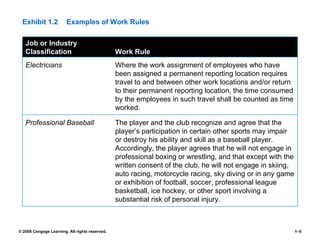
Exhibit 1.2            Examples of Work Rules

   Job or Industry
   Classification                               Work Rule
   Electricians                                 Where the work assignment of employees who have
                                                been assigned a permanent reporting location requires
                                                travel to and between other work locations and/or return
                                                to their permanent reporting location, the time consumed
                                                by the employees in such travel shall be counted as time
                                                worked.

   Professional Baseball                        The player and the club recognize and agree that the
                                                player’s participation in certain other sports may impair
                                                or destroy his ability and skill as a baseball player.
                                                Accordingly, the player agrees that he will not engage in
                                                professional boxing or wrestling, and that except with the
                                                written consent of the club, he will not engage in skiing,
                                                auto racing, motorcycle racing, sky diving or in any game
                                                or exhibition of football, soccer, professional league
                                                basketball, ice hockey, or other sport involving a
                                                substantial risk of personal injury.


© 2008 Cengage Learning. All rights reserved.                                                                1–5
Participants in the Labor Relations Process
 • Management Officials
        Corporate, divisional, plant-level managers
        Management consultants, “union avoidance” experts
 • Union Officials
        Elected officers and representatives
 • Employees
        Vote to organize and vote to ratify negotiated
            agreements


© 2008 Cengage Learning. All rights reserved.                1–6
Participants…(cont’d)
 • The Government
        Executive, legislative, and judicial branches
                 Actions (laws and regulations) can change labor-
                  management relationships.
        Federal, state, and local levels of government
 • Third-Party Neutrals
        Mediators
                 Facilitate bargaining activities.
        Arbitrators
                 Consider disputed issues and make decisions binding on
                  both labor and management.


© 2008 Cengage Learning. All rights reserved.                              1–7
Three Basic Assumptions Underlying
 U.S. Labor Relations
 1. The free enterprise (capitalist) economic
    system creates an inherent conflict of interest
    between employers (owners) and employees.
 2. Employees have a right to pursue their
    employment interests using lawful means.
 3. Collective bargaining provides for employee
    participation through their chosen
    representatives in determination of work rules.


© 2008 Cengage Learning. All rights reserved.         1–8
Exhibit 1.3            Basic Characteristics of the Private Sector Labor Relations System


      • Primarily a bilateral process (union and management) governed by a
        framework of labor laws.
      • A highly decentralized bargaining structure that results in a large
        number of labor contracts.
      • Recognition of the key legal principles of majority rule and exclusive
        bargaining representation.
      • Permits the use of economic pressure (e.g., strike, lockout, picketing,
        and boycott) to aid the parties (union and management) in reaching a
        voluntary negotiated settlement.
      • Encourages the use of final and binding arbitration, if voluntary
        grievance negotiation efforts fail, to resolve rights disputes.
      • Characterized by significant employer opposition to employee efforts
        to organize and bargain collectively through representation.


© 2008 Cengage Learning. All rights reserved.                                                1–9
Constraints or Influences on Work Rules
 • State of the Economy
        Inflation, interest rates, unemployment, and
            productivity affect job security.
 • Labor Market
        Skills and wage levels in the relevant labor market
        Demand for labor and shifts in labor market sectors
 • Product Market
        Vulnerability of disruption to product supply to
         customers from the potential for labor strikes
        Use of outsourced materials and products


© 2008 Cengage Learning. All rights reserved.                  1–10
Constraints or Influences…(cont’d)
 • Financial Market
        Availability and cost of funds for investment
        Exchange rates that affect plant location choice
        Funds borrowed to support ESOPs
        Capital investments in nonunion and offshore facilities
 • Technology
        Equipment changing or eliminating skills required
        Pace and scheduling of the work
        Work environment and tasks
        Information exchange


© 2008 Cengage Learning. All rights reserved.                 1–11
Constraints or Influences…(cont’d)
 • International Forces
        North American Free Trade Agreement (NAFTA)
        U.S. firms’ overseas investments
        Globalization and the global economy (24/7)
        Multinational firms’ plant location strategies
        Low-wages in newly industrializing countries
        Rising volume of imports
 • Public Opinion
        Influential individuals and organizations
        Attitudes and traditions of the community


© 2008 Cengage Learning. All rights reserved.             1–12
How Unions Enhance Public Opinion
 • Monitoring and reacting to negative comments
   made in the media.
 • Getting organized labor’s positive message out
   to the community.
 • Forming alliances with various groups in the
   community.


© 2008 Cengage Learning. All rights reserved.       1–13
Union Membership Is Declining
 • Structural Changes in the Labor Force
        Shift from manufacturing to knowledge-based jobs
        Growth in professional, technical, and service workers
        Shifts in workforce demographics (more females and
            younger workers)
        Employment growth primarily (80%) in smaller firms
        Increases in the use of part-time and contingent
            workers
        Economic recessions


© 2008 Cengage Learning. All rights reserved.                 1–14
Exhibit 1.4              Union Membership Trends, 1975–2006 (in thousands)


                        Data is based upon information in the Current Population Survey (CPS)
                        compiled by the Bureau of Labor Statistics, U.S. Department of Labor.


SOURCE: Barry Hirsch and David Macpherson, ‘‘Union Membership, Coverage, Density, and Employment among
All Wage and Salary Workers, 1973–2006,’’ Unionstats.com, 2007, p. 1 at http://www.trinity.edu/bhirsch/unionstats/.
© 2008 Cengage Learning. All rights reserved.                                                                         1–15
Union Membership Is Declining (cont’d)
 • Organizational Practices
        Union-avoidance practices by firms
        Improved human resources practices

 • Employment Law
        Companies’ use of laws to forestall organizing
        Laws that make unions appear unnecessary

 • Union Organizing Efforts
        Questions about the sufficiency of resources devoted
            to organizing by unions


© 2008 Cengage Learning. All rights reserved.               1–16
Key Terms
 •   Labor relations process                    •   Arbitrator
 •   Interest dispute                           •   Economy
 •   Rights dispute                             •   Labor market
 •   Work rule                                  •   Product or service market
 •   Manager                                    •   Financial market
 •   Union representative                       •   Technology
 •   Employees                                  •   International forces
 •   Dual loyalty                               •   Public opinion
 •   Government                                 •   Union density
 •   Third-party neutral                        •   Employment-at-will
 •   Mediator

© 2008 Cengage Learning. All rights reserved.                               1–17

Chapter 1 union-management relationship in perspective

  • 1.
    Chapter 1 Union-Management Relationships in Perspective Copyright © 2009 Cengage Learning. PowerPoint Presentation by Charlie Cook All rights reserved. The University of West Alabama
  • 2.
    Phases in theLabor Relations Process 1. Recognition of rights and responsibilities  Legal protections and constraints on union and management representatives 2. Negotiation of the labor agreement  Strategies, tactics, and dispute resolution techniques 3. Administration of the negotiated labor agreement  Management administers the agreement.  Union monitors management’s compliance with the terms of the agreement. © 2008 Cengage Learning. All rights reserved. 1–2
  • 3.
    Exhibit 1.1 Elements in the Labor Relations Process © 2008 Cengage Learning. All rights reserved. 1–3
  • 4.
    Labor Relations’ FocalPoint: Work Rules • Work Rule Categories  Rules governing compensation  Wages, overtime payments, vacations, shift premiums  Rules specifying employees’ and employers’ job rights and obligations  No strike/no lockout, performance standards, promotion qualifications, job specifications, layoff provisions • Characteristics of Work Rules  Common or unique  Vague or specific  Change over time © 2008 Cengage Learning. All rights reserved. 1–4
  • 5.
    Exhibit 1.2 Examples of Work Rules Job or Industry Classification Work Rule Electricians Where the work assignment of employees who have been assigned a permanent reporting location requires travel to and between other work locations and/or return to their permanent reporting location, the time consumed by the employees in such travel shall be counted as time worked. Professional Baseball The player and the club recognize and agree that the player’s participation in certain other sports may impair or destroy his ability and skill as a baseball player. Accordingly, the player agrees that he will not engage in professional boxing or wrestling, and that except with the written consent of the club, he will not engage in skiing, auto racing, motorcycle racing, sky diving or in any game or exhibition of football, soccer, professional league basketball, ice hockey, or other sport involving a substantial risk of personal injury. © 2008 Cengage Learning. All rights reserved. 1–5
  • 6.
    Participants in theLabor Relations Process • Management Officials  Corporate, divisional, plant-level managers  Management consultants, “union avoidance” experts • Union Officials  Elected officers and representatives • Employees  Vote to organize and vote to ratify negotiated agreements © 2008 Cengage Learning. All rights reserved. 1–6
  • 7.
    Participants…(cont’d) • TheGovernment  Executive, legislative, and judicial branches  Actions (laws and regulations) can change labor- management relationships.  Federal, state, and local levels of government • Third-Party Neutrals  Mediators  Facilitate bargaining activities.  Arbitrators  Consider disputed issues and make decisions binding on both labor and management. © 2008 Cengage Learning. All rights reserved. 1–7
  • 8.
    Three Basic AssumptionsUnderlying U.S. Labor Relations 1. The free enterprise (capitalist) economic system creates an inherent conflict of interest between employers (owners) and employees. 2. Employees have a right to pursue their employment interests using lawful means. 3. Collective bargaining provides for employee participation through their chosen representatives in determination of work rules. © 2008 Cengage Learning. All rights reserved. 1–8
  • 9.
    Exhibit 1.3 Basic Characteristics of the Private Sector Labor Relations System • Primarily a bilateral process (union and management) governed by a framework of labor laws. • A highly decentralized bargaining structure that results in a large number of labor contracts. • Recognition of the key legal principles of majority rule and exclusive bargaining representation. • Permits the use of economic pressure (e.g., strike, lockout, picketing, and boycott) to aid the parties (union and management) in reaching a voluntary negotiated settlement. • Encourages the use of final and binding arbitration, if voluntary grievance negotiation efforts fail, to resolve rights disputes. • Characterized by significant employer opposition to employee efforts to organize and bargain collectively through representation. © 2008 Cengage Learning. All rights reserved. 1–9
  • 10.
    Constraints or Influenceson Work Rules • State of the Economy  Inflation, interest rates, unemployment, and productivity affect job security. • Labor Market  Skills and wage levels in the relevant labor market  Demand for labor and shifts in labor market sectors • Product Market  Vulnerability of disruption to product supply to customers from the potential for labor strikes  Use of outsourced materials and products © 2008 Cengage Learning. All rights reserved. 1–10
  • 11.
    Constraints or Influences…(cont’d) • Financial Market  Availability and cost of funds for investment  Exchange rates that affect plant location choice  Funds borrowed to support ESOPs  Capital investments in nonunion and offshore facilities • Technology  Equipment changing or eliminating skills required  Pace and scheduling of the work  Work environment and tasks  Information exchange © 2008 Cengage Learning. All rights reserved. 1–11
  • 12.
    Constraints or Influences…(cont’d) • International Forces  North American Free Trade Agreement (NAFTA)  U.S. firms’ overseas investments  Globalization and the global economy (24/7)  Multinational firms’ plant location strategies  Low-wages in newly industrializing countries  Rising volume of imports • Public Opinion  Influential individuals and organizations  Attitudes and traditions of the community © 2008 Cengage Learning. All rights reserved. 1–12
  • 13.
    How Unions EnhancePublic Opinion • Monitoring and reacting to negative comments made in the media. • Getting organized labor’s positive message out to the community. • Forming alliances with various groups in the community. © 2008 Cengage Learning. All rights reserved. 1–13
  • 14.
    Union Membership IsDeclining • Structural Changes in the Labor Force  Shift from manufacturing to knowledge-based jobs  Growth in professional, technical, and service workers  Shifts in workforce demographics (more females and younger workers)  Employment growth primarily (80%) in smaller firms  Increases in the use of part-time and contingent workers  Economic recessions © 2008 Cengage Learning. All rights reserved. 1–14
  • 15.
    Exhibit 1.4 Union Membership Trends, 1975–2006 (in thousands) Data is based upon information in the Current Population Survey (CPS) compiled by the Bureau of Labor Statistics, U.S. Department of Labor. SOURCE: Barry Hirsch and David Macpherson, ‘‘Union Membership, Coverage, Density, and Employment among All Wage and Salary Workers, 1973–2006,’’ Unionstats.com, 2007, p. 1 at http://www.trinity.edu/bhirsch/unionstats/. © 2008 Cengage Learning. All rights reserved. 1–15
  • 16.
    Union Membership IsDeclining (cont’d) • Organizational Practices  Union-avoidance practices by firms  Improved human resources practices • Employment Law  Companies’ use of laws to forestall organizing  Laws that make unions appear unnecessary • Union Organizing Efforts  Questions about the sufficiency of resources devoted to organizing by unions © 2008 Cengage Learning. All rights reserved. 1–16
  • 17.
    Key Terms • Labor relations process • Arbitrator • Interest dispute • Economy • Rights dispute • Labor market • Work rule • Product or service market • Manager • Financial market • Union representative • Technology • Employees • International forces • Dual loyalty • Public opinion • Government • Union density • Third-party neutral • Employment-at-will • Mediator © 2008 Cengage Learning. All rights reserved. 1–17