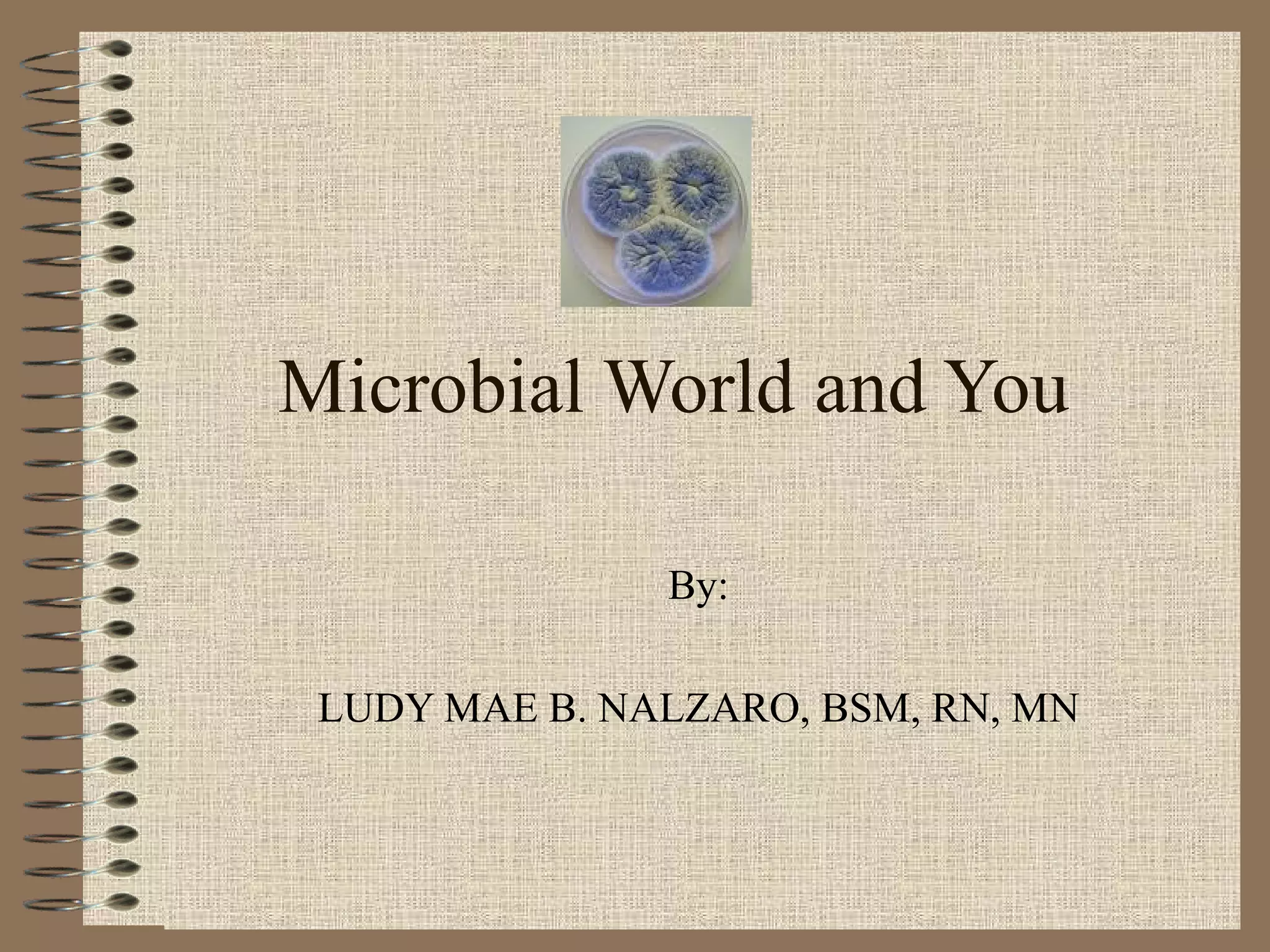
Microbial World and You

               By:

 LUDY MAE B. NALZARO, BSM, RN, MN
Terminologies…
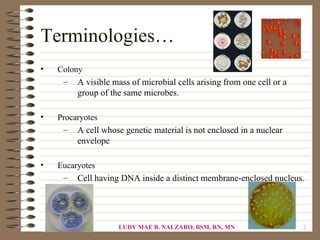
•   Colony
     –   A visible mass of microbial cells arising from one cell or a
         group of the same microbes.

•   Procaryotes
     –   A cell whose genetic material is not enclosed in a nuclear
         envelope

•   Eucaryotes
     –   Cell having DNA inside a distinct membrane-enclosed nucleus.


                    LUDY MAE B. NALZARO, BSM, RN, MN                    2
Terminologies…
•   Algae
     –   Photosynthetic eukaryotes

•   Bacteria
     –   Prokaryotic organism characterized by peptidoglycan cell wall

•   Saprophytes/decomposers
     –   Organisms that obtain nutrients from dead organic matters


                    LUDY MAE B. NALZARO, BSM, RN, MN                     3
What is Microbiology?
•   Micro - too small to be seen with the naked eye
•   Bio - life
•   ology - study of

•   Is the study of very small living organisms called
    microorganisms/microbes.

•   Microbes are ubiquitous
     – Meaning they are virtually everywhere!


                     LUDY MAE B. NALZARO, BSM, RN, MN    4
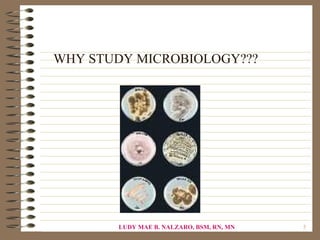
WHY STUDY MICROBIOLOGY???


       LUDY MAE B. NALZARO, BSM, RN, MN   5
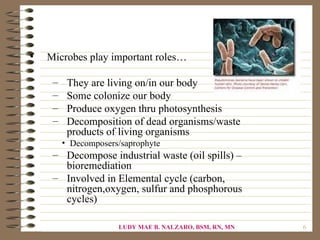
•   Microbes play important roles…

     –    They are living on/in our body
     –    Some colonize our body
     –    Produce oxygen thru photosynthesis
     –    Decomposition of dead organisms/waste
          products of living organisms
         • Decomposers/saprophyte
     – Decompose industrial waste (oil spills) –
       bioremediation
     – Involved in Elemental cycle (carbon,
       nitrogen,oxygen, sulfur and phosphorous
       cycles)

                      LUDY MAE B. NALZARO, BSM, RN, MN   6
• Algae and bacteria serve as food for tiny
  animals
• Aid in the digestion of food in human (E. coli)
• Microbes process our food and beverages –
  biotechnology
• Genetic engineering
• Cause 2 categories of diseases:
    – Infectious diseases (colonizes the body)
    – Microbial intoxications (ingest toxin)


               LUDY MAE B. NALZARO, BSM, RN, MN     7
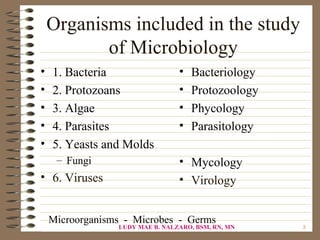
Organisms included in the study
           of Microbiology
•   1. Bacteria                  •   Bacteriology
•   2. Protozoans                •   Protozoology
•   3. Algae                     •   Phycology
•   4. Parasites                 •   Parasitology
•   5. Yeasts and Molds
     – Fungi                     • Mycology
• 6. Viruses                     • Virology


    Microorganisms - Microbes - Germs
                 LUDY MAE B. NALZARO, BSM, RN, MN   8
5 Kingdoms of Living Organisms
•   1. Animalia
•   2. Plantae
•   3. Fungi
•   4. Protista
•   5. Monera - Bacteria and Cyanobacteria

•        Eukaryotic vs. Prokaryotic
               LUDY MAE B. NALZARO, BSM, RN, MN   9
5 Characteristics of Life
• 1. Cells
• 2. Maintain structure by taking up
  chemicals and energy from the environment
• 3. Respond to stimuli in the external
  environment
• 4. Reproduce and pass on their organization
  to their offspring
• 5. Evolve and adapt to the environment
             LUDY MAE B. NALZARO, BSM, RN, MN   10
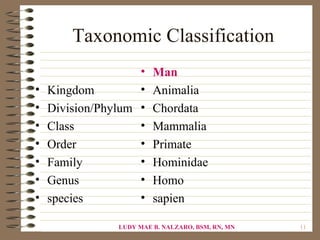
Taxonomic Classification
                  •    Man
• Kingdom         •    Animalia
• Division/Phylum •    Chordata
• Class           •    Mammalia
• Order           •    Primate
• Family          •    Hominidae
• Genus           •    Homo
• species         •    sapien

              LUDY MAE B. NALZARO, BSM, RN, MN   11
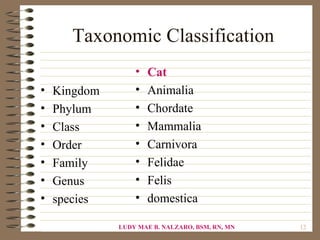
Taxonomic Classification
                  •   Cat
•   Kingdom       •   Animalia
•   Phylum        •   Chordate
•   Class         •   Mammalia
•   Order         •   Carnivora
•   Family        •   Felidae
•   Genus         •   Felis
•   species       •   domestica

              LUDY MAE B. NALZARO, BSM, RN, MN   12
Binomial System of Taxonomic
         Classification
• Use only the Genus and species
  – Homo sapien
  – Felis domestica
  – Escherichia coli
• Genus and species are either underlined or
  italicized
• Genus is always capitalized
• species is never capitalized
              LUDY MAE B. NALZARO, BSM, RN, MN   13
Classification System
• 3 Domains           1978 Carl Woese
  – 1. Bacteria
     • Unicellular prokaryotes with cell wall containing
       peptidoglycan
  – 2. Archaea
     • Unicellular prokaryotes with no peptodoglycan in
       cell wall
  – 3. Eukarya
     •   Protista
     •   Fungi
     •   Plantae
     •   Animalia

              LUDY MAE B. NALZARO, BSM, RN, MN         14
Bacteria - what comes to mind?
• Diseases
• Infections
• Epidemics
• Food Spoilage
• Only 3% of all known bacteria cause human
  diseases
• About 4% of all known bacteria cause plant
  diseases
• 95% of known bacteria are non-pathogens
           LUDY MAE B. NALZARO, BSM, RN, MN   15
Microbes Benefit Humans
• 1.Bacteria are primary decomposers -
  recycle nutrients back into the environment
  (sewage treatment plants)
• 2. Microbes produce various food products
  – cheese, pickles, green olives
  – yogurt, soy sauce, vinegar, bread
  – Beer, Wine, Alcohol


              LUDY MAE B. NALZARO, BSM, RN, MN   16
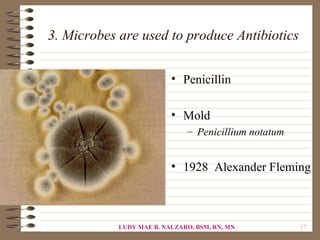
3. Microbes are used to produce Antibiotics


                          • Penicillin

                          • Mold
                              – Penicillium notatum


                          • 1928 Alexander Fleming


            LUDY MAE B. NALZARO, BSM, RN, MN          17
4. Bacteria synthesize chemicals that our
    body needs, but cannot synthesize
• Example: E. coli
    – B vitamins - for metabolism
    – Vitamin K - blood clotting


•     Escherichia coli
    – Dr. Escherich
    – Colon (intestine)


                LUDY MAE B. NALZARO, BSM, RN, MN   18
5. Biochemistry and Metabolism
• Very simple structure
• rapid rate of reproduction
• provides “instant” data


             LUDY MAE B. NALZARO, BSM, RN, MN   19
6. Microbial Antagonism
• Our normal microbial flora prevents
  potential pathogens from gaining access to
  our body


             LUDY MAE B. NALZARO, BSM, RN, MN   20
7. Insect Pest Control
• Using bacteria to control the growth of
  insects

• Bacillus thuringiensis
  – caterpillars
  – bollworms
  – corn borers


               LUDY MAE B. NALZARO, BSM, RN, MN   21
8. Bioremediation
• Using microbes to clean up pollutants and
  toxic wastes
• Exxon Valdez - 1989

• 2 Genera
  – Pseudomonas sp.
  – Bacillus sp.

             LUDY MAE B. NALZARO, BSM, RN, MN   22
9. Recombinant DNA Technology
 Gene Therapy Genetic Engineering


• Bacteria can be manipulated to produce
  enzymes and proteins they normally would
  not produce
  – Insulin
  – Human Growth Hormone
  – Interferon

            LUDY MAE B. NALZARO, BSM, RN, MN   23
10. Microbes form the basis of
        the food chain


Marine and fresh water microorganisms


         LUDY MAE B. NALZARO, BSM, RN, MN   24
Microbes do benefit us, but they are also
  capable of causing many diseases

•   Pneumonia          Whooping Cough
•   Botulism           Typhoid Fever                  Measles
•   Cholera            Scarlet Fever                  Mumps
•   Syphilis           Gonorrhea                      Herpes 1
•   Chlamydia          Tuberculosis                   Herpes 2
•   Meningitis         Tetanus                        RMSV
•   Strep Throat       Lyme Disease                   AIDS
•   Black Plague       Diarrhea                       Gangrene
                   LUDY MAE B. NALZARO, BSM, RN, MN              25
History of the Study of
          Microorganisms
• 1665 Robert Hooke
  – “little boxes” - “cells”
  – Cell Theory - all living things are made up of
    cells


              LUDY MAE B. NALZARO, BSM, RN, MN       26
Spontaneous Generation
• Theory that life just “spontaneously”
  developed from non-living matter

• Example:
  – toads, snakes and mice - moist soil
  – flies and maggots - manure and decaying flesh


              LUDY MAE B. NALZARO, BSM, RN, MN      27
Experiments to disprove
      Spontaneous Generation
• Francesco Redi           1668
  – Showed that worms which appeared on rotting meat
    were from fly eggs
• Rudolph Virchow 1858
  – Theory of Biogenesis
     • Cells can only arise from preexisting cells
• Louis Pasteur          1861
  – Showed that appearance of microbes in sterilized media
    was from air-borne bacteria
  – Showed that sterilized materials remained sterile if kept
    isolated from the external environment


                  LUDY MAE B. NALZARO, BSM, RN, MN         28
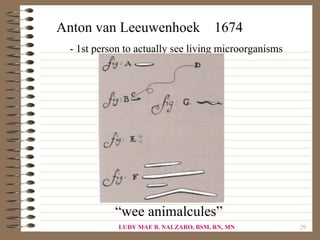
Anton van Leeuwenhoek                 1674
 - 1st person to actually see living microorganisms


           “wee animalcules”
            LUDY MAE B. NALZARO, BSM, RN, MN          29
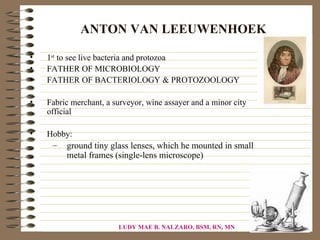
ANTON VAN LEEUWENHOEK

•   1st to see live bacteria and protozoa
•   FATHER OF MICROBIOLOGY
•   FATHER OF BACTERIOLOGY & PROTOZOOLOGY

•   Fabric merchant, a surveyor, wine assayer and a minor city
    official

•   Hobby:
     –   ground tiny glass lenses, which he mounted in small
         metal frames (single-lens microscope)


                        LUDY MAE B. NALZARO, BSM, RN, MN         30
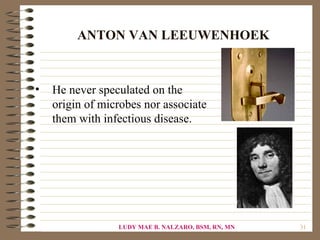
ANTON VAN LEEUWENHOEK


•   He never speculated on the
    origin of microbes nor associate
    them with infectious disease.


                 LUDY MAE B. NALZARO, BSM, RN, MN   31
LUDY MAE B. NALZARO, BSM, RN, MN   32
•   Scientist became convinced of the existence of tiny creature (not
    seen by naked eye)

•   SPONTANEOUS GENERATION THEORY /ABIOGENESIS was
    established
      – Life could develop spontaneously from inanimate
          substances/nonliving organisms.

     –   UNTIL the time of Louis Pasteur and John Tyndall who
         disproved the theory and prove that
            • “LIFE CAN ONLY ARISE FROM
              PREEXISTING LIFE ALONE”


                     LUDY MAE B. NALZARO, BSM, RN, MN                   33
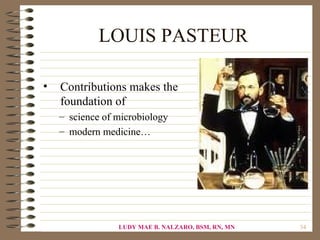
LOUIS PASTEUR

•   Contributions makes the
    foundation of
    – science of microbiology
    – modern medicine…


                 LUDY MAE B. NALZARO, BSM, RN, MN   34
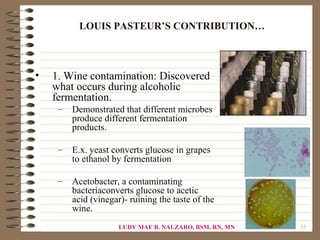
LOUIS PASTEUR’S CONTRIBUTION…


•   1. Wine contamination: Discovered
    what occurs during alcoholic
    fermentation.
     –   Demonstrated that different microbes
         produce different fermentation
         products.

     –   E.x. yeast converts glucose in grapes
         to ethanol by fermentation

     –   Acetobacter, a contaminating
         bacteriaconverts glucose to acetic
         acid (vinegar)- ruining the taste of the
         wine.
                      LUDY MAE B. NALZARO, BSM, RN, MN   35
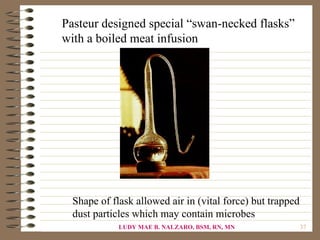
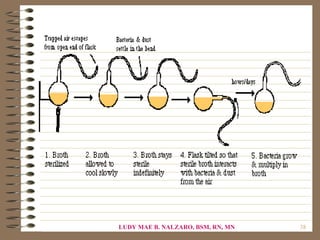
2. Thru experiment, dealth the fatal blow to
  the theory of spontaneous generation.


             LUDY MAE B. NALZARO, BSM, RN, MN   36
Pasteur designed special “swan-necked flasks”
with a boiled meat infusion


  Shape of flask allowed air in (vital force) but trapped
  dust particles which may contain microbes
             LUDY MAE B. NALZARO, BSM, RN, MN               37
LUDY MAE B. NALZARO, BSM, RN, MN   38
LOUIS PASTEUR’S CONTRIBUTION            …


• 3. Discovered forms of life that are with
  no oxygen.
   – Aerobes – microbes needs Oxygen
   – Anaerobes – microbes can live without
     oxygen


            LUDY MAE B. NALZARO, BSM, RN, MN       39
LOUIS PASTEUR’S CONTRIBUTION…


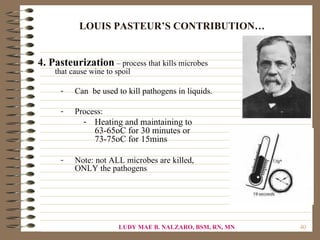
4. Pasteurization – process that kills microbes
    that cause wine to spoil

      -   Can be used to kill pathogens in liquids.

      -   Process:
             - Heating and maintaining to
               63-65oC for 30 minutes or
               73-75oC for 15mins

      -   Note: not ALL microbes are killed,
          ONLY the pathogens


                        LUDY MAE B. NALZARO, BSM, RN, MN   40
LOUIS PASTEUR’S CONTRIBUTION…

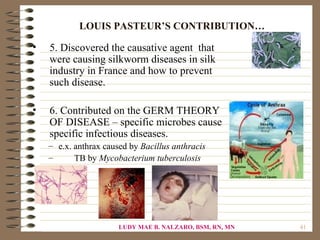
•   5. Discovered the causative agent that
    were causing silkworm diseases in silk
    industry in France and how to prevent
    such disease.

•   6. Contributed on the GERM THEORY
    OF DISEASE – specific microbes cause
    specific infectious diseases.
    – e.x. anthrax caused by Bacillus anthracis
    –      TB by Mycobacterium tuberculosis


                       LUDY MAE B. NALZARO, BSM, RN, MN   41
LOUIS PASTEUR’S CONTRIBUTION…

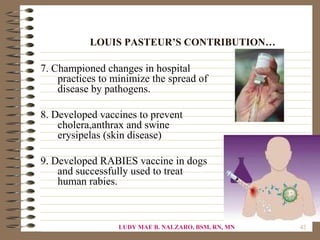
7. Championed changes in hospital
    practices to minimize the spread of
    disease by pathogens.

8. Developed vaccines to prevent
    cholera,anthrax and swine
    erysipelas (skin disease)

9. Developed RABIES vaccine in dogs
    and successfully used to treat
    human rabies.


                  LUDY MAE B. NALZARO, BSM, RN, MN   42
Germ Theory of Disease
• Hard for people to believe that diseases were
  caused by tiny invisible “wee animalcules”

• Diseases, they thought, were caused by:
   –   demons
   –   witchcraft
   –   bad luck
   –   the wrath of God
   –   curses
   –   evil spirits

                LUDY MAE B. NALZARO, BSM, RN, MN   43
Robert Koch - 1st to prove that
     bacteria actually caused diseases
• 1876
• Microbial Etiology of Infectious Disease
   – etiology - the cause of a disease
• Developed methods of fixing, staining, and
  photographing bacteria
• Established “scientific rules” to show a cause and
  effect relationship between a microbe and a
  disease
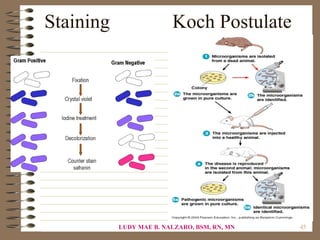
   – Koch’s Postulates

                 LUDY MAE B. NALZARO, BSM, RN, MN      44
Staining                 Koch Postulate


           LUDY MAE B. NALZARO, BSM, RN, MN   45
Koch’s Postulates
• 1. The same organisms must be found in all
  cases of a given disease.
• 2. The organism must be isolated and
  grown in pure culture.
• 3. The isolated organism must reproduce
  the same disease when inoculated into a
  healthy susceptible animal.
• 4. The original organism must again be
  isolated from the experimentally infected
  animal.
           LUDY MAE B. NALZARO, BSM, RN, MN   46
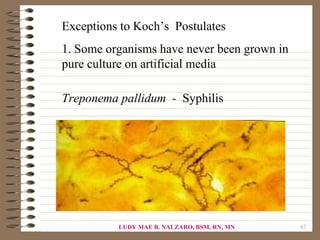
Exceptions to Koch’s Postulates
1. Some organisms have never been grown in
pure culture on artificial media

Treponema pallidum - Syphilis


          LUDY MAE B. NALZARO, BSM, RN, MN   47
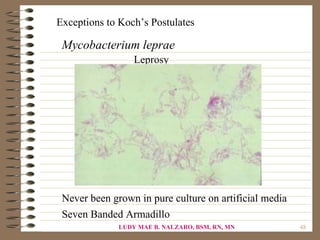
Exceptions to Koch’s Postulates

 Mycobacterium leprae
                  Leprosy


 Never been grown in pure culture on artificial media
 Seven Banded Armadillo
              LUDY MAE B. NALZARO, BSM, RN, MN          48
Exceptions to Koch’s Postulates
• In exclusively human diseases, it is not
  morally acceptable to inoculate a deadly
  pathogen into a “human guinea pig”

• HIV


             LUDY MAE B. NALZARO, BSM, RN, MN   49
Koch established the Microbial Etiology
  of 3 important diseases of his day

• 1. Cholera (fecal-oral disease)
   – Vibrio cholerae
• 2. Tuberculosis (pulmonary infection)
   – Mycobacterium tuberculosis
   – Work on tuberculin (protein from M. tuberculosis) that led to dev’t of
     skin testing to diagnose TB.
• 3. Anthrax (sheep and cattle)
   – Bacillus anthracis
   – Discovered that B. anthracis produce spores that is capable of resisting
     adverse conditions.


                      LUDY MAE B. NALZARO, BSM, RN, MN                          50
Anthrax
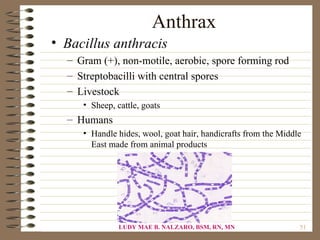
• Bacillus anthracis
  – Gram (+), non-motile, aerobic, spore forming rod
  – Streptobacilli with central spores
  – Livestock
     • Sheep, cattle, goats
  – Humans
     • Handle hides, wool, goat hair, handicrafts from the Middle
       East made from animal products


               LUDY MAE B. NALZARO, BSM, RN, MN                 51
3 Forms of Human Anthrax

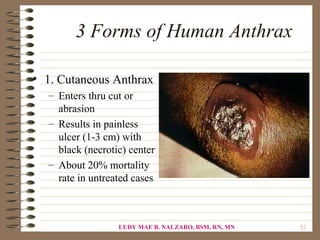
• 1. Cutaneous Anthrax
  – Enters thru cut or
    abrasion
  – Results in painless
    ulcer (1-3 cm) with
    black (necrotic) center
  – About 20% mortality
    rate in untreated cases


                  LUDY MAE B. NALZARO, BSM, RN, MN   52
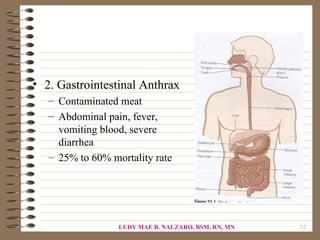
• 2. Gastrointestinal Anthrax
   – Contaminated meat
   – Abdominal pain, fever,
     vomiting blood, severe
     diarrhea
   – 25% to 60% mortality rate


                  LUDY MAE B. NALZARO, BSM, RN, MN   53
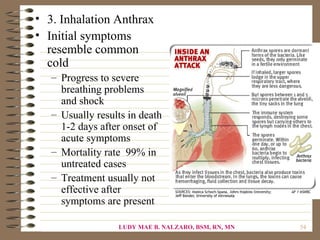
• 3. Inhalation Anthrax
• Initial symptoms
  resemble common
  cold
   – Progress to severe
     breathing problems
     and shock
   – Usually results in death
     1-2 days after onset of
     acute symptoms
   – Mortality rate 99% in
     untreated cases
   – Treatment usually not
     effective after
     symptoms are present

                  LUDY MAE B. NALZARO, BSM, RN, MN   54
Anthrax as a Biological Weapon
• Deadly if not treated early
• Spores can be produced in large quantities using basic
  knowledge of biology
• Spores may remain viable for years (60 at least)
• Spores can be spread
     – Missiles, rockets, bombs, mail, crop dusters ?
•   No cloud or color
•   No smell
•   No taste
•   Antibiotics – only effective if administered early (within
    24 –48 hours)


                  LUDY MAE B. NALZARO, BSM, RN, MN          55
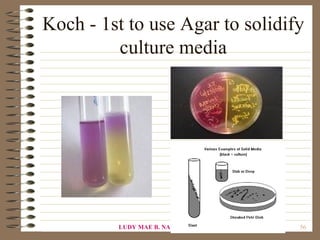
Koch - 1st to use Agar to solidify
         culture media


         LUDY MAE B. NALZARO, BSM, RN, MN   56
Golden Age of Microbiology                                   1857 - 1914
• Pasteur
   – Pasteurization
   – Fermentation
• Joseph Lister
   – Phenol to treat surgical wounds – 1st attempt to control infections
     caused by microoganisms
• Robert Koch
   – Koch’s Postulates
• Edward Jenner
   – vaccination
• Paul Erlich
   – 1st synthetic drug used to treat infections
   – Salvarsan - arsenic based chemical to treat Syphilis
       • “salvation” from Syphilis
                   LUDY MAE B. NALZARO, BSM, RN, MN                  57
Naming of Bacteria
• Genus and species - Binomial System of
  Taxonomic Classification

• Information usually given:
  – 1. Describes an organism
  – 2. Identifies a habitat
  – 3. Honors a scientist or researcher


              LUDY MAE B. NALZARO, BSM, RN, MN   58
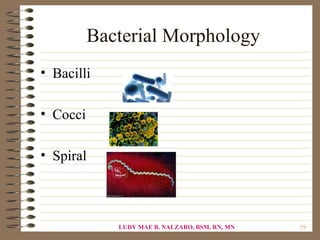
Bacterial Morphology
• Bacilli

• Cocci

• Spiral


             LUDY MAE B. NALZARO, BSM, RN, MN   59
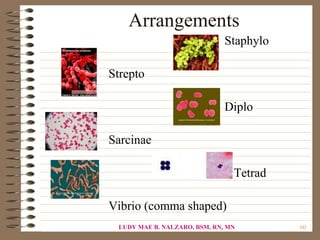
Arrangements
                              Staphylo

Strepto

                              Diplo

Sarcinae

                                Tetrad

Vibrio (comma shaped)
 LUDY MAE B. NALZARO, BSM, RN, MN        60
• Staphylococcus aureus • Escherichia coli
• Staphylococcus        • Bacillus anthracis
  epidermidis           • Salmonella enteridis
                        • Streptococcus pyogenes
• Streptococcus
  pneumoniae            • Steptococcus lactis
                        • Streptococcus faecalis
• Vibrio cholerae
                        • Erlichia canis
• Rhodospirillium       • Campylobacter jejuni
  rubrum
                        • Helicobacter pylori
• Bacillus subtilis     • Enterobacter aerogenes
• Micrococcus luteus
             LUDY MAE B. NALZARO, BSM, RN, MN   61
Microbiology: A Human Perspective


•     Microorganisms cannot be seen without the aid of a
      microscope
•     There are more than 200,000 known microbes
•     Exist in virtually any environment that has water
•     Exhibit tremendous biodiversity
•     Compose the largest biomass group of living
      organisms
•     Microbes exist for more than 3.5 billion years


               LUDY MAE B. NALZARO, BSM, RN, MN            62
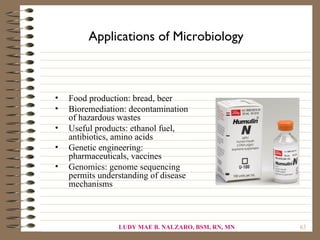
Applications of Microbiology


•   Food production: bread, beer
•   Bioremediation: decontamination
    of hazardous wastes
•   Useful products: ethanol fuel,
    antibiotics, amino acids
•   Genetic engineering:
    pharmaceuticals, vaccines
•   Genomics: genome sequencing
    permits understanding of disease
    mechanisms


                 LUDY MAE B. NALZARO, BSM, RN, MN   63
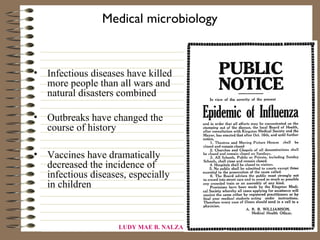
Medical microbiology


• Infectious diseases have killed
  more people than all wars and
  natural disasters combined

• Outbreaks have changed the
  course of history

• Vaccines have dramatically
  decreased the incidence of
  infectious diseases, especially
  in children


                    LUDY MAE B. NALZARO, BSM, RN, MN   64
Medical microbiology (cont.)


•     Re-emergence of “Old” Infectious
      Diseases
     –   Cases of whooping cough have increased
         in the last few years
     –   Many microbes have evolved antibiotic
         resistance


          LUDY MAE B. NALZARO, BSM, RN, MN   65
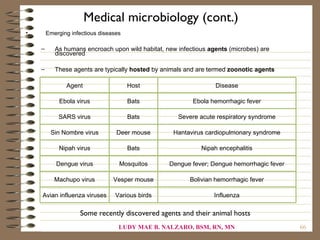
Medical microbiology (cont.)
•       Emerging infectious diseases

    –      As humans encroach upon wild habitat, new infectious agents (microbes) are
           discovered

    –      These agents are typically hosted by animals and are termed zoonotic agents

               Agent                   Host                       Disease

             Ebola virus               Bats               Ebola hemorrhagic fever

            SARS virus                 Bats          Severe acute respiratory syndrome

         Sin Nombre virus         Deer mouse       Hantavirus cardiopulmonary syndrome

            Nipah virus                Bats                  Nipah encephalitis

           Dengue virus            Mosquitos      Dengue fever; Dengue hemorrhagic fever

           Machupo virus         Vesper mouse            Bolivian hemorrhagic fever

    Avian influenza viruses       Various birds                  Influenza

                    Some recently discovered agents and their animal hosts
                                   LUDY MAE B. NALZARO, BSM, RN, MN                        66
Terminologies…
•   Bacteriocins
     – Toxins produce by enterobacteria that are lethal to
        related strains of bacteria.

•   Resident flora
     – Collective vegetation in a given area in one part of
        the body, yet produce infection in another.

•   Infection
     – Is an invasion of body tissue by microbes and their
        growth


                 LUDY MAE B. NALZARO, BSM, RN, MN         67
• Infectious agent
    – Microbes that cause infection.

• Asymptomatic/subclinical
    – Microbes do not produce clinical evidence of
      disease.

• Disease
    – Detectable alteration in normal tissue function


                LUDY MAE B. NALZARO, BSM, RN, MN        68
•   Virulence
     –   Microbe’s ability to produce disease

•   Communicable disease
     –   Infectious agents that can be transmitted to an individual by direct
         or indirect contact or as airborne infection
     –   e.x. common colds

•   Pathogenicity
     –   Ability to produce disease

•   Pathogen
     –   Disease causing microbes
     –   3% of known microbes are capable of causing disease.

•   Non-pathogens
     –   Do not cause disease.


                    LUDY MAE B. NALZARO, BSM, RN, MN                            69
Terminologies…
•   Opportunistic pathogen
     – Causes disease only in a susceptible individual

•   Asepsis
     – Freedom from disease-causing microbes.

•   Medical asepsis
     – All practices intended to confine a specific
       microbes to a specific area, limiting the #, growth,
       & transmission of microbes.


                 LUDY MAE B. NALZARO, BSM, RN, MN         70
•   Medical asepsis
     – Objects are CLEAN (absence of almost all microbes)

•   Surgical asepsis/sterile technique
     – Practices that keep an area or object free of all
       microbes
     – Practices that destroys all microbes & spores

•   Sepsis
     – State of infection and can take many forms, including
        septic shock.


                       LUDY MAE B. NALZARO, BSM, RN, MN        71
GRADED RECITATION
Microorganisms are said to be
            ubiquitous.
Can you think of any locations that
would be devoid of microorganisms?


        LUDY MAE B. NALZARO, BSM, RN, MN   73
Of all the various areas of microbiology
    mentioned in this chapter, which
         appeal to you the most?
                  Why?


           LUDY MAE B. NALZARO, BSM, RN, MN   74
Assume that you are entering a health-related
                profession.
     Of what value will knowledge of
          microbiology be to you?


             LUDY MAE B. NALZARO, BSM, RN, MN   75
Many people consider Louis Pasteur’s
  contributions to be the foundation of the
 science of microbiology and a cornerstone
            of modern medicine.

What contributions did he make that would
       cause people to believe that?

           LUDY MAE B. NALZARO, BSM, RN, MN   76
You have isolated a bacterium from the blood
 of a patient with a newly described disease.
 What steps would you take to prove that the
  organism that you’ve isolated is the cause
           of the patient’s disease?

    (Hint: Remember Koch’s Postulates.)

             LUDY MAE B. NALZARO, BSM, RN, MN   77

Chapter 1 part 1 microbial world and you

  • 1.
    Microbial World andYou By: LUDY MAE B. NALZARO, BSM, RN, MN
  • 2.
    Terminologies… • Colony – A visible mass of microbial cells arising from one cell or a group of the same microbes. • Procaryotes – A cell whose genetic material is not enclosed in a nuclear envelope • Eucaryotes – Cell having DNA inside a distinct membrane-enclosed nucleus. LUDY MAE B. NALZARO, BSM, RN, MN 2
  • 3.
    Terminologies… • Algae – Photosynthetic eukaryotes • Bacteria – Prokaryotic organism characterized by peptidoglycan cell wall • Saprophytes/decomposers – Organisms that obtain nutrients from dead organic matters LUDY MAE B. NALZARO, BSM, RN, MN 3
  • 4.
    What is Microbiology? • Micro - too small to be seen with the naked eye • Bio - life • ology - study of • Is the study of very small living organisms called microorganisms/microbes. • Microbes are ubiquitous – Meaning they are virtually everywhere! LUDY MAE B. NALZARO, BSM, RN, MN 4
  • 5.
    WHY STUDY MICROBIOLOGY??? LUDY MAE B. NALZARO, BSM, RN, MN 5
  • 6.
    Microbes play important roles… – They are living on/in our body – Some colonize our body – Produce oxygen thru photosynthesis – Decomposition of dead organisms/waste products of living organisms • Decomposers/saprophyte – Decompose industrial waste (oil spills) – bioremediation – Involved in Elemental cycle (carbon, nitrogen,oxygen, sulfur and phosphorous cycles) LUDY MAE B. NALZARO, BSM, RN, MN 6
  • 7.
    • Algae andbacteria serve as food for tiny animals • Aid in the digestion of food in human (E. coli) • Microbes process our food and beverages – biotechnology • Genetic engineering • Cause 2 categories of diseases: – Infectious diseases (colonizes the body) – Microbial intoxications (ingest toxin) LUDY MAE B. NALZARO, BSM, RN, MN 7
  • 8.
    Organisms included inthe study of Microbiology • 1. Bacteria • Bacteriology • 2. Protozoans • Protozoology • 3. Algae • Phycology • 4. Parasites • Parasitology • 5. Yeasts and Molds – Fungi • Mycology • 6. Viruses • Virology Microorganisms - Microbes - Germs LUDY MAE B. NALZARO, BSM, RN, MN 8
  • 9.
    5 Kingdoms ofLiving Organisms • 1. Animalia • 2. Plantae • 3. Fungi • 4. Protista • 5. Monera - Bacteria and Cyanobacteria • Eukaryotic vs. Prokaryotic LUDY MAE B. NALZARO, BSM, RN, MN 9
  • 10.
    5 Characteristics ofLife • 1. Cells • 2. Maintain structure by taking up chemicals and energy from the environment • 3. Respond to stimuli in the external environment • 4. Reproduce and pass on their organization to their offspring • 5. Evolve and adapt to the environment LUDY MAE B. NALZARO, BSM, RN, MN 10
  • 11.
    Taxonomic Classification • Man • Kingdom • Animalia • Division/Phylum • Chordata • Class • Mammalia • Order • Primate • Family • Hominidae • Genus • Homo • species • sapien LUDY MAE B. NALZARO, BSM, RN, MN 11
  • 12.
    Taxonomic Classification • Cat • Kingdom • Animalia • Phylum • Chordate • Class • Mammalia • Order • Carnivora • Family • Felidae • Genus • Felis • species • domestica LUDY MAE B. NALZARO, BSM, RN, MN 12
  • 13.
    Binomial System ofTaxonomic Classification • Use only the Genus and species – Homo sapien – Felis domestica – Escherichia coli • Genus and species are either underlined or italicized • Genus is always capitalized • species is never capitalized LUDY MAE B. NALZARO, BSM, RN, MN 13
  • 14.
    Classification System • 3Domains 1978 Carl Woese – 1. Bacteria • Unicellular prokaryotes with cell wall containing peptidoglycan – 2. Archaea • Unicellular prokaryotes with no peptodoglycan in cell wall – 3. Eukarya • Protista • Fungi • Plantae • Animalia LUDY MAE B. NALZARO, BSM, RN, MN 14
  • 15.
    Bacteria - whatcomes to mind? • Diseases • Infections • Epidemics • Food Spoilage • Only 3% of all known bacteria cause human diseases • About 4% of all known bacteria cause plant diseases • 95% of known bacteria are non-pathogens LUDY MAE B. NALZARO, BSM, RN, MN 15
  • 16.
    Microbes Benefit Humans •1.Bacteria are primary decomposers - recycle nutrients back into the environment (sewage treatment plants) • 2. Microbes produce various food products – cheese, pickles, green olives – yogurt, soy sauce, vinegar, bread – Beer, Wine, Alcohol LUDY MAE B. NALZARO, BSM, RN, MN 16
  • 17.
    3. Microbes areused to produce Antibiotics • Penicillin • Mold – Penicillium notatum • 1928 Alexander Fleming LUDY MAE B. NALZARO, BSM, RN, MN 17
  • 18.
    4. Bacteria synthesizechemicals that our body needs, but cannot synthesize • Example: E. coli – B vitamins - for metabolism – Vitamin K - blood clotting • Escherichia coli – Dr. Escherich – Colon (intestine) LUDY MAE B. NALZARO, BSM, RN, MN 18
  • 19.
    5. Biochemistry andMetabolism • Very simple structure • rapid rate of reproduction • provides “instant” data LUDY MAE B. NALZARO, BSM, RN, MN 19
  • 20.
    6. Microbial Antagonism •Our normal microbial flora prevents potential pathogens from gaining access to our body LUDY MAE B. NALZARO, BSM, RN, MN 20
  • 21.
    7. Insect PestControl • Using bacteria to control the growth of insects • Bacillus thuringiensis – caterpillars – bollworms – corn borers LUDY MAE B. NALZARO, BSM, RN, MN 21
  • 22.
    8. Bioremediation • Usingmicrobes to clean up pollutants and toxic wastes • Exxon Valdez - 1989 • 2 Genera – Pseudomonas sp. – Bacillus sp. LUDY MAE B. NALZARO, BSM, RN, MN 22
  • 23.
    9. Recombinant DNATechnology Gene Therapy Genetic Engineering • Bacteria can be manipulated to produce enzymes and proteins they normally would not produce – Insulin – Human Growth Hormone – Interferon LUDY MAE B. NALZARO, BSM, RN, MN 23
  • 24.
    10. Microbes formthe basis of the food chain Marine and fresh water microorganisms LUDY MAE B. NALZARO, BSM, RN, MN 24
  • 25.
    Microbes do benefitus, but they are also capable of causing many diseases • Pneumonia Whooping Cough • Botulism Typhoid Fever Measles • Cholera Scarlet Fever Mumps • Syphilis Gonorrhea Herpes 1 • Chlamydia Tuberculosis Herpes 2 • Meningitis Tetanus RMSV • Strep Throat Lyme Disease AIDS • Black Plague Diarrhea Gangrene LUDY MAE B. NALZARO, BSM, RN, MN 25
  • 26.
    History of theStudy of Microorganisms • 1665 Robert Hooke – “little boxes” - “cells” – Cell Theory - all living things are made up of cells LUDY MAE B. NALZARO, BSM, RN, MN 26
  • 27.
    Spontaneous Generation • Theorythat life just “spontaneously” developed from non-living matter • Example: – toads, snakes and mice - moist soil – flies and maggots - manure and decaying flesh LUDY MAE B. NALZARO, BSM, RN, MN 27
  • 28.
    Experiments to disprove Spontaneous Generation • Francesco Redi 1668 – Showed that worms which appeared on rotting meat were from fly eggs • Rudolph Virchow 1858 – Theory of Biogenesis • Cells can only arise from preexisting cells • Louis Pasteur 1861 – Showed that appearance of microbes in sterilized media was from air-borne bacteria – Showed that sterilized materials remained sterile if kept isolated from the external environment LUDY MAE B. NALZARO, BSM, RN, MN 28
  • 29.
    Anton van Leeuwenhoek 1674 - 1st person to actually see living microorganisms “wee animalcules” LUDY MAE B. NALZARO, BSM, RN, MN 29
  • 30.
    ANTON VAN LEEUWENHOEK • 1st to see live bacteria and protozoa • FATHER OF MICROBIOLOGY • FATHER OF BACTERIOLOGY & PROTOZOOLOGY • Fabric merchant, a surveyor, wine assayer and a minor city official • Hobby: – ground tiny glass lenses, which he mounted in small metal frames (single-lens microscope) LUDY MAE B. NALZARO, BSM, RN, MN 30
  • 31.
    ANTON VAN LEEUWENHOEK • He never speculated on the origin of microbes nor associate them with infectious disease. LUDY MAE B. NALZARO, BSM, RN, MN 31
  • 32.
    LUDY MAE B.NALZARO, BSM, RN, MN 32
  • 33.
    Scientist became convinced of the existence of tiny creature (not seen by naked eye) • SPONTANEOUS GENERATION THEORY /ABIOGENESIS was established – Life could develop spontaneously from inanimate substances/nonliving organisms. – UNTIL the time of Louis Pasteur and John Tyndall who disproved the theory and prove that • “LIFE CAN ONLY ARISE FROM PREEXISTING LIFE ALONE” LUDY MAE B. NALZARO, BSM, RN, MN 33
  • 34.
    LOUIS PASTEUR • Contributions makes the foundation of – science of microbiology – modern medicine… LUDY MAE B. NALZARO, BSM, RN, MN 34
  • 35.
    LOUIS PASTEUR’S CONTRIBUTION… • 1. Wine contamination: Discovered what occurs during alcoholic fermentation. – Demonstrated that different microbes produce different fermentation products. – E.x. yeast converts glucose in grapes to ethanol by fermentation – Acetobacter, a contaminating bacteriaconverts glucose to acetic acid (vinegar)- ruining the taste of the wine. LUDY MAE B. NALZARO, BSM, RN, MN 35
  • 36.
    2. Thru experiment,dealth the fatal blow to the theory of spontaneous generation. LUDY MAE B. NALZARO, BSM, RN, MN 36
  • 37.
    Pasteur designed special“swan-necked flasks” with a boiled meat infusion Shape of flask allowed air in (vital force) but trapped dust particles which may contain microbes LUDY MAE B. NALZARO, BSM, RN, MN 37
  • 38.
    LUDY MAE B.NALZARO, BSM, RN, MN 38
  • 39.
    LOUIS PASTEUR’S CONTRIBUTION … • 3. Discovered forms of life that are with no oxygen. – Aerobes – microbes needs Oxygen – Anaerobes – microbes can live without oxygen LUDY MAE B. NALZARO, BSM, RN, MN 39
  • 40.
    LOUIS PASTEUR’S CONTRIBUTION… 4.Pasteurization – process that kills microbes that cause wine to spoil - Can be used to kill pathogens in liquids. - Process: - Heating and maintaining to 63-65oC for 30 minutes or 73-75oC for 15mins - Note: not ALL microbes are killed, ONLY the pathogens LUDY MAE B. NALZARO, BSM, RN, MN 40
  • 41.
    LOUIS PASTEUR’S CONTRIBUTION… • 5. Discovered the causative agent that were causing silkworm diseases in silk industry in France and how to prevent such disease. • 6. Contributed on the GERM THEORY OF DISEASE – specific microbes cause specific infectious diseases. – e.x. anthrax caused by Bacillus anthracis – TB by Mycobacterium tuberculosis LUDY MAE B. NALZARO, BSM, RN, MN 41
  • 42.
    LOUIS PASTEUR’S CONTRIBUTION… 7.Championed changes in hospital practices to minimize the spread of disease by pathogens. 8. Developed vaccines to prevent cholera,anthrax and swine erysipelas (skin disease) 9. Developed RABIES vaccine in dogs and successfully used to treat human rabies. LUDY MAE B. NALZARO, BSM, RN, MN 42
  • 43.
    Germ Theory ofDisease • Hard for people to believe that diseases were caused by tiny invisible “wee animalcules” • Diseases, they thought, were caused by: – demons – witchcraft – bad luck – the wrath of God – curses – evil spirits LUDY MAE B. NALZARO, BSM, RN, MN 43
  • 44.
    Robert Koch -1st to prove that bacteria actually caused diseases • 1876 • Microbial Etiology of Infectious Disease – etiology - the cause of a disease • Developed methods of fixing, staining, and photographing bacteria • Established “scientific rules” to show a cause and effect relationship between a microbe and a disease – Koch’s Postulates LUDY MAE B. NALZARO, BSM, RN, MN 44
  • 45.
    Staining Koch Postulate LUDY MAE B. NALZARO, BSM, RN, MN 45
  • 46.
    Koch’s Postulates • 1.The same organisms must be found in all cases of a given disease. • 2. The organism must be isolated and grown in pure culture. • 3. The isolated organism must reproduce the same disease when inoculated into a healthy susceptible animal. • 4. The original organism must again be isolated from the experimentally infected animal. LUDY MAE B. NALZARO, BSM, RN, MN 46
  • 47.
    Exceptions to Koch’sPostulates 1. Some organisms have never been grown in pure culture on artificial media Treponema pallidum - Syphilis LUDY MAE B. NALZARO, BSM, RN, MN 47
  • 48.
    Exceptions to Koch’sPostulates Mycobacterium leprae Leprosy Never been grown in pure culture on artificial media Seven Banded Armadillo LUDY MAE B. NALZARO, BSM, RN, MN 48
  • 49.
    Exceptions to Koch’sPostulates • In exclusively human diseases, it is not morally acceptable to inoculate a deadly pathogen into a “human guinea pig” • HIV LUDY MAE B. NALZARO, BSM, RN, MN 49
  • 50.
    Koch established theMicrobial Etiology of 3 important diseases of his day • 1. Cholera (fecal-oral disease) – Vibrio cholerae • 2. Tuberculosis (pulmonary infection) – Mycobacterium tuberculosis – Work on tuberculin (protein from M. tuberculosis) that led to dev’t of skin testing to diagnose TB. • 3. Anthrax (sheep and cattle) – Bacillus anthracis – Discovered that B. anthracis produce spores that is capable of resisting adverse conditions. LUDY MAE B. NALZARO, BSM, RN, MN 50
  • 51.
    Anthrax • Bacillus anthracis – Gram (+), non-motile, aerobic, spore forming rod – Streptobacilli with central spores – Livestock • Sheep, cattle, goats – Humans • Handle hides, wool, goat hair, handicrafts from the Middle East made from animal products LUDY MAE B. NALZARO, BSM, RN, MN 51
  • 52.
    3 Forms ofHuman Anthrax • 1. Cutaneous Anthrax – Enters thru cut or abrasion – Results in painless ulcer (1-3 cm) with black (necrotic) center – About 20% mortality rate in untreated cases LUDY MAE B. NALZARO, BSM, RN, MN 52
  • 53.
    • 2. GastrointestinalAnthrax – Contaminated meat – Abdominal pain, fever, vomiting blood, severe diarrhea – 25% to 60% mortality rate LUDY MAE B. NALZARO, BSM, RN, MN 53
  • 54.
    • 3. InhalationAnthrax • Initial symptoms resemble common cold – Progress to severe breathing problems and shock – Usually results in death 1-2 days after onset of acute symptoms – Mortality rate 99% in untreated cases – Treatment usually not effective after symptoms are present LUDY MAE B. NALZARO, BSM, RN, MN 54
  • 55.
    Anthrax as aBiological Weapon • Deadly if not treated early • Spores can be produced in large quantities using basic knowledge of biology • Spores may remain viable for years (60 at least) • Spores can be spread – Missiles, rockets, bombs, mail, crop dusters ? • No cloud or color • No smell • No taste • Antibiotics – only effective if administered early (within 24 –48 hours) LUDY MAE B. NALZARO, BSM, RN, MN 55
  • 56.
    Koch - 1stto use Agar to solidify culture media LUDY MAE B. NALZARO, BSM, RN, MN 56
  • 57.
    Golden Age ofMicrobiology 1857 - 1914 • Pasteur – Pasteurization – Fermentation • Joseph Lister – Phenol to treat surgical wounds – 1st attempt to control infections caused by microoganisms • Robert Koch – Koch’s Postulates • Edward Jenner – vaccination • Paul Erlich – 1st synthetic drug used to treat infections – Salvarsan - arsenic based chemical to treat Syphilis • “salvation” from Syphilis LUDY MAE B. NALZARO, BSM, RN, MN 57
  • 58.
    Naming of Bacteria •Genus and species - Binomial System of Taxonomic Classification • Information usually given: – 1. Describes an organism – 2. Identifies a habitat – 3. Honors a scientist or researcher LUDY MAE B. NALZARO, BSM, RN, MN 58
  • 59.
    Bacterial Morphology • Bacilli •Cocci • Spiral LUDY MAE B. NALZARO, BSM, RN, MN 59
  • 60.
    Arrangements Staphylo Strepto Diplo Sarcinae Tetrad Vibrio (comma shaped) LUDY MAE B. NALZARO, BSM, RN, MN 60
  • 61.
    • Staphylococcus aureus• Escherichia coli • Staphylococcus • Bacillus anthracis epidermidis • Salmonella enteridis • Streptococcus pyogenes • Streptococcus pneumoniae • Steptococcus lactis • Streptococcus faecalis • Vibrio cholerae • Erlichia canis • Rhodospirillium • Campylobacter jejuni rubrum • Helicobacter pylori • Bacillus subtilis • Enterobacter aerogenes • Micrococcus luteus LUDY MAE B. NALZARO, BSM, RN, MN 61
  • 62.
    Microbiology: A HumanPerspective • Microorganisms cannot be seen without the aid of a microscope • There are more than 200,000 known microbes • Exist in virtually any environment that has water • Exhibit tremendous biodiversity • Compose the largest biomass group of living organisms • Microbes exist for more than 3.5 billion years LUDY MAE B. NALZARO, BSM, RN, MN 62
  • 63.
    Applications of Microbiology • Food production: bread, beer • Bioremediation: decontamination of hazardous wastes • Useful products: ethanol fuel, antibiotics, amino acids • Genetic engineering: pharmaceuticals, vaccines • Genomics: genome sequencing permits understanding of disease mechanisms LUDY MAE B. NALZARO, BSM, RN, MN 63
  • 64.
    Medical microbiology • Infectiousdiseases have killed more people than all wars and natural disasters combined • Outbreaks have changed the course of history • Vaccines have dramatically decreased the incidence of infectious diseases, especially in children LUDY MAE B. NALZARO, BSM, RN, MN 64
  • 65.
    Medical microbiology (cont.) • Re-emergence of “Old” Infectious Diseases – Cases of whooping cough have increased in the last few years – Many microbes have evolved antibiotic resistance LUDY MAE B. NALZARO, BSM, RN, MN 65
  • 66.
    Medical microbiology (cont.) • Emerging infectious diseases – As humans encroach upon wild habitat, new infectious agents (microbes) are discovered – These agents are typically hosted by animals and are termed zoonotic agents Agent Host Disease Ebola virus Bats Ebola hemorrhagic fever SARS virus Bats Severe acute respiratory syndrome Sin Nombre virus Deer mouse Hantavirus cardiopulmonary syndrome Nipah virus Bats Nipah encephalitis Dengue virus Mosquitos Dengue fever; Dengue hemorrhagic fever Machupo virus Vesper mouse Bolivian hemorrhagic fever Avian influenza viruses Various birds Influenza Some recently discovered agents and their animal hosts LUDY MAE B. NALZARO, BSM, RN, MN 66
  • 67.
    Terminologies… • Bacteriocins – Toxins produce by enterobacteria that are lethal to related strains of bacteria. • Resident flora – Collective vegetation in a given area in one part of the body, yet produce infection in another. • Infection – Is an invasion of body tissue by microbes and their growth LUDY MAE B. NALZARO, BSM, RN, MN 67
  • 68.
    • Infectious agent – Microbes that cause infection. • Asymptomatic/subclinical – Microbes do not produce clinical evidence of disease. • Disease – Detectable alteration in normal tissue function LUDY MAE B. NALZARO, BSM, RN, MN 68
  • 69.
    Virulence – Microbe’s ability to produce disease • Communicable disease – Infectious agents that can be transmitted to an individual by direct or indirect contact or as airborne infection – e.x. common colds • Pathogenicity – Ability to produce disease • Pathogen – Disease causing microbes – 3% of known microbes are capable of causing disease. • Non-pathogens – Do not cause disease. LUDY MAE B. NALZARO, BSM, RN, MN 69
  • 70.
    Terminologies… • Opportunistic pathogen – Causes disease only in a susceptible individual • Asepsis – Freedom from disease-causing microbes. • Medical asepsis – All practices intended to confine a specific microbes to a specific area, limiting the #, growth, & transmission of microbes. LUDY MAE B. NALZARO, BSM, RN, MN 70
  • 71.
    Medical asepsis – Objects are CLEAN (absence of almost all microbes) • Surgical asepsis/sterile technique – Practices that keep an area or object free of all microbes – Practices that destroys all microbes & spores • Sepsis – State of infection and can take many forms, including septic shock. LUDY MAE B. NALZARO, BSM, RN, MN 71
  • 72.
  • 73.
    Microorganisms are saidto be ubiquitous. Can you think of any locations that would be devoid of microorganisms? LUDY MAE B. NALZARO, BSM, RN, MN 73
  • 74.
    Of all thevarious areas of microbiology mentioned in this chapter, which appeal to you the most? Why? LUDY MAE B. NALZARO, BSM, RN, MN 74
  • 75.
    Assume that youare entering a health-related profession. Of what value will knowledge of microbiology be to you? LUDY MAE B. NALZARO, BSM, RN, MN 75
  • 76.
    Many people considerLouis Pasteur’s contributions to be the foundation of the science of microbiology and a cornerstone of modern medicine. What contributions did he make that would cause people to believe that? LUDY MAE B. NALZARO, BSM, RN, MN 76
  • 77.
    You have isolateda bacterium from the blood of a patient with a newly described disease. What steps would you take to prove that the organism that you’ve isolated is the cause of the patient’s disease? (Hint: Remember Koch’s Postulates.) LUDY MAE B. NALZARO, BSM, RN, MN 77

Editor's Notes

  • #2 Requirements: Look for an article in the net or newspaper about certain outbreak in a certain community. Identify its chain of infection.
  • #15 Archaea Methanogens, Halophiles, Extreme Thermophiles
  • #55 Anthrax mid November 2001 5 killed - at least 13 infected