Chapter 1
Principles of Management
Instructor: Sumera Kazi
July, 2021
MSMG 125 “Principles of Management” Instructor: Sumera Kazi, July 2021
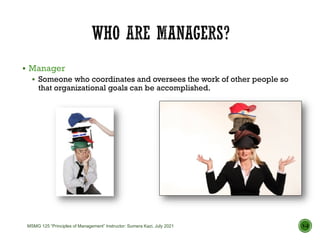
 Manager
 Someone who coordinates and oversees the work of other people so
that organizational goals can be accomplished.
1–2
MSMG 125 “Principles of Management” Instructor: Sumera Kazi, July 2021
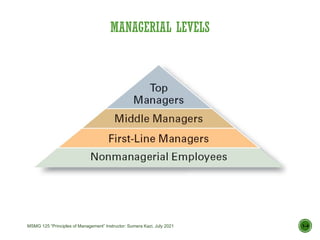
 First-line Managers
 Individuals who manage the work of non-managerial employees.
 Middle Managers
 Individuals who manage the work of first-line managers.
 Top Managers
 Individuals who are responsible for making organization-wide
decisions and establishing plans and goals that affect the entire
organization.
1–3
MSMG 125 “Principles of Management” Instructor: Sumera Kazi, July 2021
MANAGERIAL LEVELS
1–4
MSMG 125 “Principles of Management” Instructor: Sumera Kazi, July 2021
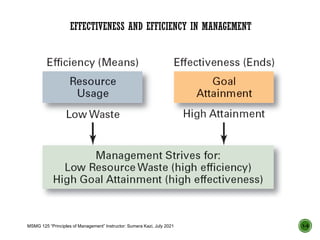
 Managerial Concerns
 Efficiency
 “Doing things right”
 Getting the most output for the
least inputs
 Effectiveness
 “Doing the right things”
 Attaining organizational goals
1–5
MSMG 125 “Principles of Management” Instructor: Sumera Kazi, July 2021
EFFECTIVENESS AND EFFICIENCY IN MANAGEMENT
MSMG 125 “Principles of Management” Instructor: Sumera Kazi, July 2021 1–6
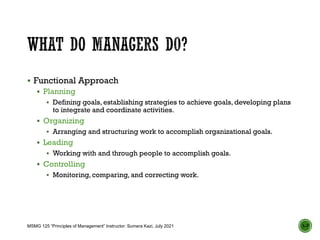
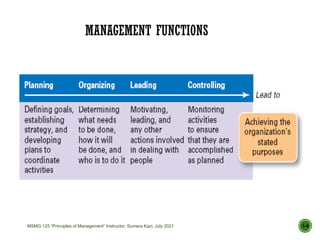
 Functional Approach
 Planning
 Defining goals, establishing strategies to achieve goals, developing plans
to integrate and coordinate activities.
 Organizing
 Arranging and structuring work to accomplish organizational goals.
 Leading
 Working with and through people to accomplish goals.
 Controlling
 Monitoring, comparing, and correcting work.
MSMG 125 “Principles of Management” Instructor: Sumera Kazi, July 2021 1–7
MANAGEMENT FUNCTIONS
1–8
MSMG 125 “Principles of Management” Instructor: Sumera Kazi, July 2021
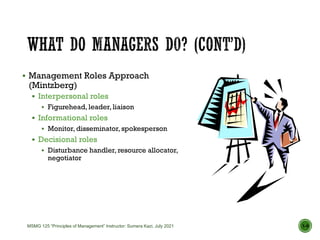
 Management Roles Approach
(Mintzberg)
 Interpersonal roles
 Figurehead, leader, liaison
 Informational roles
 Monitor, disseminator, spokesperson
 Decisional roles
 Disturbance handler, resource allocator,
negotiator
1–9
MSMG 125 “Principles of Management” Instructor: Sumera Kazi, July 2021
 Interaction
 with others
 with the organization
 with the external context of the
organization
 Reflection
 thoughtful thinking
 Action
 practical doing
1–10
MSMG 125 “Principles of Management” Instructor: Sumera Kazi, July 2021
 Skills Approach
 Technical skills
 Knowledge and proficiency in a specific field
 Human skills
 The ability to work well with other people
 Conceptual skills
 The ability to think and conceptualize about abstract and complex
situations concerning the organization
1–11
MSMG 125 “Principles of Management” Instructor: Sumera Kazi, July 2021
CONCEPTUAL SKILLS
1–12
• Using information to solve business problems
• Identifying of opportunities for innovation
• Recognizing problem areas and implementing
solutions
• Selecting critical information from masses of
data
• Understanding of business uses of technology
• Understanding of organization’s business model
MSMG 125 “Principles of Management” Instructor: Sumera Kazi, July 2021
TECHNICAL SKILLS
1–13
• Job-specific knowledge and techniques
• First line management
• Specialized and mastery jobs to a particular set
of tools and mechanisms
MSMG 125 “Principles of Management” Instructor: Sumera Kazi, July 2021
HUMAN SKILLS
1–14
• Ability to work well with people both individual
and with team
• These skills are equally important at all levels
• Manager with good human skills can get best
from his people.
• They know hoe to communicate, motivate, lead
and inspire.
MSMG 125 “Principles of Management” Instructor: Sumera Kazi, July 2021
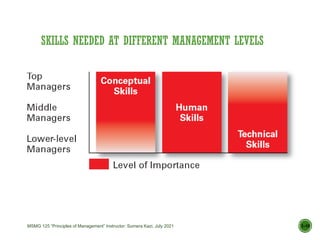
SKILLS NEEDED AT DIFFERENT MANAGEMENT LEVELS
1–15
MSMG 125 “Principles of Management” Instructor: Sumera Kazi, July 2021
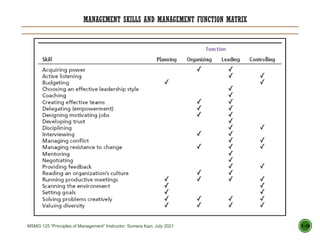
MANAGEMENT SKILLS AND MANAGEMENT FUNCTION MATRIX
1–16
MSMG 125 “Principles of Management” Instructor: Sumera Kazi, July 2021
 The Increasing Importance of Customers
 Customers: the reason that organizations exist
 Managing customer relationships is the responsibility of all managers
and employees.
 Consistent high quality customer service is essential for survival.
 Innovation
 Doing things differently, exploring new territory, and taking risks
 Managers should encourage employees to be aware of and act on
opportunities for innovation.
1–17
MSMG 125 “Principles of Management” Instructor: Sumera Kazi, July 2021
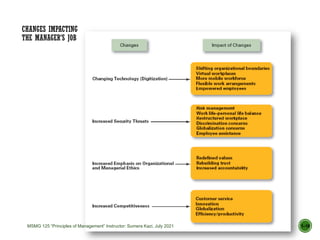
CHANGES IMPACTING
THE MANAGER’S JOB
1–18
MSMG 125 “Principles of Management” Instructor: Sumera Kazi, July 2021
 An Organization Defined
 A deliberate arrangement of people to accomplish some specific
purpose (that individuals independently could not accomplish
alone).
 Common Characteristics of Organizations
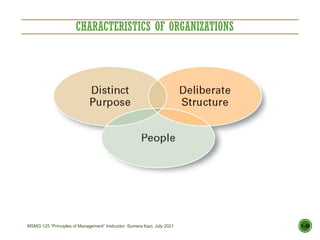
 Have a distinct purpose (goal)
 Composed of people
 Have a deliberate structure
MSMG 125 “Principles of Management” Instructor: Sumera Kazi, July 2021 1–19
CHARACTERISTICS OF ORGANIZATIONS
1–20
MSMG 125 “Principles of Management” Instructor: Sumera Kazi, July 2021
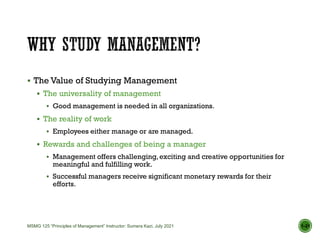
 The Value of Studying Management
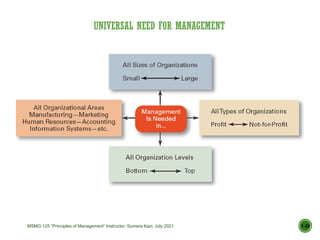
 The universality of management
 Good management is needed in all organizations.
 The reality of work
 Employees either manage or are managed.
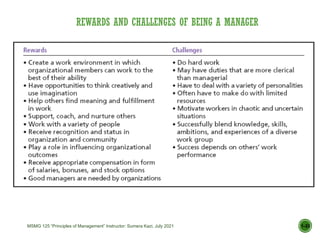
 Rewards and challenges of being a manager
 Management offers challenging, exciting and creative opportunities for
meaningful and fulfilling work.
 Successful managers receive significant monetary rewards for their
efforts.
1–21
MSMG 125 “Principles of Management” Instructor: Sumera Kazi, July 2021
UNIVERSAL NEED FOR MANAGEMENT
1–22
MSMG 125 “Principles of Management” Instructor: Sumera Kazi, July 2021
REWARDS AND CHALLENGES OF BEING A MANAGER
1–23
MSMG 125 “Principles of Management” Instructor: Sumera Kazi, July 2021
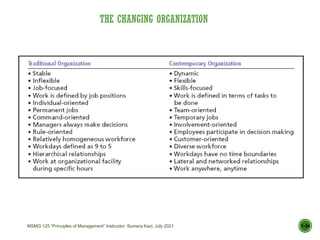
THE CHANGING ORGANIZATION
1–24
MSMG 125 “Principles of Management” Instructor: Sumera Kazi, July 2021
TERMS TO KNOW
 manager
 first-line managers
 middle managers
 top managers
 management
 efficiency
 effectiveness
 planning
 organizing
 leading
 controlling
 management roles
 interpersonal roles
 informational roles
 decisional roles
 technical skills
 human skills
 conceptual skills
 organization
 universality of management
1–25
MSMG 125 “Principles of Management” Instructor: Sumera Kazi, July 2021

Chapter 1 introduction to management & organization

  • 1.
    Chapter 1 Principles ofManagement Instructor: Sumera Kazi July, 2021 MSMG 125 “Principles of Management” Instructor: Sumera Kazi, July 2021
  • 2.
     Manager  Someonewho coordinates and oversees the work of other people so that organizational goals can be accomplished. 1–2 MSMG 125 “Principles of Management” Instructor: Sumera Kazi, July 2021
  • 3.
     First-line Managers Individuals who manage the work of non-managerial employees.  Middle Managers  Individuals who manage the work of first-line managers.  Top Managers  Individuals who are responsible for making organization-wide decisions and establishing plans and goals that affect the entire organization. 1–3 MSMG 125 “Principles of Management” Instructor: Sumera Kazi, July 2021
  • 4.
    MANAGERIAL LEVELS 1–4 MSMG 125“Principles of Management” Instructor: Sumera Kazi, July 2021
  • 5.
     Managerial Concerns Efficiency  “Doing things right”  Getting the most output for the least inputs  Effectiveness  “Doing the right things”  Attaining organizational goals 1–5 MSMG 125 “Principles of Management” Instructor: Sumera Kazi, July 2021
  • 6.
    EFFECTIVENESS AND EFFICIENCYIN MANAGEMENT MSMG 125 “Principles of Management” Instructor: Sumera Kazi, July 2021 1–6
  • 7.
     Functional Approach Planning  Defining goals, establishing strategies to achieve goals, developing plans to integrate and coordinate activities.  Organizing  Arranging and structuring work to accomplish organizational goals.  Leading  Working with and through people to accomplish goals.  Controlling  Monitoring, comparing, and correcting work. MSMG 125 “Principles of Management” Instructor: Sumera Kazi, July 2021 1–7
  • 8.
    MANAGEMENT FUNCTIONS 1–8 MSMG 125“Principles of Management” Instructor: Sumera Kazi, July 2021
  • 9.
     Management RolesApproach (Mintzberg)  Interpersonal roles  Figurehead, leader, liaison  Informational roles  Monitor, disseminator, spokesperson  Decisional roles  Disturbance handler, resource allocator, negotiator 1–9 MSMG 125 “Principles of Management” Instructor: Sumera Kazi, July 2021
  • 10.
     Interaction  withothers  with the organization  with the external context of the organization  Reflection  thoughtful thinking  Action  practical doing 1–10 MSMG 125 “Principles of Management” Instructor: Sumera Kazi, July 2021
  • 11.
     Skills Approach Technical skills  Knowledge and proficiency in a specific field  Human skills  The ability to work well with other people  Conceptual skills  The ability to think and conceptualize about abstract and complex situations concerning the organization 1–11 MSMG 125 “Principles of Management” Instructor: Sumera Kazi, July 2021
  • 12.
    CONCEPTUAL SKILLS 1–12 • Usinginformation to solve business problems • Identifying of opportunities for innovation • Recognizing problem areas and implementing solutions • Selecting critical information from masses of data • Understanding of business uses of technology • Understanding of organization’s business model MSMG 125 “Principles of Management” Instructor: Sumera Kazi, July 2021
  • 13.
    TECHNICAL SKILLS 1–13 • Job-specificknowledge and techniques • First line management • Specialized and mastery jobs to a particular set of tools and mechanisms MSMG 125 “Principles of Management” Instructor: Sumera Kazi, July 2021
  • 14.
    HUMAN SKILLS 1–14 • Abilityto work well with people both individual and with team • These skills are equally important at all levels • Manager with good human skills can get best from his people. • They know hoe to communicate, motivate, lead and inspire. MSMG 125 “Principles of Management” Instructor: Sumera Kazi, July 2021
  • 15.
    SKILLS NEEDED ATDIFFERENT MANAGEMENT LEVELS 1–15 MSMG 125 “Principles of Management” Instructor: Sumera Kazi, July 2021
  • 16.
    MANAGEMENT SKILLS ANDMANAGEMENT FUNCTION MATRIX 1–16 MSMG 125 “Principles of Management” Instructor: Sumera Kazi, July 2021
  • 17.
     The IncreasingImportance of Customers  Customers: the reason that organizations exist  Managing customer relationships is the responsibility of all managers and employees.  Consistent high quality customer service is essential for survival.  Innovation  Doing things differently, exploring new territory, and taking risks  Managers should encourage employees to be aware of and act on opportunities for innovation. 1–17 MSMG 125 “Principles of Management” Instructor: Sumera Kazi, July 2021
  • 18.
    CHANGES IMPACTING THE MANAGER’SJOB 1–18 MSMG 125 “Principles of Management” Instructor: Sumera Kazi, July 2021
  • 19.
     An OrganizationDefined  A deliberate arrangement of people to accomplish some specific purpose (that individuals independently could not accomplish alone).  Common Characteristics of Organizations  Have a distinct purpose (goal)  Composed of people  Have a deliberate structure MSMG 125 “Principles of Management” Instructor: Sumera Kazi, July 2021 1–19
  • 20.
    CHARACTERISTICS OF ORGANIZATIONS 1–20 MSMG125 “Principles of Management” Instructor: Sumera Kazi, July 2021
  • 21.
     The Valueof Studying Management  The universality of management  Good management is needed in all organizations.  The reality of work  Employees either manage or are managed.  Rewards and challenges of being a manager  Management offers challenging, exciting and creative opportunities for meaningful and fulfilling work.  Successful managers receive significant monetary rewards for their efforts. 1–21 MSMG 125 “Principles of Management” Instructor: Sumera Kazi, July 2021
  • 22.
    UNIVERSAL NEED FORMANAGEMENT 1–22 MSMG 125 “Principles of Management” Instructor: Sumera Kazi, July 2021
  • 23.
    REWARDS AND CHALLENGESOF BEING A MANAGER 1–23 MSMG 125 “Principles of Management” Instructor: Sumera Kazi, July 2021
  • 24.
    THE CHANGING ORGANIZATION 1–24 MSMG125 “Principles of Management” Instructor: Sumera Kazi, July 2021
  • 25.
    TERMS TO KNOW manager  first-line managers  middle managers  top managers  management  efficiency  effectiveness  planning  organizing  leading  controlling  management roles  interpersonal roles  informational roles  decisional roles  technical skills  human skills  conceptual skills  organization  universality of management 1–25 MSMG 125 “Principles of Management” Instructor: Sumera Kazi, July 2021