By
V.Yogalakshmi
   M.B.A
What is management?
Functions of management
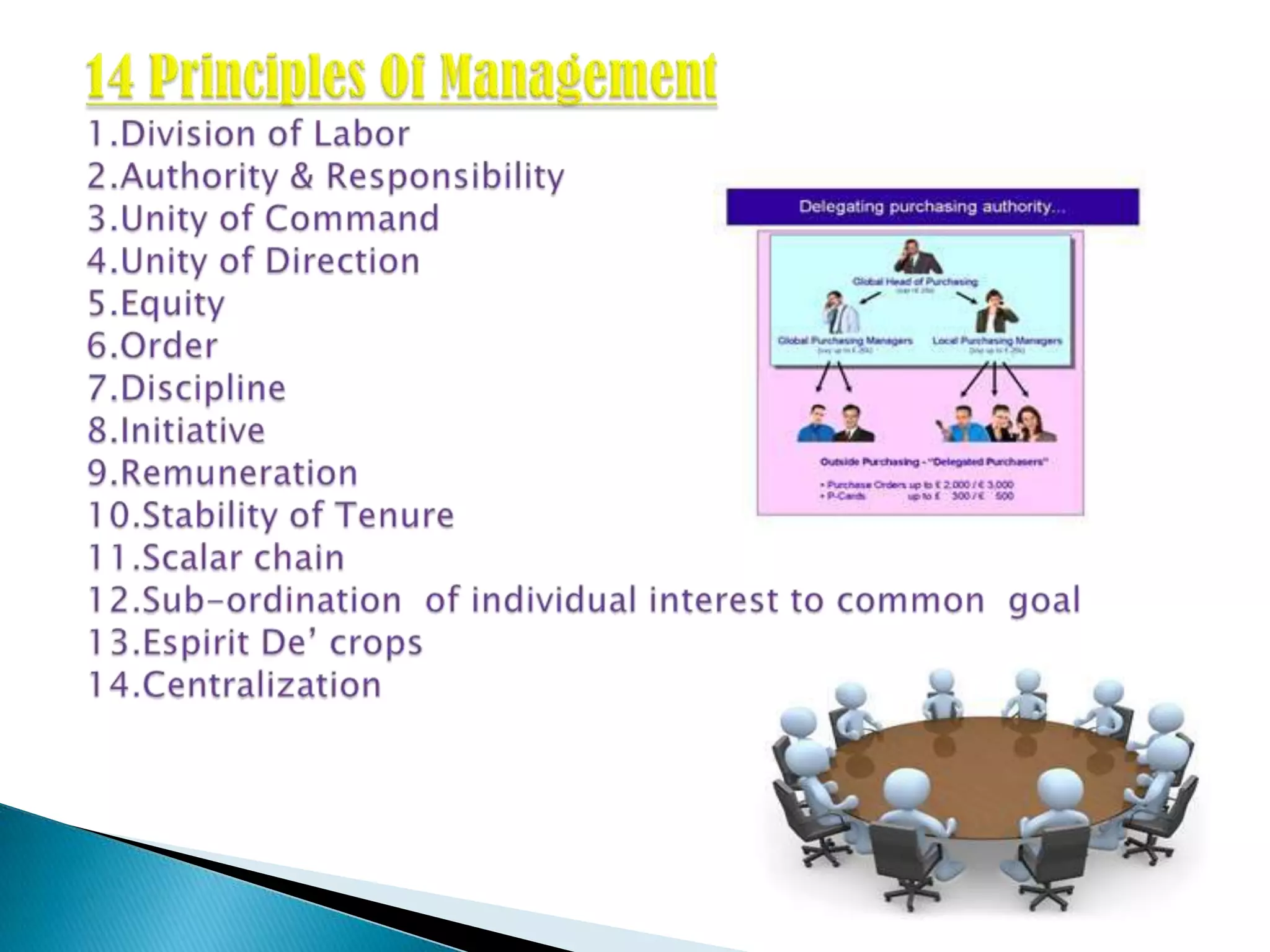
14 principles of management
Conclusion
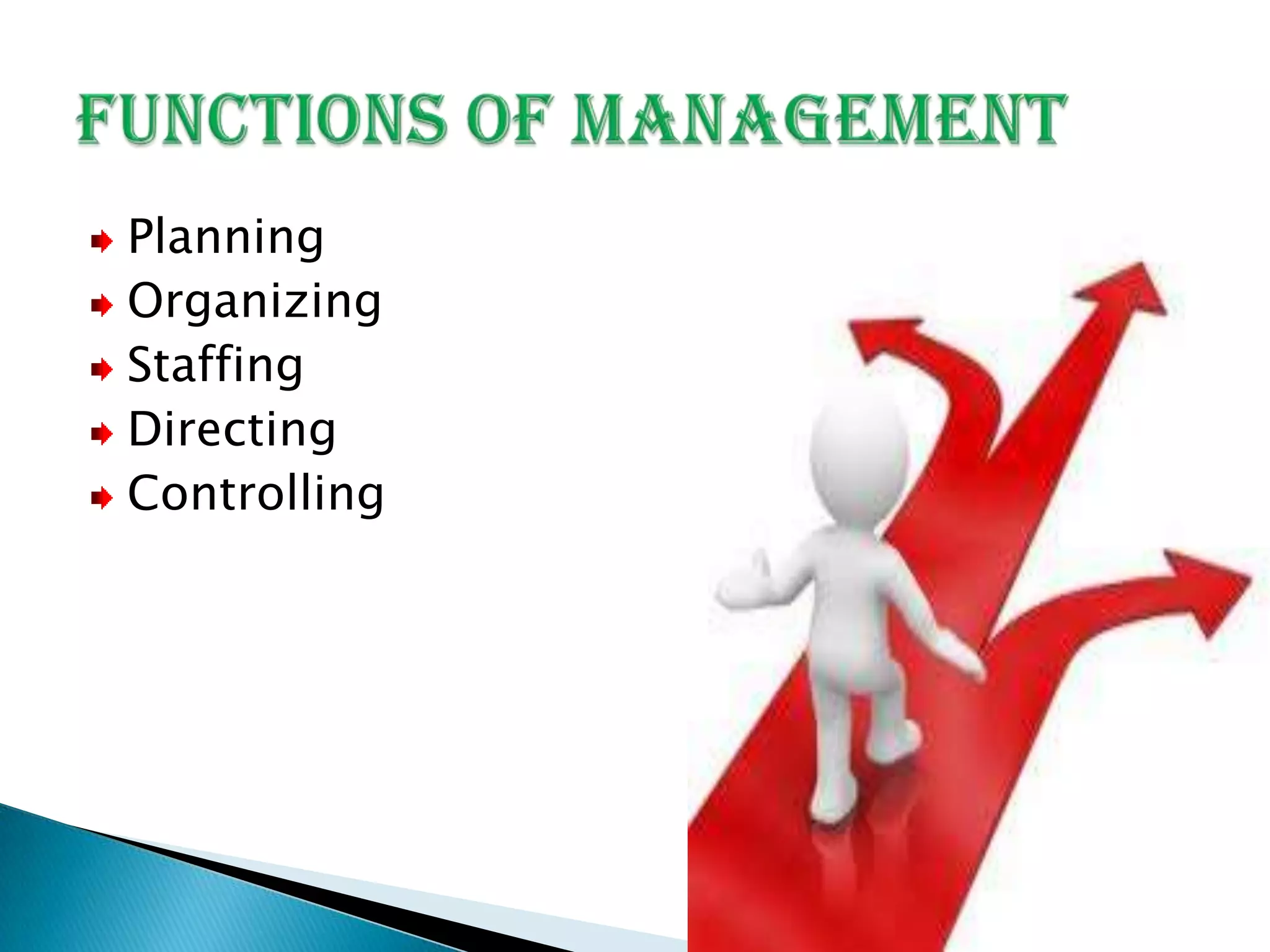
Planning
Organizing
Staffing
Directing
Controlling
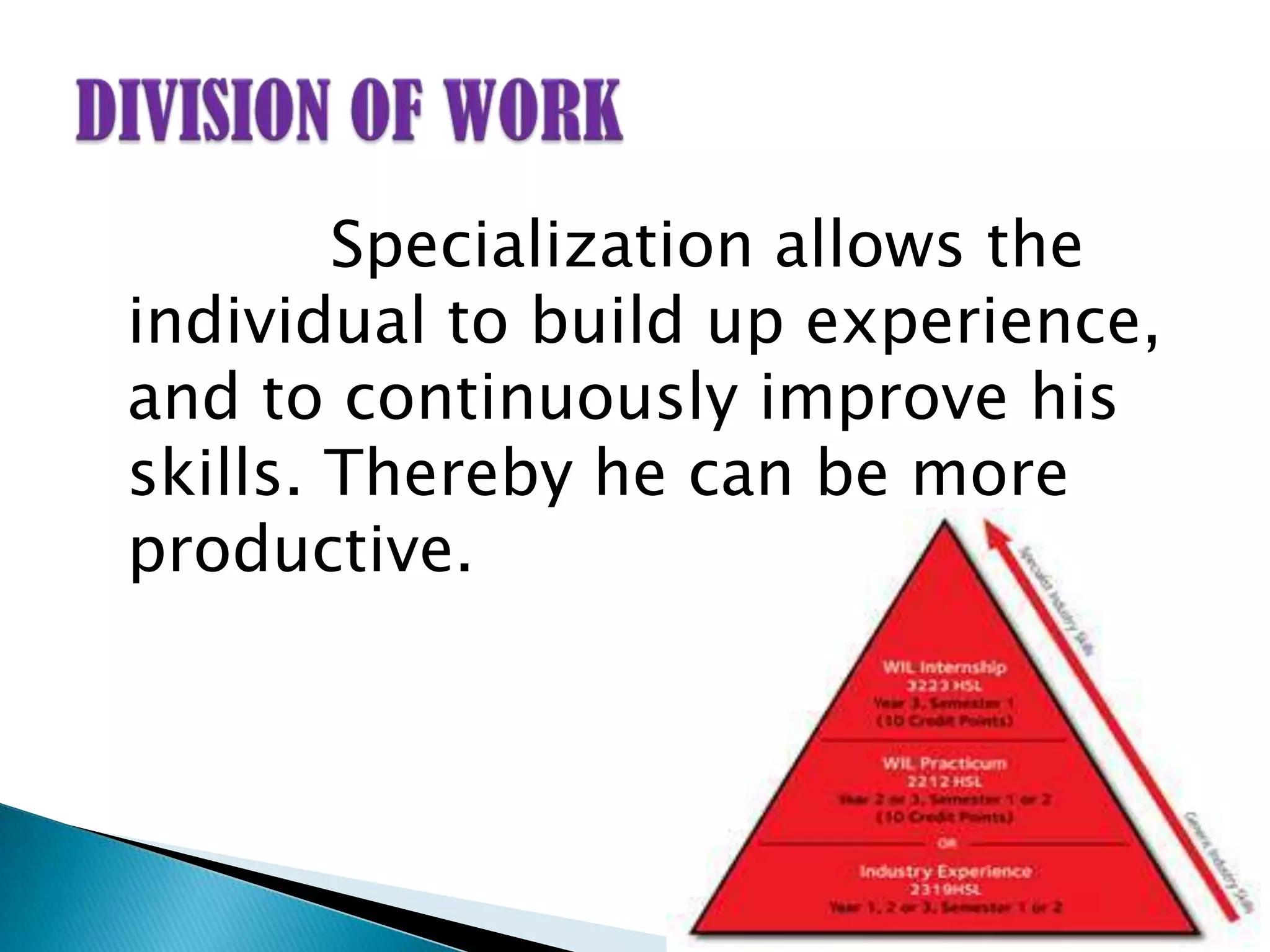
Specialization allows the
individual to build up experience,
and to continuously improve his
skills. Thereby he can be more
productive.
The      right     to     issue
commands, along with which
must     go        the      balanced
responsibility for its function.
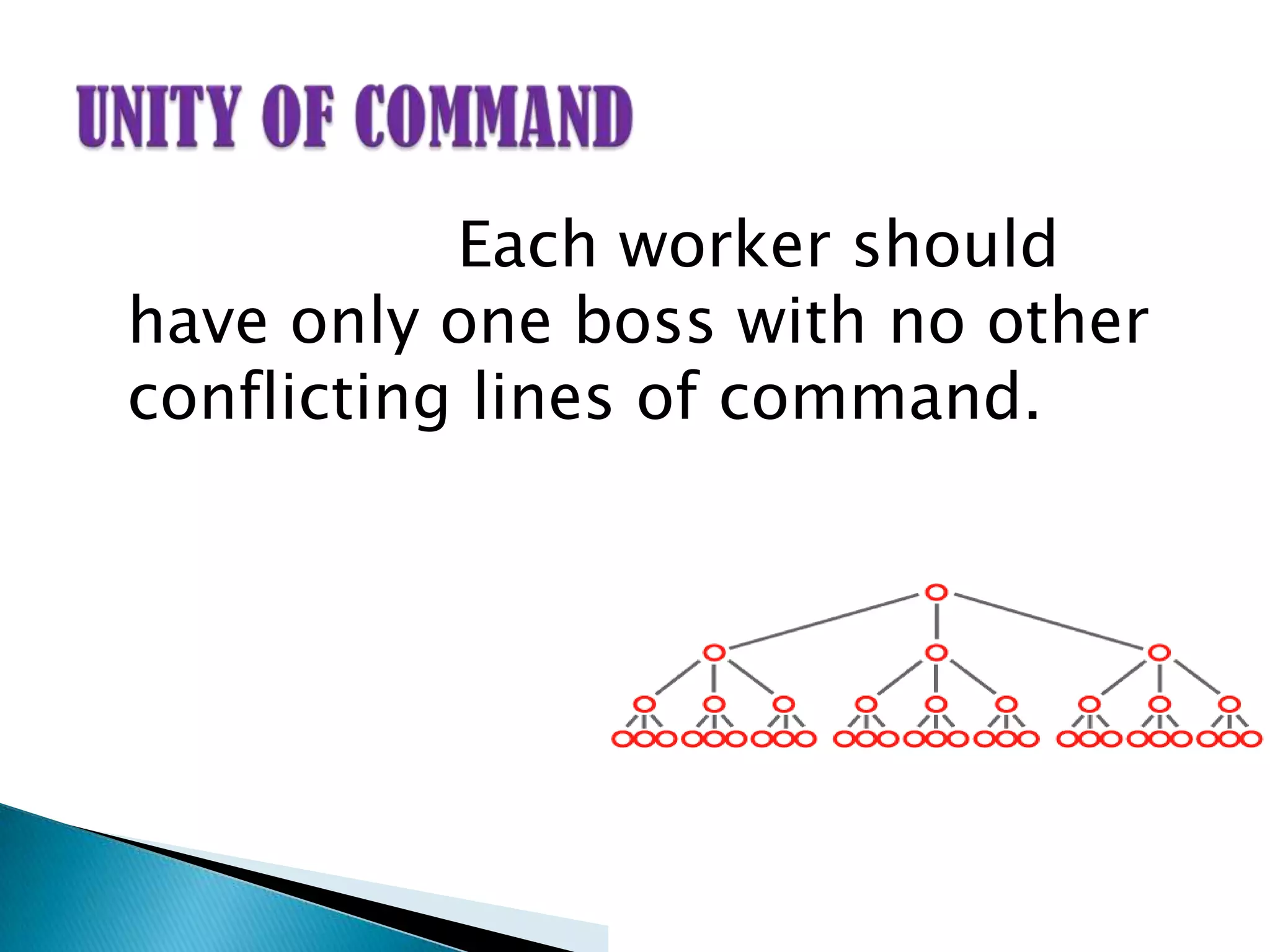
Each worker should
have only one boss with no other
conflicting lines of command.
People engaged in the
same kind of activities must have
the same objectives in a single
plan. This is essential to ensure
unity and coordination in the
enterprise. Unity of command
does not exist without unity of
direction but does not necessarily
flows from it.
In running a business a
„combination of kindliness and
justice‟ is needed. Treating
employees well is important to
achieve equity.
Both material order and
social order are necessary. The
former minimizes lost time
and useless handling of
materials. The latter is
achieved through organization
and selection.
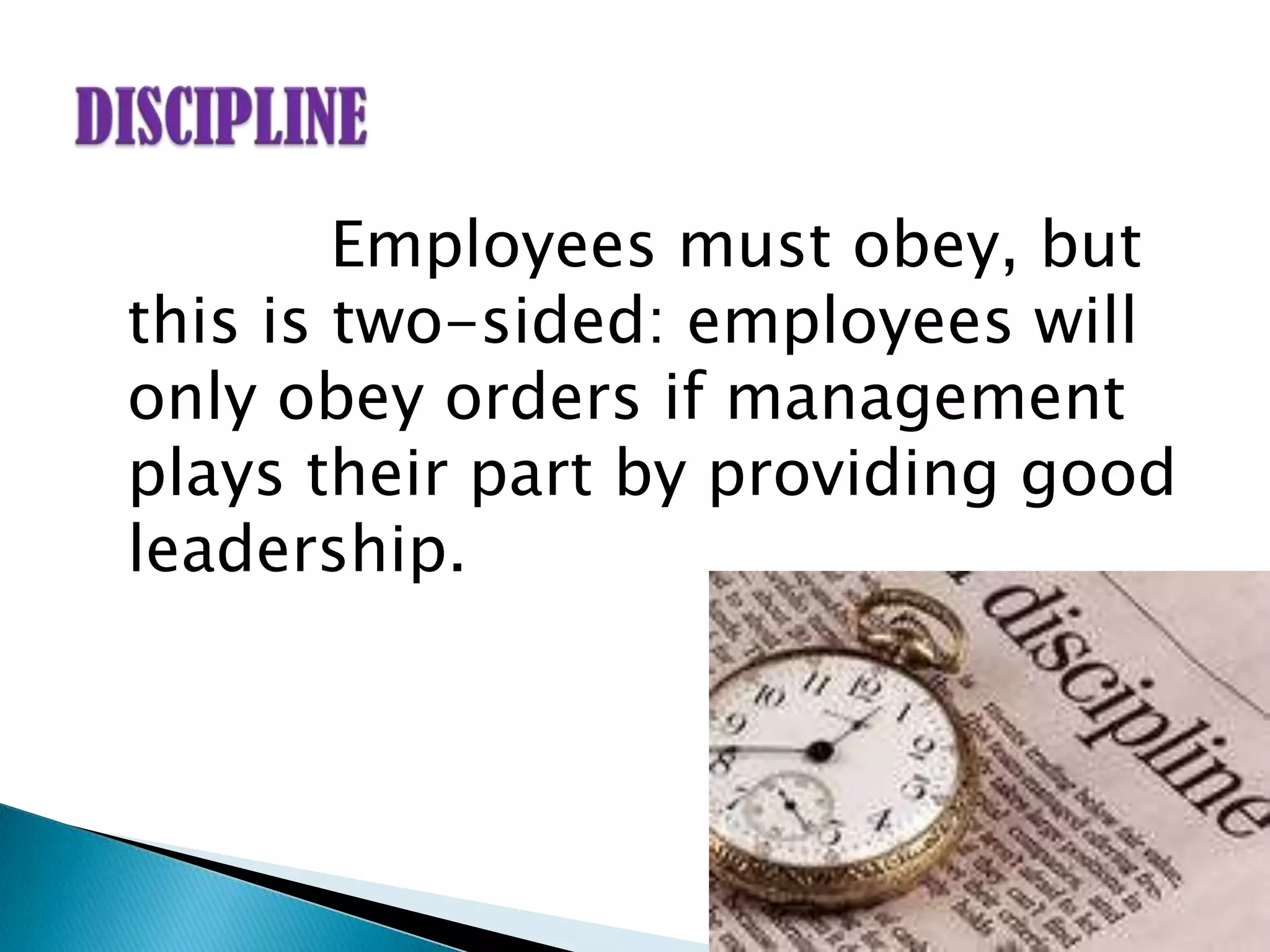
Employees must obey, but
this is two-sided: employees will
only obey orders if management
plays their part by providing good
leadership.
Allowing all personnel to
show their initiative in some
way is a source of strength for
the organization. Even though
it may well involve a sacrifice
of „personal vanity‟ on the part
of many managers.
Payment       is      an
important motivator although by
analyzing       a     number      of
possibilities, Fayol points out that
there is no such thing as a perfect
system.
Employees work
better if job security and
career progress are assured to
them. An insecure tenure and
a high rate of employee
turnover will affect the
organization adversely.
A hierarchy is necessary
for unity of direction. But lateral
communication is also fundamental, as
long as superiors know that such
communication is taking place. Scalar
chain refers to the number of levels in
the hierarchy from the ultimate
authority to the lowest level in the
organization. It should not be over-
stretched and consist of too-many
levels.
Management must see
that the goals of the firms are
always paramount.
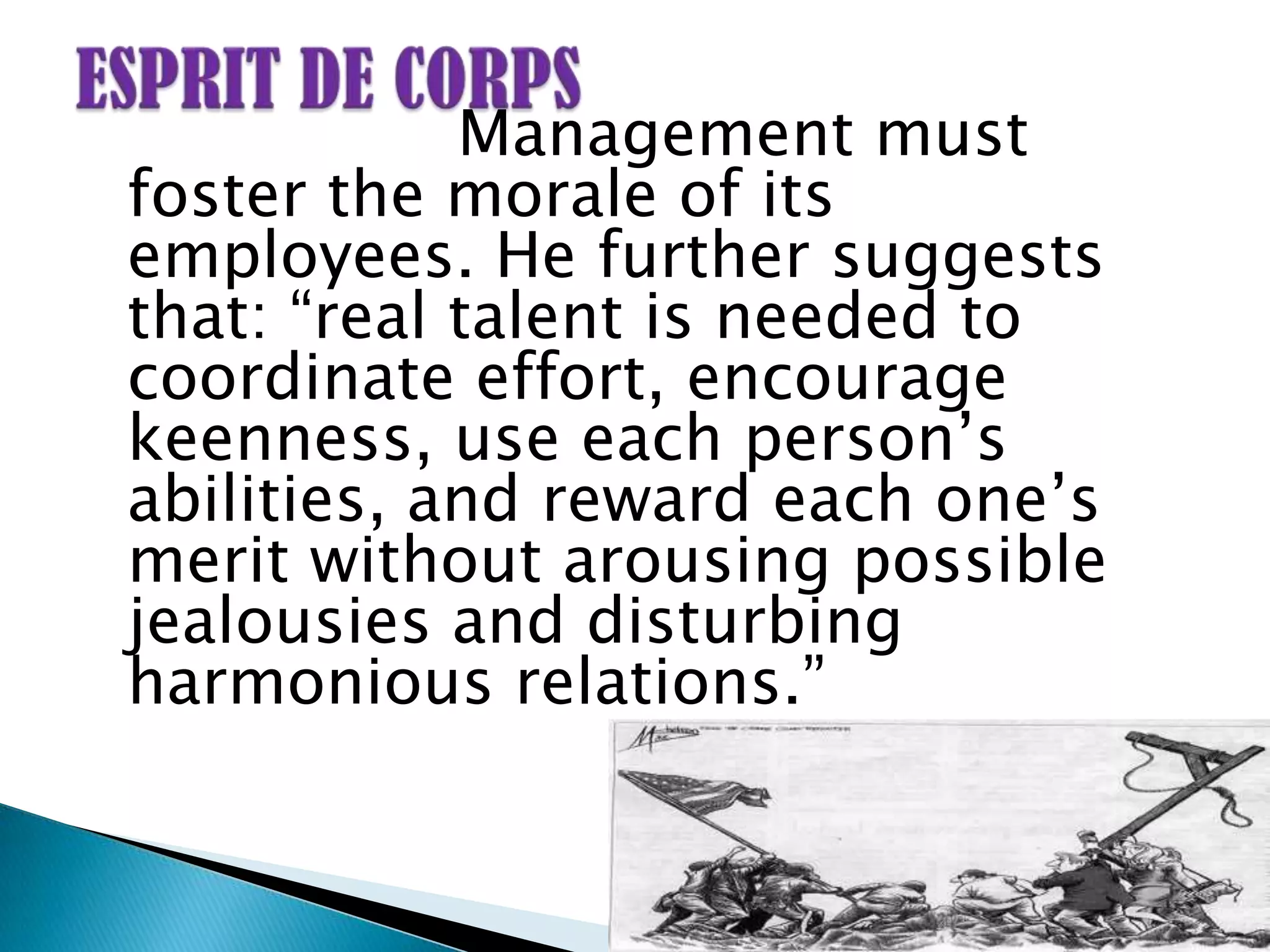
Management must
foster the morale of its
employees. He further suggests
that: “real talent is needed to
coordinate effort, encourage
keenness, use each person‟s
abilities, and reward each one‟s
merit without arousing possible
jealousies and disturbing
harmonious relations.”
This is a matter of degree
depending on the condition of the
business and the quality of its
personnel.
Principles of management
are the essential,
underlying factors that
form the foundation of
successful management.
Principles of management

Principles of management

  • 1.
  • 2.
    What is management? Functionsof management 14 principles of management Conclusion
  • 4.
  • 8.
    Specialization allows the individualto build up experience, and to continuously improve his skills. Thereby he can be more productive.
  • 9.
    The right to issue commands, along with which must go the balanced responsibility for its function.
  • 10.
    Each worker should haveonly one boss with no other conflicting lines of command.
  • 11.
    People engaged inthe same kind of activities must have the same objectives in a single plan. This is essential to ensure unity and coordination in the enterprise. Unity of command does not exist without unity of direction but does not necessarily flows from it.
  • 12.
    In running abusiness a „combination of kindliness and justice‟ is needed. Treating employees well is important to achieve equity.
  • 13.
    Both material orderand social order are necessary. The former minimizes lost time and useless handling of materials. The latter is achieved through organization and selection.
  • 14.
    Employees must obey,but this is two-sided: employees will only obey orders if management plays their part by providing good leadership.
  • 15.
    Allowing all personnelto show their initiative in some way is a source of strength for the organization. Even though it may well involve a sacrifice of „personal vanity‟ on the part of many managers.
  • 16.
    Payment is an important motivator although by analyzing a number of possibilities, Fayol points out that there is no such thing as a perfect system.
  • 17.
    Employees work better ifjob security and career progress are assured to them. An insecure tenure and a high rate of employee turnover will affect the organization adversely.
  • 18.
    A hierarchy isnecessary for unity of direction. But lateral communication is also fundamental, as long as superiors know that such communication is taking place. Scalar chain refers to the number of levels in the hierarchy from the ultimate authority to the lowest level in the organization. It should not be over- stretched and consist of too-many levels.
  • 19.
    Management must see thatthe goals of the firms are always paramount.
  • 20.
    Management must foster themorale of its employees. He further suggests that: “real talent is needed to coordinate effort, encourage keenness, use each person‟s abilities, and reward each one‟s merit without arousing possible jealousies and disturbing harmonious relations.”
  • 21.
    This is amatter of degree depending on the condition of the business and the quality of its personnel.
  • 22.
    Principles of management arethe essential, underlying factors that form the foundation of successful management.