ORGANISATIONAL LEADERSHIP
MODULE: 1
ANURAG
ANJALI
MODULE 1
MADE BY:
ANURAG, ROLL NO:
20150102
ANJALI, ROLL NO:
201510101
WHAT IS LEADERSHIP
It is the action of leading a group of people or an organization,
or the ability to do this.
Management
It is the process of dealing with or controlling things or people.
LEADERSHIP VS MANAGEMENT
 The main difference between leaders and managers is that
leaders have people follow them while managers have people
who work for them.
 A successful business owner needs to be both a strong leader
and manager to get their team on board to follow them
towards their vision of success.
 Leadership is about getting people to understand and believe
in your vision and to work with you to achieve your goals
while managing is more about administering and making sure
the day-to-day things are happening as they should.
 The manager administers; the leader innovates.
 – The manager is a copy; the leader is an original.
 – The manager maintains; the leader develops.
 – The manager focuses on systems and structure; the leader
focuses on people.
 – The manager relies on control; the leader inspires trust.
 – The manager has a short-range view; the leader has a long-
range perspective.
 – The manager asks how and when; the leader asks what and
why.
 – The manager has his or her eye always on the bottom line;
the leader’s eye is on the horizon.
 – The manager imitates; the leader originates.
 – The manager accepts the status quo; the leader challenges it.
 – The manager is the classic good soldier; the leader is his or
her own person.
 – The manager does things right; the leader does the right
thing.
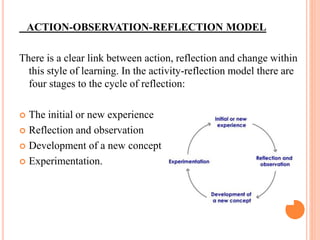
ACTION-OBSERVATION-REFLECTION MODEL
There is a clear link between action, reflection and change within
this style of learning. In the activity-reflection model there are
four stages to the cycle of reflection:
 The initial or new experience
 Reflection and observation
 Development of a new concept
 Experimentation.
LEADERSHIP DEVELOPMENT THROUGH
EXPERIENCE
Experience is the best Teacher”
Two factors that make any given opportunity or experience
potent in fostering managerial growth:
 Your Co-Workers.
The people you associate with can simulate development in
many ways. Others play an especially important role in
personal and professional development at work.
 The Task Itself.
In addition to the various sorts of relationships with other
people, certain kinds of work-related tasks can also
be particularly developmental.
Leadership practitioners can enhance the learning value of
their experiences by:
 Creating opportunities to get feedback :
Leaders may not learn much from their leadership experiences
if they get no feedback about how they are doing.!.
 Taking a 10% stretch:
Learning always involves stretching# taking risks and reaching
beyond one’s comfort zone.
 Learning from others:
People limit what and whom they pay attention to ,and thus
what they may learn from. Leaders also can learn by asking
questions and paying attention to everyday situation.
 Keeping a journal of daily leadership events: journal
entries may include
entries that address some aspect of leaders or leadership. “It
may also include
rejections or comments about insightful or interesting quote
s, anecdotes,newspaper articles or even humorous cartoon
about leadership.
 Having a developmental plan:
 A systematic plan outlining self-improvement
goals and strategies will help leaders take advantage of opp
ortunities they otherwise might overlook. A leader’s 1st
step in exercising control over personal development is to
identify actual goals
Leadership Is Developed through Education and
Experience
“Leadership and learning are indispensable to each other.”
Factors that make any given experience potent in fostering
managerial growth:
 The people you work with
 The characteristics of the task itself
The people you work with: A boss can be a powerful catalyst
for growth.
 People from different backgrounds, perspectives, or agendas
can impact the growth experience.
 Working with problem subordinates can stimulate managerial
growth, as can peers.
 Both mentors and mentorees benefit from having the
relationship.
 Executive coaching: General responsibility of all executives
towards managers who report to them.
Developmental Tasks:
 Opportunities that stretch individuals and allow them to test
themselves provide learning.
 The risk of possible failure is a strong incentive for managers
to learn.
 Leadership development can be enhanced in a changing,
dynamic, uncontrollable, and unpredictable environment.
 Strategic planning and projections can contribute to a
leader’s development.
 Organizations may not provide the same development
opportunities for all their members
Making the Most of Your Leadership Experiences:
Learning to Learn from Experience
 The learning events and developmental experiences that
punctuate one’s life are usually stressful.
 To be successful, learning must continue throughout life,
beyond the completion of one’s formal education.
Leadership Development through Education and Training
 Research has shown that:
 Education level or academic performance in college was positively
related to future managerial success.
 Educational programs generally have a positive effect on leadership
development.
 Formal education and training programs can help one become a
better leader.
 The content of different leadership programs varies
considerably, depending on the target audience.
 Leadership education is a component of leadership
development.
University Courses in Leadership
 Leadership training programs can include formal courses or
extracurricular leadership activities.
 The pedagogy used to impart different leadership concepts
vary greatly.
 Many courses use the standard lecture methods, or provide
individualized feedback through:
 Case studies
 Role Playing
 Simulations
 Games
Leadership Training Programs
 Programs aimed particularly at industry and public service
leaders and supervisors use:
 Lectures
 Case studies
 Role-playing exercises
 Programs for midlevel managers often focus on:
 Individualized feedback, case studies, presentations
 Role playing, simulations
 In-basket exercises
 Leaderless group discussions
 Conger offers that a multi-tiered approach is effective.
 Leadership development in the 21st century must occur in
more lifelike situations and contexts.
 Leadership programs for senior executives and CEOs focus on
strategic planning, PR, and interpersonal skills.
 No matter the type of program chosen, a systematic approach
guarantees its usefulness.
 One way to add value to your leadership courses and
experiences is by applying the action-observation-reflection
model.
 Be aware of the role perception plays in leadership
development.
 Education and experience can contribute to your development
as a leader.
 To become a better leader, one must seek challenges and try to
make the best of any leadership opportunity.
ASSESING LEADERSHIP
 Start with Job analysis:
Id SMEs
Conduct interviews
Review job description
Confirm leadership duties
(use factors and competencies)
Develop matrix (duties & competencies)
Document Job Analysis findings
Assessment Principal Traits
 Intelligence
 Self-confidence
 Determination
 Integrity
 Sociability
Methods
 Personal History
 Assessment center
 Behavioral interview / Oral board
 handout “Candidate Leadership Ratings”
 Written tests / inventories
Personal History
 Supplemental application blank
 References
 Past performance reviews
 Past accomplishments
 Peer assessments (promo / dev)
 360 / multi-rater
Assessment Center
 Situational interview
 In-basket technique: 1. Give the trainees a description of
their role (a current or future job) and general information
about the situation. 2. Then give them a packet of materials
(such as requests, complaints, memos, messages, and reports)
which make up the in-basket.
Written tests/ inventories
 Integrity inventories
 Personality inventories
 Leadership ability tests
 Biodata
 Cognitive ability
•Job simulation
•Leaderless Group Discussion
•Leader emergence
THANK YOU

Leadership

  • 1.
    ORGANISATIONAL LEADERSHIP MODULE: 1 ANURAG ANJALI MODULE1 MADE BY: ANURAG, ROLL NO: 20150102 ANJALI, ROLL NO: 201510101
  • 2.
    WHAT IS LEADERSHIP Itis the action of leading a group of people or an organization, or the ability to do this. Management It is the process of dealing with or controlling things or people.
  • 3.
    LEADERSHIP VS MANAGEMENT The main difference between leaders and managers is that leaders have people follow them while managers have people who work for them.  A successful business owner needs to be both a strong leader and manager to get their team on board to follow them towards their vision of success.  Leadership is about getting people to understand and believe in your vision and to work with you to achieve your goals while managing is more about administering and making sure the day-to-day things are happening as they should.
  • 4.
     The manageradministers; the leader innovates.  – The manager is a copy; the leader is an original.  – The manager maintains; the leader develops.  – The manager focuses on systems and structure; the leader focuses on people.  – The manager relies on control; the leader inspires trust.  – The manager has a short-range view; the leader has a long- range perspective.  – The manager asks how and when; the leader asks what and why.  – The manager has his or her eye always on the bottom line; the leader’s eye is on the horizon.
  • 5.
     – Themanager imitates; the leader originates.  – The manager accepts the status quo; the leader challenges it.  – The manager is the classic good soldier; the leader is his or her own person.  – The manager does things right; the leader does the right thing.
  • 6.
    ACTION-OBSERVATION-REFLECTION MODEL There isa clear link between action, reflection and change within this style of learning. In the activity-reflection model there are four stages to the cycle of reflection:  The initial or new experience  Reflection and observation  Development of a new concept  Experimentation.
  • 8.
    LEADERSHIP DEVELOPMENT THROUGH EXPERIENCE Experienceis the best Teacher” Two factors that make any given opportunity or experience potent in fostering managerial growth:  Your Co-Workers. The people you associate with can simulate development in many ways. Others play an especially important role in personal and professional development at work.  The Task Itself. In addition to the various sorts of relationships with other people, certain kinds of work-related tasks can also be particularly developmental.
  • 9.
    Leadership practitioners canenhance the learning value of their experiences by:  Creating opportunities to get feedback : Leaders may not learn much from their leadership experiences if they get no feedback about how they are doing.!.  Taking a 10% stretch: Learning always involves stretching# taking risks and reaching beyond one’s comfort zone.  Learning from others: People limit what and whom they pay attention to ,and thus what they may learn from. Leaders also can learn by asking questions and paying attention to everyday situation.
  • 10.
     Keeping ajournal of daily leadership events: journal entries may include entries that address some aspect of leaders or leadership. “It may also include rejections or comments about insightful or interesting quote s, anecdotes,newspaper articles or even humorous cartoon about leadership.  Having a developmental plan:  A systematic plan outlining self-improvement goals and strategies will help leaders take advantage of opp ortunities they otherwise might overlook. A leader’s 1st step in exercising control over personal development is to identify actual goals
  • 11.
    Leadership Is Developedthrough Education and Experience “Leadership and learning are indispensable to each other.” Factors that make any given experience potent in fostering managerial growth:  The people you work with  The characteristics of the task itself
  • 12.
    The people youwork with: A boss can be a powerful catalyst for growth.  People from different backgrounds, perspectives, or agendas can impact the growth experience.  Working with problem subordinates can stimulate managerial growth, as can peers.  Both mentors and mentorees benefit from having the relationship.  Executive coaching: General responsibility of all executives towards managers who report to them.
  • 13.
    Developmental Tasks:  Opportunitiesthat stretch individuals and allow them to test themselves provide learning.  The risk of possible failure is a strong incentive for managers to learn.  Leadership development can be enhanced in a changing, dynamic, uncontrollable, and unpredictable environment.  Strategic planning and projections can contribute to a leader’s development.  Organizations may not provide the same development opportunities for all their members
  • 14.
    Making the Mostof Your Leadership Experiences: Learning to Learn from Experience  The learning events and developmental experiences that punctuate one’s life are usually stressful.  To be successful, learning must continue throughout life, beyond the completion of one’s formal education.
  • 15.
    Leadership Development throughEducation and Training  Research has shown that:  Education level or academic performance in college was positively related to future managerial success.  Educational programs generally have a positive effect on leadership development.  Formal education and training programs can help one become a better leader.  The content of different leadership programs varies considerably, depending on the target audience.  Leadership education is a component of leadership development.
  • 16.
    University Courses inLeadership  Leadership training programs can include formal courses or extracurricular leadership activities.  The pedagogy used to impart different leadership concepts vary greatly.  Many courses use the standard lecture methods, or provide individualized feedback through:  Case studies  Role Playing  Simulations  Games
  • 17.
    Leadership Training Programs Programs aimed particularly at industry and public service leaders and supervisors use:  Lectures  Case studies  Role-playing exercises  Programs for midlevel managers often focus on:  Individualized feedback, case studies, presentations  Role playing, simulations  In-basket exercises  Leaderless group discussions
  • 18.
     Conger offersthat a multi-tiered approach is effective.  Leadership development in the 21st century must occur in more lifelike situations and contexts.  Leadership programs for senior executives and CEOs focus on strategic planning, PR, and interpersonal skills.  No matter the type of program chosen, a systematic approach guarantees its usefulness.
  • 19.
     One wayto add value to your leadership courses and experiences is by applying the action-observation-reflection model.  Be aware of the role perception plays in leadership development.  Education and experience can contribute to your development as a leader.  To become a better leader, one must seek challenges and try to make the best of any leadership opportunity.
  • 20.
    ASSESING LEADERSHIP  Startwith Job analysis: Id SMEs Conduct interviews Review job description Confirm leadership duties (use factors and competencies) Develop matrix (duties & competencies) Document Job Analysis findings
  • 21.
    Assessment Principal Traits Intelligence  Self-confidence  Determination  Integrity  Sociability
  • 22.
    Methods  Personal History Assessment center  Behavioral interview / Oral board  handout “Candidate Leadership Ratings”  Written tests / inventories
  • 23.
    Personal History  Supplementalapplication blank  References  Past performance reviews  Past accomplishments  Peer assessments (promo / dev)  360 / multi-rater Assessment Center  Situational interview  In-basket technique: 1. Give the trainees a description of their role (a current or future job) and general information about the situation. 2. Then give them a packet of materials (such as requests, complaints, memos, messages, and reports) which make up the in-basket.
  • 24.
    Written tests/ inventories Integrity inventories  Personality inventories  Leadership ability tests  Biodata  Cognitive ability •Job simulation •Leaderless Group Discussion •Leader emergence
  • 25.