Chapter Five Fire-Resistive Construction Elements
Learning Objectives Describe the difference between specification codes and performance codes Explain why a rated assembly must be maintained as a unit
Learning Objectives Describe origin of STTC and its significance List three nationally recognized testing labs Explain why labeling is mandated
Specification Code A code provision that specifies a type of construction or materials to be used
Specification Code “The protection on all floor and roof beams shall be at least one inch thick of concrete or porous terra-cotta or brick set in cement.” 1916 Boston Building Code
Performance Codes Identify a performance feature rather than specific construction elements Fire resistance in hours Load bearing ability in pounds per ft ²
Performance Code “Vertical exit enclosures four stories or more shall be 2-hour fire-resistance rated.” 2006 International Building Code Performance Code     Performance Based Design
“Fire Resistance Rating of One Hour” One hour of what?
Tests for Fire Endurance of Building Materials Based on tests developed in early 1900s Standard Time-Temperature Curve ASTM E119 UL 263 NFPA 251
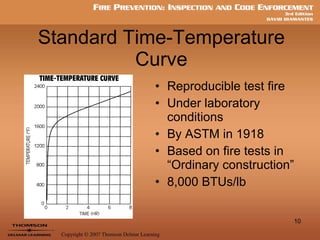
Standard Time-Temperature Curve Reproducible test fire Under laboratory conditions By ASTM in 1918 Based on fire tests in “Ordinary construction” 8,000 BTUs/lb
Tests of a Rated Assembly Specified in specific standards and include Ability to support a specified load Limit heat transfer Prevent passage of heat Withstand hose stream test
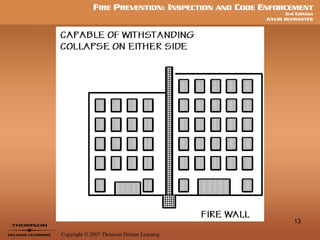
Fire Walls versus Fire Barriers Fire walls Separate buildings Designed to withstand collapse of structures on either side during fire conditions
 
Fire Walls versus Fire Barriers Fire barriers or fire separation walls Separate fire areas Rated assemblies constructed within the building Extend from floor to floor above or to the roof
Opening Protectives Fire doors Fire windows Fire shutters Rated glazing Fire dampers Through penetration firestop
Structural Ratings Provided by encasement Concrete or masonry Gypsum Approved spray on material Asbestos  was  widely used Impact protection must be provided
Fire Blocking Method of controlling fire spread through small concealed spaces Formerly called  “fire stopping” Not a rated assembly Fire blocking requirements are prescriptive not performance requirements
Draft Stopping Method of controlling fire spread through large concealed spaces in combustible construction Attics, floor, ceilings Not a rated assembly Draft stopping requirements are prescriptive not performance requirements
Draft Stopping Typically, 3,000 ft ² for attics in apartments Attics must have access for maintenance and inspection Openings in draft stops self closing and latching Often damaged by tradesmen
Summary Building code requirements are generally performance versus specification Specify ratings in hours for structural elements Assemblies are tested in accordance with the STTC tests Approved assemblies are listed

Chapter 05

  • 1.
    Chapter Five Fire-ResistiveConstruction Elements
  • 2.
    Learning Objectives Describethe difference between specification codes and performance codes Explain why a rated assembly must be maintained as a unit
  • 3.
    Learning Objectives Describeorigin of STTC and its significance List three nationally recognized testing labs Explain why labeling is mandated
  • 4.
    Specification Code Acode provision that specifies a type of construction or materials to be used
  • 5.
    Specification Code “Theprotection on all floor and roof beams shall be at least one inch thick of concrete or porous terra-cotta or brick set in cement.” 1916 Boston Building Code
  • 6.
    Performance Codes Identifya performance feature rather than specific construction elements Fire resistance in hours Load bearing ability in pounds per ft ²
  • 7.
    Performance Code “Verticalexit enclosures four stories or more shall be 2-hour fire-resistance rated.” 2006 International Building Code Performance Code  Performance Based Design
  • 8.
    “Fire Resistance Ratingof One Hour” One hour of what?
  • 9.
    Tests for FireEndurance of Building Materials Based on tests developed in early 1900s Standard Time-Temperature Curve ASTM E119 UL 263 NFPA 251
  • 10.
    Standard Time-Temperature CurveReproducible test fire Under laboratory conditions By ASTM in 1918 Based on fire tests in “Ordinary construction” 8,000 BTUs/lb
  • 11.
    Tests of aRated Assembly Specified in specific standards and include Ability to support a specified load Limit heat transfer Prevent passage of heat Withstand hose stream test
  • 12.
    Fire Walls versusFire Barriers Fire walls Separate buildings Designed to withstand collapse of structures on either side during fire conditions
  • 13.
  • 14.
    Fire Walls versusFire Barriers Fire barriers or fire separation walls Separate fire areas Rated assemblies constructed within the building Extend from floor to floor above or to the roof
  • 15.
    Opening Protectives Firedoors Fire windows Fire shutters Rated glazing Fire dampers Through penetration firestop
  • 16.
    Structural Ratings Providedby encasement Concrete or masonry Gypsum Approved spray on material Asbestos was widely used Impact protection must be provided
  • 17.
    Fire Blocking Methodof controlling fire spread through small concealed spaces Formerly called “fire stopping” Not a rated assembly Fire blocking requirements are prescriptive not performance requirements
  • 18.
    Draft Stopping Methodof controlling fire spread through large concealed spaces in combustible construction Attics, floor, ceilings Not a rated assembly Draft stopping requirements are prescriptive not performance requirements
  • 19.
    Draft Stopping Typically,3,000 ft ² for attics in apartments Attics must have access for maintenance and inspection Openings in draft stops self closing and latching Often damaged by tradesmen
  • 20.
    Summary Building coderequirements are generally performance versus specification Specify ratings in hours for structural elements Assemblies are tested in accordance with the STTC tests Approved assemblies are listed