Chapter 2Creating Curriculum
OverviewCurriculum is child-centered/child-initiatedProvides for all child’s developmentEncourages learning by doingIs inclusiveInvites creativityFacilitates physical activity and playInvolves families
Multilevel ProcessGoalsObjectives
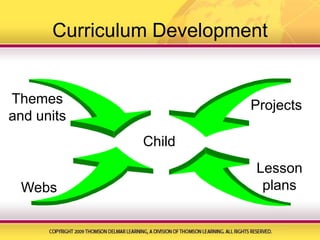
Process of Curriculum DevelopmentOngoingBoth planned and unplannedBased on child developmental theoriesChild-centered, child-directedProvides for effective use of personnel, time, space, equipment, and materialsInclusive, integrated, emergent
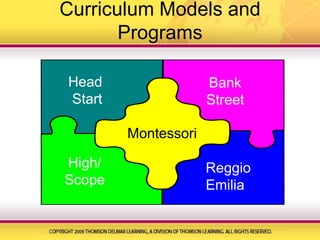
Curriculum Models and ProgramsHead StartBankStreetMontessoriHigh/ScopeReggioEmilia
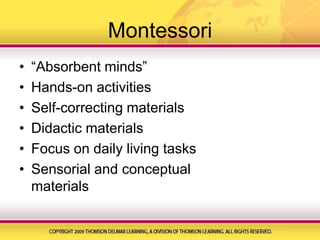
Montessori“Absorbent minds”Hands-on activitiesSelf-correcting materialsDidactic materialsFocus on daily living tasksSensorial and conceptual materials
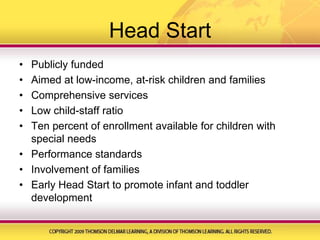
Head StartPublicly funded
Aimed at low-income, at-risk children and families
Comprehensive services
Low child-staff ratio
Ten percent of enrollment available for children with special needs
Performance standards
Involvement of families
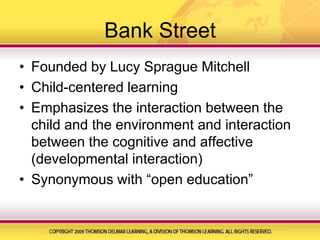
Early Head Start to promote infant and toddler developmentBank StreetFounded by Lucy Sprague Mitchell
Child-centered learning
Emphasizes the interaction between the child and the environment and interaction between the cognitive and affective  (developmental interaction)
Synonymous with “open education”High/ScopeCreated under the leadership of David Weikert
Began as an intervention program for low-income, at-risk children
High/Scope Perry Preschool Study
Active learning
Plan-do-review sequenceReggio EmiliaFounded by Loris MalaguzziImage of a strong child central to philosophyEnvironment is a “third teacher”
Relationships central in learning
The hundred languages of childrenMulticultural/Anti-Bias ConsiderationsChanging demographicsDiscover your own cultural uniquenessExplore your feelings about people who differ from you culturally, racially, or because of special needs
Anti-Bias CurriculumLouise Derman-SparksMore children are bicultural and bilingualCulture is learnedEstablish an anti-bias curriculumCombat prejudices, stereotypesThe development of each child to full potentialExplicit and implicit communication
Special Needs ConsiderationsPublic Law 94–142Least restrictive environmentIndividuals with Disabilities Education Act (IDEA)Individualized family services plan (IFSP) for children from birth through age threeEligibilityAssessmentDevelopmentImplementation and monitoringSupport the transitionIndividualized education plan (IEP) for children older than three
Managing the Environment with Appropriate GuidanceAppropriate verbal guidance and guidance techniquesSet clear, consistent, and appropriate goalsAddress behavior, not childFocus on developing responsibility and independenceSelf-regulationPositive techniques versus negative techniquesA problem-solving approach
Indoor EnvironmentShould welcome everyone in

Chapter 02