Adult Learning: Main Ideas
• Adults are likely to learn
more effectively when the
learning tasks are seen as
relevant, meaningful,
interesting, and useful.
• Adults have wide
experiences and knowledge
of the world, yet they often
lack confidence in themselves
as learners.
Source Adult Learning, Adult Teaching by John Daines, Carolyn Daines, and Brian Graham
Adult Learning: Main Ideas
• Adults expect to be treated
with respect.
• The motives people have for
attending may vary, but
achieving some successes will
increase their motivation for
further learning.
• Adults look for commitment to
equal opportunities in the
trainer’s behaviors.
Source Adult Learning, Adult Teaching by John Daines, Carolyn Daines, and Brian Graham
Adult Learning: Preferences
• Adult learners tend to be
less interested in survey
courses. They tend to prefer
single-concept, single-
theory courses that focus
heavily on application of the
concept to relevant
problems.
• How-to is the preferred
content orientation.
Source: “30 Things We Know for Sure about Adult Learning” by Ron and Susan Zemke,
Training/HRD. June 1981.
Adult Learning: Preferences
• Adults prefer self-directed and self-designed
learning projects 7 to 1 over group learning
experiences led by a professional.
• Self-directed does not mean isolated; studies
indicate these projects often involve an
average of 10 people as resources, guides,
and supporters.
• Even for self-directed learner, lectures,
workshops and seminars get positive ratings,
especially when they give learner access to
an expert.
Source: “30 Things We Know for Sure about Adult Learning” by Ron and Susan Zemke,
Training/HRD. June 1981.
Adult Learning: Integration & Issues
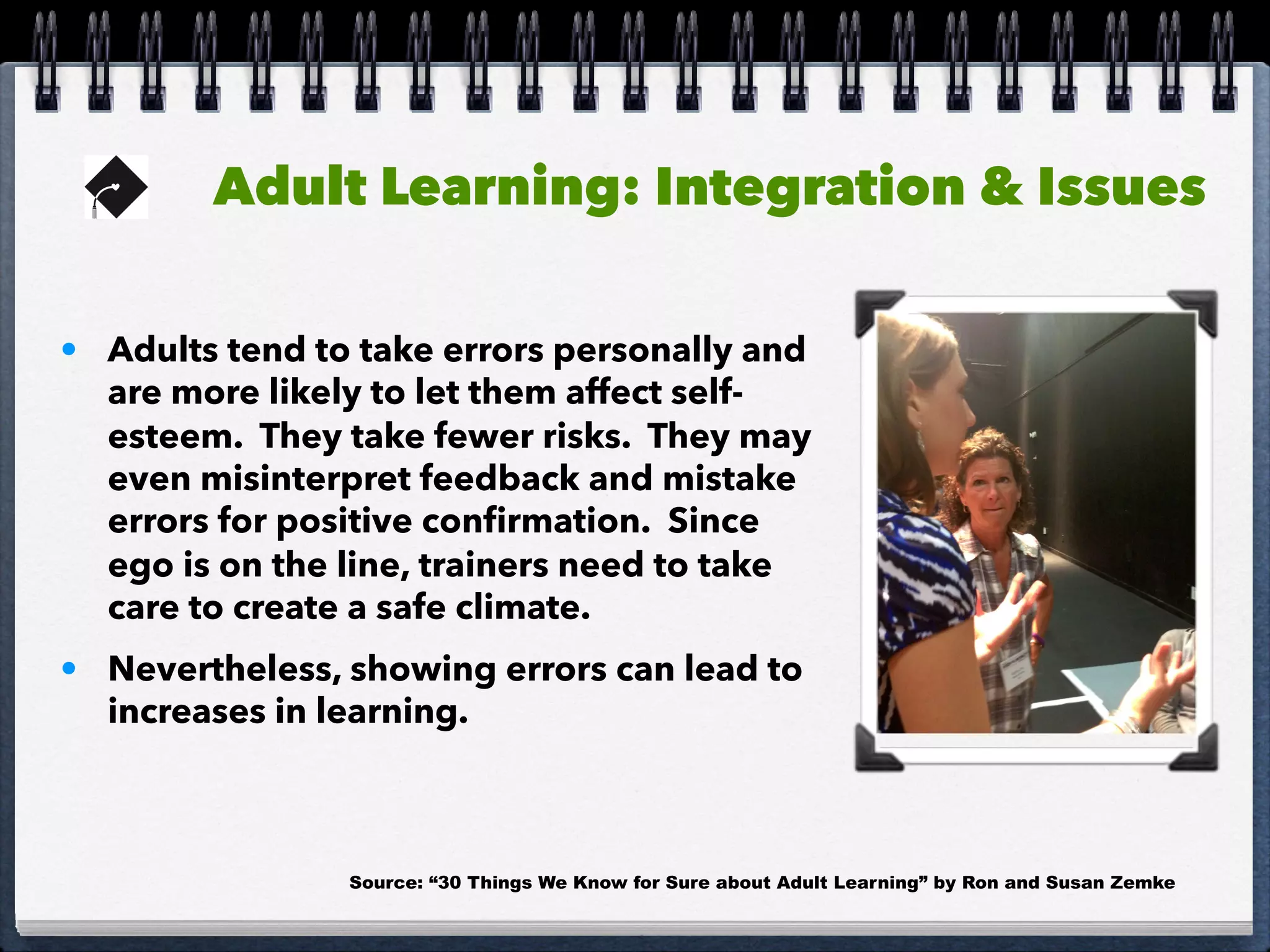
• Adults tend to take errors personally and
are more likely to let them affect self-
esteem. They take fewer risks. They may
even misinterpret feedback and mistake
errors for positive confirmation. Since
ego is on the line, trainers need to take
care to create a safe climate.
• Nevertheless, showing errors can lead to
increases in learning.
Source: “30 Things We Know for Sure about Adult Learning” by Ron and Susan Zemke
Adult Learning: Integration & Issues
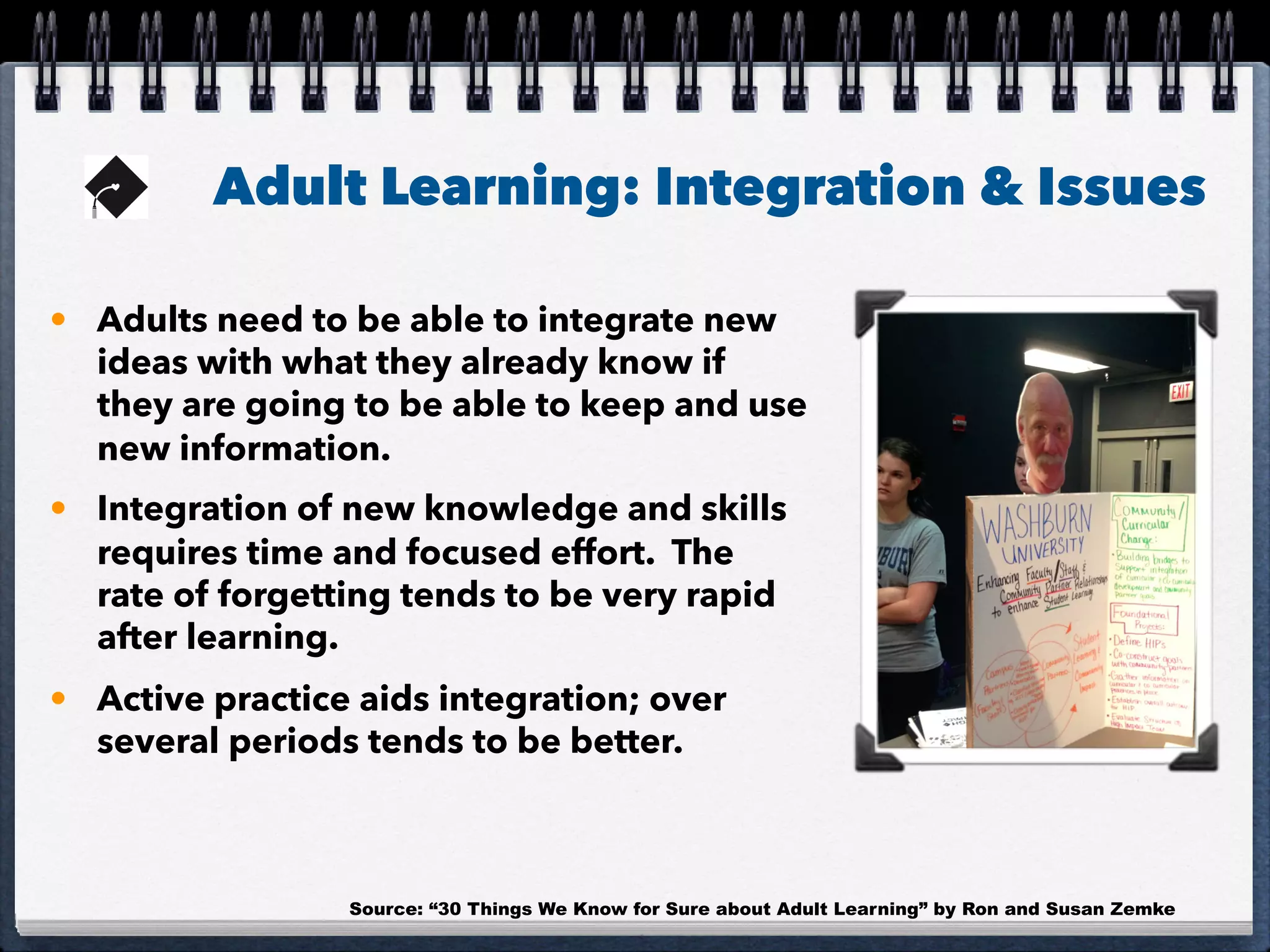
• Adults need to be able to integrate new
ideas with what they already know if
they are going to be able to keep and use
new information.
• Integration of new knowledge and skills
requires time and focused effort. The
rate of forgetting tends to be very rapid
after learning.
• Active practice aids integration; over
several periods tends to be better.
Source: “30 Things We Know for Sure about Adult Learning” by Ron and Susan Zemke
Bringing It Together
• Learning is enhanced when it is
immediately applicable to real
life contexts.
• Learning is enhanced when
adults have influence over or a
role in the experience.
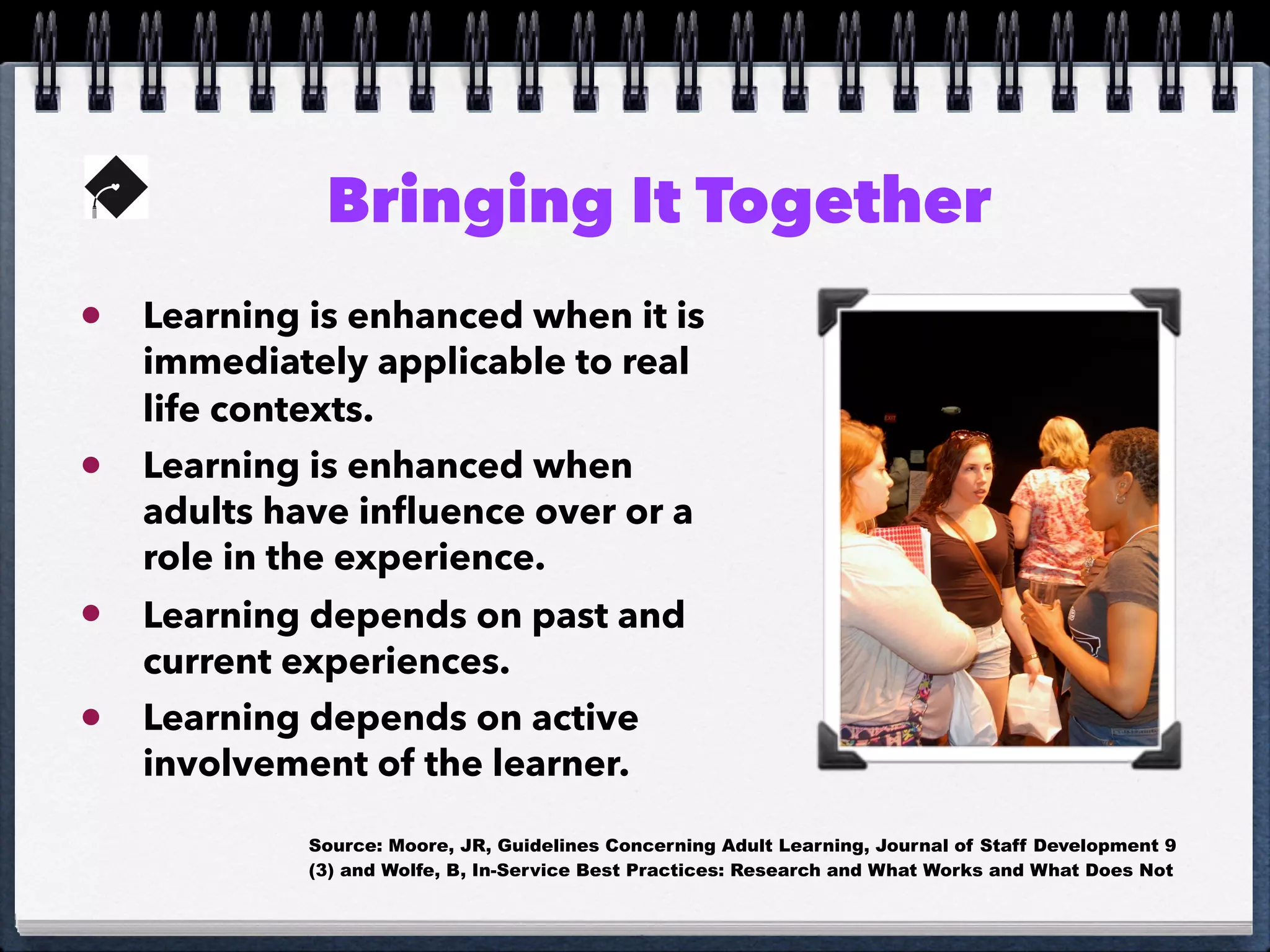
• Learning depends on past and
current experiences.
• Learning depends on active
involvement of the learner.
Source: Moore, JR, Guidelines Concerning Adult Learning, Journal of Staff Development 9
(3) and Wolfe, B, In-Service Best Practices: Research and What Works and What Does Not
Bringing It Together
• Learning is optimal in a
climate of respect and
comfort.
• Learning is enhanced when
learners achieve self
direction.
• Adult learning approaches
should account for learning
style & individual
differences.
Source: Moore, JR, Guidelines Concerning Adult Learning, Journal of Staff Development 9
(3) and Wolfe, B, In-Service Best Practices: Research and What Works and What Does Not
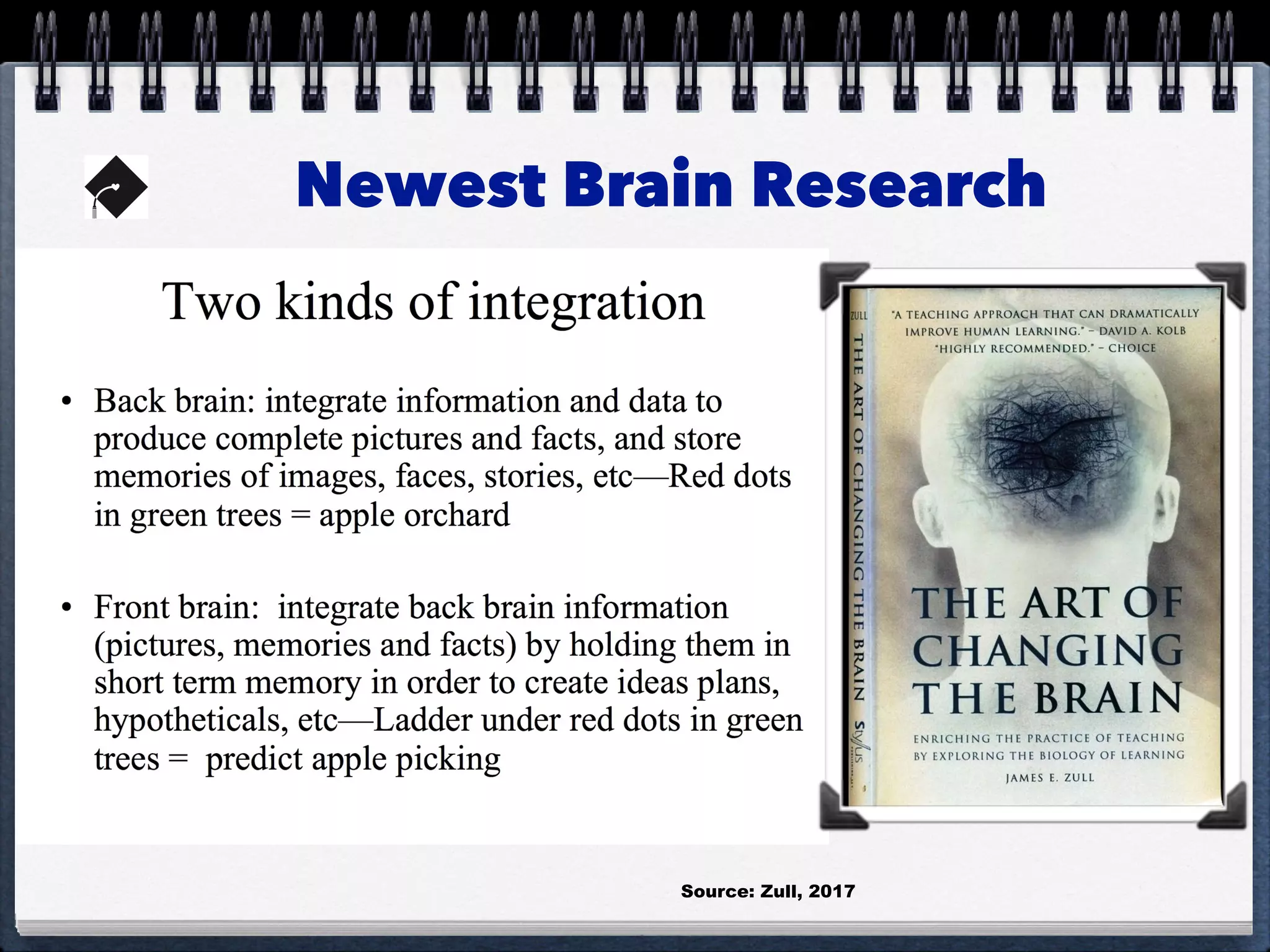
Newest Brain Research
Source: Zull, 2017
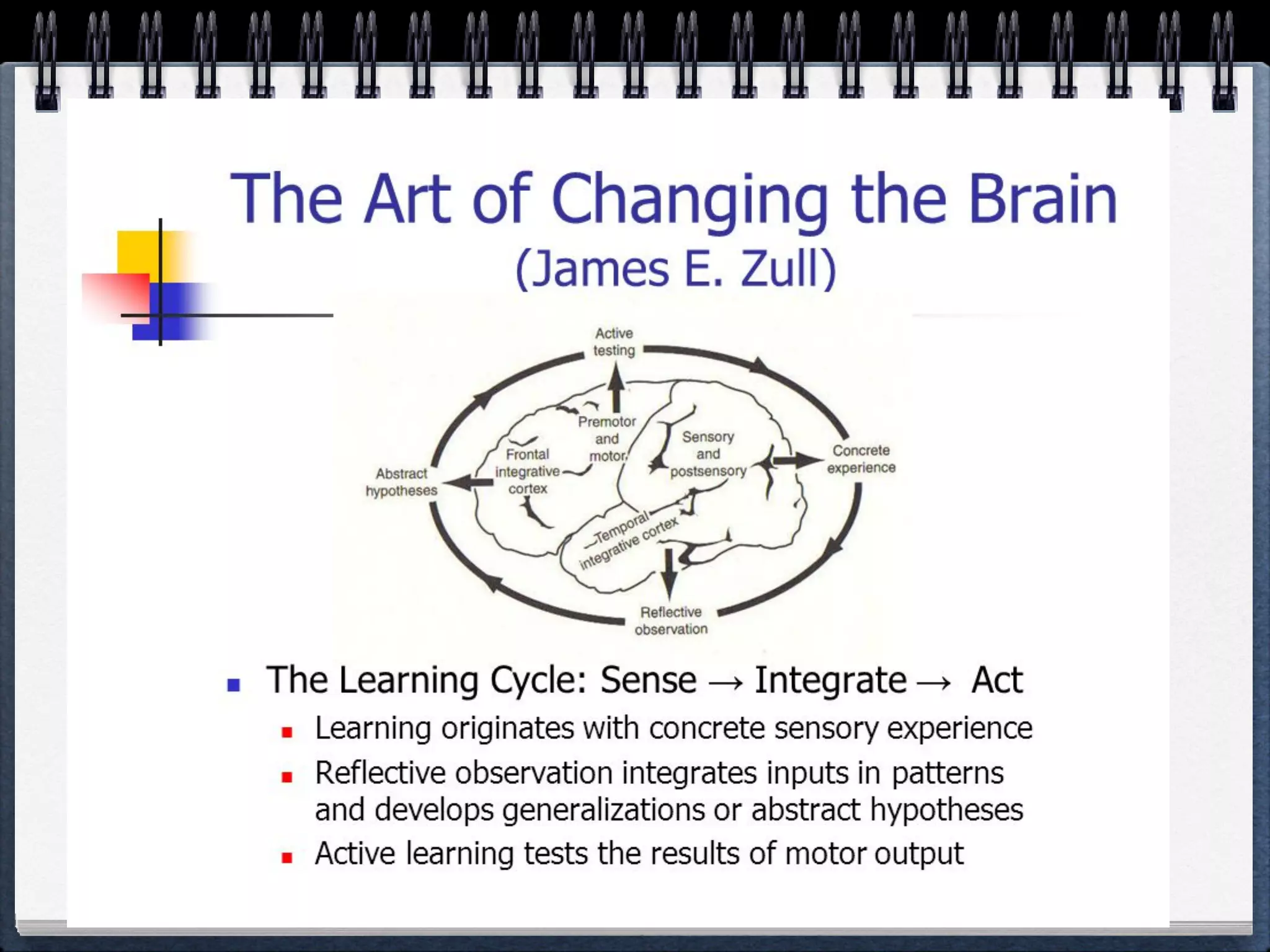
Source: Zull, 2017
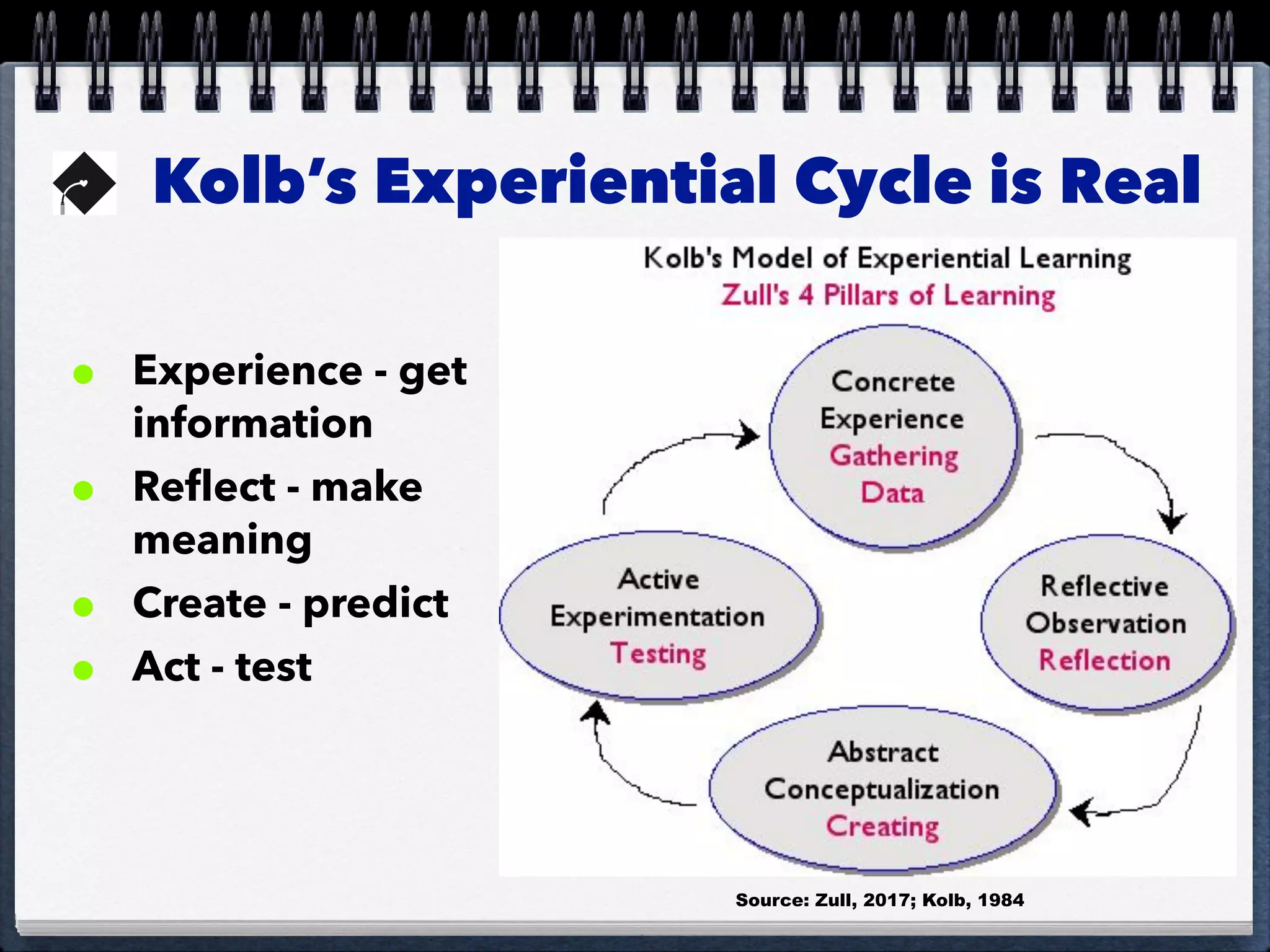
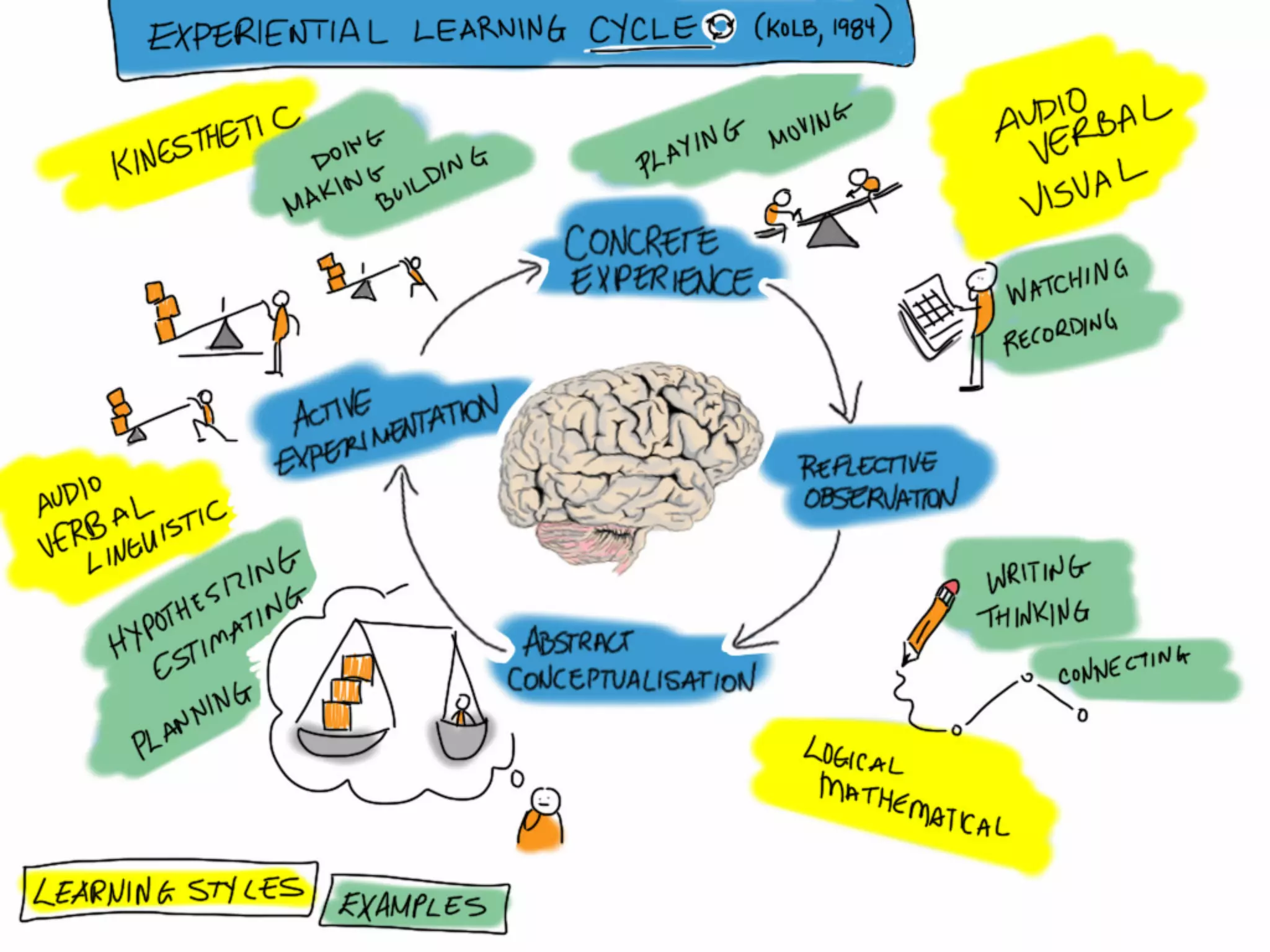
Kolb’s Experiential Cycle is Real
Source: Zull, 2017; Kolb, 1984
• Experience - get
information
• Reflect - make
meaning
• Create - predict
• Act - test
Source: Zull, 2017

Train-the-Trainers Principles of Adult Learning

  • 1.
    Adult Learning: MainIdeas • Adults are likely to learn more effectively when the learning tasks are seen as relevant, meaningful, interesting, and useful. • Adults have wide experiences and knowledge of the world, yet they often lack confidence in themselves as learners. Source Adult Learning, Adult Teaching by John Daines, Carolyn Daines, and Brian Graham
  • 2.
    Adult Learning: MainIdeas • Adults expect to be treated with respect. • The motives people have for attending may vary, but achieving some successes will increase their motivation for further learning. • Adults look for commitment to equal opportunities in the trainer’s behaviors. Source Adult Learning, Adult Teaching by John Daines, Carolyn Daines, and Brian Graham
  • 3.
    Adult Learning: Preferences •Adult learners tend to be less interested in survey courses. They tend to prefer single-concept, single- theory courses that focus heavily on application of the concept to relevant problems. • How-to is the preferred content orientation. Source: “30 Things We Know for Sure about Adult Learning” by Ron and Susan Zemke, Training/HRD. June 1981.
  • 4.
    Adult Learning: Preferences •Adults prefer self-directed and self-designed learning projects 7 to 1 over group learning experiences led by a professional. • Self-directed does not mean isolated; studies indicate these projects often involve an average of 10 people as resources, guides, and supporters. • Even for self-directed learner, lectures, workshops and seminars get positive ratings, especially when they give learner access to an expert. Source: “30 Things We Know for Sure about Adult Learning” by Ron and Susan Zemke, Training/HRD. June 1981.
  • 5.
    Adult Learning: Integration& Issues • Adults tend to take errors personally and are more likely to let them affect self- esteem. They take fewer risks. They may even misinterpret feedback and mistake errors for positive confirmation. Since ego is on the line, trainers need to take care to create a safe climate. • Nevertheless, showing errors can lead to increases in learning. Source: “30 Things We Know for Sure about Adult Learning” by Ron and Susan Zemke
  • 6.
    Adult Learning: Integration& Issues • Adults need to be able to integrate new ideas with what they already know if they are going to be able to keep and use new information. • Integration of new knowledge and skills requires time and focused effort. The rate of forgetting tends to be very rapid after learning. • Active practice aids integration; over several periods tends to be better. Source: “30 Things We Know for Sure about Adult Learning” by Ron and Susan Zemke
  • 7.
    Bringing It Together •Learning is enhanced when it is immediately applicable to real life contexts. • Learning is enhanced when adults have influence over or a role in the experience. • Learning depends on past and current experiences. • Learning depends on active involvement of the learner. Source: Moore, JR, Guidelines Concerning Adult Learning, Journal of Staff Development 9 (3) and Wolfe, B, In-Service Best Practices: Research and What Works and What Does Not
  • 8.
    Bringing It Together •Learning is optimal in a climate of respect and comfort. • Learning is enhanced when learners achieve self direction. • Adult learning approaches should account for learning style & individual differences. Source: Moore, JR, Guidelines Concerning Adult Learning, Journal of Staff Development 9 (3) and Wolfe, B, In-Service Best Practices: Research and What Works and What Does Not
  • 9.
  • 10.
  • 11.
    Kolb’s Experiential Cycleis Real Source: Zull, 2017; Kolb, 1984 • Experience - get information • Reflect - make meaning • Create - predict • Act - test
  • 12.