Adapted by: Paula Davenport Miranda Leickly Beth Sigurdson
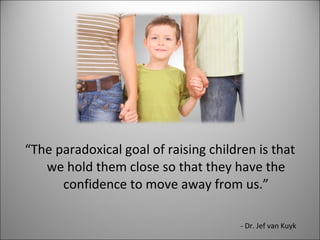
“ The paradoxical goal of raising children is that we hold them close so that they have the confidence to move away from us.” - Dr. Jef van Kuyk
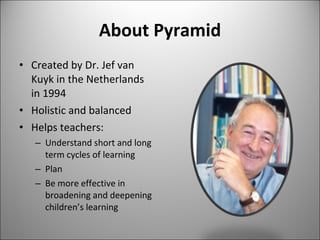
About Pyramid Created by Dr. Jef van Kuyk in the Netherlands in 1994 Holistic and balanced Helps teachers: Understand short and long term cycles of learning Plan Be more effective in broadening and deepening children’s learning
Pyramid in Action Educational method for children between the ages of three to six Schedule: Three-year-olds: At least four mornings or afternoons of preschool a week Four to six year olds: Five days a week Favorable teacher-child ratio (1:12) Tutor available as preventative measure Strong parental involvement Parents engage in similar activities at home as children do in school
Interactive Storytelling Step One – Orientation
Interactive Storytelling Step Two – Demonstration
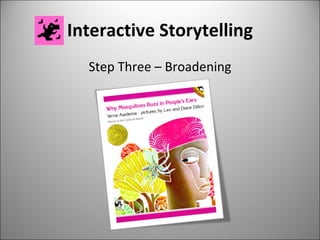
Interactive Storytelling Step Three – Broadening
Interactive Storytelling Step Four – Deepening
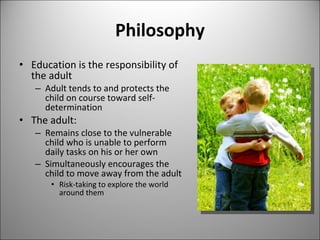
Philosophy Education is the responsibility of the adult  Adult tends to and protects the child on course toward self-determination The adult: Remains close to the vulnerable child who is unable to perform daily tasks on his or her own Simultaneously encourages the child to move away from the adult  Risk-taking to explore the world around them
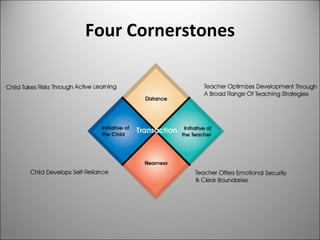
Four Cornerstones
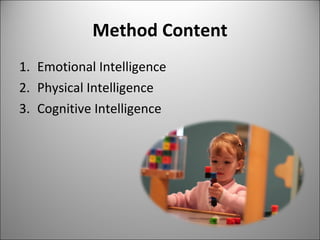
Method Content Emotional Intelligence Physical Intelligence Cognitive Intelligence
Pyramid Programs Play program Projects Orientation Demonstration Broadening Deepening Tutoring program Parent program
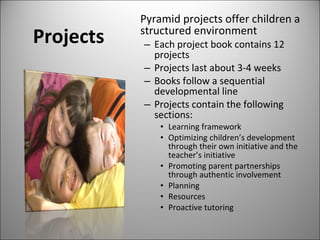
Projects Pyramid projects offer children a structured environment Each project book contains 12 projects Projects last about 3-4 weeks Books follow a sequential developmental line Projects contain the following sections:  Learning framework Optimizing children’s development through their own initiative and the teacher’s initiative Promoting parent partnerships through authentic involvement Planning Resources Proactive tutoring
References Pyramid Post. (2006). In D. Neubauer-van Dijk (Ed.),  Cito USA . Retrieved March 20, 2009, from  http://www.cito.com Roopnarine, J. L., & Johnson, J. E. (2005).  Approached to early childhood education (4 th  ed.) . Upper Saddle River, NJ: Merrill Prentice Hall. Smith, C. G. (2008). Inspired cognition: A revolutionary four-step process.  Interactive storytelling . Symposium conducted at the NESA Winter Training Institute. Retrieved from  www.nesacenter.org/storage/content-pages/conferences/wti-2008/Interactive_Storytelling.doc van Kuyk, J. (2001, June 1). Pyramid Educational Method for 3 to 6-Year-Old Children: Theory and Research. (ERIC Document Reproduction Service No. ED455005) Retrieved March 25, 2009, from ERIC database. van Kuyk, J., & Centraal Inst. voor Toetsonwikkeling, A. (1997, September 1). The Pyramid Project. (ERIC Document Reproduction Service No. ED420369) Retrieved March 24, 2009, from ERIC database.

Pyramid Method Presentation Ppt

  • 1.
    Adapted by: PaulaDavenport Miranda Leickly Beth Sigurdson
  • 2.
    “ The paradoxicalgoal of raising children is that we hold them close so that they have the confidence to move away from us.” - Dr. Jef van Kuyk
  • 3.
    About Pyramid Createdby Dr. Jef van Kuyk in the Netherlands in 1994 Holistic and balanced Helps teachers: Understand short and long term cycles of learning Plan Be more effective in broadening and deepening children’s learning
  • 4.
    Pyramid in ActionEducational method for children between the ages of three to six Schedule: Three-year-olds: At least four mornings or afternoons of preschool a week Four to six year olds: Five days a week Favorable teacher-child ratio (1:12) Tutor available as preventative measure Strong parental involvement Parents engage in similar activities at home as children do in school
  • 5.
    Interactive Storytelling StepOne – Orientation
  • 6.
    Interactive Storytelling StepTwo – Demonstration
  • 7.
    Interactive Storytelling StepThree – Broadening
  • 8.
  • 9.
    Philosophy Education isthe responsibility of the adult Adult tends to and protects the child on course toward self-determination The adult: Remains close to the vulnerable child who is unable to perform daily tasks on his or her own Simultaneously encourages the child to move away from the adult Risk-taking to explore the world around them
  • 10.
  • 11.
    Method Content EmotionalIntelligence Physical Intelligence Cognitive Intelligence
  • 12.
    Pyramid Programs Playprogram Projects Orientation Demonstration Broadening Deepening Tutoring program Parent program
  • 13.
    Projects Pyramid projectsoffer children a structured environment Each project book contains 12 projects Projects last about 3-4 weeks Books follow a sequential developmental line Projects contain the following sections: Learning framework Optimizing children’s development through their own initiative and the teacher’s initiative Promoting parent partnerships through authentic involvement Planning Resources Proactive tutoring
  • 14.
    References Pyramid Post.(2006). In D. Neubauer-van Dijk (Ed.), Cito USA . Retrieved March 20, 2009, from http://www.cito.com Roopnarine, J. L., & Johnson, J. E. (2005). Approached to early childhood education (4 th ed.) . Upper Saddle River, NJ: Merrill Prentice Hall. Smith, C. G. (2008). Inspired cognition: A revolutionary four-step process. Interactive storytelling . Symposium conducted at the NESA Winter Training Institute. Retrieved from www.nesacenter.org/storage/content-pages/conferences/wti-2008/Interactive_Storytelling.doc van Kuyk, J. (2001, June 1). Pyramid Educational Method for 3 to 6-Year-Old Children: Theory and Research. (ERIC Document Reproduction Service No. ED455005) Retrieved March 25, 2009, from ERIC database. van Kuyk, J., & Centraal Inst. voor Toetsonwikkeling, A. (1997, September 1). The Pyramid Project. (ERIC Document Reproduction Service No. ED420369) Retrieved March 24, 2009, from ERIC database.