









Chapter 12
“Researching, Supporting, and
   Delivering Your Ideas”
 Morgan Garrison, Brittany Griffith, Lacey Viar, Sarah Woll
Lacey Viar


Researching Your Topic
Morgan Garrison


Verbal Supporting Materials
“Supporting Materials are
informative materials that serve as
    a foundation for our ideas”
               Page 324
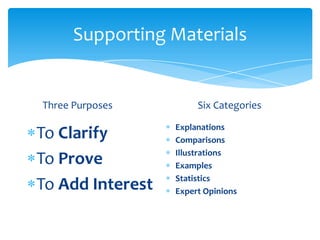
Supporting Materials


Three Purposes         Six Categories

                  Explanations
To Clarify        Comparisons
                  Illustrations
To Prove          Examples
                  Statistics
To Add Interest   Expert Opinions
Explaining the Six Categories
 Explanations, Comparisons, Illustrations, Examples, Statis
                 tics, and Expert Opinions
“In an explanation the speaker
describes the relationship between
  certain items, defines a term or
word, or gives instructions on how
  to do something or how to get
            somewhere”
              Page 344
Explanations Should


Be specific but brief
Be used only for
clarification, not proof
Not be overused
“Speakers use comparisons to show
   the similarities or differences
 between something the listeners
 know and something they do not
               know”
               Page 345
Comparisons


    Types              Comparisons

Literal            Relate unfamiliar to
                   familiar
Comparisons
                   Effective and easy
Figurative         way to add interest
Comparisons        Used to clarify
“An illustration is a narrative or
story told in vivid detail to paint a
     picture for the listener”
                Page 346
Illustrations


     Types              Illustrations Should
                     Be detailed and vivid
Factual              Relate clearly to point
                     If factual, used both to clarify
illustrations        and to add proof
                     Used by speakers in
Hypothetical         introductions
                     If hypothetical, used only for
illustrations        clarification
“Examples are brief references to
 specific items or events that are
     used for both proof and
            clarification”
              Page 347
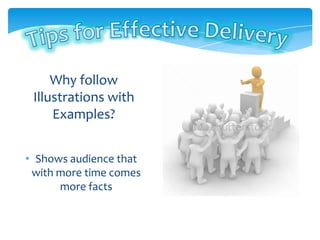
Why follow
 Illustrations with
     Examples?


• Shows audience that
 with more time comes
      more facts
Examples


May contain no detail, or may include few brief
facts
Are used for both clarification and proof
Are most effective when used in groups of two or
more
Included immediately after factual illustration to
add additional proof
“Statistics are numbers used to
show relationships between items”
              Page 348
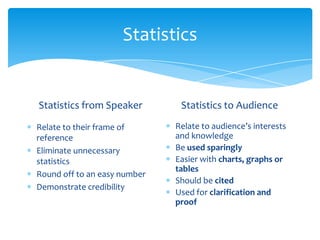
Statistics


Statistics from Speaker        Statistics to Audience

Relate to their frame of      Relate to audience’s interests
reference                     and knowledge
Eliminate unnecessary         Be used sparingly
statistics                    Easier with charts, graphs or
                              tables
Round off to an easy number
                              Should be cited
Demonstrate credibility
                              Used for clarification and
                              proof
“Expert opinion refers to the ideas
        of an expert in the
  filed, paraphrased or quoted
     directly by the speaker”
               Page 349
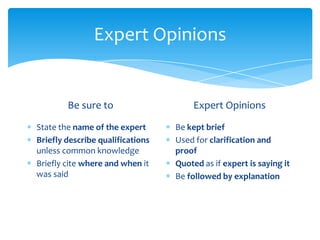
Expert Opinions


        Be sure to                     Expert Opinions

State the name of the expert      Be kept brief
Briefly describe qualifications   Used for clarification and
unless common knowledge           proof
Briefly cite where and when it    Quoted as if expert is saying it
was said                          Be followed by explanation
Sarah Woll


Improving Delivery
Delivery and Non Verbal
  Communication
     Body Language and Gestures
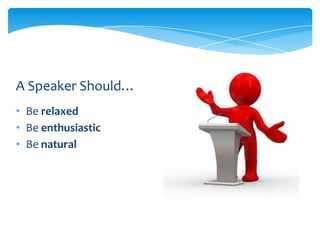
A Speaker Should…
• Be relaxed
• Be enthusiastic
• Be natural
Delivery and Non Verbal Behavior


      Gestures                 Tips

 Help you appear      Do not overdo it!
 natural and add      Try stepping
                      forward, backward, or
 enthusiasm/importa   side-to-side
 nce to your          Move at
 presentation         beginning, end, or when
                      emphasizing a point
Delivery and Verbal Communications
Delivery and Voice
 Volume, Pitch, Emphasis, and Rate
Delivery and Voice


     Volume               Pitch

Loud enough to be    Step changes
heard through room
                     in pitch to add
Increase/Decrease
volume with          interest
emphasis
Delivery and Voice


       Emphasis                     Rate

Increase pitch and volume   Rate effects listener
Emphasizing certain words   attention
changes the sentence
meaning                     Be sure to pause after
  Example:                  important phrases or
    Why did you fire him?
    Why did you fire him?
                            ideas for absorption
Delivery and Language
 Oral Language, and Persuasive Language
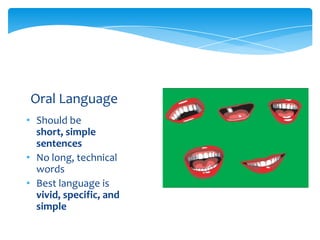
Oral Language
• Should be
  short, simple
  sentences
• No long, technical
  words
• Best language is
  vivid, specific, and
  simple
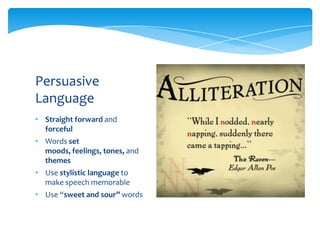
Persuasive
Language
• Straight forward and
  forceful
• Words set
  moods, feelings, tones, and
  themes
• Use stylistic language to
  make speech memorable
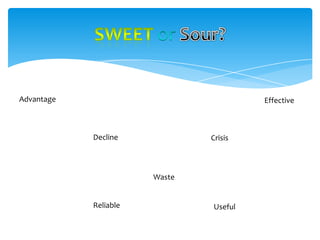
• Use “sweet and sour” words
Advantage                               Effective


            Decline            Crisis


                       Waste


            Reliable           Useful
Confident Delivery


Practice
Stand up, speak out loud, and use visuals
It is okay to be nervous, but don’t let it show
Never say sorry after a mistake
Maintain Composure
Do not toy with items, hair, clothing
Questions?

Chapter12 powerpoint

  • 1.
    Chapter 12 “Researching, Supporting,and Delivering Your Ideas” Morgan Garrison, Brittany Griffith, Lacey Viar, Sarah Woll
  • 2.
  • 3.
  • 4.
    “Supporting Materials are informativematerials that serve as a foundation for our ideas” Page 324
  • 5.
    Supporting Materials Three Purposes Six Categories Explanations To Clarify Comparisons Illustrations To Prove Examples Statistics To Add Interest Expert Opinions
  • 6.
    Explaining the SixCategories Explanations, Comparisons, Illustrations, Examples, Statis tics, and Expert Opinions
  • 7.
    “In an explanationthe speaker describes the relationship between certain items, defines a term or word, or gives instructions on how to do something or how to get somewhere” Page 344
  • 8.
    Explanations Should Be specificbut brief Be used only for clarification, not proof Not be overused
  • 9.
    “Speakers use comparisonsto show the similarities or differences between something the listeners know and something they do not know” Page 345
  • 10.
    Comparisons Types Comparisons Literal Relate unfamiliar to familiar Comparisons Effective and easy Figurative way to add interest Comparisons Used to clarify
  • 11.
    “An illustration isa narrative or story told in vivid detail to paint a picture for the listener” Page 346
  • 12.
    Illustrations Types Illustrations Should Be detailed and vivid Factual Relate clearly to point If factual, used both to clarify illustrations and to add proof Used by speakers in Hypothetical introductions If hypothetical, used only for illustrations clarification
  • 13.
    “Examples are briefreferences to specific items or events that are used for both proof and clarification” Page 347
  • 14.
    Why follow Illustrationswith Examples? • Shows audience that with more time comes more facts
  • 15.
    Examples May contain nodetail, or may include few brief facts Are used for both clarification and proof Are most effective when used in groups of two or more Included immediately after factual illustration to add additional proof
  • 16.
    “Statistics are numbersused to show relationships between items” Page 348
  • 17.
    Statistics Statistics from Speaker Statistics to Audience Relate to their frame of Relate to audience’s interests reference and knowledge Eliminate unnecessary Be used sparingly statistics Easier with charts, graphs or tables Round off to an easy number Should be cited Demonstrate credibility Used for clarification and proof
  • 18.
    “Expert opinion refersto the ideas of an expert in the filed, paraphrased or quoted directly by the speaker” Page 349
  • 19.
    Expert Opinions Be sure to Expert Opinions State the name of the expert Be kept brief Briefly describe qualifications Used for clarification and unless common knowledge proof Briefly cite where and when it Quoted as if expert is saying it was said Be followed by explanation
  • 20.
  • 21.
    Delivery and NonVerbal Communication Body Language and Gestures
  • 22.
    A Speaker Should… •Be relaxed • Be enthusiastic • Be natural
  • 23.
    Delivery and NonVerbal Behavior Gestures Tips Help you appear Do not overdo it! natural and add Try stepping forward, backward, or enthusiasm/importa side-to-side nce to your Move at presentation beginning, end, or when emphasizing a point
  • 24.
    Delivery and VerbalCommunications
  • 25.
    Delivery and Voice Volume, Pitch, Emphasis, and Rate
  • 26.
    Delivery and Voice Volume Pitch Loud enough to be Step changes heard through room in pitch to add Increase/Decrease volume with interest emphasis
  • 27.
    Delivery and Voice Emphasis Rate Increase pitch and volume Rate effects listener Emphasizing certain words attention changes the sentence meaning Be sure to pause after Example: important phrases or Why did you fire him? Why did you fire him? ideas for absorption
  • 28.
    Delivery and Language Oral Language, and Persuasive Language
  • 29.
    Oral Language • Shouldbe short, simple sentences • No long, technical words • Best language is vivid, specific, and simple
  • 30.
    Persuasive Language • Straight forwardand forceful • Words set moods, feelings, tones, and themes • Use stylistic language to make speech memorable • Use “sweet and sour” words
  • 31.
    Advantage Effective Decline Crisis Waste Reliable Useful
  • 32.
    Confident Delivery Practice Stand up,speak out loud, and use visuals It is okay to be nervous, but don’t let it show Never say sorry after a mistake Maintain Composure Do not toy with items, hair, clothing
  • 33.

Editor's Notes