Channel Management Decisions
Group-3:
Dipesh Raj Pandey
Dibya Raj Sapkota
Kushal Chandra Shrestha
Natasha Baidya
Spartakas Dhakal
Trijya Kafle
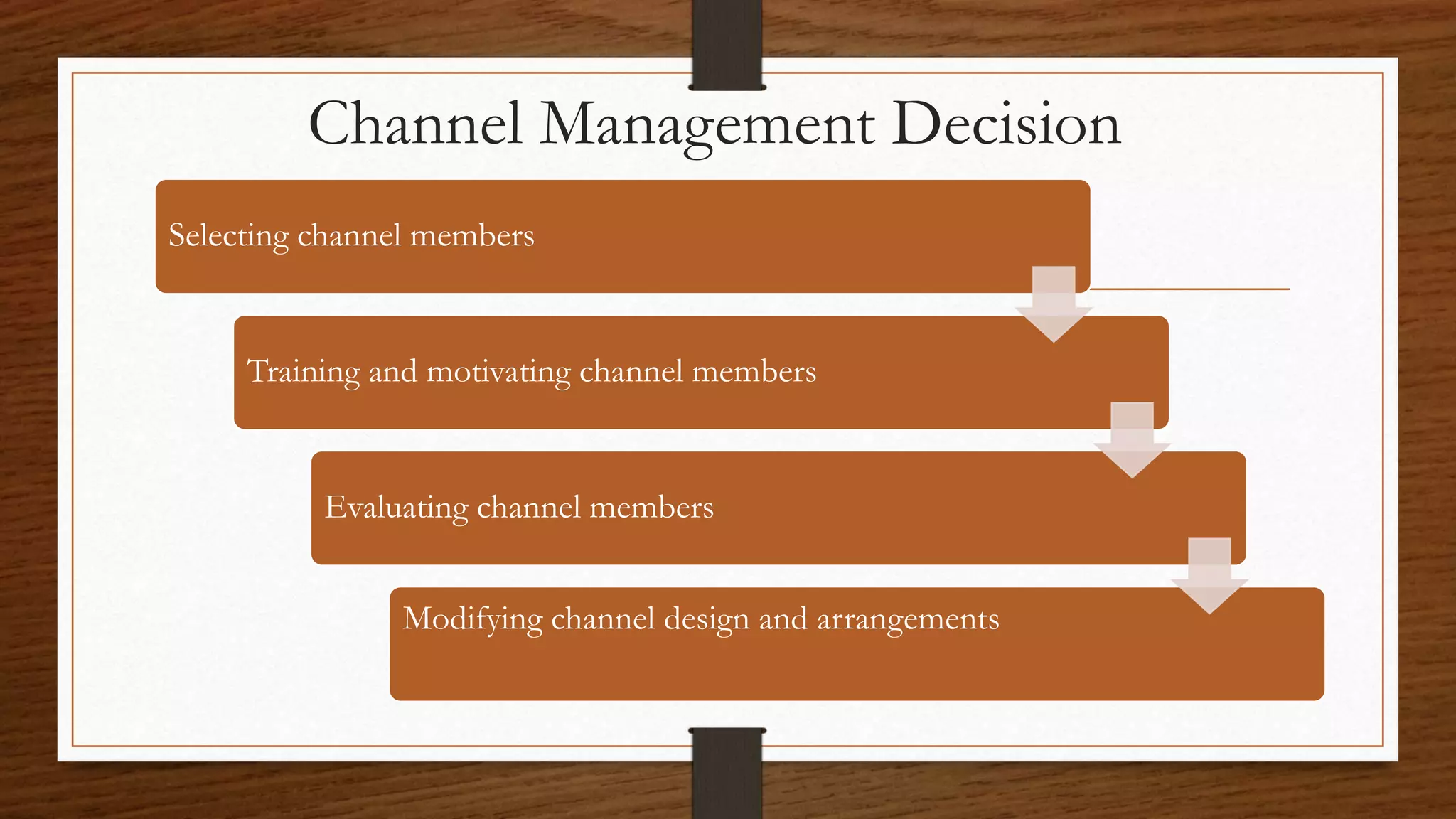
Channel Management Decision
Selecting channel members
Training and motivating channel members
Evaluating channel members
Modifying channel design and arrangements
Selecting Channel Members
• Determine characteristics that better distinguish the better intermediaries
• Other lines carried
• Growth and profit record
• Cooperativeness
• Service reputation
Training and Motivating Channel Members
• Understand the needs of the channel members
• Construct a channel positioning
• Plan and implement capability building programs
• E.g. Microsoft
• Constant communiccation
• Intermediaries as partners
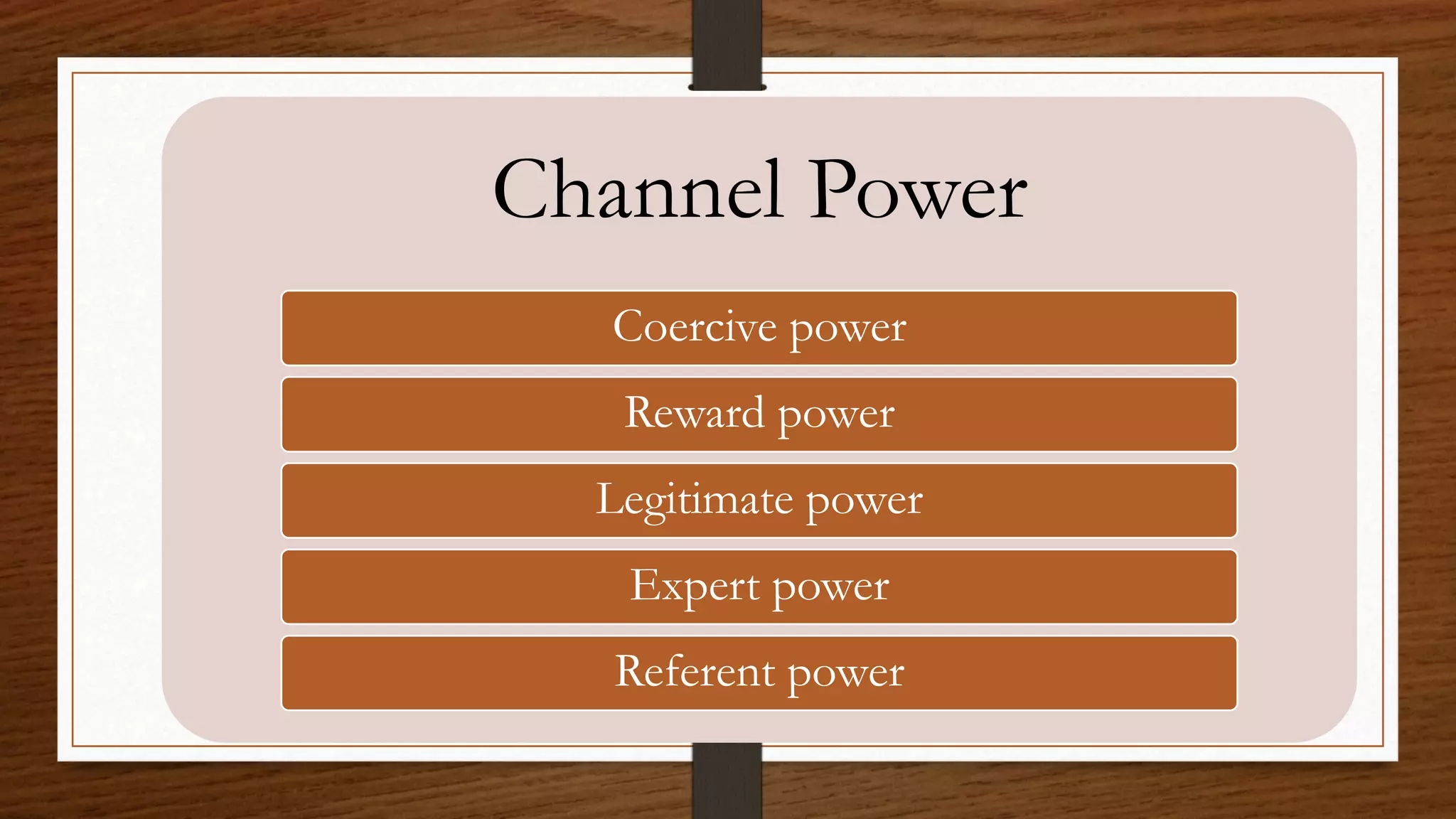
Channel Power
Coercive power
Reward power
Legitimate power
Expert power
Referent power
Efficient Consumer Response
Demand side management
Supply side management
Enablers and integrators
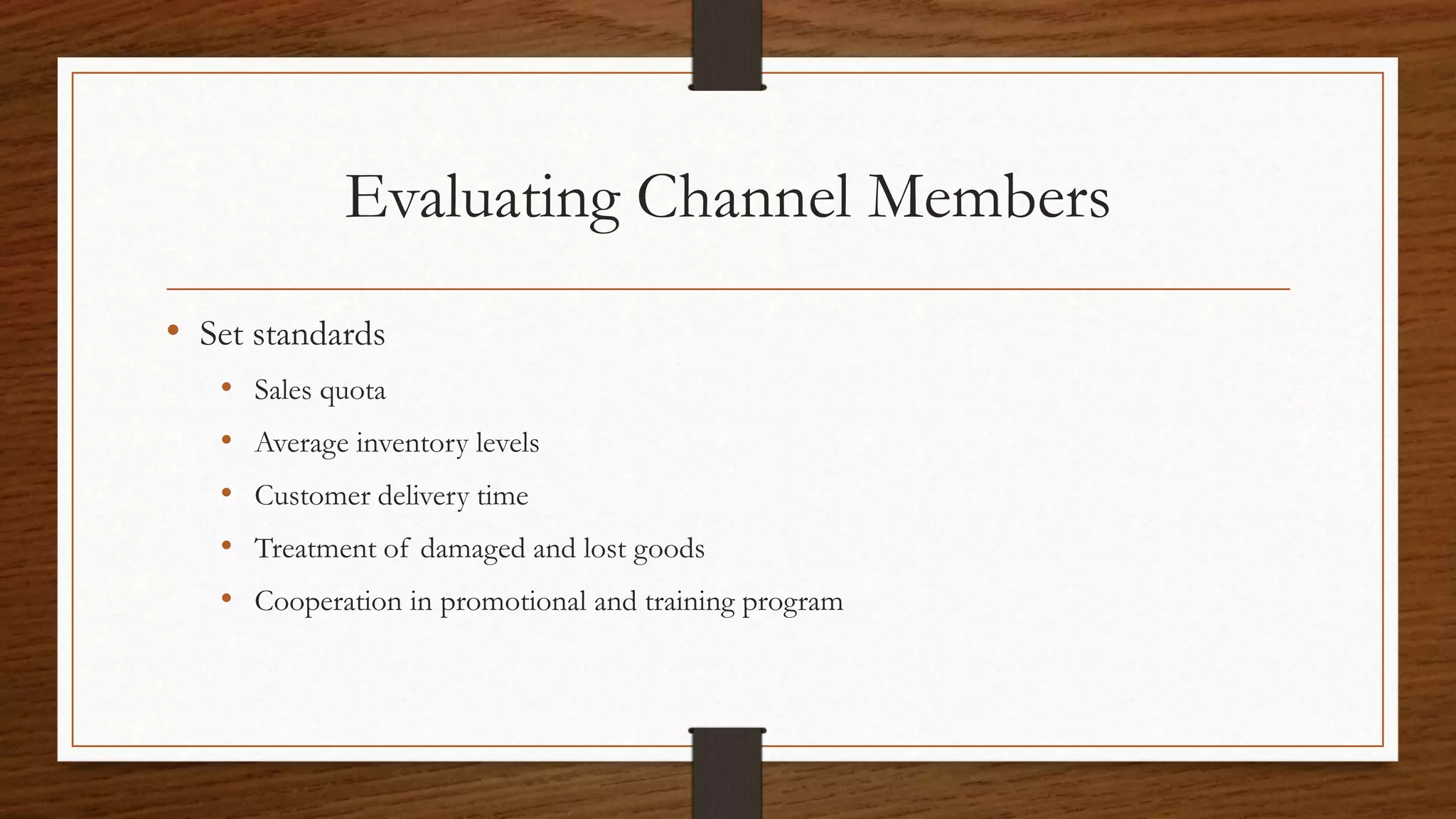
Evaluating Channel Members
• Set standards
• Sales quota
• Average inventory levels
• Customer delivery time
• Treatment of damaged and lost goods
• Cooperation in promotional and training program
Under performer
• Counseled
• Retrained
• Motivated
• Terminated
Modifying Channel Design
• Deviate from plan
• Consumer buying patterns
• Market expands
• New Competition
Modifying Channel Design
• Innovative distribution channels
• Product life cycle stage
• High competition
• Low entry barriers
Add or Drop
• Incremental Analysis
• Sales decrease below certain level
• Consumer shopping information
• Revise channel strategy
• Gap between ideal and existing
Patanjali
• No of transport vehicle
• No of salesperson
• Association with any Political/Social/Religious Institution
• Detail of alternate business
• Warehouse area
• Last year turnover if you have
• Investment Capacity

Channel Management Decisions

  • 1.
    Channel Management Decisions Group-3: DipeshRaj Pandey Dibya Raj Sapkota Kushal Chandra Shrestha Natasha Baidya Spartakas Dhakal Trijya Kafle
  • 2.
    Channel Management Decision Selectingchannel members Training and motivating channel members Evaluating channel members Modifying channel design and arrangements
  • 3.
    Selecting Channel Members •Determine characteristics that better distinguish the better intermediaries • Other lines carried • Growth and profit record • Cooperativeness • Service reputation
  • 4.
    Training and MotivatingChannel Members • Understand the needs of the channel members • Construct a channel positioning • Plan and implement capability building programs • E.g. Microsoft • Constant communiccation • Intermediaries as partners
  • 5.
    Channel Power Coercive power Rewardpower Legitimate power Expert power Referent power
  • 6.
    Efficient Consumer Response Demandside management Supply side management Enablers and integrators
  • 7.
    Evaluating Channel Members •Set standards • Sales quota • Average inventory levels • Customer delivery time • Treatment of damaged and lost goods • Cooperation in promotional and training program
  • 8.
    Under performer • Counseled •Retrained • Motivated • Terminated
  • 9.
    Modifying Channel Design •Deviate from plan • Consumer buying patterns • Market expands • New Competition
  • 10.
    Modifying Channel Design •Innovative distribution channels • Product life cycle stage • High competition • Low entry barriers
  • 11.
    Add or Drop •Incremental Analysis • Sales decrease below certain level • Consumer shopping information • Revise channel strategy • Gap between ideal and existing
  • 12.
    Patanjali • No oftransport vehicle • No of salesperson • Association with any Political/Social/Religious Institution • Detail of alternate business • Warehouse area • Last year turnover if you have • Investment Capacity

Editor's Notes

  • #5 -View its intermediaries in the same ways as viewing its customers -channel offerings are tailored to provide value to the intermmedieries And other capability building program to improve the intermediaries performance