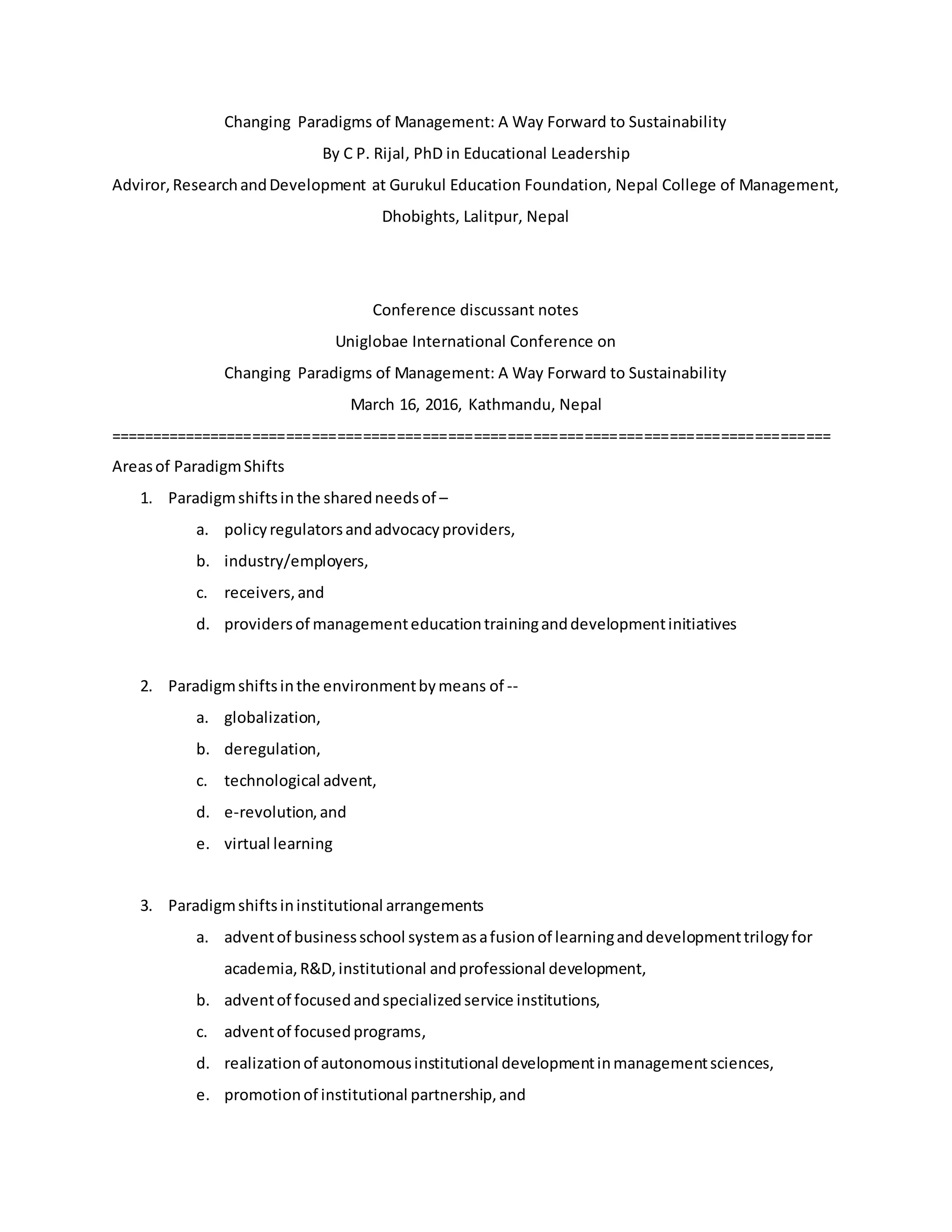
Changing Paradigms of Management: A Way Forward to Sustainability
By C P. Rijal, PhD in Educational Leadership
Adviror,ResearchandDevelopment at Gurukul Education Foundation, Nepal College of Management,
Dhobights, Lalitpur, Nepal
Conference discussant notes
Uniglobae International Conference on
Changing Paradigms of Management: A Way Forward to Sustainability
March 16, 2016, Kathmandu, Nepal
=====================================================================================
Areasof ParadigmShifts
1. Paradigmshiftsinthe sharedneedsof –
a. policyregulatorsandadvocacyproviders,
b. industry/employers,
c. receivers,and
d. providersof managementeducationtraininganddevelopmentinitiatives
2. Paradigmshiftsinthe environmentbymeans of --
a. globalization,
b. deregulation,
c. technological advent,
d. e-revolution,and
e. virtual learning
3. Paradigmshiftsininstitutional arrangements
a. adventof businessschool systemasafusionof learninganddevelopmenttrilogyfor
academia,R&D,institutional andprofessional development,
b. adventof focusedandspecializedservice institutions,
c. adventof focusedprograms,
d. realizationof autonomousinstitutional developmentinmanagementsciences,
e. promotionof institutional partnership,and
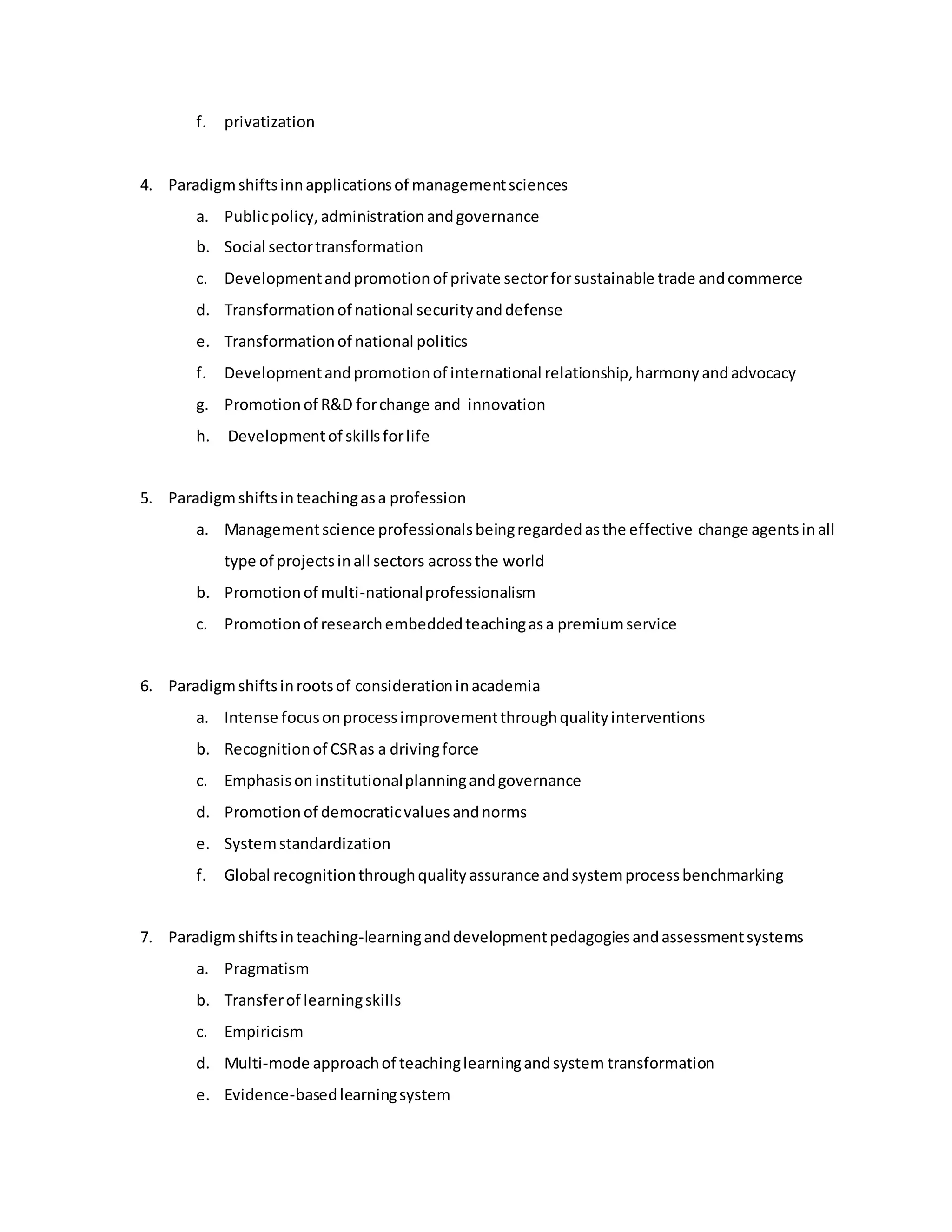
f. privatization
4. Paradigmshiftsinnapplicationsof managementsciences
a. Publicpolicy,administrationandgovernance
b. Social sectortransformation
c. Developmentandpromotionof private sectorforsustainable trade andcommerce
d. Transformationof national securityanddefense
e. Transformationof national politics
f. Developmentandpromotionof international relationship,harmonyandadvocacy
g. Promotionof R&D forchange and innovation
h. Developmentof skillsforlife
5. Paradigmshiftsinteachingasa profession
a. Managementscience professionalsbeingregardedasthe effective change agentsinall
type of projectsinall sectors acrossthe world
b. Promotionof multi-nationalprofessionalism
c. Promotionof researchembeddedteachingasa premiumservice
6. Paradigmshiftsinrootsof considerationinacademia
a. Intense focusonprocessimprovementthroughqualityinterventions
b. Recognitionof CSRas a drivingforce
c. Emphasisoninstitutionalplanningandgovernance
d. Promotionof democraticvaluesandnorms
e. Systemstandardization
f. Global recognitionthroughqualityassurance andsystemprocessbenchmarking
7. Paradigmshiftsinteaching-learninganddevelopmentpedagogiesandassessmentsystems
a. Pragmatism
b. Transferof learningskills
c. Empiricism
d. Multi-mode approachof teachinglearningandsystem transformation
e. Evidence-basedlearningsystem
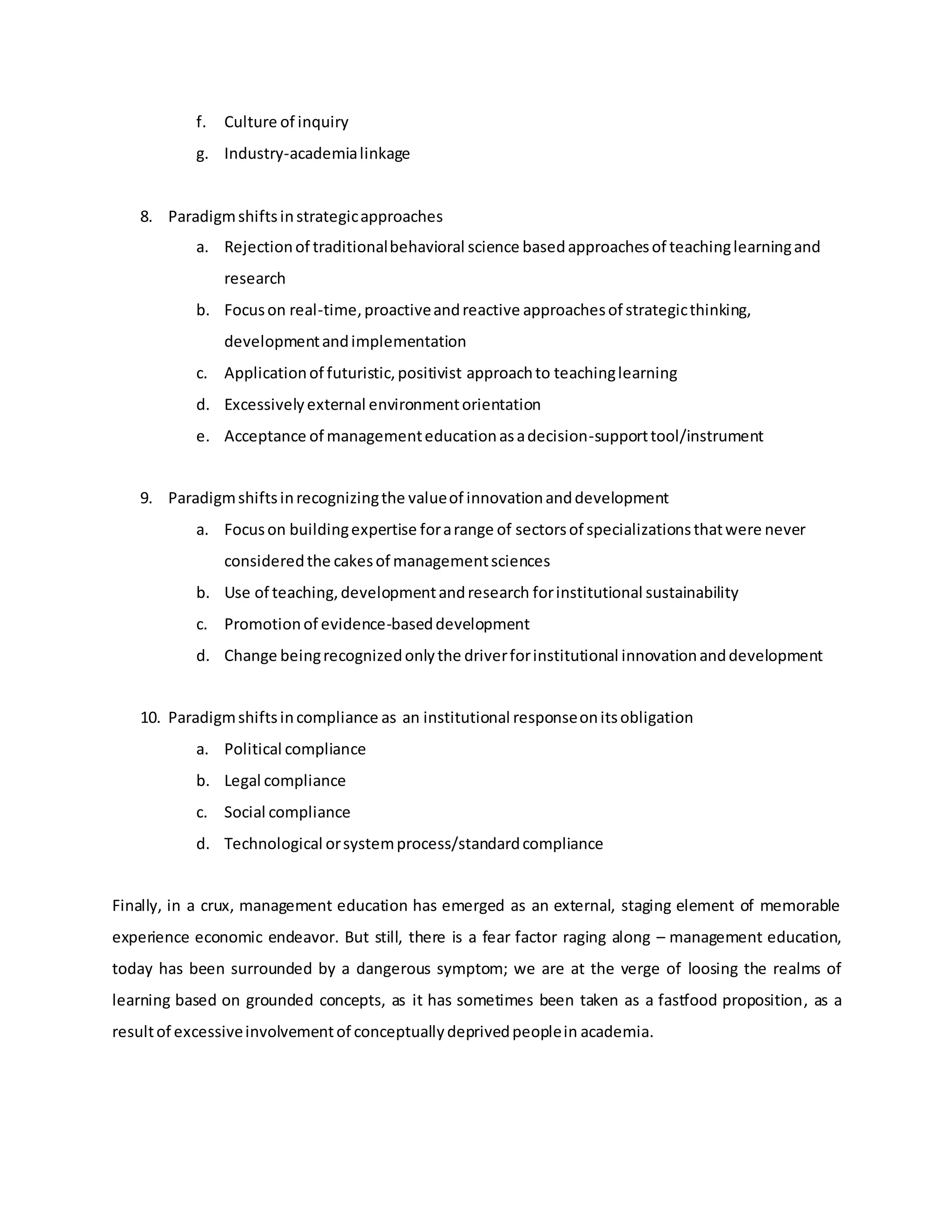
f. Culture of inquiry
g. Industry-academialinkage
8. Paradigmshiftsinstrategicapproaches
a. Rejectionof traditionalbehavioral science basedapproachesof teachinglearningand
research
b. Focuson real-time,proactiveandreactive approachesof strategicthinking,
developmentandimplementation
c. Applicationof futuristic,positivist approachto teachinglearning
d. Excessivelyexternal environmentorientation
e. Acceptance of managementeducationasadecision-supporttool/instrument
9. Paradigmshiftsinrecognizingthe valueof innovationanddevelopment
a. Focuson buildingexpertise forarange of sectorsof specializationsthatwere never
consideredthe cakesof managementsciences
b. Use of teaching,developmentandresearch forinstitutional sustainability
c. Promotionof evidence-baseddevelopment
d. Change beingrecognizedonlythe driverforinstitutional innovationanddevelopment
10. Paradigmshiftsincompliance as an institutional responseonitsobligation
a. Political compliance
b. Legal compliance
c. Social compliance
d. Technological orsystemprocess/standardcompliance
Finally, in a crux, management education has emerged as an external, staging element of memorable
experience economic endeavor. But still, there is a fear factor raging along – management education,
today has been surrounded by a dangerous symptom; we are at the verge of loosing the realms of
learning based on grounded concepts, as it has sometimes been taken as a fastfood proposition, as a
resultof excessiveinvolvementof conceptuallydeprivedpeoplein academia.

Changing paradigms of management a way forward to sustainability

  • 1.
    Changing Paradigms ofManagement: A Way Forward to Sustainability By C P. Rijal, PhD in Educational Leadership Adviror,ResearchandDevelopment at Gurukul Education Foundation, Nepal College of Management, Dhobights, Lalitpur, Nepal Conference discussant notes Uniglobae International Conference on Changing Paradigms of Management: A Way Forward to Sustainability March 16, 2016, Kathmandu, Nepal ===================================================================================== Areasof ParadigmShifts 1. Paradigmshiftsinthe sharedneedsof – a. policyregulatorsandadvocacyproviders, b. industry/employers, c. receivers,and d. providersof managementeducationtraininganddevelopmentinitiatives 2. Paradigmshiftsinthe environmentbymeans of -- a. globalization, b. deregulation, c. technological advent, d. e-revolution,and e. virtual learning 3. Paradigmshiftsininstitutional arrangements a. adventof businessschool systemasafusionof learninganddevelopmenttrilogyfor academia,R&D,institutional andprofessional development, b. adventof focusedandspecializedservice institutions, c. adventof focusedprograms, d. realizationof autonomousinstitutional developmentinmanagementsciences, e. promotionof institutional partnership,and
  • 2.
    f. privatization 4. Paradigmshiftsinnapplicationsofmanagementsciences a. Publicpolicy,administrationandgovernance b. Social sectortransformation c. Developmentandpromotionof private sectorforsustainable trade andcommerce d. Transformationof national securityanddefense e. Transformationof national politics f. Developmentandpromotionof international relationship,harmonyandadvocacy g. Promotionof R&D forchange and innovation h. Developmentof skillsforlife 5. Paradigmshiftsinteachingasa profession a. Managementscience professionalsbeingregardedasthe effective change agentsinall type of projectsinall sectors acrossthe world b. Promotionof multi-nationalprofessionalism c. Promotionof researchembeddedteachingasa premiumservice 6. Paradigmshiftsinrootsof considerationinacademia a. Intense focusonprocessimprovementthroughqualityinterventions b. Recognitionof CSRas a drivingforce c. Emphasisoninstitutionalplanningandgovernance d. Promotionof democraticvaluesandnorms e. Systemstandardization f. Global recognitionthroughqualityassurance andsystemprocessbenchmarking 7. Paradigmshiftsinteaching-learninganddevelopmentpedagogiesandassessmentsystems a. Pragmatism b. Transferof learningskills c. Empiricism d. Multi-mode approachof teachinglearningandsystem transformation e. Evidence-basedlearningsystem
  • 3.
    f. Culture ofinquiry g. Industry-academialinkage 8. Paradigmshiftsinstrategicapproaches a. Rejectionof traditionalbehavioral science basedapproachesof teachinglearningand research b. Focuson real-time,proactiveandreactive approachesof strategicthinking, developmentandimplementation c. Applicationof futuristic,positivist approachto teachinglearning d. Excessivelyexternal environmentorientation e. Acceptance of managementeducationasadecision-supporttool/instrument 9. Paradigmshiftsinrecognizingthe valueof innovationanddevelopment a. Focuson buildingexpertise forarange of sectorsof specializationsthatwere never consideredthe cakesof managementsciences b. Use of teaching,developmentandresearch forinstitutional sustainability c. Promotionof evidence-baseddevelopment d. Change beingrecognizedonlythe driverforinstitutional innovationanddevelopment 10. Paradigmshiftsincompliance as an institutional responseonitsobligation a. Political compliance b. Legal compliance c. Social compliance d. Technological orsystemprocess/standardcompliance Finally, in a crux, management education has emerged as an external, staging element of memorable experience economic endeavor. But still, there is a fear factor raging along – management education, today has been surrounded by a dangerous symptom; we are at the verge of loosing the realms of learning based on grounded concepts, as it has sometimes been taken as a fastfood proposition, as a resultof excessiveinvolvementof conceptuallydeprivedpeoplein academia.